
Flower Types
55 Native California Flowers and Plants: Names and Pictures


Contributing Editor
Credentials
- BA in Professional Writing TheCollector
- Worked at Dover Museum and the Canterbury Archaeological Trust TheCollector
Writing for Petal Republic since 2022 · 92 articles
Expertise
Flowers, Native plants, Wildlife gardening
Published In
TheCollector
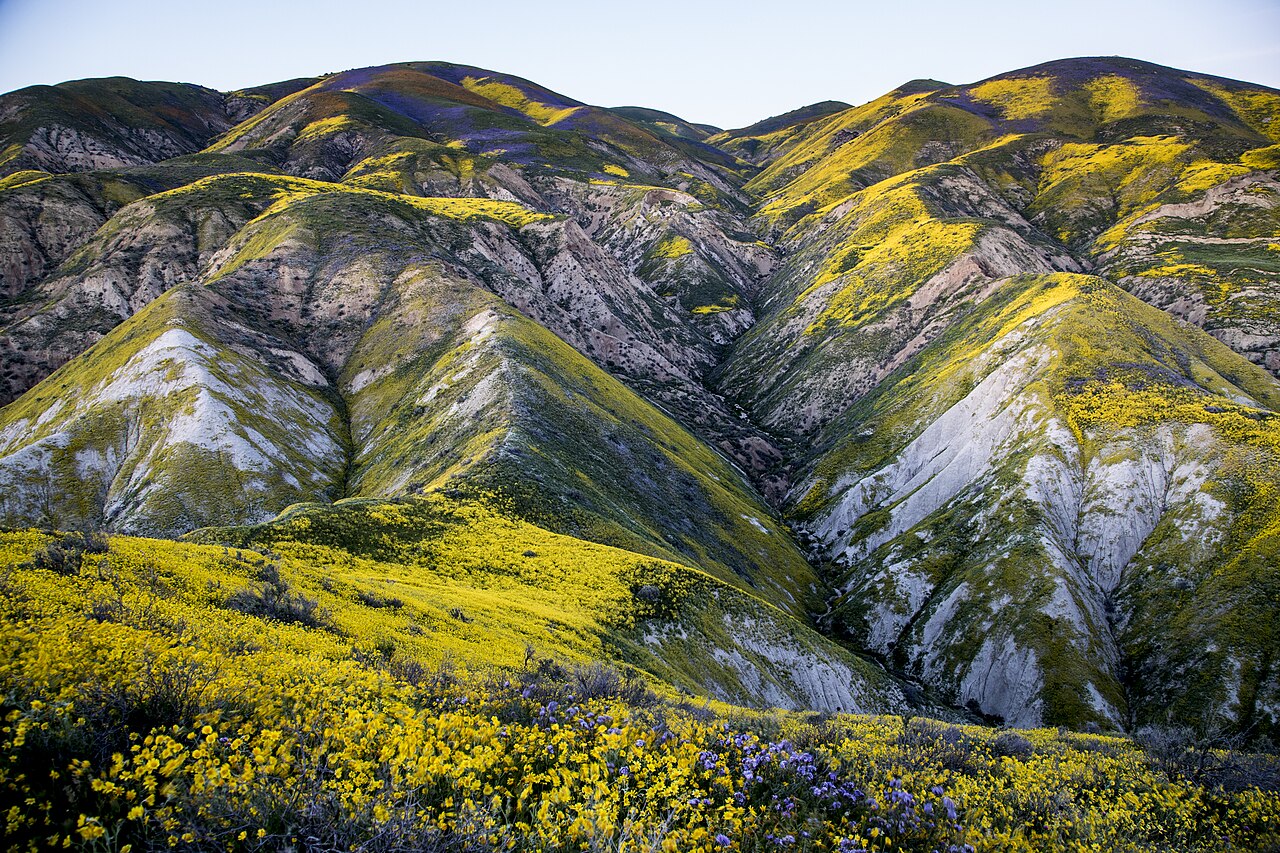
Fifty-five native California wildflowers, shrubs, and flowering plants with names, pictures, and a native status checked against Kew's Plants of the World Online and the USDA PLANTS database.
In Short
California has about 6,500 native plants, and the best known include the California poppy, the state flower since 1903, baby blue eyes, goldfields, lupines, and blue dicks. Most bloom in spring.
- Every plant was checked against Kew and USDA PLANTS; 51 of the 55 are native in both, three only in Kew, and the sources disagree only on sacred datura.
- Bloom starts on the desert floor in mid-February, peaks at the Antelope Valley poppy reserve from mid-March through April, and climbs the mountain slopes into July.
More Takeaways
- Picking wildflowers is against the law in California state parks, and state law bars removing plants from public land or land you do not own without the owner's written permission.
California Native Range
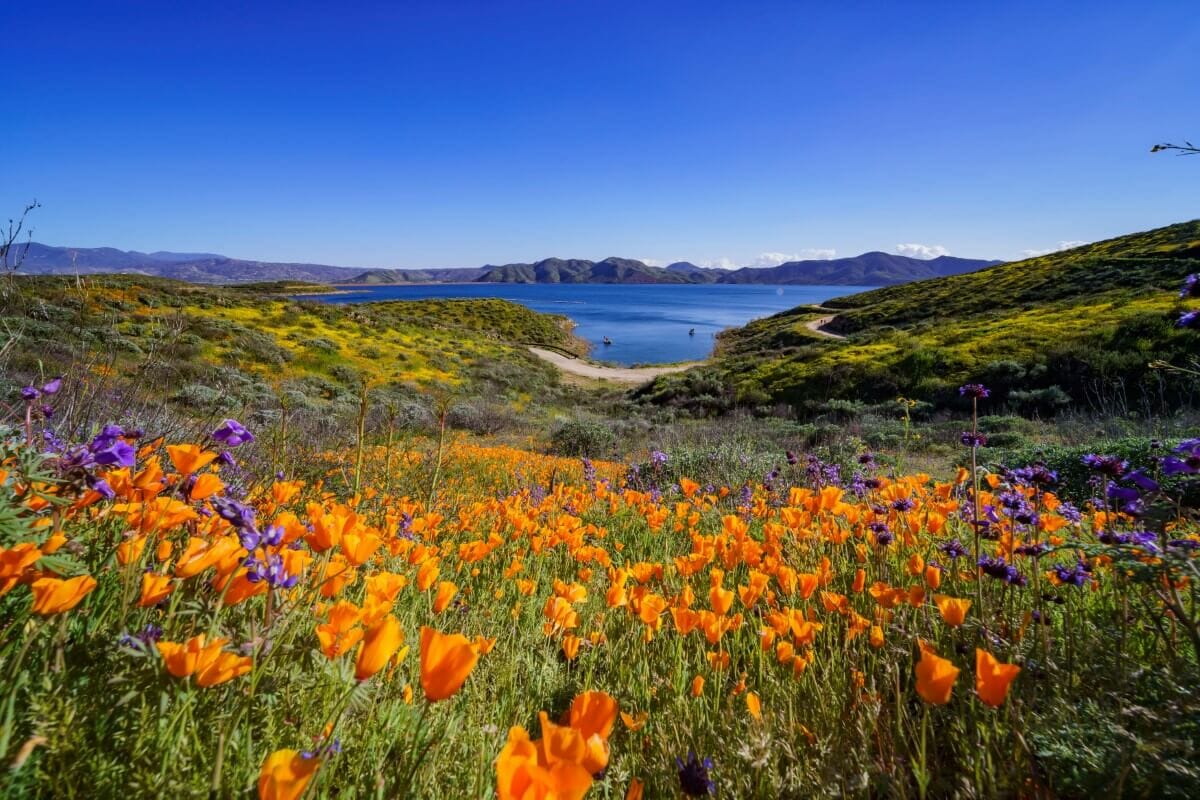
California stretches along the West Coast of the United States, where North America meets the Pacific Ocean. Most of California has a Mediterranean climate, especially Southern California. However, cooler temperatures can be found in areas such as the Sierra Nevada mountains.
California also has several desert areas, especially the Mojave Desert. In some years, these deserts bloom heavily after rain. These incredible natural spectacles are known as “super blooms”.
How Are California’s Native Plants Defined?
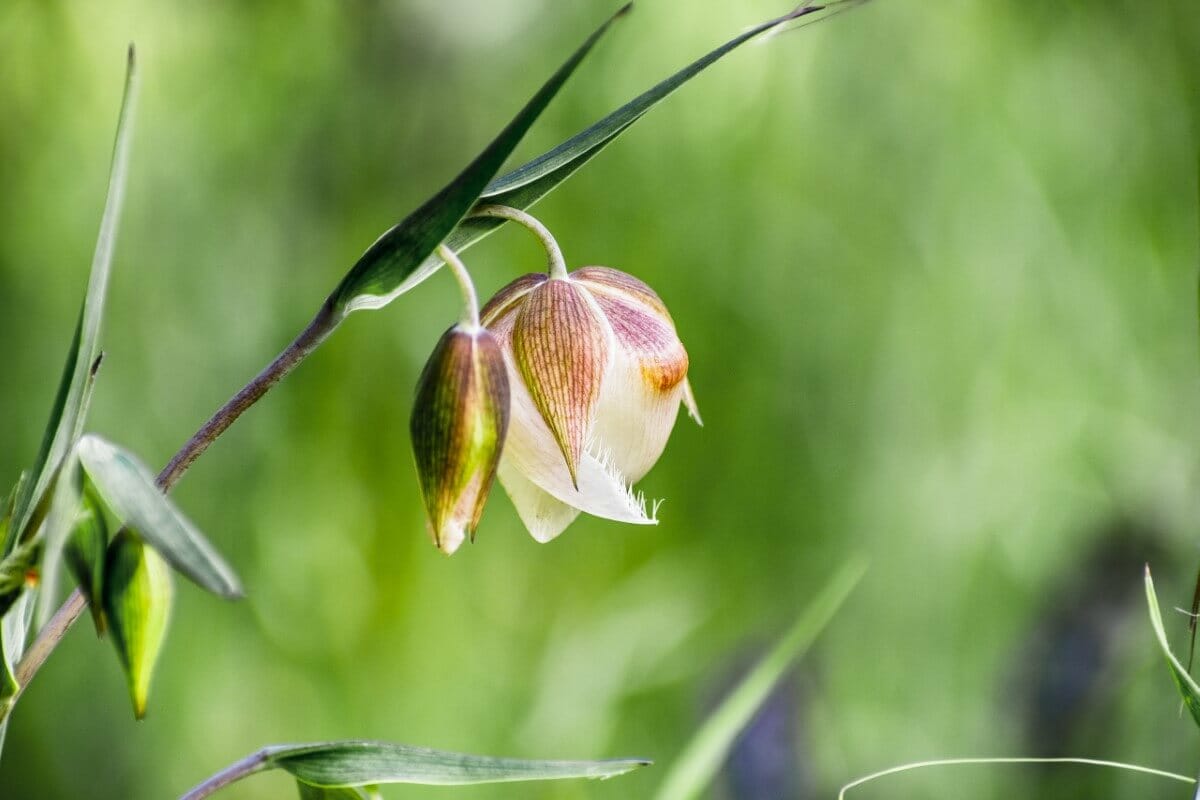
As California is home to thousands of plants, it can be challenging to figure out which plants are native species. Gardeners have introduced hundreds of non-native species over the years, and some have become naturalized.
Plants are defined as native if they grew in California before European settlers arrived. Many of California’s native plants were probably used by the region’s Native American societies for food and medicine.
When Are California’s Native Plants In Season?
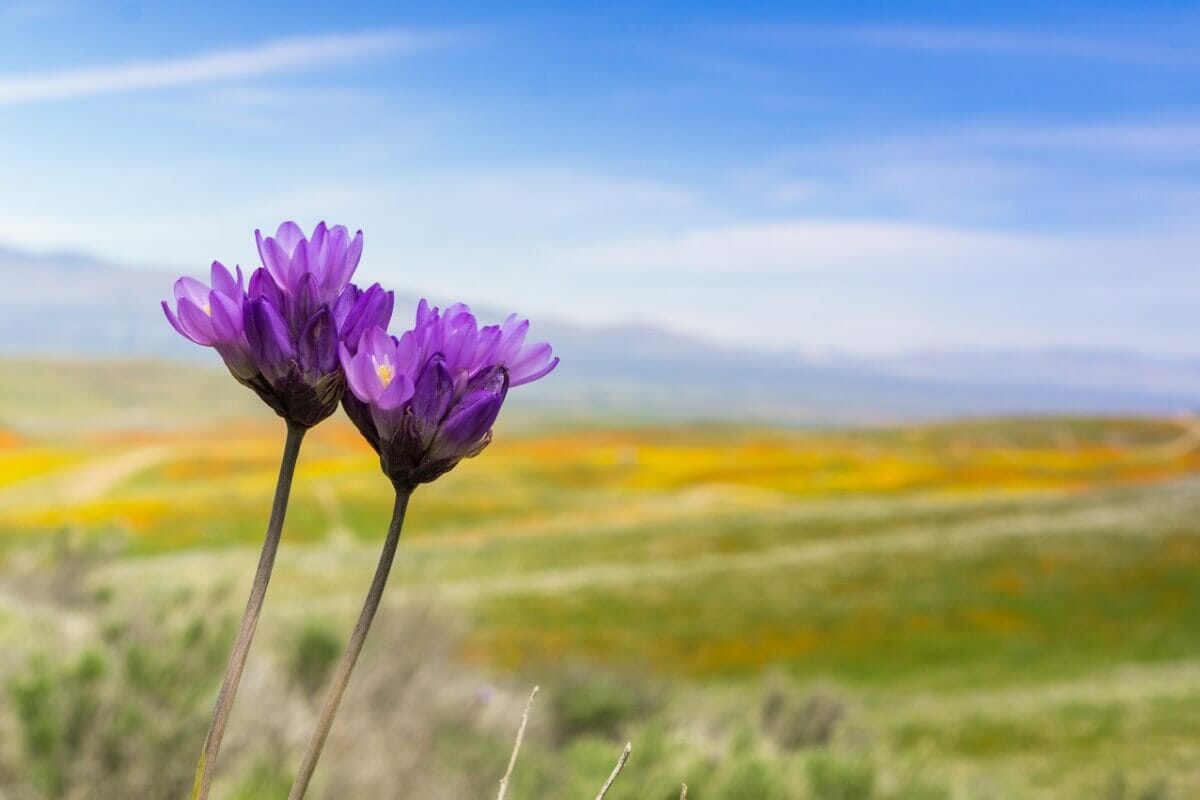
California’s native plants enjoy a Mediterranean climate in most parts of the state. California’s native wildflowers and flowering plants mainly bloom in spring and summer. Sow native seeds in the spring or plant native shrubs during the fall or early winter. Keep in mind that frost can strike in some areas.
How We Checked These 55 Plants
Petal Republic editors checked every plant in this list against Kew's Plants of the World Online and the USDA PLANTS database, state by state, on October 17, 2026.
| What the check found | Plants |
|---|---|
| Native in both Kew and USDA PLANTS | 51 |
| Native in Kew's records only | 3 |
| Native in USDA PLANTS; Kew lists it as introduced | 1 |
| Checked as a whole genus | 1 |
55 Native California Wildflowers and Flowering Plants
1. California Poppy (Eschscholzia californica)
About:
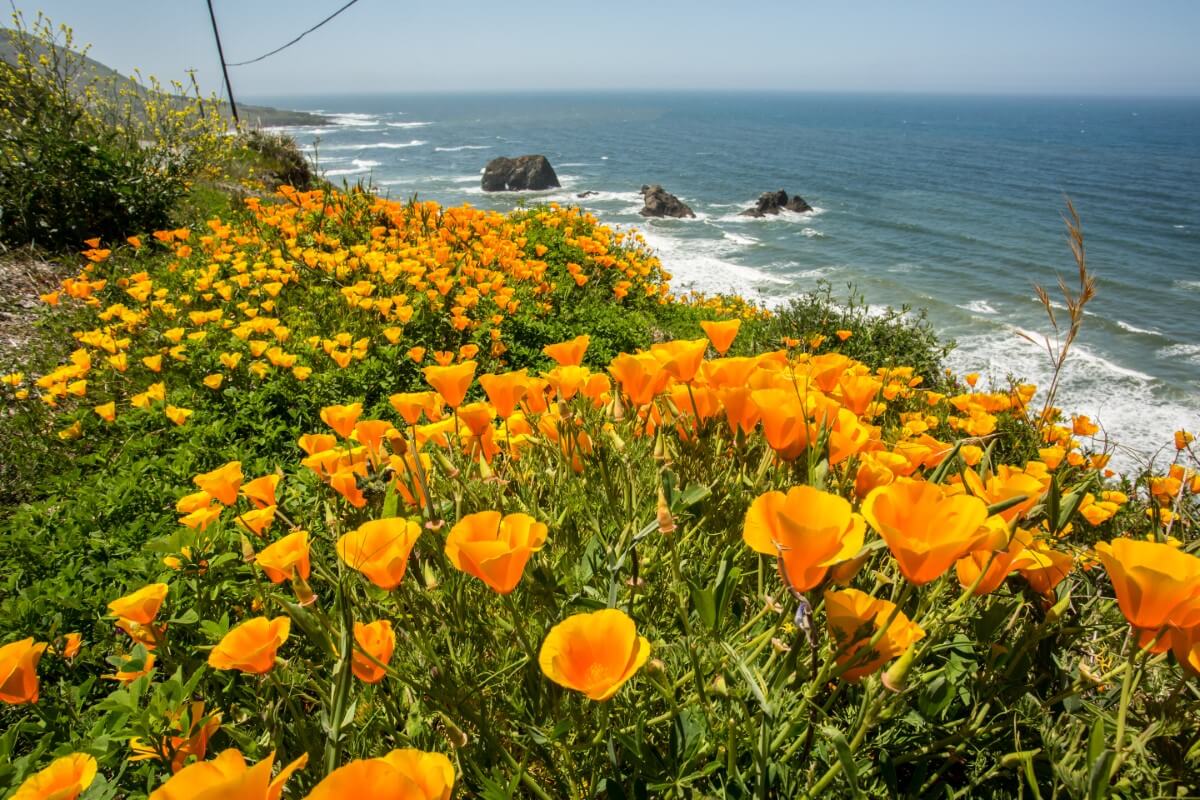
Few of California’s wildflowers are as iconic as the California poppy (Eschscholzia californica). It belongs to the poppy family (Papaveraceae) and was named California’s official state flower in 1903.
California poppies have orange, red, or yellow cup-shaped flowers and gray feathery leaves. The flowers open on sunny mornings but close up on overcast days. California poppies bloom mainly in spring, covering grasslands, foothills, and valleys.
2. California Suncup (Camissoniopsis bistorta)
- Native Status
- Confirmed by Kew
- Kew Record
- Camissoniopsis bistorta
About:
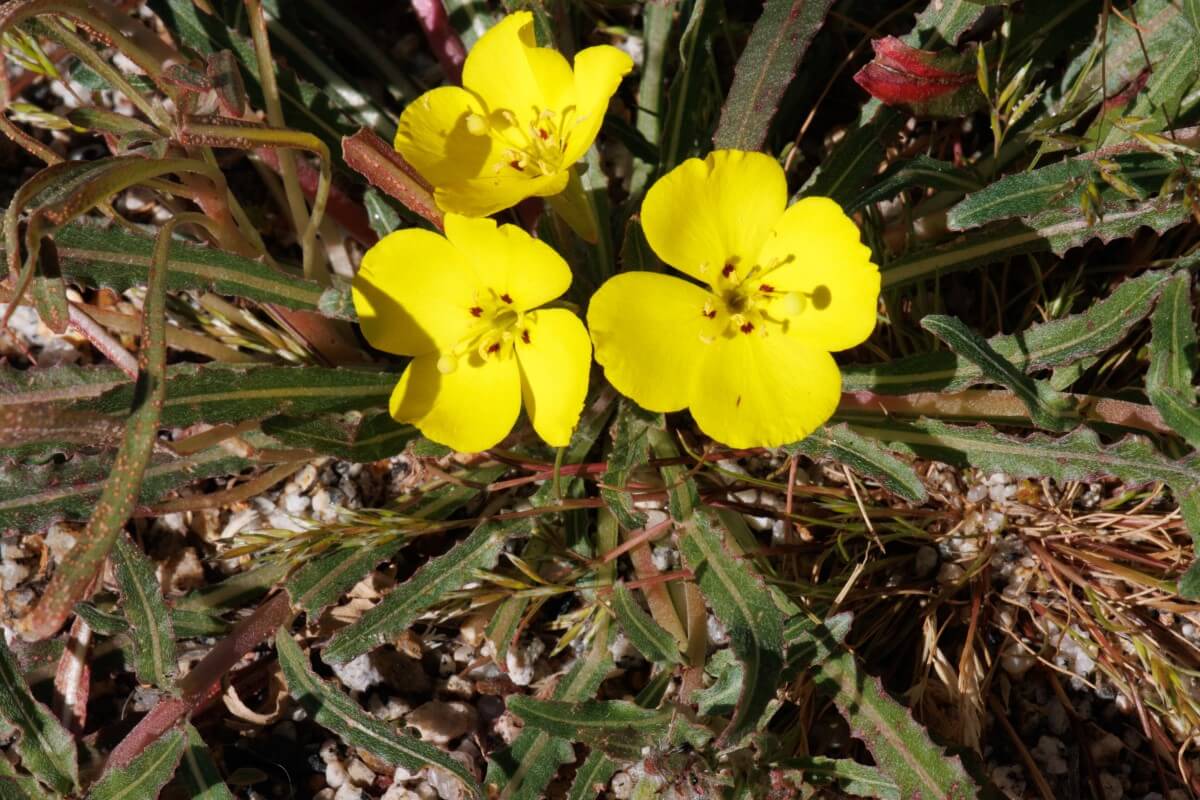
California suncup (Camissoniopsis bistorta) is a bright, cheery wildflower from the evening primrose family (Onagraceae). They grow in the coastal areas of southwestern California. California suncup usually grows as an annual but can be a short-lived perennial in some areas.
These flowers have four bright yellow petals with four large red dots in the center. These wildflowers bloom in spring and summer. Each flower stem can grow up to 2 ½ feet long.
3. Baby Blue Eyes (Nemophila menziesii)
About:
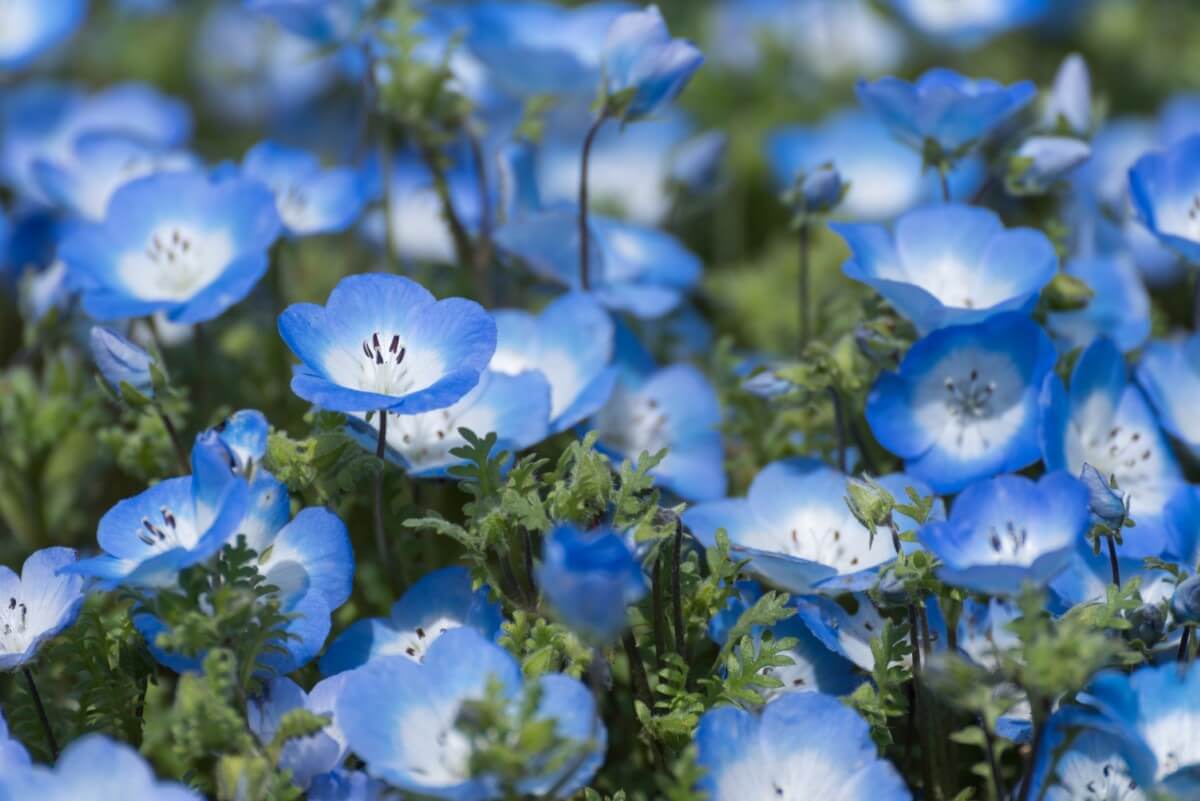
Baby blue eyes (Nemophila menziesii) are an annual herb from the borage family (Boraginaceae). These charming flowers are native to California, Oregon, and Baja, California, in Mexico. Baby blue eyes grow in various habitats, from chaparrals to grassy valleys and woodland areas.
Baby blue eyes have light blue flowers with five petals and white centers with black dots and blue veins. These trailing or creeping annuals flower from late winter into early summer.
4. California Loosestrife (Lythrum californicum)
About:
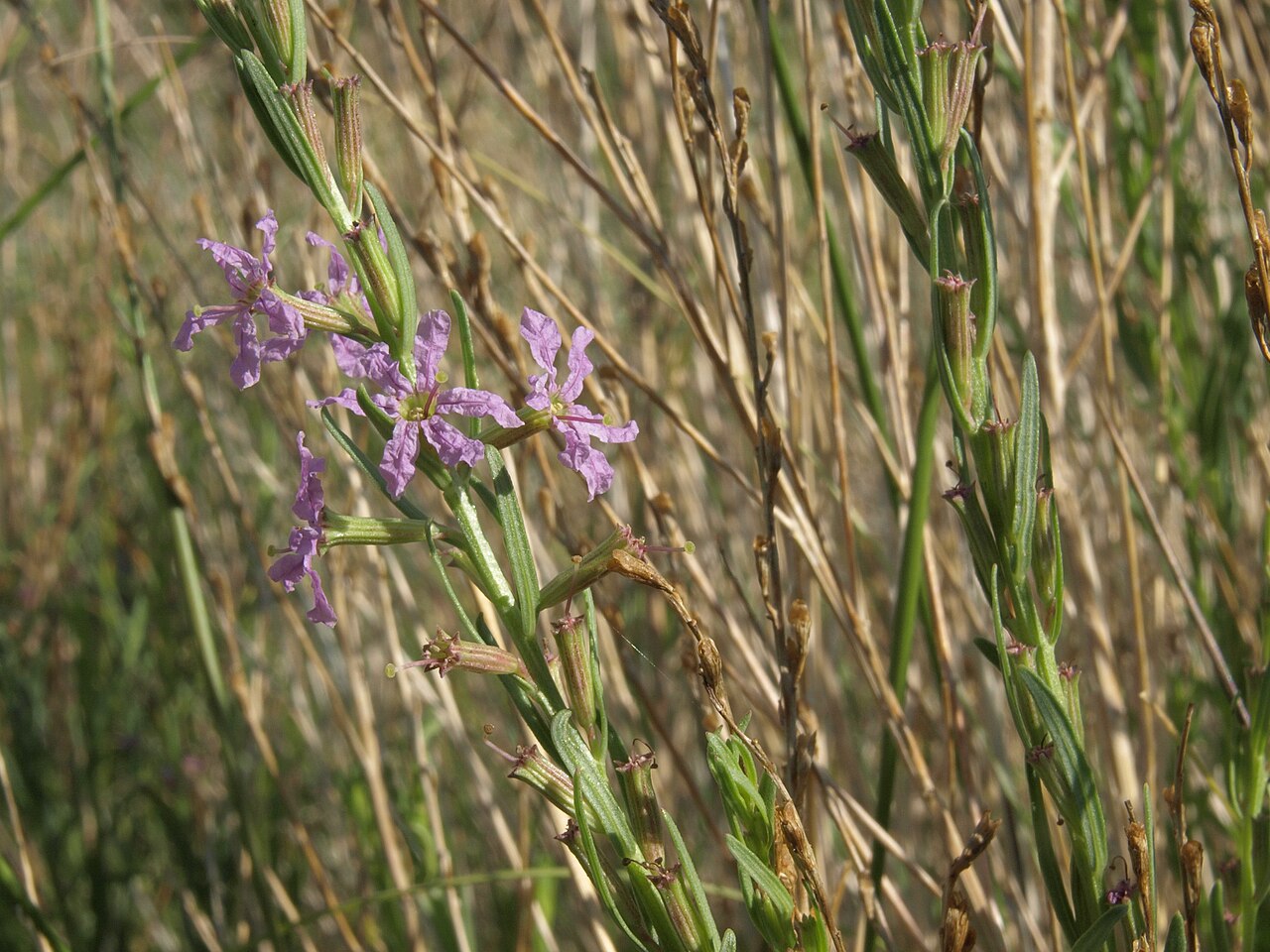
California loosestrife (Lythrum californicum) is a flowering perennial herb from the loosestrife family (Lythraceae). It’s native to the southwestern United States and parts of northern Mexico. These flowering herbs can grow up to 2 feet tall.
California loosestrife produces waxy lance-shaped leaves and purple flowers with 6 to 7 petals. Each bloom can be up to an inch wide and can flower from March through to November in some areas of its range.
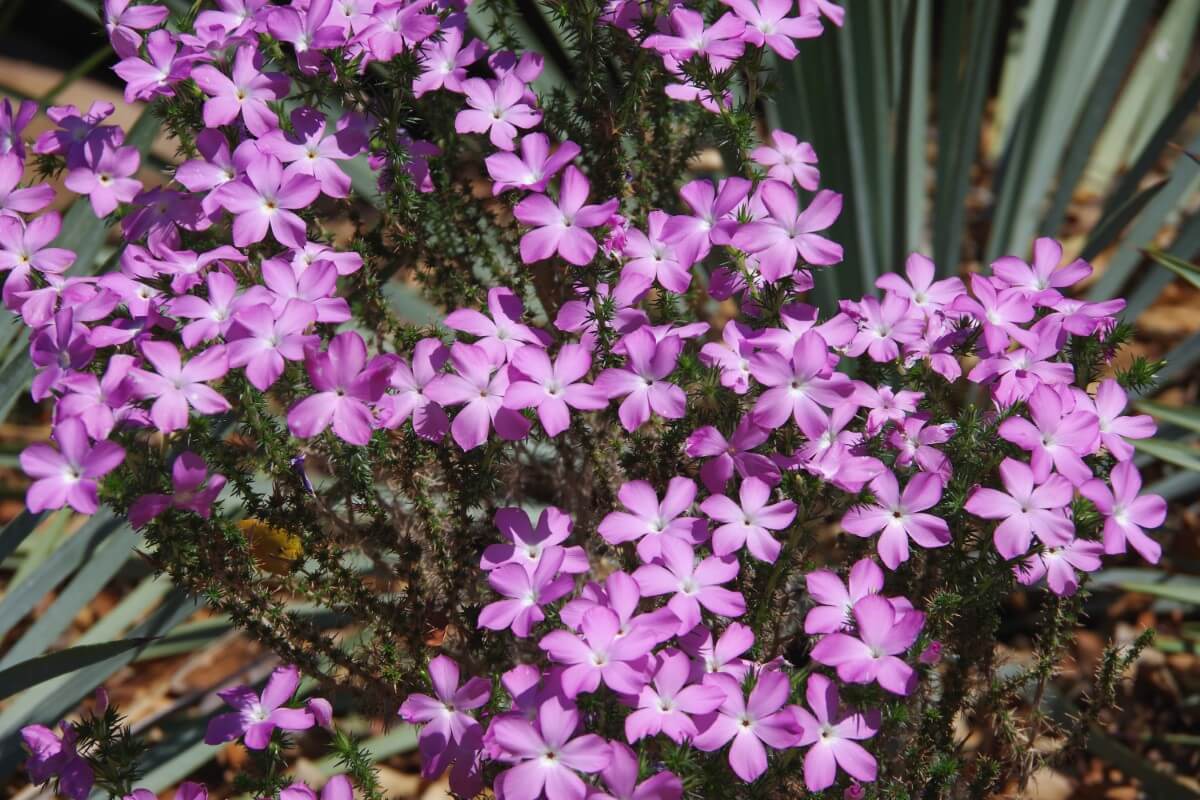
5. Prickly Phlox (Linanthus californicus)
About:
Prickly phlox (Linanthus californicus) is a woody perennial from the phlox family (Polemoniaceae). It gets its name from the prickly spines on its flower stems. Prickly phlox is native to coastal areas and chaparrals of southwestern California.
Prickly phlox produces pink, purple, or white flowers with five petals and white centers. Each flower can measure up to an inch in diameter. These perennials bloom from March until June and attract numerous pollinators.
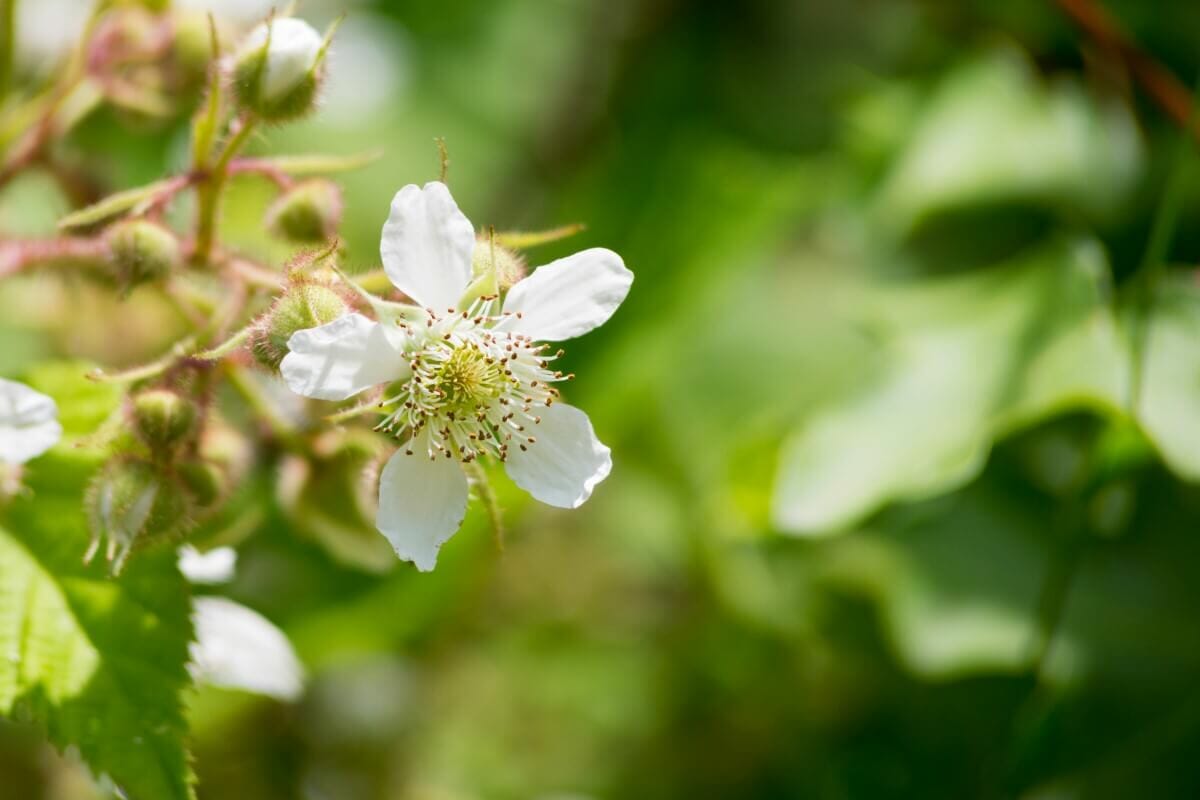
6. California Blackberry (Rubus ursinus)
About:
California blackberry (Rubus ursinus) is a perennial climbing or trailing shrub belonging to the rose family (Rosaceae). It has a wide range that stretches across the western United States, British Columbia, and Baja California in Mexico.
California blackberry flowers have slender white petals that give off an aromatic scent from early spring until midsummer. The berries are black or dark red.
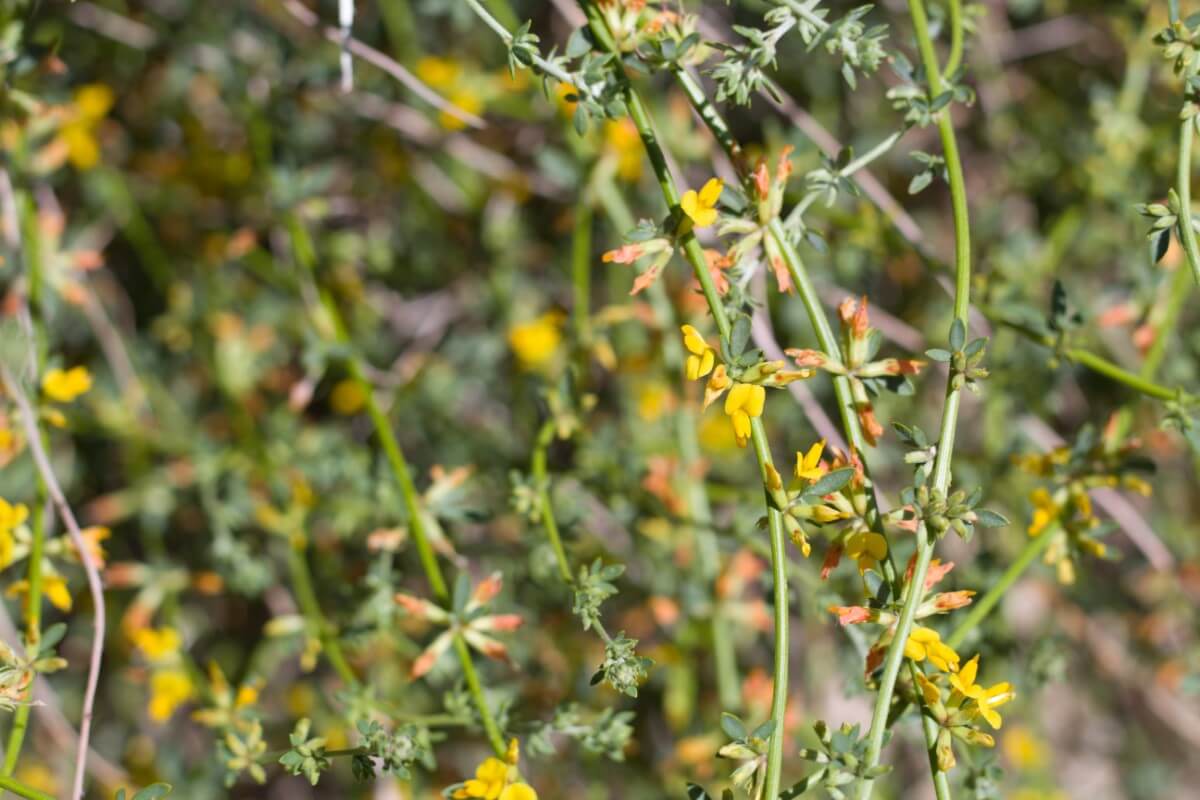
7. Common Deerweed (Acmispon glaber)
- Native Status
- Confirmed by Kew
- Kew Record
- Acmispon glaber
About:
Common deerweed (Acmispon glaber) is a perennial subshrub belonging to the legume family (Fabaceae). It’s a hardy species that quickly colonize dry, barren areas of chaparral and thrives in coastal habitats. Common deerweed is native to California, Arizona, and parts of Mexico.
Common deerweed flowers, from March to August, produce clusters of small yellow flowers. It also has green deciduous foliage on long, arching stems. Common deerweed grows up to 3 feet tall and wide.
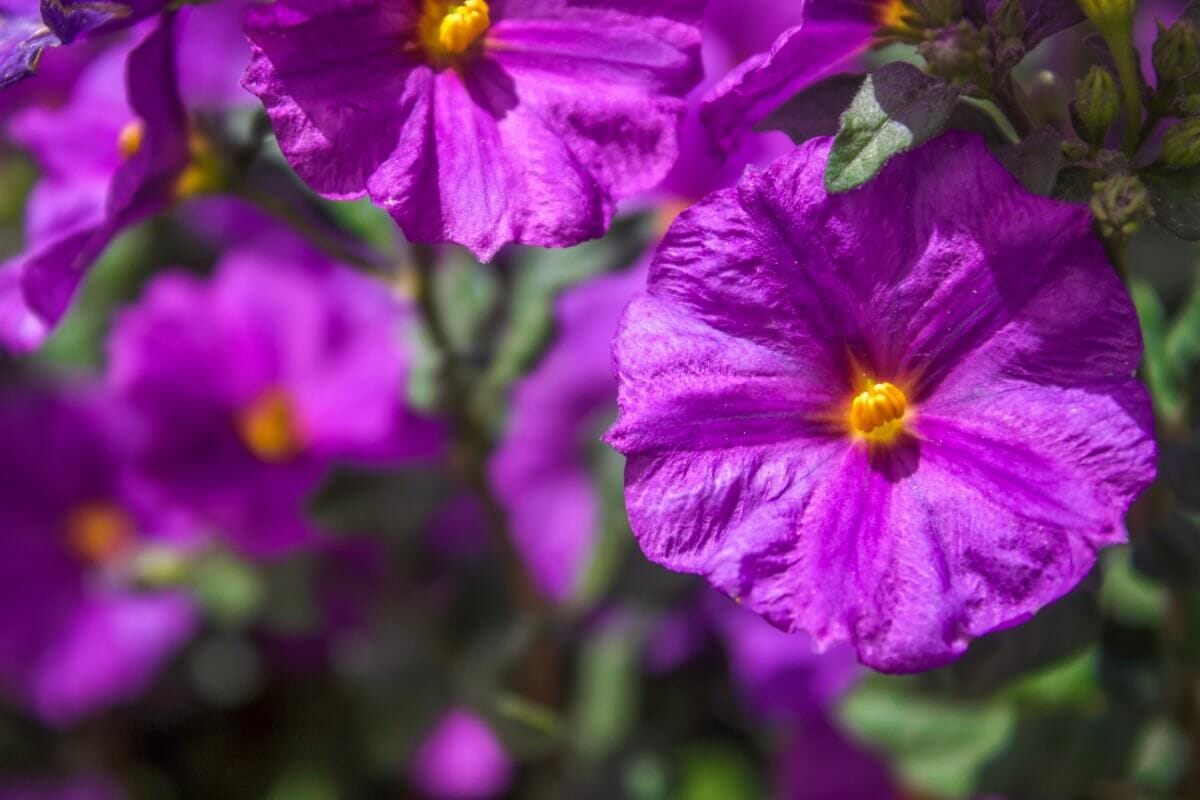
8. Purple Nightshade (Solanum xanti)
About:
Also known as chaparral nightshade, purple nightshade (Solanum xanti) comes from the nightshade family (Solanaceae). These perennial subshrubs are native to California, Arizona, Nevada, Oregon, and Baja, California. It inhabits chaparral and woodland habitats.
Purple nightshade produces hairy stems that can grow up to 3 feet tall. Purple nightshade flowers from late winter to early summer, producing purple umbrella-shaped flowers. Like many members of the nightshade family, purple nightshade is poisonous.
9. Alkali Mallow (Malvella leprosa)
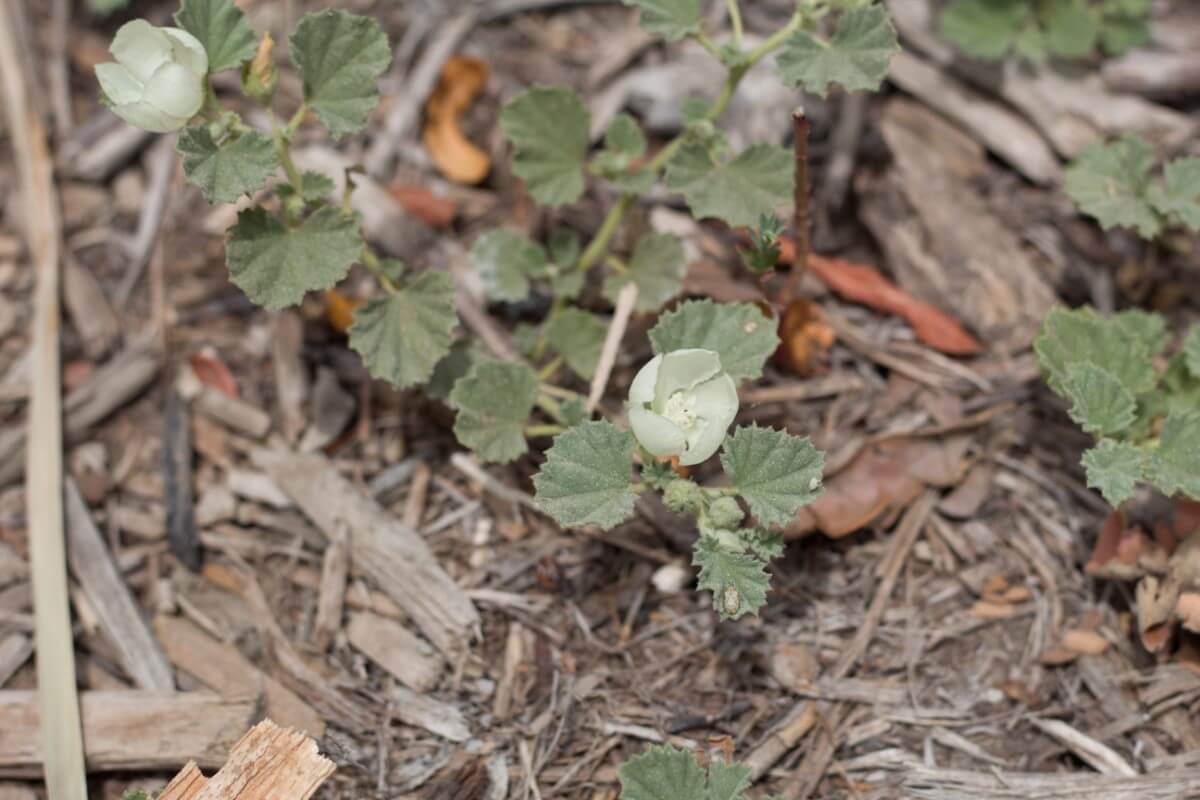
About:
Alkali mallow (Malvella leprosa) is a low-growing flowering perennial from the mallow family (Malvaceae). It’s native to the western United States and parts of Argentina, Chile, and Mexico.
Alkali mallow produces pink or white cup-shaped flowers with frilly edges. Both the fan-shaped leaves and the stems are covered with white hairs. Alkali mallow thrives in alkaline soils, especially in California’s fields and orchards.
10. Sticky Monkey-flower (Diplacus aurantiacus)
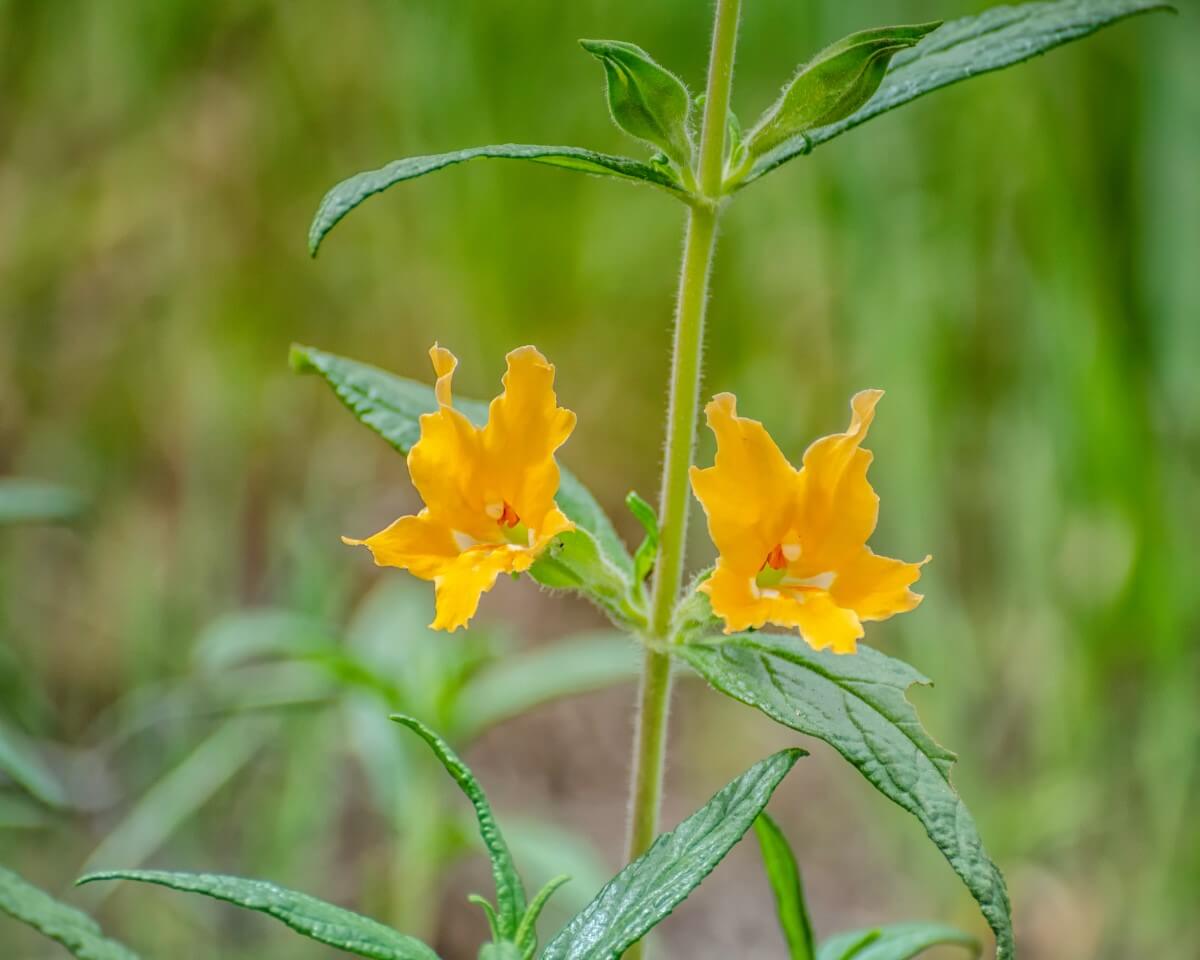
About:
The sticky monkey-flower (Diplacus aurantiacus) is a flowering subshrub that produces orange, red, or white tubular flowers with frilled edges. These exquisite flowers bloom throughout spring and summer. Sticky monkey-flower belongs to the lopseed family (Phrymaceae).
Sticky monkey-flowers are native to California and Oregon. These flowering plants can grow up to 4 feet tall and thrive in most soil types. The stems are covered with sticky dark green leaves.
11. California Buckwheat (Eriogonum fasciculatum)
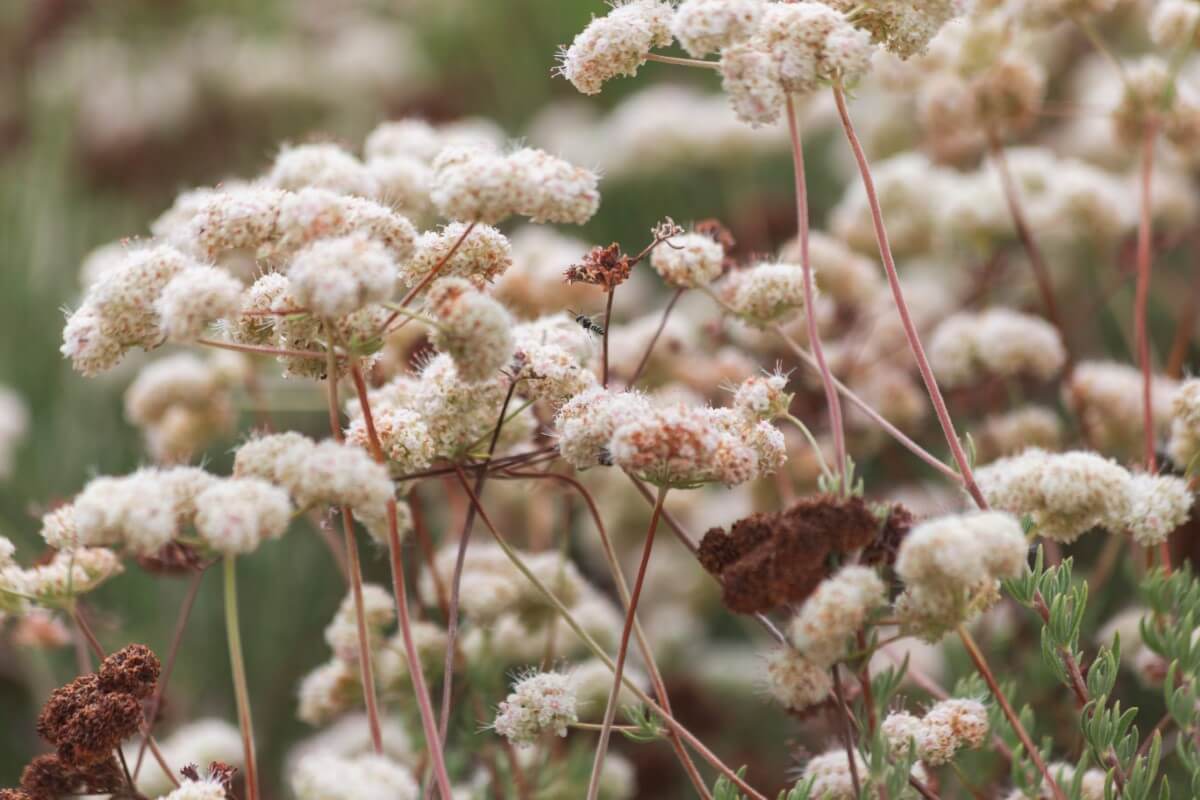
About:
California buckwheat (Eriogonum fasciculatum) is native to the southwestern United States and parts of northern Mexico. It’s a colorful member of the buckwheat family (Polygonaceae). They thrive in environments such as scrub and grasslands.
California buckwheat bursts into rounded clusters of small pink and white flowers from late spring until fall. These evergreen shrubs can grow up to 6 feet tall and 8 feet wide.
12. Distant Phacelia (Phacelia distans)
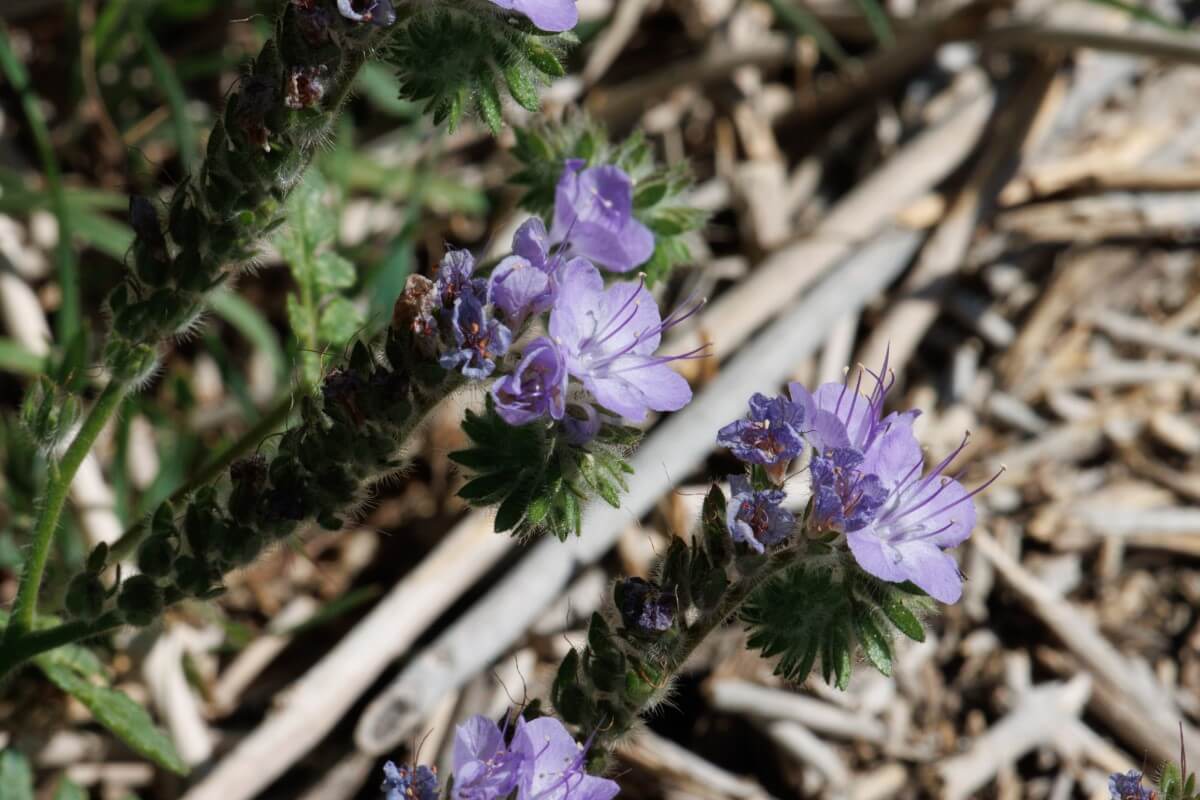
About:
Distant phacelia (Phacelia distans) is an annual herb that belongs to the borage family (Boraginaceae). These flowering plants grow up to approximately 2 ½ feet tall. Distant phacelia is native to the southwestern United States and northwestern Mexico.
Distant phacelia has dazzling blue or purple bell-shaped flowers with white markings around the center. The petals may show purple or blue veins. The stems and leaves are covered with prickly white hairs.
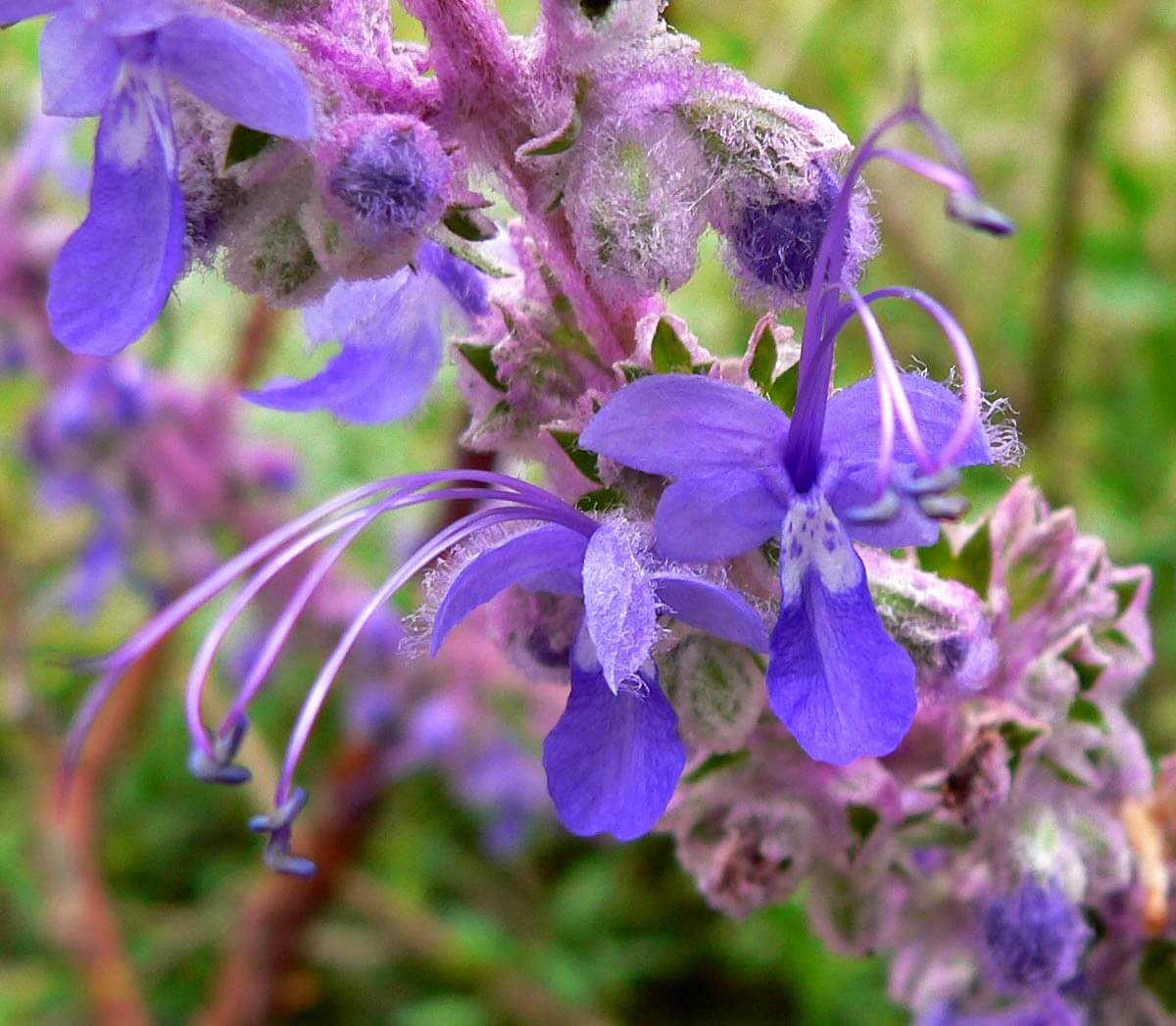
13. Woolly Bluecurls (Trichostema lanatum)
About:
Woolly bluecurls (Trichostema lanatum) is an evergreen shrub belonging to the mint or sage family (Lamiaceae). It’s also known as romero after the Spanish word for rosemary, a name it was given by Spanish explorers. Woolly blue curls thrive in the coastal chaparrals of California.
Woolly bluecurls grow up to 5 feet tall and produce clusters of brilliant blue flowers from March until June. The flowers are similar to salvia flowers.
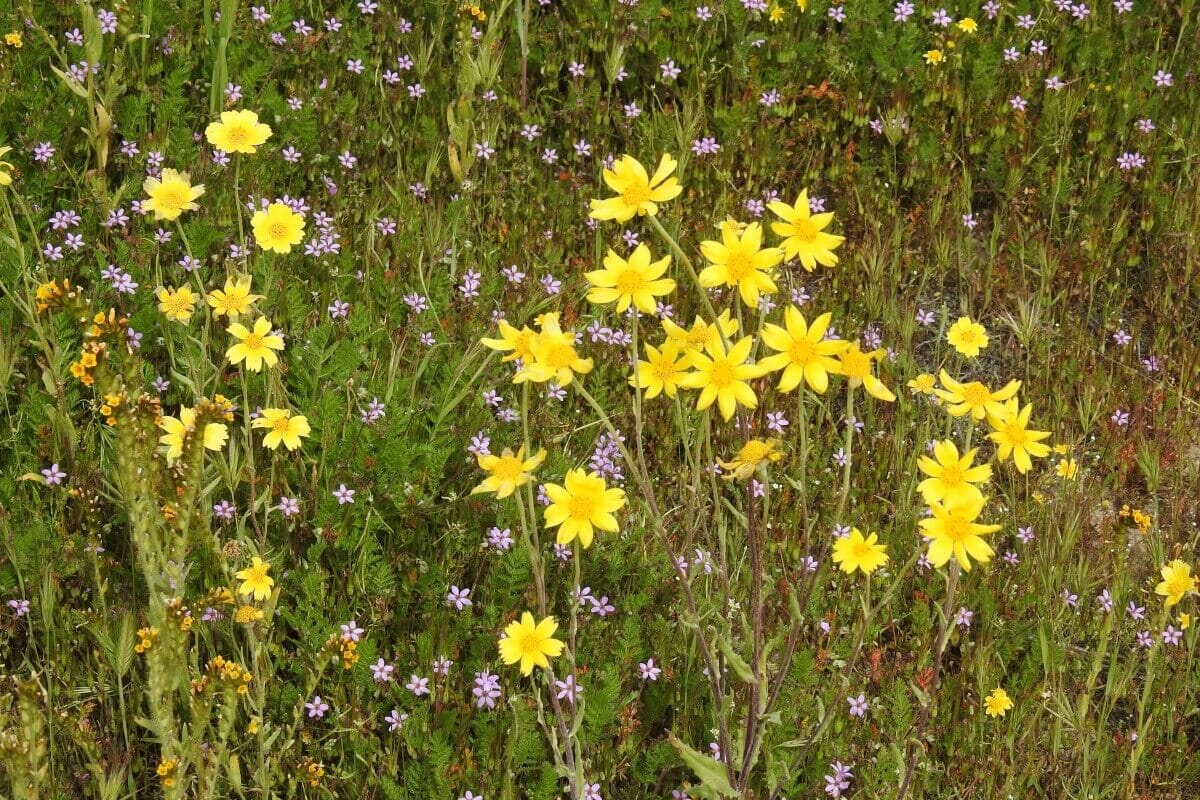
14. California Goldfields (Lasthenia californica)
About:
California goldfields (Lasthenia californica) are bright yellow flowers in the aster or daisy family (Asteraceae). These cheery annuals can grow up to 16 inches tall. Each flower has up to 10 petals with fluffy central florets in the middle of the flower heads.
California goldfields form a carpet of vibrant flowers between March and May. These wildflowers are native to the western United States, including California and Oregon. California goldfields love open areas and slopes.
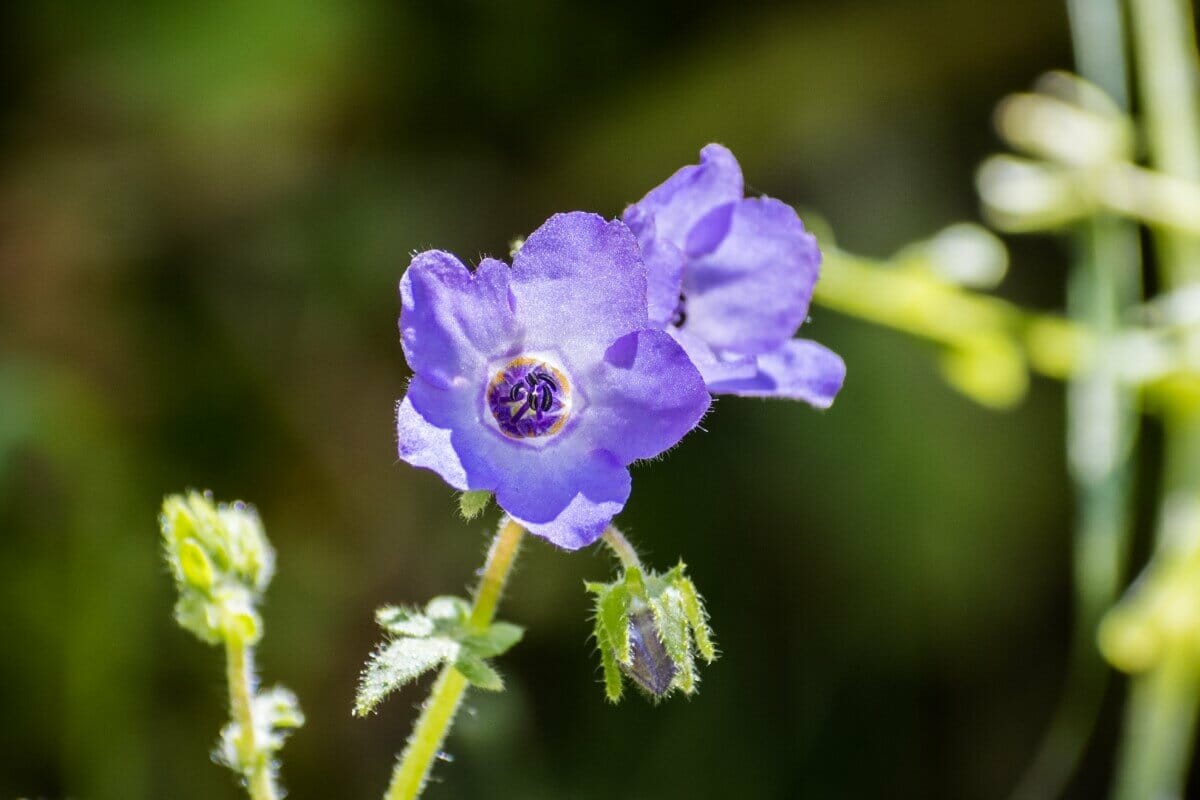
15. Blue Fiestaflower (Pholistoma auritum)
About:
Blue fiestaflower (Pholistoma auritum) is a flowering annual from the borage family (Boraginaceae). It produces a tangle of hairy stems and blue bell-shaped flowers from March until May. Blue fiestaflowers can latch onto passing animals or humans thanks to the bristles on the stems.
Blue fiestaflowers are native to California, Arizona, and parts of Nevada. These flowers thrive in several habitats but prefer shady areas. Each clump can grow up to 3 feet tall.
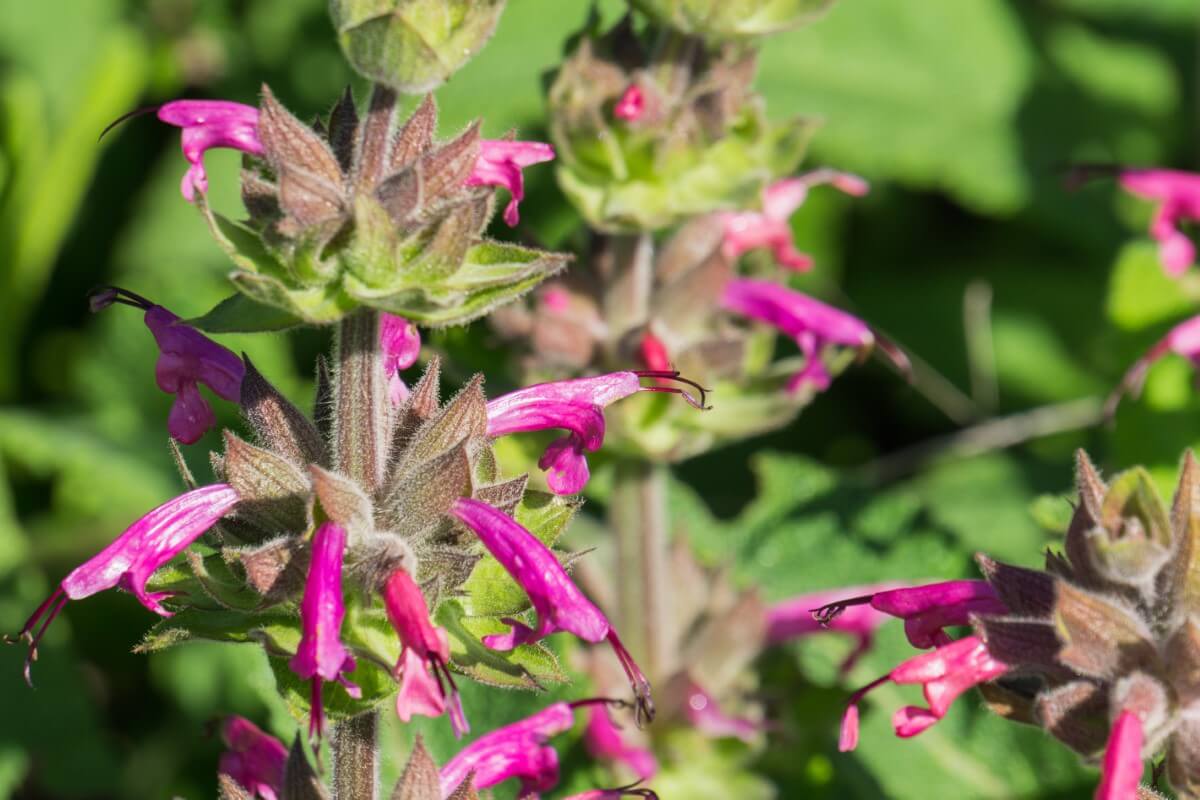
16. California Hummingbird Sage (Salvia spathacea)
About:
Also known as the pitcher sage, California hummingbird sage (Salvia spathacea) belongs to the mint or sage family (Lamiaceae). It’s native to central and southern regions of California and thrives in scrub and woodland areas.
California hummingbird sage grows up to 5 feet tall, producing just one flowering stem. The quintessential sage flowers are dark pink and have a fruity scent. The leaves are also aromatic, and the entire plant is covered with soft hairs.
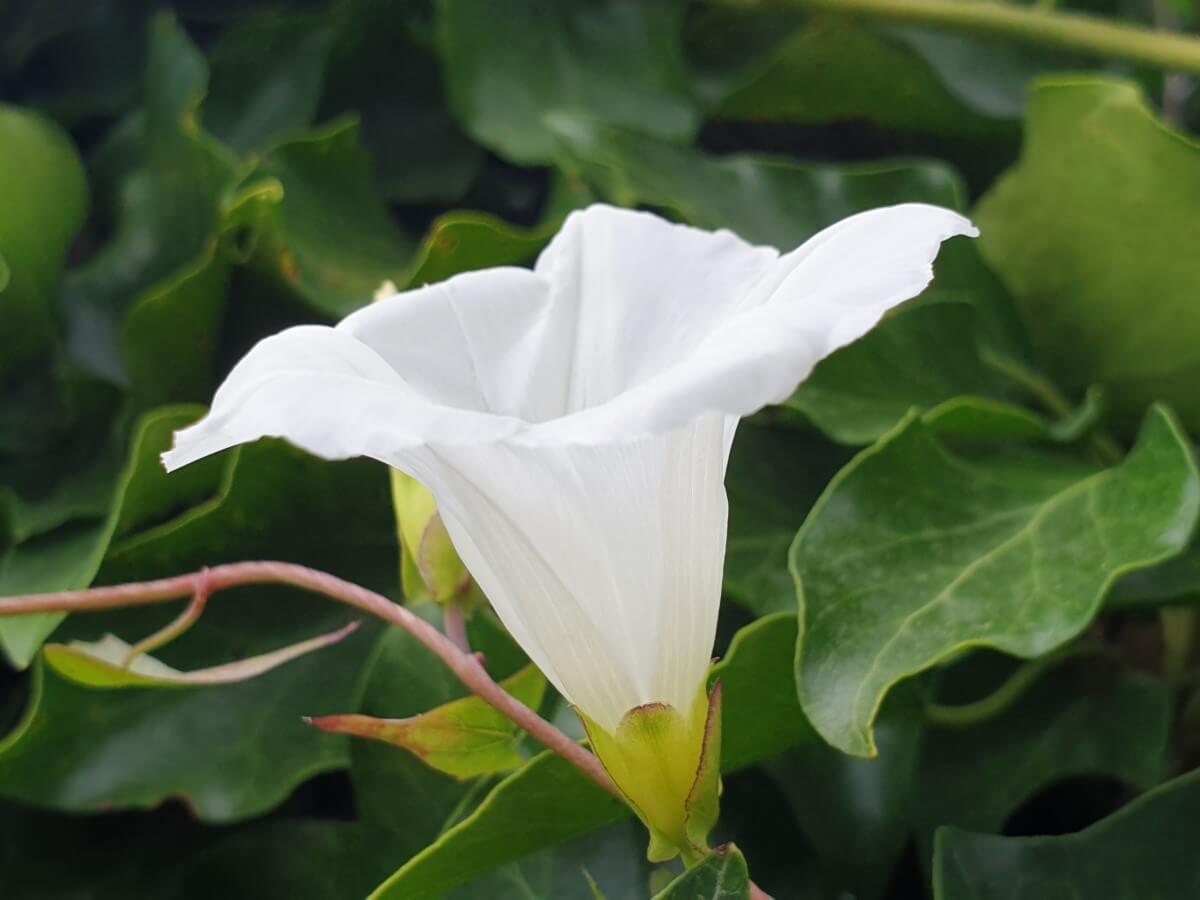
17. Island Morning Glory (Calystegia macrostegia)
About:
Island morning glory (Calystegia macrostegia) is a climbing perennial vine or shrub from the bindweed family (Convolvulaceae). It’s native to coastal chaparral areas of Southern California and can grow up to 30 feet long.
Island morning glory has large white or pink trumpet-shaped flowers that can be over 2 inches wide. These vines flower from late winter until summer and produce large triangular green leaves up to 4 inches wide.
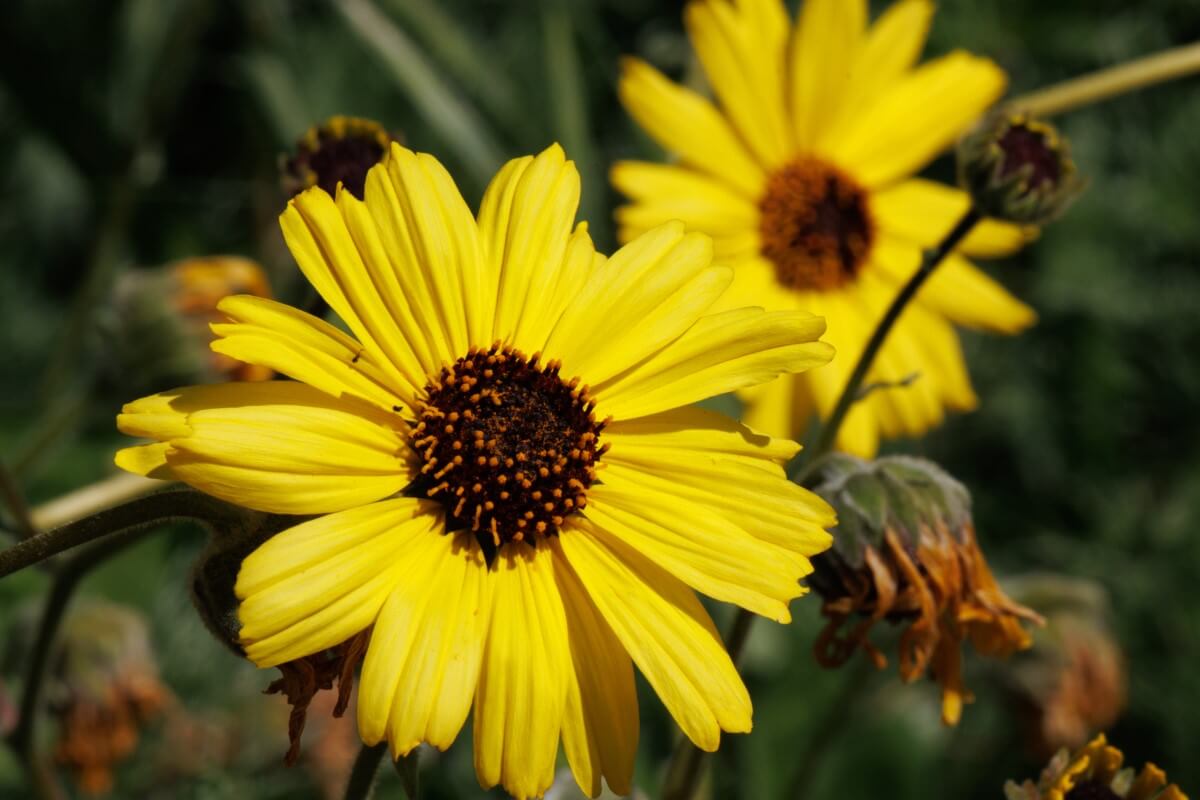
18. California Brittlebush (Encelia californica)
About:
California brittlebush (Encelia californica) is a bushy shrub from the daisy family (Asteraceae). These plants produce large bright yellow flower heads with up to 25 petals surrounding yellow or brown central disc florets.
California brittlebush thrives in coastal sage scrub habitats and chaparral or woodland areas. It’s indigenous to southern California and parts of Baja California in Mexico.
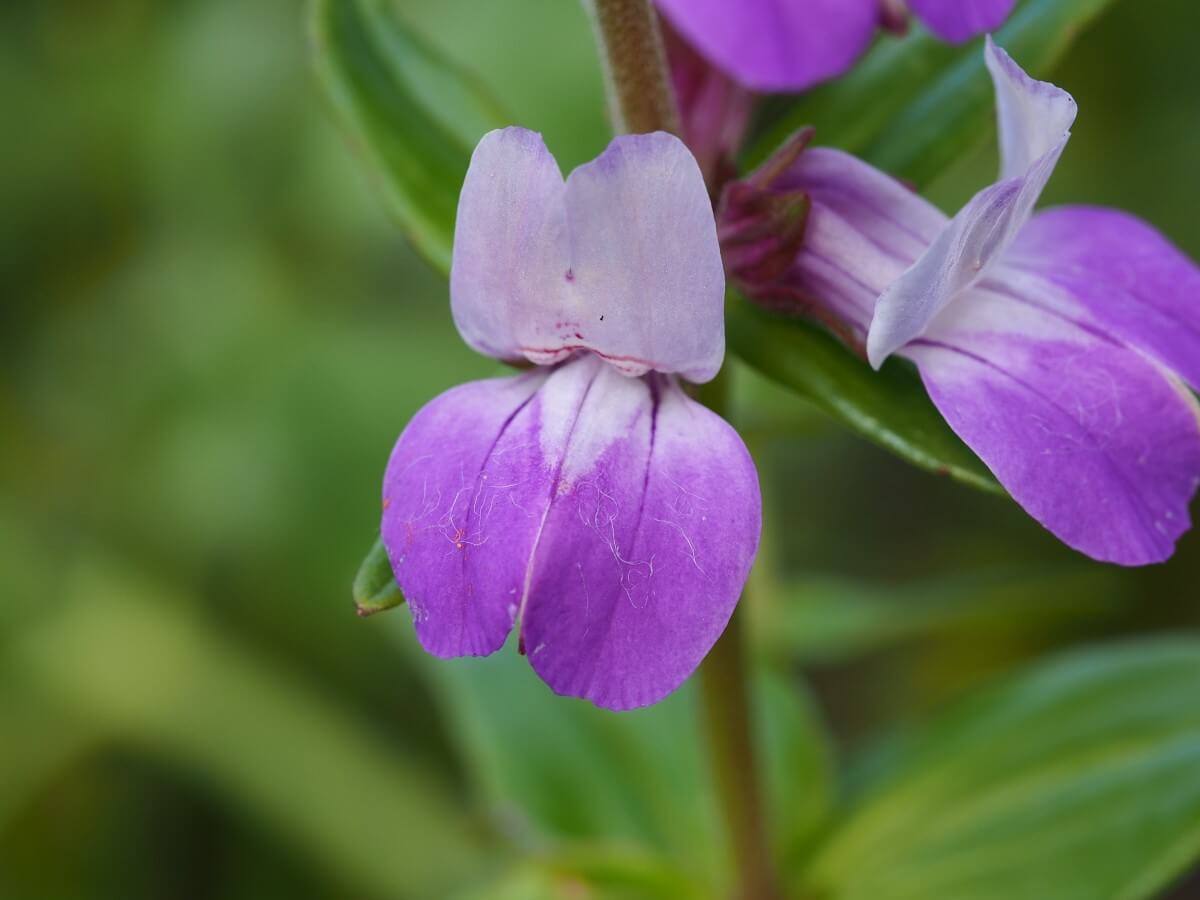
19. Purple Chinese Houses (Collinsia heterophylla)
About:
Also known as innocence, purple Chinese houses (Collinsia heterophylla) are flowering annuals belonging to the plantain family (Plantaginaceae). They grow across California and prefer shadier areas. These flowering plants can grow up to 1.5 feet tall.
Purple Chinese houses flower from mid-spring into early summer. The flowers resemble irises, with purple lower petals and white upper petals with black speckles. In full flower, they resemble pagodas, which inspired their common name.
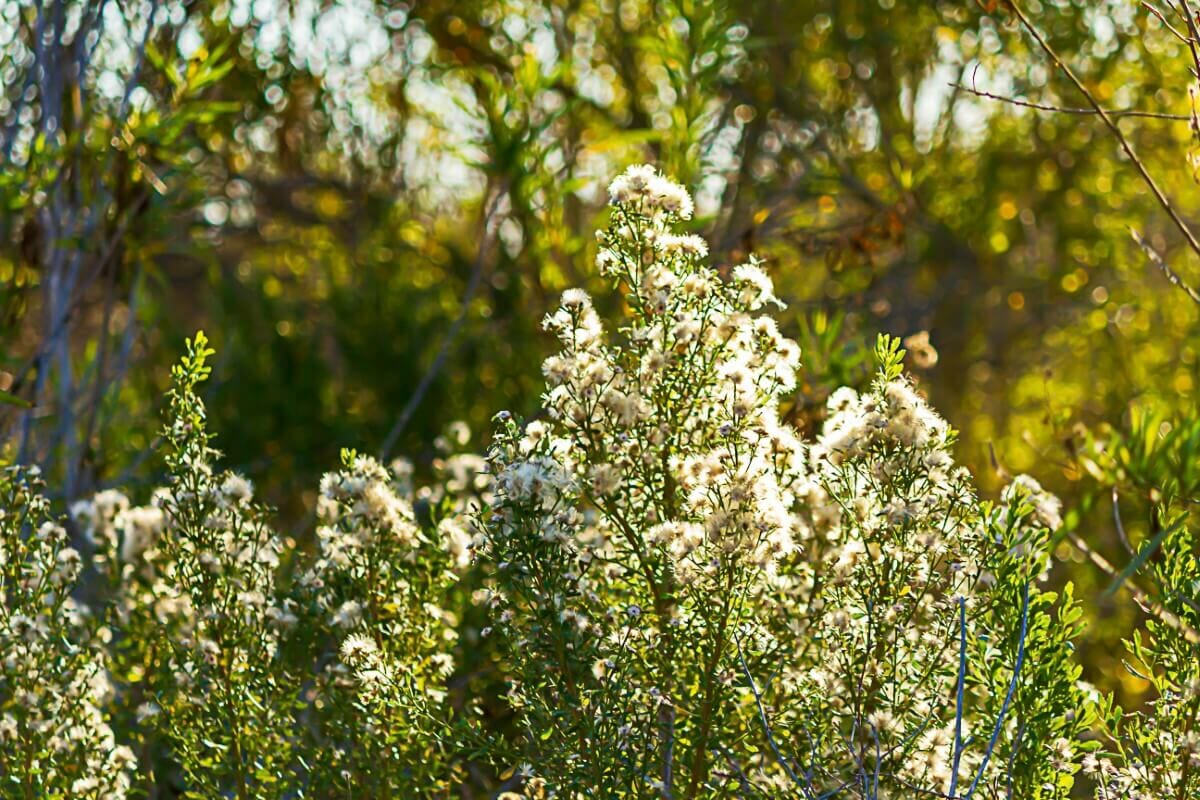
20. Mule Fat (Baccharis salicifolia)
About:
Also known as seepwillow, mule fat (Baccharis salicifolia) is widespread across most of California. These flowering shrubs belong to the daisy family. Mule fat is native to the southwestern United States and parts of Mexico and South America.
Mule fat produces clusters of sticky flower heads with small white flowers with pink or red edges. These shrubs also have blade-like leaves with three noticeable veins and toothed edges. Mule fat is extremely popular with butterflies.
21. Chamise (Adenostoma fasciculatum)
About:
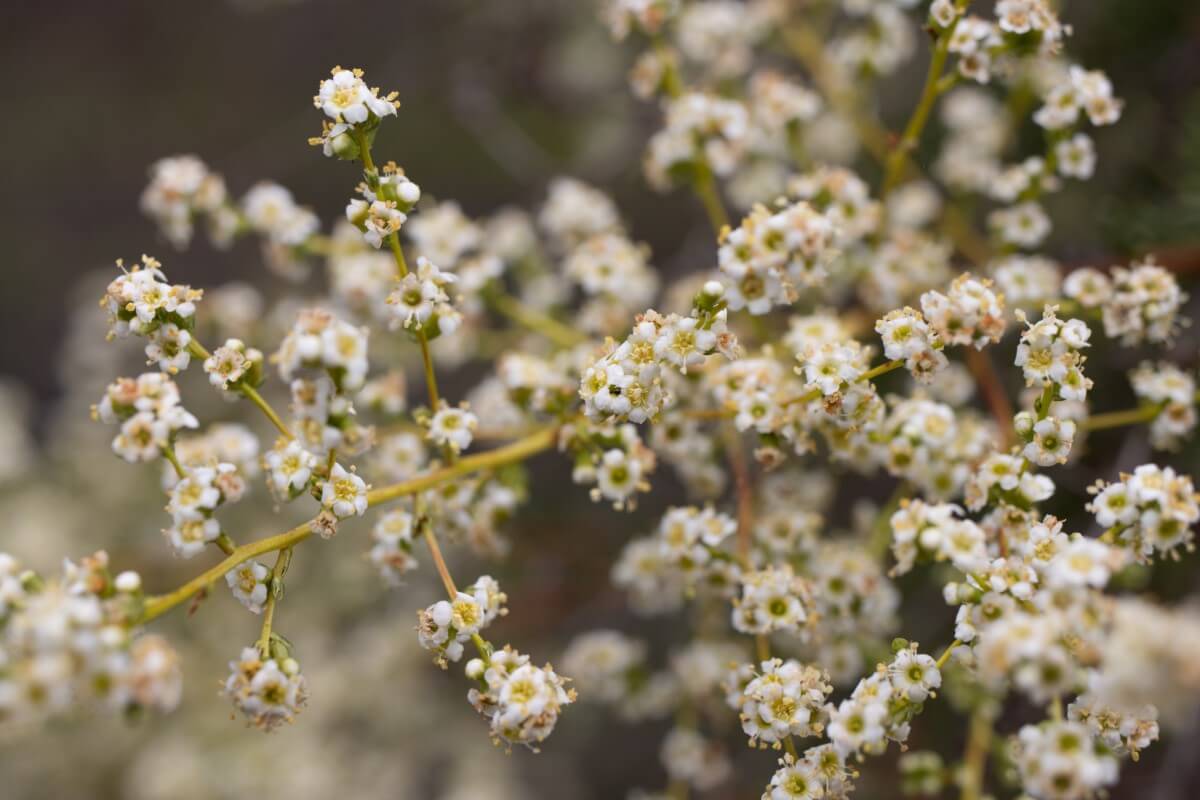
Chamise (Adenostoma fasciculatum) is a flowering shrub from the rose family (Rosaceae). Also known as greasewood, chamise thrives in California’s chaparral habitats and coastal areas.
Chamise has oily dark red stems when young but mature to gray. These spreading branched stems produce masses of small white flowers between April and June. These shrubs can grow up to 13 feet high. Chamise often emerges after wildfires have cleared areas of scrub.
22. Western Goldenrod (Euthamia occidentalis)
About:
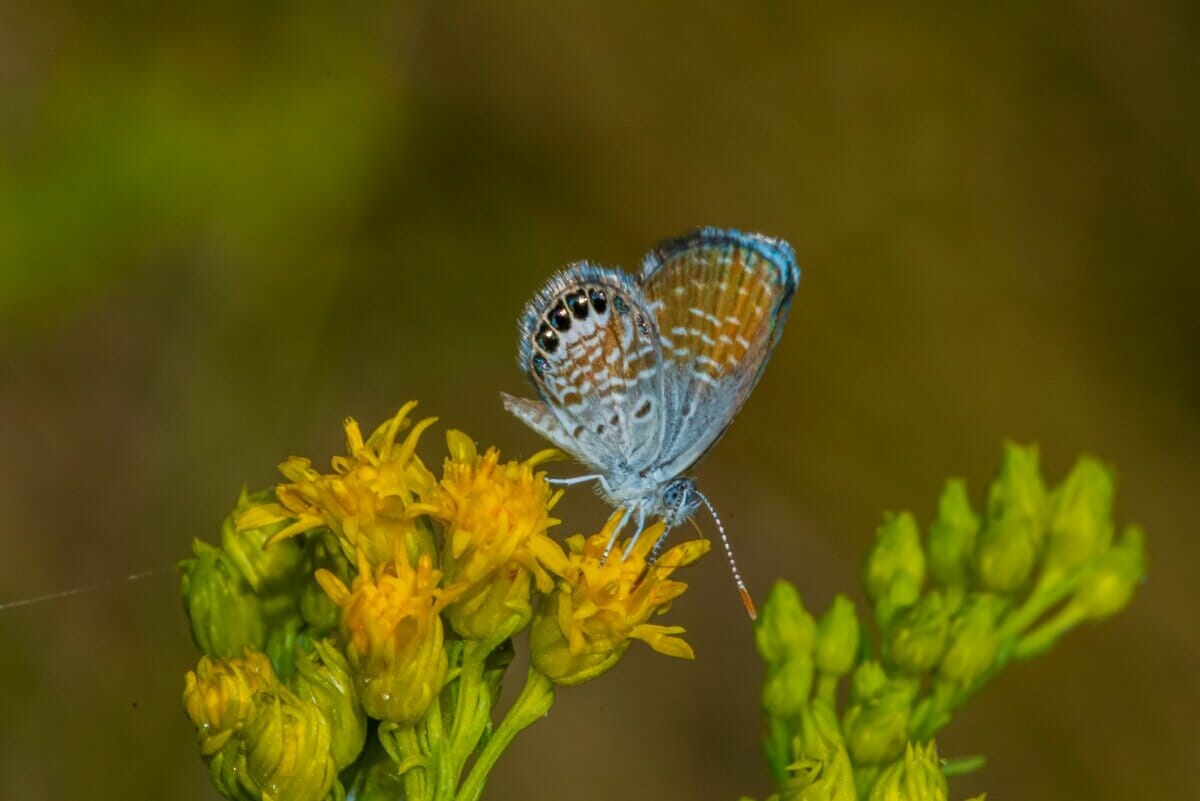
Western goldenrod (Euthamia occidentalis) is a flowering perennial from the daisy family (Asteraceae). It thrives in wetland habitats in the western United States, western Canada, and Baja California.
Western goldenrod produces clusters of small yellow flowers from summer until late fall. Western goldenrod also has thin, lance-shaped foliage that fades from green to brownish green as the plant ages. These perennials can grow up to 7 feet tall and cover the ground in large banks.
23. Lupines (Lupinus spp.)
About:
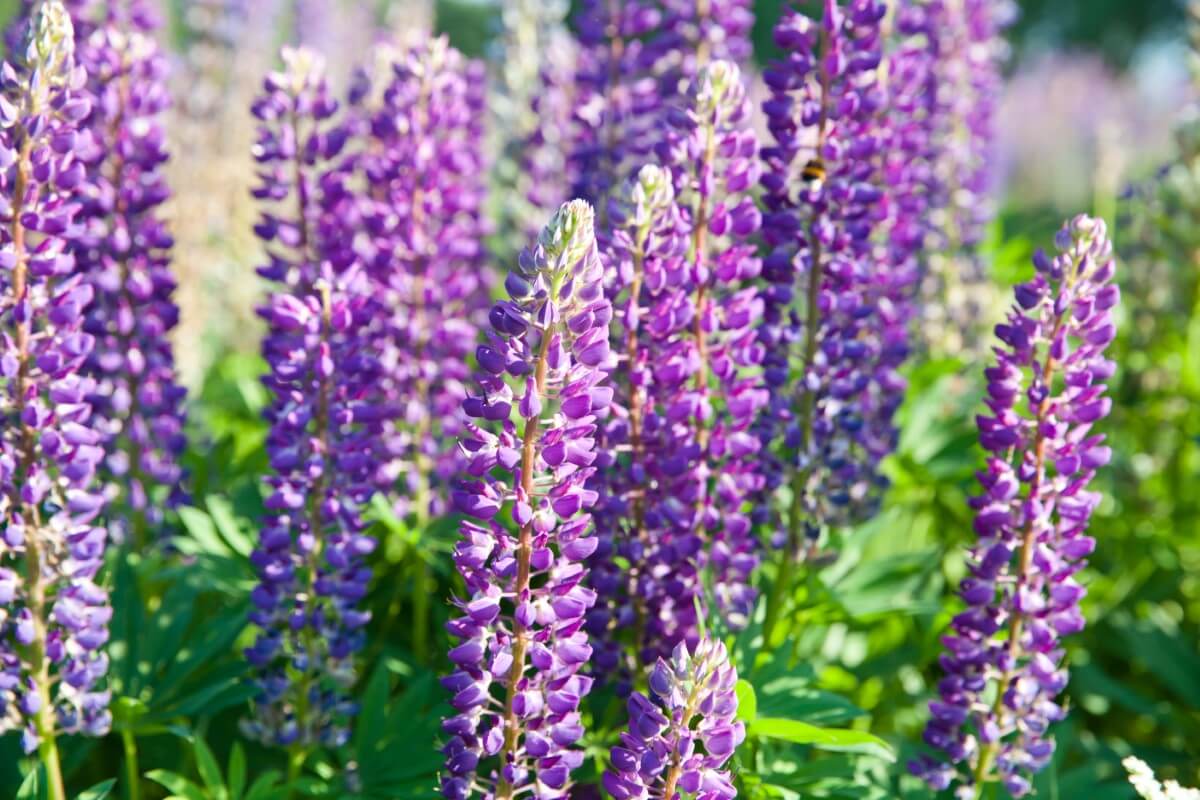
Lupines (Lupinus spp.) is a genus of flowering plants within the legume family (Fabaceae). The Lupinus genus contains about 595 accepted species. Most are concentrated in North and South America, although some lupines also grow in the Mediterranean and North Africa.
Lupines inhabit various habitats across California and can grow to approximately 5 feet high and spread up to 2 feet wide. Lupines produce spikes of colorful flowers similar to other species of legumes.
24. Yellow Yarrow (Eriophyllum confertiflorum)
About:
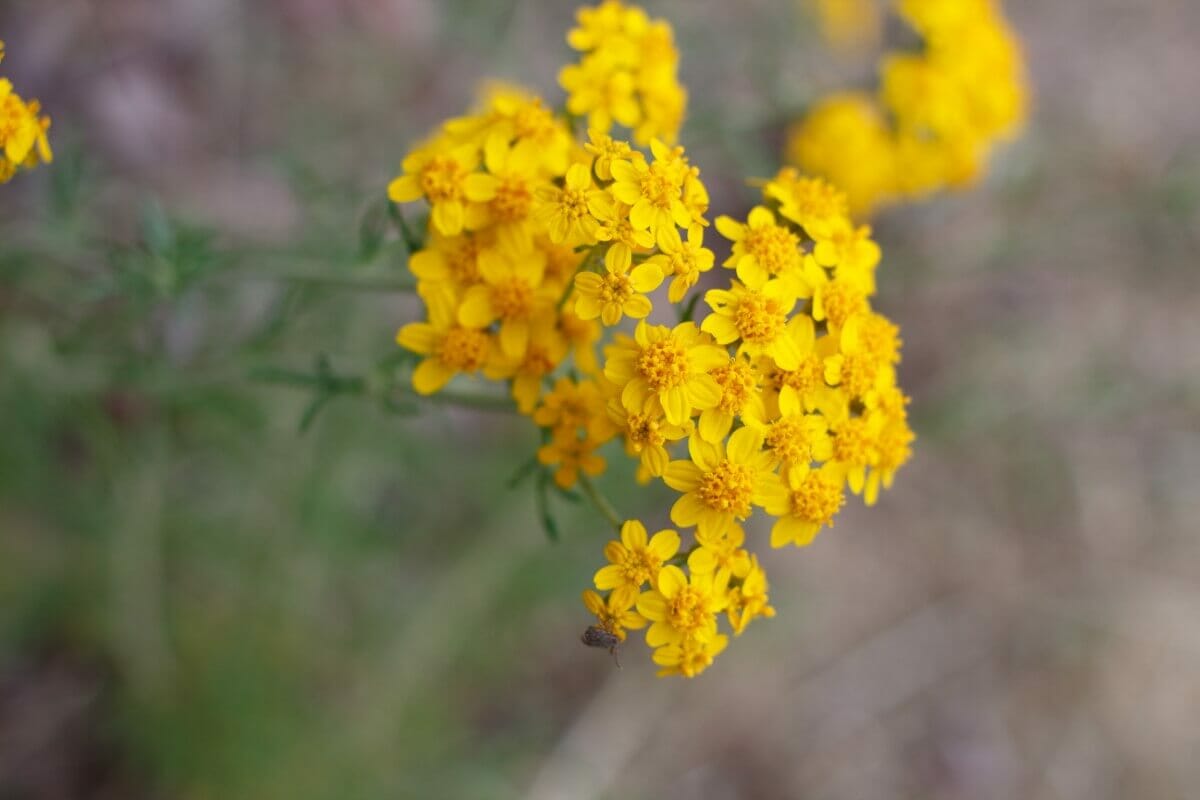
Also known as golden yarrow, yellow yarrow (Eriophyllum confertiflorum) is a flowering plant in the Asteraceae family. This plant is indigenous to California and Baja California in Mexico. It thrives in most habitats throughout its range.
Yellow yarrow produces umbels of bright yellow flowers with central disc florets. Young plants have wooly white hairs on their stems, which turn grayish-green as the plant ages. Yellow yarrow flowers from winter through until midsummer.
25. Red-maids (Calandrinia ciliata)
- Native Status
- Confirmed by Kew
- Kew Record
- Calandrinia menziesii
About:
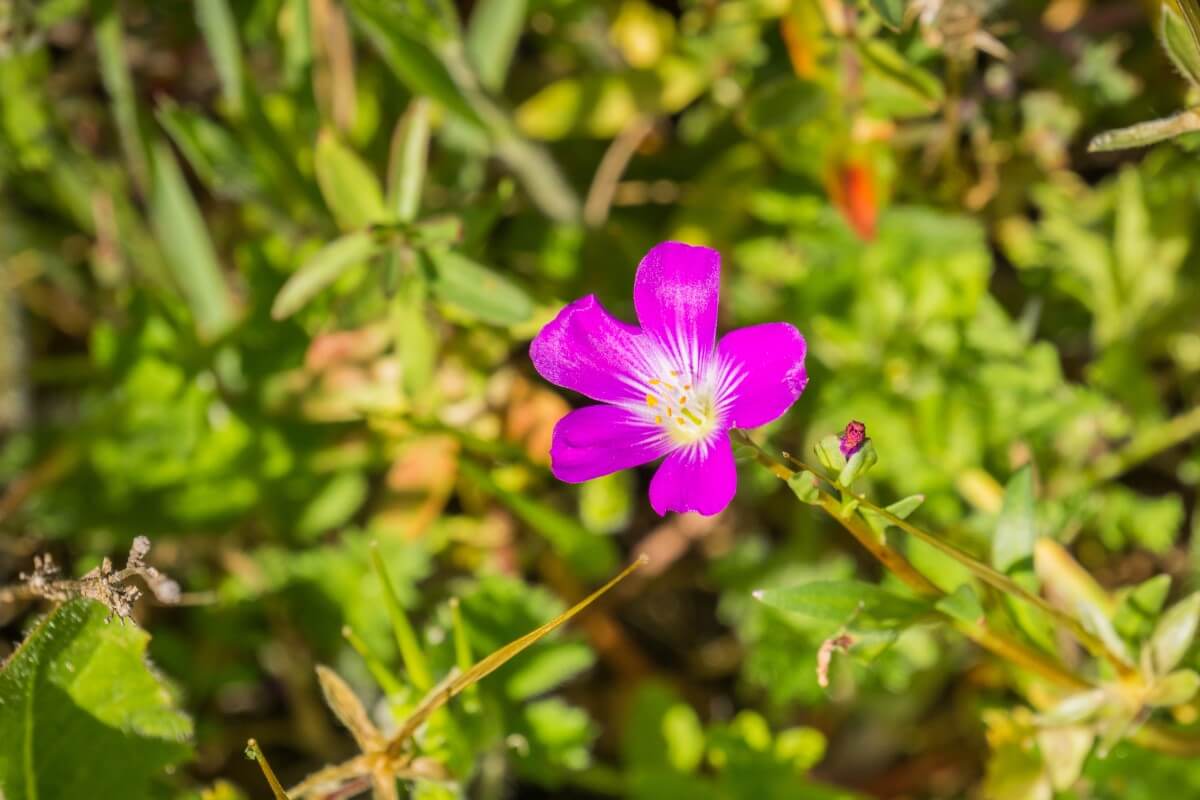
Red-maids (Calandrinia ciliata) are flowering annuals in the Montiaceae family, though Kew files the California plant as Calandrinia menziesii while USDA PLANTS uses Calandrinia ciliata. Also known as fringed red-maids, these flowers are widespread across western North America.
Red-maids can grow up to 16 inches tall, but their form can vary hugely. They produce dark pink or red cup-shaped flowers with a cluster of white stamens in the center. Red-maids also have succulent-like leaves that can grow up to 4 inches long.
26. White Fairy Lantern (Calochortus albus)
About:
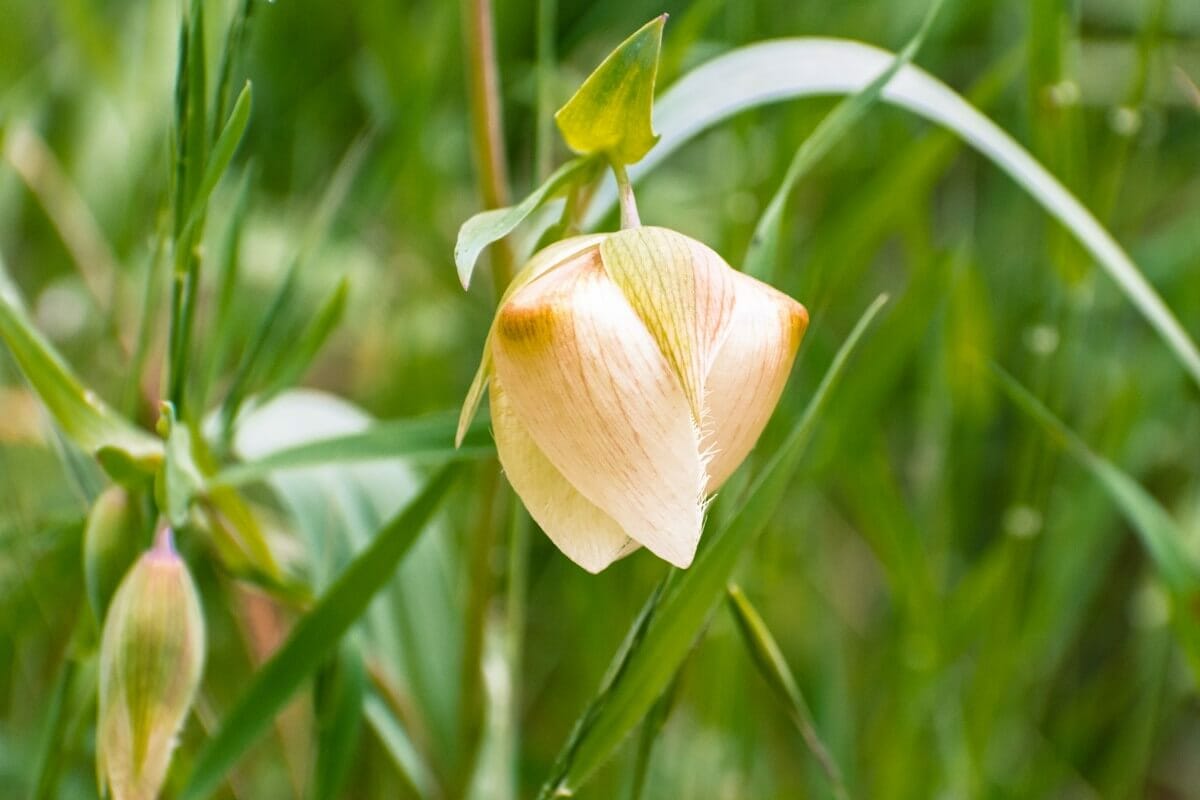
White fairy lanterns (Calochortus albus) are exquisite flowers belonging to the lily family (Liliaceae). They are indigenous to parts of southern California and inhabit areas such as chaparral and woodland regions.
The plants produce nodding globe-like white flowers with tinges of green, pink, or purple on the petals and can grow up to 2 ½ feet tall. White fairy lanterns flower from late March until early July.
27. Blue Elderberry (Sambucus cerulea)
About:
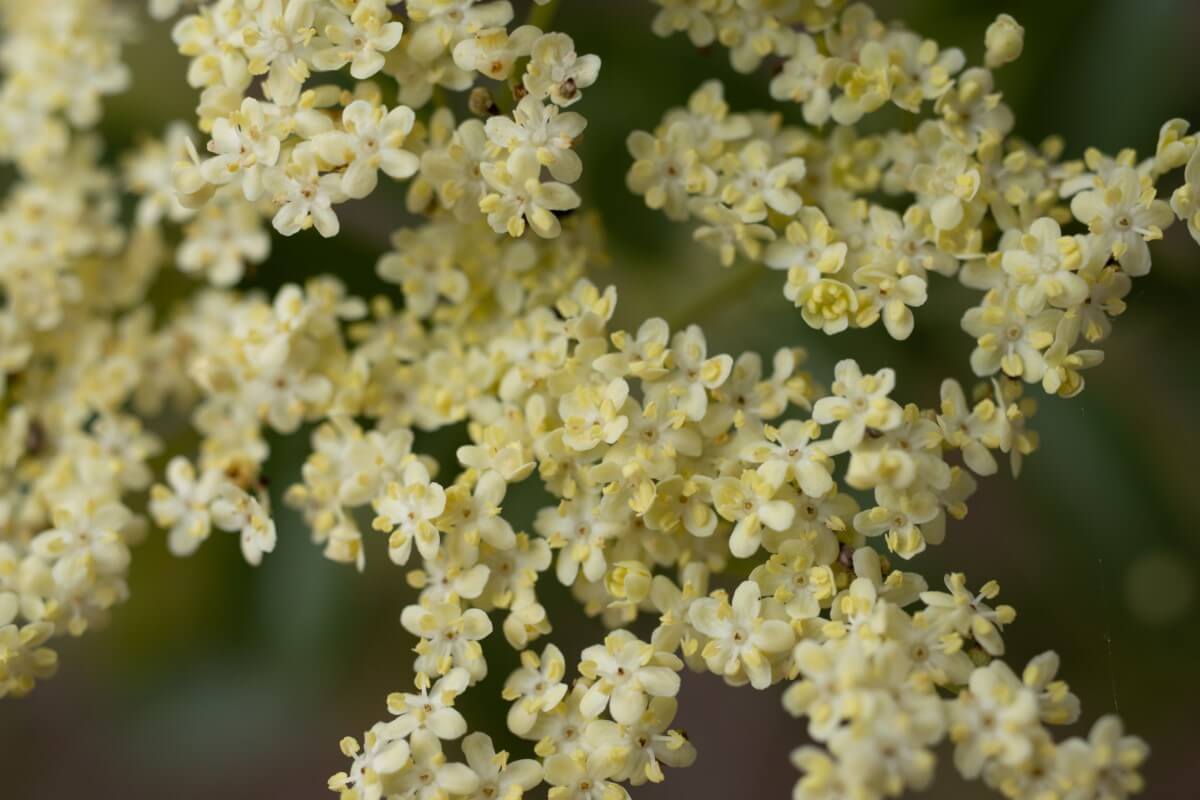
Kew accepts blue elderberry (Sambucus cerulea) as its own species, while USDA PLANTS treats it as a subspecies of the black elderberry (Sambucus nigra). It’s native to the western United States and parts of British Columbia and northwestern Mexico. It belongs to the moschatel family (Adoxaceae).
Blue elderberry plants are deciduous shrubs that produce masses of creamy-white flowers from May until June. The flowers are followed by bluish-black berries with a powdery coating. Blue elderberry bushes can grow up to 30 feet tall and 20 feet wide.
28. Blue Dicks (Dichelostemma capitatum)
About:
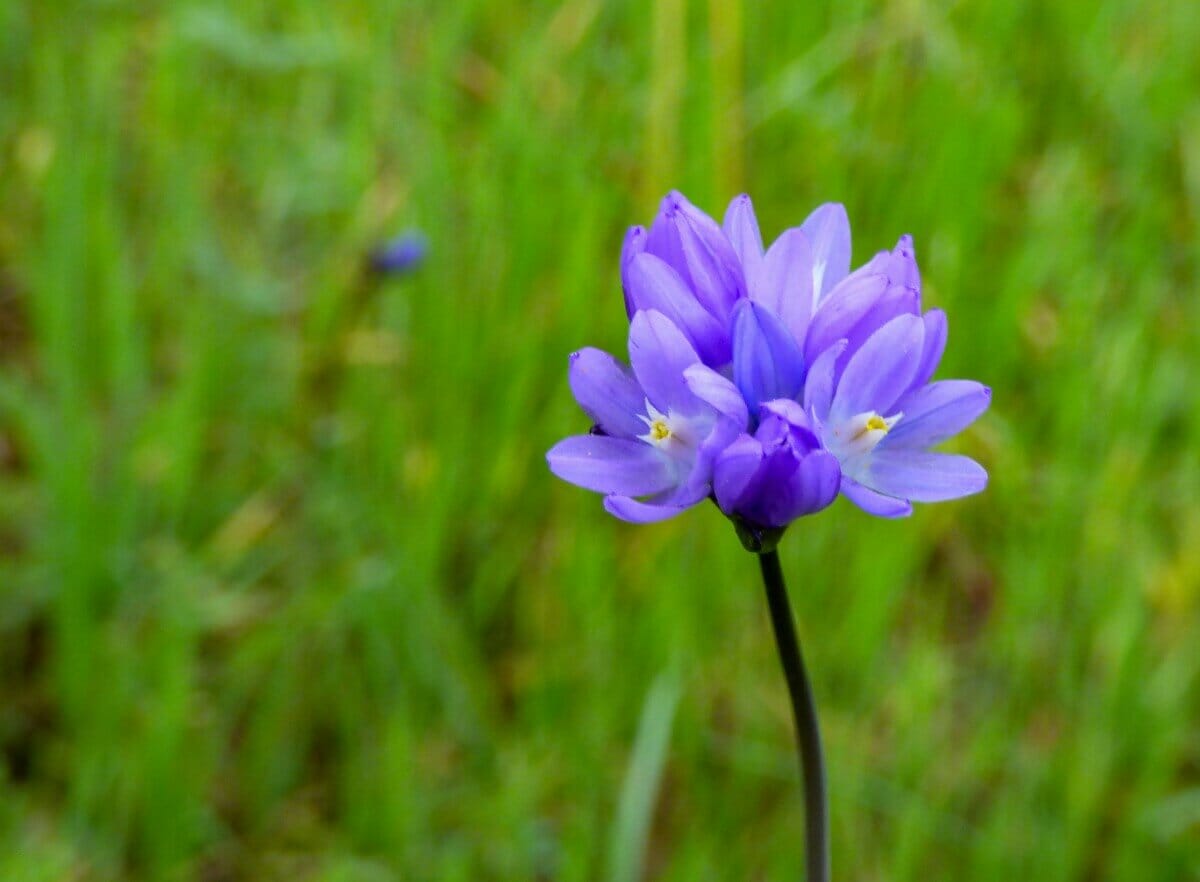
Also known as purpleheads, blue dicks (Dichelostemma capitatum) are herbaceous flowering perennials in the asparagus family (Asparagaceae). Blue dicks are native to California, Arizona, New Mexico, Oregon, Utah, and parts of northwestern Mexico, and thrive in habitats like chaparral and grassland areas.
Blue dicks grow from underground corms and can reach up to 2 feet high. They produce clusters of up to 15 blue or purple flowers with blade-like petals from March until June.
29. Elegant Clarkia (Clarkia unguiculata)
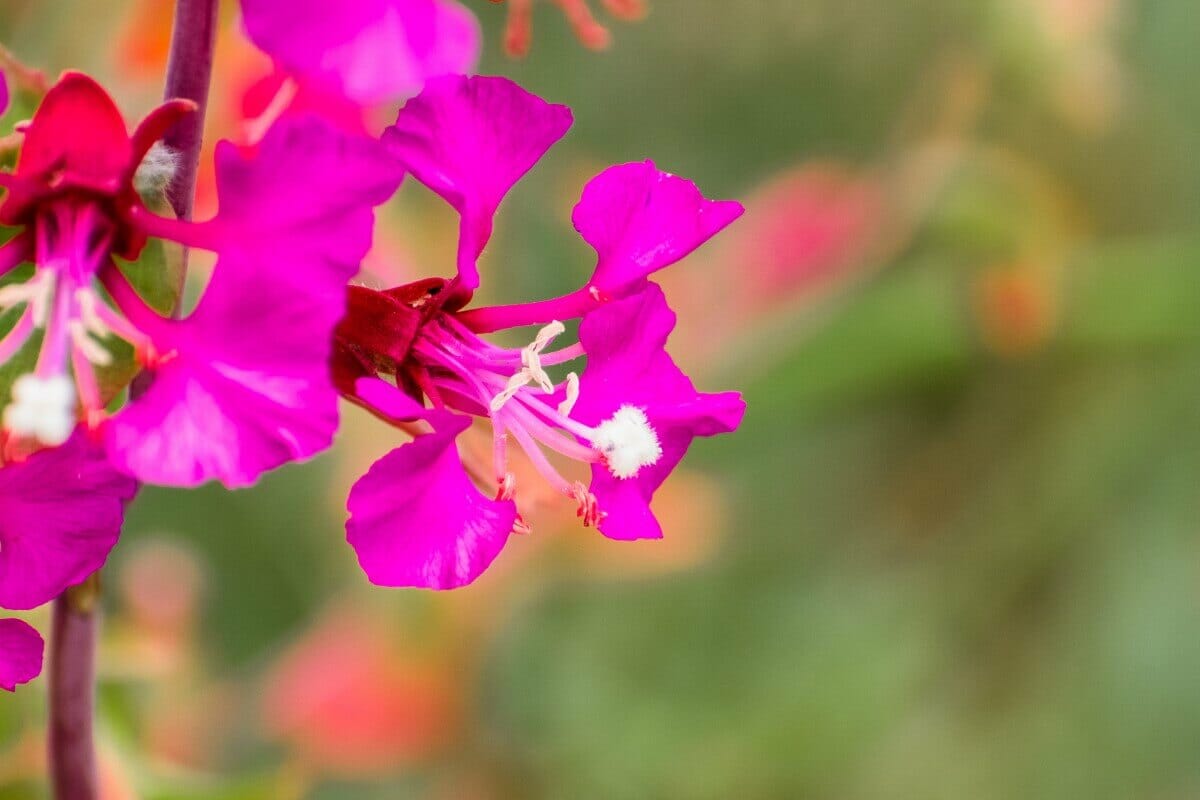
About:
Elegant clarkia (Clarkia unguiculata) is an annual wildflower belonging to the evening primrose family (Onagraceae). Elegant clarkia produces thin stems bearing dramatic pink, purple, or reddish-purple flowers. The fan-shaped petals are widely spaced.
Clarkia is native to California and Baja California and thrives in woodland regions underneath oak or pine trees. Their narrow upright stems can grow up to 3 feet tall. Elegant clarkia favors the Sierra foothills and central coastal parts of California.
30. Clustered Tarweed (Deinandra fasciculata)
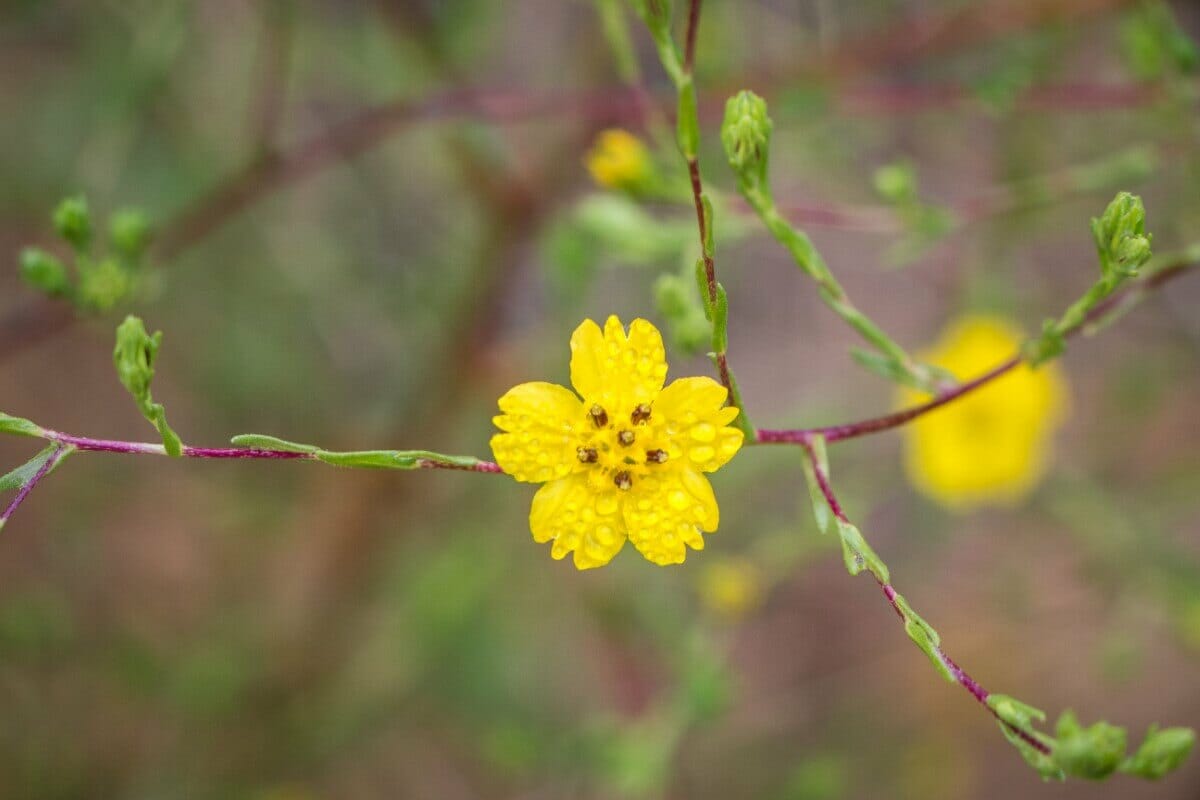
About:
Clustered tarweed (Deinandra fasciculata) is a flowering annual belonging to the aster family (Asteraceae). It’s native to California and parts of Baja California in Mexico. Clustered tarweed thrives in coastal regions, including scrub and woodland areas.
Clustered tarweed can grow over 3 feet tall and produces prominent orange or yellow flowers from May until October. The flowers have five-toothed petals with noticeable grooves surrounding six-disc florets. Clustered tarweed gives off a tar-like odor.
31. California Golden Violet (Viola pedunculata)
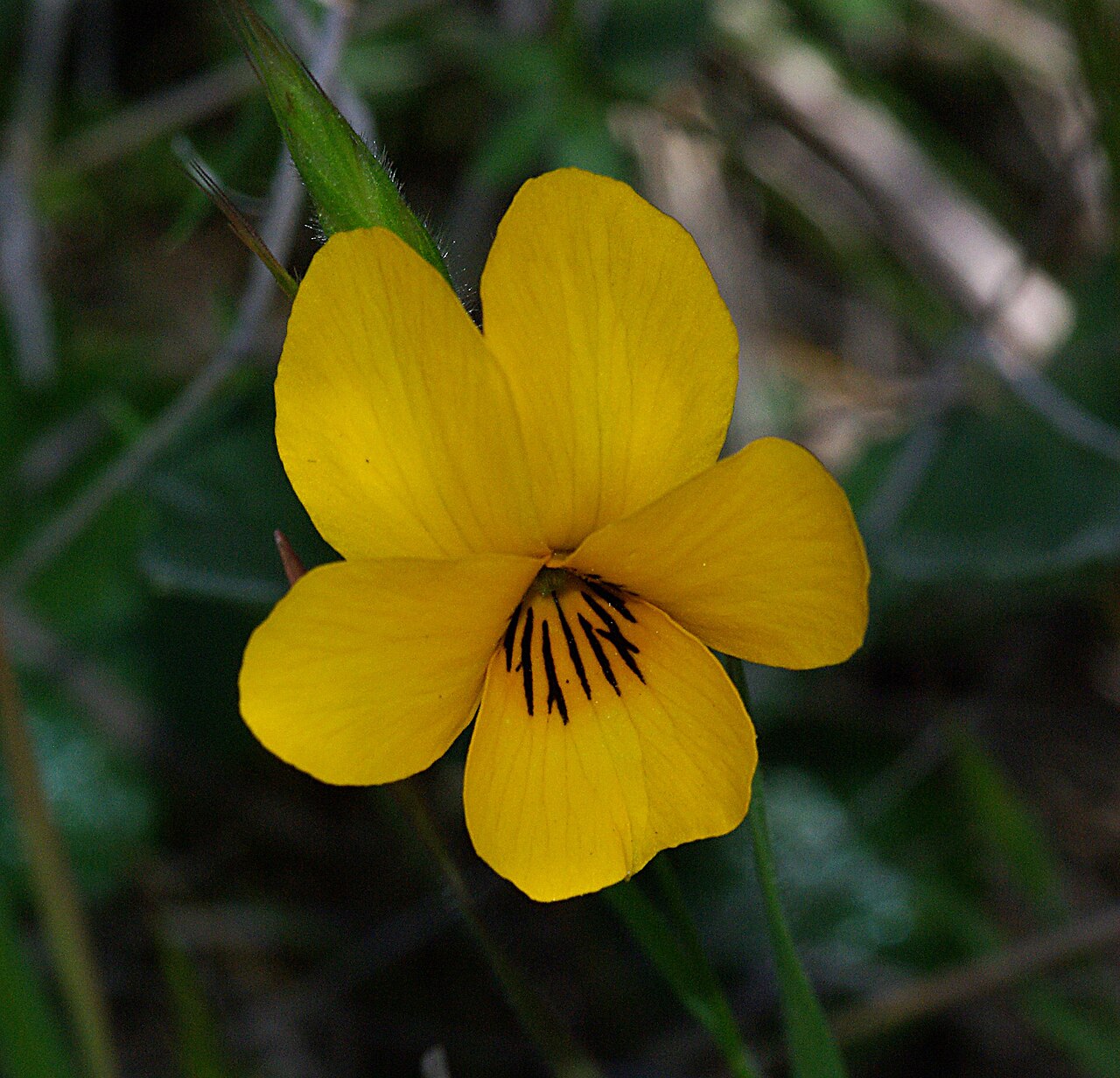
About:
Also known as yellow pansies, California golden violets (Viola pedunculata) are members of the Violaceae family. These gorgeous perennial wildflowers have golden yellow petals with black stripes at the mouth of the nectaries. California golden violets flower from March to April and produce a pleasant fragrance.
California golden violets are native to coastal parts of California and Baja California. These fragrant yellow flowers.
32. Coast Indian Paintbrush (Castilleja affinis)
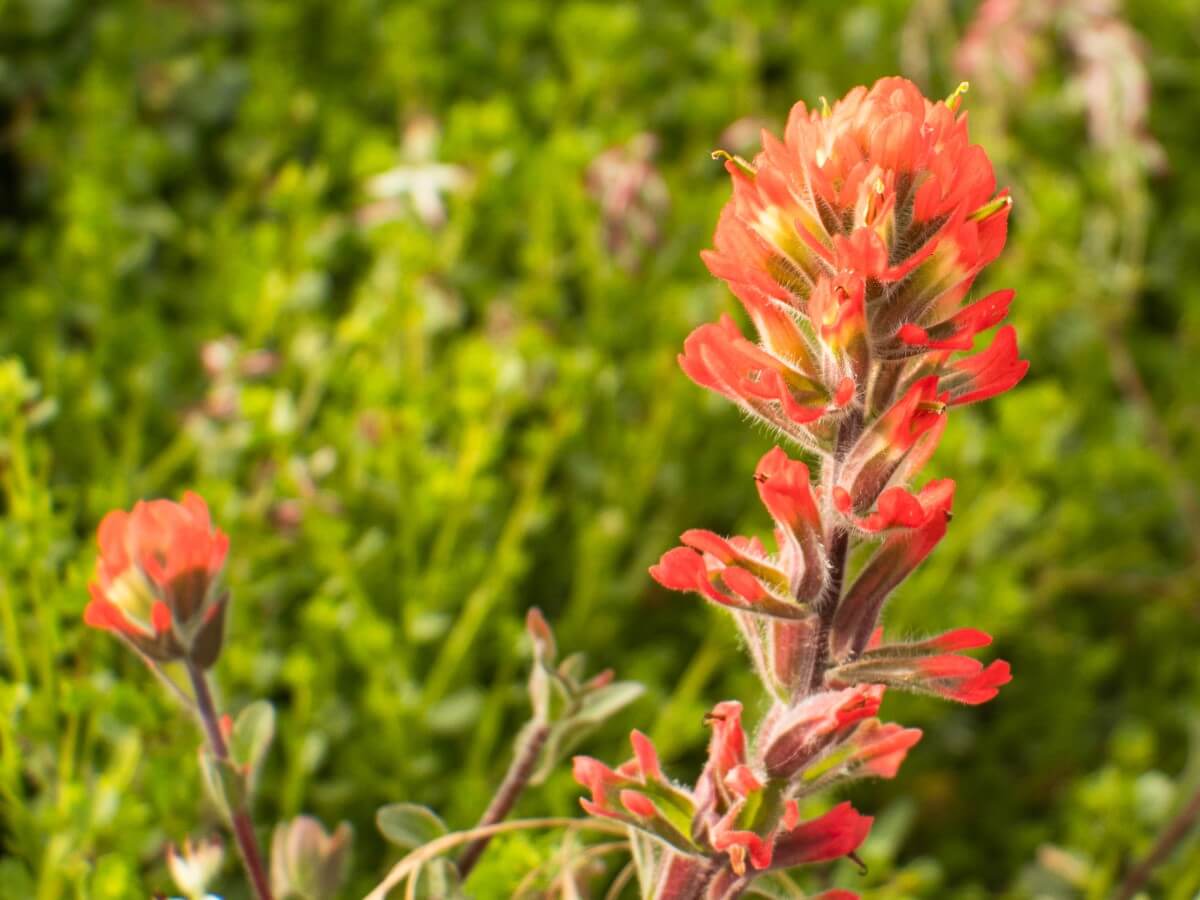
About:
The Coast Indian paintbrush (Castilleja affinis) is a flowering perennial herb belonging to the broomrape family (Orobanchaceae). It grows along the Pacific Coast of North America from Washington down to Baja California. It favors coastal areas and grows on hill slopes.
Coast Indian paintbrush produces bright red and yellow bracts containing long green flowers with red or yellow lines. These flowers can grow up to 2 feet high and have three known subspecies.
33. Largeflower Phacelia (Phacelia grandiflora)
About:
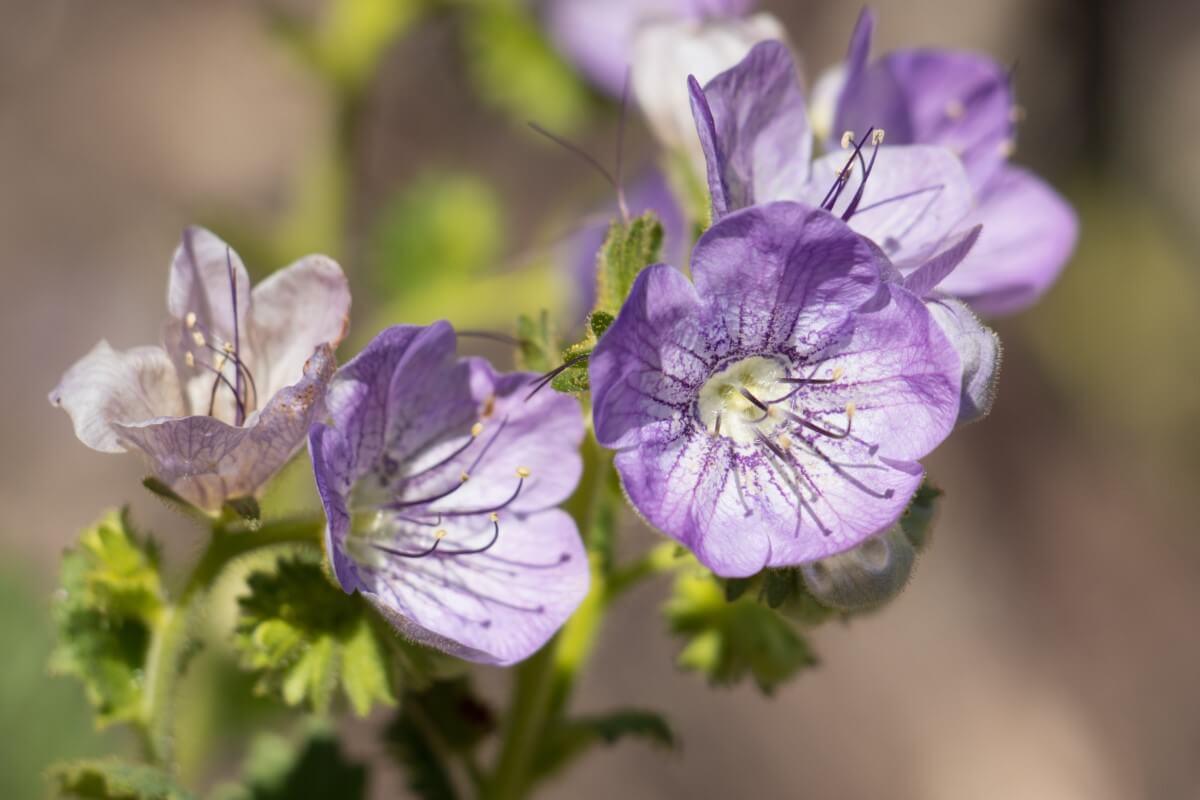
Largeflower phacelia (Phacelia grandiflora) is a showy flowering annual in the borage family (Boraginaceae). Largeflower phacelia grows up to 3 feet tall and produces large bell-shaped blue or purple flowers with white centers. Each flower can be up to 1.5 inches wide.
Largeflower phacelia is native to parts of southern California and Baja California in Mexico. These annuals grow in hilly coastal areas in chaparral and sage scrub habitats. Largeflower phacelia flowers from February through June.
34. Heartleaf Keckiella (Keckiella cordifolia)
About:
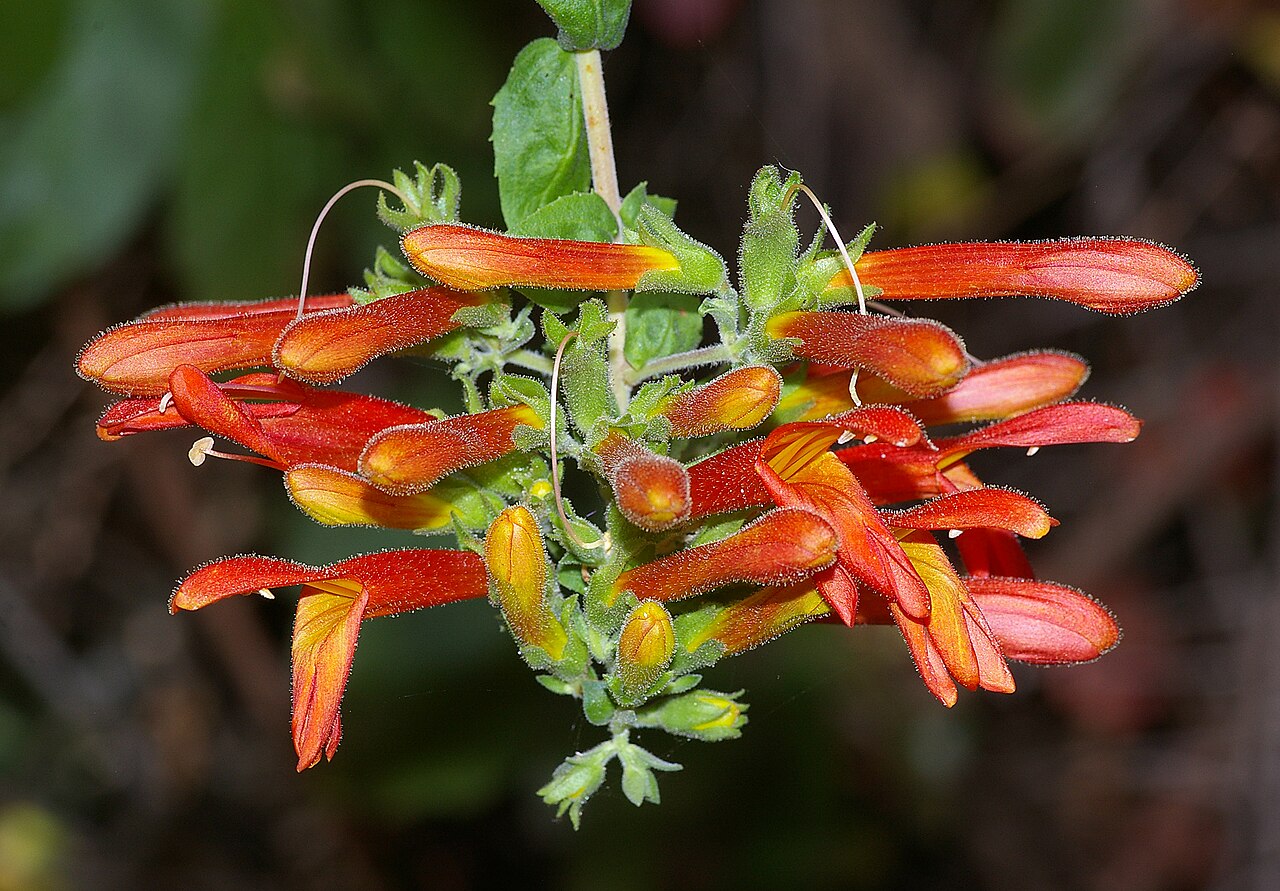
Heartleaf keckiella (Keckiella cordifolia) is a flowering shrub belonging to the plantain family (Plantaginaceae). It’s native to southern California and Baja California and thrives in coastal areas of scrub or woodland.
Heartleaf keckiella produces tubular orange or red flowers with three lower lobes, and two upper lobes joined together. Each flower can be up to an inch long and 1.5 inches wide. Heartleaf keckiella shrubs can grow up to 6.5 feet high.
35. Chaparral Mallow (Malacothamnus fasciculatus)
About:
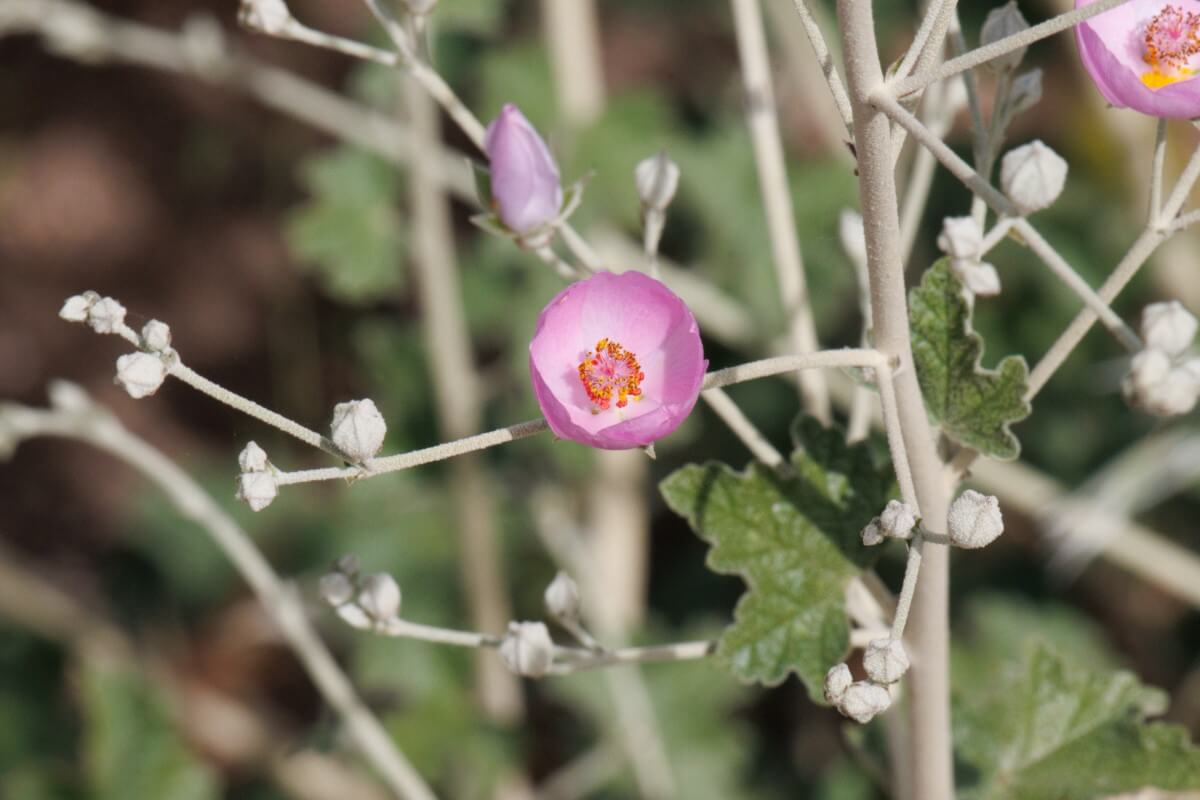
Also known as bush mallow, chaparral mallow (Malacothamnus fasciculatus) is a flowering shrub from the Malvaceae family. Chaparral mallow can grow between 3 and 16 feet high and grows in chaparral or coastal sage scrub habitats. It’s native to southern California and Baja California.
Chaparral mallow flowers during the summer, producing clusters of pale pink cup-shaped flowers. Each shrub can grow thousands of blooms. The stems are covered with brown or white hairs and oval-shaped leaves.
36. Black Sage (Salvia mellifera)
About:
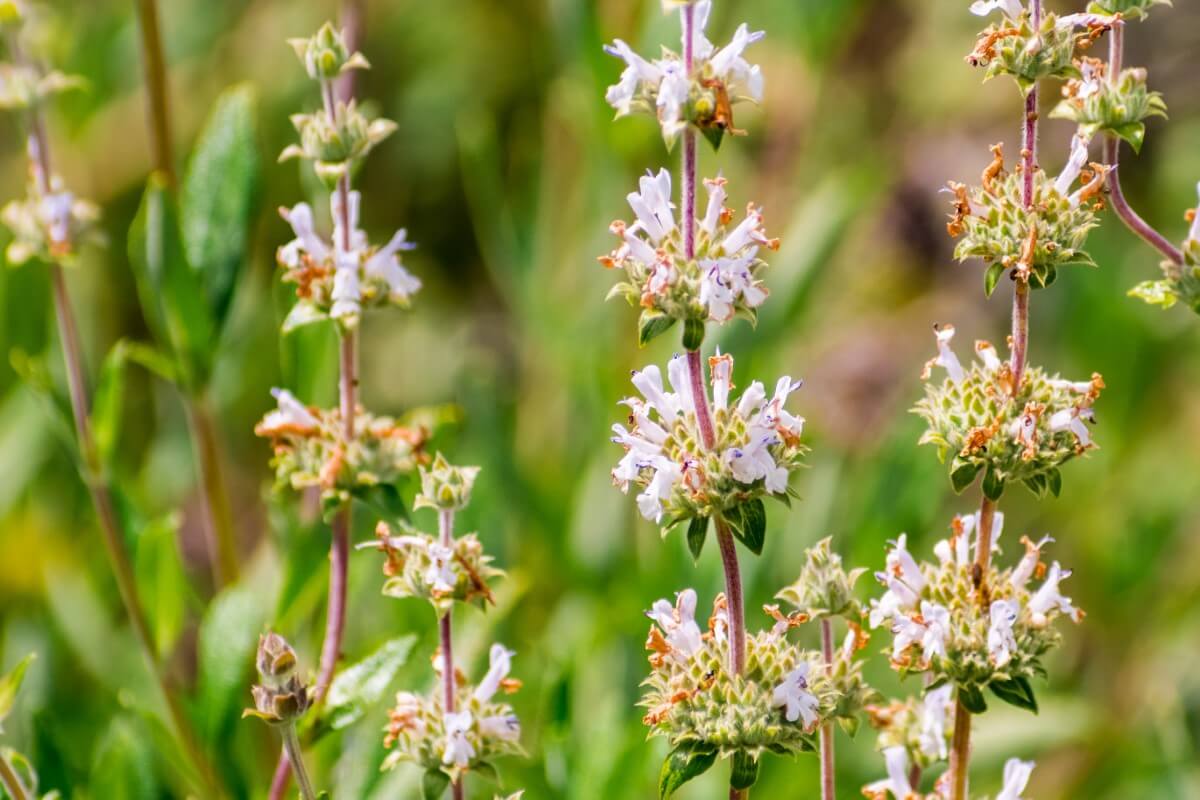
Black sage (Salvia mellifera) is a key perennial plant in the coastal sage scrub ecosystem of southern California. It comes from the Lamiaceae family.
These evergreens produce light blue, purple, or pink flowers from April until July. During periods of drought, the flowers turn darker. Black sage shrubs can grow between 3 and 6.5 feet tall and can spread up to 10 feet wide.
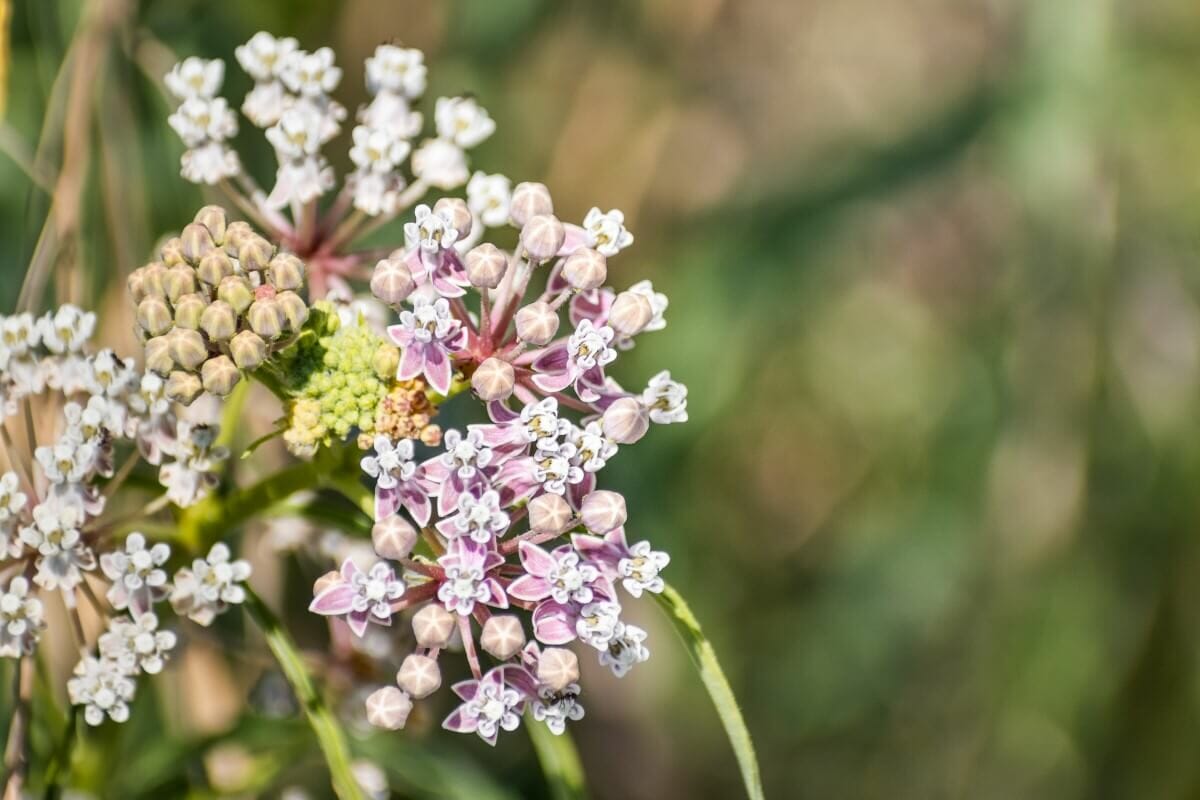
37. Narrowleaf Milkweed (Asclepias fascicularis)
About:
Narrowleaf milkweed (Asclepias fascicularis) is a flowering perennial from the dogbane family (Apocynaceae). From late spring until late summer, narrowleaf milkweed produces round clusters of small pink, purple, and white flowers. It’s a vital food plant for monarch butterflies.
Narrowleaf milkweed is native to the western United States and Baja California. It thrives in various habitats, from desert scrub to woodlands and chaparral. After flowering, narrowleaf milkweed produces brown seeds with silky tails.
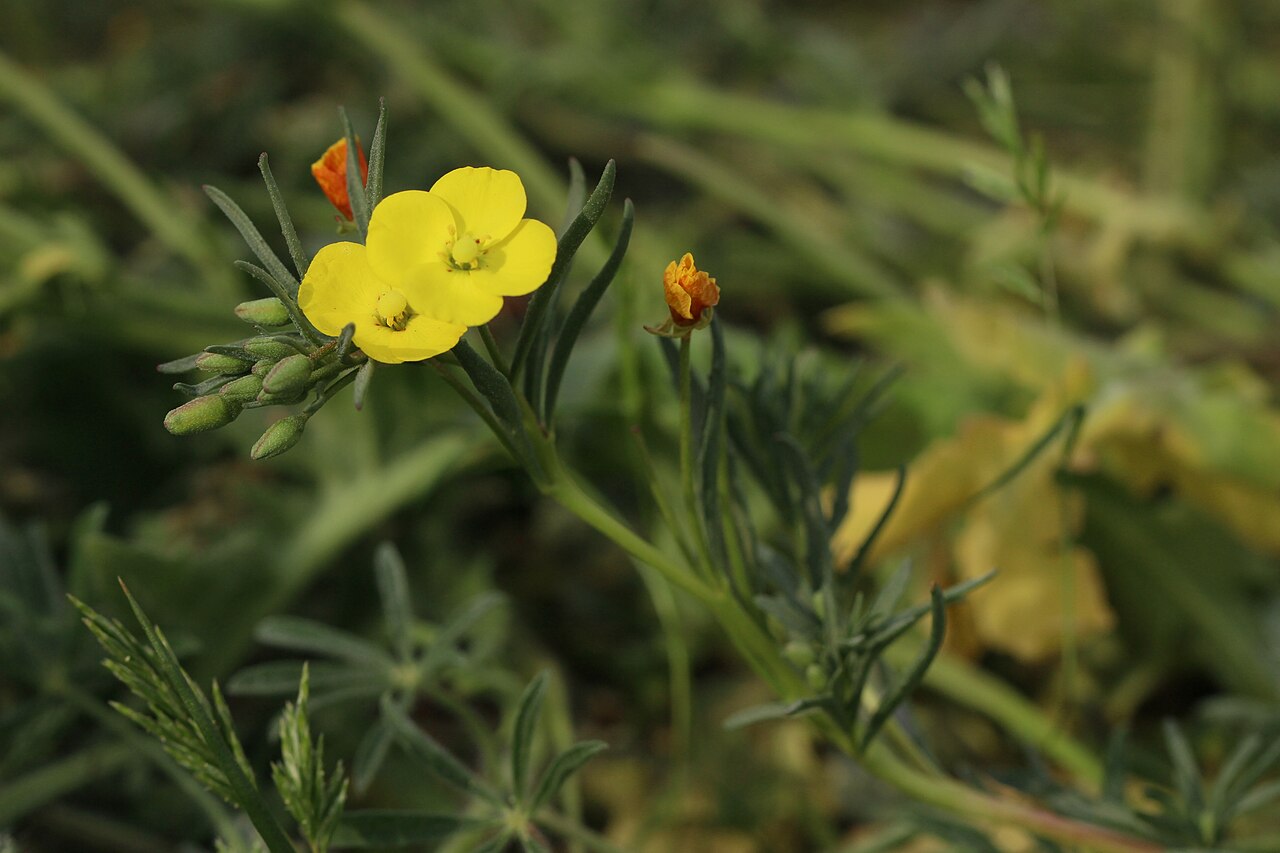
38. Mustard Evening Primrose (Eulobus californicus)
About:
Mustard evening primrose (Eulobus californicus) is a member of the Onagraceae family native to California and Arizona. Also known as California sun cup, it can be easily confused with Camissoniopsis bistorta, another plant nicknamed California sun cup.
Both plants produce bright yellow flowers with four petals. However, Eulobus californicus has several red speckles around the center of each flower, while Camissoniopsis bistorta has four distinct red spots. Eulobus californicus is the larger of the two.
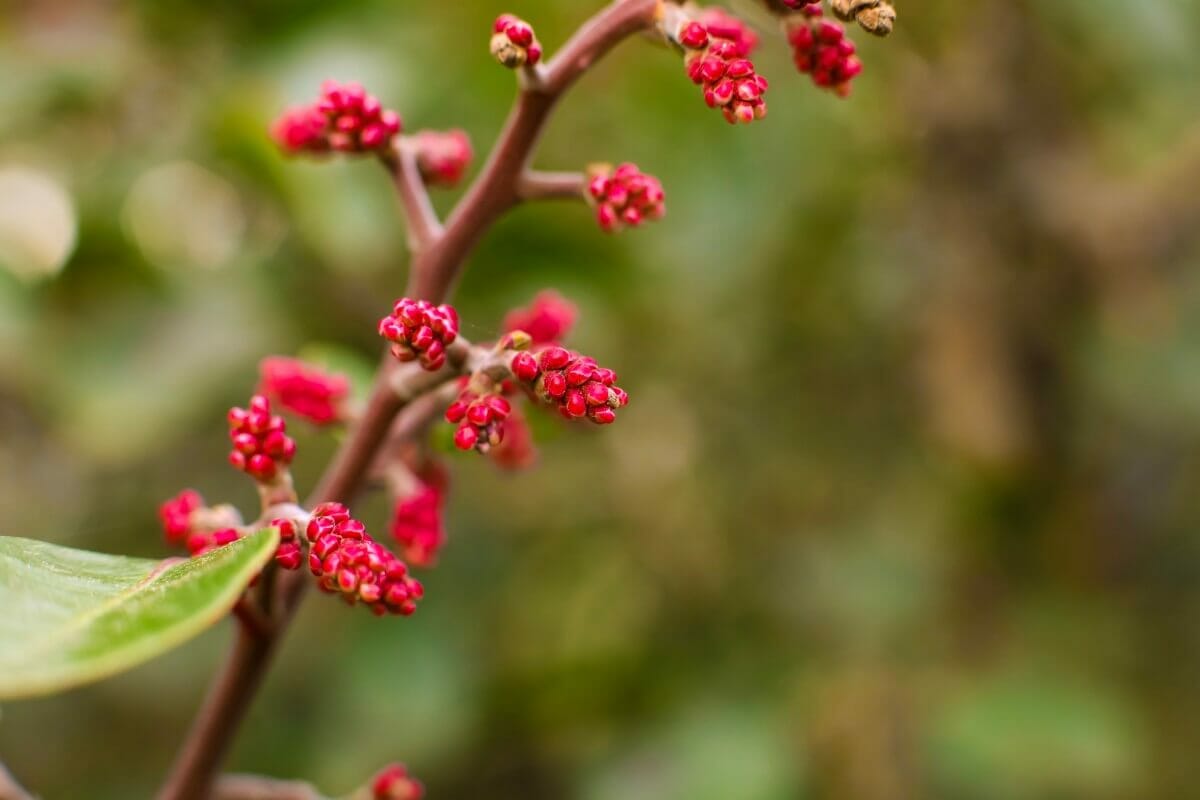
39. Sugar Bush (Rhus ovata)
About:
Sugar bush (Rhus ovata) is a perennial evergreen shrub from the sumac family (Anacardiaceae). It’s native to southern California, Arizona, and northwestern Mexico.
Sugar bushes produce shiny, leathery green leaves up to 3 inches long. These plants produce small pink or white flowers from March until June with prominent yellow stamens. Sugar bushes can grow over 30 feet tall and over 30 feet wide.
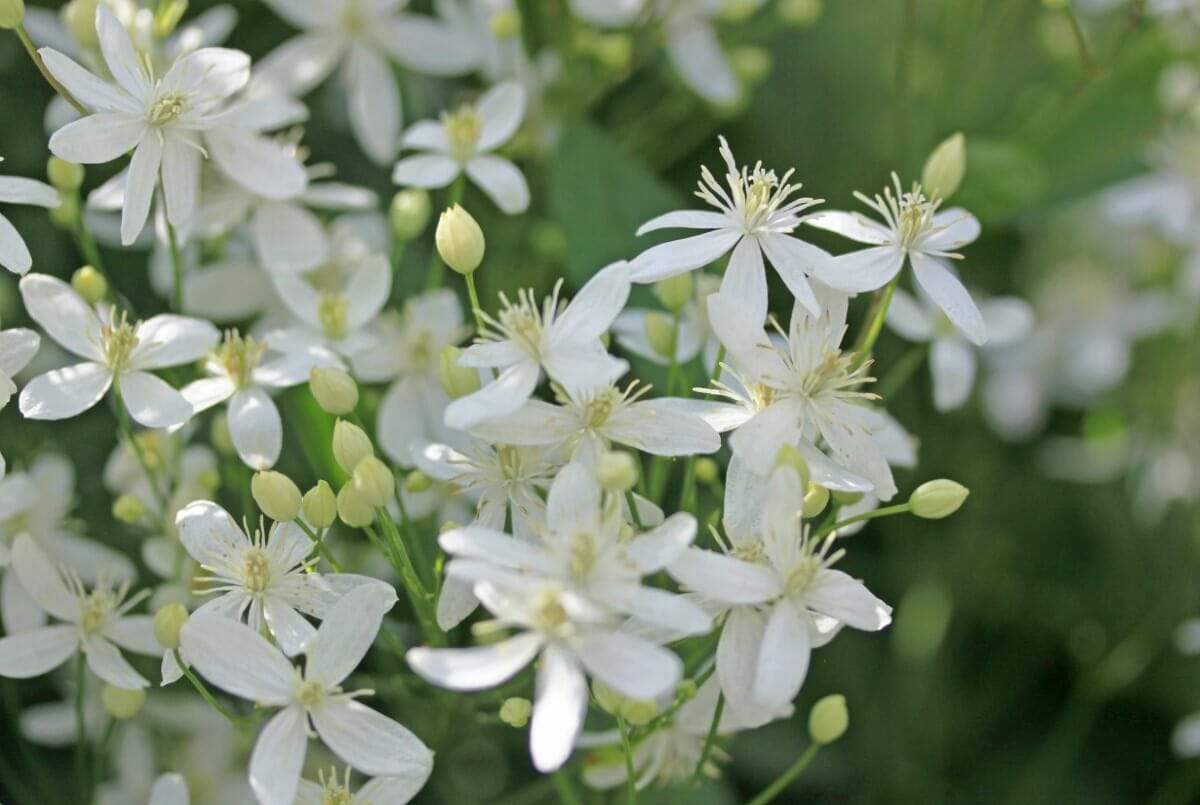
40. Old Man’s Beard (Clematis ligusticifolia)
About:
Old man’s beard (Clematis ligusticifolia) is a deciduous climbing vine from the buttercup family (Ranunculaceae). It’s also known as western white clematis or virgin’s bower. Old man’s beard is widespread across the western United States, including California.
Old man’s beard can grow up to 30 feet high and approximately 6 feet wide. It flowers from mid-spring until late summer, producing masses of creamy-white blooms. Each flower gives off an aromatic scent and sports several long cream-colored stamens.
41. Winecup Clarkia (Clarkia purpurea)
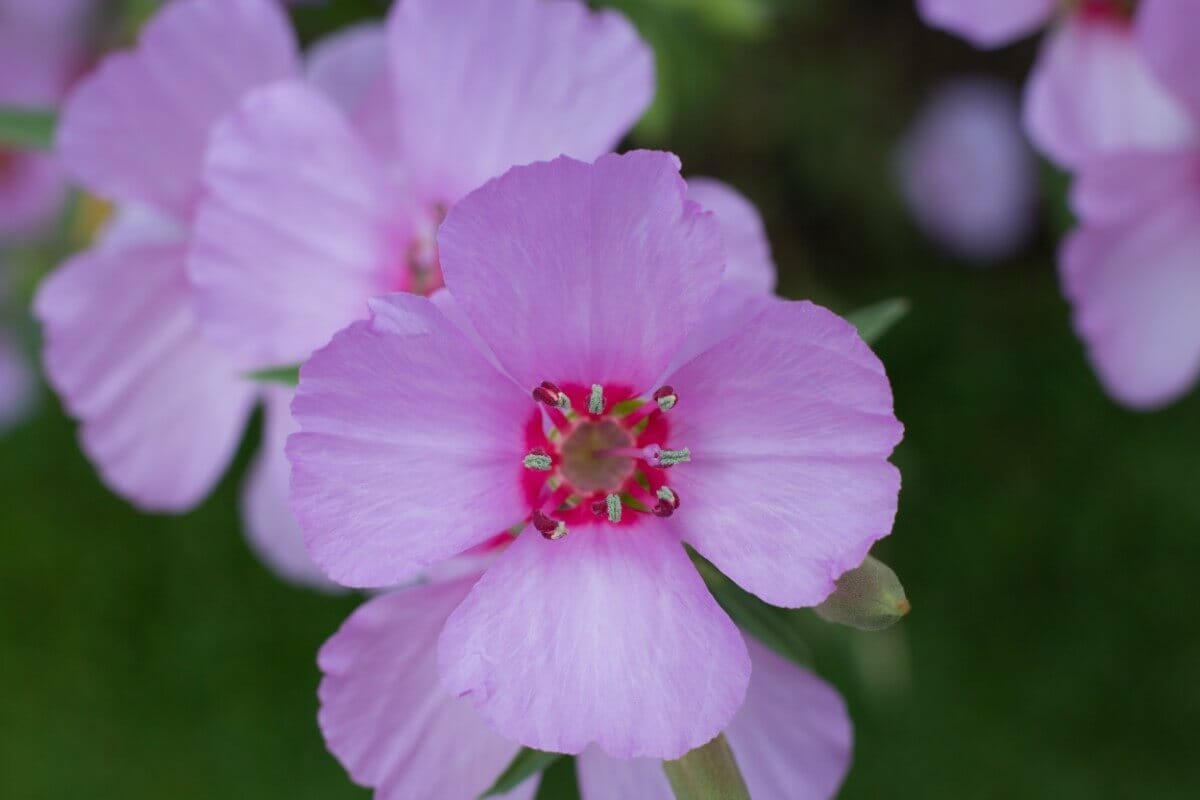
About:
Winecup clarkia (Clarkia purpurea) is a wildflower belonging to the evening primrose family (Onagraceae). It’s native to much of western North America, including Arizona, California, Oregon, and Washington. It’s found in habitats across California apart from deserts.
Winecup flowers produce large cup-shaped dark red, pink, or purple flowers with four notched petals. These wildflowers emerge from red stems that can grow up to 3 feet tall. Its seeds are widely used in commercial wildflower seed mixes.
42. Chia Sage (Salvia columbariae)
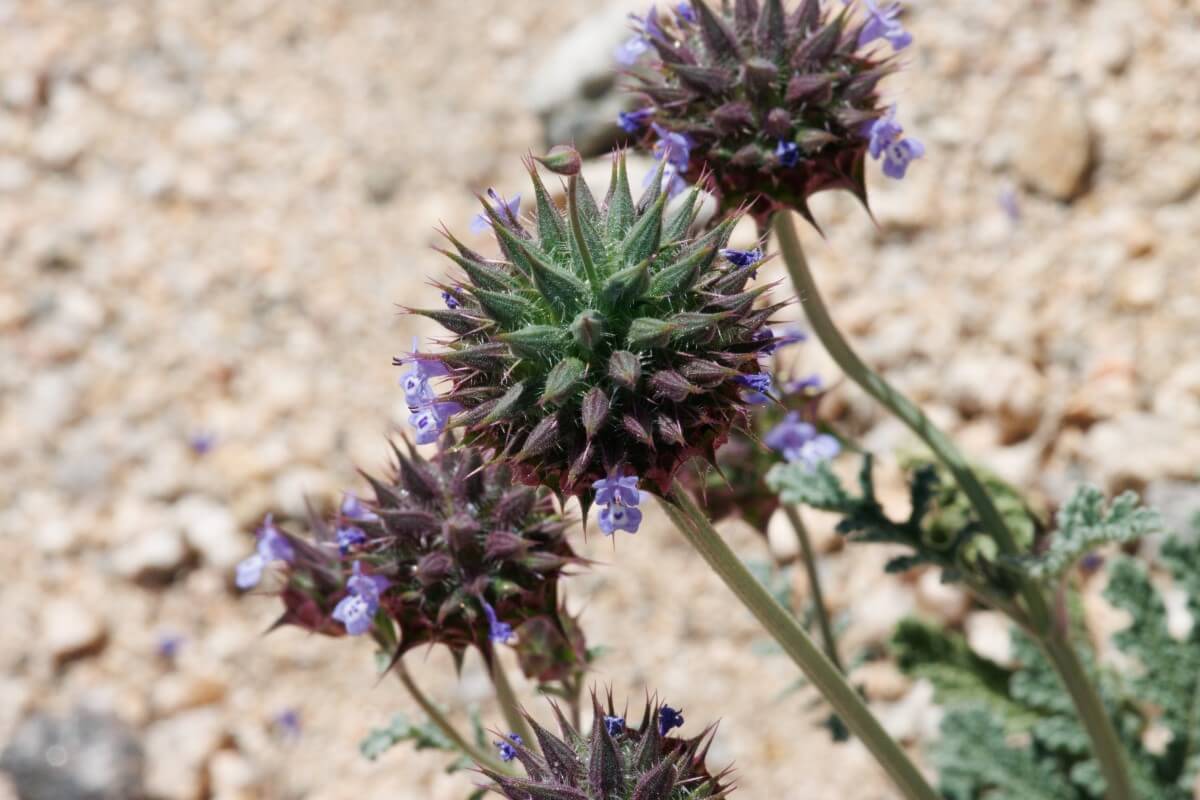
About:
Chia sage (Salvia columbariae) is a member of the Lamiaceae family native to the southwestern United States. Like its close relative Salvia hispanica, chia sage produces chia seeds, a significant food source for Native American societies. These seeds are still used today.
Chia sage grows up to 20 inches tall and produces stems bearing one or two clusters of pale blue flowers. The flowers emerge from round black calyxes.
43. Western Blue-eyed Grass (Sisyrinchium bellum)
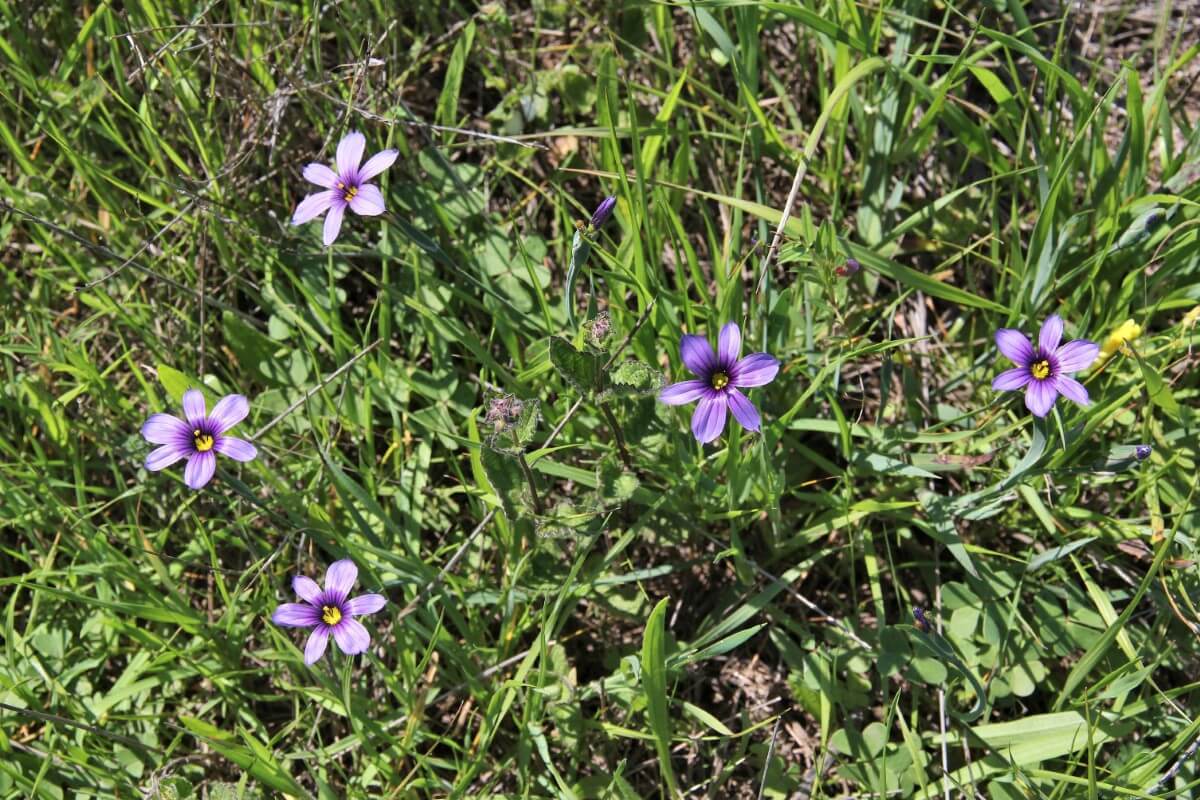
About:
Western blue-eyed grass (Sisyrinchium bellum) is a flowering perennial from the iris family (Iridaceae). Western blue-eyed grass is native to California, Oregon, and Baja California. It thrives in moist grasslands and woodlands.
Western blue-eyed grass produces tufted grass-like leaves and stems that can grow up to 2 feet high. From late spring until midsummer, western blue-eyed grass has purple or blue flowers with dark purple stripes and yellow centers.
44. Telegraph Weed (Heterotheca grandiflora)
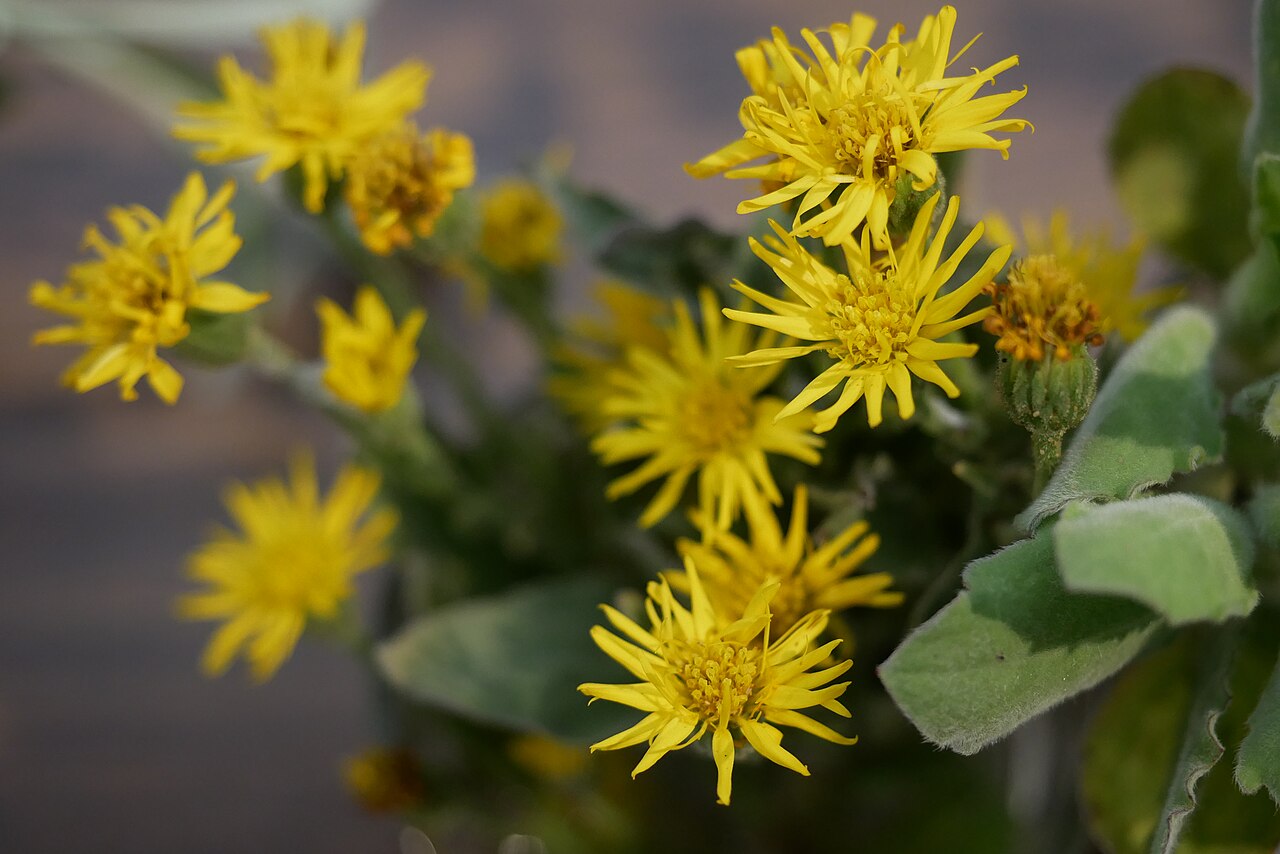
About:
Also known as silk-grass goldenaster, telegraph weed (Heterotheca grandiflora) is a flowering annual from the sunflower family (Asteraceae). It’s native to California, Arizona, Nevada, Utah, and Baja California. This prolific plant often grows along roadsides.
Telegraph weed produces golden yellow flowers with yellow central florets. The stems can grow up to 40 inches high and are covered with bristly-lobed leaves. After flowering, the flowers give way to round, fluffy seed heads.
45. Coastal Tidy-tips (Layia platyglossa)
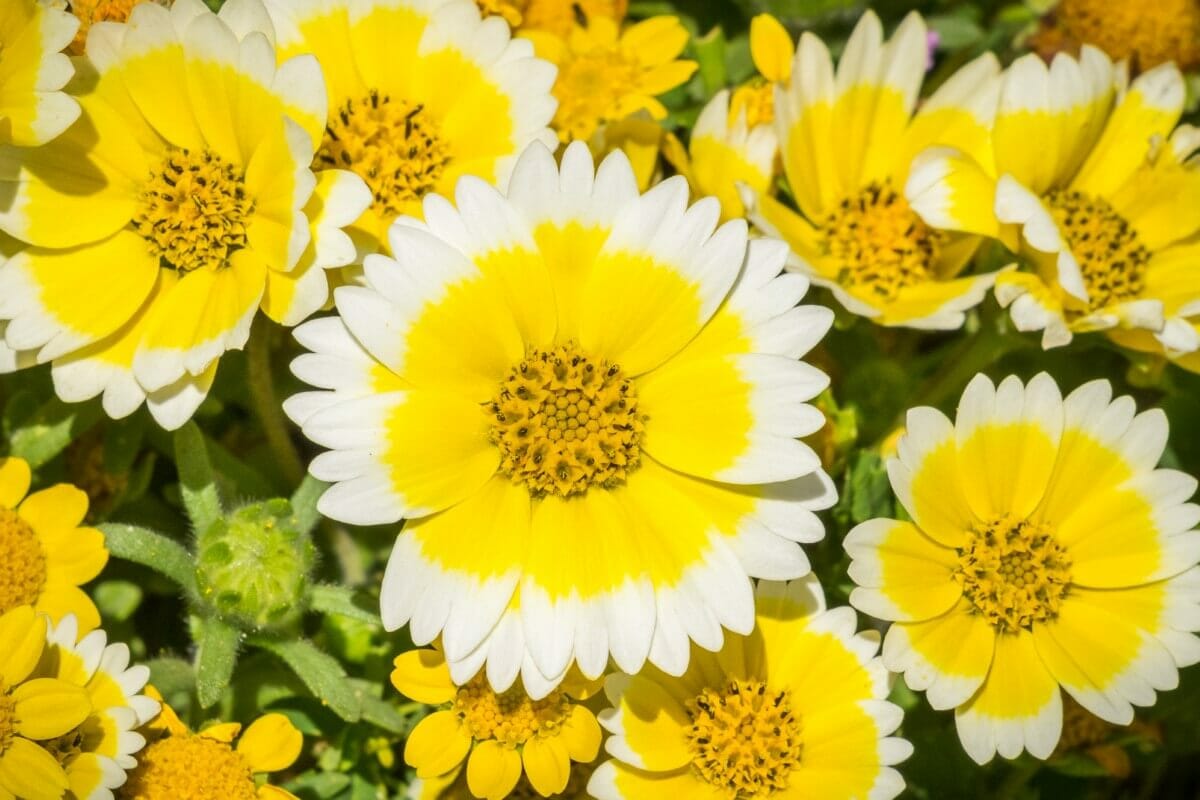
About:
Coastal tidy-tips (Layia platyglossa) are charming annual wildflowers from the aster family (Asteraceae). Coastal tidy-tips are native to California, Arizona, Utah, and Baja California. These wildflowers thrive in deserts, coastal sage scrub, and chaparral habitats.
Coastal tidy-tips bloom from March until June and have bright yellow petals ringed with white surrounding yellow central florets. These plants also have narrow, hairy leaves. Coastal tidy-tips grow up to a foot high and spread up to 12 inches wide.
46. Bush Poppy (Dendromecon rigida)
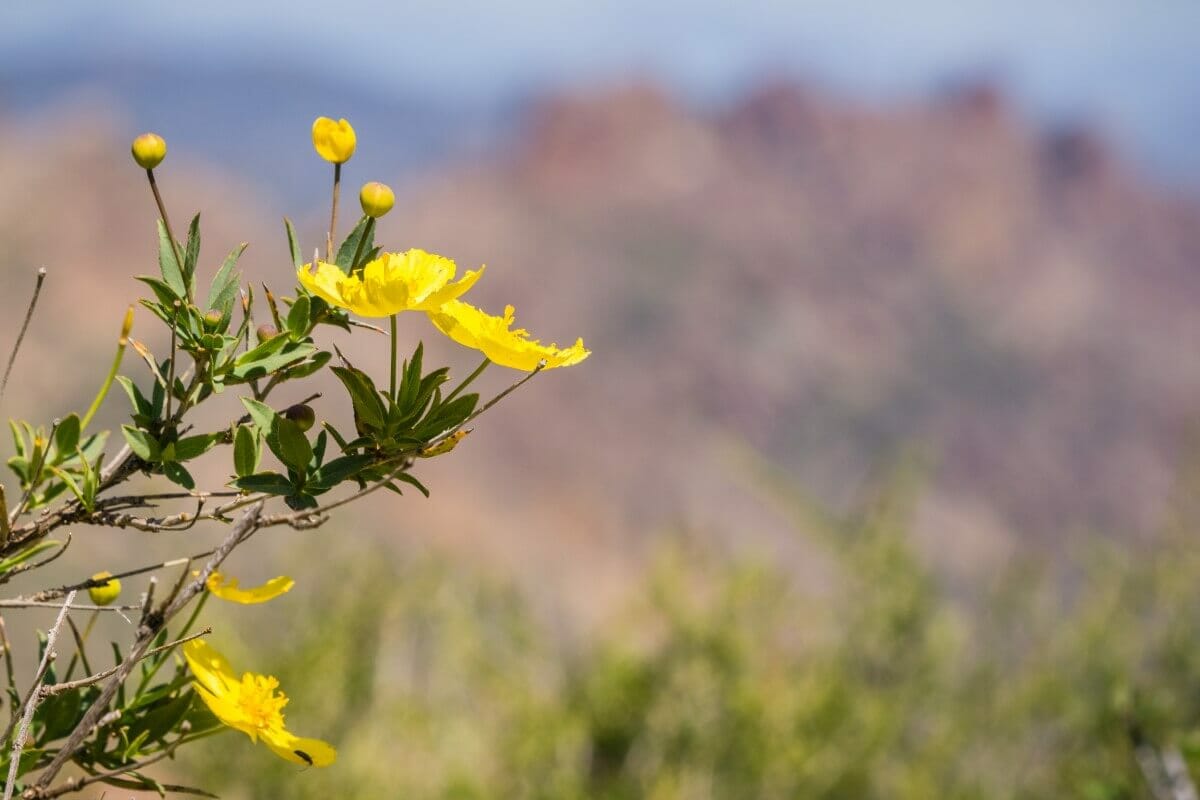
About:
The bush poppy (Dendromecon rigida) is a perennial shrub from the Papaveraceae family. The bright yellow flowers have four petals and can be almost 3 inches wide. Bush poppies flower from April until June.
These poppies grow throughout California and Baja California. Bush poppies can grow on mountain foothills or in scrub and woodland areas. These shrubs can grow up to 10 feet tall and have long, fine-toothed leaves.
47. Leafy Daisy (Erigeron foliosus)
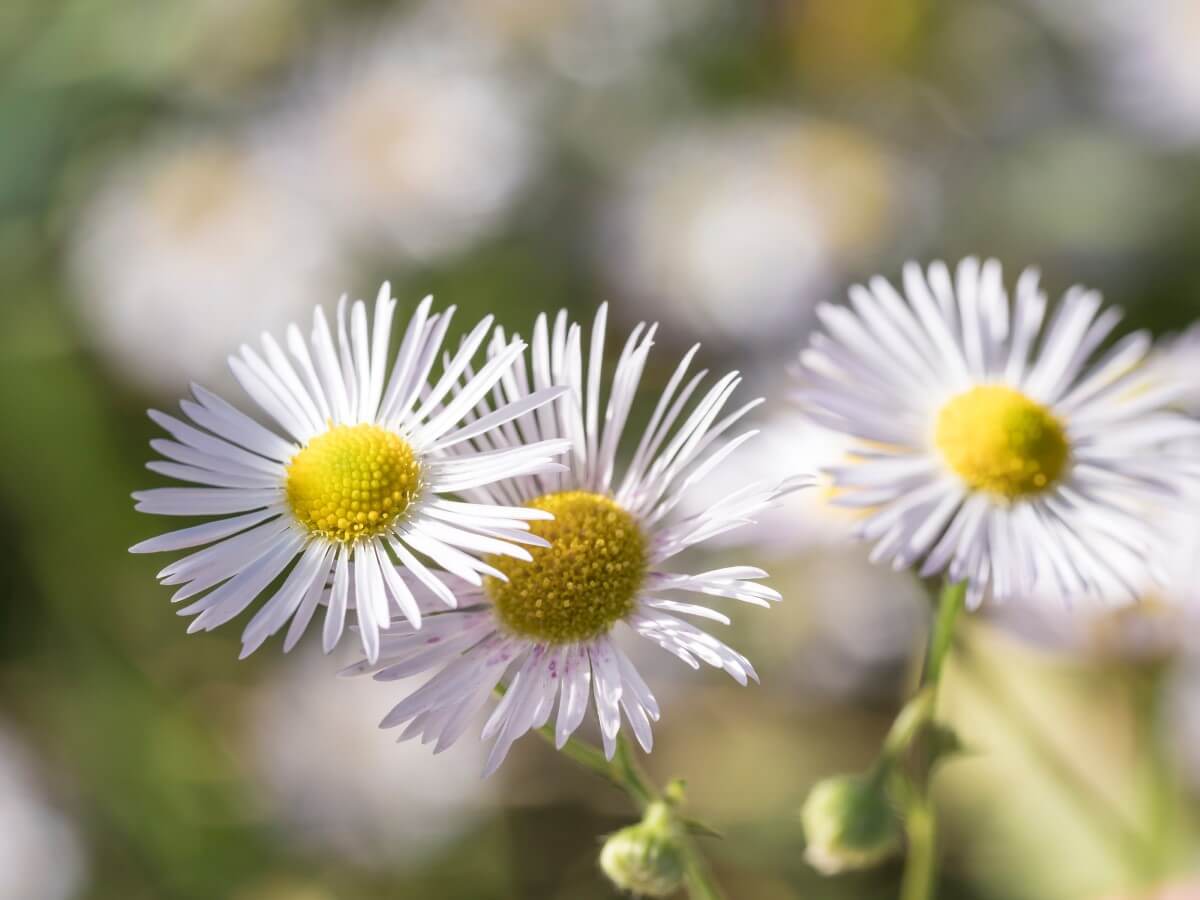
About:
Also known as leafy fleabane, leafy daisy (Erigeron foliosus) is a clump-forming perennial from the Asteraceae family. It’s native to California, Oregon, and Baja California. There are five regional subspecies of leafy daisy found across its range.
Leafy daisies can grow anywhere from 8 inches to over 3 feet tall. They have classic daisy flowers, golden yellow central florets, and white to slightly purple petals. Leafy daisies grow in chaparral, woodlands, and rocky areas.
48. Catalina Mariposa Lily (Calochortus catalinae)
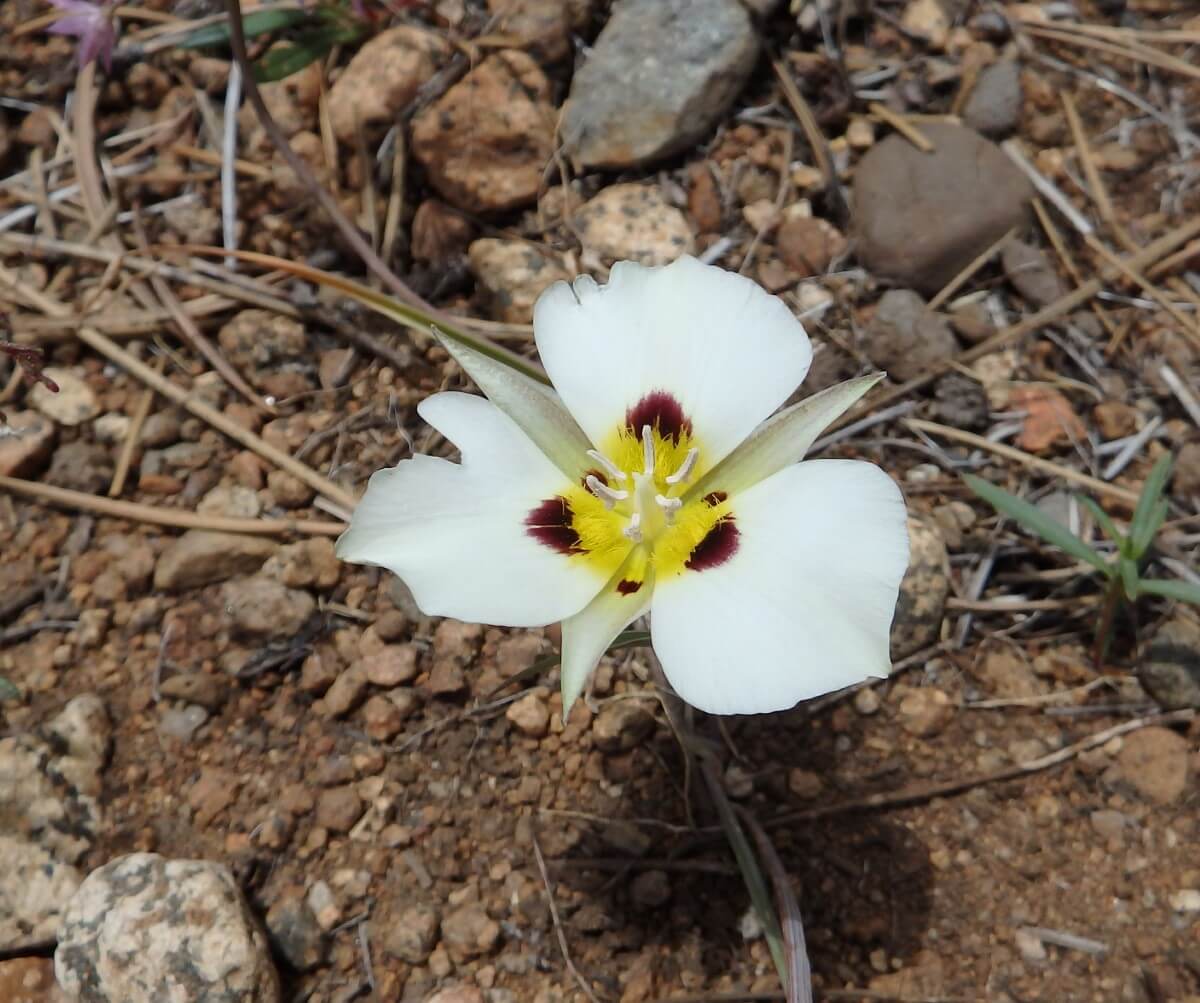
About:
The Catalina Mariposa lily (Calochortus catalinae) is a perennial flowering bulb from the Liliaceae family. These lilies produce large bell-shaped white flowers that have purple or red patches at the base. The flower bowl contains several pink anthers.
Catalina Mariposa lilies are endemic to southern California and thrive in coastal grasslands and chaparral areas. They can also be found in California’s mountain ranges. Catalina Mariposa lilies can grow up to 2 feet tall.
49. Fringed Indian Pink (Silene laciniata)
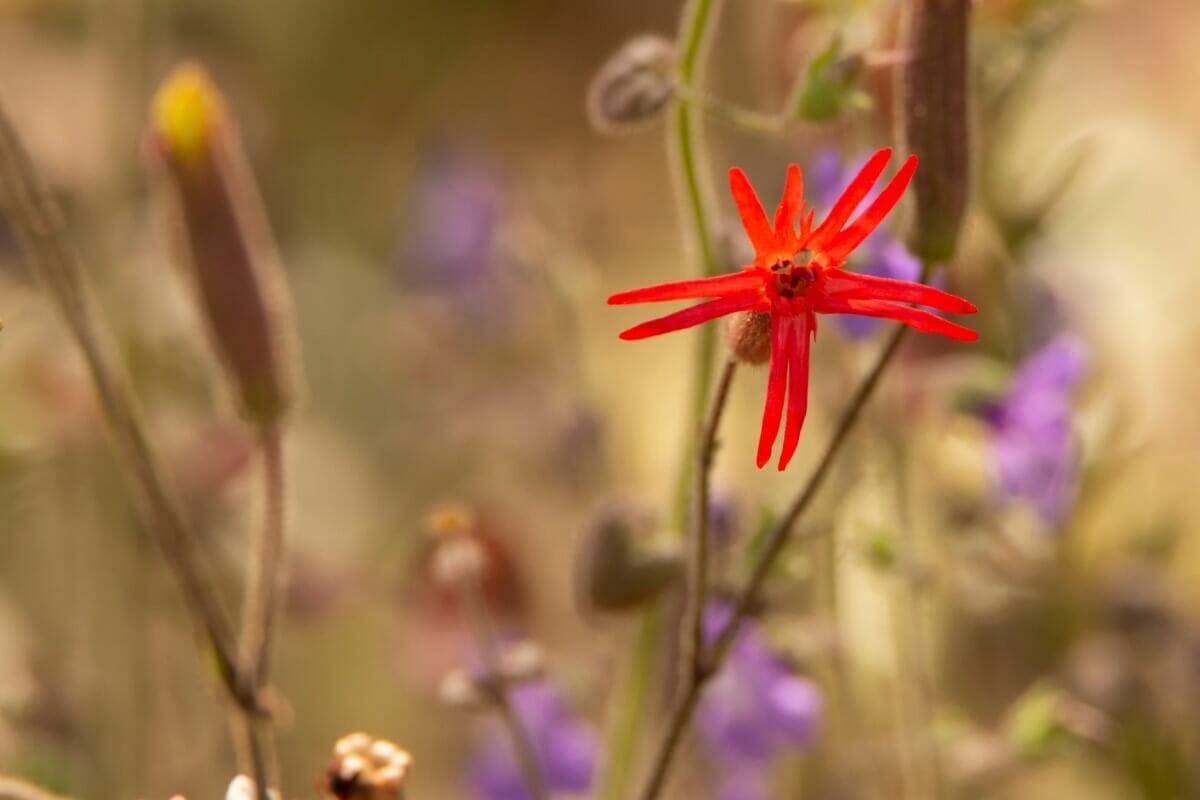
About:
Fringed Indian pink (Silene laciniata) is a perennial flowering herb within the carnation or pink family (Caryophyllaceae). It’s native to California, Texas, and parts of northern Mexico.
Fringed Indian pink produces dark red or pink flowers with deep lobes or toothed edges. The stems can grow up to 3 feet tall and are covered in a sticky substance. These plants can survive periods of hot weather thanks to their long taproots.
50. California Peony (Paeonia californica)
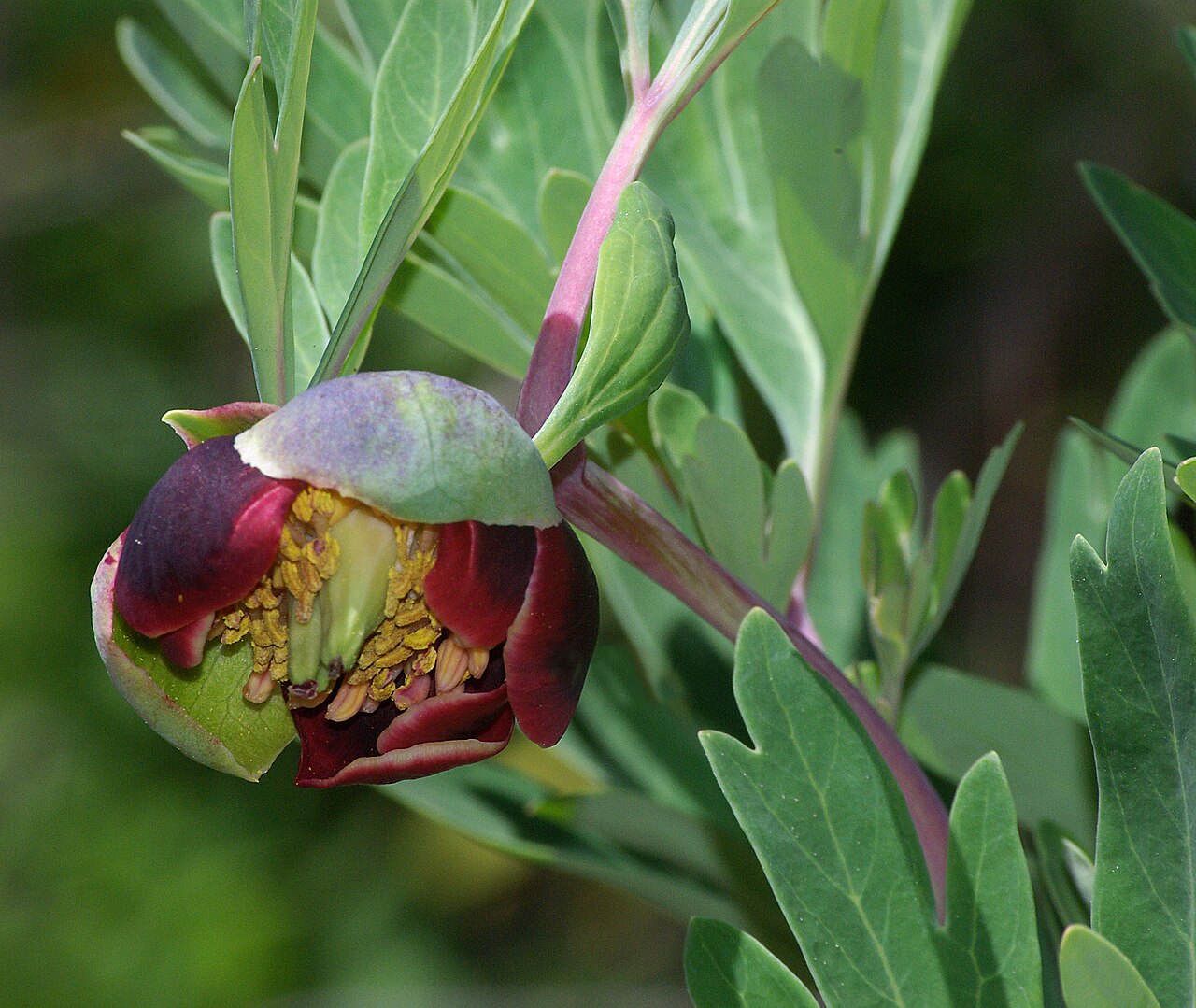
About:
The California peony (Paeonia californica) is a deciduous perennial within the Peoniaceae family. California peonies grow in dry, hilly coastal sage scrub and chaparral areas in southern California and northwestern Baja California. These flower from late winter to late spring before retreating underground during the summer.
California peonies have large dark red, dark pink, or purple nodding flowers with several yellow anthers in the center. The compound light green leaves are delicate and pointed.
51. Purple Owl’s Clover (Castilleja exserta)
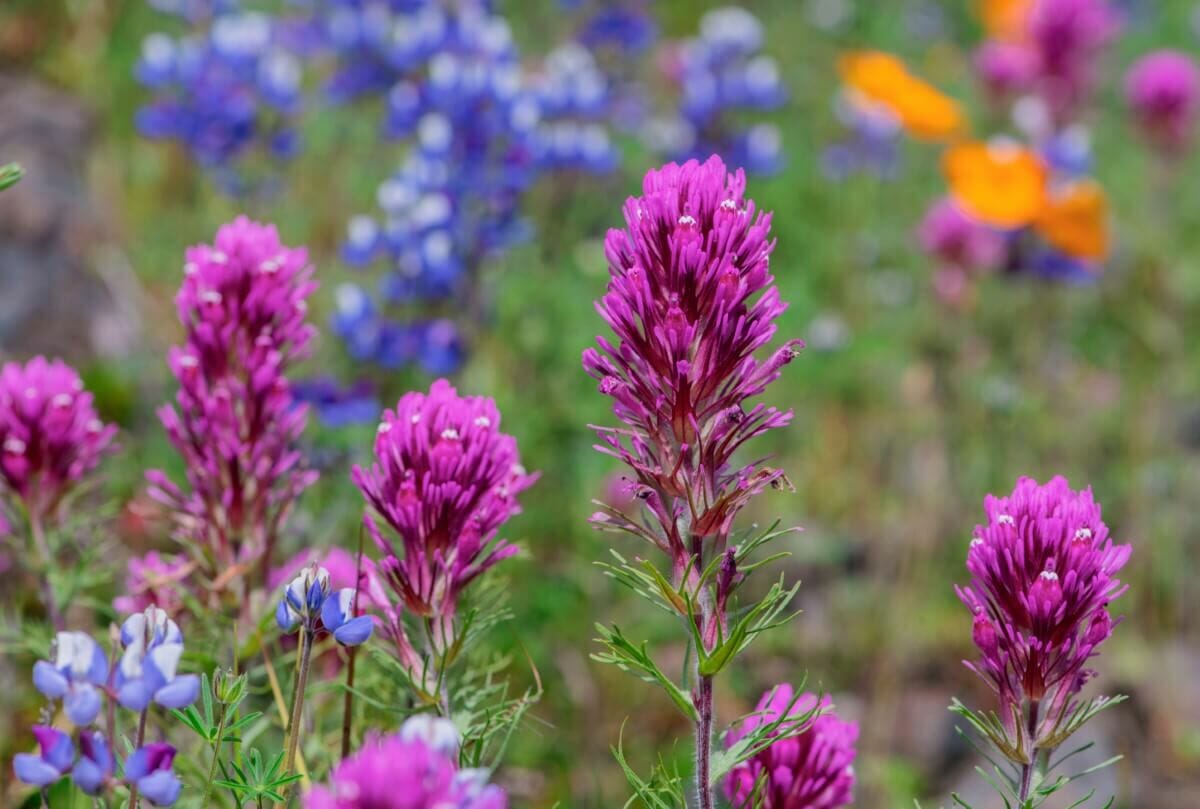
About:
Purple owl’s clover (Castilleja exserta) is a flowering annual from the broomrape family (Orobanchaceae). It’s native to California, Arizona, and New Mexico. There are three recognized subspecies within California.
Purple owl’s clover produces feathery lavender, pink, or purple flower heads that resemble paintbrushes. Purple owl’s clover can grow up to 18 inches tall and leaches some nutrients from surrounding plants. These annuals have hairy stems and small thin leaves.
52. Sacred Datura (Datura wrightii)
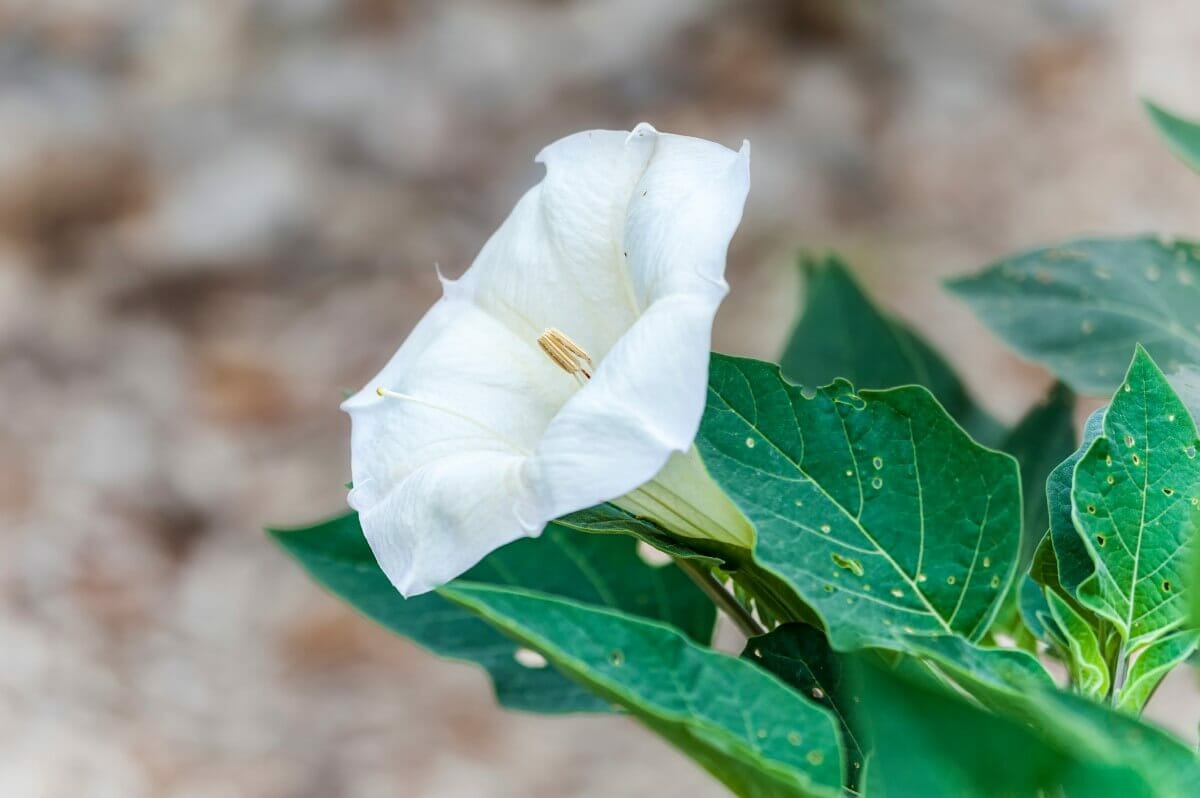
- Native Status
- Native in USDA PLANTS; Kew lists it as introduced
- Kew Record
- Datura wrightii
About:
Sacred datura (Datura wrightii) is a herbaceous perennial from the nightshade family (Solanaceae). USDA PLANTS lists sacred datura as native in California. Kew records it as native only to northeastern and northwestern Mexico, New Mexico, and Texas, and as introduced in California. Sacred datura is exceptionally poisonous but was used in spiritual ceremonies by some Native American societies.
Sacred datura grows up to 5 feet tall and wide. From April until October, sacred datura produces fragrant trumpet-shaped white flowers. Each flower can be up to 8 inches long.
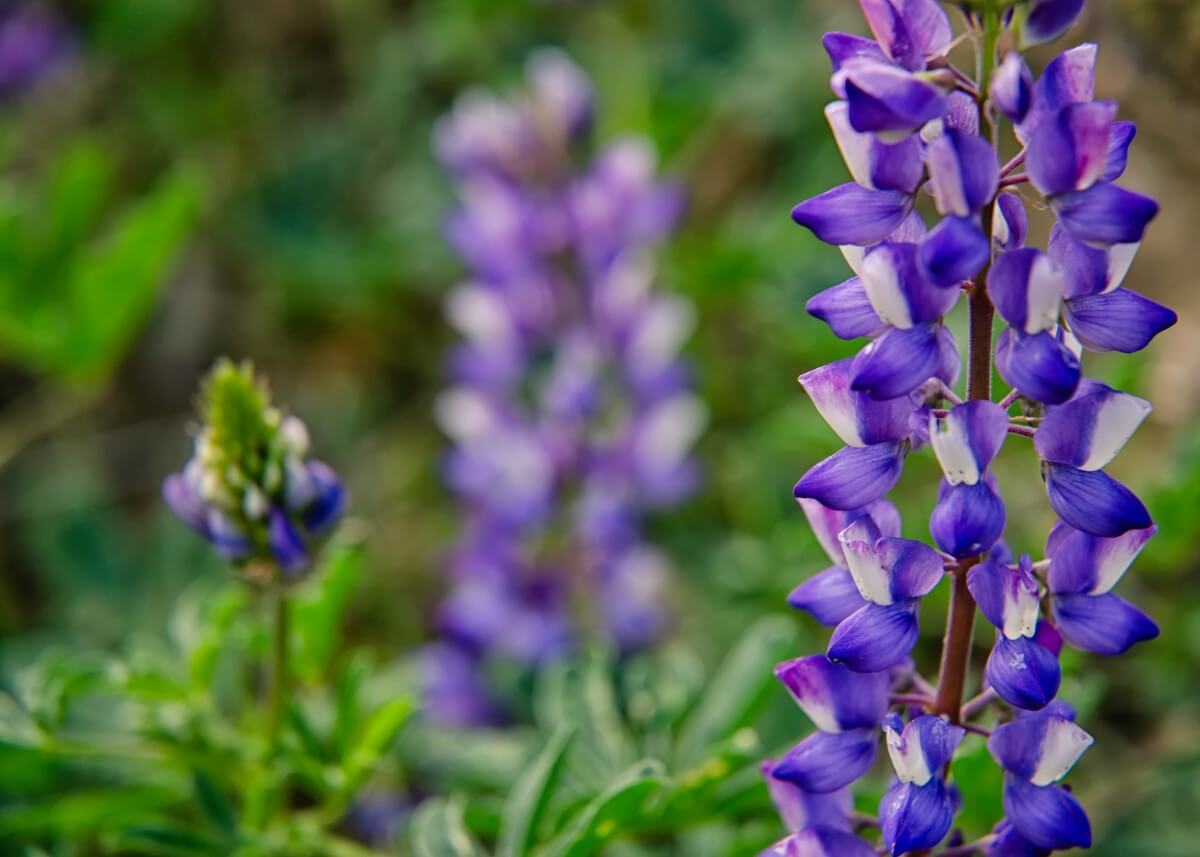
53. Arroyo Lupine (Lupinus succulentus)
About:
Also known as the succulent lupine, arroyo lupine (Lupinus succulentus) is a flowering annual from the legume family (Fabaceae). The stems can grow over 3 feet tall and have a succulent-like feel. Arroyo lupines produce blue or purple columns of flowers with white flowers at the top of the stem.
Arroyo lupine is common across California and also grows in parts of Arizona and Baja California. These lupines bloom from April until May.
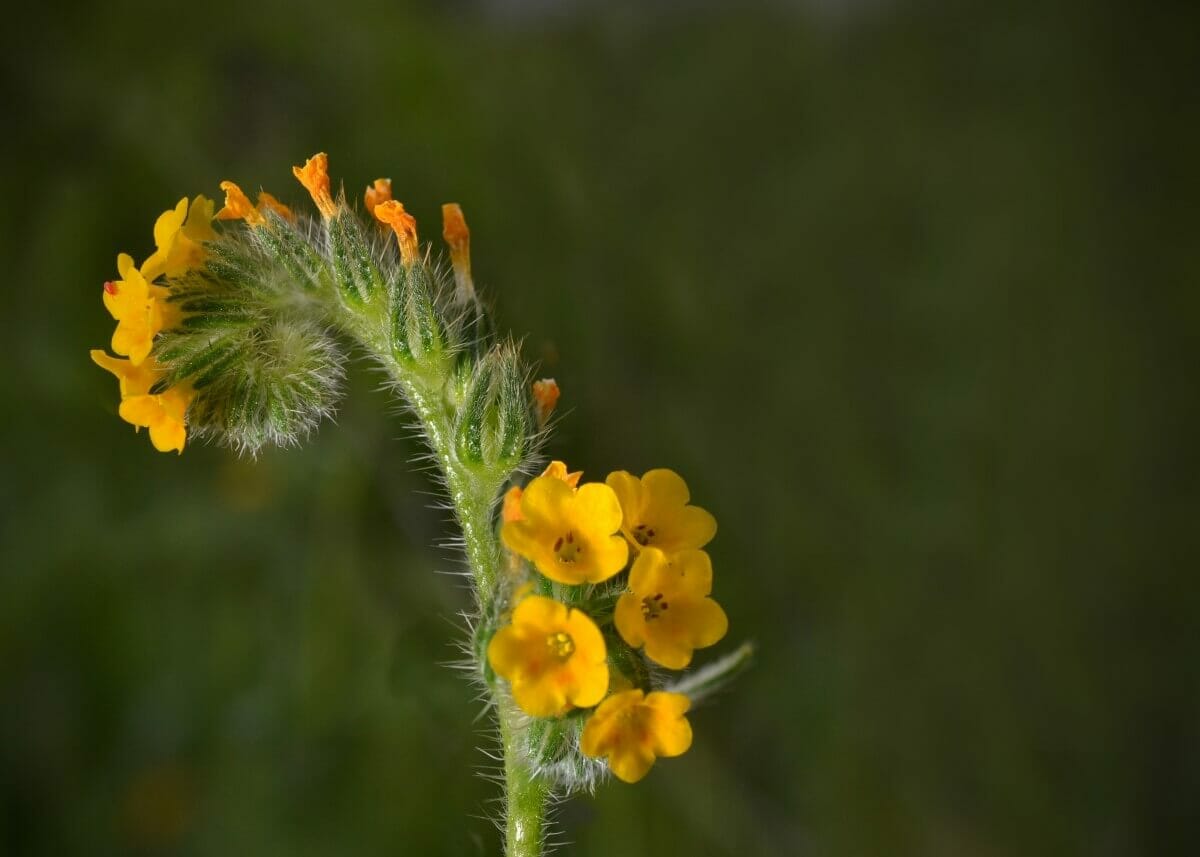
54. Common Fiddleneck (Amsinckia intermedia)
About:
The common fiddleneck (Amsinckia intermedia) is a flowering annual from the borage family (Boraginaceae). It's native from Alberta and British Columbia south to California, Texas and northwestern Mexico, and introduced in Alaska.
Common fiddleneck grows up to 4 feet tall and produces tiny trumpet-shaped yellow or orange flowers from May until July. The flower stems have a whorled appearance and resemble the neck of a violin, which explains their common name. The stems are covered in white spines.
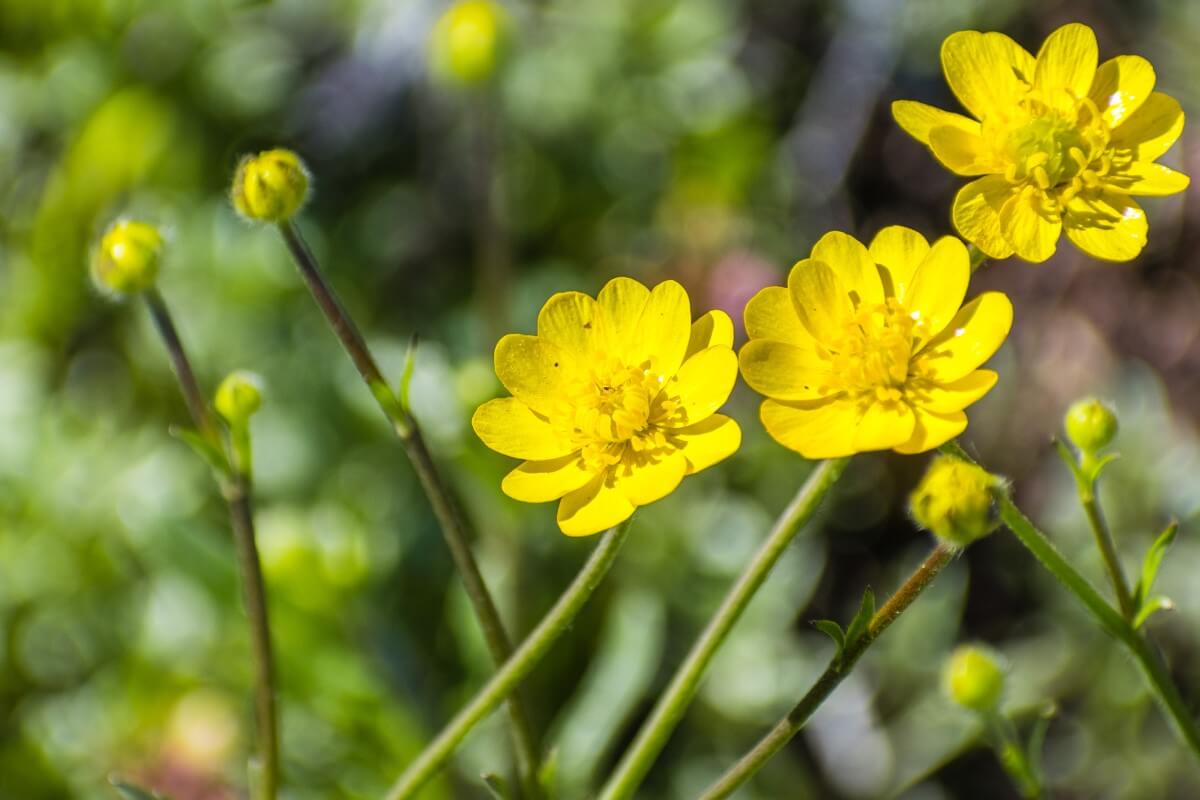
55. California Buttercup (Ranunculus californicus)


About:
California buttercups (Ranunculus californicus) are flowering annuals from the Ranunculaceae family. These annuals produce leafless stems that can grow over 2 feet tall. The stems are topped by bright yellow flowers with up to 22 overlapping petals surrounding golden yellow central florets.
California buttercups are native to California and parts of Oregon and Baja California. These flowers thrive in scrub and woodland habitats. California buttercups flower from February through May.
Native California Flowers and Wildflowers – Wrapping Up
Many of California’s flowers inhabit coastal sage scrub or chaparral areas. Remember that picking any wildflower inside the Antelope Valley California Poppy Reserve State Natural Reserve is a violation of state law. California law makes it illegal to cut, destroy, mutilate, or remove plant material, including a golden poppy, growing on public land or on land that is not yours without the landowner's written permit, though on your own land you may pick. Picking wildflowers is also against the law in California state parks, and Death Valley National Park asks visitors not to pick flowers.
Other regional guides cover Australian native plants, Brazilian plants, Florida native flowering plants, native Georgia flowers, Missouri native plants, Ohio wildflowers identification and flowers native to Virginia.
Further reading: 50 stunning native Arizona wildflowers.
Questions and Answers
How often do superblooms happen in California?
Superblooms tend to average once a decade. Death Valley National Park's most recent superbloom years were 2026, 2016, 2005, and 1998. There is no official definition, and the park uses the word when so many flowers appear that they look like swaths of color across the landscape.
Where are the best places to see wildflowers in California?
Anza-Borrego Desert State Park, Antelope Valley California Poppy Reserve State Natural Reserve, and Red Rock Canyon State Park are among the best places to see wildflowers in California. Anza-Borrego, the largest state park in California, typically starts its peak bloom in mid-February. At Antelope Valley, the bloom runs mid-March through April, peaking in late March or early April.
What are California's state flower and bird?
California's state flower is the California golden poppy (Eschscholzia californica), adopted in 1903 by Senate Bill 1171, Chapter 69. It grows throughout California and blooms from spring to early summer. The state bird is the California valley quail, adopted in 1931 by Assembly Bill 776, Chapter 777, with a distinctive plume of six interlocking black feathers.
Sources15 sources, linked in the text
- Wikipedia: Superbloom
- Plants of the World Online (Kew): Kew's Plants of the World Online
- USDA PLANTS: USDA PLANTS database
- Plants of the World Online (Kew): Camissoniopsis bistorta
- Plants of the World Online (Kew): Acmispon glaber
- Plants of the World Online (Kew): Calandrinia menziesii
- Plants of the World Online (Kew): Datura wrightii
- parks.ca.gov: ?page id=627
- california.public.law: penal code section 384a
- parks.ca.gov: 1471
- nps.gov: wildflowers.htm
- wildlife.ca.gov: Plants
- capitolmuseum.ca.gov: flower california golden poppy
- parks.ca.gov: ?page id=638
- capitolmuseum.ca.gov: bird california valley quail
Updates and CorrectionsOct 18, 2026 · 4 corrected, 1 clarified
- Added: Every plant was checked against Kew's Plants of the World Online and the USDA PLANTS database; a plant the two sources do not both confirm shows its status in its entry.
- Corrected: 9 statements about where plants grow wild now follow Kew and USDA PLANTS.
- Corrected: California Penal Code section 384a covers all plants on public land or land you do not own, not the golden poppy alone; the Antelope Valley California Poppy Reserve State Natural Reserve is now named in full.
- Corrected: 6 unsourced figures (species counts, dates, zones or sizes) were corrected to a source or removed.
- Clarified: Health, edibility and toxicity statements now follow a named source; unsourced medicinal claims were removed.
- Added: Answers on how often superblooms happen, where to see wildflowers and the state flower and bird, each with its source.
- Corrected: 6 photos that showed a different plant were replaced, and the featured image is now a photograph of a California wildflower bloom.
Save and Share
Reader Comments
Have a question? Ask it here.