
Flower Types
29 Native Italian Flowers and Wildflowers: Names and Pictures


Contributing Editor
Credentials
- BA in Professional Writing TheCollector
- Worked at Dover Museum and the Canterbury Archaeological Trust TheCollector
Writing for Petal Republic since 2022 · 92 articles
Expertise
Flowers, Native plants, Wildlife gardening
Published In
TheCollector
Twenty-nine Italian flowers and shrubs with pictures, Latin names, and a native status verified against Kew's Plants of the World Online on October 18, 2026.
In Short
Native Italian flowers include alpine edelweiss, field poppy, rosemary, lily of the valley, purple cyclamen and Italian lavender. Bloom runs from March to July, with timing shifting by altitude.
- In late spring, Gran Paradiso National Park's high alpine pastures are in flower. The Paradisia Alpine Botanical Garden in Valnontey peaks from mid-June to mid-July.
- Italy has no official national flower. The strawberry tree is considered one of its symbols, though not by law, and it is not on this list.
More Takeaways
- Of the 29 plants, 27 are native and two are ancient introductions. Genovese basil was removed.
- Picking rules vary by region and park: Gran Paradiso bans picking or removing plant parts, and Lombardy's regional law no. 10 protects some species and regulates others.
Italy’s Climate and Native Plants
Northern Italy has a cooler temperate climate. Southern Italy experiences a warm, Mediterranean climate.
Italy’s biodiversity reflects the country’s different climates. Beech and pine forests thrive in the north, along with alpine plants. Olive and citrus groves grow in the south, especially along the coast.
How Are Italy’s Native Flowers Defined?
Italy’s native flowers are species that Kew's Plants of the World Online records as native in Italy. Where Kew does not confirm a species, the Portal to the Flora of Italy decides, as it lists native and alien plants separately. However, due to human activity, many non-native or naturalized species are now present across Italy.
How We Checked These 29 Plants
Each of the 29 plants was checked against Kew's Plants of the World Online, which records native ranges region by region, on October 18, 2026. Where Kew did not show a plant as native to Italy, the University of Trieste's Portal to the Flora of Italy was checked.
| What the check found | Plants |
|---|---|
| Native in Italy (Kew) | 27 |
| Ancient introduction (Flora of Italy); Kew lists as introduced | 2 |
29 Native Italian Flowers
1) Alpine Edelweiss
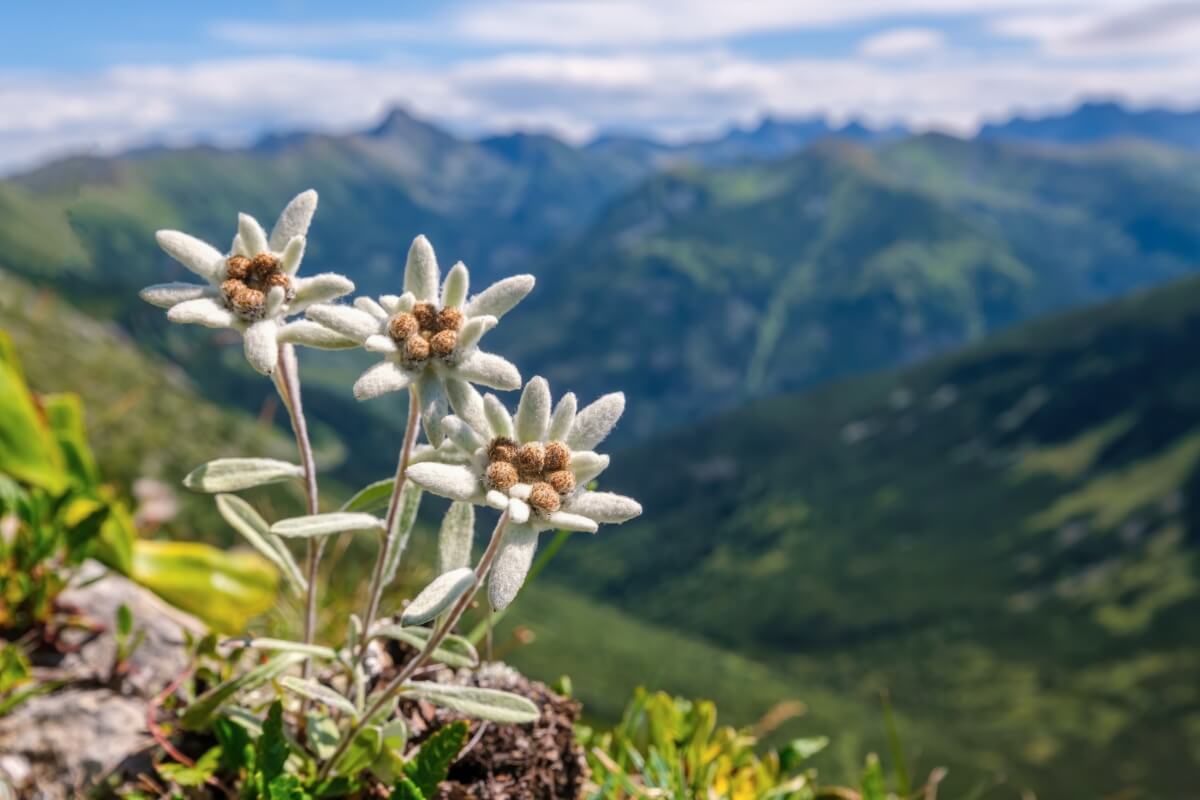
Alpine edelweiss is an elegant mountain wildflower from the aster or daisy family (Asteraceae). They are native to the mountains of several European countries, among them Italy, Austria, France, Switzerland and Spain. The Italian Alps are among those mountains.
Leontopodium nivale plants grow in clumps of hairy, lance-shaped leaves. The blooms are a cluster of central florets surrounded by furry white bracts.
Scientific Name: Leontopodium nivale
- Native Status
- Confirmed by Kew
- Light Requirements
- Full sun
- Growing Zones
- 4 to 7
- Flowering Season
- Spring to fall
- Mature Height
- 6 to 12 inches
2) Alpine Pasqueflower
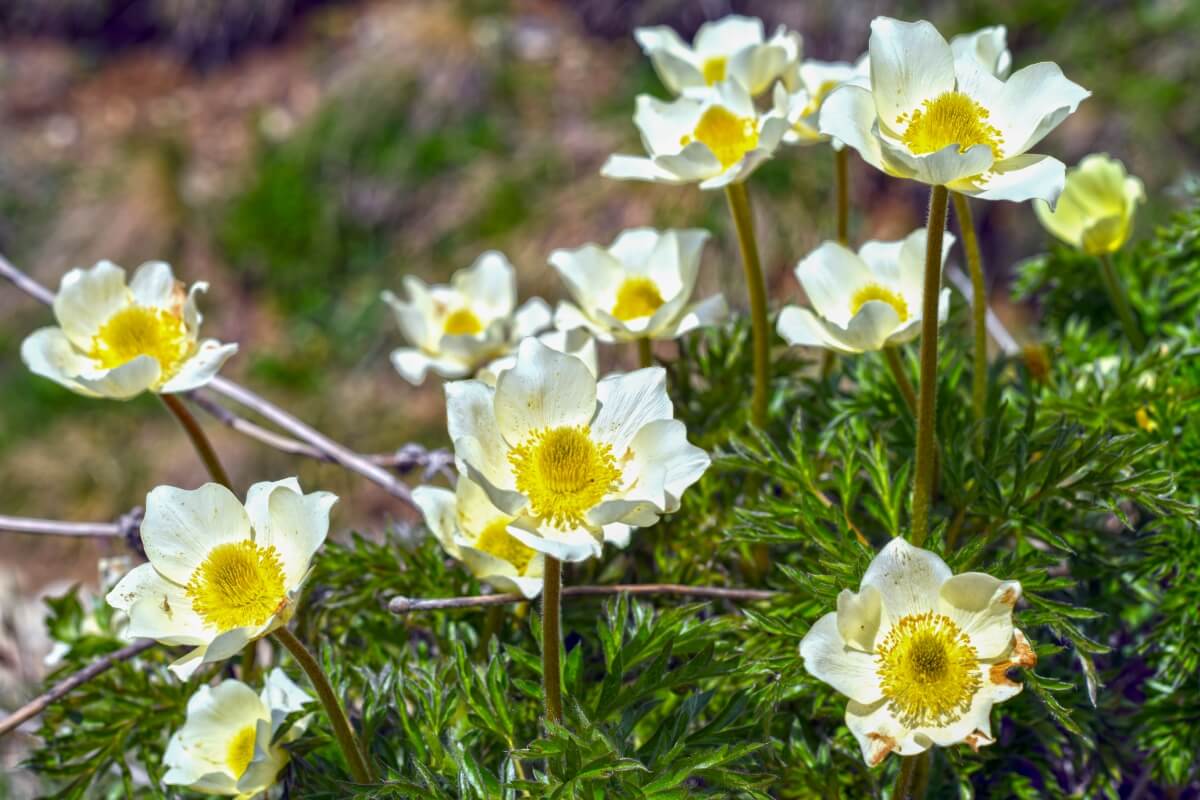
Pulsatilla alpina flowers inhabit the mountains of central and southern Europe. These lovely wildflowers thrive in the Italian Alps and work well in alpine or rock gardens.
Alpine pasqueflowers come from the buttercup family (Ranunculaceae). These herbaceous perennials have hairy fern-like leaves. Alpine pasqueflowers also have white cup-shaped flowers with silky petals. The flowers can even bloom from underneath a layer of snow.
Scientific Name: Pulsatilla alpina
- Native Status
- Confirmed by Kew
- Light Requirements
- Full sun
- Growing Zones
- 5 to 7
- Flowering Season
- Spring to summer
- Mature Height
- 6 to 12 inches
3) Bee Orchid
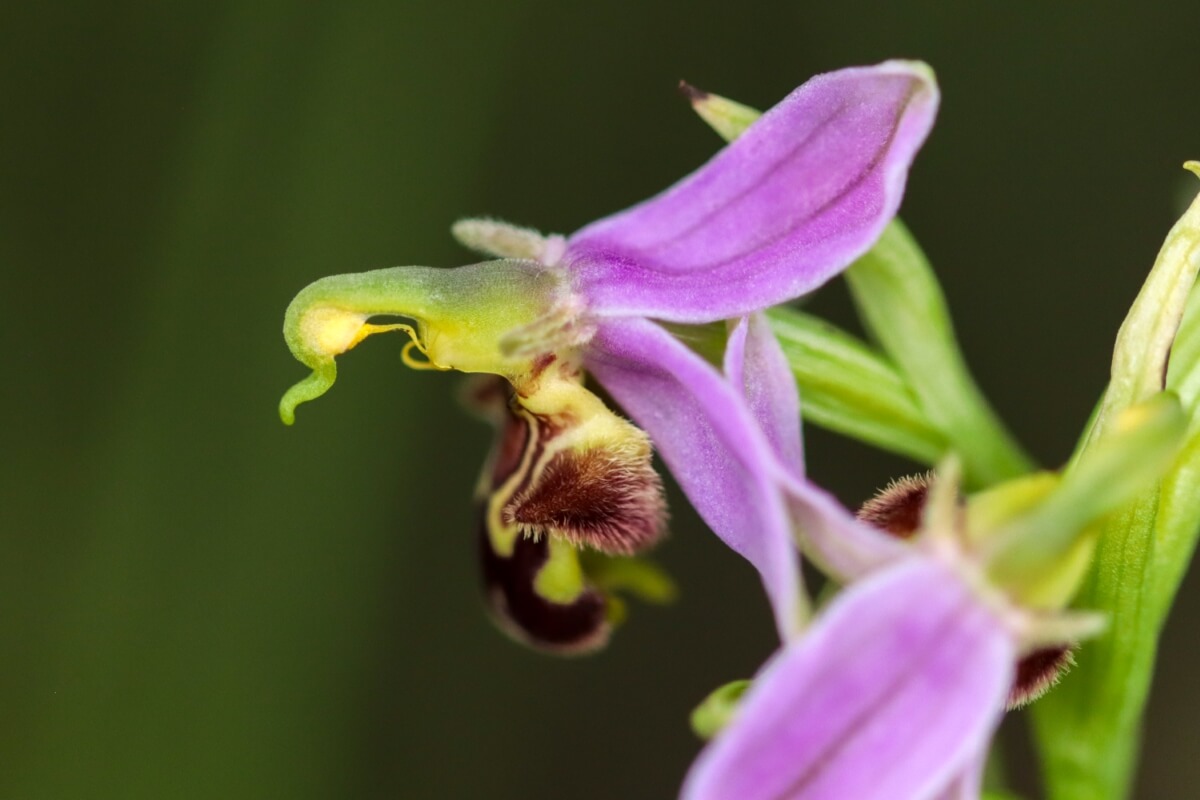
Few orchids are as charismatic or as fascinating as bee orchids. These colorful orchids have three purple sepals with a labellum that resembles a bumblebee. Bee orchids also have lanceolate to ovate leaves.
Bee orchids produce chemicals that copy the pheromones of female bees. Male bees looking for a mate latch onto the orchids, transferring pollen between the reproductive parts of the flower.
Scientific Name: Ophrys apifera
- Native Status
- Confirmed by Kew
- Light Requirements
- Full sun to partial shade
- Growing Zones
- 6 to 9
- Flowering Season
- Spring to summer
- Mature Height
- 1 to 2 feet
4) Common Thyme
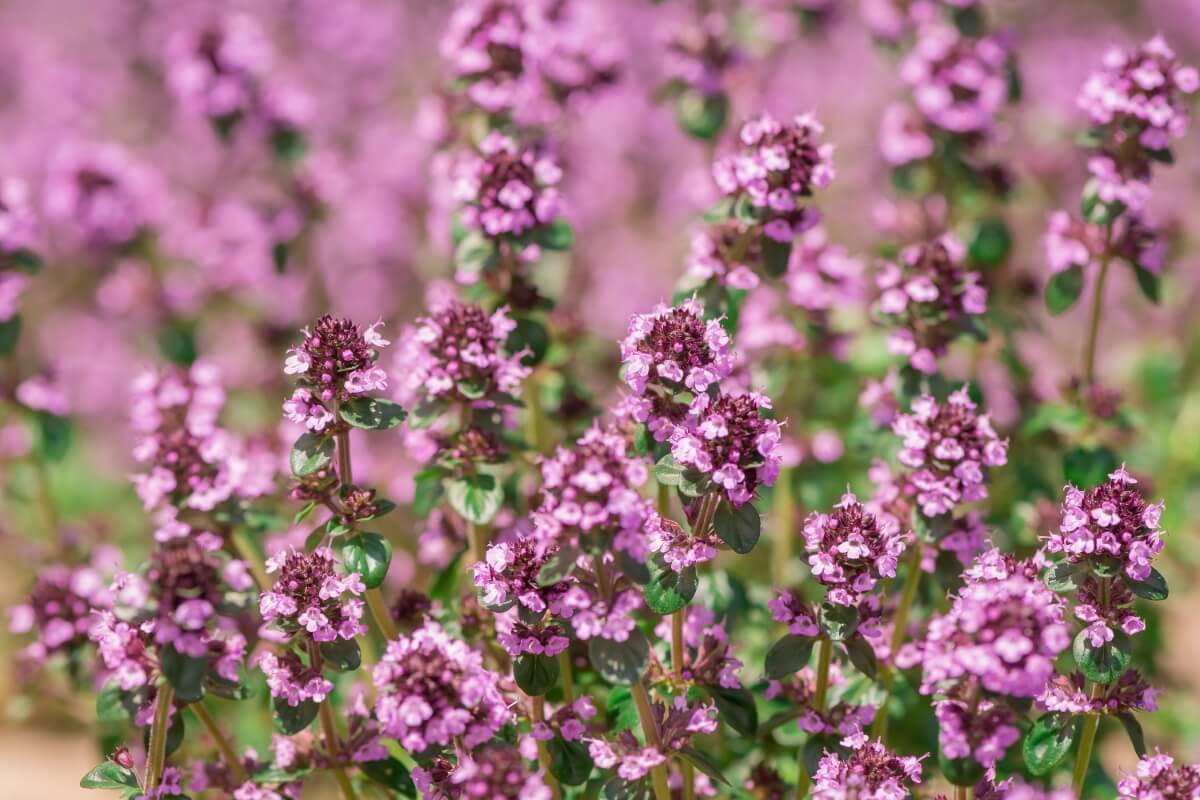
Common thyme is a popular herb native to Italy and southern Europe. These shrubs have grayish-green leaves with a pungent scent. Throughout spring and summer, common thyme shrubs also have whorls of tiny pink or white flowers.
Common thyme comes from the mint or sage family (Lamiaceae). Common thyme suits kitchen and Mediterranean gardens and also works as ground cover.
Scientific Name: Thymus vulgaris
- Native Status
- Confirmed by Kew
- Light Requirements
- Full sun
- Growing Zones
- 5 to 9
- Flowering Season
- Spring to summer
- Mature Height
- Approximately 1 foot
5) Field Poppy
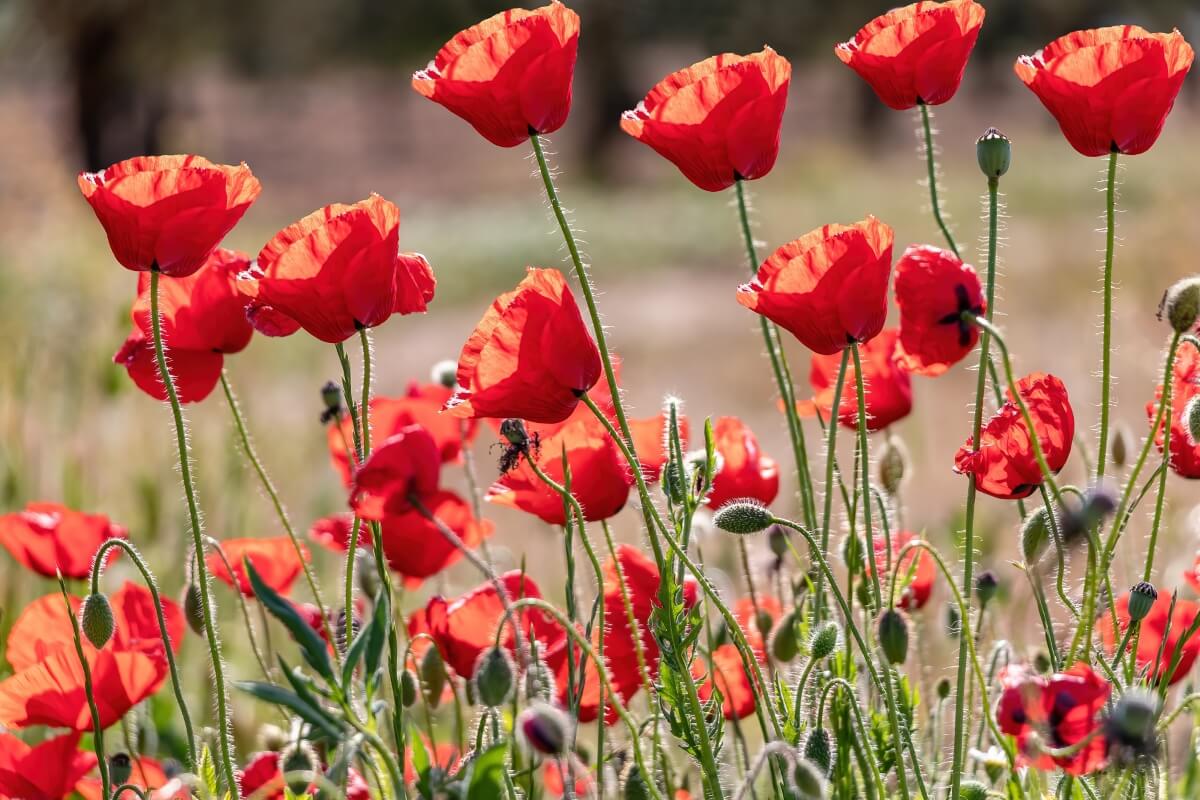
Field poppies are stunning wildflowers that are widespread throughout Asia, Europe, and North Africa. These vibrant annuals have large cup-shaped flowers with red, papery petals. Field poppies are excellent additions to wildflower borders.
Papaver rhoeas flowers also have grayish-green fern-like leaves. These wildflowers belong to the Papaveraceae family. Field poppies are a poignant symbol of remembrance, especially for soldiers who died during World War One.
Scientific Name: Papaver rhoeas
- Native Status
- Confirmed by Kew
- Light Requirements
- Full sun
- Growing Zones
- 3 to 9
- Flowering Season
- Spring to summer
- Mature Height
- 1 to 2 feet
6) Florentine Iris
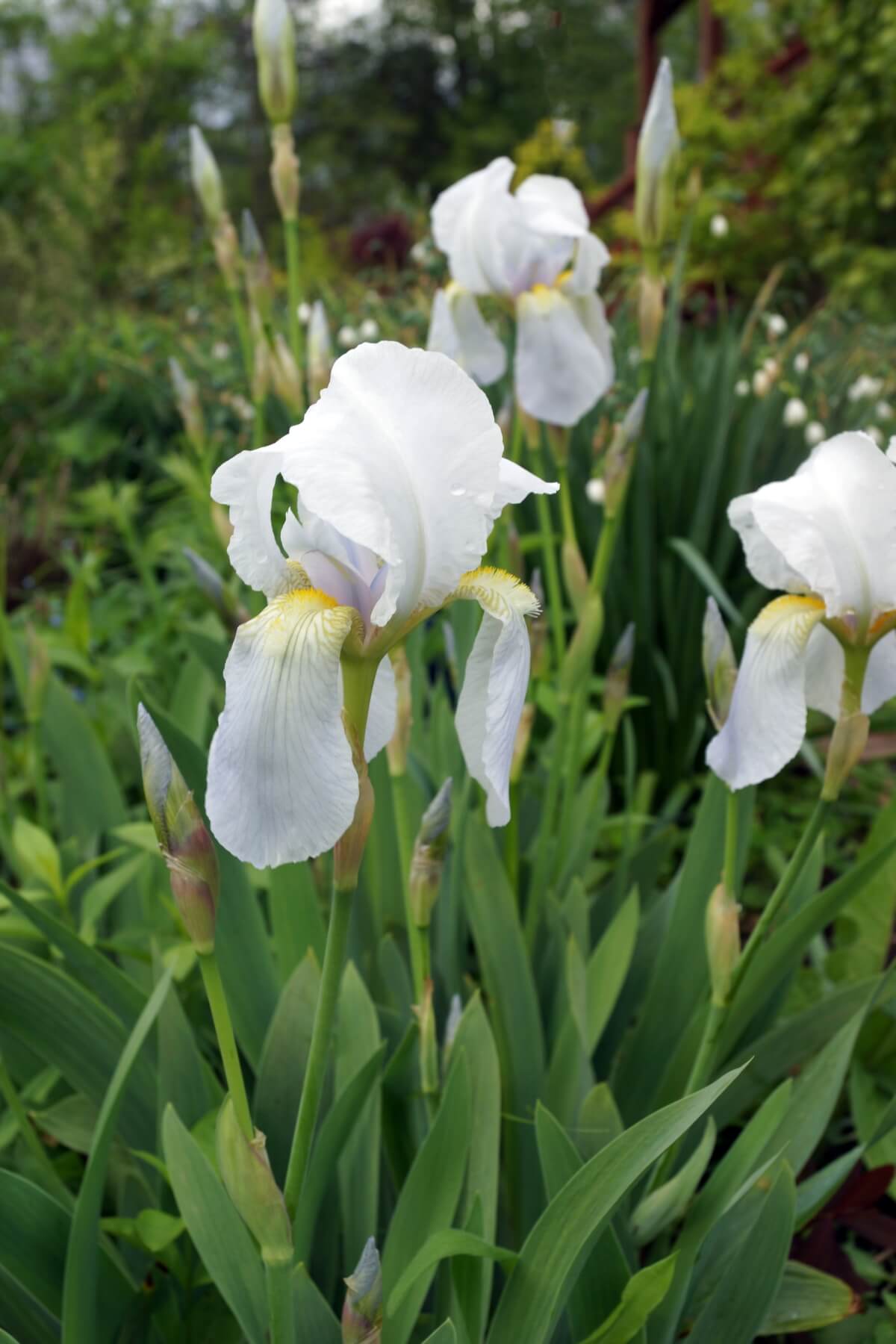
The Florentine iris is a bearded iris long grown in Italy and parts of France. Kew lists it as introduced in Italy and France, and the Portal to the Flora of Italy classes it as an ancient introduction (archaeophyte) naturalized in several regions. The showy white flowers have yellow beard markings and a strong fragrance. These blooms emerge during the summer.
Florentine irises also have grayish-green lance-shaped leaves. Florentine irises thrive in full sun but also like moist, well-draining soils.
Scientific Name: Iris florentina
- Light Requirements
- Full sun
- Growing Zones
- 3 to 9
- Flowering Season
- Summer
- Native Status
- Ancient introduction (Flora of Italy); Kew: introduced
- Mature Height
- Approximately 2.5 feet
7) Garland Chrysanthemum
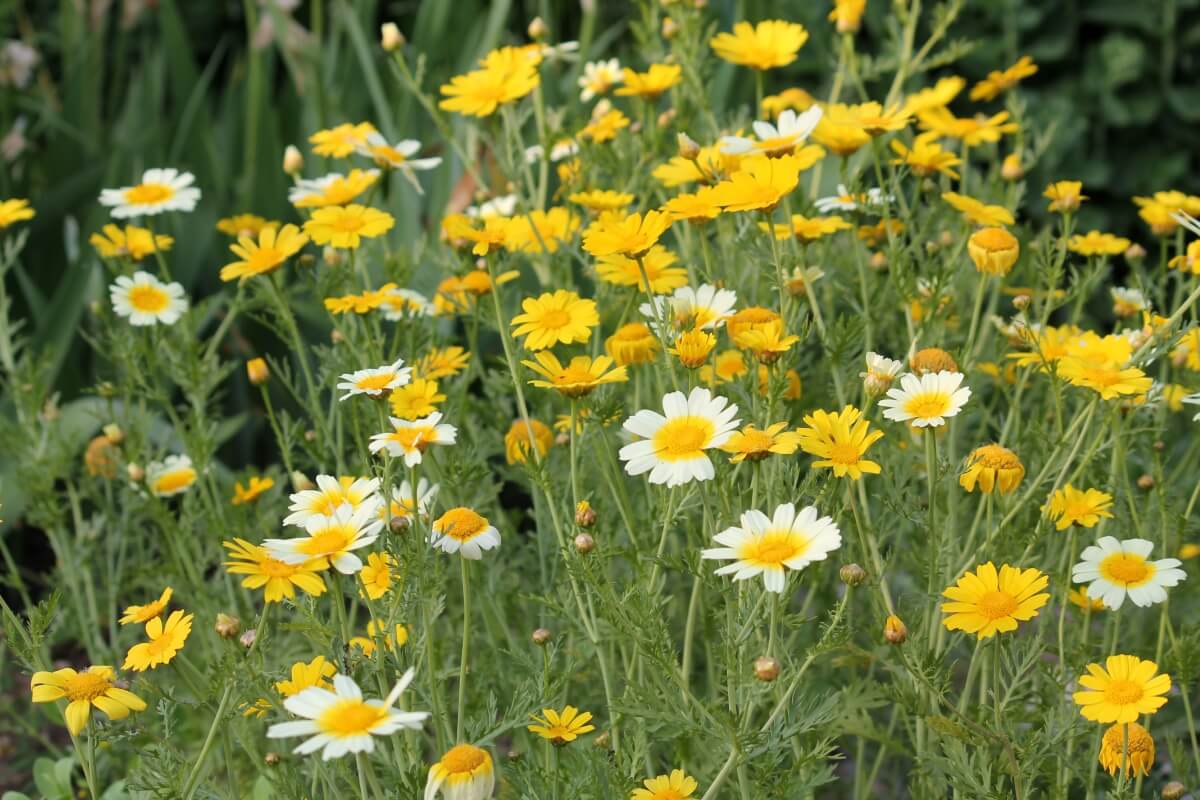
Also known as crown daisies, garland chrysanthemums are herbaceous annuals from the daisy family. These gorgeous flowers are native to Italy and other parts of Mediterranean Europe.
Garland chrysanthemums have charming flowers with white and yellow petals. The flowers bloom from spring until fall. The fern-like aromatic leaves are edible and are often added to soups. These flowers work well in ornamental borders.
Scientific Name: Glebionis coronaria
- Native Status
- Confirmed by Kew
- Light Requirements
- Full sun
- Growing Zones
- 5 to 9
- Flowering Season
- Spring to fall
- Mature Height
- 2 to 4 feet
8) Great Yellow Gentian
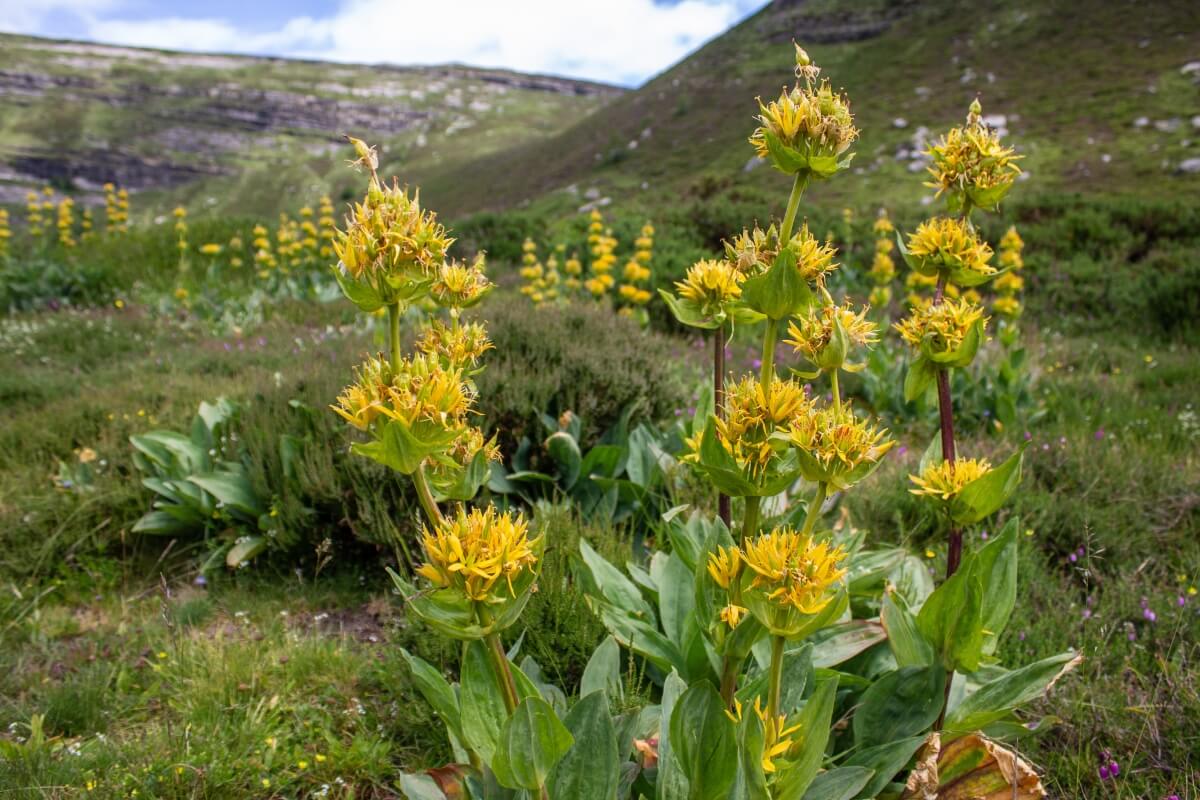
The great yellow gentian is a herbaceous perennial from the Gentianaceae family. They are tall wildflowers native to Italy and Sardinia. The bitter roots have been used in traditional medicine or to flavor drinks.
Gentiana lutea plants have upright stems covered in elliptical or lanceolate leaves. From summer until fall, the stems also have densely packed whorls of bright yellow flowers.
Scientific Name: Gentiana lutea
- Native Status
- Confirmed by Kew
- Light Requirements
- Full sun to partial shade
- Growing Zones
- 4 to 8
- Flowering Season
- Summer to fall
- Mature Height
- 3 to 6 feet
9) Italian Arum
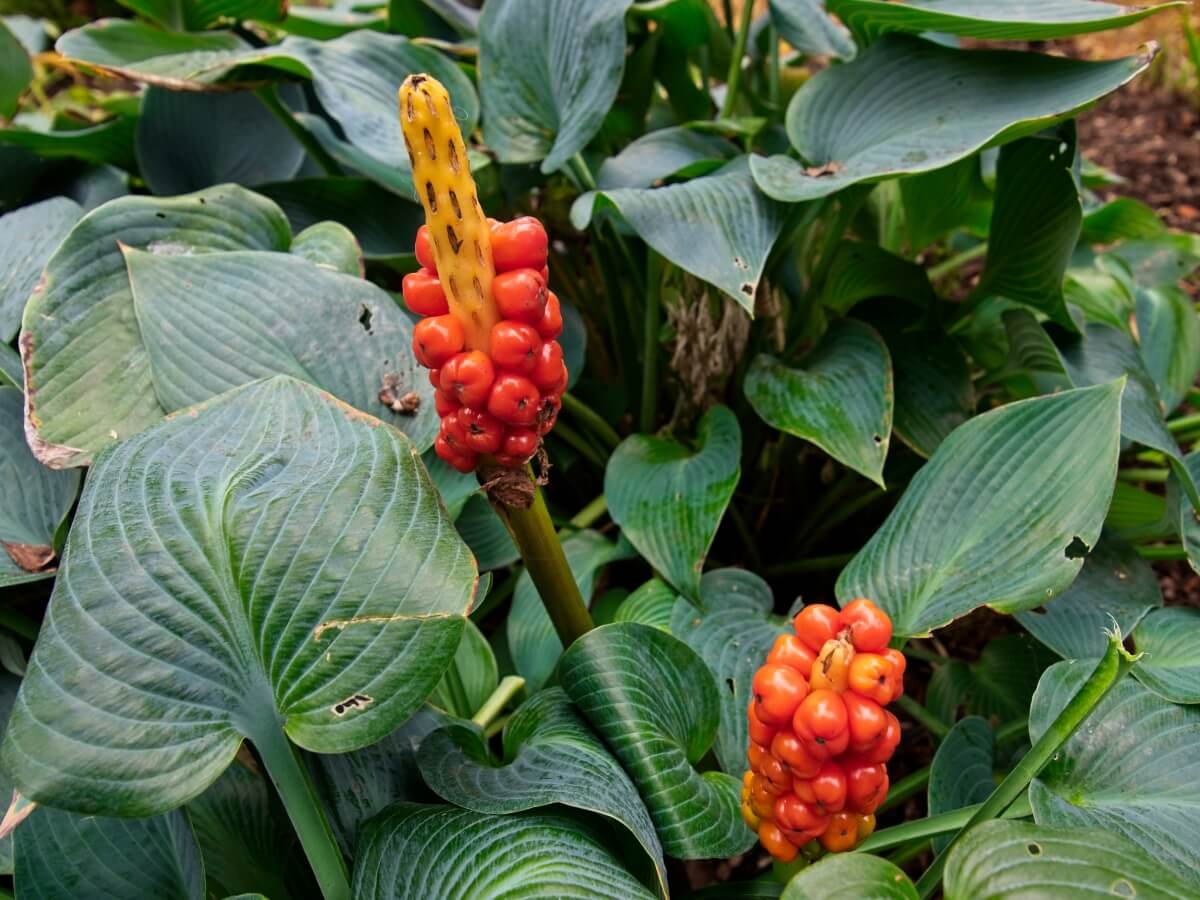
The Italian arum is a vigorous herbaceous perennial from the arum family (Araceae). These plants can spread via underground rhizomes.
These native Italian plants grow in clumps of glossy arrow-shaped leaves with creamy-white veins. During the spring, these arums have a large hooded spathe that protects a spadix of tiny greenish-white flowers.
Scientific Name: Arum italicum
- Native Status
- Confirmed by Kew
- Light Requirements
- Partial to full shade
- Growing Zones
- 5 to 9
- Flowering Season
- Spring
- Mature Height
- 1 to 2 feet
10) Italian Aster
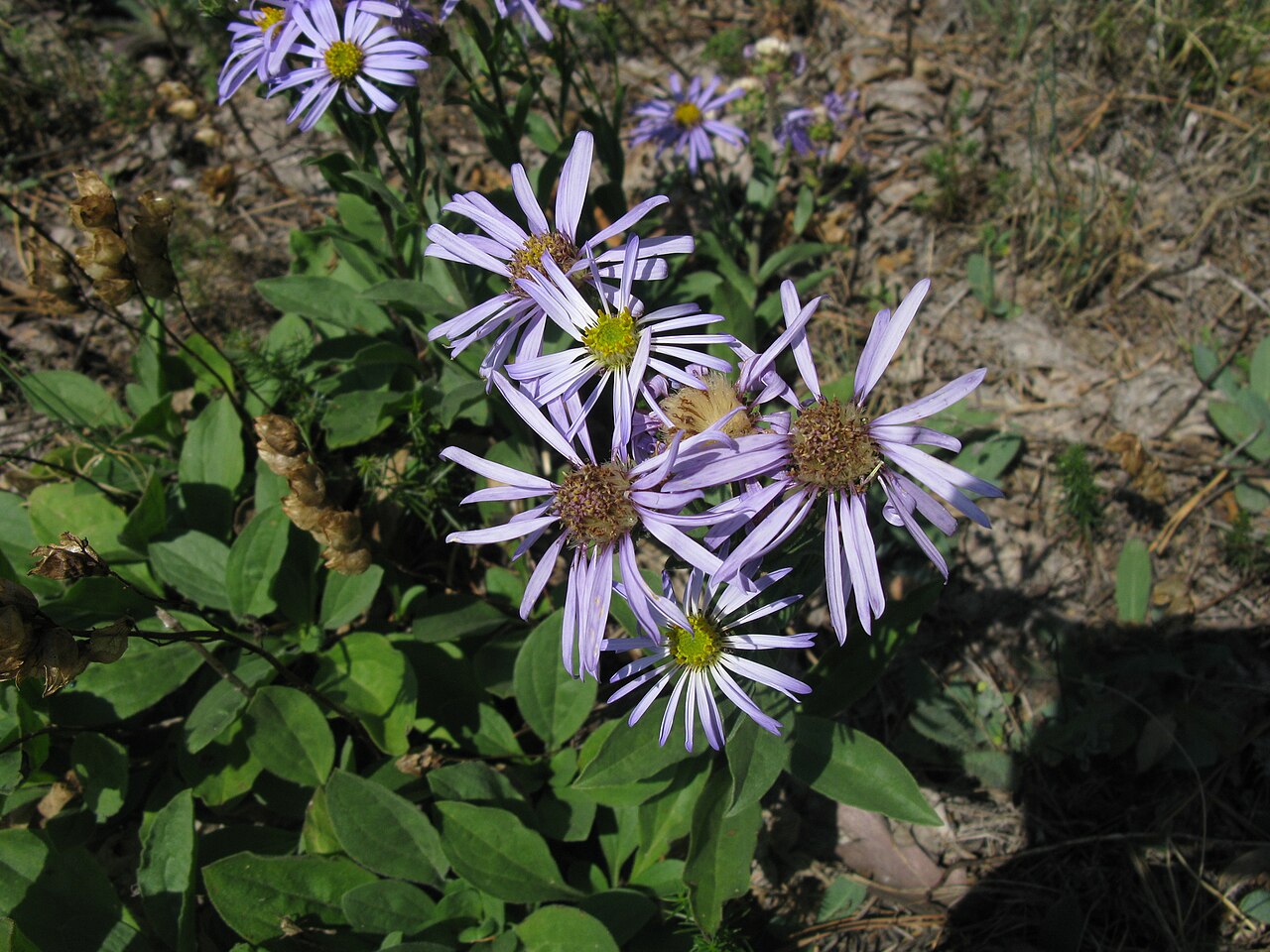
The Italian aster is also known as the European Michaelmas daisy. These herbaceous perennials are prized for their bluish-purple daisy-like flowers. These daisies have a more compact growth habit than other asters.
Aster amellus plants grow in clumps of dark green lance-shaped leaves. The flowers bloom from summer until fall and have bright yellow central florets. Italian asters are ideal for wildflower borders.
Scientific Name: Aster amellus
- Native Status
- Confirmed by Kew
- Light Requirements
- Full sun
- Growing Zones
- 5 to 8
- Flowering Season
- Summer to fall
- Mature Height
- 1 to 3 feet
11) Italian Bellflower
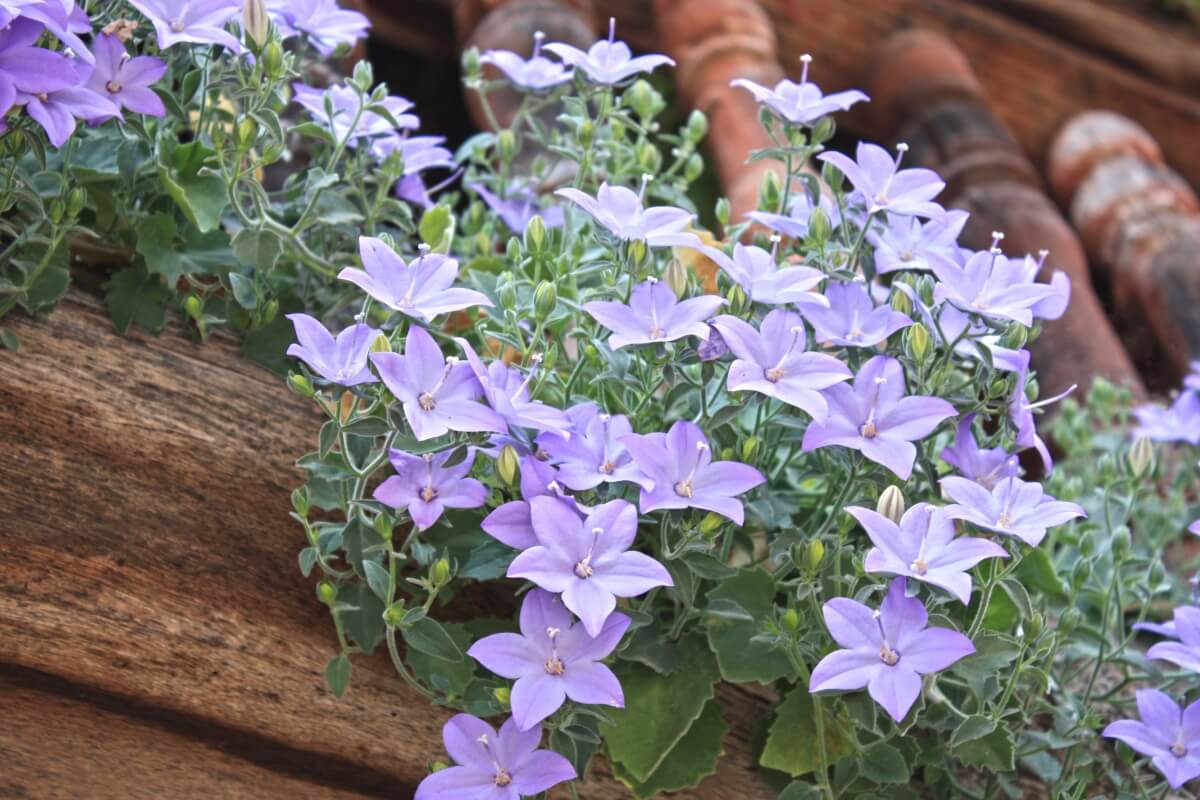
To add some Italian style to trellises, use Italian bellflowers. These perennials are trailing vines from the Campanulaceae family. Bellflowers are native to Italy.
Italian bellflowers have heart-shaped leaves with toothed edges. These vines can grow up to 12 inches wide. Italian bellflowers also have masses of star-shaped white or blue flowers from summer until fall.
Scientific Name: Campanula isophylla
- Native Status
- Confirmed by Kew
- Light Requirements
- Full sun to partial shade
- Growing Zones
- 7 to 10
- Flowering Season
- Summer to fall
- Mature Height
- 6 to 8 inches
12) Italian Bluebell
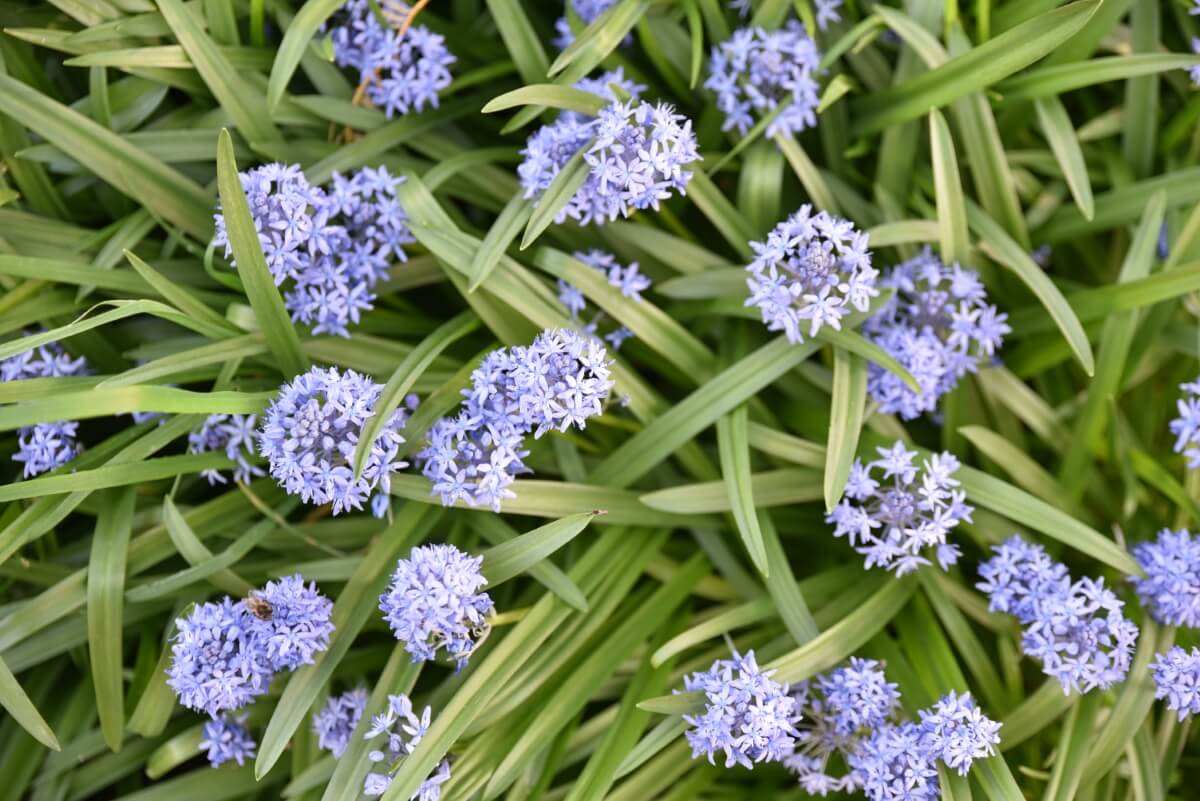
Italian bluebells are ideal spring centerpieces in Mediterranean gardens. These bulbous perennials are native to parts of Italy and France. Hyacinthoides italica is a member of the asparagus family (Asparagaceae).
These attractive bluebells grow in clumps of slender, lance-shaped leaves. During the spring, Italian bluebells produce dense clusters of blue star-shaped flowers. They grow best in dry, stony soils.
Scientific Name: Hyacinthoides italica
- Native Status
- Confirmed by Kew
- Light Requirements
- Full sun to full shade
- Growing Zones
- 3 to 8
- Flowering Season
- Spring
- Mature Height
- Approximately 2 feet
13) Italian Buckthorn
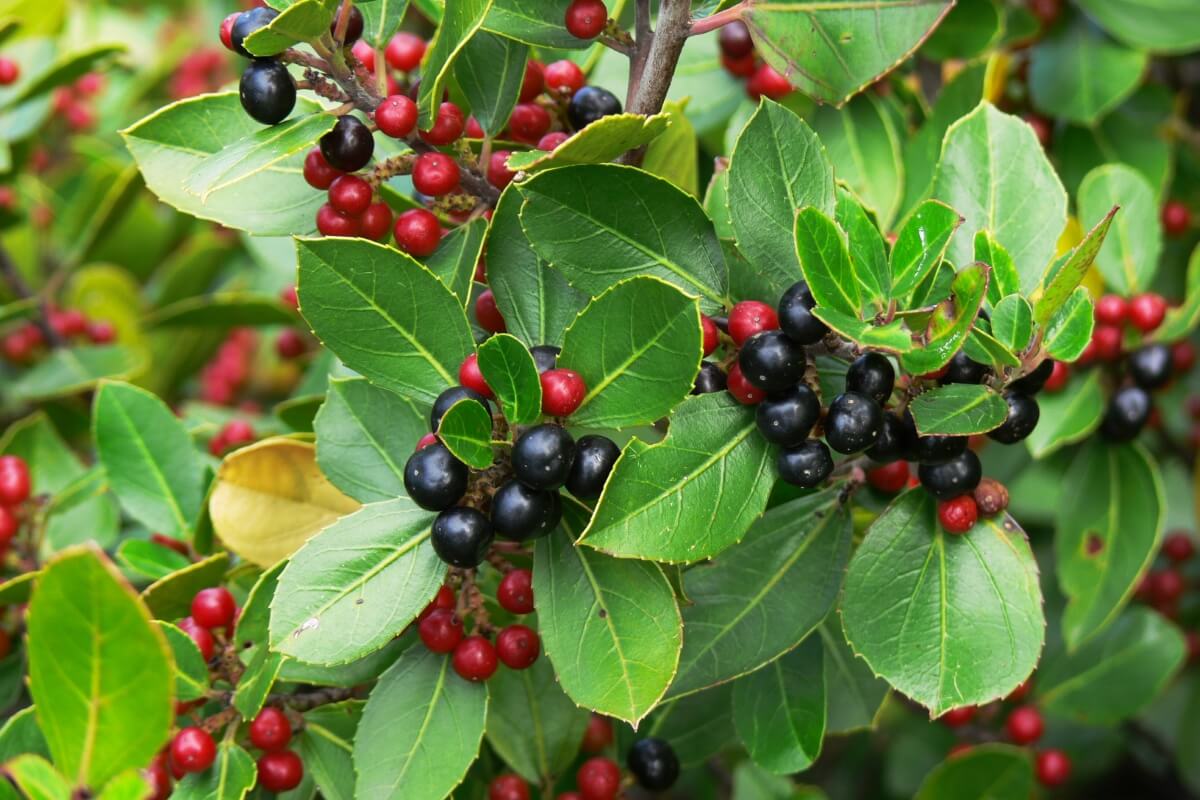
Also known as Mediterranean buckthorn, Italian buckthorn grows throughout the Mediterranean Basin. These evergreen shrubs have glossy oval-shaped leaves with yellowish-green undersides. Italian buckthorn also has reddish-brown bark.
Italian buckthorn shrubs can flower as early as February. When in bloom, these shrubs produce clusters of tiny, fragrant yellowish-green flowers. As such, it’s a good ornamental shrub for spring borders.
Scientific Name: Rhamnus alaternus
- Native Status
- Confirmed by Kew
- Light Requirements
- Full sun
- Growing Zones
- 6 to 9
- Flowering Season
- Late winter to spring
- Mature Height
- 3 to 16.5 feet
14) Italian Bugloss
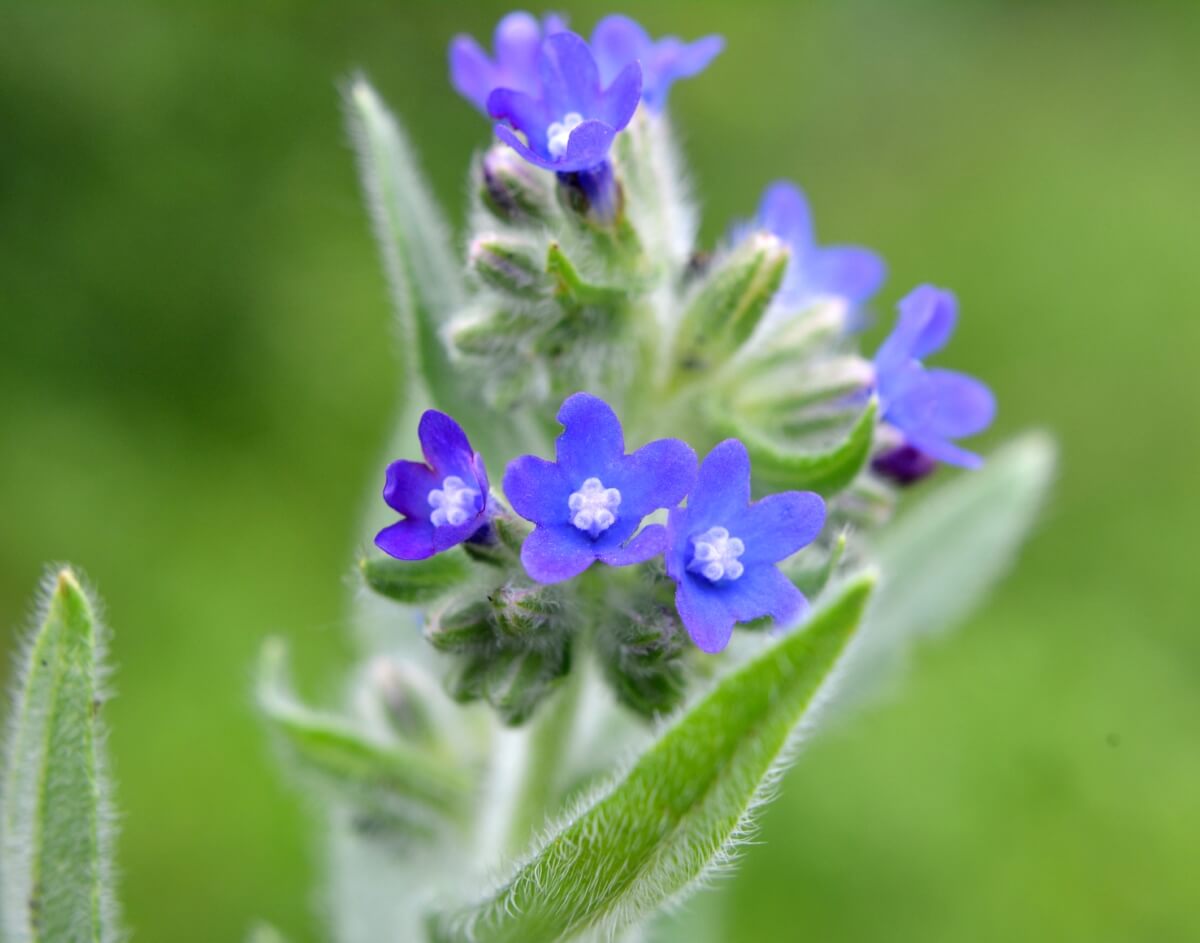
Anchusa azurea is also known as the Italian alkanet. They grow best in spring borders or wildflower beds.
Italian bugloss leaves and stems are covered in stiff hairs. The leaves are lance-shaped. From spring until summer, these perennials have clusters of small blue star-shaped flowers. These flowers are popular with pollinating insects.
Scientific Name: Anchusa azurea
- Native Status
- Confirmed by Kew
- Light Requirements
- Full sun to partial shade
- Growing Zones
- 3 to 8
- Flowering Season
- Spring to summer
- Mature Height
- Approximately 5 feet
15) Italian Clematis
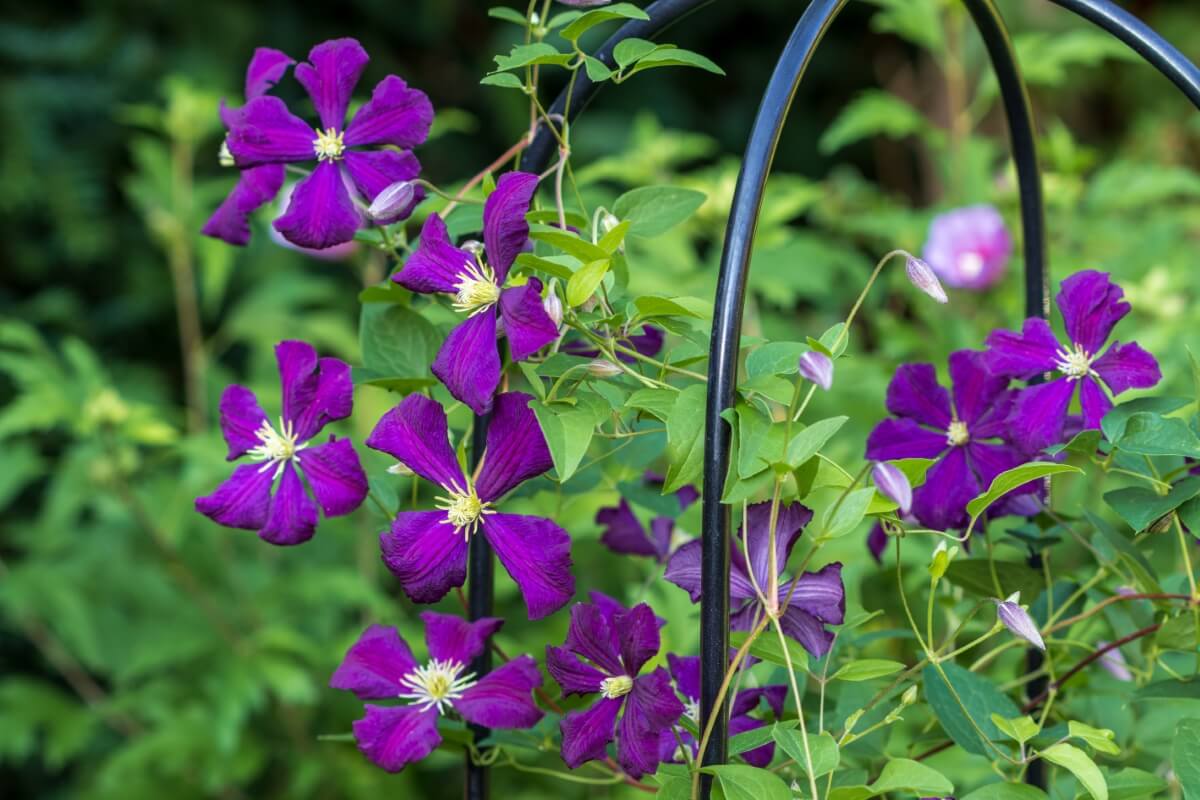
One of the most popular types of clematis is the Italian clematis (Clematis viticella). This variety has a long flowering season and is best grown as a climbing vine. It can also be grown in containers.
Native Italian clematis vines have pinnate leaves and large bell-shaped flowers. The flowers come in shades of blue, pink, and purple.
Scientific Name: Clematis viticella
- Native Status
- Confirmed by Kew
- Light Requirements
- Full sun to partial shade
- Growing Zones
- 4 to 11
- Flowering Season
- Summer to fall
- Mature Height
- Approximately 10 to 15 feet
16) Italian Lavender
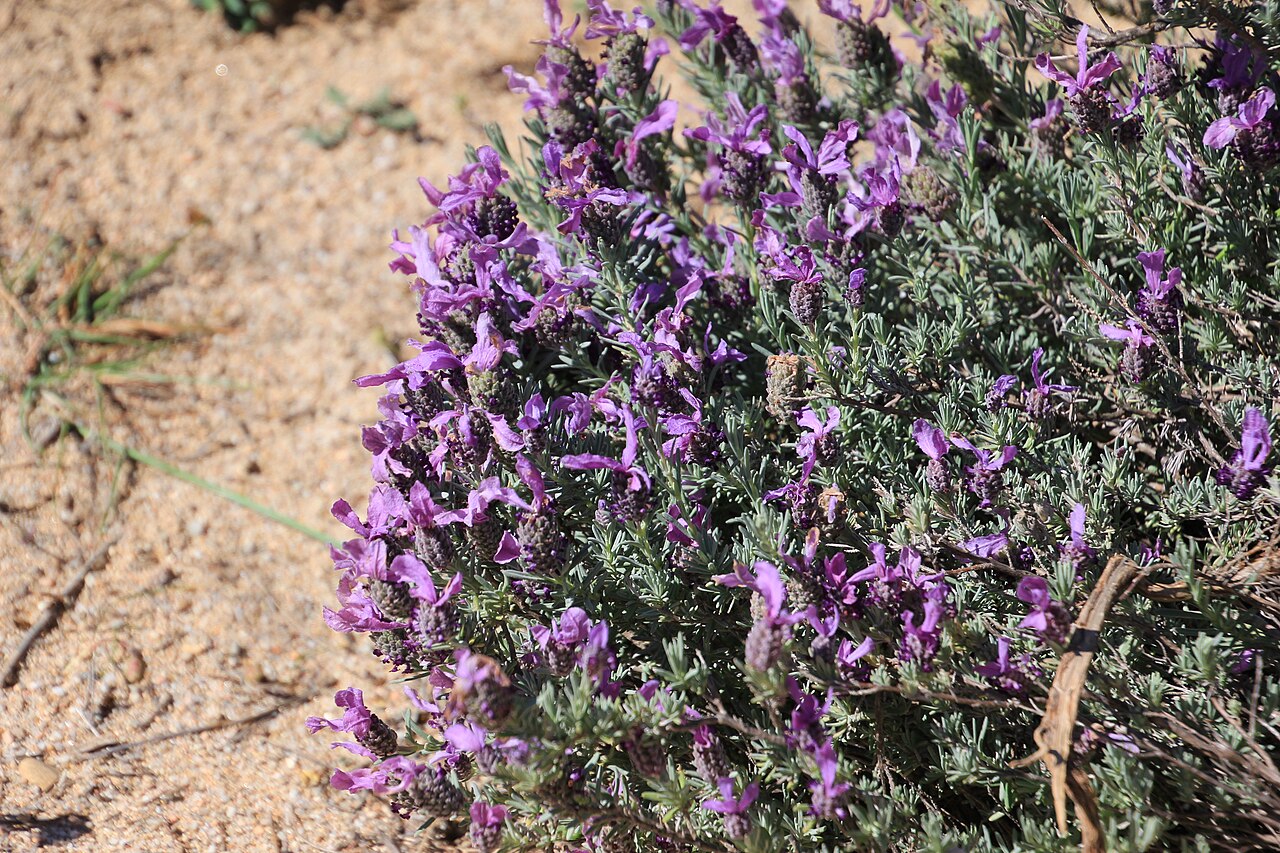
Italian lavender is also known as Spanish lavender and grows throughout the Mediterranean. Lavandula stoechas plants have a bushy habit and fuzzy grayish-green leaves. The flower spikes consist of tiny dark purple flowers with papery pinkish-purple bracts on top.
These attractive lavender shrubs thrive in full sun and prefer dry, sandy soils. As such, Italian lavender is ideal for Mediterranean herb gardens. This variety also grows well in containers.
Scientific Name: Lavandula stoechas
- Native Status
- Confirmed by Kew
- Light Requirements
- Full sun
- Growing Zones
- 6 to 11
- Flowering Season
- Spring to summer
- Mature Height
- 2 to 3 feet
17) Italian Thistle
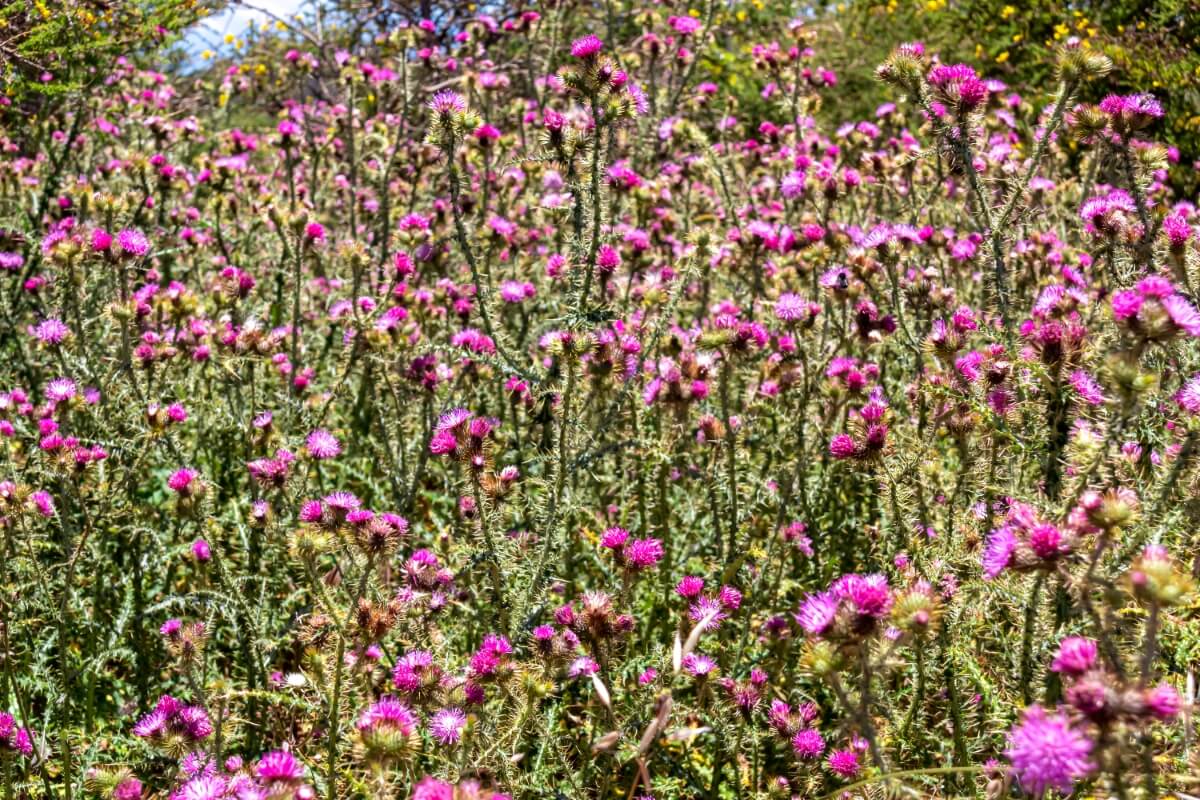
Carduus pycnocephalus is a herbaceous annual that’s native to the Mediterranean. It’s also found in parts of Asia, India, and North Africa. In the US, it has been introduced in states such as California, Oregon and Texas.
Native Italian thistles have spiky stems with woolly hairs. The leaves are also spiky. From late winter until summer, Italian thistles also have clusters of purple flowers.
Scientific Name: Carduus pycnocephalus
- Native Status
- Confirmed by Kew
- Light Requirements
- Full sun
- Growing Zones
- 6 to 9
- Flowering Season
- Winter to summer
- Mature Height
- Approximately 6.5 feet
18) Lesser Celandine
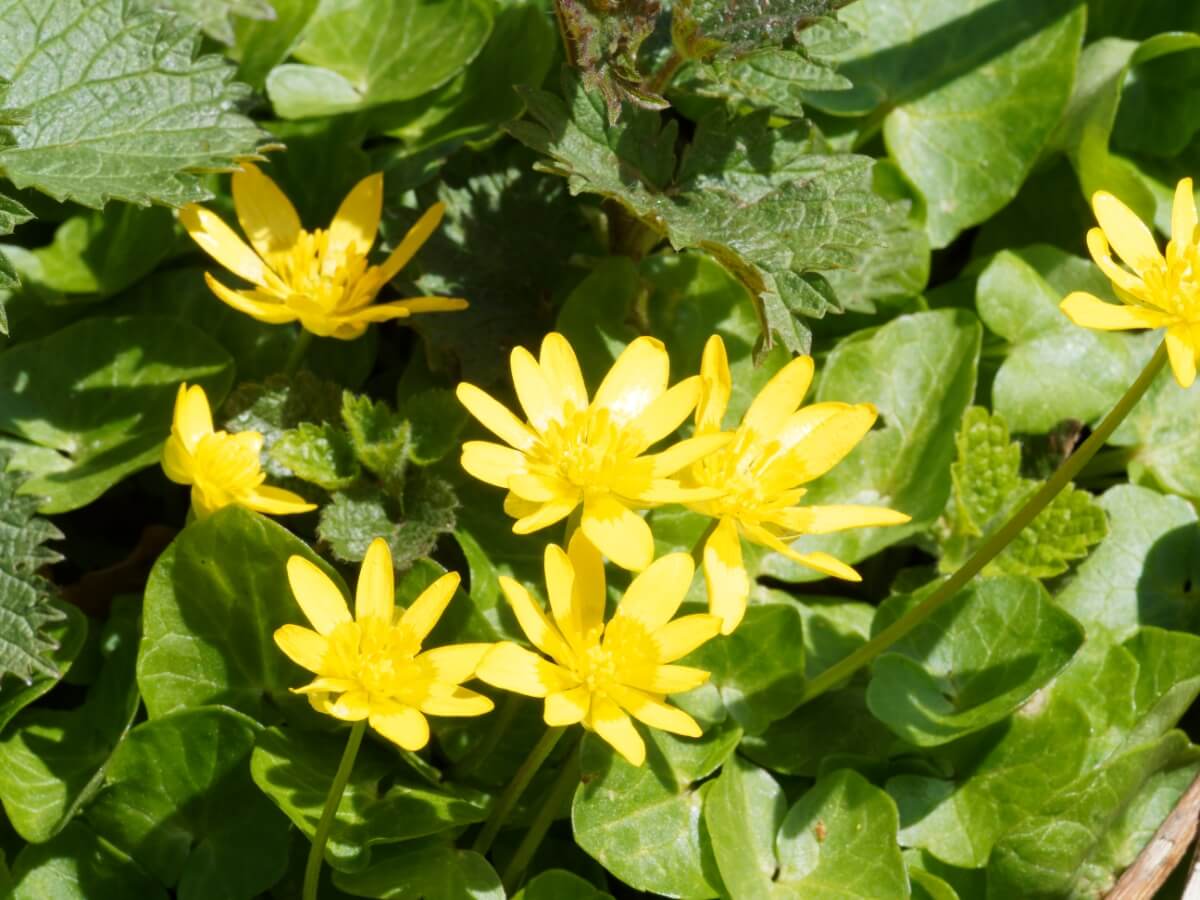
The lesser celandine is a herbaceous perennial from the buttercup family (Ranunculaceae). It’s a low-growing plant native throughout Europe. It has also been introduced to North America.
Lesser celandines grow in clumps of glossy heart-shaped leaves. During the spring, bright yellow flowers bloom atop leafless stems. The flowers can have up to 12 tepals.
Scientific Name: Ficaria verna
- Native Status
- Confirmed by Kew
- Light Requirements
- Full sun to partial shade
- Growing Zones
- 4 to 11
- Flowering Season
- Spring
- Mature Height
- Approximately 10 inches
19) Lily of the Valley
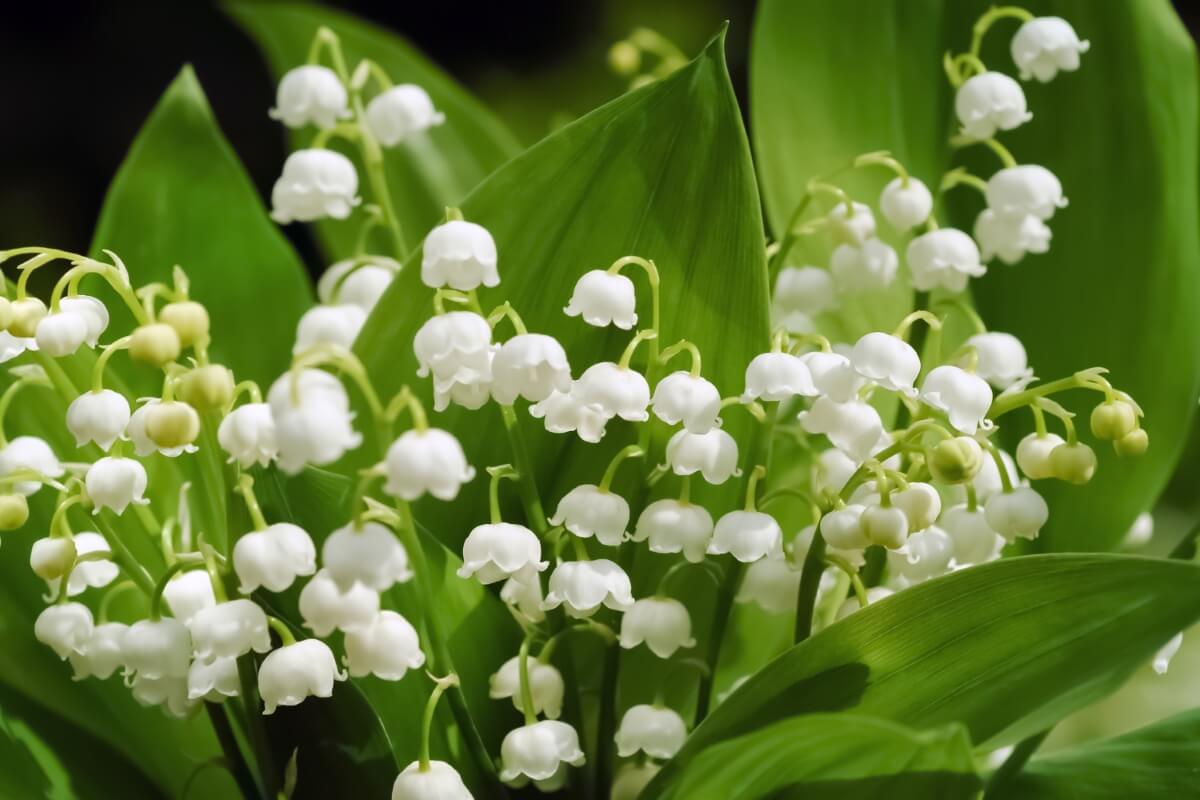
They are native across much of Europe, with Italy among them. Plant them in shady borders for the best display.
Convallaria majalis plants have pairs of elliptical leaves. During the spring, these perennials have arching stems laden with nodding bell-shaped white flowers. These lovely flowers also have a strong floral scent.
Scientific Name: Convallaria majalis
- Native Status
- Confirmed by Kew
- Light Requirements
- Partial to full shade
- Growing Zones
- 2 to 7
- Flowering Season
- Spring
- Mature Height
- Approximately 1 foot
20) Mediterranean Spurge
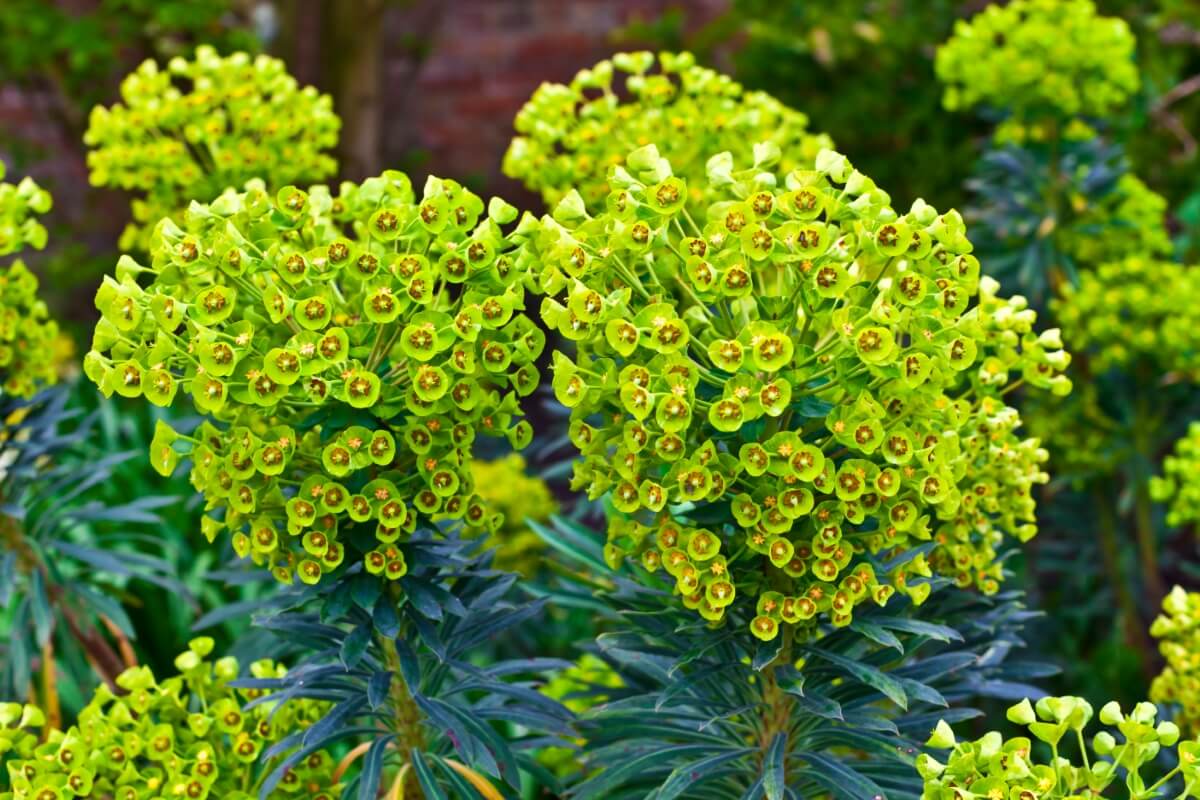
As its name suggests, Mediterranean spurge is widespread across the Mediterranean Basin. These adaptable, drought-tolerant plants thrive in Zones 7 to 10. However, Mediterranean spurge may struggle in hot, humid conditions.
Mediterranean spurge shrubs have hairy evergreen leaves that provide year-round interest. These shrubs also have dense clusters of small yellowish-green flowers. The flowers bloom from early spring until early summer.
Scientific Name: Euphorbia characias
- Native Status
- Confirmed by Kew
- Light Requirements
- Full sun
- Growing Zones
- 7 to 10
- Flowering Season
- Spring to summer
- Mature Height
- 3 to 4 feet
21) Purple Cyclamen
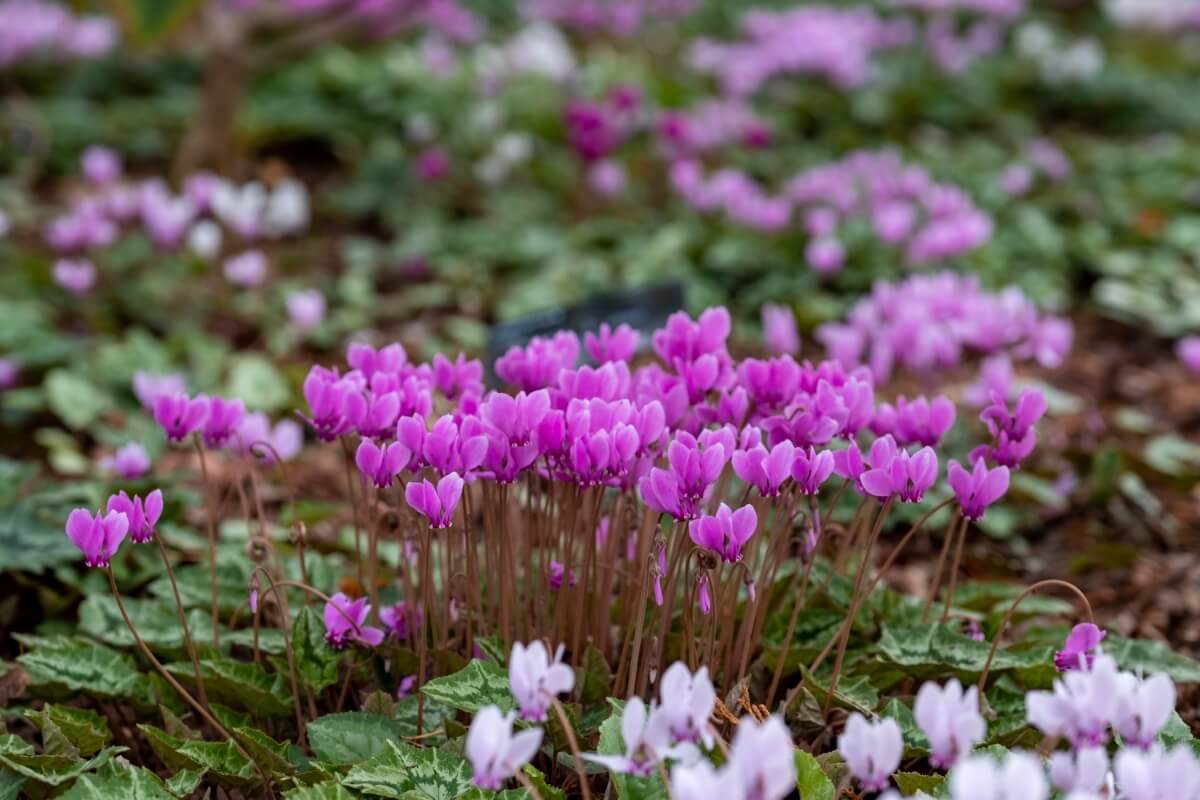
The purple cyclamen is a dramatic low-growing evergreen perennial. This cyclamen species is native to Italy and other parts of Central Europe.
Purple cyclamen plants form clumps of heart-shaped leaves decorated with mottled patterns. During the summer, these perennials produce gorgeous purple flowers with vertical petals.
Scientific Name: Cyclamen purpurascens
- Native Status
- Confirmed by Kew
- Light Requirements
- Full sun to full shade
- Growing Zones
- 5 to 9
- Flowering Season
- Summer
- Mature Height
- 2 to 3 inches
22) Rosemary
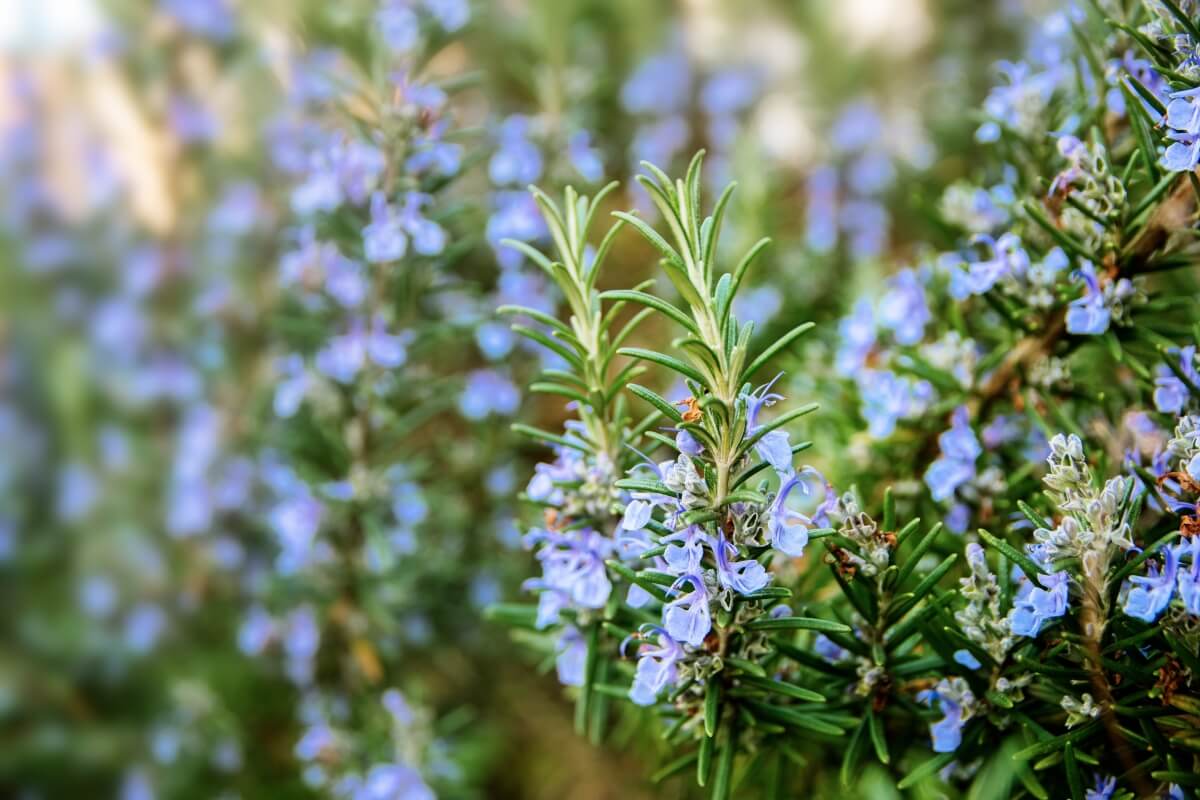
Rosemary is another classic culinary herb. These aromatic evergreen shrubs are native to the Mediterranean. As such, rosemary thrives in full sun and likes dry, sandy soils.
Rosemary shrubs have needle-like leaves and woody stems. From late winter to spring, these shrubs have clusters of tiny blue or white flowers. The ‘Tuscan Blue’ cultivar is particularly beautiful.
Scientific Name: Salvia rosmarinus
- Native Status
- Confirmed by Kew
- Light Requirements
- Full sun
- Growing Zones
- 8 to 11
- Flowering Season
- Winter to spring
- Mature Height
- 2 to 6 feet
23) Sardinian Hellebore
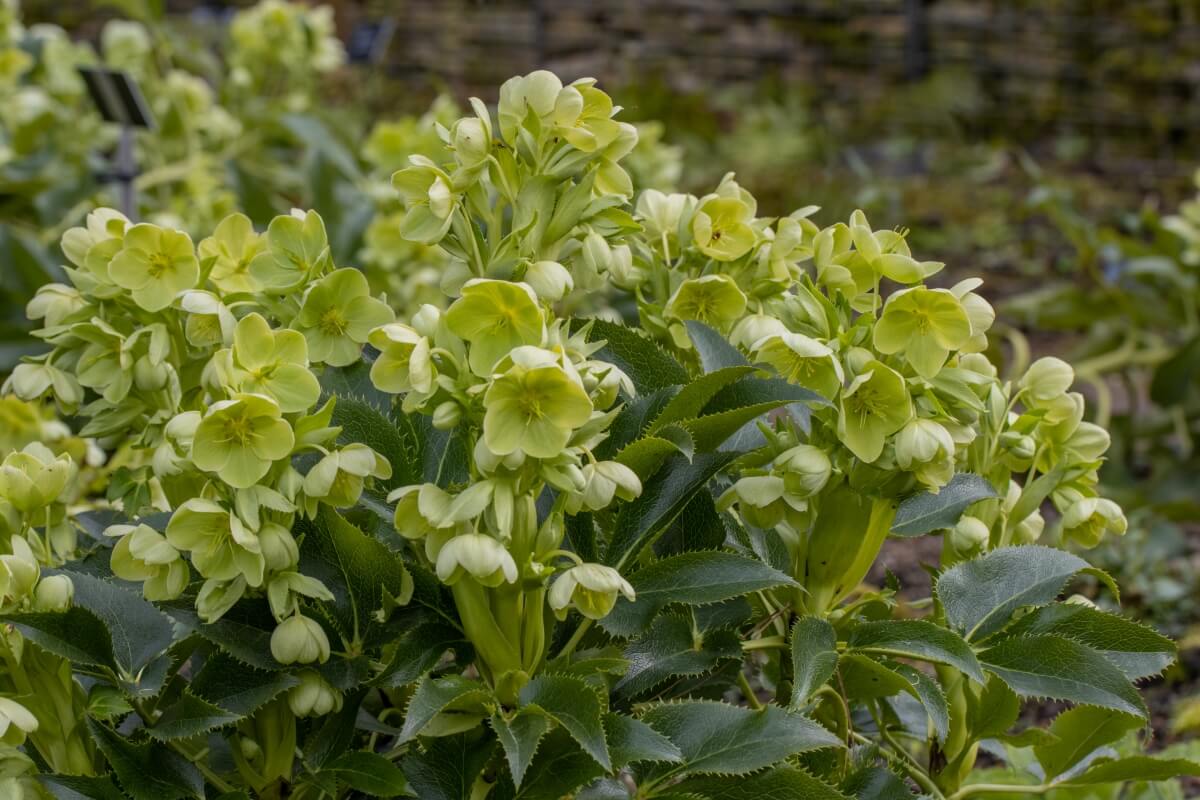
The Sardinian hellebore is also known as the Corsican hellebore. These evergreen perennials are prized for their long flowering season, which runs from late winter until early summer.
Sardinian hellebores have large leaves divided into three leathery leaflets with spiky margins. When in bloom, these hellebores have dense racemes of nodding bowl-shaped green flowers. These plants thrive in partial shade.
Scientific Name: Helleborus argutifolius
- Native Status
- Confirmed by Kew
- Light Requirements
- Full sun to partial shade
- Growing Zones
- 6 to 9
- Flowering Season
- Winter to summer
- Mature Height
- Approximately 3 feet
24) Sicilian Chamomile
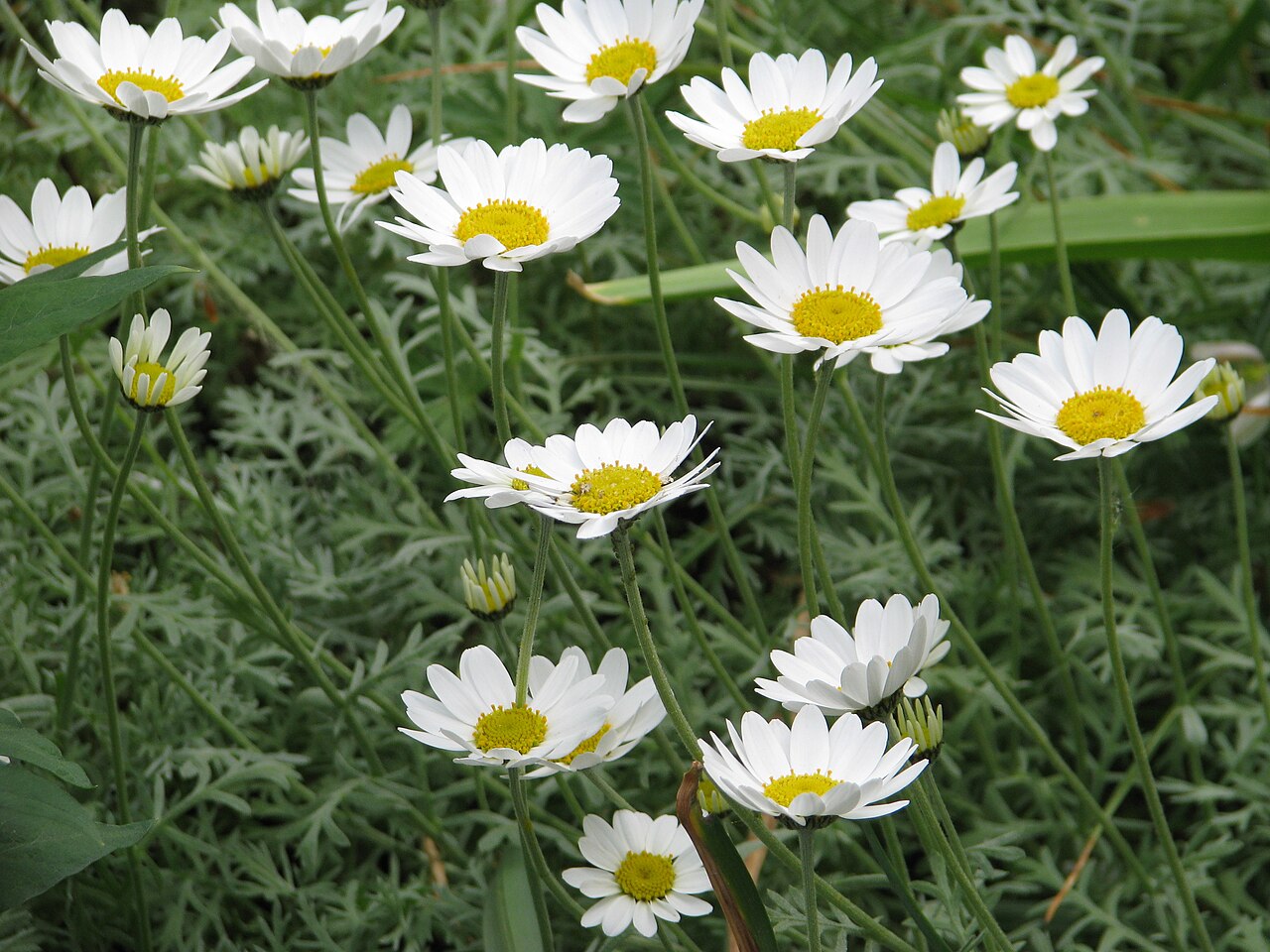
Anthemis cupaniana is a chamomile variety that’s native to the island of Sicily. These low-growing evergreen perennials form mats of feathery leaves. From summer until fall, Sicilian chamomile plants have white daisy-like blooms with yellow central florets.
This chamomile species is usually available as Anthemis punctata subsp. Cupaniana. It thrives in full sun and prefers fertile, well-draining soils.
Scientific Name: Anthemis cupaniana
- Native Status
- Confirmed by Kew
- Light Requirements
- Full sun
- Growing Zones
- 7 to 9
- Flowering Season
- Summer to fall
- Mature Height
- Approximately 1 foot
25) Sicilian Honey Garlic
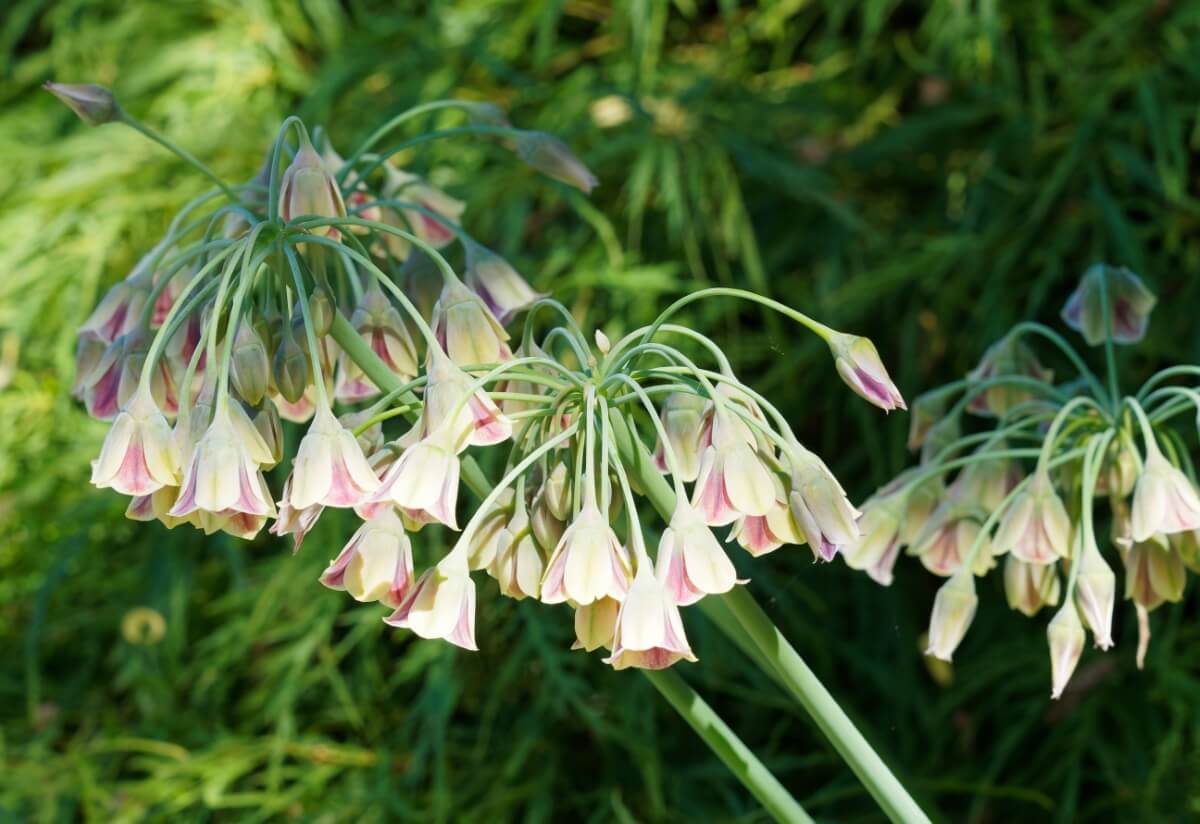
Sicilian honey garlic is one of the most graceful Allium varieties. It’s native to Italy, France, and Turkey. These alliums work well as ornamentals in Mediterranean borders.
Allium siculum plants have triangular bluish-green leaves and long green stems. The leaves emit a garlic-like scent when crushed. These alliums also have large clusters of nodding greenish-pink bell-shaped flowers.
Scientific Name: Allium siculum
- Native Status
- Confirmed by Kew
- Light Requirements
- Full sun to partial shade
- Growing Zones
- 5 to 10
- Flowering Season
- Spring to summer
- Mature Height
- Approximately 4 feet
26) Snowbell Bush
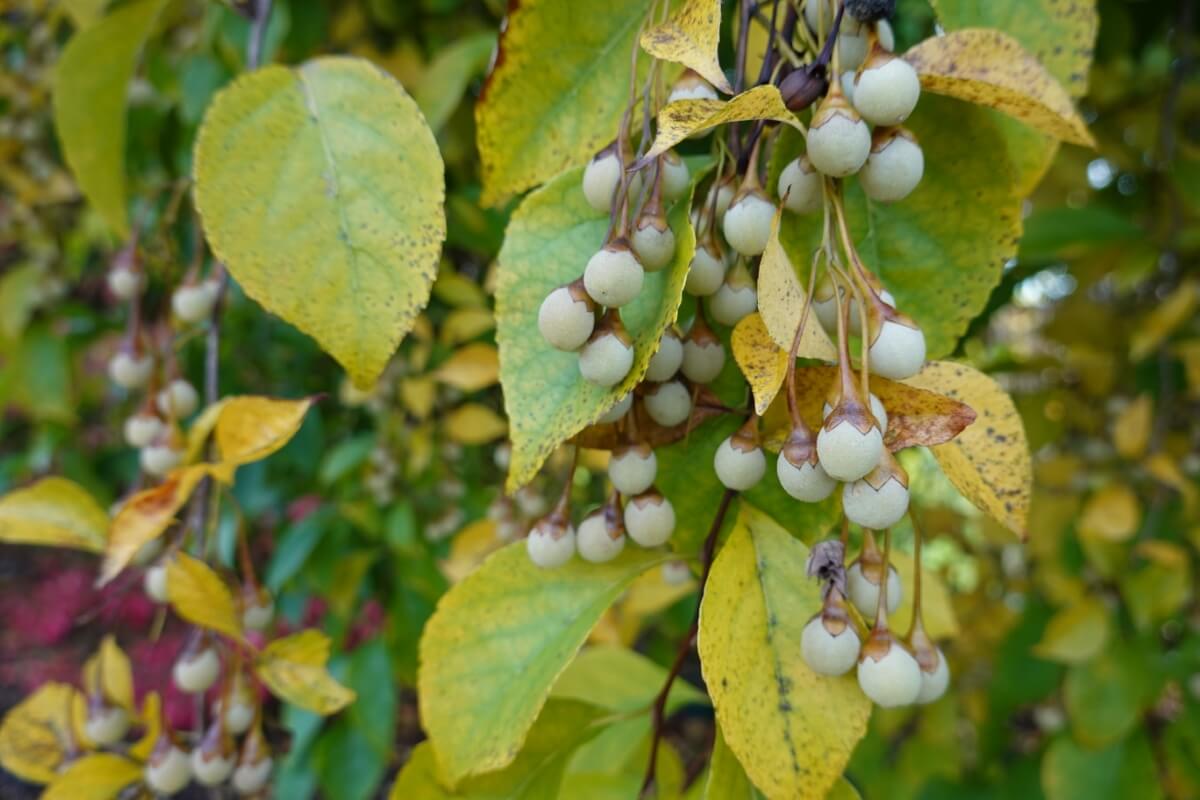
Styrax officinalis is a large deciduous shrub from the Styracaceae family. These shrubs have a dense canopy of elliptical or oval-shaped leaves. During spring and summer, snowbell bushes have fragrant bell-shaped white flowers.
Snowbell bushes are native to Italy, Southern Europe, and Turkey. These shrubs produce a fragrant sap which was traditionally used to make incense or perfume.
Scientific Name: Styrax officinalis
- Native Status
- Confirmed by Kew
- Light Requirements
- Full sun to partial shade
- Growing Zones
- 8 to 11
- Flowering Season
- Spring to summer
- Mature Height
- Up to 16.5 feet
27) Tree Heather
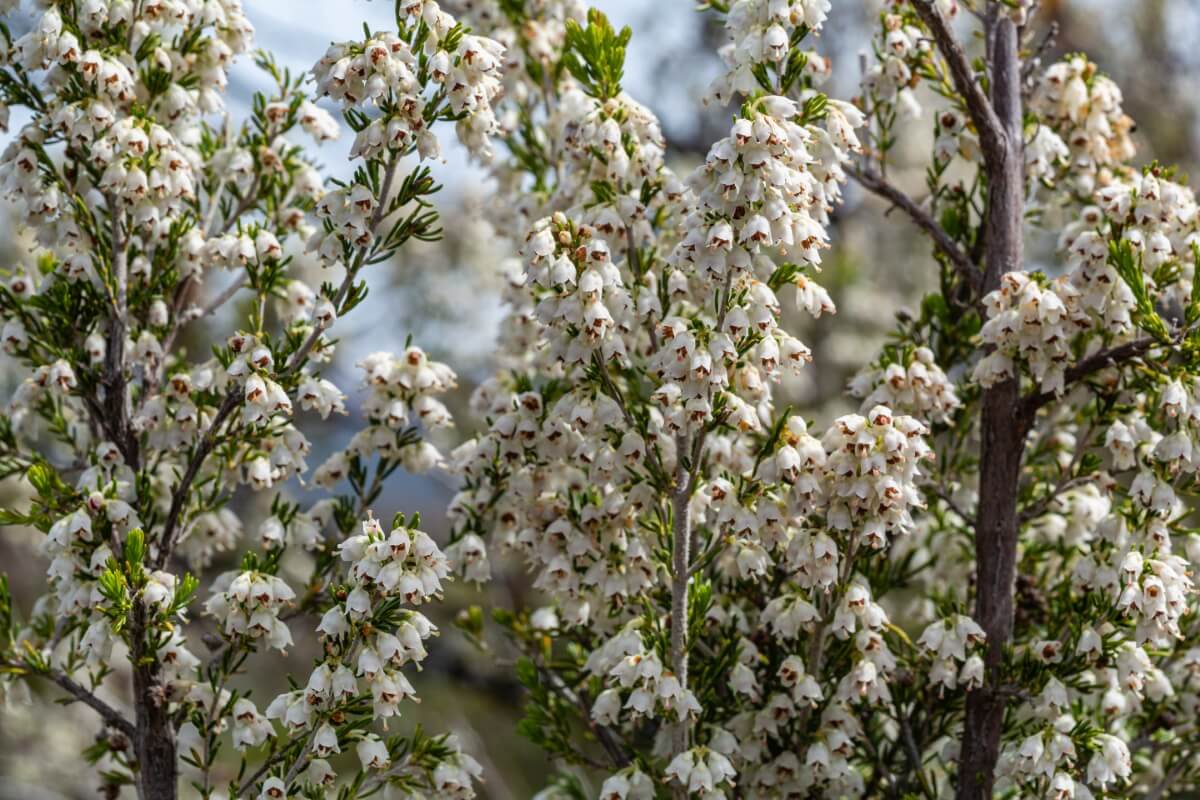
Tree heathers are evergreen shrubs that are widespread throughout the Mediterranean and East Africa. The hardwood of these shrubs has traditionally been used to make tobacco pipes. Tree heathers also work well as ornamentals in spring borders.
Erica arborea shrubs have needle-like dark green foliage. During the spring, these shrubs are covered in masses of fluffy white flowers. The blooms emit a honey-like fragrance.
Scientific Name: Erica arborea
- Native Status
- Confirmed by Kew
- Light Requirements
- Full sun to partial shade
- Growing Zones
- 7 to 9
- Flowering Season
- Spring
- Mature Height
- Approximately 12 feet
28) Tuscan Crocus
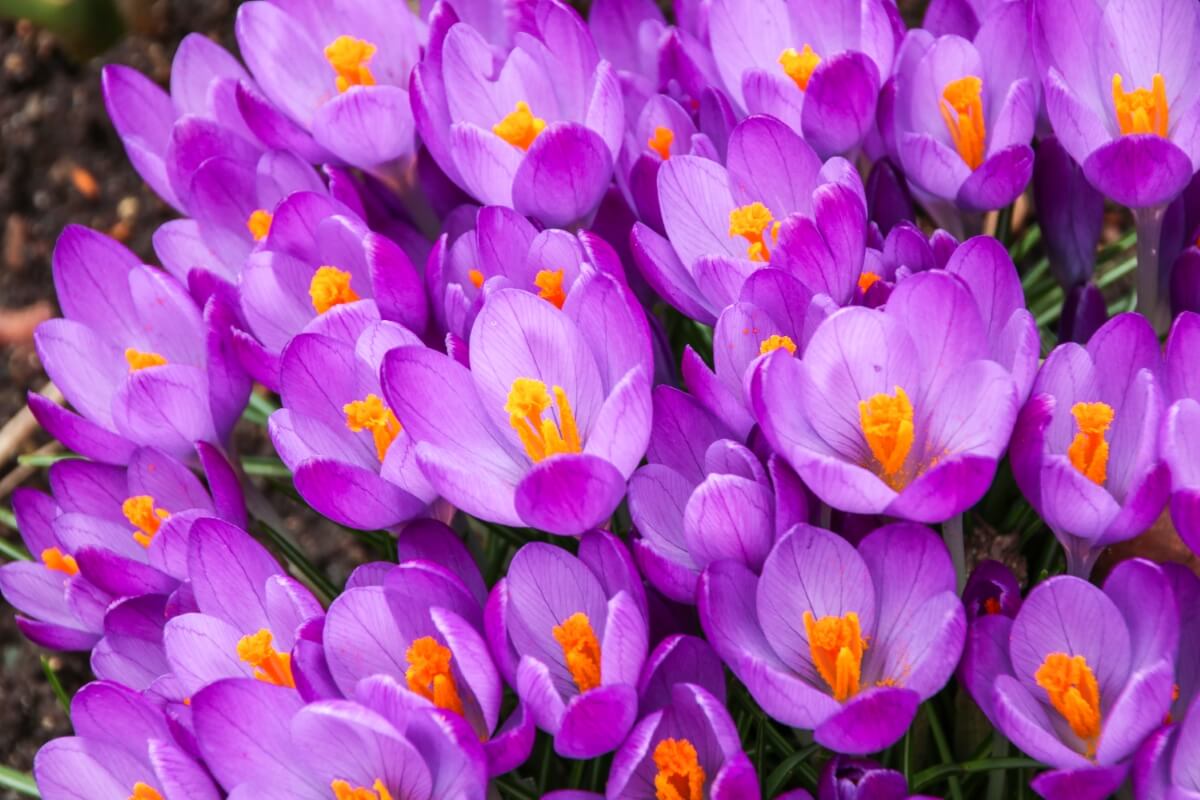
The Tuscan crocus is a Crocus species native to Italy. This variety thrives in deciduous woodlands. Crocus etruscus ‘Zwanenburg’ is a popular cultivar that grows well in spring borders.
Tuscan crocuses are low-growing bulbous perennials. During early spring, the underground corms produce large light purple flowers with dark veins. Inside each flower is a cluster of reddish-orange stamens.
Scientific Name: Crocus etruscus
- Native Status
- Confirmed by Kew
- Light Requirements
- Full sun to partial shade
- Growing Zones
- 4 to 8
- Flowering Season
- Spring
- Mature Height
- Approximately 4 inches
29) White Lily
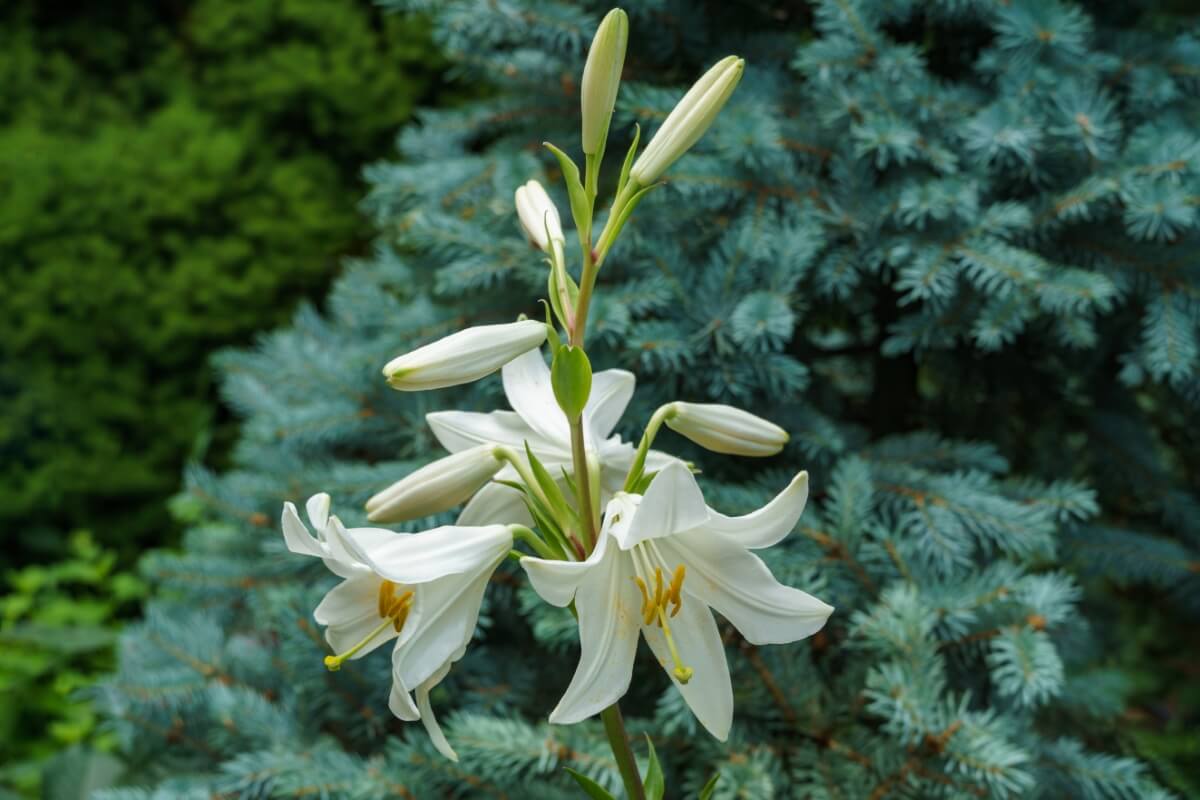


Also known as Madonna lilies, white lilies are perennials. Kew records their native range in the eastern Mediterranean and southeastern Europe and lists them as introduced in Italy, and the Portal to the Flora of Italy classes them as an ancient introduction (archaeophyte) that has become naturalized in Italy.
White lilies have upright stems with whorls of elliptical leaves. During spring and summer, these lilies produce several large, pure white flowers with swept-back petals. These intoxicating flowers have a strong, sweet fragrance.
Scientific Name: Lilium candidum
- Light Requirements
- Full sun to partial shade
- Growing Zones
- 6 to 9
- Flowering Season
- Spring to summer
- Native Status
- Ancient introduction (Flora of Italy); Kew: introduced
- Mature Height
- Approximately 6 feet
Wrapping Up
Many of Italy’s native flowers are brilliant additions to garden borders and containers. Species like the Italian bluebell (Hyacinthoides italica) and Tuscan crocus (Crocus etruscus) provide a colorful spring display. Meanwhile, Italian bugloss (Anchusa azurea) adds impact to wildflower borders.
Other regional guides cover Michigan native wildflowers, native wildflowers Colorado, French plants, Oregon coast wildflowers and native Spanish flowers to admire.
Questions and Answers
Does Italy have an official national flower?
No, Italy does not have an official national flower. The strawberry tree is considered one of Italy's symbols. The poet Giovanni Pascoli linked its green leaves, white flowers and red fruits to the Italian flag in his ode 'Al Corbezzolo'. No source checked names the white lily as an official or national flower of Italy.
When do wildflowers bloom in Italy?
Wildflowers bloom in Italy from early spring through midsummer, depending on the region and altitude. Around the beginning of March, once the snow has melted, crocuses cover the Campo Imperatore plateau in Abruzzo, though the bloom lasts only a few days. In Gran Paradiso National Park, flowering peaks from mid-June to mid-July. The Garden of Ninfa in Lazio is at its best in April and May.
Is it illegal to pick wildflowers in Italy?
It depends on where the flowers grow, because rules are set by region and by park, and there is no single national rule on picking wildflowers. In Gran Paradiso National Park, picking, uprooting and damaging plant species are prohibited. Lombardy regional law splits protected wild flora into two groups: strictly protected species, whose picking is banned, and species whose picking is regulated.
What do you call a flower in Italian?
The Italian word for flower is 'fiore', a masculine noun from Latin flos, floris. Treccani defines it as the most striking part of the plant, which contains the reproductive organs. The Portal to the Flora of Italy also lists regional Italian names for individual plants, such as 'Fiò de San Gioan' for the white lily in Liguria.
Sources45 sources, linked in the text
- dryades.units.it: floritaly
- Plants of the World Online (Kew): native to the mountains of several European countries
- Wikipedia: Leontopodium nivale
- Wikipedia: Pulsatilla alpina
- Wikipedia: Ophrys apifera
- Wikipedia: Thymus vulgaris
- britishlegion.org.uk: the poppy
- Wikipedia: Papaver rhoeas
- Wikipedia: Iris florentina
- Wikipedia: Glebionis coronaria
- Wikipedia: Gentiana lutea
- Wikipedia: Arum italicum
- Wikipedia: Aster amellus
- Plants of the World Online (Kew): Bellflowers are native to Italy
- Wikipedia: Campanula isophylla
- Wikipedia: Hyacinthoides italica
- Wikipedia: Rhamnus alaternus
- Wikipedia: Anchusa azurea
- Wikipedia: Clematis viticella
- Wikipedia: Lavandula stoechas
- Plants of the World Online (Kew): introduced in states such as California, Oregon
- Wikipedia: Carduus pycnocephalus
- Plants of the World Online (Kew): It has also been introduced to North America
- Wikipedia: Ficaria verna
- Plants of the World Online (Kew): native across much of Europe, with Italy
- Wikipedia: Lily of the valley
- Wikipedia: Euphorbia characias
- Wikipedia: Cyclamen purpurascens
- Wikipedia: Rosemary
- Wikipedia: Helleborus argutifolius
- Plants of the World Online (Kew): native to the island of Sicily
- Wikipedia: Anthemis cupaniana
- Wikipedia: Allium siculum
- Wikipedia: Styrax officinalis
- Wikipedia: Erica arborea
- Wikipedia: Crocus etruscus
- Wikipedia: Lilium candidum
- luoghi.italianbotanicalheritage.com: gran paradiso national park
- italoamericano.org: italian curiosities strawberry tree symbol of italy
- pngp.it: Regolamento Stralcio.pdf
- italia.it: flowering plants in italy in gardens and parks
- italia.it: garden of ninfa
- legislazionetecnica.it: 2233324
- treccani.it: fiore
- dryades.units.it: index.php?procedure=taxon page&tipo=all&id=6807
Updates and CorrectionsOct 18, 2026 · 3 corrected, 1 clarified, 2 removed
- Added: Every plant's native status, checked against Kew's Plants of the World Online, is shown in its entry; a national flora decided the plants Kew does not confirm.
- Removed: Genovese basil (Ocimum basilicum): Kew records no native range in Italy, and the Portal to the Flora of Italy lists it as a casual alien.
- Corrected: 4 unsourced figures (zones, counts, sizes or dates) were corrected to a source or removed.
- Corrected: 5 statements about where plants grow wild now follow the sources.
- Removed: A claim that the white lily is Italy's unofficial national flower, which no source supported.
- Clarified: The Florentine iris and the white lily are ancient introductions naturalized in Italy, not native; their entries now say so.
- Corrected: 3 photos that showed a different plant were replaced or removed.
Save and Share
Reader Comments
Have a question? Ask it here.