Flower Types
30 Native Brazilian Flowers and Plants: Names and Pictures


Contributing Editor
Credentials
- BA in Professional Writing TheCollector
- Worked at Dover Museum and the Canterbury Archaeological Trust TheCollector
Writing for Petal Republic since 2022 · 75 articles
Expertise
Flowers, Native plants, Wildlife gardening
Published In
TheCollector
Thirty Brazilian natives with names, pictures, growing details, and a native status checked against Kew and the national checklist on October 18, 2026.
In Short
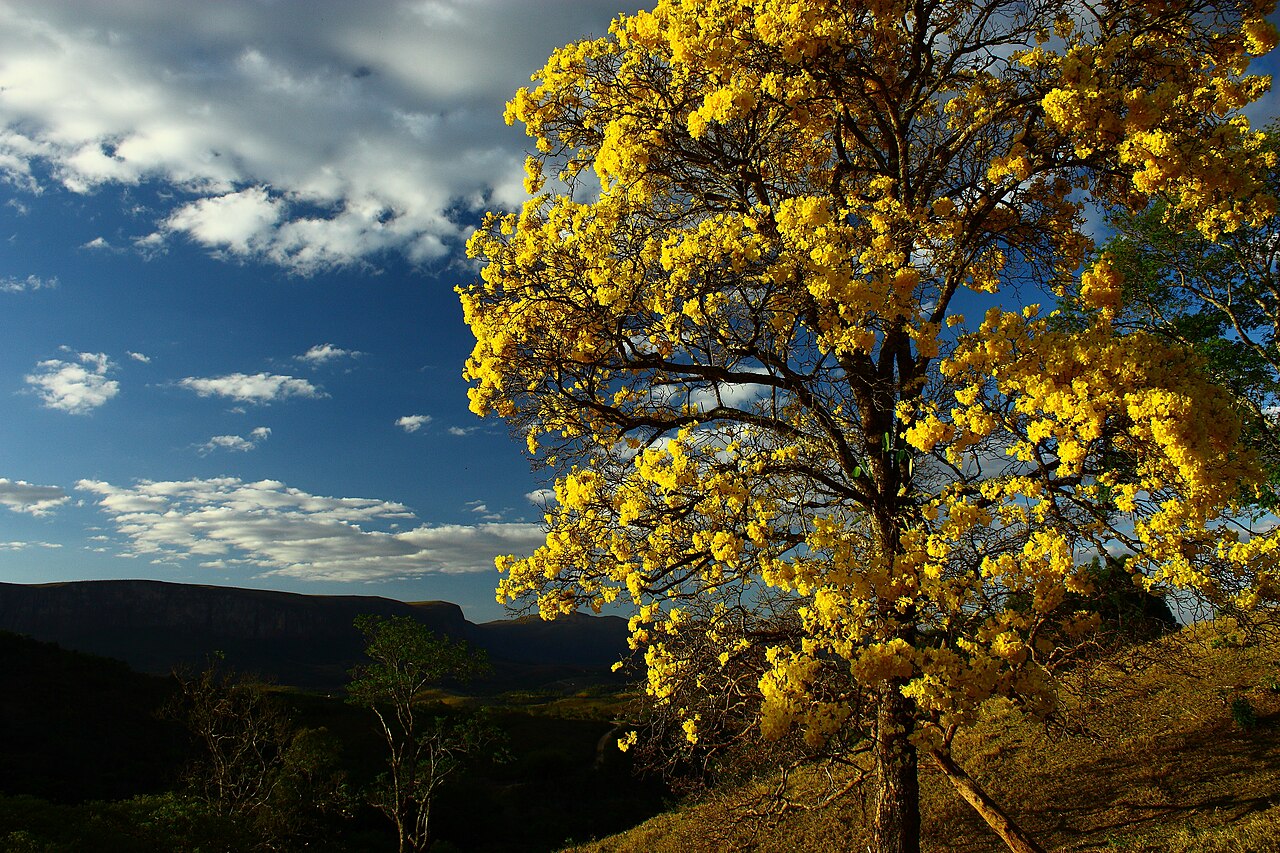
Native Brazilian flowers include the Amazonian water lily, golden trumpet tree, pink lapacho, heliconia, passionflower, and Brazilian orchid. In Belo Horizonte, the ipês flower from June to September.
- Chapada dos Veadeiros National Park in Goiás protects threatened Cerrado flora, including the sempre-viva Paepalanthus chiquitensis.
- Brazil has no official national flower; the pau-brasil is the National Tree, and bills to make the ipê-amarelo the national flower were withdrawn in 1972 and archived in 1978.
More Takeaways
- The check confirmed 28 of 30 plants as native in Kew records; the bromeliad and jacaranda entries use the national checklist, and no plant was removed.
- No federal rule targets picking wild flowers as such, but damaging ornamental plants in public places or on another person's property is a crime.
Brazil’s Climate and Native Plants
Northern Brazil is covered by tropical rainforest, while most of central Brazil is comprised of tropical grasslands. Southern Brazil enjoys a humid subtropical climate. There are also some hot, arid habitats in northeastern Brazil.
How Are Brazil’s Native Flowers Defined?
In this list, a plant counts as native to Brazil where Kew's Plants of the World Online records it as native there. For plants Kew does not confirm, the national checklist, Flora e Funga do Brasil, decides: it must record the plant as native rather than cultivated. Unfortunately, some of Brazil’s native flowers are at risk due to the ongoing deforestation of the Amazon rainforest.
How We Checked These 30 Plants
On October 18, 2026, every plant in this list was checked against Kew's Plants of the World Online, which records native ranges region by region. Where Kew had no species-level record, the Flora e Funga do Brasil national checklist was checked.
| What the check found | Plants |
|---|---|
| Native in Brazil (Kew) | 28 |
| Native family (Flora e Funga do Brasil) | 1 |
| Cultivated in Brazil; its genus is native (Flora e Funga do Brasil) | 1 |
| Checked as a whole genus | 5 |
30 Native Brazilian Flowers and Plants
1) Allamanda
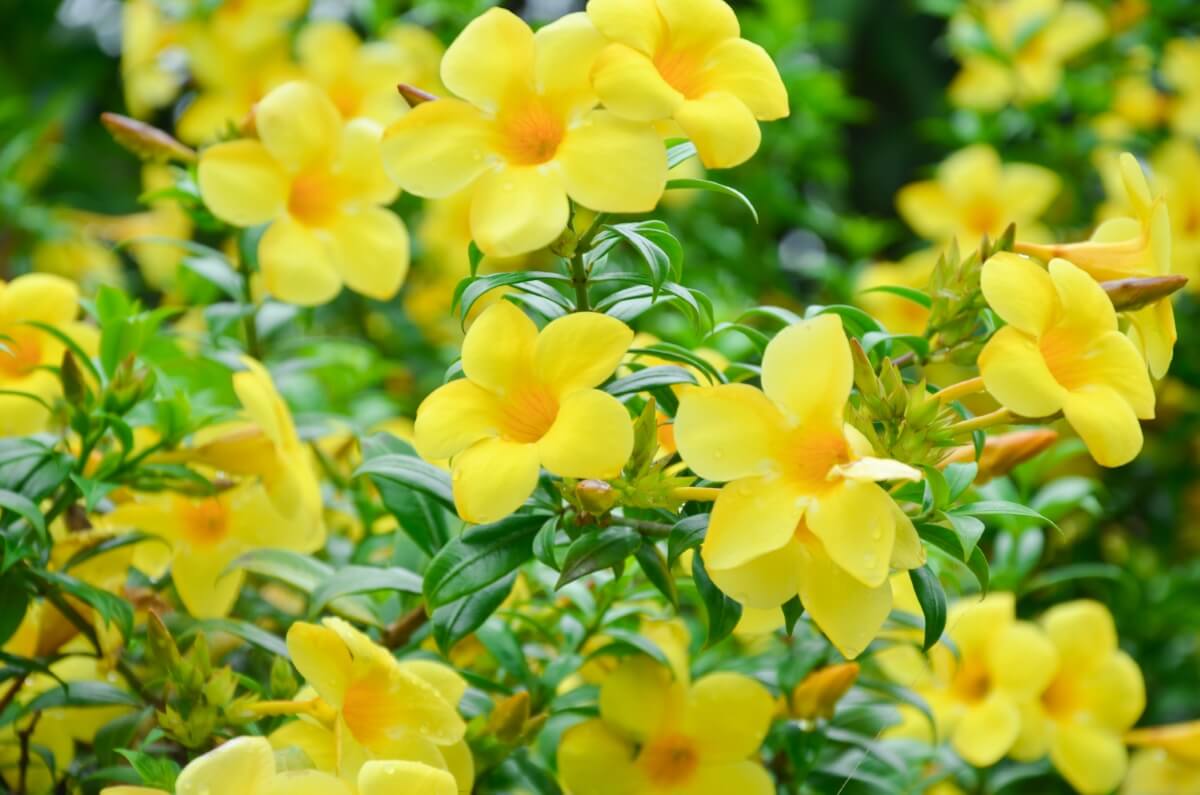
Also known as golden trumpet flowers, allamanda flowers are climbing shrubs from the dogbane family (Apocynaceae). For the best display, train your allamanda flowers to grow up trellises or other support structures.
Allamanda plants have sprawling stems bearing glossy elliptical leaves. These climbers have bright yellow trumpet-shaped flowers that can bloom throughout the year in tropical climates.
Scientific Name: Allamanda cathartica
- Native Status
- Confirmed by Kew
- Light Requirements
- Full sun
- Growing Zones
- 10 to 11
- Flowering Season
- Summer to fall
- Mature Height
- Approximately 10 to 20 feet
2) Amazonian Water Lily
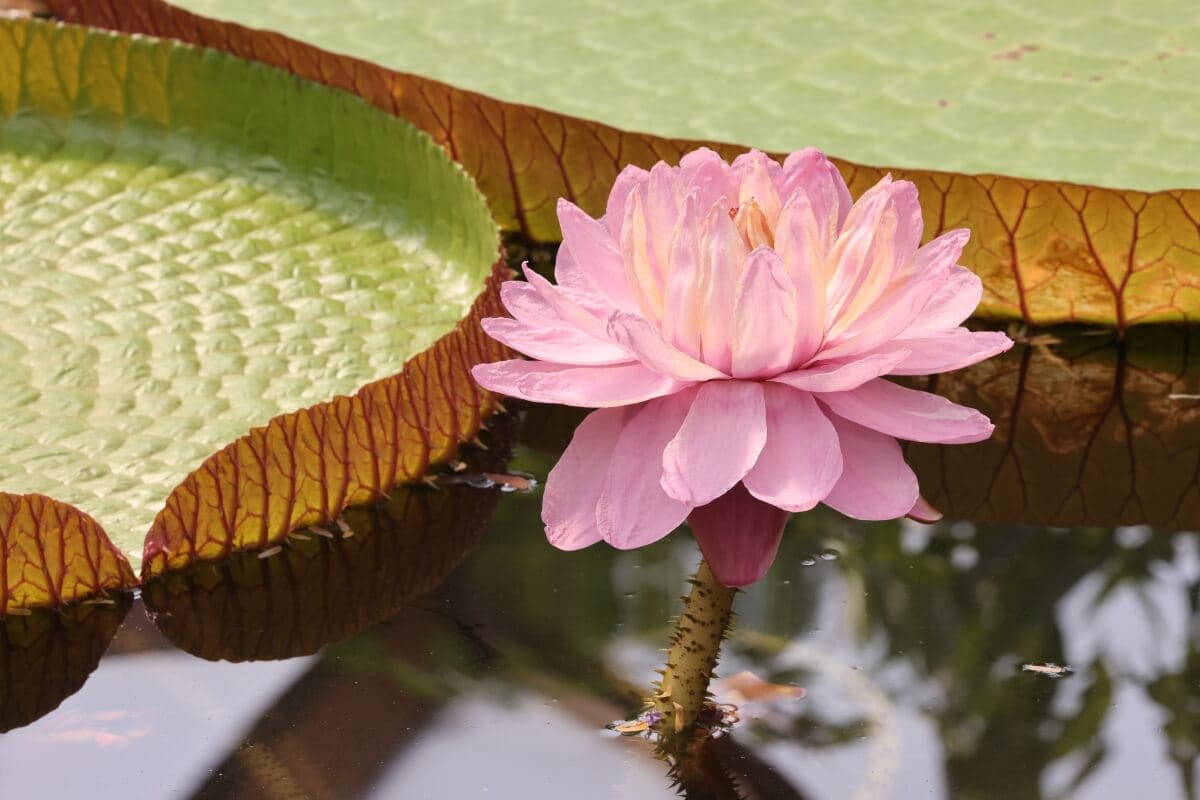
Known as uape jacana in Brazil, Amazonian water lilies are seriously impressive aquatic plants. The waxy pads of these water lilies have spiny reddish-purple undersides and can grow up to 10 feet wide. These lily pads are supported by enormous stalks that can be over 25 feet long. Amazonian water lilies also have substantial white flowers that can take two days to fully unfurl.
Scientific Name: Victoria amazonica
- Native Status
- Confirmed by Kew
- Light Requirements
- Full sun
- Growing Zones
- 10 to 11
- Flowering Season
- Summer
- Mature Height
- Approximately 25 feet
3) Anthurium
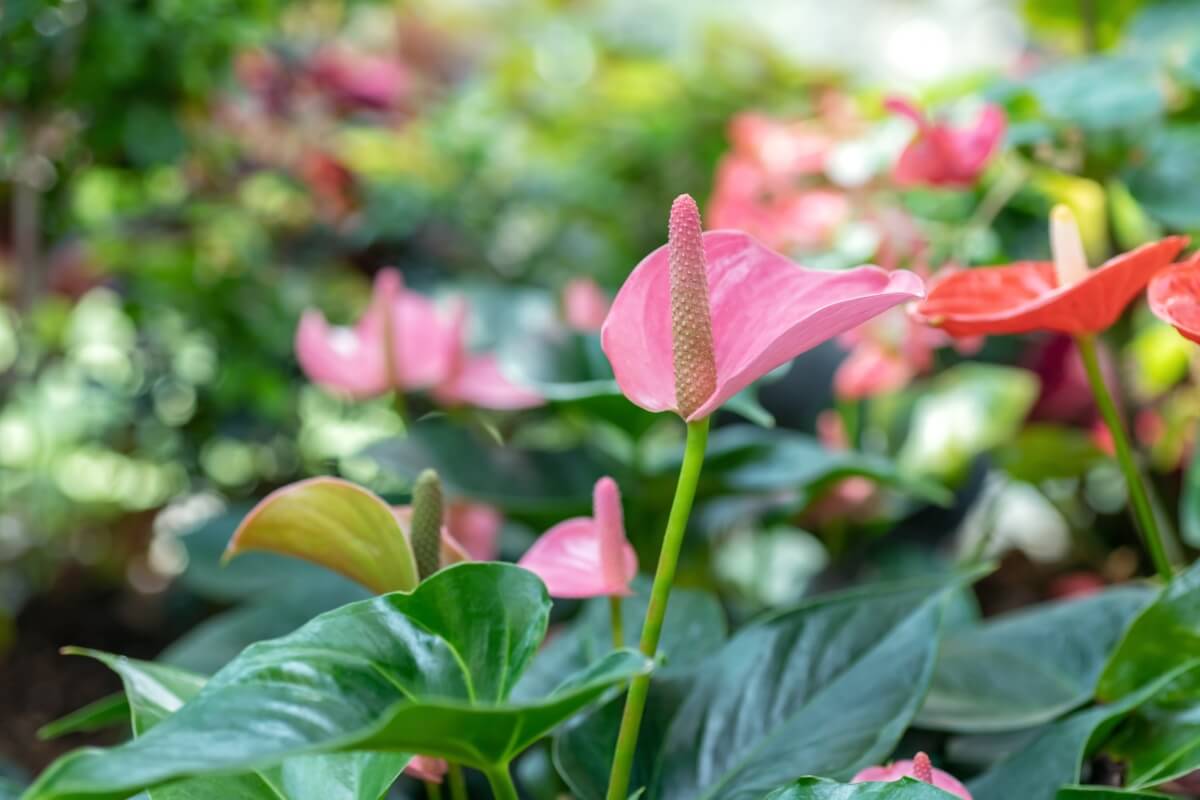
Anthuriums are some of the world’s most popular houseplants. These tropical perennials can also be grown outdoors in Zones 10 to 12.
Some anthuriums have glossy, bright red spathes, while others have large, velvety leaves covered in prominent veins. All anthuriums have a spadix consisting of several tiny greenish-white flowers.
Scientific Name: Anthurium spp.
- Native Status
- Genus: Confirmed by Kew
- Light Requirements
- Bright, indirect light
- Growing Zones
- 10 to 12
- Flowering Season
- Throughout the year
- Mature Height
- Approximately 2 feet
4) Beach Morning Glory
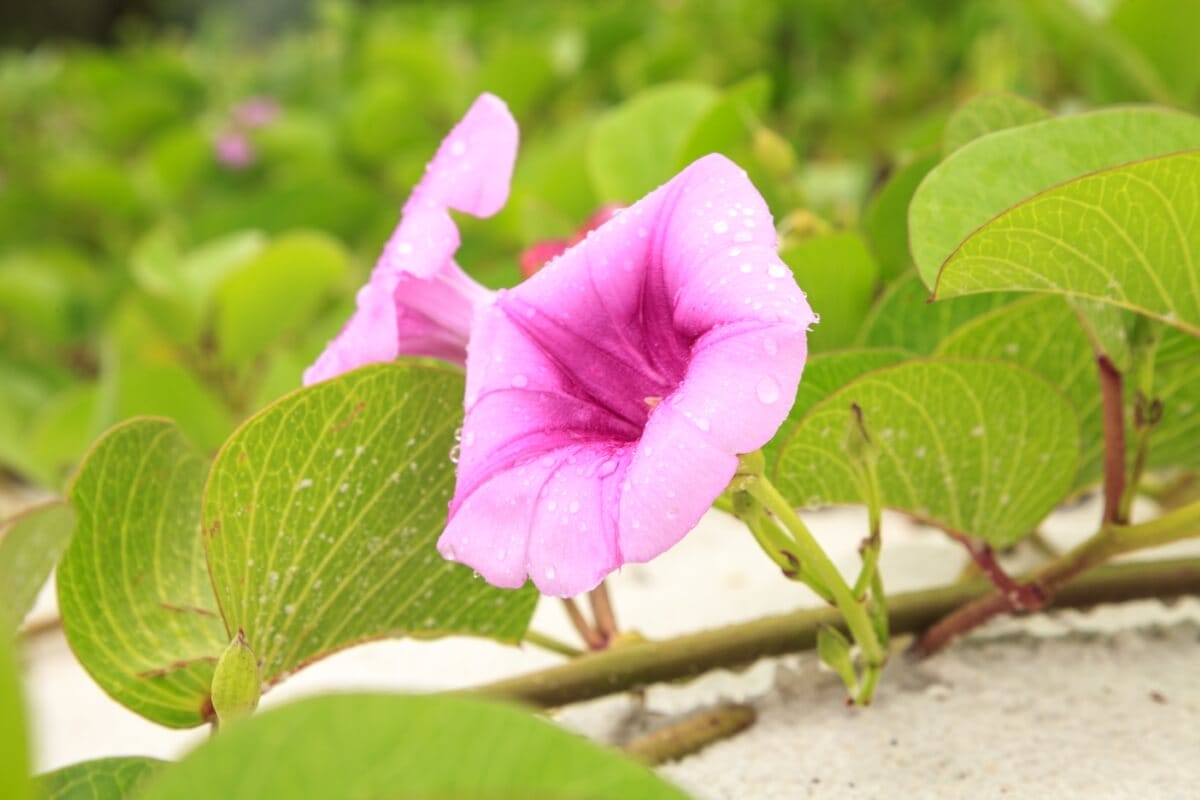
The beach morning glory is a low-growing perennial vine with a creeping habit. As such, these morning glories make excellent ground cover plants in Zones 8 to 11.
As their name suggests, these vines are ideal for coastal areas because they can tolerate salty air and sandy soils. These morning glories have round, succulent-like leaves and purple trumpet-shaped flowers with dark purple centers.
Scientific Name: Ipomoea pes-caprae
- Native Status
- Confirmed by Kew
- Light Requirements
- Full sun
- Growing Zones
- 8 to 11
- Flowering Season
- Throughout the year
- Mature Height
- 4 to 6 inches
5) Brazilian Cherry
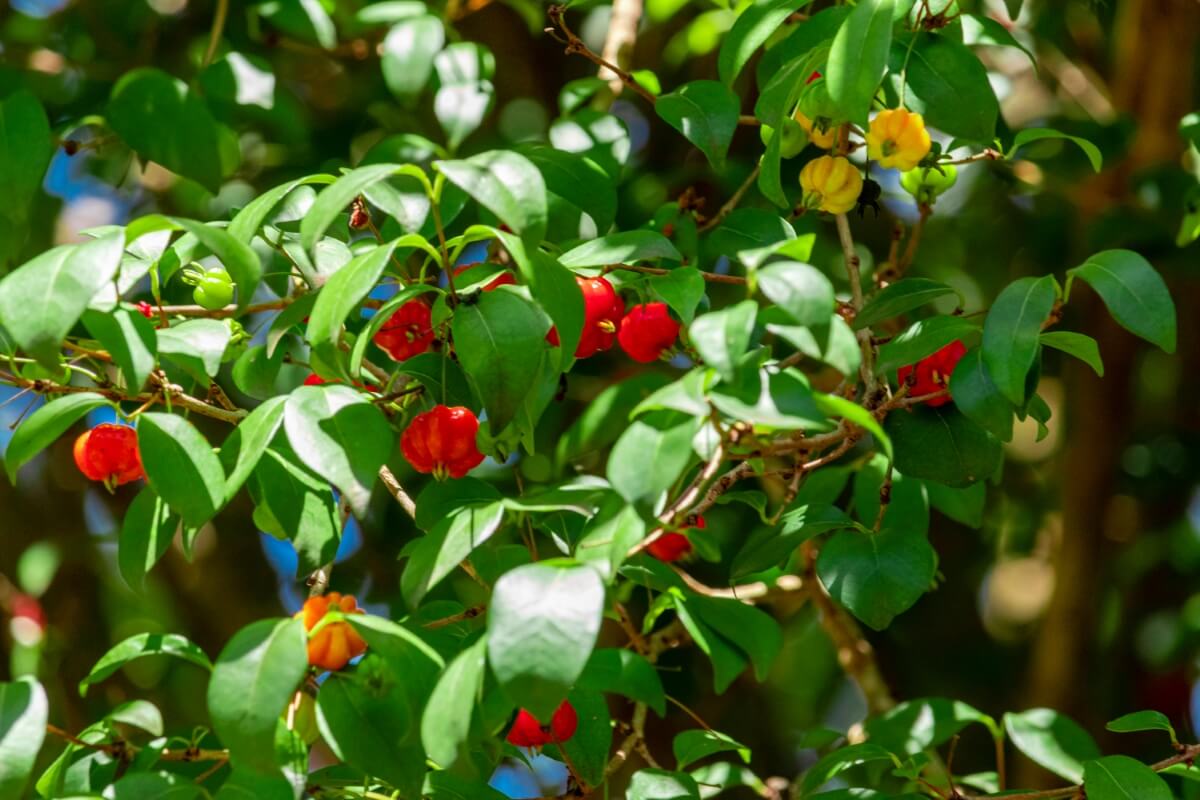
Brazilian cherry trees are evergreen members of the myrtle family (Myrtaceae). These beautiful trees produce edible fruits that turn from green to reddish-purple as they ripen. These ribbed fruits make good jams or jellies.
Brazilian cherry trees have a conical, upright growth habit. The glossy, ovate leaves produce a resin-like smell when crushed. Plus, these trees also have white flowers with four petals.
Scientific Name: Eugenia uniflora
- Native Status
- Confirmed by Kew
- Light Requirements
- Partial shade
- Growing Zones
- 10 to 12
- Flowering Season
- Throughout the year
- Mature Height
- Approximately 20 feet
6) Brazilian Dutchman’s Pipe
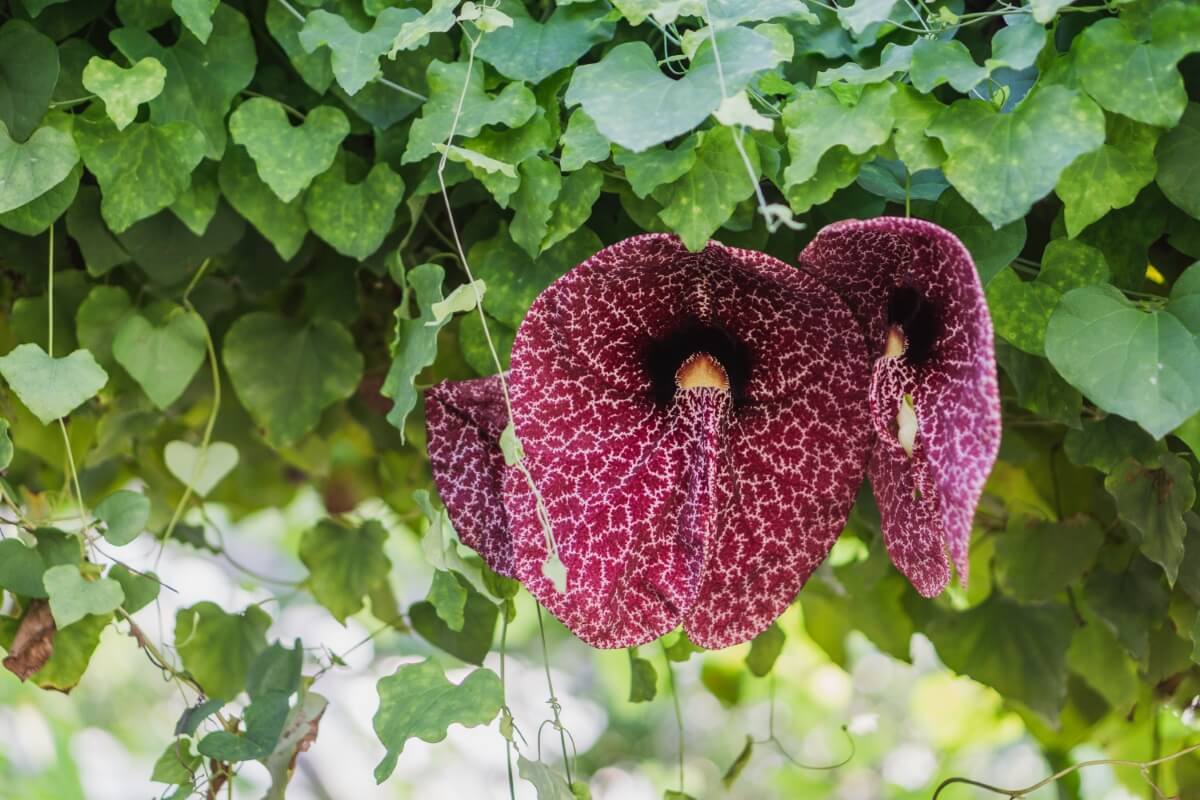
The Brazilian Dutchman’s pipe is a vigorous climbing vine from the birthwort family (Aristolochiaceae). These vines have large, pouch-like reddish-purple flowers and green heart-shaped leaves.
These dramatic climbing vines grow best when climbing a trellis or similar support. Brazilian Dutchman’s pipe flowers can’t tolerate cold temperatures outside of Zones 10 to 12.
Scientific Name: Aristolochia gigantea
- Native Status
- Confirmed by Kew
- Light Requirements
- Full sun to partial shade
- Growing Zones
- 10 to 12
- Flowering Season
- Summer to winter
- Mature Height
- Approximately 20 feet
7) Brazilian Firetree
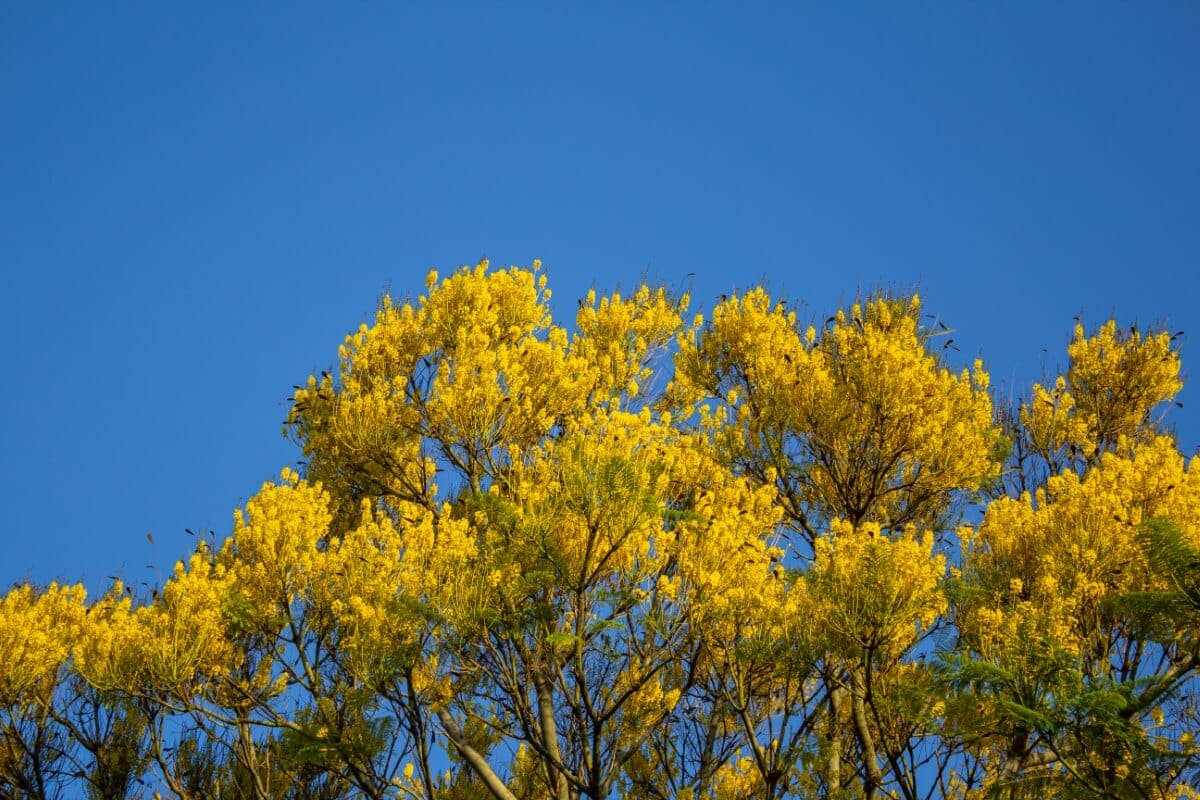
Brazilian firetrees are fast-growing deciduous trees known as guapuruvu or ficheira trees in Brazil. These tall, upright trees have smooth, grayish-green bark and a canopy of large, bipinnate leaves.
During spring and summer in the Southern Hemisphere, Brazilian firetrees produce bright yellow flowers. These trees require full sun in Zones 10 to 12.
Scientific Name: Schizolobium parahyba
- Native Status
- Confirmed by Kew
- Light Requirements
- Full sun
- Growing Zones
- 10 to 12
- Flowering Season
- Spring to summer
- Mature Height
- 80 to 130 feet
8) Brazilian Fuchsia
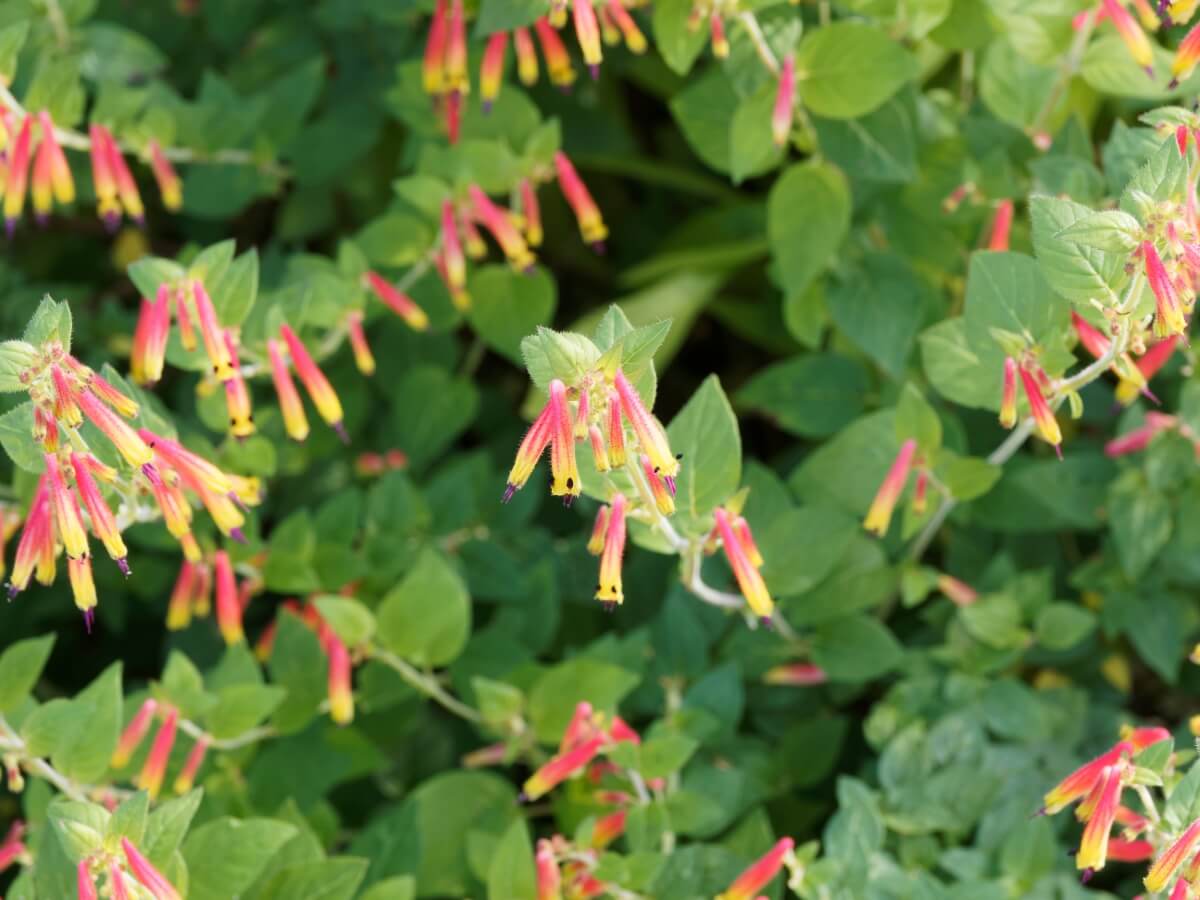
Brazilian fuchsias are gorgeous evergreen shrubs that thrive in Zones 9b to 11. Although not actually related to true fuchsias, Brazilian fuchsias work well as hedges. However, they cannot tolerate frost.
Brazilian fuchsias have soft, hairy stems and dark green elliptical leaves. What’s more, from fall until spring, Brazilian fuchsias have nodding clusters of tubular red and yellow flowers.
Scientific Name: Justicia floribunda
- Native Status
- Confirmed by Kew
- Light Requirements
- Full sun to partial shade
- Growing Zones
- 9b to 11
- Flowering Season
- Fall to spring
- Mature Height
- Approximately 2 feet
9) Brazilian Grape Tree
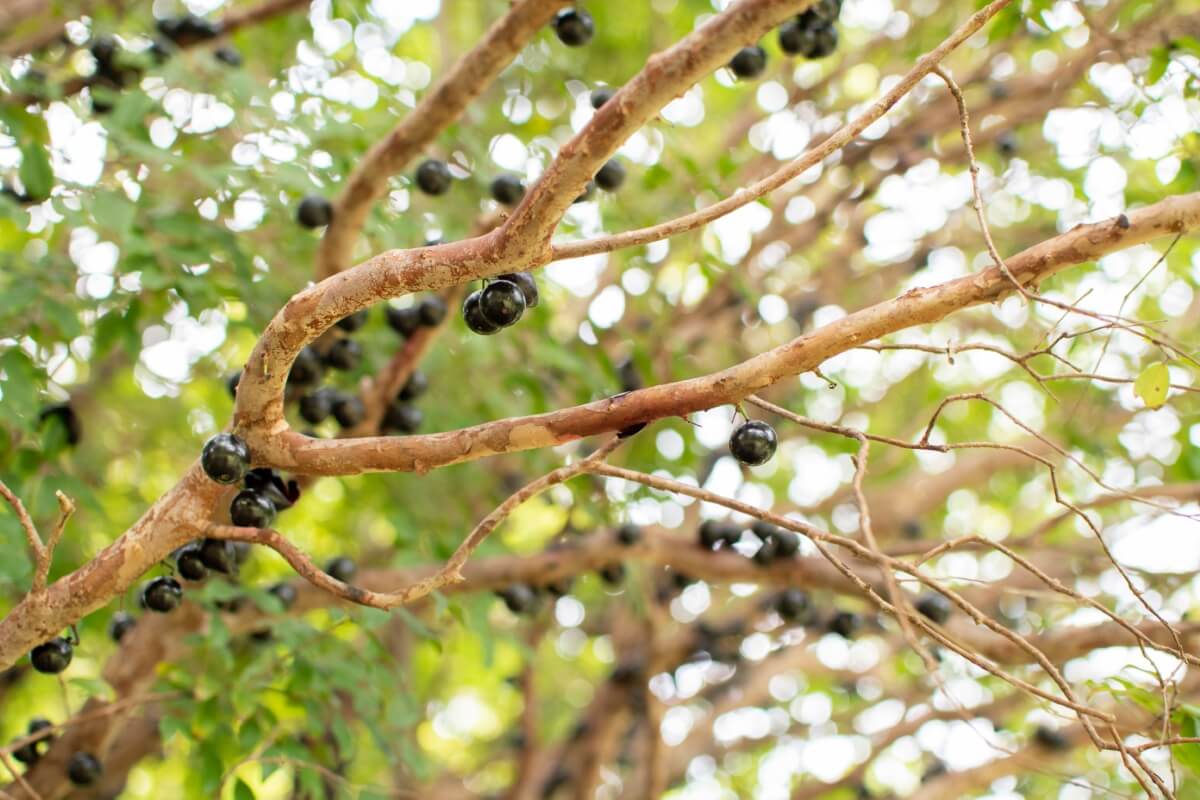
Also known as jabuticaba trees, Brazilian grape trees are interesting members of the myrtle family. These evergreen trees have reddish-brown trunks and pink elliptical leaves that gradually turn green.
Brazilian grape trees also have white flowers and purplish-black fruits that grow directly from the trunk. The edible fruits can be eaten raw or used to make jams or wines.
Scientific Name: Plinia cauliflora
- Native Status
- Confirmed by Kew
- Light Requirements
- Full sun
- Growing Zones
- 10 to 12
- Flowering Season
- Throughout the year
- Mature Height
- Approximately 50 feet
10) Brazilian Orchid
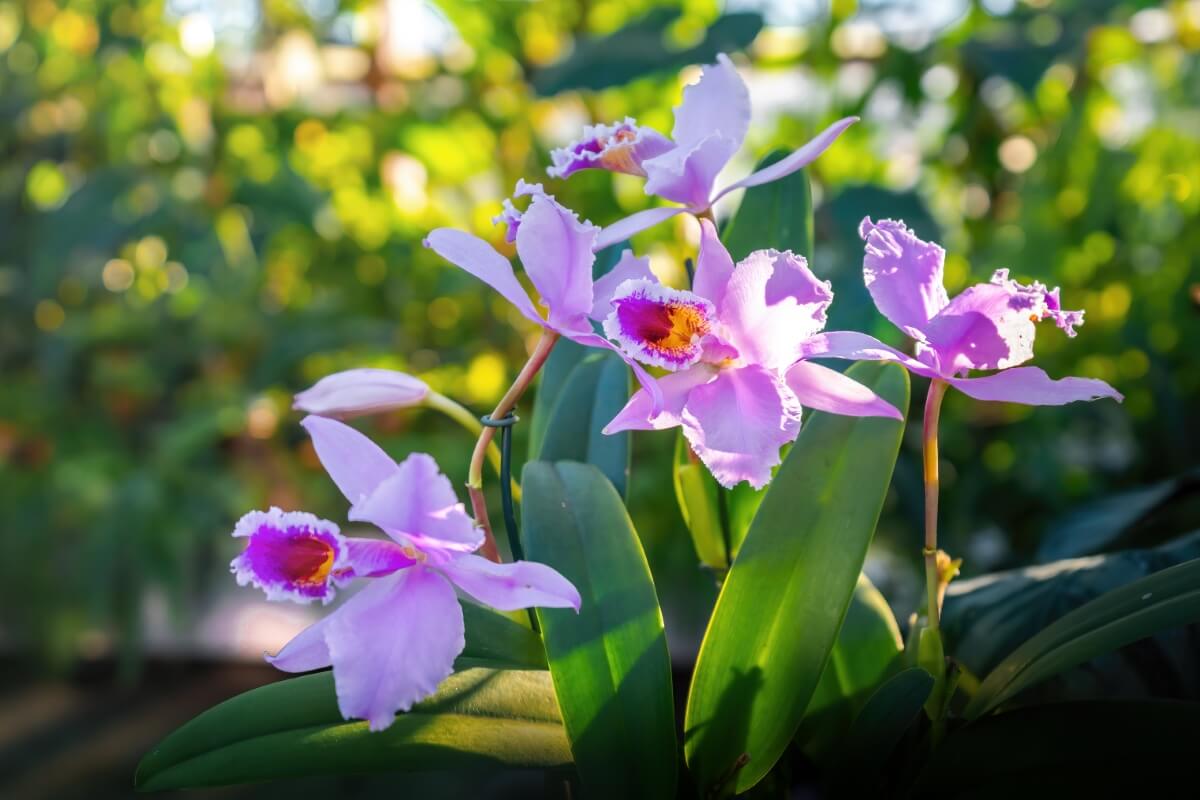
Brazilian orchids are elegant epiphytic orchids that grow on the branches of nearby trees. These orchids are often grown as houseplants due to their gorgeous flowers. These large blooms have a central funnel and five pink, purple, yellow, or white petals.
Brazilian orchids also have fleshy rhizomes and pseudobulbs that store water and nutrients. These orchids require plenty of bright, indirect light.
Scientific Name: Cattleya labiata
- Native Status
- Confirmed by Kew
- Light Requirements
- Bright, indirect
- Growing Zones
- 10 to 12
- Flowering Season
- Fall
- Mature Height
- Approximately 2 feet
11) Brazilian Plume Flower
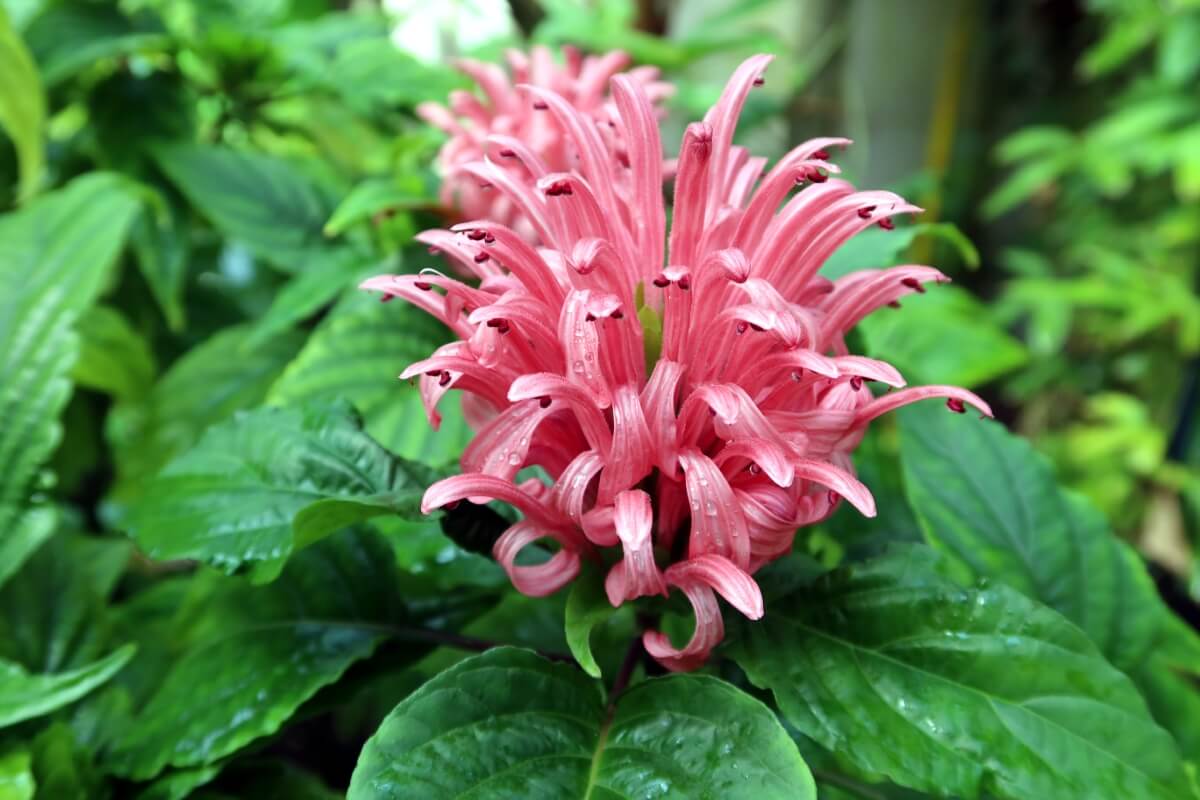
Brazilian plume flowers have plume-like clusters of tubular pink or red flowers. These beautiful evergreen shrubs can flower throughout the year in warm temperatures.
These native Brazilian flowers have upright stems and glossy dark green elliptical leaves with prominent ribs. These shrubs thrive in Zones 8 to 11 and grow best in the shade.
Scientific Name: Justicia carnea
- Native Status
- Confirmed by Kew
- Light Requirements
- Partial to full shade
- Growing Zones
- 8 to 11
- Flowering Season
- Throughout the year
- Mature Height
- Approximately 4 to 6 feet
12) Brazilwood
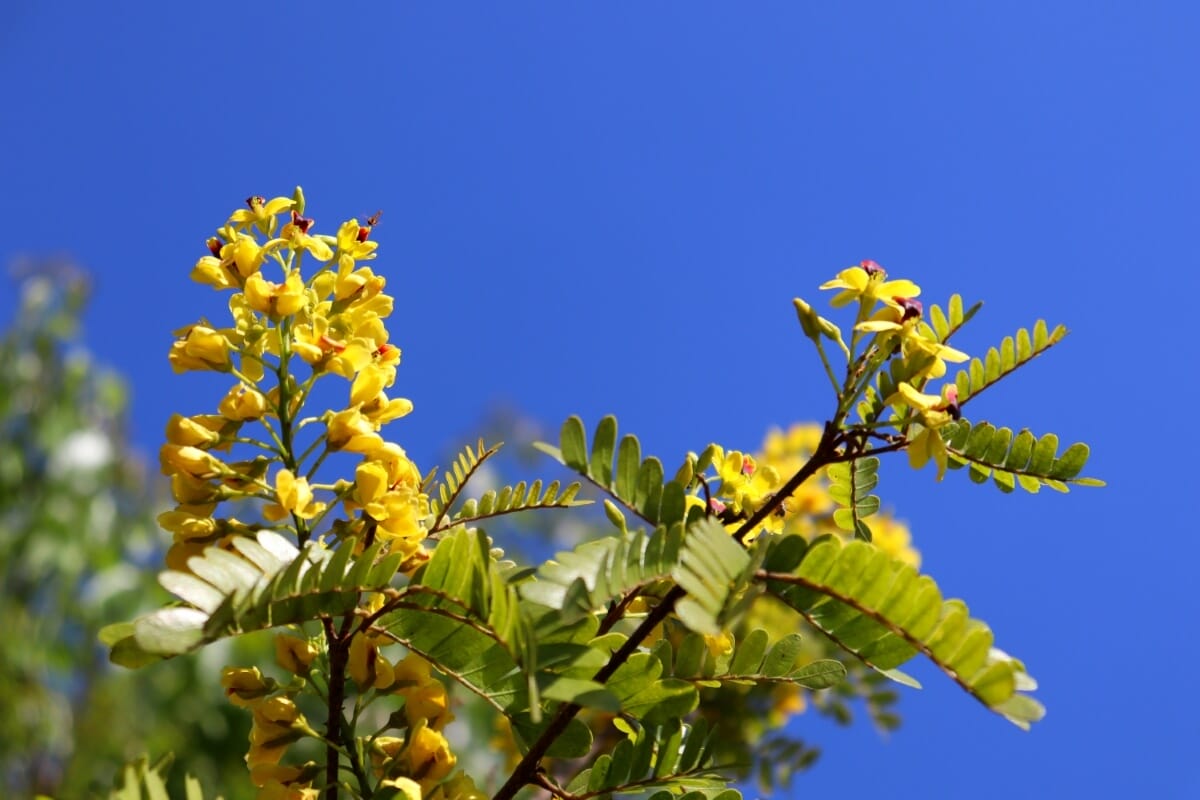
Brazilwood trees are attractive evergreen trees that are mainly grown as hardwood timber crops. This member of the legume family (Fabaceae) is also Brazil’s national tree.
Brazilwood trees have reddish-orange heartwood and flaky dark brown bark. These trees also have pinnate leaves that are divided into up to 19 oblong leaflets. Brazilwood trees have clusters of fragrant bright yellow flowers.
Scientific Name: Paubrasilia echinata
- Native Status
- Confirmed by Kew
- Light Requirements
- Full sun to partial shade
- Growing Zones
- 10 to 12
- Flowering Season
- Fall
- Mature Height
- Approximately 50 feet
13) Bromeliads
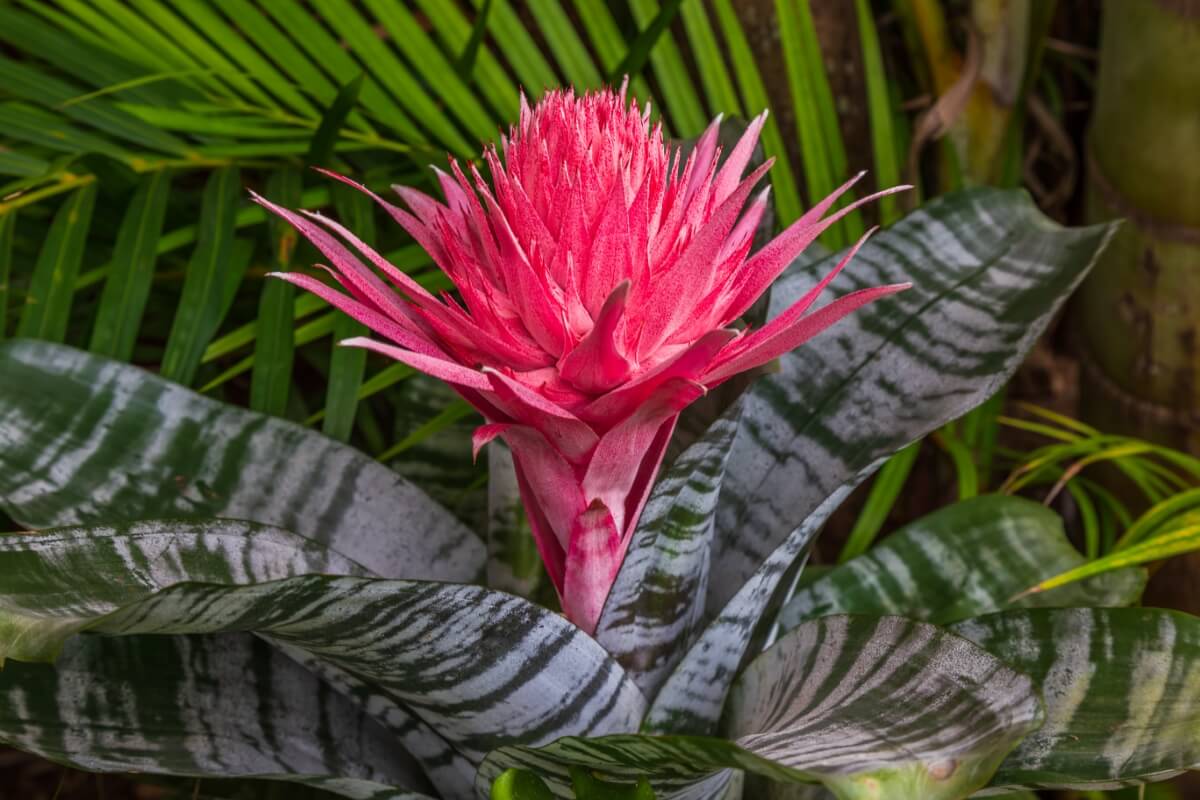
Bromeliads are a large family of herbaceous perennial plants that thrive in tropical conditions. In temperate areas, bromeliads are frequently grown as houseplants. Bromeliads are usually either epiphytes or terrestrial plants.
The bromeliad family (Bromeliaceae) is well represented in Brazil, with about 1,400 species native to the country. Most form rosettes of fleshy lance-shaped leaves. These rosettes allow bromeliads to store rainwater. Most bromeliads also produce flowers with colorful, showy bracts.
Scientific Name: Bromeliaceae spp.
- Light Requirements
- Bright, indirect
- Growing Zones
- 9 to 12
- Native Status
- Family: native to Brazil (Flora e Funga do Brasil)
- Flowering Season
- Throughout the year
- Mature Height
- Approximately 3 feet
14) Flame Vine
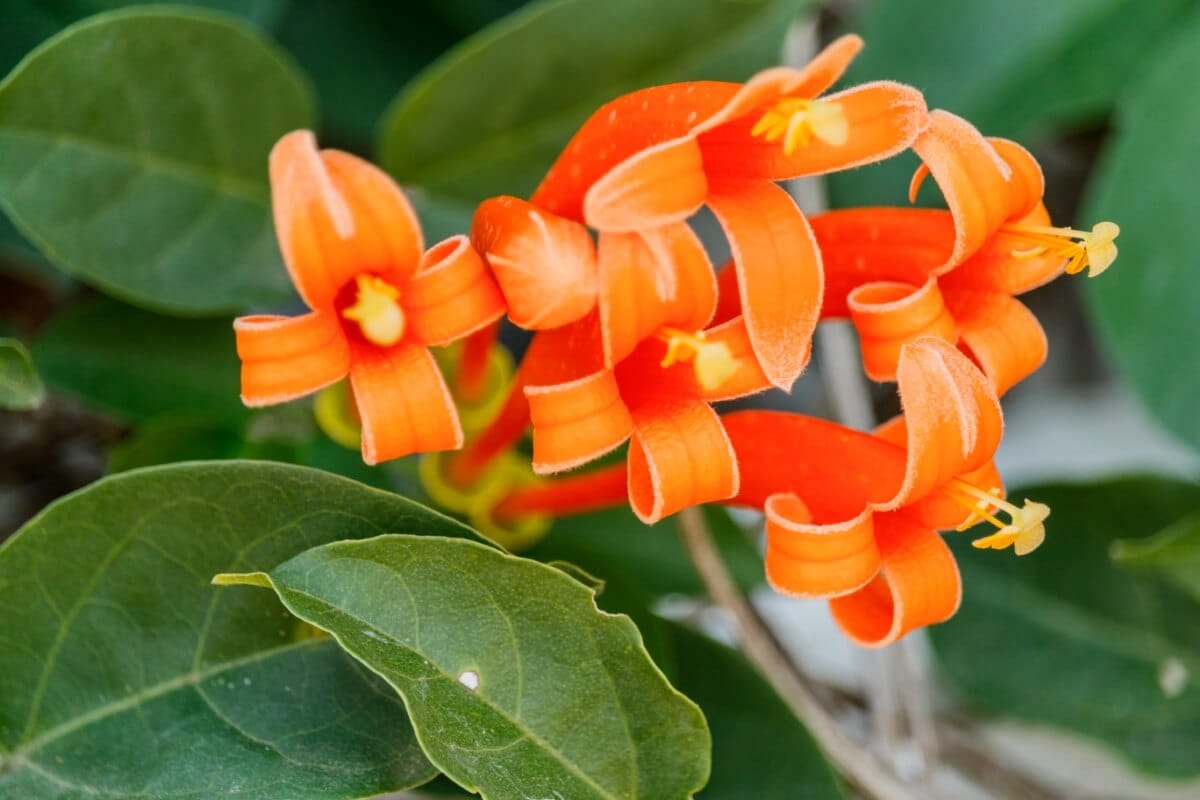
Flame vines are vibrant evergreen climbers that work best when trained to climb trellises, walls, and other supports. These popular tropical plants must be sheltered from cold winds.
Flame vines have pinnate evergreen leaves consisting of two to three glossy elliptical leaflets and tendrils. Flame vines also have clusters of tubular orange flowers with recurved petals.
Scientific Name: Pyrostegia venusta
- Native Status
- Confirmed by Kew
- Light Requirements
- Full sun to partial shade
- Growing Zones
- 9 to 11
- Flowering Season
- Fall to spring
- Mature Height
- Approximately 16 feet
15) Golden Trumpet Tree
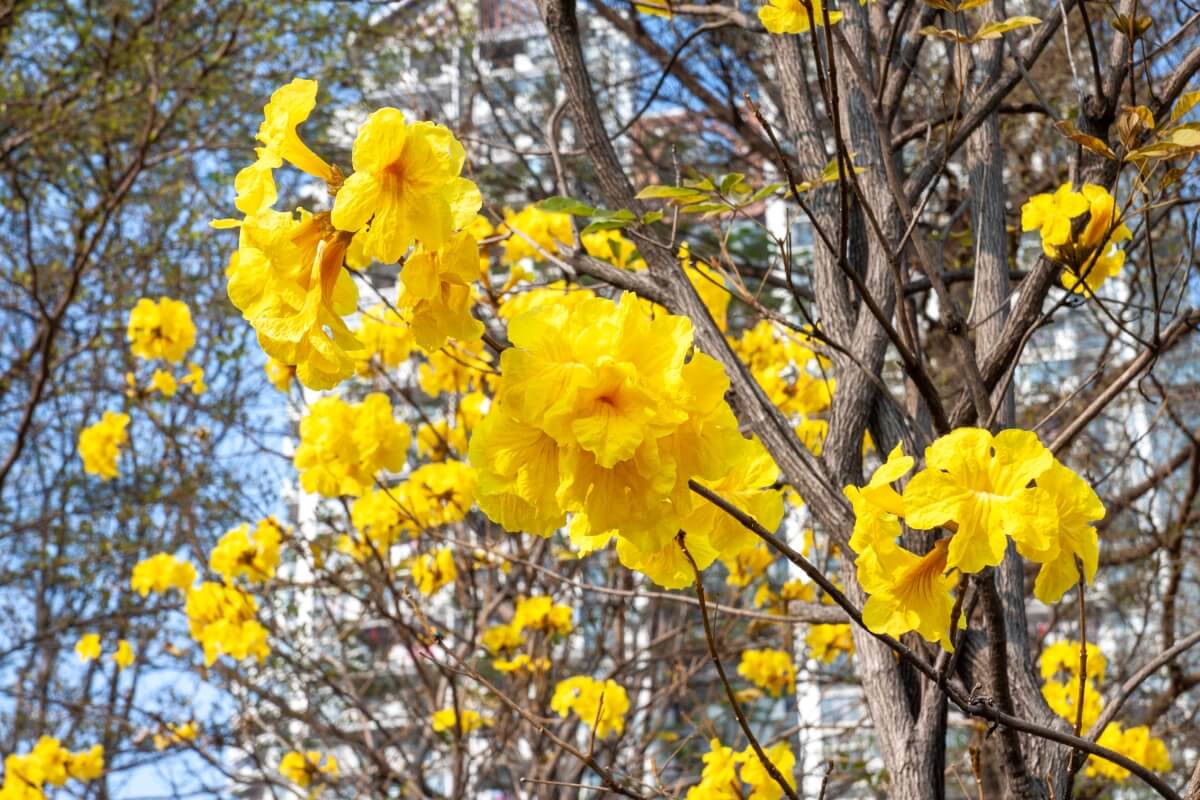
No law makes the golden trumpet tree Brazil's national flower, and bills to make the ipê-amarelo the national flower were withdrawn in 1972 and archived in 1978. The only plant named by law is the pau-brasil, Brazil's national tree (entry 12). These deciduous trees are popular ornamental trees in gardens and streets throughout Brazil.
Golden trumpet trees have palmate leaves divided into five wedge-shaped leaflets with serrated margins. The yellow flowers bloom during the spring before the leaves emerge.
Scientific Name: Handroanthus chrysotrichus
- Native Status
- Confirmed by Kew
- Light Requirements
- Full sun or partial shade
- Growing Zones
- 9b to 11
- Flowering Season
- Spring
- Mature Height
- Approximately 25 feet
16) Heliconia
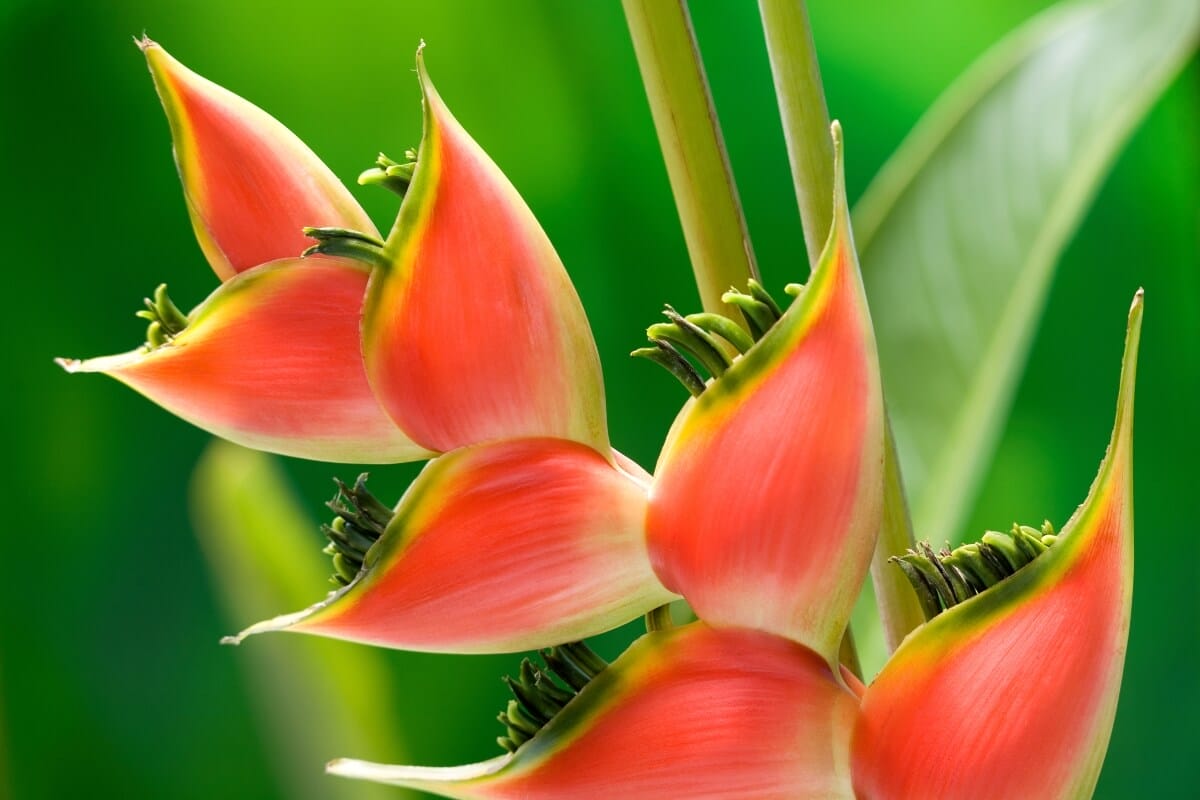
Heliconia flowers are evergreen perennials that are commonly known as lobster claws. Heliconias are fantastic ornamental plants for warm climates because they thrive in Zones 10 and 11.
These intriguing native Brazilian plants have inconspicuous flowers that emerge from colorful, waxy bracts. These bracts resemble lobster claws, hence the common name. The bracts form dense panicles alongside the evergreen oblong leaves.
Scientific Name: Heliconia spp.
- Native Status
- Genus: Confirmed by Kew
- Light Requirements
- Full sun to partial shade
- Growing Zones
- 10 & 11
- Flowering Season
- Throughout the year
- Mature Height
- Approximately 6 feet
17) Jacaranda
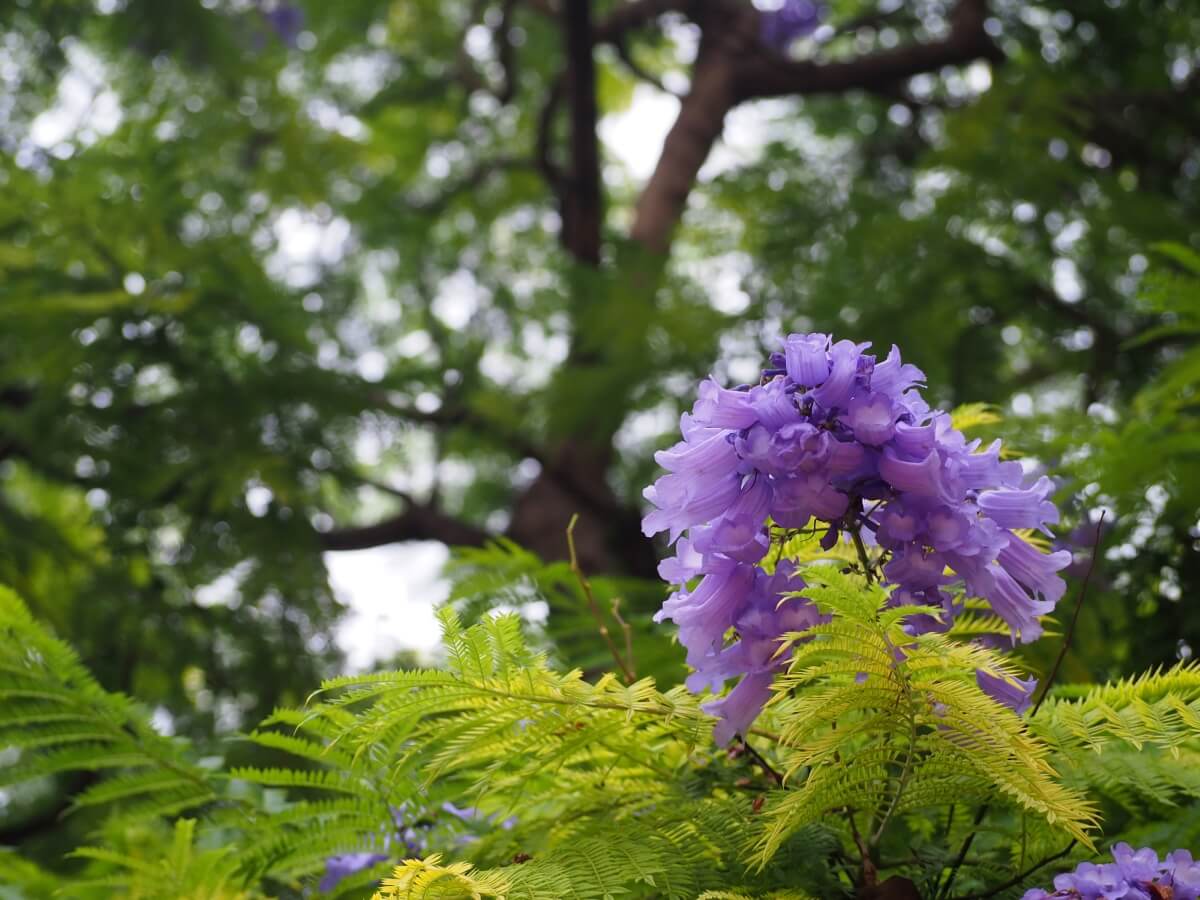
Jacaranda mimosifolia is a popular tree in Brazil, but it is cultivated there. Kew records it as native to Argentina, Bolivia and Paraguay. The genus Jacaranda has 39 species native to Brazil, among them Jacaranda brasiliana, Jacaranda copaia and Jacaranda cuspidifolia. These popular ornamental trees have low maintenance requirements and work well as shade trees. Jacaranda trees thrive in full sun and are relatively drought-tolerant.
Jacaranda trees have attractive, scaly, grayish-brown bark and slender branches. These trees have fern-like bipinnate leaves and dense clusters of light blue or violet flowers.
Scientific Name: Jacaranda mimosifolia
- Light Requirements
- Full sun
- Growing Zones
- 10 to 11
- Flowering Season
- Spring to summer
- Native Status
- Cultivated in Brazil (Flora e Funga do Brasil); 39 Jacaranda species native
- Mature Height
- Approximately 65 feet
18) Lobeira
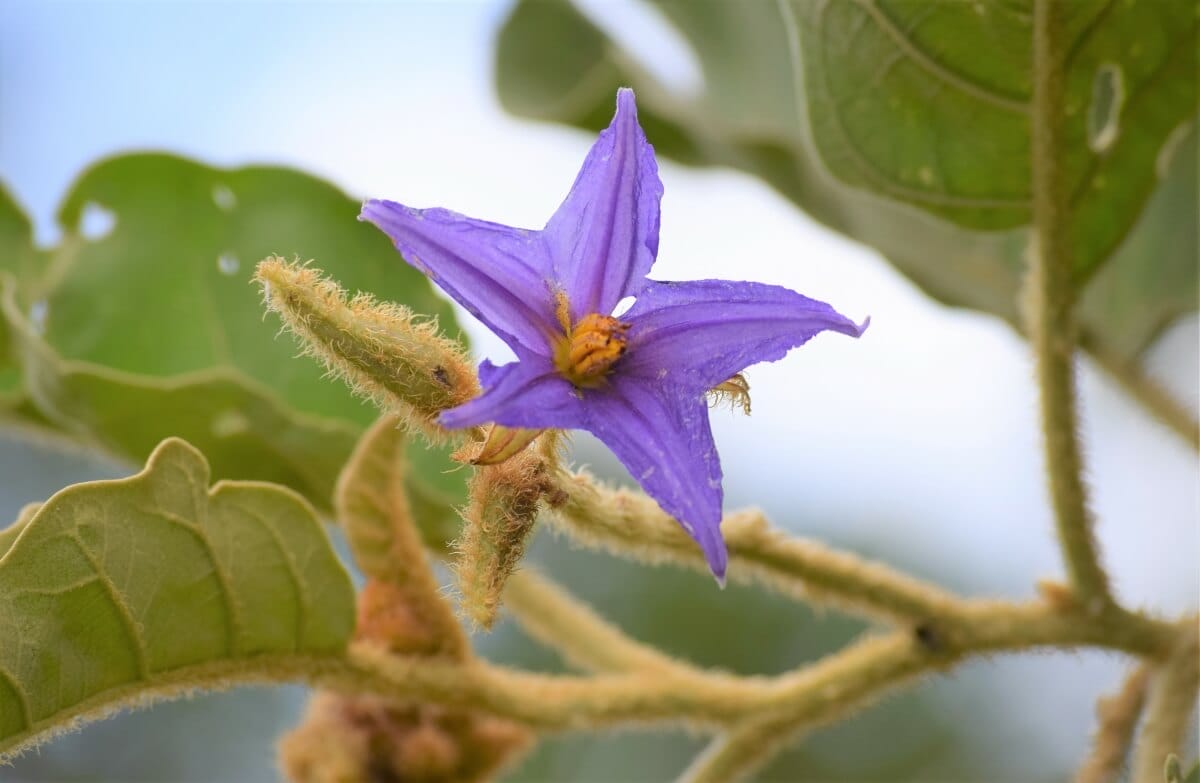
Also known as wolf apple plants, lobeira flowers are deciduous shrubs from the nightshade family (Solanaceae). Maned wolves consume the fruits, hence the common name.
Lobeira shrubs have large, deeply lobed leaves that are covered in soft, fuzzy hairs. These shrubs also have purple star-shaped flowers with yellow stamens.
Scientific Name: Solanum lycocarpum
- Native Status
- Confirmed by Kew
- Light Requirements
- Full sun
- Growing Zones
- 10 to 11
- Flowering Season
- Throughout the year
- Mature Height
- Approximately 15 feet
19) Manacá-da-Serra
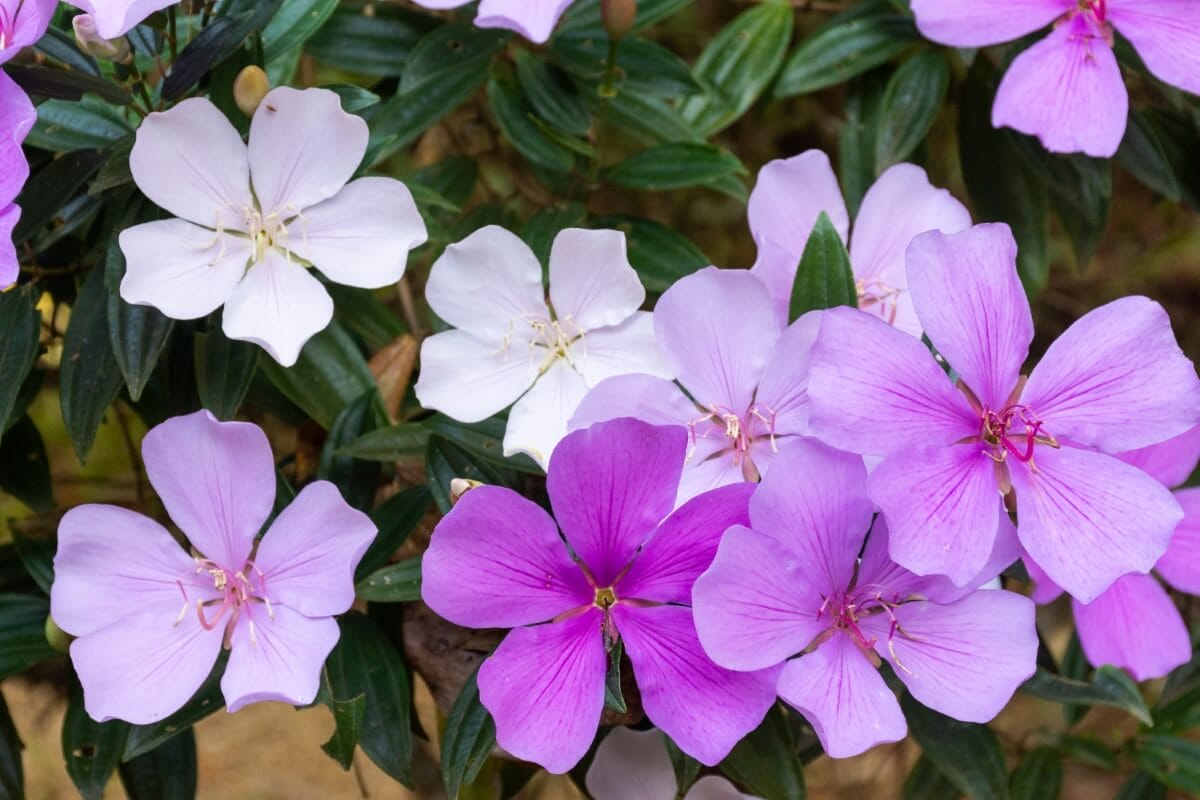
Manacá-da-Serra trees are evergreen trees that grow in Brazil’s Atlantic forest habitats. As such, these trees thrive in full sun or partial shade. Manacá-da-Serra trees are frequently used as ornamental landscaping trees in Brazil.
Manacá-da-Serra trees have glossy dark green elliptical leaves and clusters of pink, purple, or white flowers. Due to their shallow roots, these trees also grow well in containers.
Scientific Name: Tibouchina mutabilis
- Native Status
- Confirmed by Kew
- Light Requirements
- Full sun to partial shade
- Growing Zones
- 10 to 11
- Flowering Season
- Spring to summer
- Mature Height
- Approximately 40 feet
20) Mandacaru
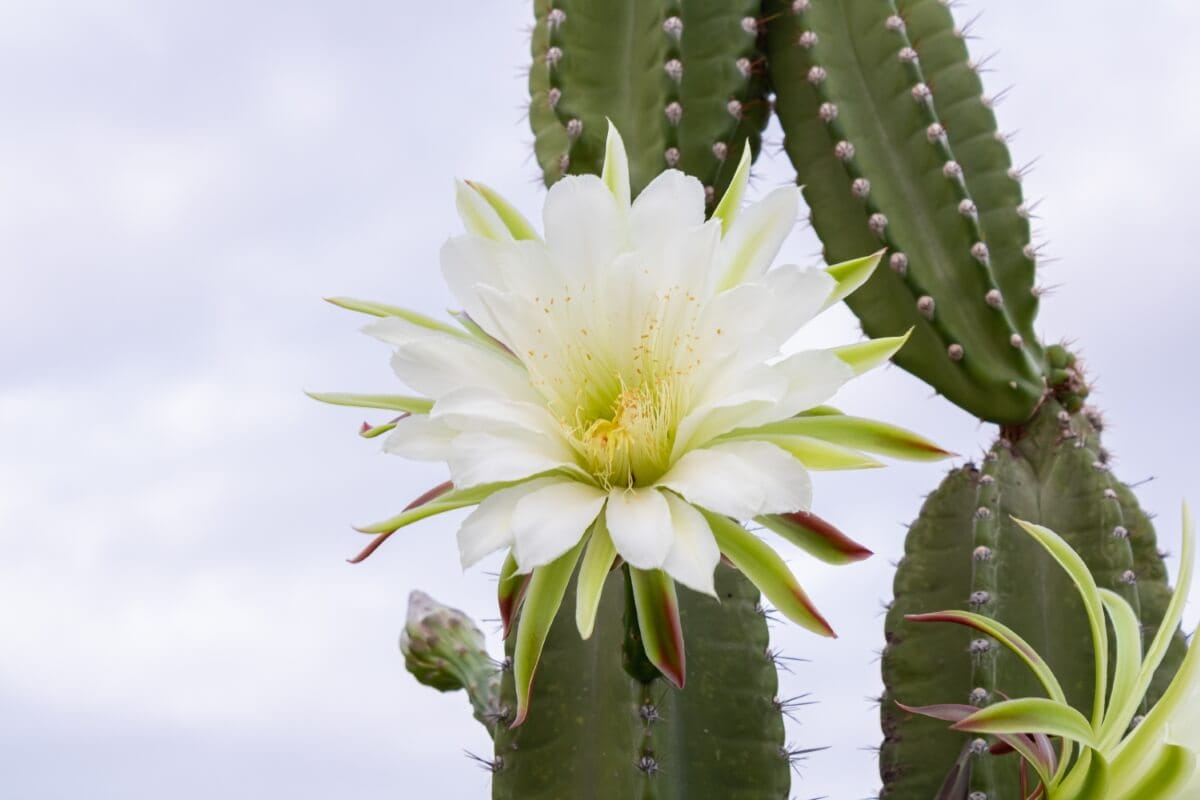
Also known as cardeiro in Brazil, mandacaru plants are attractive cacti with wooded stems. Each plant produces a group of upright, wrinkled stems covered in spines. These cacti thrive in full sun in Zones 9 to 10.
During the spring, mandacaru plants produce large greenish-white flowers. These flowers unfurl at dusk but only last for a single night.
Scientific Name: Cereus jamacaru
- Native Status
- Confirmed by Kew
- Light Requirements
- Full sun
- Growing Zones
- 9 to 10
- Flowering Season
- Spring
- Mature Height
- Approximately 30 feet
21) Paepalanthus
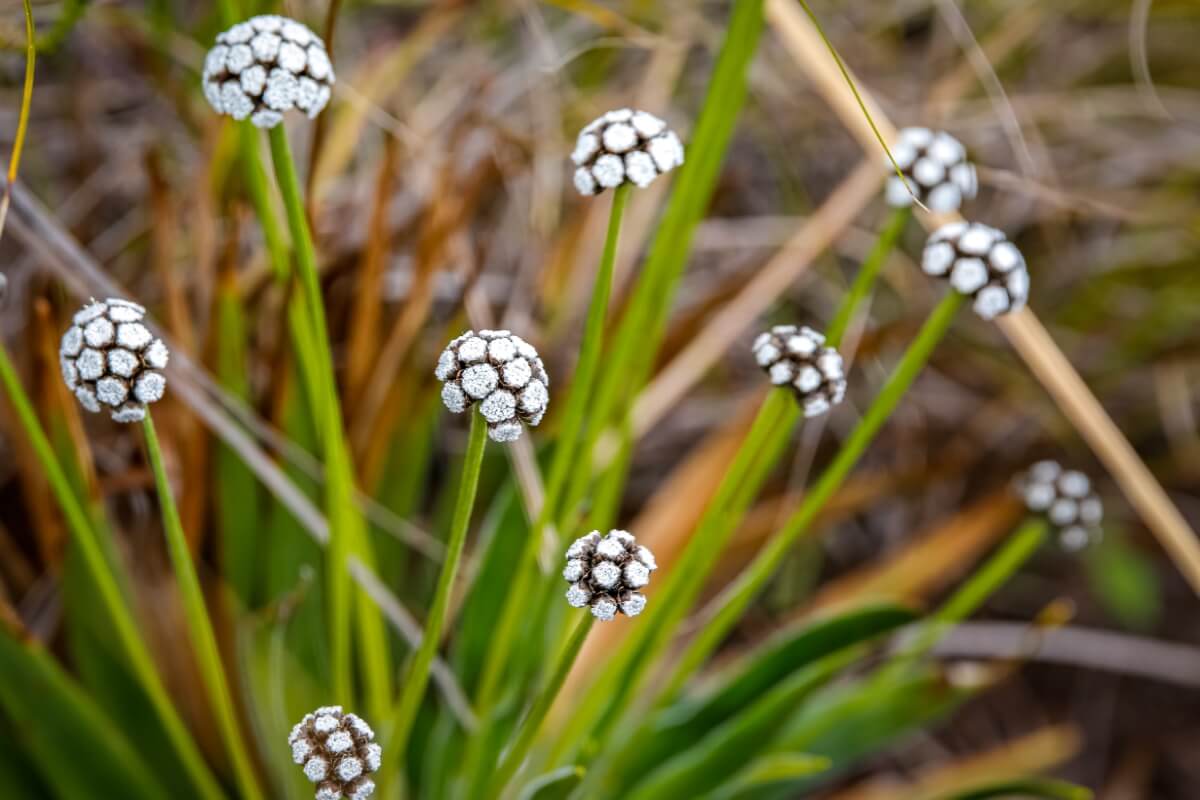
Paepalanthus plants are a group of about 300 species of perennials from the pipewort family (Eriocaulaceae). Several Paepalanthus species are native to Brazil, including Paepalanthus bromelioides. This species thrives in Brazil’s tropical savanna habitats.
Paepalanthus plants have upright stems bearing variable leaves. These stems are topped with rounded clusters of flowers.
Scientific Name: Paepalanthus spp.
- Native Status
- Genus: Confirmed by Kew
- Light Requirements
- Full sun to partial shade
- Growing Zones
- 9 to 11
- Flowering Season
- Summer
- Mature Height
- Up to 8 feet
22) Passionflower
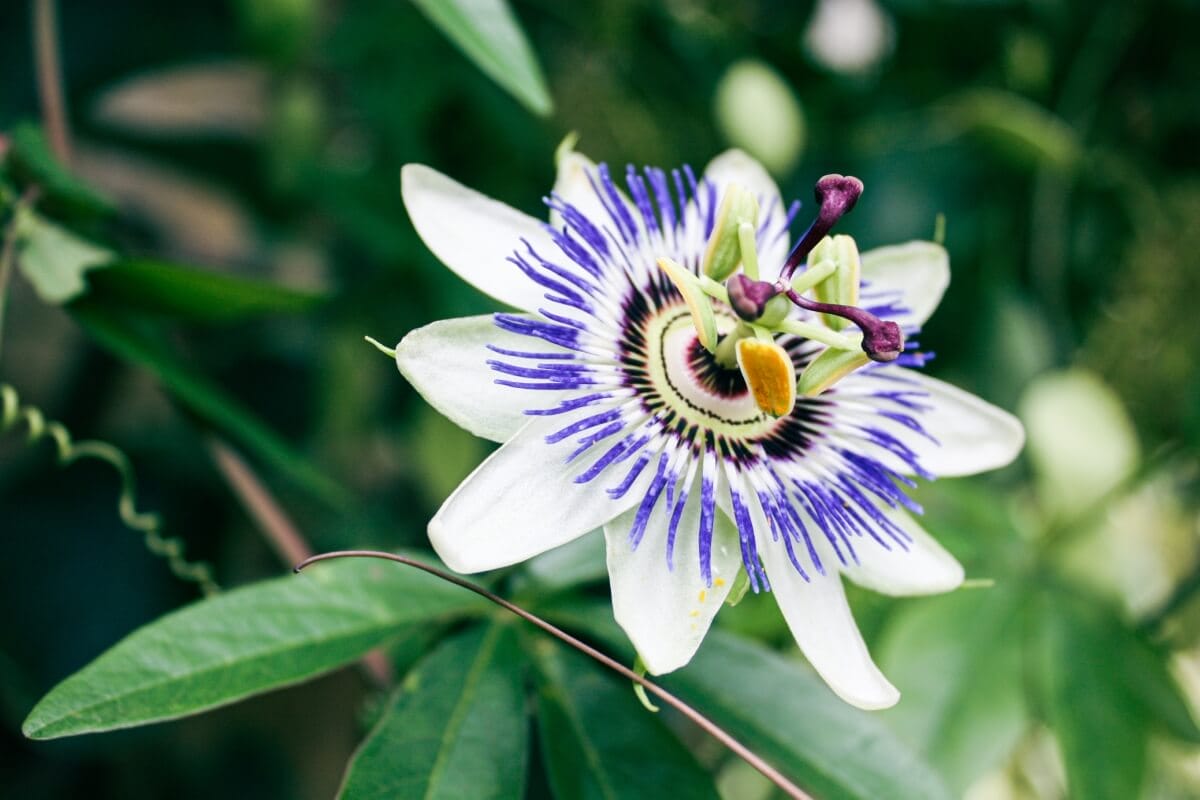
Also known as passion fruits, passionflowers are gorgeous tropical vines with intricate flowers. These perennial vines have bluish-green leaves and tendrils. Passionflowers have greenish-white flowers with a central ring of wavy purple filaments that have white tips.
Kew's Plants of the World Online lists the passionflower as native in Brazil's northeast, south, southeast and west-central regions, and as introduced in the north. The national checklist, Flora e Funga do Brasil, lists it as native in every state. These native Brazilian flowers also produce large reddish-purple edible fruits. Passionflowers are ideal for training up trellises, archways, and other support structures.
Scientific Name: Passiflora edulis
- Native Status
- Confirmed by Kew
- Light Requirements
- Full sun to partial shade
- Growing Zones
- 9 to 11
- Flowering Season
- Summer to fall
- Mature Height
- Approximately 3 feet
23) Pata-de-vaca
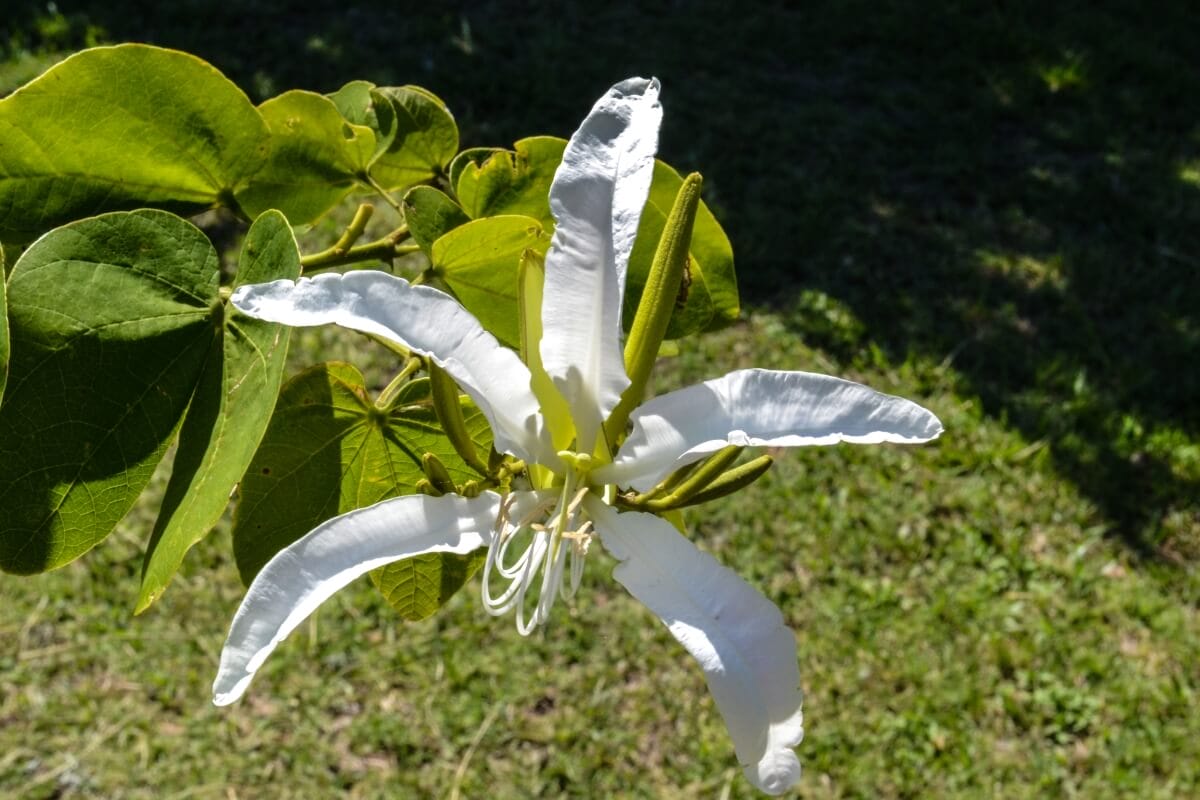
Also known as Brazilian orchid trees, these deciduous trees are members of the legume family (Fabaceae). Pata-de-vaca trees are named for their large, orchid-like flowers with five long white petals.
Brazilian orchid trees have heart-shaped leaves with deeply notched tips. These fast-growing trees are often some of the first to colonize disturbed areas of Brazil’s Atlantic forest.
Scientific Name: Bauhinia forficata
- Native Status
- Confirmed by Kew
- Light Requirements
- Full sun
- Growing Zones
- 10 to 12
- Flowering Season
- Spring to summer
- Mature Height
- Approximately 25 to 30 feet
24) Pink Lapacho
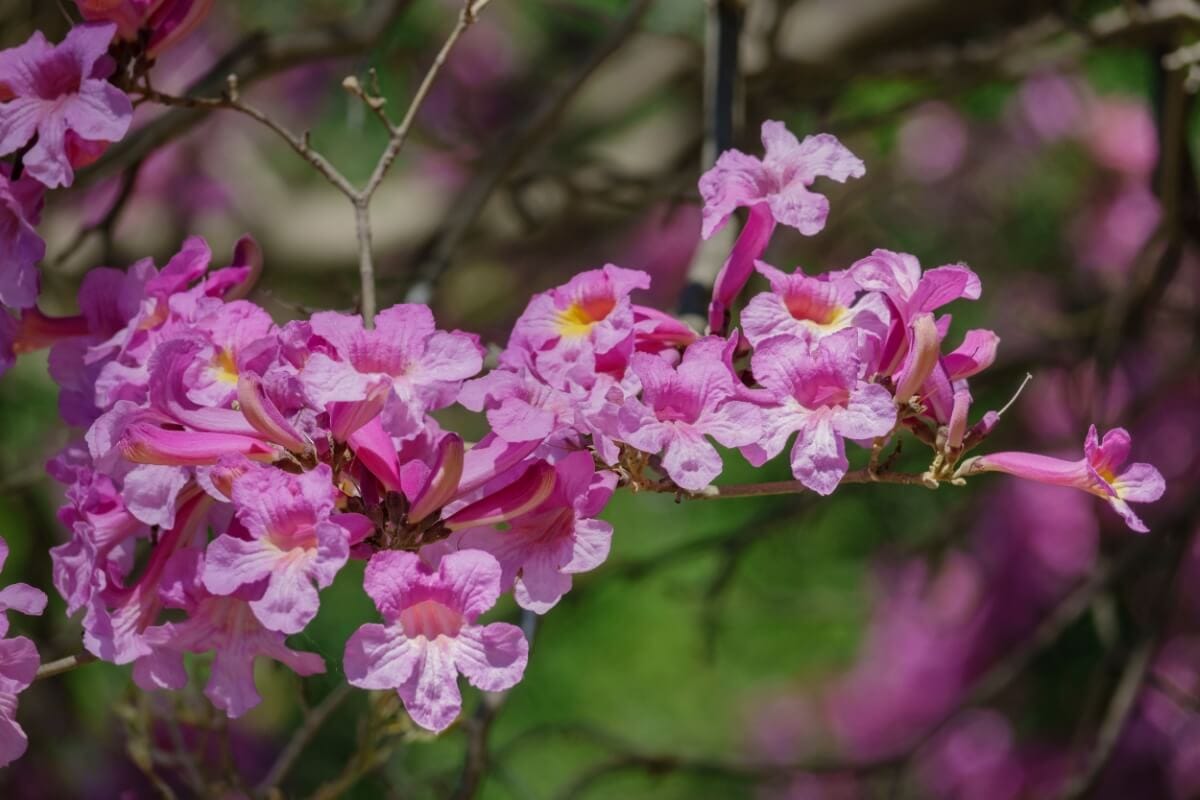
Pink lapacho trees are also known as ipê-roxo trees in Brazil. These large deciduous trees are often used as ornamental or landscaping trees. Pink lapacho trees suit gardens in Zones 10 to 12.
Pink lapacho trees have tough, grayish-brown bark and elliptical leaves with serrated margins. During the summer, they produce clusters of pink flowers.
Scientific Name: Handroanthus impetiginosus
- Native Status
- Confirmed by Kew
- Light Requirements
- Full sun
- Growing Zones
- 10 to 12
- Flowering Season
- Summer to fall
- Mature Height
- Approximately 40 feet
25) Princess Flower
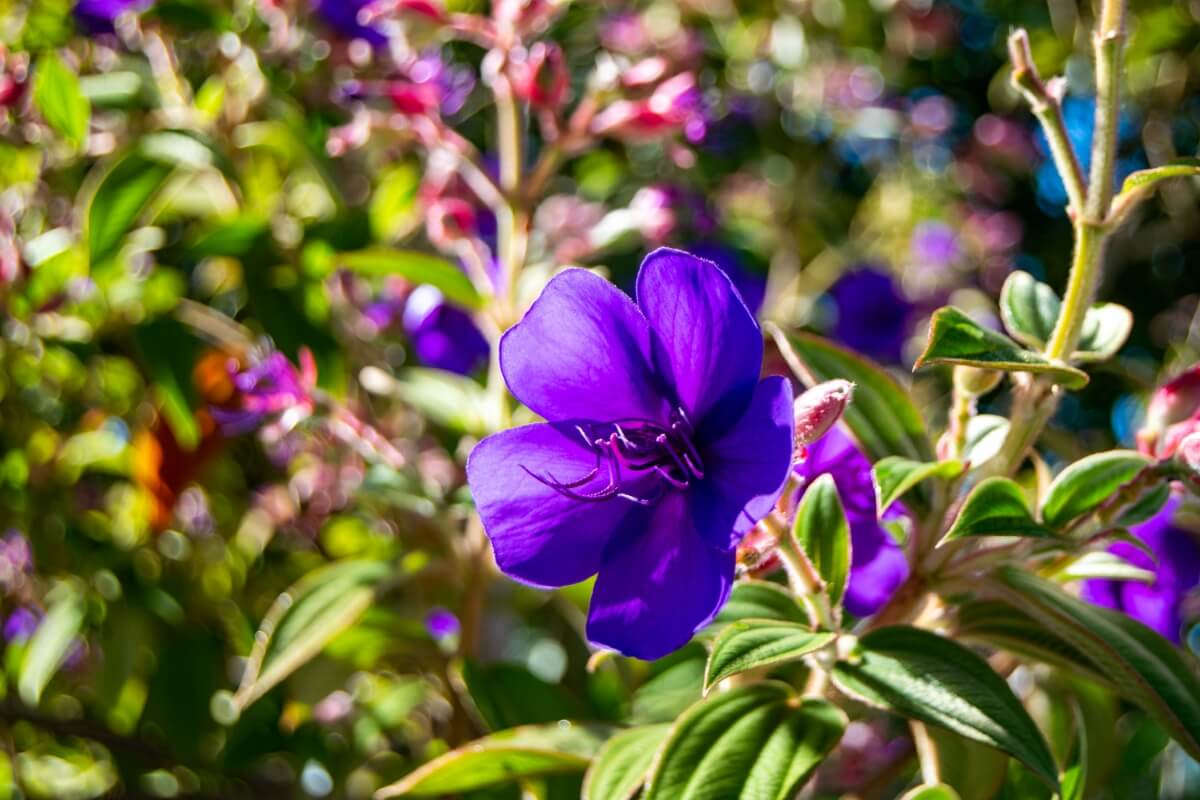
Princess flowers are majestic shrubs known for their stunning purple flowers. These flowers have five petals and emerge in clusters throughout the year in warm climates. Princess flower shrubs are ideal for urban gardens and grow well in containers.
Princess flower shrubs have a sprawling habit and need to be kept in check. Princess flowers have lovely elliptical leaves that are covered in soft hairs. Princess flowers require full sun and grow best in fertile, well-draining soils that still retain some moisture.
Scientific Name: Tibouchina urvilleana
- Native Status
- Confirmed by Kew
- Light Requirements
- Full sun
- Growing Zones
- 9 to 11
- Flowering Season
- Summer to fall
- Mature Height
- Approximately 10 to 20 feet
26) Quaresmeira
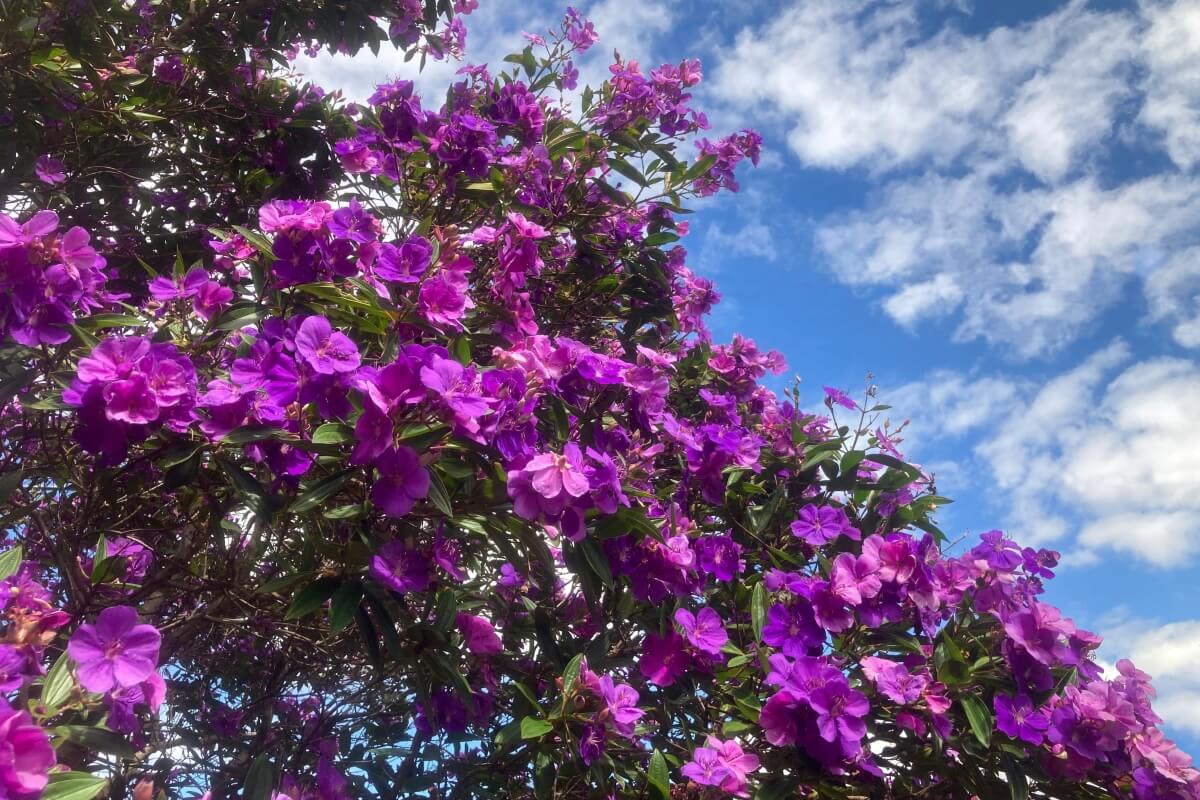
Few Brazilian flowers are as beautiful as quaresmeira shrubs. Also known as purple glory trees, these evergreen shrubs have clusters of vibrant purple flowers with white centers. Quaresmeira shrubs can bloom throughout the year in warm temperatures in Zones 10 and 11.
Quaresmeira shrubs have dark green elliptical leaves with a glossy finish. Clusters of stunning purple flowers accompany these attractive leaves. It’s easy to see why quaresmeira shrubs are so popular as ornamental plants in Brazil.
Scientific Name: Tibouchina granulosa
- Native Status
- Confirmed by Kew
- Light Requirements
- Full sun
- Growing Zones
- 10 & 11
- Flowering Season
- Spring to fall
- Mature Height
- Approximately 30 feet
27) Scarlet Begonia
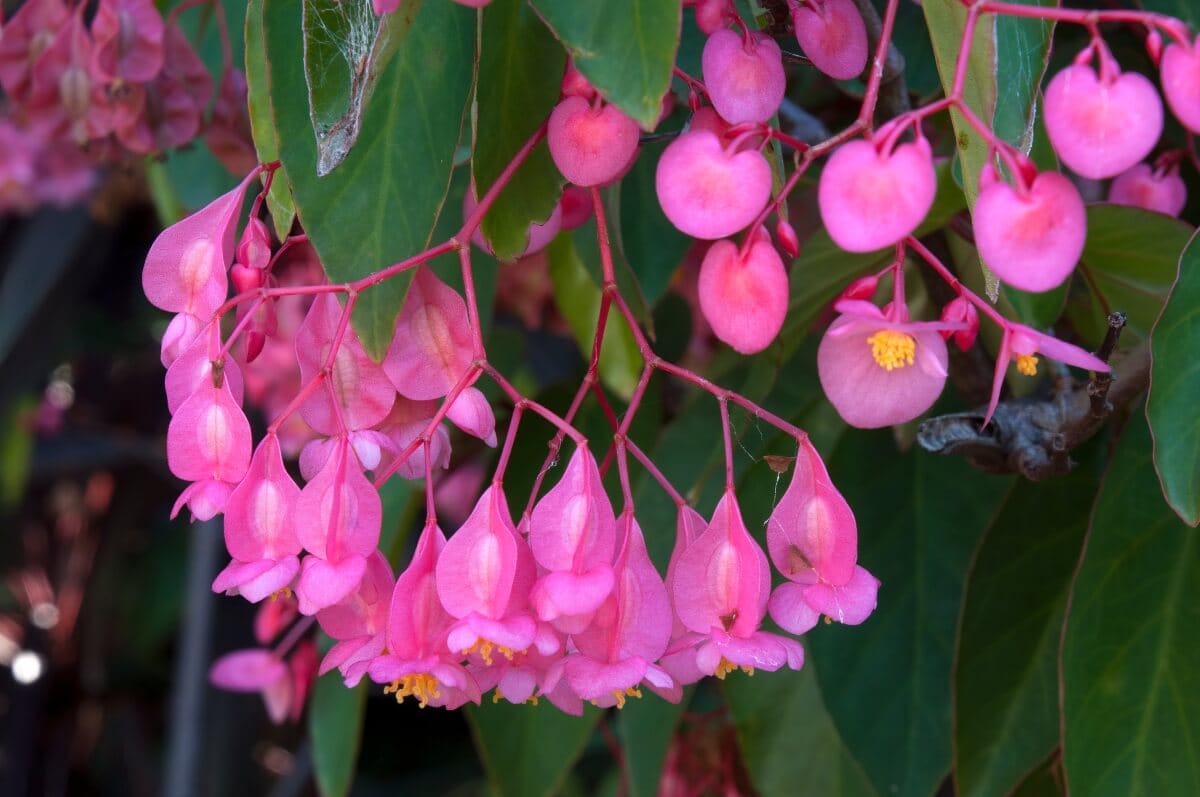
Also known as angel wing begonias, scarlet begonias are tropical shrubs that are commonly grown as houseplants. These begonias have linear dark green leaves with serrated margins. Sometimes, these leaves are covered in pale spots, adding to the visual interest.
Scarlet begonias flower throughout the year in warm temperatures. These plants produce clusters of small pink heart-shaped flowers. These begonias require lots of sunlight if you want them to bloom indoors. As such, they grow best in bright, indirect light.
Scientific Name: Begonia coccinea
- Native Status
- Confirmed by Kew
- Light Requirements
- Full sun to partial shade
- Growing Zones
- 9 to 11
- Flowering Season
- Throughout the year
- Mature Height
- Approximately 2 feet
28) Vriesea
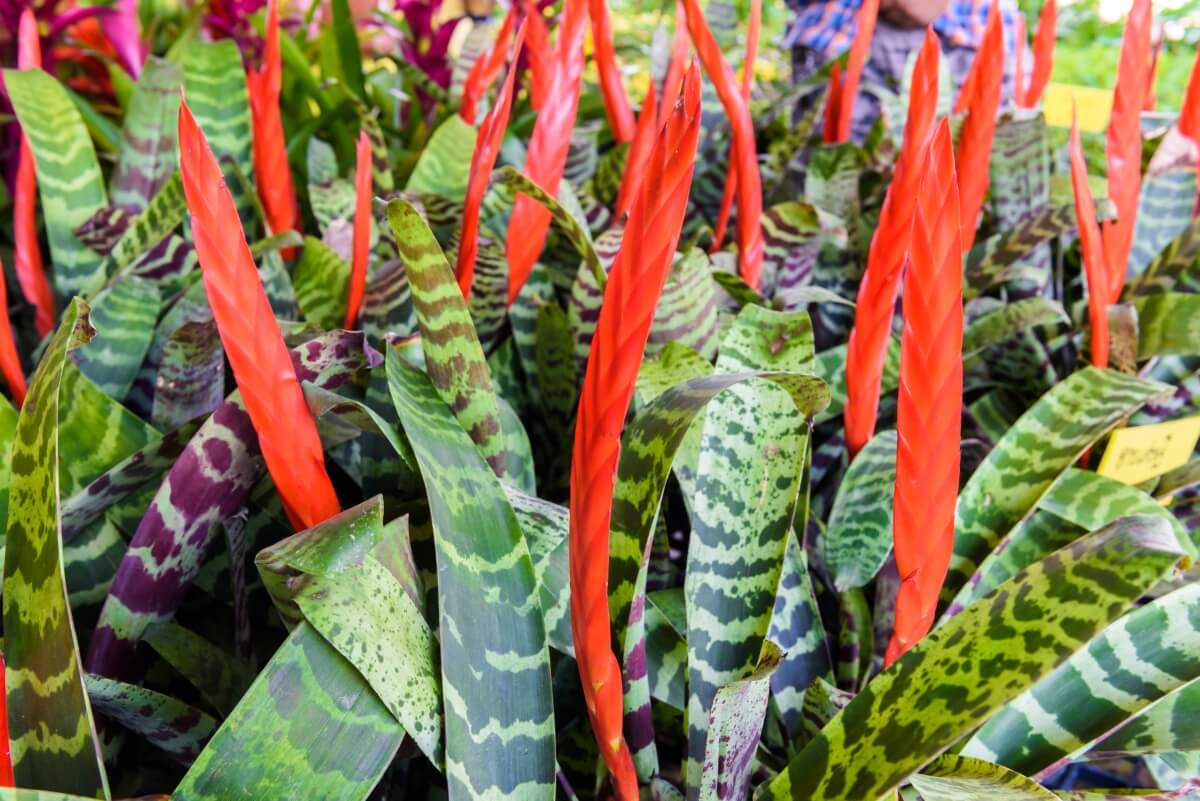
Vriesea plants belong to a large genus in the bromeliad family. These wonderful bromeliads are popular thanks to their lush rosettes of glossy lance-shaped leaves. The genus was named after Willem Hendrik de Vriese, a 19th-century Dutch botanist.
Vrieseas only flower once, producing showy, colorful bracts that conceal the inconspicuous true flowers. However, these plants have several smaller plants called pups.
Scientific Name: Vriesea spp.
- Native Status
- Genus: Confirmed by Kew
- Light Requirements
- Bright, indirect light
- Growing Zones
- 10 to 11
- Flowering Season
- Spring to fall
- Mature Height
- Approximately 2 feet
29) Walker’s Cattleya
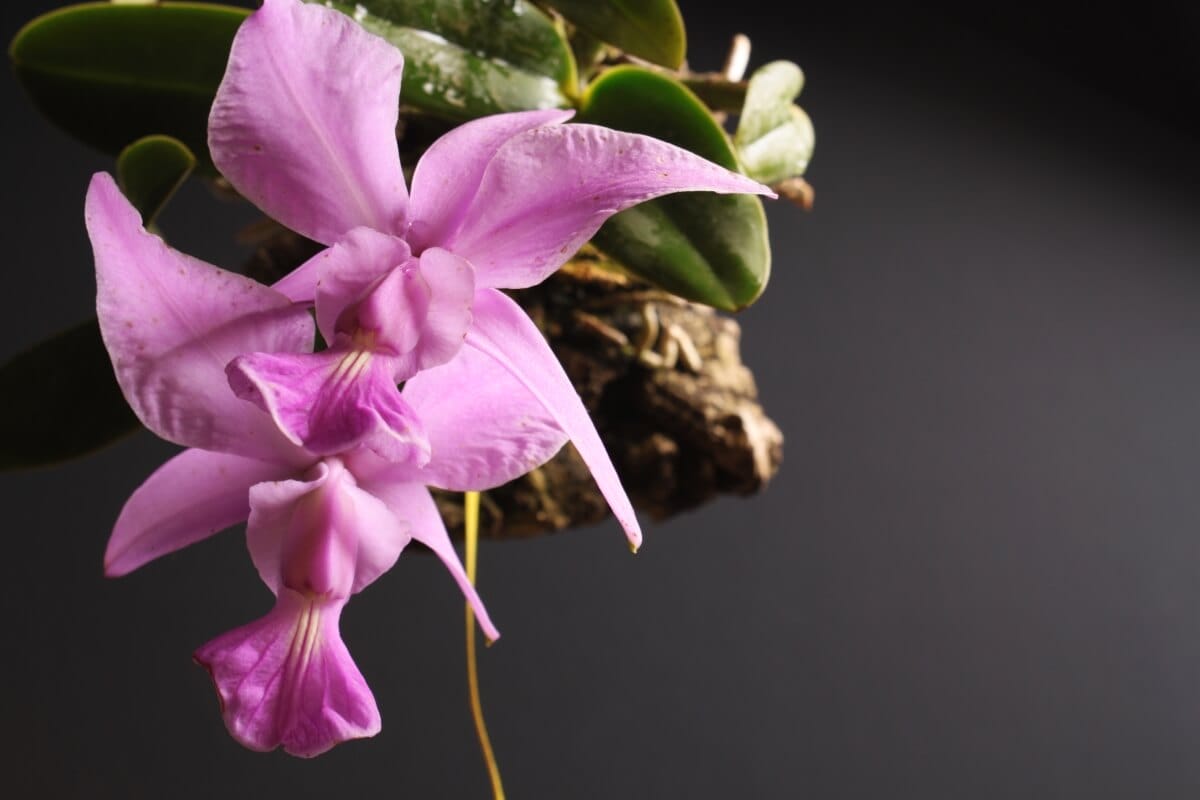
Walker’s cattleya orchids are popular houseplants known for their astonishing flowers. These orchids have large pale purple or pink flowers with five long petals. Unlike other cattleya orchids, this species produces flowers from its rhizomes rather than from pseudobulbs.
These orchids are frequently grown as houseplants but can be grown outdoors in Zones 10 to 12. Walker’s cattleya orchids need lots of sunlight to produce flowers.
Scientific Name: Cattleya walkeriana
- Native Status
- Confirmed by Kew
- Light Requirements
- Full sun
- Growing Zones
- 10 to 12
- Flowering Season
- Spring
- Mature Height
- Approximately 1 foot
30) Yellow Lapacho
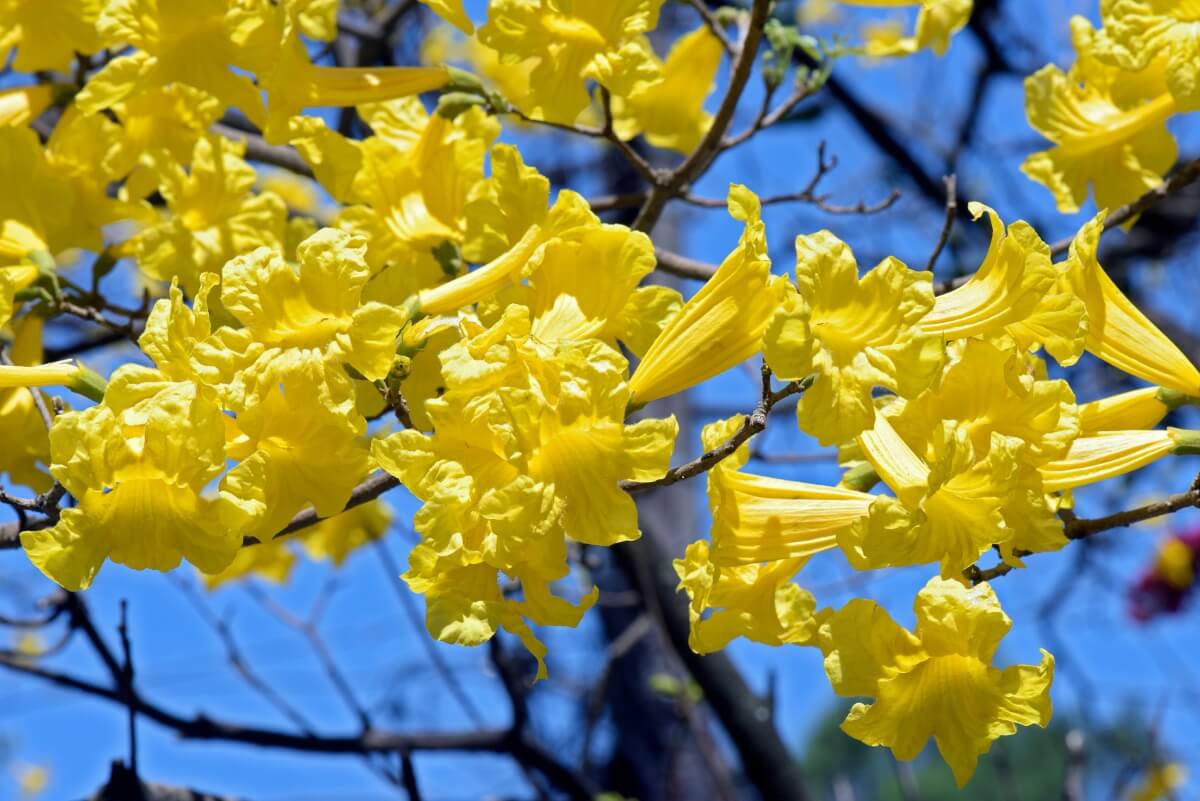

Yellow lapacho trees are ornamental trees that thrive in full sun. As some of the strongest tropical trees, yellow lapacho trees are also grown for their hardwood.
Yellow lapacho trees erupt with vibrant clusters of bright yellow flowers from late winter until spring. The flowers are followed by dark green ovate to elliptical leaves. These deciduous trees grow best in Zones 10 to 12.
Scientific Name: Handroanthus serratifolius
- Native Status
- Confirmed by Kew
- Light Requirements
- Full sun
- Growing Zones
- 10 to 12
- Flowering Season
- Late winter to spring
- Mature Height
- Up to 150 feet
Wrapping Up
With its high levels of biodiversity, it’s no surprise that Brazil is home to some of the world’s most beautiful flowers. Brazil is also home to some gorgeous flowering trees, such as Brazilian cherry trees and golden trumpet trees.
Other regional guides cover beautiful African flowers, Florida flowers, native Georgia flowers and Italian native flowers.
Questions and Answers
Does Brazil have an official national flower?
No, Brazil has no official national flower. The only plant named by Brazilian law as a national symbol is the pau-brasil (Caesalpinia echinata, now Paubrasilia echinata), declared the National Tree by Lei 6.607 of 7 December 1978. Bills to declare the ipe-amarelo the national flower were withdrawn in 1972 and archived in 1978. The golden trumpet tree (Handroanthus chrysotrichus) is therefore only popularly called Brazil's national flower.
When do ipe trees bloom in Brazil?
According to Belo Horizonte's 2022 records, ipe trees bloom in Brazil from June to September. The blooms last about a week on average. The yellow ipe can last up to 10 days and flower twice, once around July and again in September. Belo Horizonte has almost 29 thousand ipe trees. The golden trumpet tree, pink lapacho and yellow lapacho in this list are all ipe trees (Handroanthus).
Is it illegal to pick wildflowers in Brazil?
There is no federal law aimed specifically at picking wildflowers in Brazil. However, Lei 9.605/1998 makes destroying, damaging or mistreating ornamental plants in public places or on another person's private property a crime. Destroying or damaging a permanent preservation forest is also a crime. In conservation units such as national parks, any activity that conflicts with the unit's management plan is prohibited, so the park's rules and the landowner's consent decide.
Where can you see native Brazilian flowers?
Native Brazilian flowers can be seen in national parks such as Chapada dos Veadeiros and Itatiaia, and in cities like Belo Horizonte. Chapada dos Veadeiros, in the Cerrado, protects threatened plants including the sempre-viva Paepalanthus chiquitensis, arnica brasileira and the juçara palm. Itatiaia, Brazil's oldest national park, runs from Atlantic Forest to high-altitude grasslands.
Sources43 sources, linked in the text
- Wikipedia: Allamanda cathartica
- Wikipedia: Victoria amazonica
- Plants of the World Online (Kew): Anthurium spp.
- Wikipedia: Ipomoea pes caprae
- Wikipedia: Eugenia uniflora
- Wikipedia: Aristolochia gigantea
- Wikipedia: Schizolobium
- Wikipedia: Justicia floribunda
- Wikipedia: Jabuticaba
- Wikipedia: Cattleya labiata
- Wikipedia: Justicia carnea
- planalto.gov.br: l6607.htm
- Wikipedia: Paubrasilia
- api.gbif.org: search?datasetKey=aacd816d 662c 49d2 ad1a 97e66e2a2908&highertaxonKey=114699055&rank=SPECIES&status=ACCEPTED&limit=0
- Wikipedia: Pyrostegia venusta
- Wikipedia: Handroanthus chrysotrichus
- Wikipedia: Heliconia
- api.gbif.org: distributions
- Plants of the World Online (Kew): Kew records it as native to Argentina, Bolivia
- gbif.org: aacd816d 662c 49d2 ad1a 97e66e2a2908
- Wikipedia: Jacaranda mimosifolia
- Wikipedia: Solanum lycocarpum
- Wikipedia: Pleroma mutabile
- Wikipedia: Cereus jamacaru
- api.gbif.org: search?datasetKey=aacd816d 662c 49d2 ad1a 97e66e2a2908&highertaxonKey=114714329&rank=SPECIES&status=ACCEPTED&limit=0
- Wikipedia: Paepalanthus
- Plants of the World Online (Kew): lists the passionflower as native in Brazil's northeast
- api.gbif.org: distributions
- Wikipedia: Passiflora edulis
- Wikipedia: Bauhinia forficata
- Wikipedia: Handroanthus impetiginosus
- Wikipedia: Pleroma urvilleanum
- Wikipedia: Pleroma granulosum
- Wikipedia: Begonia coccinea
- Wikipedia: Vriesea
- Wikipedia: Cattleya walkeriana
- Wikipedia: Handroanthus serratifolius
- prefeitura.pbh.gov.br: temporada de floracao dos ipes colore ruas de belo horizonte
- gov.br: Plano de Manejo 9730998 PM VERSAO FINAL PNCV 2021 10 01 versao final pos portaria.pdf
- planalto.gov.br: l9605.htm
- camara.leg.br: fichadetramitacao?idProposicao=212193
- planalto.gov.br: l9985.htm
- gov.br: parna do itatiaia
Updates and CorrectionsOct 18, 2026 · 3 corrected, 2 clarified
- Added: Every plant's native status, checked against Kew's Plants of the World Online, is shown in its entry; a national flora decided the plants Kew does not confirm.
- Clarified: 3 health, edibility and toxicity statements now follow a named source; unsourced ones were removed.
- Corrected: 5 unsourced figures (zones, counts, sizes or dates) were corrected to a source or removed.
- Corrected: One statement about where a plant grows wild now follows the sources.
- Corrected: The golden trumpet tree was called Brazil's national flower. No law names a national flower; the pau-brasil is the National Tree (Lei 6.607 of 1978).
- Clarified: Jacaranda mimosifolia is cultivated, not native, in Brazil, where 39 other Jacaranda species are native; the entry now says so.
Save and Share
Reader Comments
Comments are closed for now.