Flower Types
50 Native African Flowers: Names, Pictures and Where They Grow


Contributing Editor
Credentials
- BA in Professional Writing TheCollector
- Worked at Dover Museum and the Canterbury Archaeological Trust TheCollector
Writing for Petal Republic since 2022 · 92 articles
Expertise
Flowers, Native plants, Wildlife gardening
Published In
TheCollector
Fifty African flowers and plants, each with a picture and a native status verified against Kew's botanical records.
In Short
Africa's native flowers include the king protea, bird of paradise, African violet, red hot poker, calla lily, and flame lily. In South Africa, most wildflower displays come in spring, from August to November.
- Every plant was checked against Kew's Plants of the World Online on October 17, 2026: all 50 are native to Africa, 25 also recorded as introduced elsewhere in Africa.
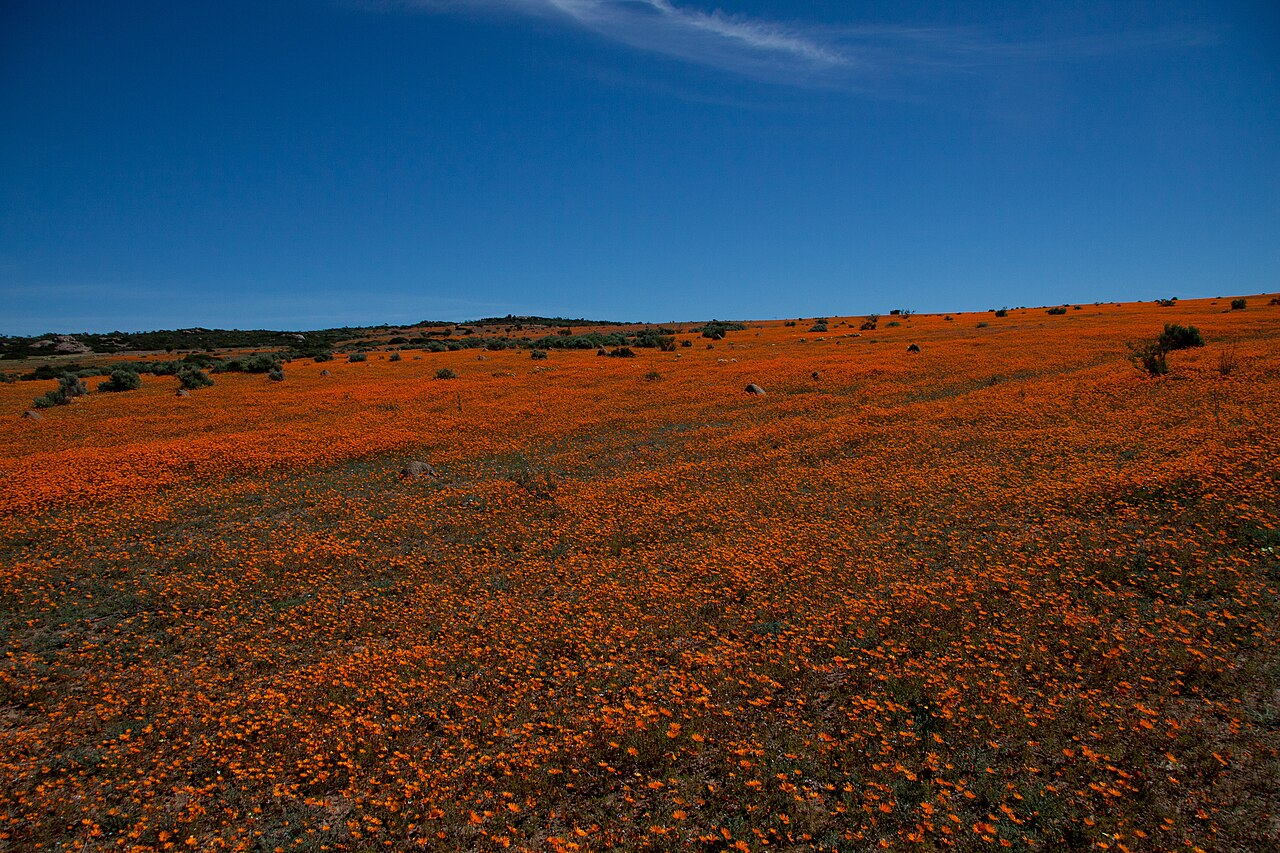
- Namaqualand's daisy display in South Africa's Northern Cape runs from early August to the end of September, and the flowers do not open in heavily overcast or rainy weather.
More Takeaways
- The king protea, South Africa's national flower, grows wild from the Cedarberg in the Western Cape to near Makhanda (Grahamstown) in the Eastern Cape.
- Sub-Saharan Africa has about 45,000 plant species, so these 50 plants are a small sample.
African Native Range & Growing Zones
Africa is a vast continent that provides an enormous range of plant habitats. North Africa has an arid, desert climate, while Central Africa has a tropical climate. Southern Africa experiences more of a temperate climate.
How Are Africa’s Native Flowers Defined?
Africa’s native flowers are defined as plants that originated on the African continent. Many of these species have evolved over thousands of years. However, many plant species now found in Africa were brought from other continents. These species are naturalized rather than native.
How We Checked These 50 Plants
Every plant in this list was checked against Kew's Plants of the World Online on October 17, 2026. All 50 plants are native to Africa, and each entry names the regions where it grows wild. Twenty-five are also recorded as introduced in some other part of Africa.
| What the check found | Plants |
|---|---|
| Native in Africa (Kew) | 50 |
| Checked as a whole genus | 11 |
50 Types of Native African Flowers
1) African Aloe
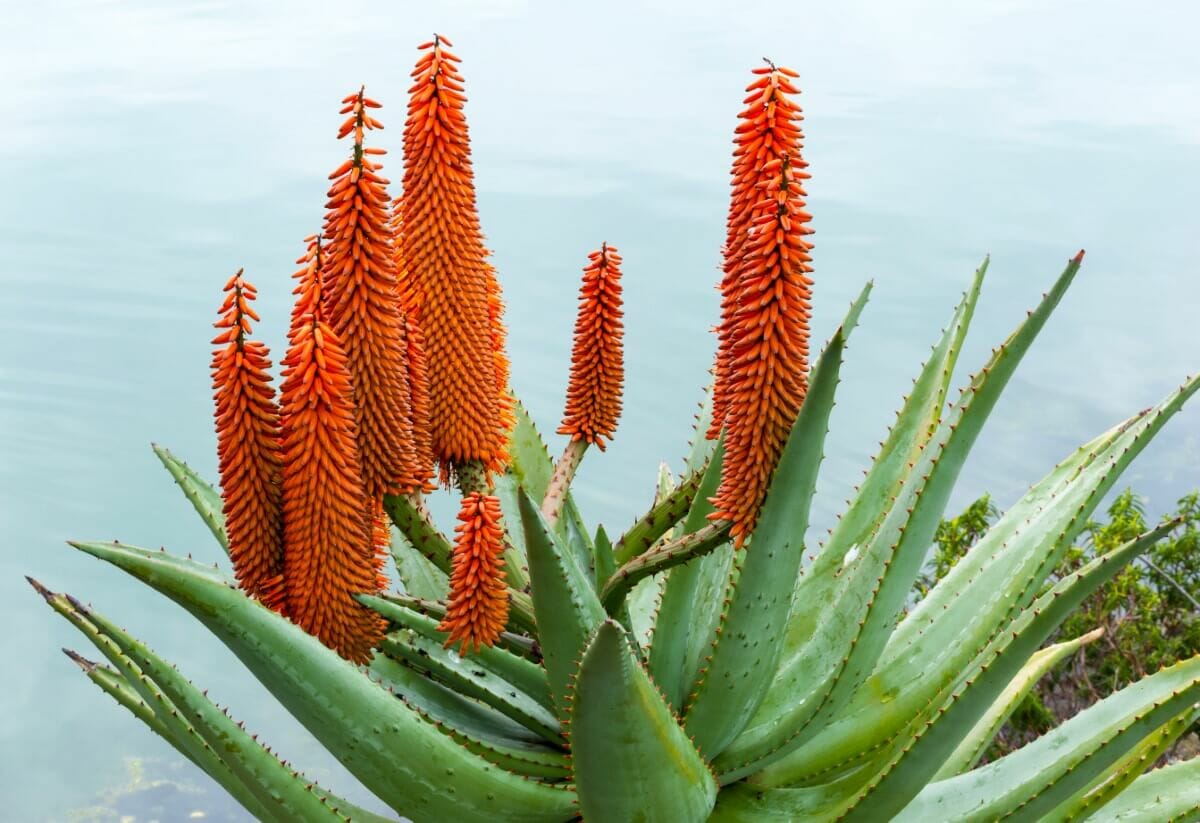
African aloe comes from the Asphodelaceae family. It’s known as the Uitenhage aloe and is native to South Africa’s Eastern Cape. African aloe starts flowering once it’s four or five years old.
African aloe plants produce tall upright racemes of tubular orange or yellow flowers. The flower tips curve upwards at almost 90 degrees. These aloe plants will struggle if winter temperatures drop below 20ºF.
Scientific Name: Aloe africana
- Native Range
- Cape Provinces
- Light Requirements
- Full sun to partial shade
- Growing Zones
- 9 to 11
- Flowering Season
- Winter to spring
- Mature Height
- Up to 13 ft
2) African Daisy
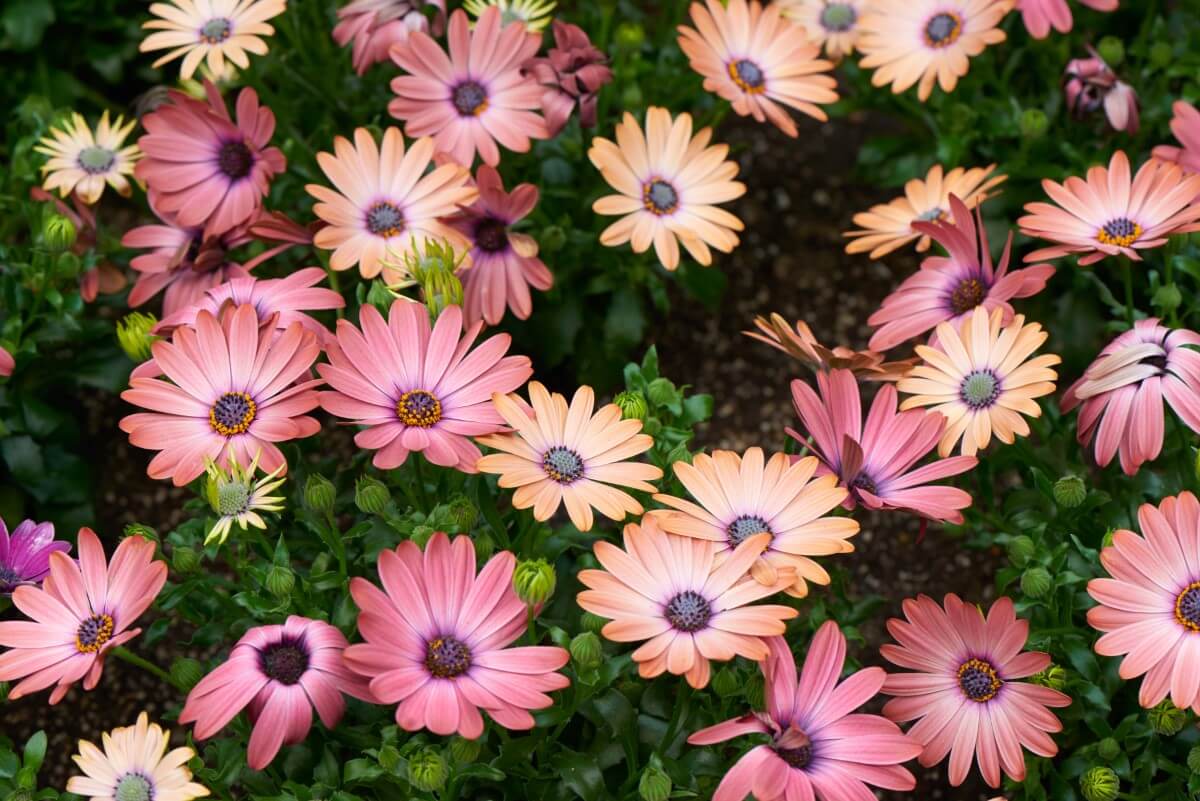
African daisies are charming little flowers from the daisy family (Asteraceae). They’re native to southern Africa and thrive on dry, rocky hillsides. African daisies are grown as annuals in Zones 2 to 8 and as perennials in Zones 9 to 11.
African daisies have colorful red, yellow, or white daisy-like flowers with black or yellow central florets. The flowers close at night before unfurling in the sunshine.
- Native Range
- Genus: Botswana, Cape Provinces, Free State, KwaZulu-Natal, Lesotho, Namibia, Northern Provinces
- Light Requirements
- Full sun
- Growing Zones
- 2 to 11
- Flowering Season
- Late spring to fall
- Mature Height
- 1 to 2 ft
3) African Iris
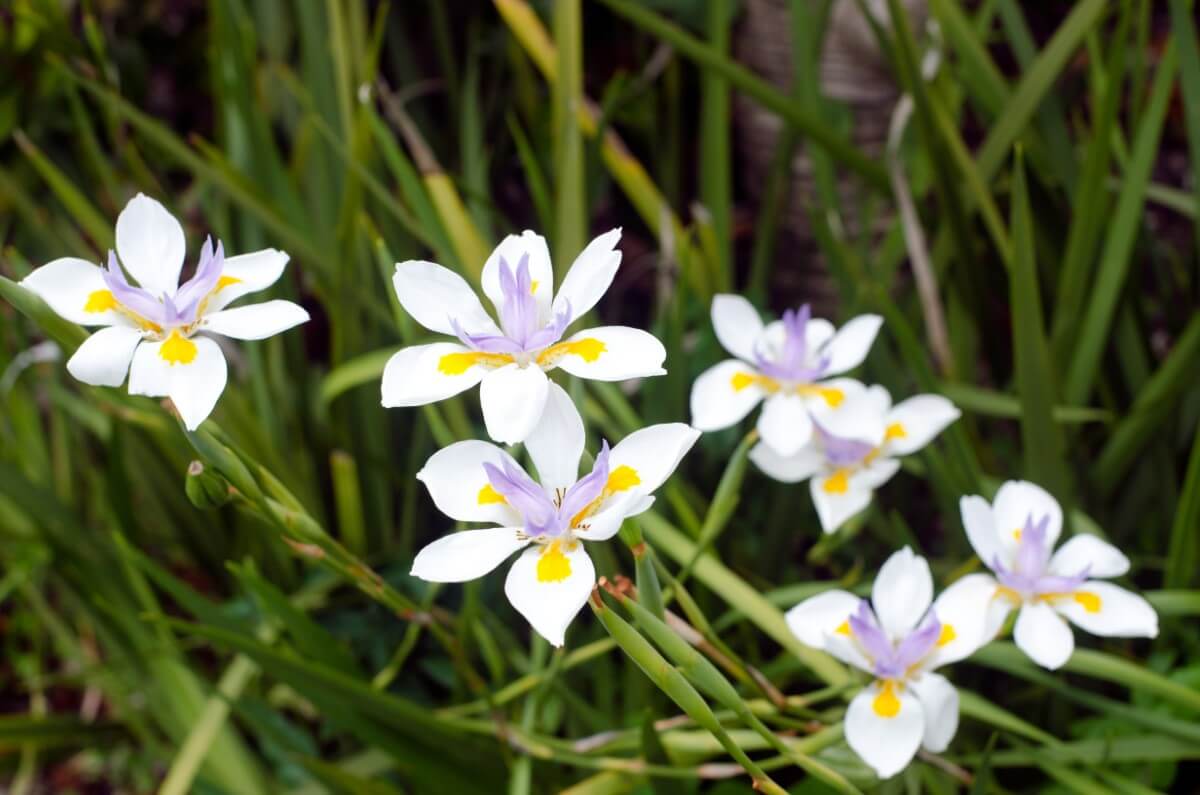
African irises come from the Dietes genus of the iris family (Iridaceae). The genus is native from Angola and the Cape Provinces to Ethiopia and Tanzania, across southern, central, and eastern Africa. It is also native on Norfolk Island. Dietes iridioides is the most common species.
African iris flowers have six white or yellow tepals with yellow or purple markings that surround three central petals. These flowers only last for a few days.
Scientific Name: Dietes spp.
- Native Range
- Genus: Angola, Cape Provinces, DR Congo, Eswatini, Ethiopia, Kenya, KwaZulu-Natal, Lesotho, Malawi, Mozambique, Northern Provinces, Tanzania, Uganda, Zambia, Zimbabwe
- Light Requirements
- Full sun to partial shade
- Growing Zones
- 8 to 11
- Flowering Season
- Spring to fall
- Mature Height
- 2 to 4 ft
4) African Lily
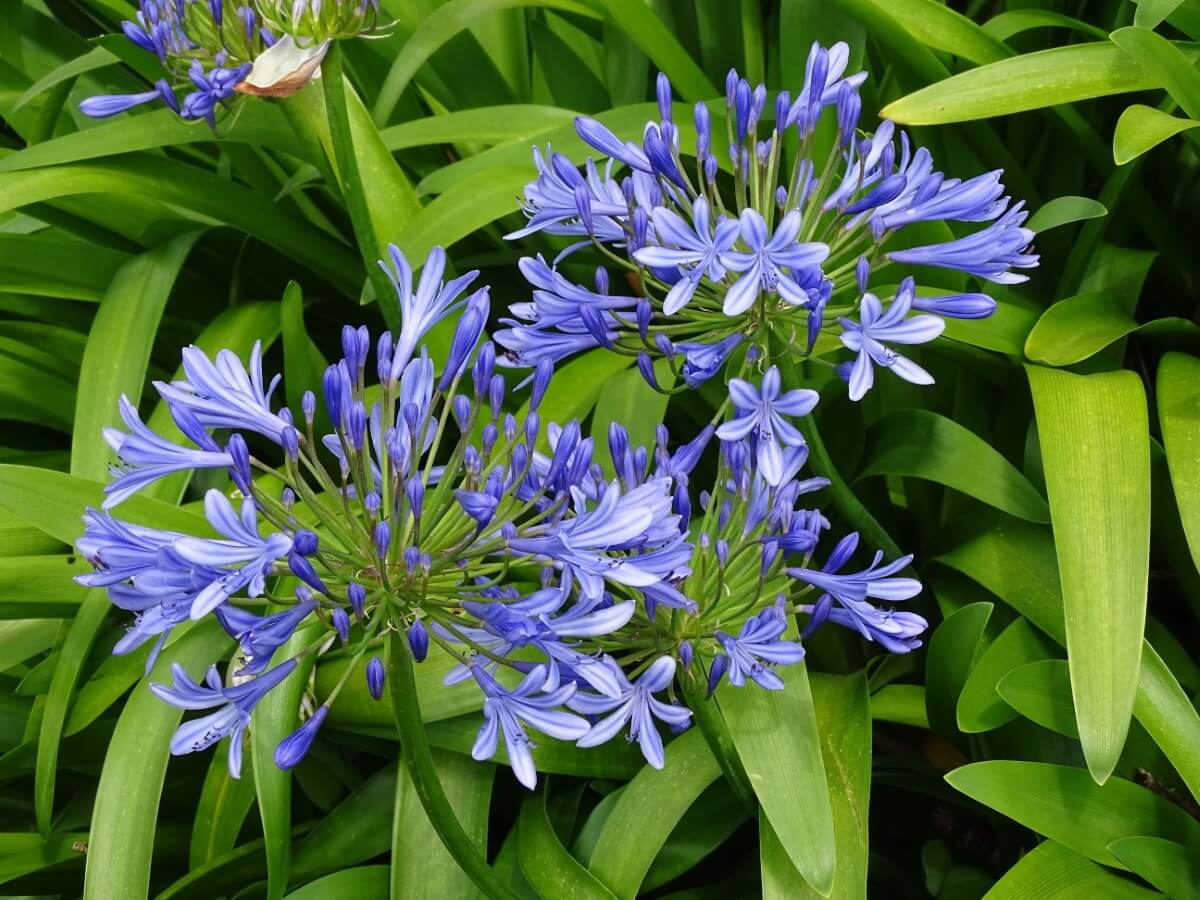
African lily is a beautiful species of Agapanthus from the Amaryllis family (Amaryllidaceae). These agapanthus plants thrive on rocky slopes in South Africa. Despite being thousands of miles away from Egypt, these plants are also known as Lily-of-the-Nile.
African lilies produce upright stems topped with large, rounded clusters of trumpet-shaped blue flowers. These stems rise up from clumps of leathery, strap-like leaves.
Scientific Name: Agapanthus africanus
- Native Range
- Cape Provinces
- Light Requirements
- Full sun
- Growing Zones
- 8 to 10
- Flowering Season
- Summer
- Mature Height
- 2 to 3 ft
5) African Sage
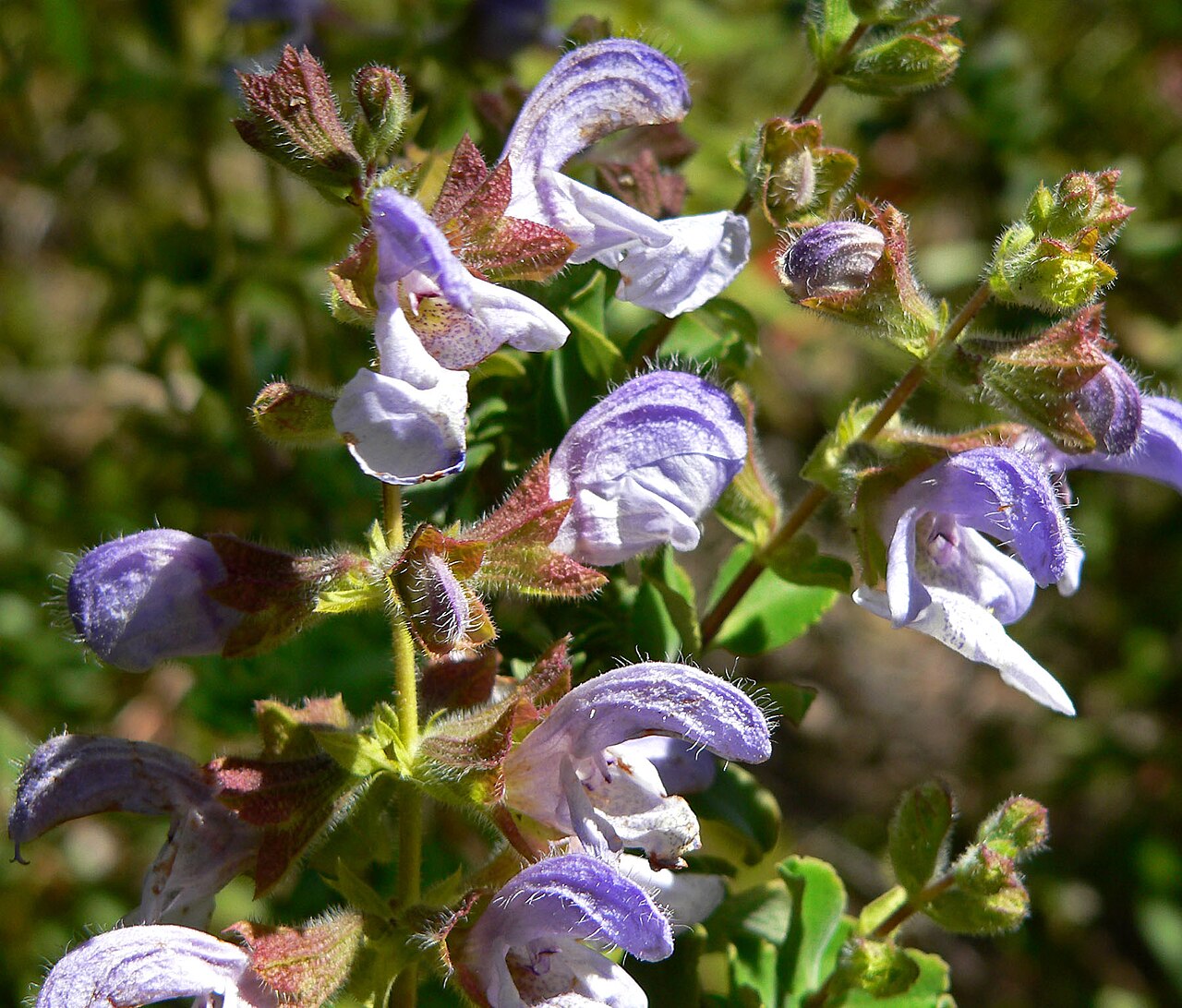
African sage is a fragrant perennial shrub from the Salvia genus within the mint family (Lamiaceae). It thrives in dry coastal or rocky areas in South Africa. African sage has hairy gray stems that produce a strong fragrance when touched.
African sage has pale blue, pink, or violet salvia-like flowers that emerge from tall inflorescences. African sage also has attractive grayish-green elliptical foliage.
Scientific Name: Salvia africana
- Native Range
- Cape Provinces
- Light Requirements
- Full sun to partial shade
- Growing Zones
- 9 to 11
- Flowering Season
- Spring to winter
- Mature Height
- 2 to 3 ft
6) African Violet
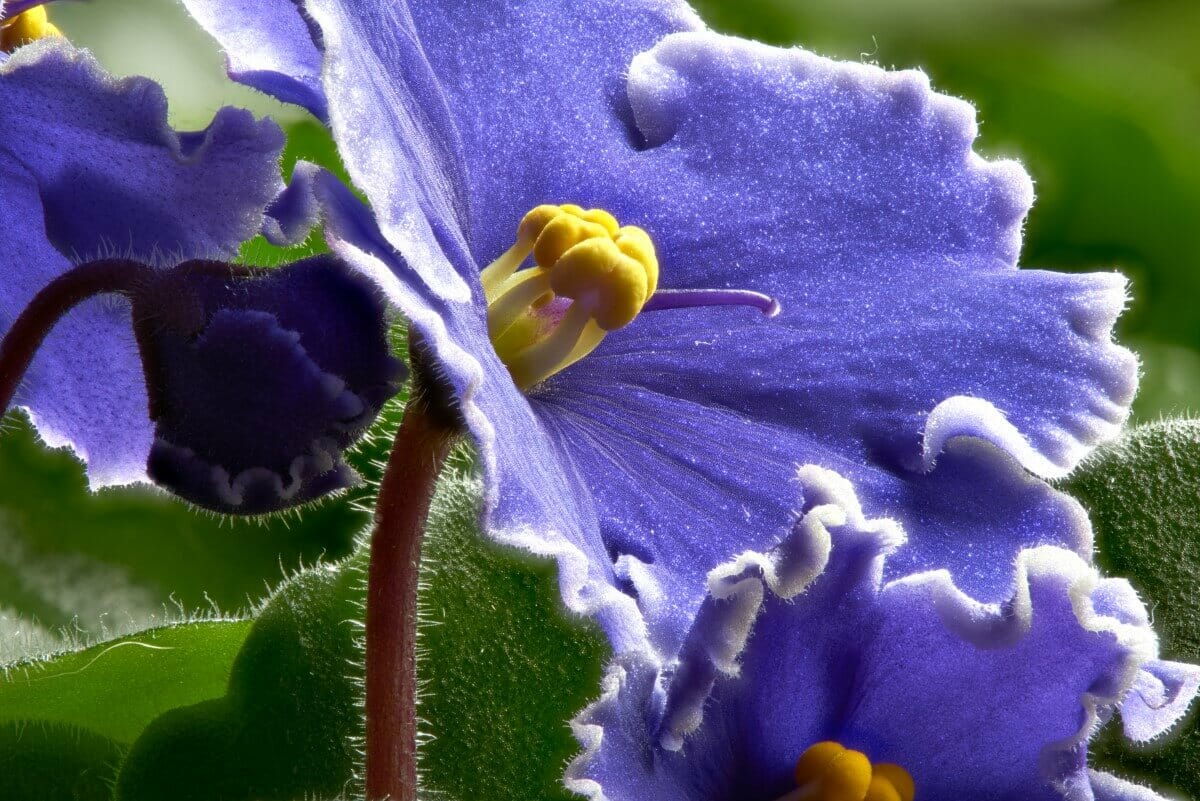
African violets are charming little flowers best grown as houseplants. African violets come from the Saintpaulia section of the Streptocarpus genus within the Gesneriad family (Gesneriaceae).
African violets are native to tropical areas of Kenya and Tanzania in eastern Africa. These plants have clumps of round, succulent-like dark green leaves and small purple flowers with five petals. African violets grow best in well-draining soil in indirect light.
Scientific Name: Saintpaulia ionantha
- Native Range
- Kenya, Tanzania
- Light Requirements
- Partial shade
- Growing Zones
- 11 to 12
- Flowering Season
- All year round
- Mature Height
- Up to 9 inches
7) Anchusa Cape Forget-Me-Not
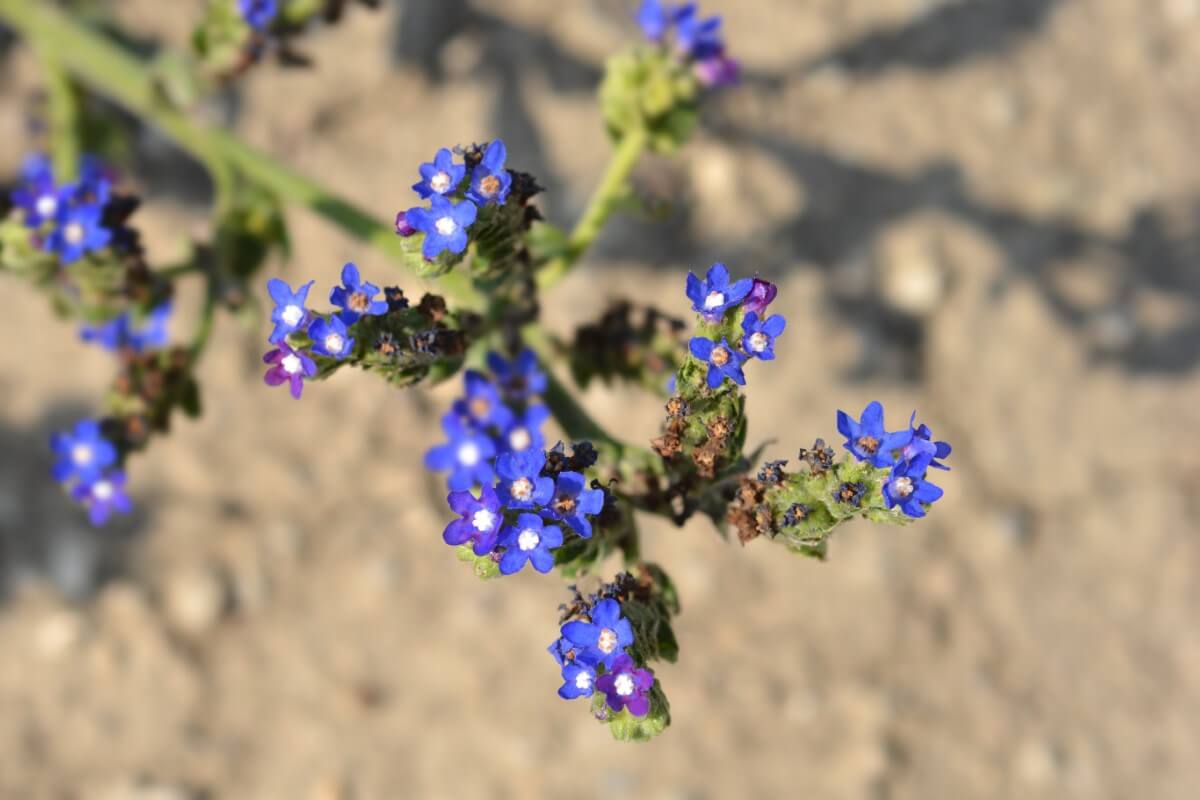
Anchusa Cape forget-me-not is also known as common bugloss and comes from the borage family (Boraginaceae). These plants are native to parts of southern Africa, such as Namibia and South Africa.
Anchusa Cape forget-me-not produces vivid blue flowers that emerge from red flower buds. There are numerous cultivars with blue, pink, or white flowers. The leaves are rough and lance-shaped.
Scientific Name: Anchusa capensis
- Native Range
- Cape Provinces, Free State, Lesotho, Namibia, Northern Provinces
- Light Requirements
- Full sun
- Growing Zones
- 8 to 11
- Flowering Season
- Summer
- Mature Height
- 1 to 2 ft
8) Bird of Paradise
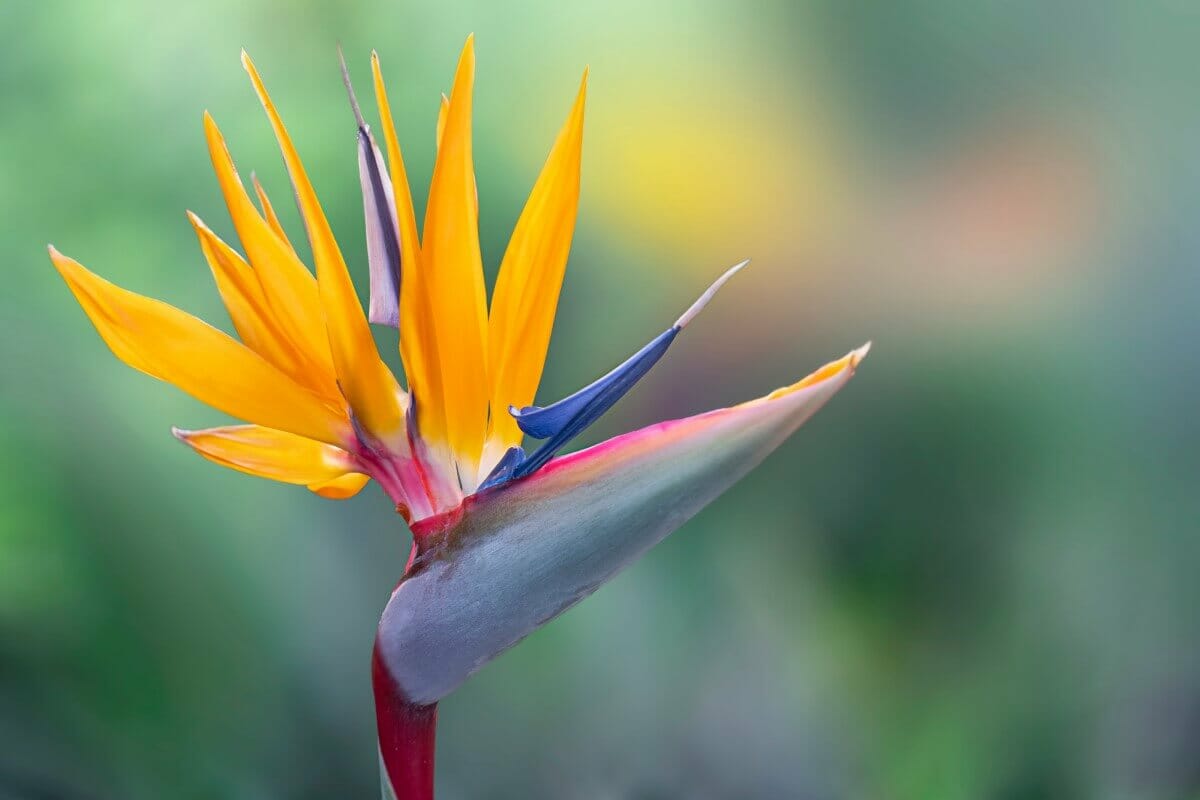
Bird of Paradise plants come from the Strelitziaceae family and are some of the most popular tropical houseplants in the world. Bird of Paradise plants are native to the Cape Provinces and KwaZulu-Natal in South Africa.
Bird of Paradise plants have striking orange and blue flowers that are protected by beak-like spathes. Each flower lasts approximately one week, but each flower head can produce 5 to 7 flowers.
Scientific Name: Strelitzia reginae
- Native Range
- Cape Provinces, KwaZulu-Natal
- Light Requirements
- Full sun to partial shade
- Growing Zones
- 10 to 12
- Flowering Season
- Fall to spring
- Mature Height
- 4 to 6 ft
9) Bitter Aloe
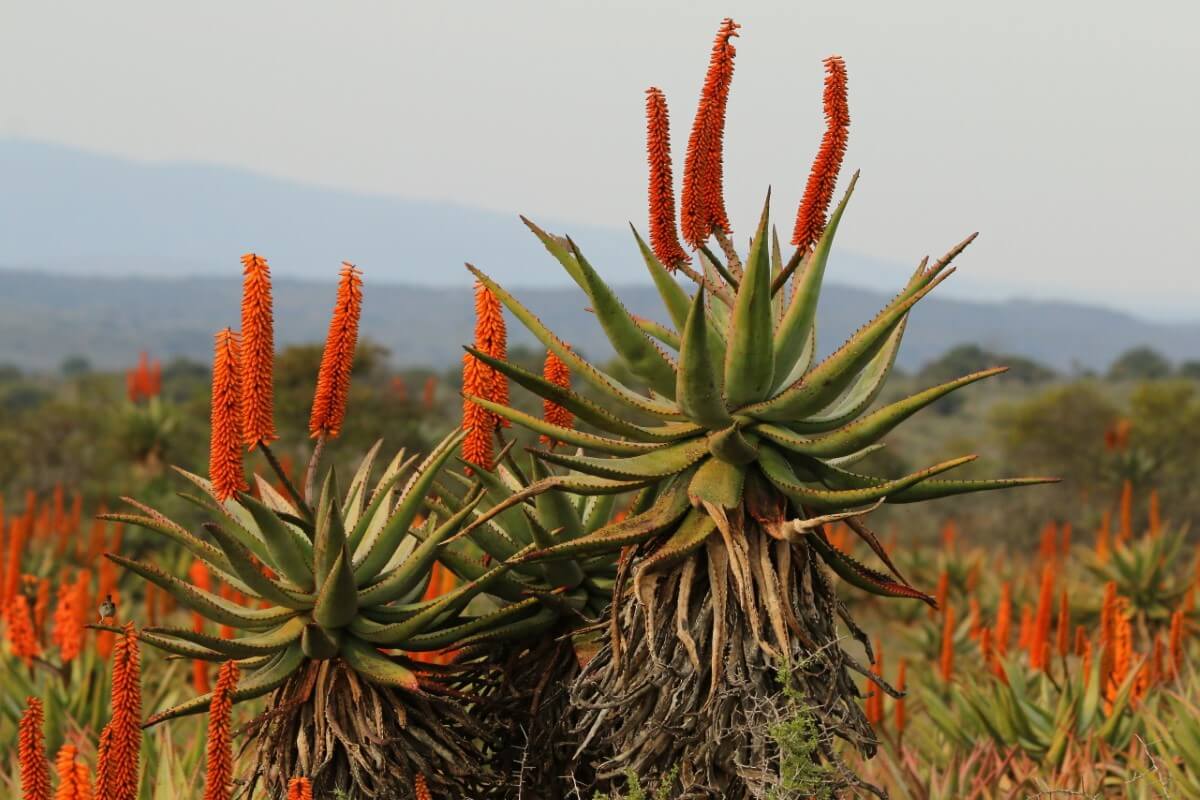
Also known as Cape aloe, bitter aloe is native to rocky areas and dry shrublands in South Africa. This tree-like aloe produces a single thick trunk up to 10 feet tall with rosettes of thick, fleshy leaves. These leaves can grow up to 3 feet long.
Bitter aloe plants have orange or red flowers that emerge from a crown of inflorescences on top of the plant.
Scientific Name: Aloe ferox
- Native Range
- Cape Provinces, Free State, Lesotho
- Light Requirements
- Full sun
- Growing Zones
- 9 to 12
- Flowering Season
- Winter to spring
- Mature Height
- 6 to 10 ft
10) Blue Lily
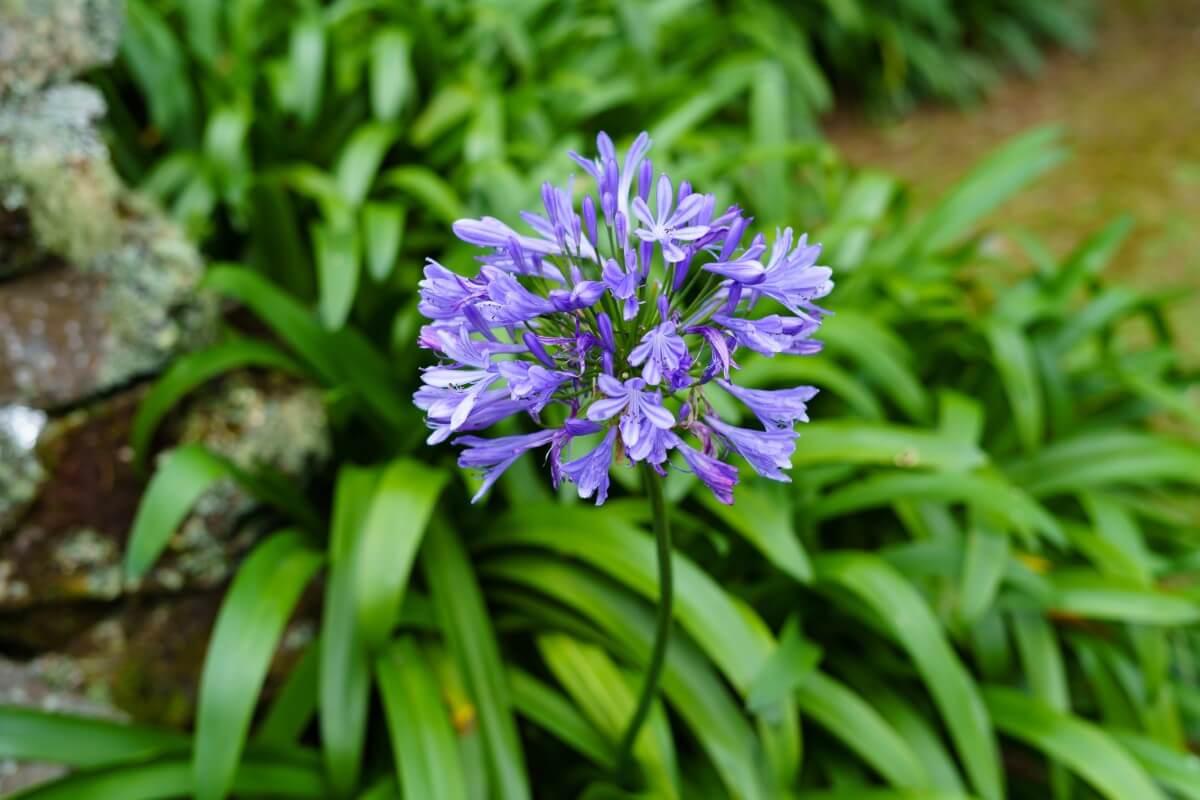
Also known as the common agapanthus, the blue lily plant is one of the most popular ornamental agapanthus species. Blue lily plants come from the amaryllis family and are native to South Africa’s Eastern Cape province.
They bloom during the summer in the Northern Hemisphere and late winter to spring in South Africa. These agapanthus plants produce large, rounded clusters of tubular blue, white, or purple flowers.
Scientific Name: Agapanthus praecox
- Native Range
- Cape Provinces, KwaZulu-Natal
- Light Requirements
- Full sun
- Growing Zones
- 8 to 10
- Flowering Season
- Summer
- Mature Height
- 2 to 4 ft
11) Blue Hyacinth
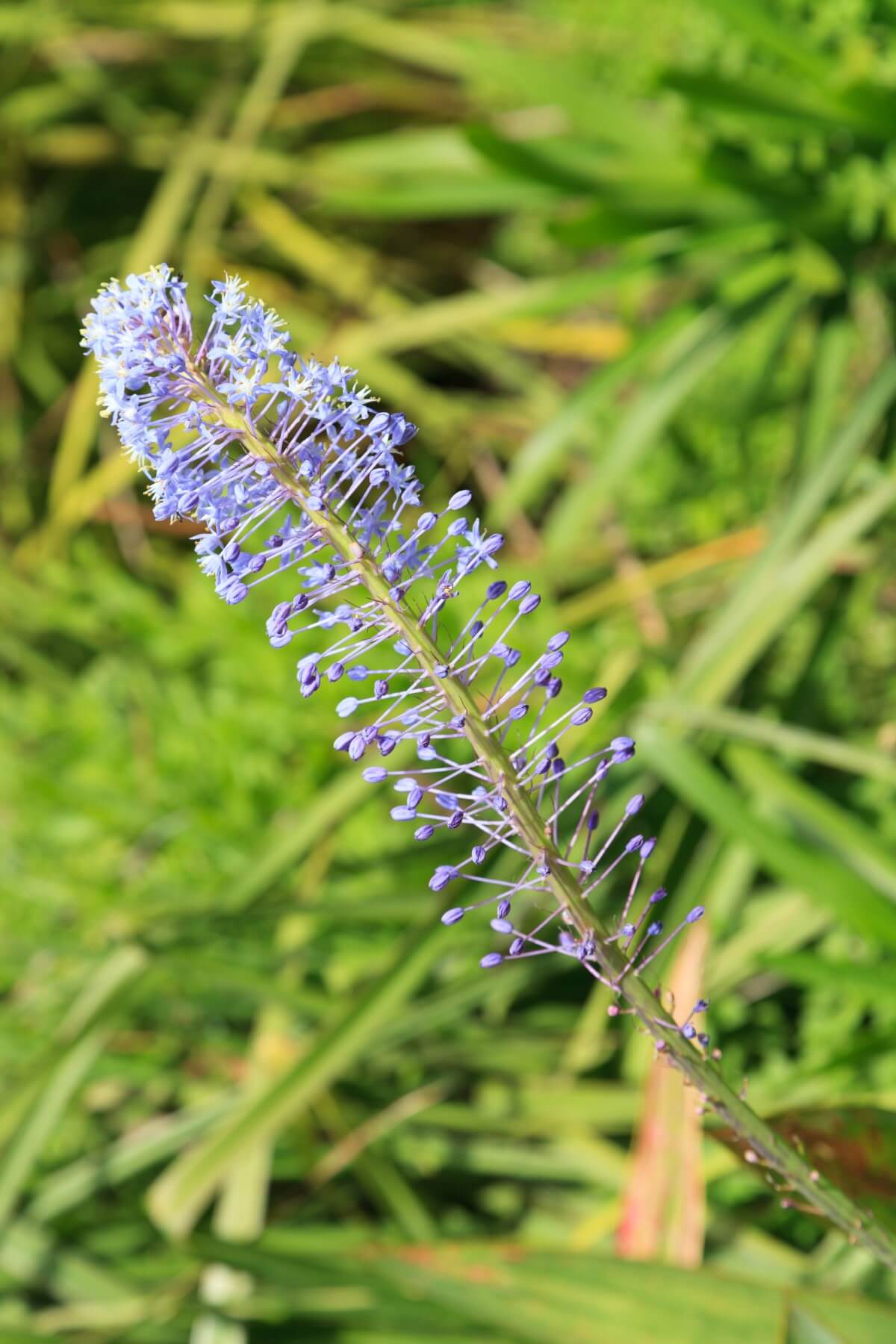
Also known as blue squill, blue hyacinth is a bulb-forming perennial from the asparagus family (Asparagaceae). These deciduous plants are native to parts of Southern Africa and grow in various habitats.
During the spring, blue hyacinth bulbs produce a rosette of veined leaves. The blue, white, or violet flowers are produced on upright racemes. During the evening, blue hyacinth flowers emit a lovely honey-like fragrance.
Scientific Name: Merwilla plumbea
- Native Range
- Cape Provinces, Eswatini, Free State, KwaZulu-Natal, Lesotho, Malawi, Northern Provinces
- Light Requirements
- Full sun to partial shade
- Growing Zones
- 7 to 10
- Flowering Season
- Spring to summer
- Mature Height
- 1 to 1.5 ft
12) Blushing Bride
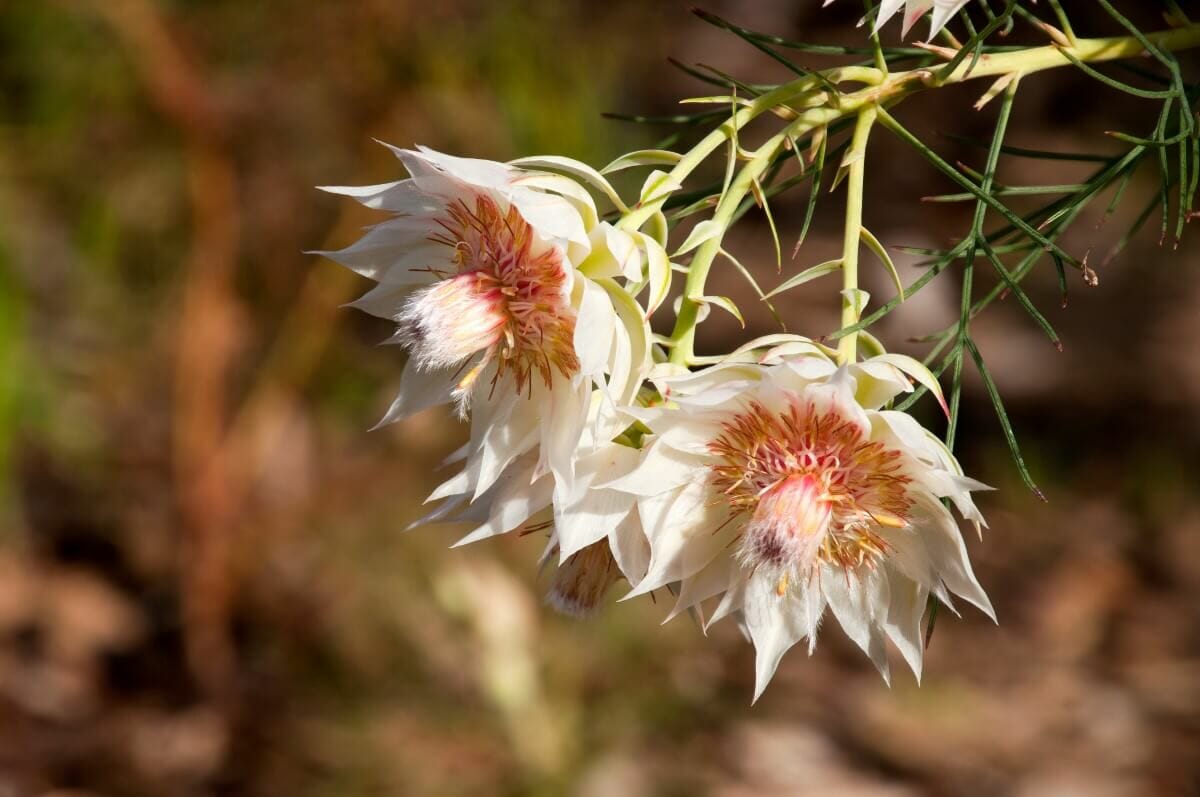
Blushing bride plants are evergreen shrubs from the Proteaceae family. These flowers are native to the Cape Provinces of South Africa and were first recorded in the mountains near Franschhoek.
Blushing bride plants produce several flowering stems that branch off from the main stem. These stems produce up to eight pink or white flowers with large central pods. These plants rely on fire to germinate their seeds.
Scientific Name: Serruria florida
- Native Range
- Cape Provinces
- Light Requirements
- Full sun
- Growing Zones
- 10 to 11
- Flowering Season
- Winter to
- Mature Height
- 2.5 to 5 ft
13) Bush Lily
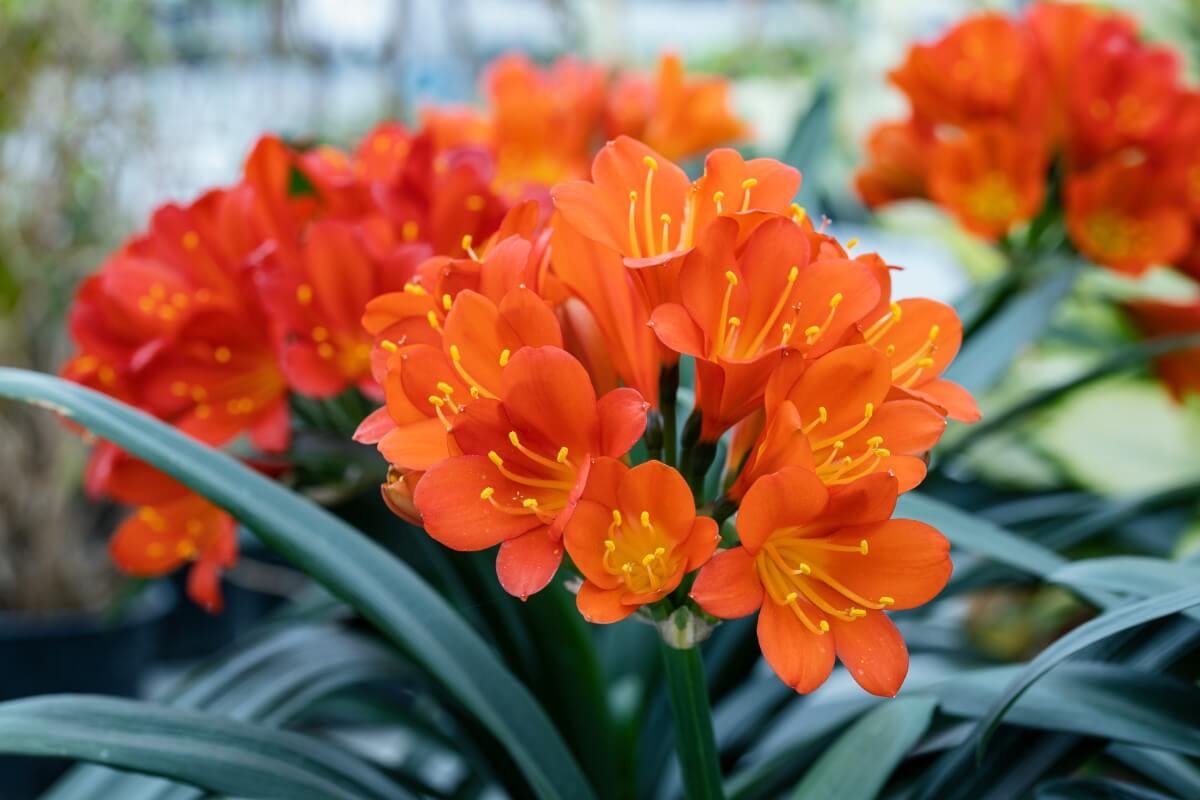
Also known as natal lilies, bush lilies come from the Clivia genus in the Amaryllis family. Bush lilies thrive in woodland areas in several parts of South Africa.
They produce clusters of orange, red, or yellow trumpet-shaped flowers. These flowers give off a subtle sweet scent. Due to their need for warm temperatures, bush lilies are best grown as houseplants outside of Zones 9 to 11.
Scientific Name: Clivia miniata
- Native Range
- Cape Provinces, Eswatini, KwaZulu-Natal, Northern Provinces
- Light Requirements
- Partial shade
- Growing Zones
- 9 to 11
- Flowering Season
- Winter to spring
- Mature Height
- 1 to 2 ft
14) Calla Lily
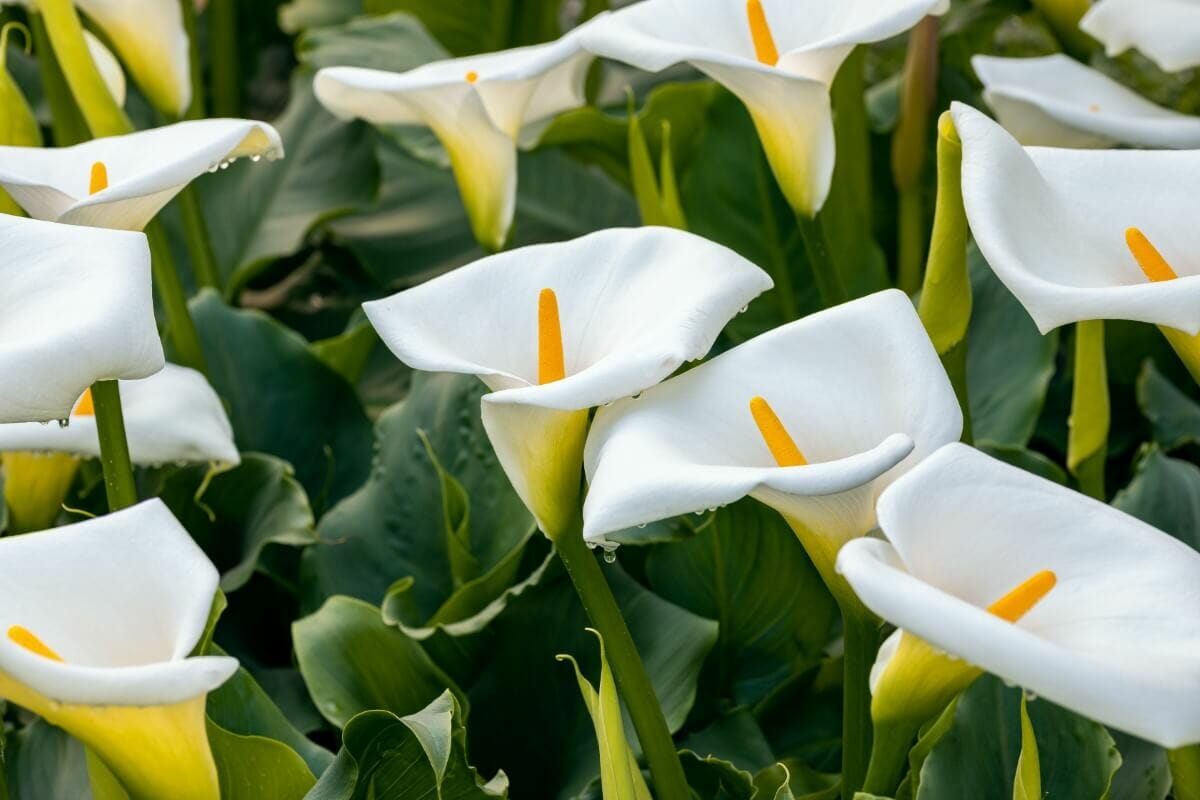
Calla lilies are popular ornamental flowers native to parts of southern Africa. These herbaceous perennials grow best in wetland areas or along riverbanks. Calla lilies can be grown outdoors or as houseplants.
Calla lilies have large, beautiful white spathes and a yellow spadix that emits a sweet scent. They also produce clumps of dark green arrow-shaped leaves. However, calla lilies can become invasive.
Scientific Name: Zantedeschia aethiopica
- Native Range
- Cape Provinces, Eswatini, Free State, KwaZulu-Natal, Lesotho, Northern Provinces
- Light Requirements
- Full sun to partial shade
- Growing Zones
- 8 to 10
- Flowering Season
- Spring to summer
- Mature Height
- 2 to 3 ft
15) Cape Daisy
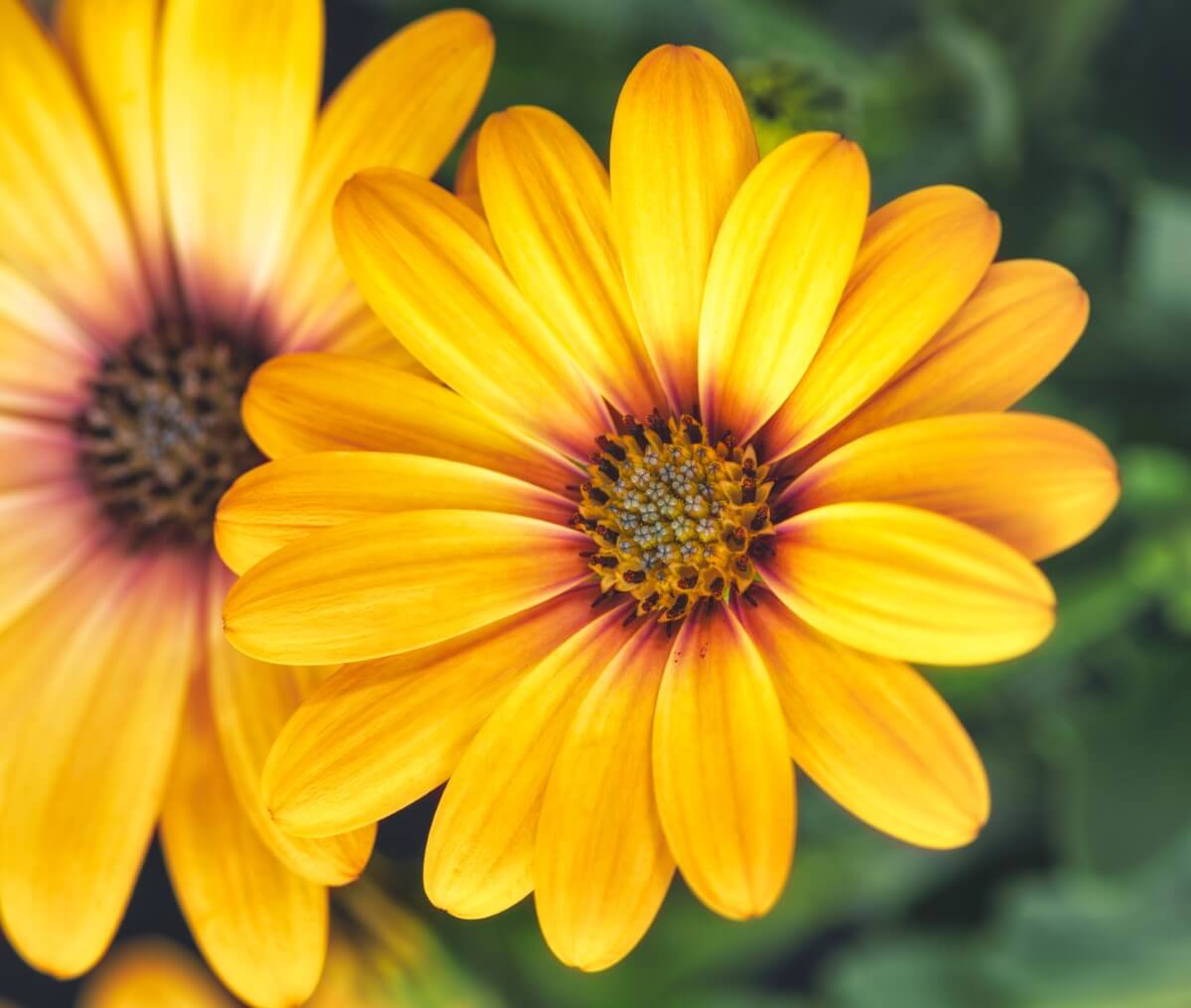
Cape daisies are also known as African daisies and come from the Osteospermum genus of the daisy family. Osteospermums have colorful daisy-like flowers with dark blue central florets. The petals come in various shades of blue, pink, purple, yellow, and white.
Cape daisies are native to the eastern and southern parts of Africa. Cape daisies are popular garden plants worldwide and thrive in warm climates.
Scientific Name: Osteospermum spp.
- Native Range
- Genus: Angola, Botswana, Cape Provinces, DR Congo, Djibouti, Egypt, Eritrea, Eswatini, Ethiopia, Free State, Kenya, KwaZulu-Natal, Lesotho, Malawi, Mozambique, Namibia, Northern Provinces, Socotra, Somalia, St.Helena, Sudan-South Sudan, Tanzania, Uganda, Zambia, Zimbabwe
- Light Requirements
- Full sun
- Growing Zones
- 10 to 11
- Flowering Season
- Spring to fall
- Mature Height
- 1 to 3 ft
16) Cape Honeysuckle
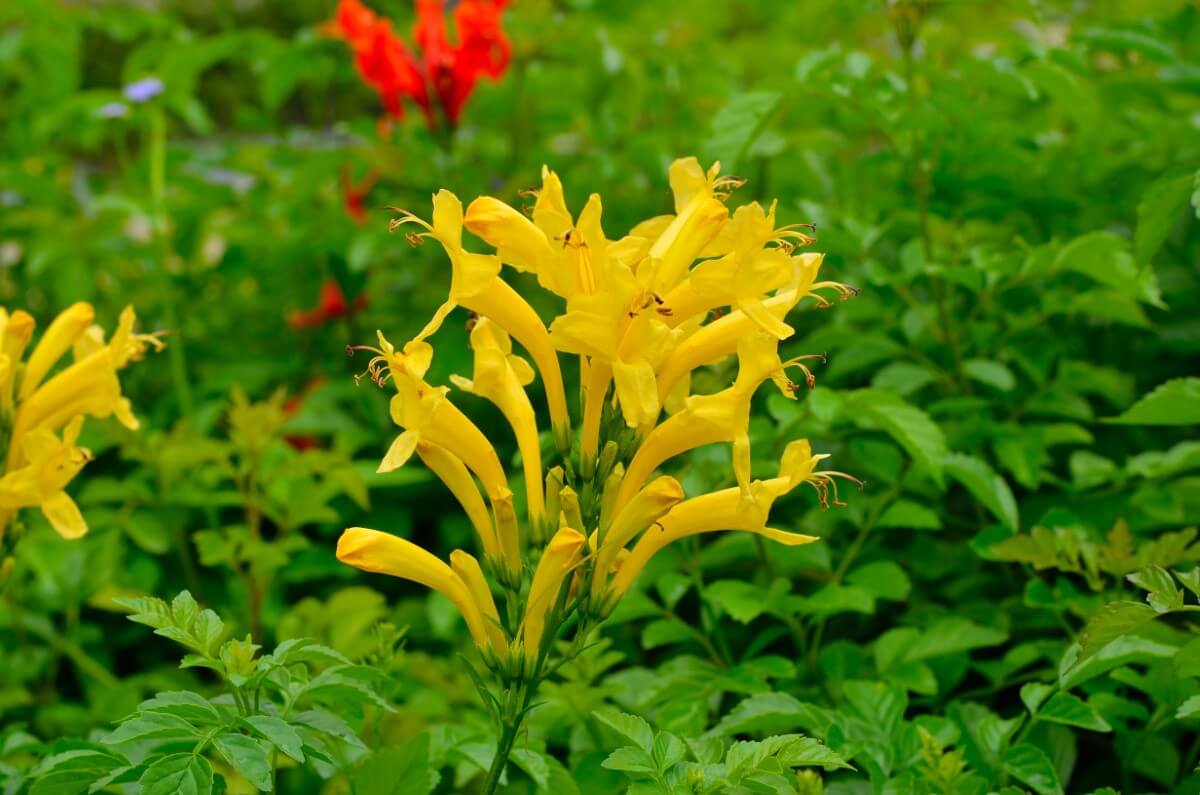
Cape honeysuckle is a beautiful evergreen shrub from the Bignonia family (Bignoniaceae). It’s native from Angola and the Cape Provinces to Tanzania, and is now grown around the world. Cape honeysuckle has a scrambling habit, allowing it to climb.
Cape honeysuckle has orange or red tubular flowers that bloom throughout the year in warm climates. Cape honeysuckle can’t handle cold temperatures below 40ºF. It can be grown in containers.
Scientific Name: Tecoma capensis
- Native Range
- Angola, Cape Provinces, DR Congo, Eswatini, KwaZulu-Natal, Malawi, Mozambique, Northern Provinces, Tanzania
- Light Requirements
- Full sun to partial shade
- Growing Zones
- 9 to 11
- Flowering Season
- Fall to spring
- Mature Height
- 7 to 10 ft
17) Cape Primrose
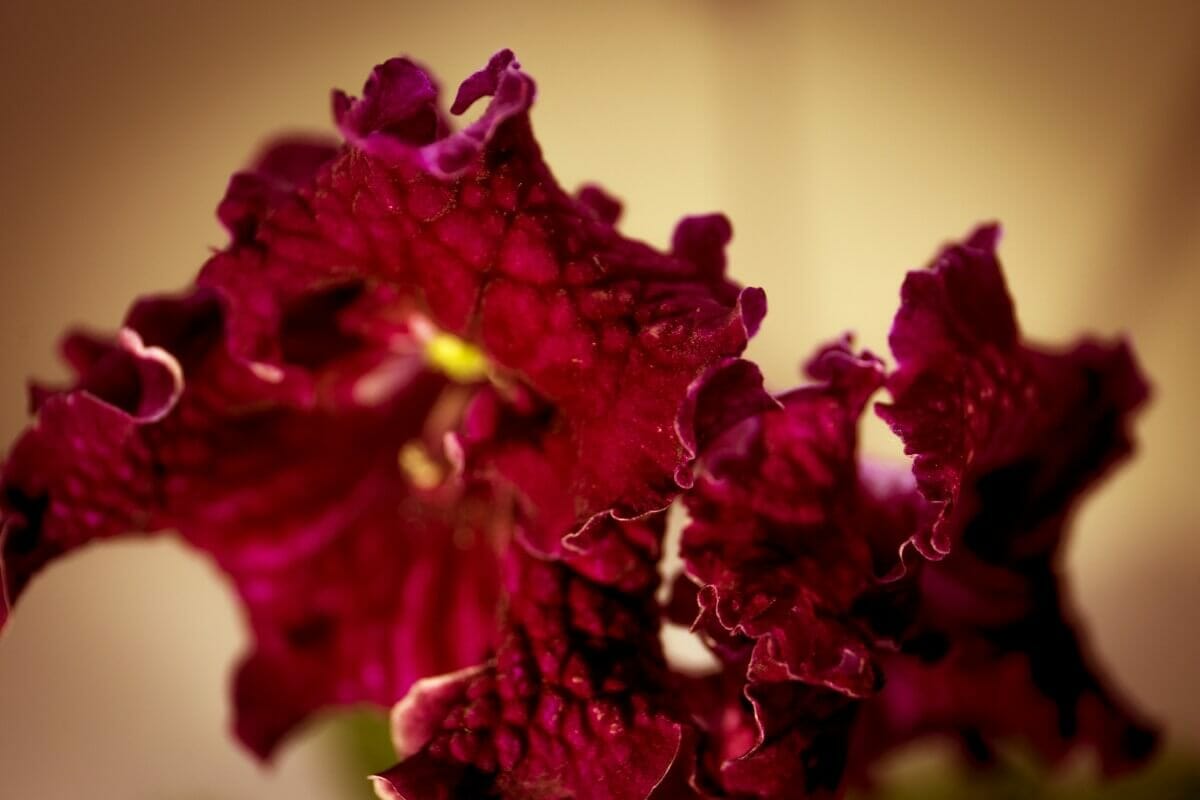
Cape primroses are attractive flowering perennials related to African violets. Cape primroses can be grown outdoors in Zones 10 to 11 or as houseplants in colder areas. They are native to Africa and Madagascar.
Cape primroses produce orchid-like flowers with five petals. The flowers can be blue, pink, purple, red, yellow, or white. Cape primroses also have wrinkled, strap-like leaves with a velvety texture.
Scientific Name: Streptocarpus spp.
- Native Range
- Genus: Angola, Benin, Burundi, Cameroon, Cape Provinces, Central African Republic, Comoros, DR Congo, Eswatini, Ethiopia, Free State, Gabon, Ghana, Guinea, Gulf of Guinea Is., Ivory Coast, Kenya, KwaZulu-Natal, Lesotho, Liberia, Madagascar, Malawi, Mozambique, Nigeria, Northern Provinces, Rwanda, Sierra Leone, Sudan-South Sudan, Tanzania, Togo, Uganda, Zambia, Zimbabwe
- Light Requirements
- Partial sun
- Growing Zones
- 10 to 11
- Flowering Season
- All year round
- Mature Height
- 10 to 12 inches
18) Cape Snowdrop
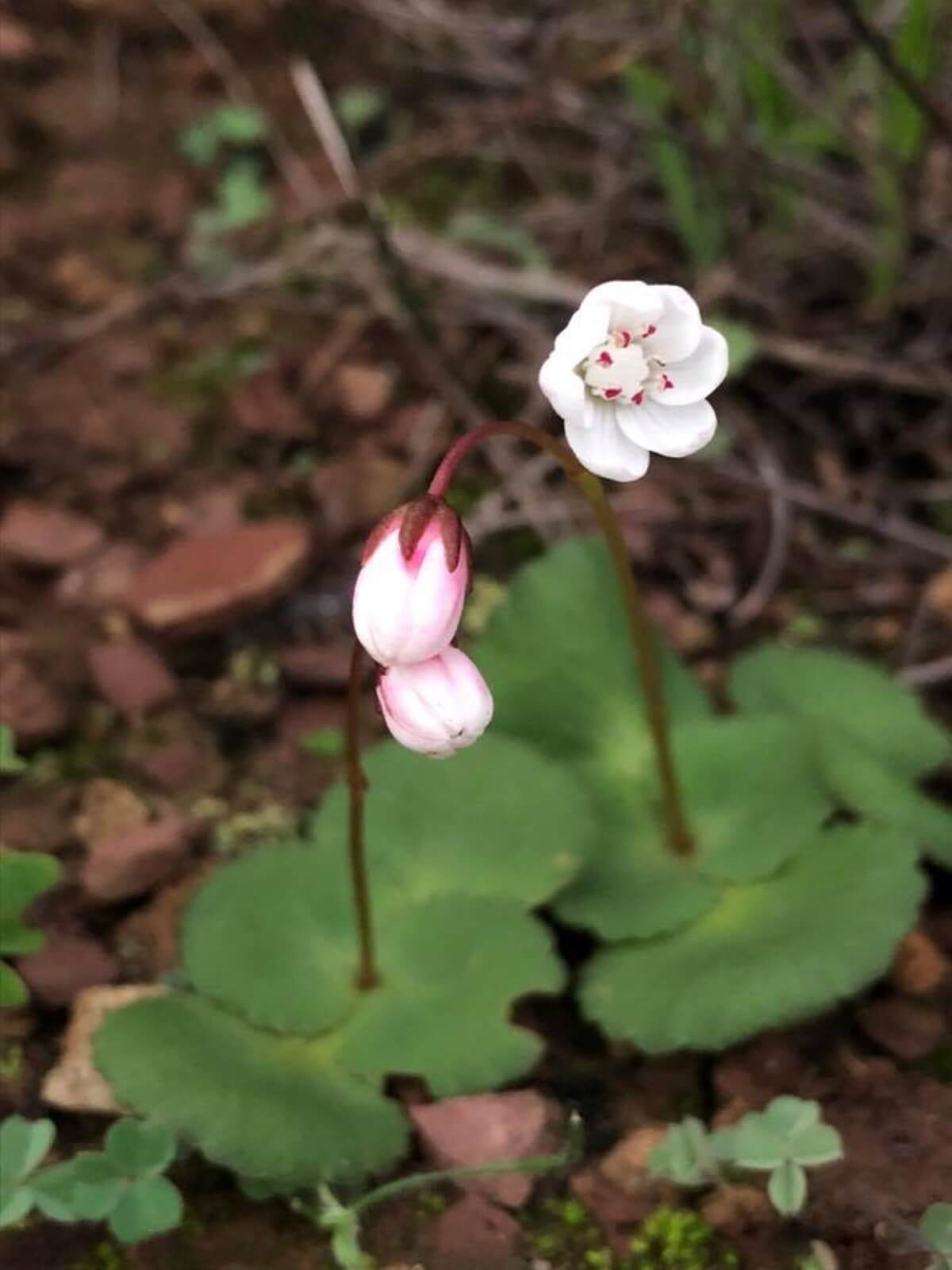
Cape snowdrops come from the Crassula genus in the stonecrop family (Crassulaceae). These small perennial succulents are native to areas of South Africa’s Western Cape province.
They bloom in spring and summer in the Northern Hemisphere and from fall to winter in their native range. They have white flowers with six petals and rounded succulent leaves with toothed edges.
Scientific Name: Crassula capensis
- Native Range
- Cape Provinces
- Light Requirements
- Full sun to partial shade
- Growing Zones
- 9 to 11
- Flowering Season
- Spring to summer
- Mature Height
- Up to 8 inches
19) Cape Tulip
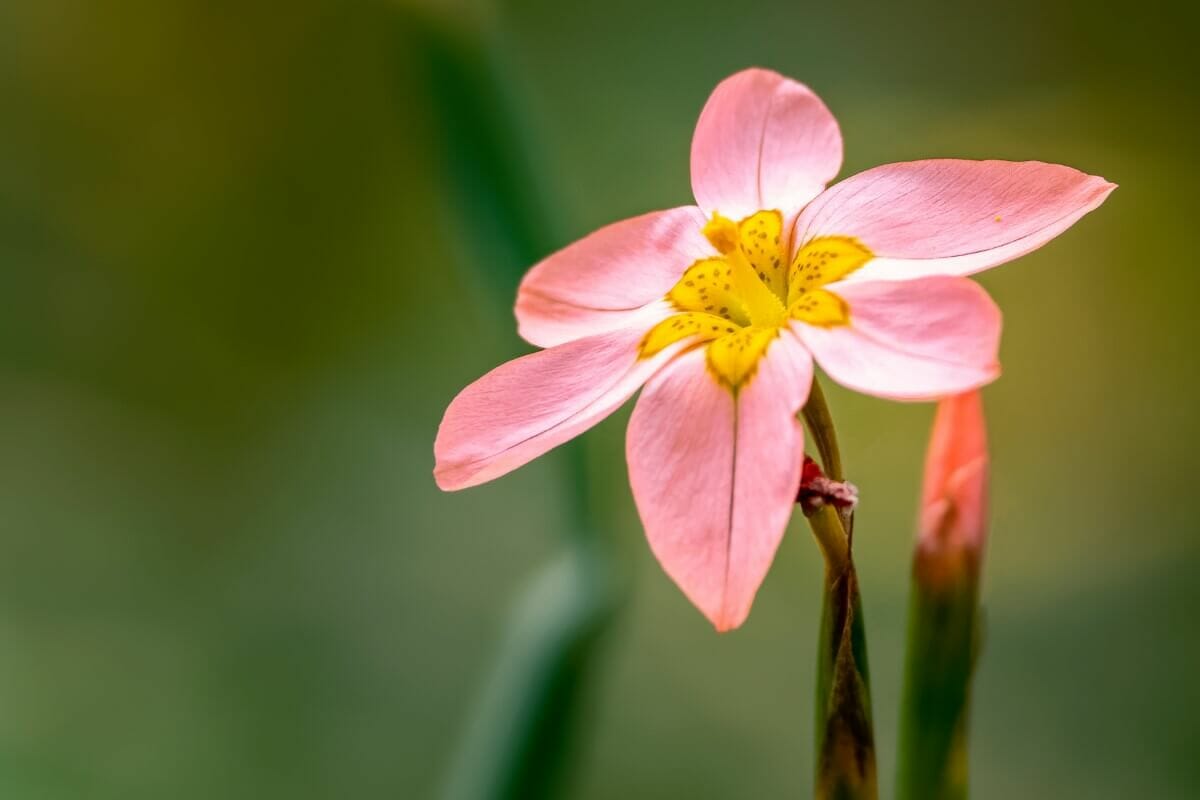
Cape tulips are bulbous flowers from the iris family (Iridaceae). They are native across Africa, southern Europe, and western and central Asia, and Kew records them as introduced in Australia. Cape tulips grow via corms that flower from late winter to early spring in the Southern Hemisphere.
Cape tulips have attractive flowers with six long petals and yellow anthers in the center. Cape tulips can be pink, orange, yellow, and white.
Scientific Name: Moraea spp.
- Native Range
- Genus: Algeria, Angola, Botswana, Burundi, Cameroon, Cape Provinces, DR Congo, Egypt, Eswatini, Ethiopia, Free State, Kenya, KwaZulu-Natal, Lesotho, Libya, Malawi, Morocco, Mozambique, Namibia, Nigeria, Northern Provinces, Sudan-South Sudan, Tanzania, Tunisia, Uganda, Zambia, Zimbabwe
- Light Requirements
- Full sun
- Growing Zones
- 9 to 10
- Flowering Season
- Late winter to early spring
- Mature Height
- Up to 2 ft
20) Century Plant
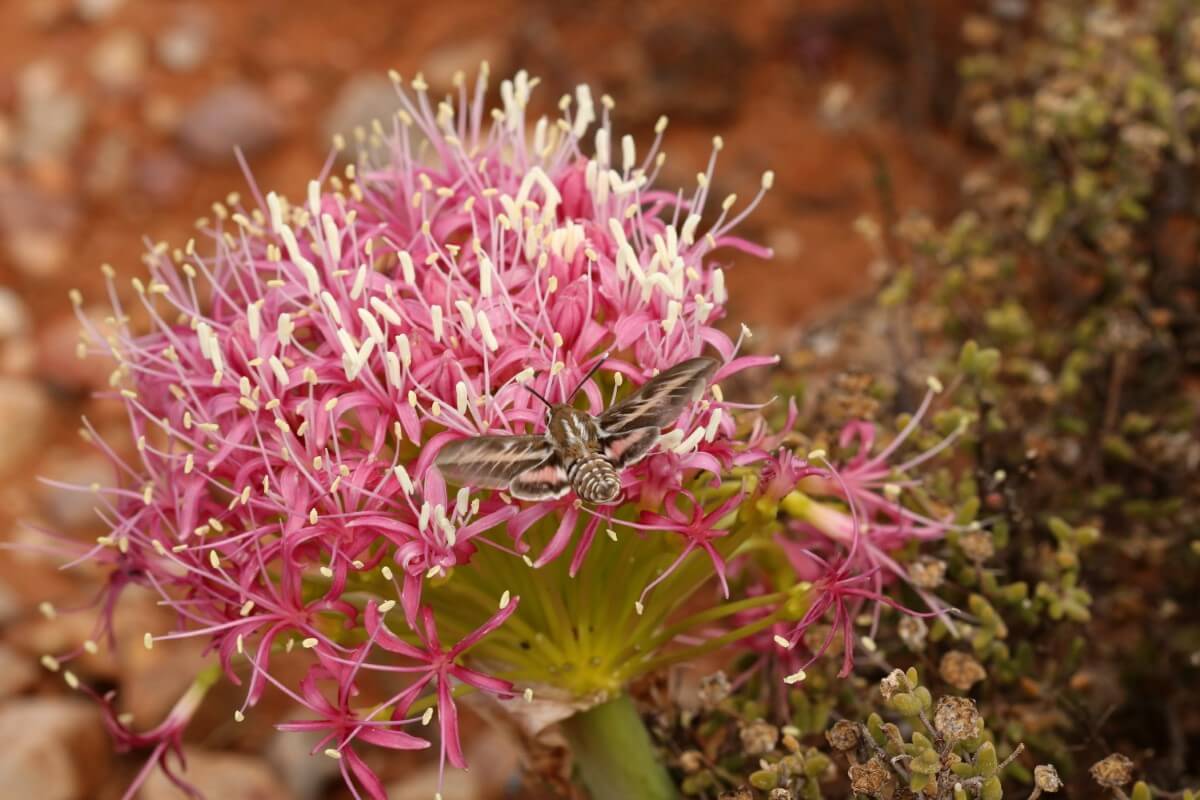
Century plants are unusual bulbous plants from the Amaryllis family. These plants are native to southern, central, and eastern Africa, from Angola and the Cape Provinces to Kenya and Tanzania, and thrive in dry grasslands. Many of these bulbs can live for decades.
Century plants grow as large bulbs that can grow up to 7 inches tall. They produce umbel-like clusters of small pink or red flowers followed by fans of grayish-green leaves. The flowers give off a sweet fragrance.
Scientific Name: Boophone disticha
- Native Range
- Angola, Botswana, Burundi, Cape Provinces, DR Congo, Eswatini, Free State, Kenya, KwaZulu-Natal, Lesotho, Malawi, Mozambique, Namibia, Northern Provinces, Rwanda, Sudan-South Sudan, Tanzania, Uganda, Zambia, Zimbabwe
- Light Requirements
- Full sun
- Growing Zones
- 9 to 10
- Flowering Season
- Spring
- Mature Height
- Up to 25 inches
21) Coral Tree
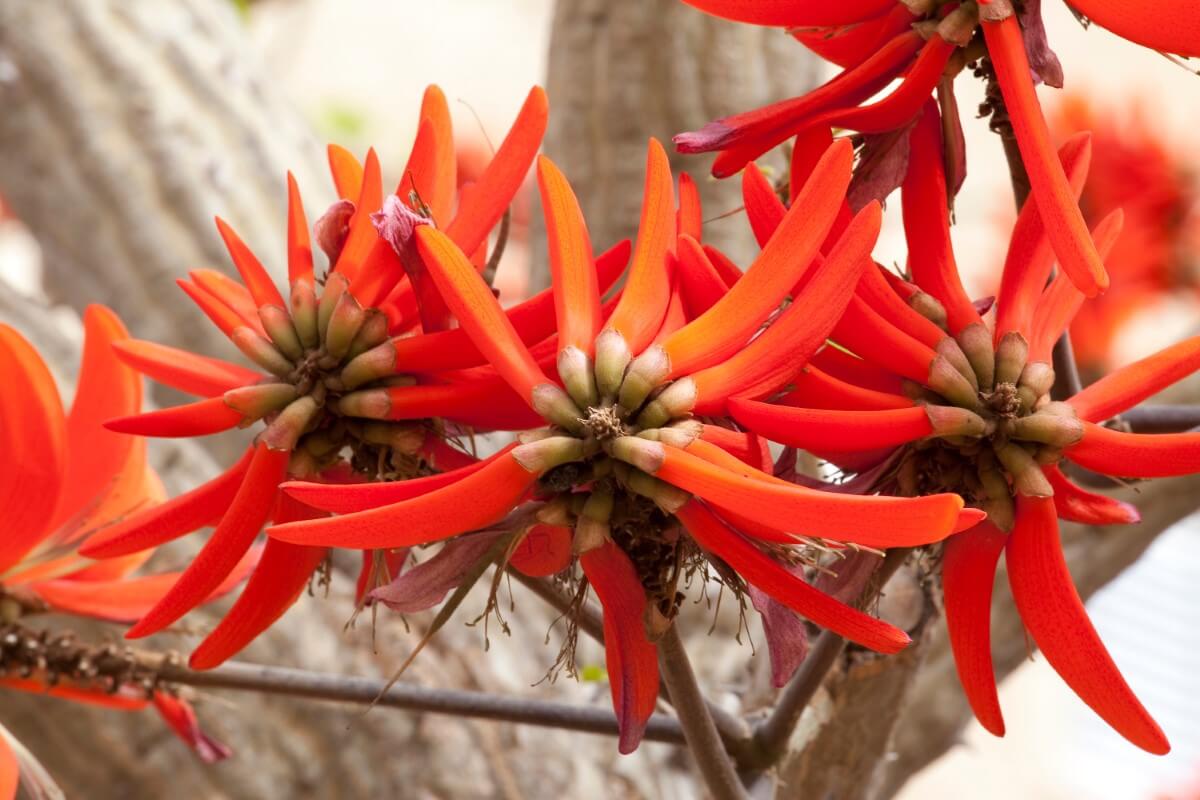
Coral trees are beautiful trees that come from the legume or pea family (Fabaceae). These trees are native to Botswana, South Africa's Cape Provinces, KwaZulu-Natal, and Northern Provinces, Eswatini, Malawi, Mozambique, Tanzania, and Zimbabwe, and are frequently used as landscaping trees.
Coral trees have smooth gray bark with hooked prickles. Coral trees have fan-shaped leaves with hooked tips. During the spring, coral trees produce racemes covered with long, bright red flowers. The flowers are produced before new leaves emerge.
Scientific Name: Erythrina lysistemon
- Native Range
- Botswana, Cape Provinces, Eswatini, KwaZulu-Natal, Malawi, Mozambique, Northern Provinces, Tanzania, Zimbabwe
- Light Requirements
- Full sun
- Growing Zones
- 9 to 11
- Flowering Season
- Winter to spring
- Mature Height
- 30 to 40 ft
22) Crocosmia
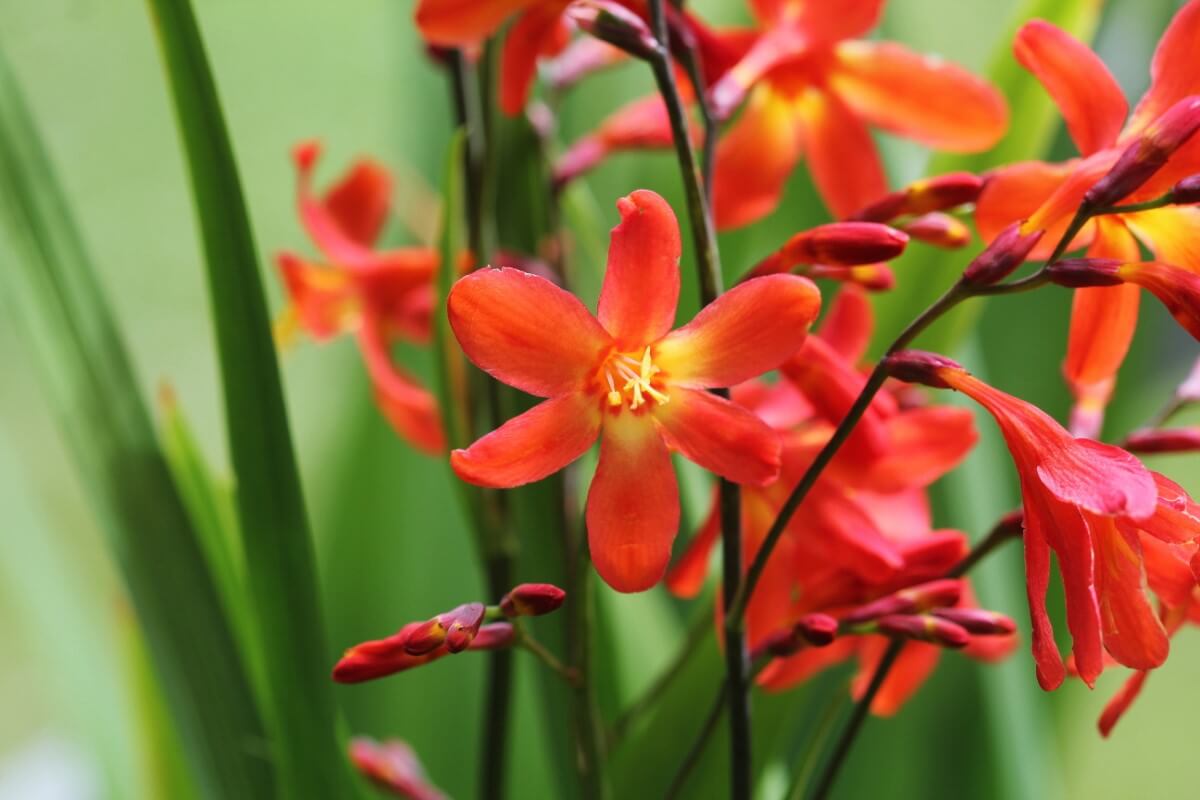
Crocosmias are popular, exotic flowers grown around the world. They come from the iris family (Iridaceae) and are native to eastern and southern parts of Africa. Crocosmias are planted as corms and bloom during the summer.
Crosomia plants produce sword-shaped leaves and arching flower stems. These stems erupt with tubular orange or red flowers. The leaves produce a saffron-like scent when dried and exposed to hot water.
Scientific Name: Crocosmia spp.
- Native Range
- Genus: Angola, Burundi, Cape Provinces, Central African Republic, DR Congo, Eswatini, Free State, KwaZulu-Natal, Lesotho, Madagascar, Malawi, Mozambique, Northern Provinces, Sudan-South Sudan, Tanzania, Zambia, Zimbabwe
- Light Requirements
- Full sun to partial shade
- Growing Zones
- 6 to 9
- Flowering Season
- Summer
- Mature Height
- 2 to 3 ft
23) Fireball Lily
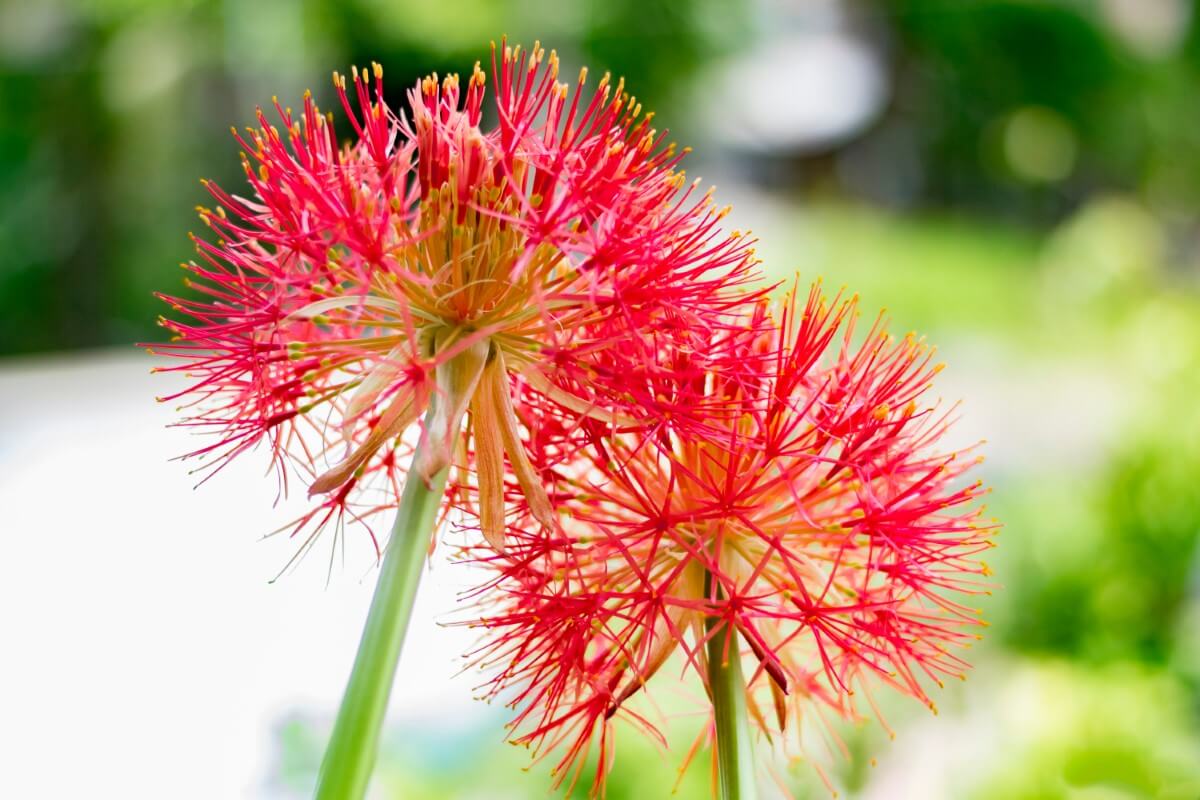
Also known as African blood lilies, fireball lilies are stunning bulbous plants from the amaryllis family. Fireball lily plants are native to most areas in Sub-Saharan Africa. They are also grown around the world as ornamental plants.
Fireball lilies produce globe-like flower heads containing lots of bright red, star-shaped flowers. Fireball lilies are deciduous bulbs. They die back before winter and stay dormant until spring.
Scientific Name: Scadoxus multiflorus
- Native Range
- Angola, Benin, Botswana, Burkina, Burundi, Cameroon, Cape Provinces, Central African Republic, Chad, Congo, DR Congo, Djibouti, Equatorial Guinea, Eritrea, Eswatini, Ethiopia, Gabon, Gambia, Ghana, Guinea, Guinea-Bissau, Gulf of Guinea Is., Ivory Coast, Kenya, KwaZulu-Natal, Liberia, Malawi, Mali, Mauritania, Mozambique, Namibia, Nigeria, Northern Provinces, Rwanda, Senegal, Seychelles, Sierra Leone, Somalia, Sudan-South Sudan, Tanzania, Togo, Uganda, Zambia, Zimbabwe
- Light Requirements
- Partial shade
- Growing Zones
- 9 to 11
- Flowering Season
- Summer to fall
- Mature Height
- 2 to 4 ft
24) Flame Lily
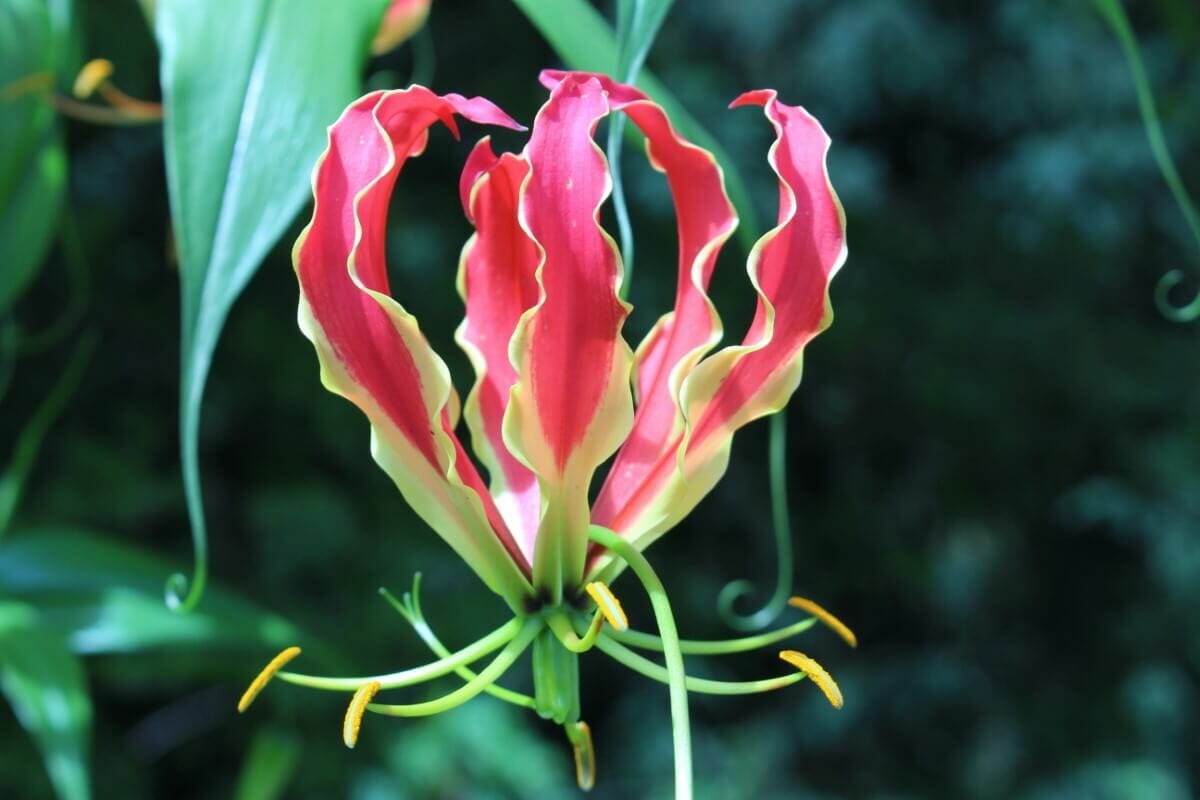
Flame lilies are spectacular members of the autumn-crocus family (Colchicaceae). These lilies are native to southern Africa and Asia.
Flame lilies have fiery red or orange flowers with yellow edges and wavy petals that resemble flames. The petals curl upwards and sit above six almost horizontal stamens. Despite their beauty, flame lilies are lethally toxic.
Scientific Name: Gloriosa superba
- Native Range
- Angola, Benin, Botswana, Burkina, Burundi, Cabinda, Cameroon, Cape Provinces, Caprivi Strip, Central African Republic, Chad, Congo, DR Congo, Equatorial Guinea, Ethiopia, Gabon, Ghana, Guinea, Guinea-Bissau, Gulf of Guinea Is., Ivory Coast, Kenya, Liberia, Madagascar, Malawi, Mozambique, Nigeria, Northern Provinces, Rwanda, Senegal, Seychelles, Sierra Leone, Sudan-South Sudan, Tanzania, Togo, Uganda, Zambia, Zimbabwe
- Light Requirements
- Full sun to partial shade
- Growing Zones
- 8 to 10
- Flowering Season
- Summer to fall
- Mature Height
- 5 to 6 ft
25) Flowering Grass
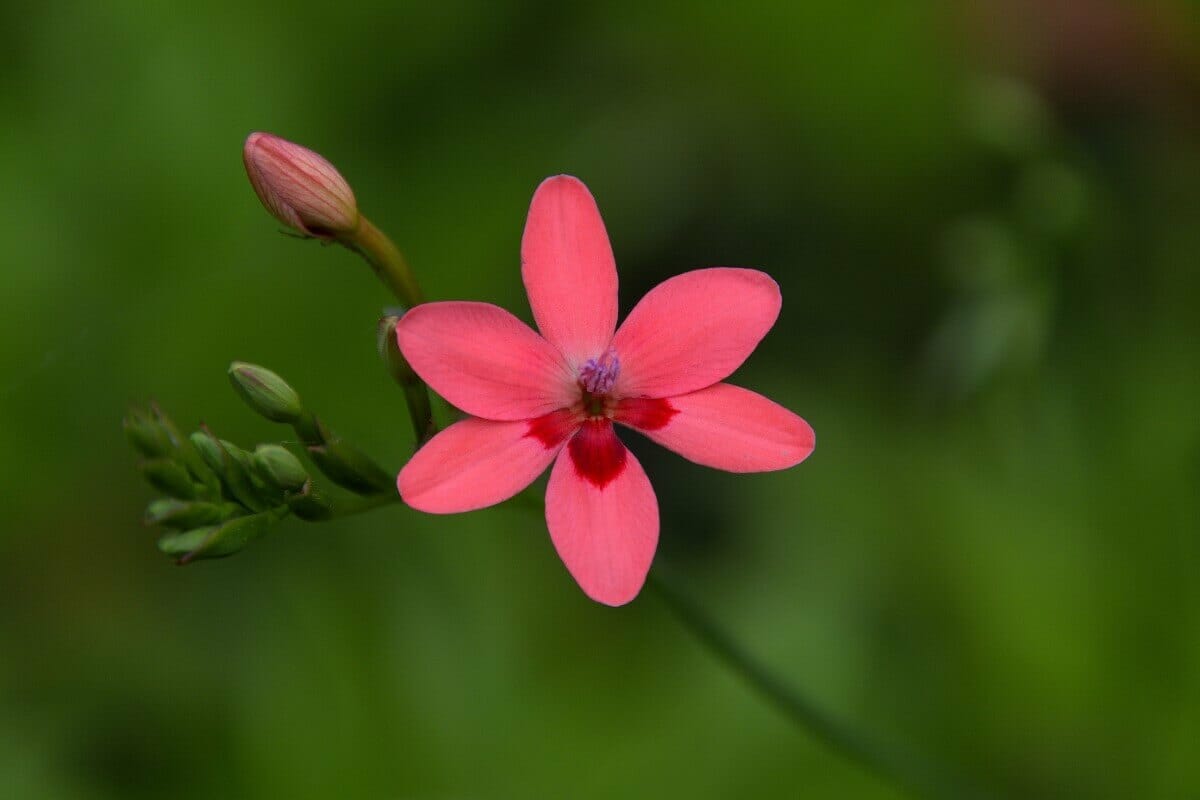
Flowering grass is a member of the iris family native to parts of eastern and southern Africa. In the Northern Hemisphere, flowering grass blooms during the summer. In the Southern Hemisphere, the flowers emerge from October until December.
They grow via underground corms, producing a flat fan of slender green leaves. It then produces small, flat flowers that can be red, pale blue, or white.
Scientific Name: Freesia laxa
- Native Range
- Cape Provinces, DR Congo, Eswatini, Kenya, KwaZulu-Natal, Malawi, Mozambique, Northern Provinces, Rwanda, Tanzania, Uganda, Zambia
- Light Requirements
- Full sun to partial shade
- Growing Zones
- 8 to 10
- Flowering Season
- Summer
- Mature Height
- 6 to 12 inches
26) Gazania
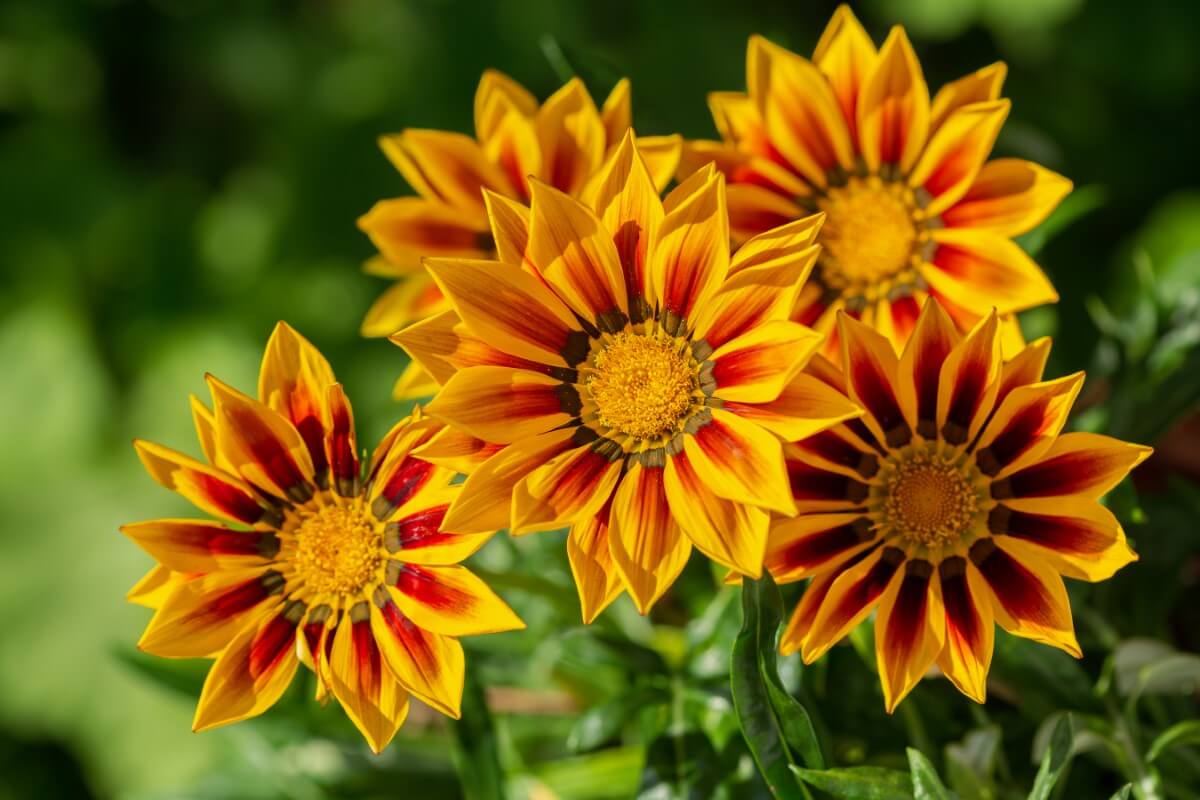
Also known as treasure flowers, gazanias are colorful flowers from the daisy family (Asteraceae). These vibrant plants are native to southern regions of Africa. Gazanias are popular with gardeners worldwide but are listed as invasive in some areas.
Gazania flowers have small overlapping petals surrounding large central florets with dark markings. The petals come in colors like pink, orange, red, yellow, and white.
Scientific Name: Gazania spp.
- Native Range
- Genus: Angola, Botswana, Cape Provinces, Eswatini, Free State, KwaZulu-Natal, Lesotho, Mozambique, Namibia, Northern Provinces, Zambia, Zimbabwe
- Light Requirements
- Full sun
- Growing Zones
- 8 to 11
- Flowering Season
- Spring to summer
- Mature Height
- 1 to 2 ft
27) Hottentot Fig
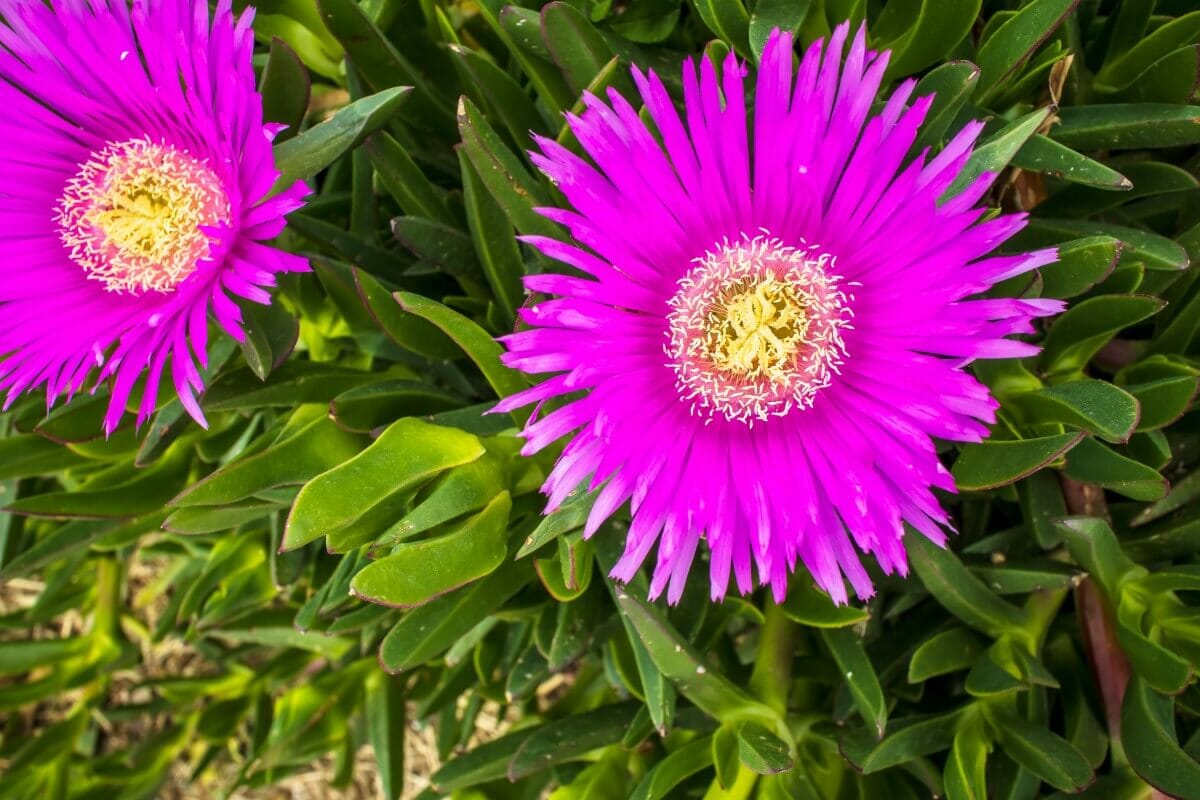
Hottentot figs are low-growing succulents from the fig-marigold family (Aizoaceae). Hottentot figs form mats of triangular succulent leaves that turn red as they age. The flowers have lots of thin, long petals surrounding large central clusters of tiny yellow flowers.
Hottentot figs are native to South Africa's Cape Provinces, are introduced widely in the Mediterranean, California, Florida, Australia, and New Zealand, and frequently colonize recently-disturbed sites. These plants make good low-maintenance ground cover plants. As succulents, Hottentot figs are drought-tolerant.
Scientific Name: Carpobrotus edulis
- Native Range
- Cape Provinces
- Light Requirements
- Full sun
- Growing Zones
- 8 to 11
- Flowering Season
- Spring to fall
- Mature Height
- Up to 1 ft
28) Impala Lily
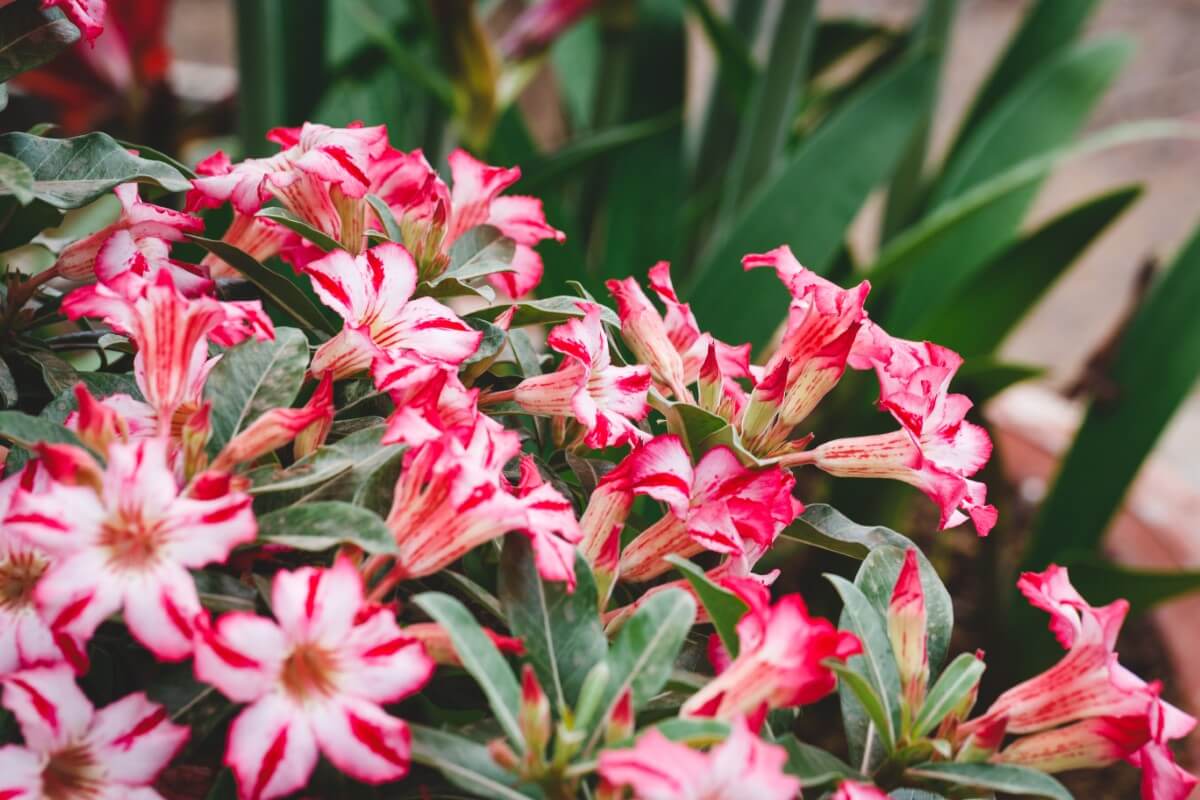
Impala lilies come from the Adenium genus of the dogbane family (Apocynaceae). These succulent trees have beautiful star-shaped tubular white flowers with dark red edges. These plants have gray bark and look like small baobab trees.
Impala lilies are native to central and eastern parts of southern Africa and thrive in dry woodland or grassland habitats. In the Southern Hemisphere, impala lilies flower from May to September.
Scientific Name: Adenium multiflorum
- Native Range
- Eswatini, KwaZulu-Natal, Malawi, Mozambique, Northern Provinces, Zambia, Zimbabwe
- Light Requirements
- Full sun
- Growing Zones
- 10 to 12
- Flowering Season
- Winter to spring
- Mature Height
- 1.5 to 10 ft
29) King Protea
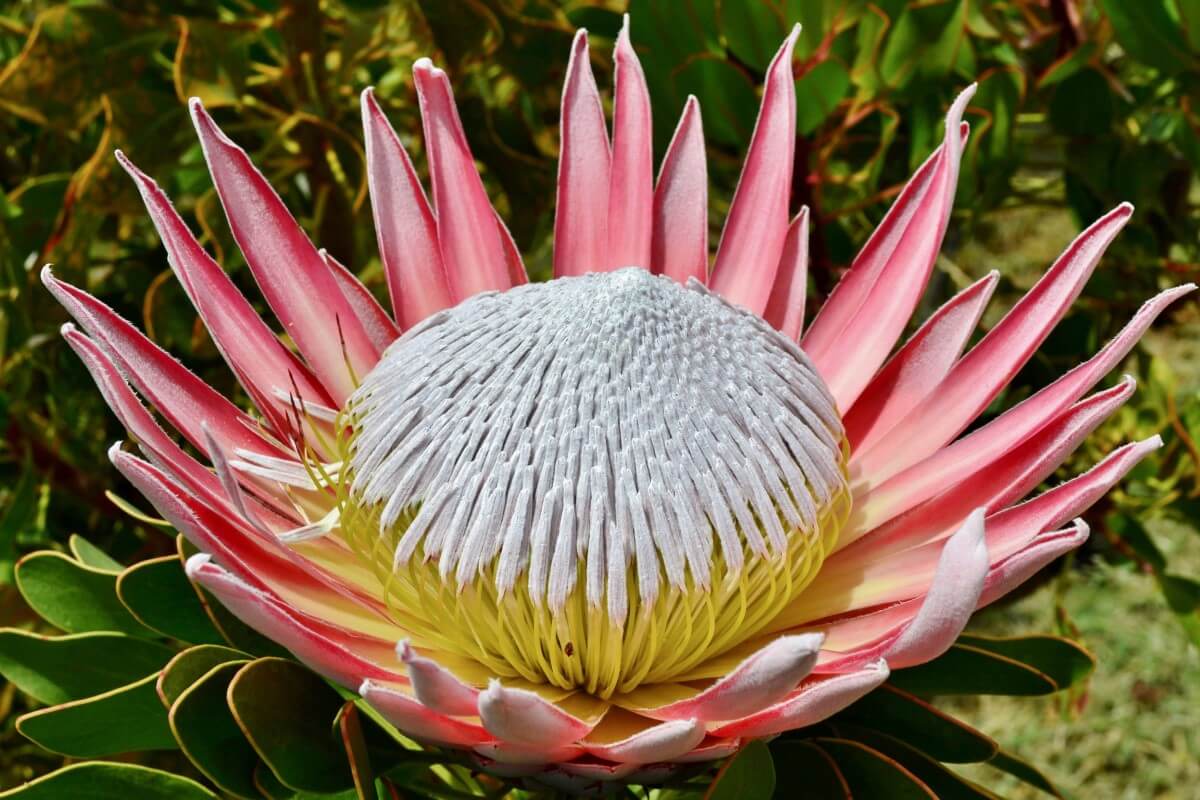
King protea plants are impressive woody shrubs from the Proteaceae family. These shrubs are native to South Africa’s southern areas. The king protea is also South Africa’s national flower.
King protea shrubs have round, glossy dark green leaves. They produce large complex flower heads that can grow up to 12 inches wide. The flowers have an outer ring of white bracts which surround the inner flowers.
Scientific Name: Protea cynaroides
- Native Range
- Cape Provinces
- Light Requirements
- Full sun
- Growing Zones
- 9 to 12
- Flowering Season
- Winter to spring
- Mature Height
- 1 to 6.5 ft
30) Lion’s Ear
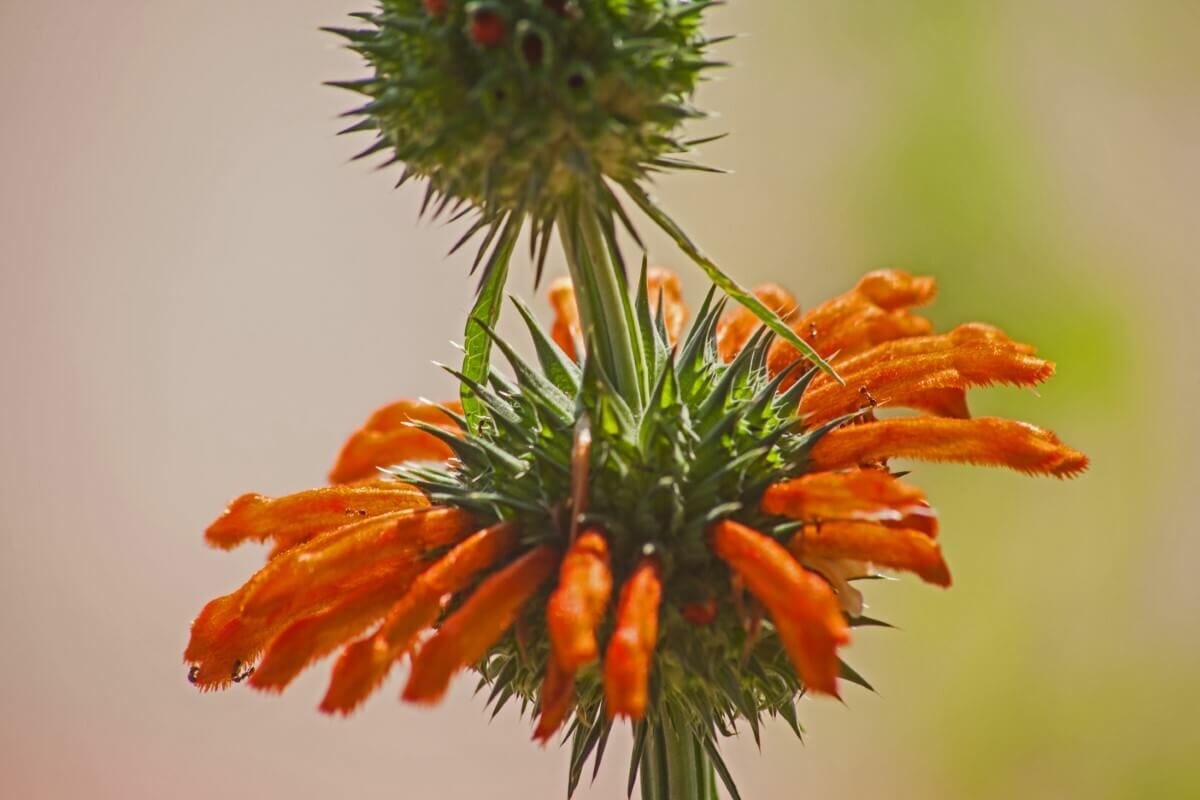
Also known as Klip dagga, the lion’s ear is a member of the mint family (Lamiaceae). It’s native to tropical regions of Africa and India. It has also become naturalized in Latin America and the Caribbean, and in Alabama, the only US state Kew lists.
Lion’s ear plants produce tall stems with several whorls of tubular, hairy orange flowers. Lion’s ear plants also have green heart-shaped leaves. Lion’s ear plants enjoy a long blooming period.
Scientific Name: Leonotis nepetifolia
- Native Range
- Angola, Benin, Botswana, Burkina, Burundi, Cameroon, Central African Republic, Chad, Congo, DR Congo, Eritrea, Eswatini, Ethiopia, Gabon, Gambia, Ghana, Guinea, Guinea-Bissau, Gulf of Guinea Is., Ivory Coast, Kenya, Liberia, Madagascar, Malawi, Mali, Mauritius, Mozambique, Namibia, Niger, Nigeria, Northern Provinces, Rwanda, Senegal, Sierra Leone, Sudan-South Sudan, Tanzania, Togo, Uganda, Zambia, Zimbabwe
- Light Requirements
- Full sun
- Growing Zones
- 9 to 10
- Flowering Season
- Spring to fall
- Mature Height
- 6.5 to 10 ft
31) Leopard Orchid
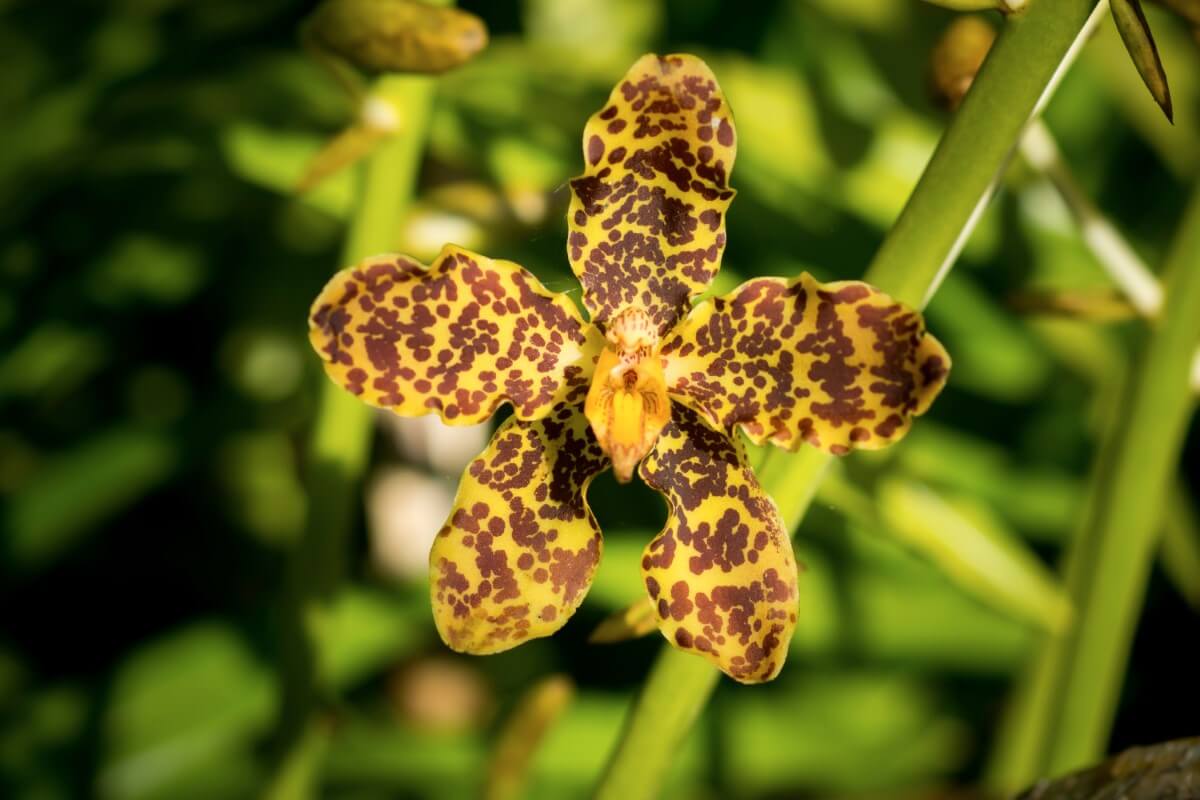
Leopard orchids are native to tropical and southern Africa, including West Africa. These stunning orchids have yellow flowers covered with brown spots, resembling the fur of a leopard. Each flower lasts approximately ten days.
Leopard orchids can be epiphytes or terrestrial orchids. The white aerial roots form a protective basket around the large pseudobulbs. The pseudobulbs can grow up to 2 feet long.
Scientific Name: Ansellia africana
- Native Range
- Angola, Benin, Botswana, Burundi, Cameroon, Central African Republic, Congo, DR Congo, Equatorial Guinea, Eswatini, Gabon, Ghana, Guinea-Bissau, Gulf of Guinea Is., Ivory Coast, Kenya, KwaZulu-Natal, Liberia, Malawi, Mozambique, Namibia, Nigeria, Northern Provinces, Rwanda, Sierra Leone, Sudan-South Sudan, Tanzania, Uganda, Zambia, Zimbabwe
- Light Requirements
- Full sun or partial shade
- Growing Zones
- 11 to 12
- Flowering Season
- All year round
- Mature Height
- 1 to 4 ft
32) Natal Plum
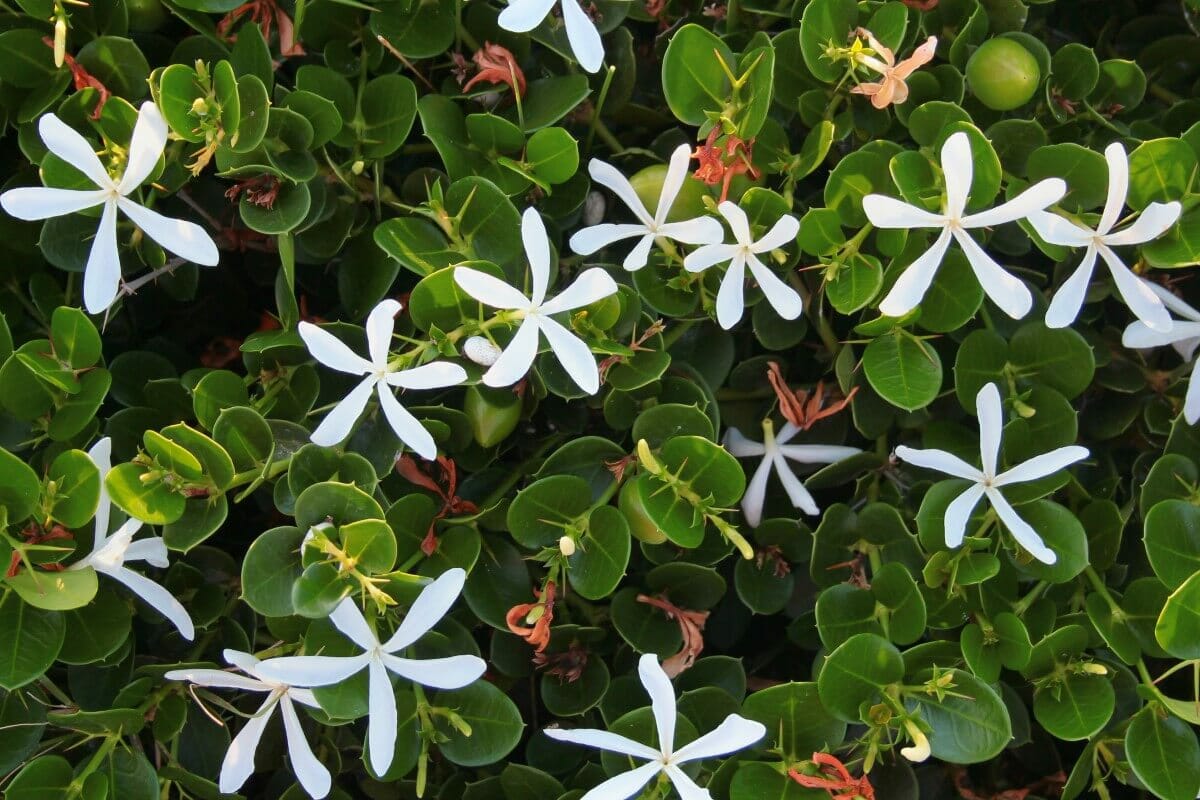
Also known as the large num-num in South Africa, the natal plum shrub comes from the dogbane family. They are native to South Africa's Cape Provinces, KwaZulu-Natal, and Northern Provinces, as well as DR Congo, Kenya, Mozambique, Zambia, and Zimbabwe.
They have round, glossy green leaves and Y-shaped thorns on the stems. Natal plums produce pure white star-shaped flowers with long petals. The round fruits are bright red.
Scientific Name: Carissa macrocarpa
- Native Range
- Cape Provinces, DR Congo, Kenya, KwaZulu-Natal, Mozambique, Northern Provinces, Zambia, Zimbabwe
- Light Requirements
- Full sun or partial shade
- Growing Zones
- 9 to 10
- Flowering Season
- All year round
- Mature Height
- 5 to 7 ft
33) Orange African Daisy
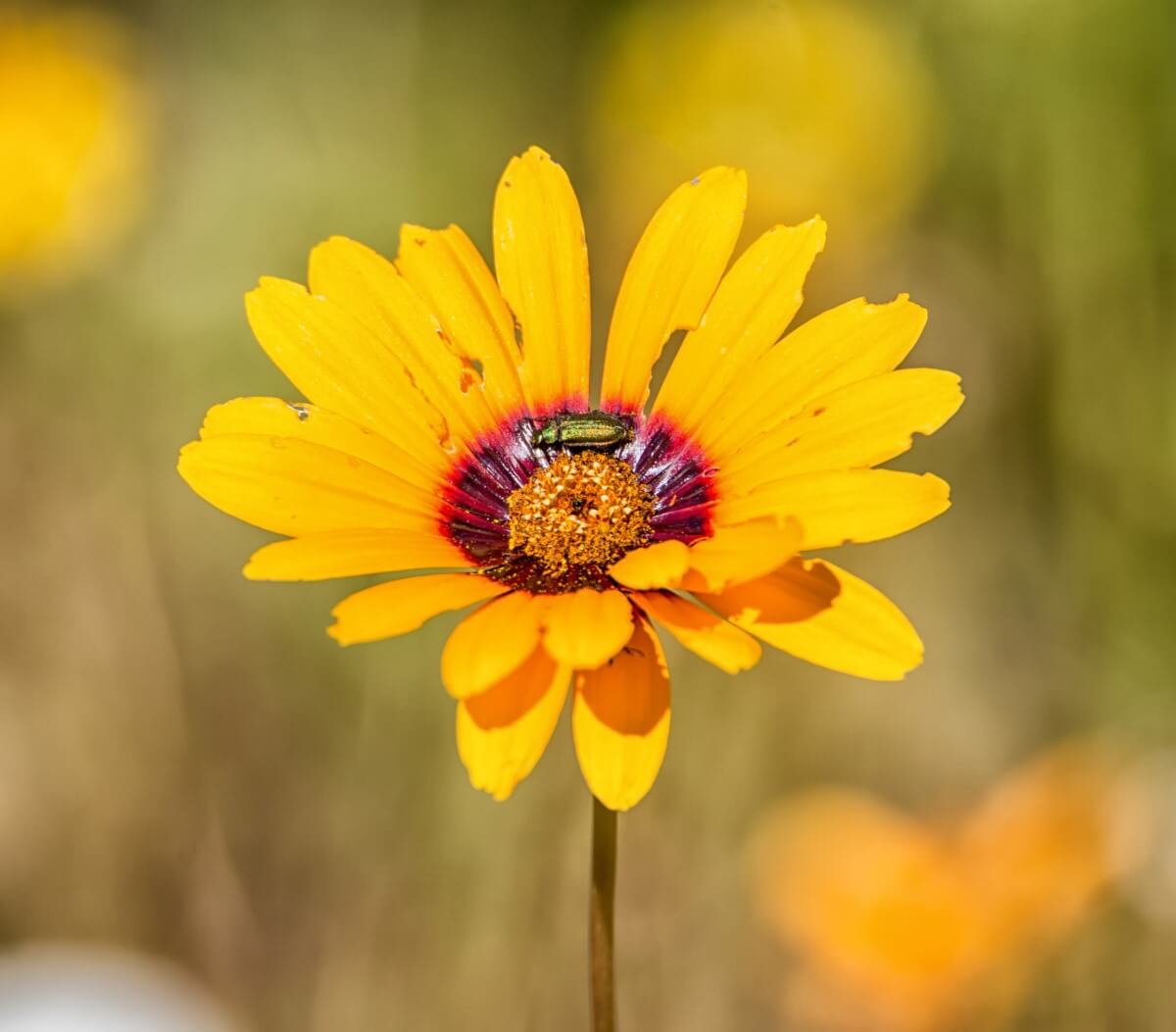
Orange African daisies are cheery annual flowers from the aster family (Asteraceae). These plants have daisy-like flowers with orange or yellow petals. Some flowers have dark purple rings around the central florets.
Orange African daisies are native to the Cape Provinces of South Africa and thrive in coastal habitats. These daisies bloom in July and September in the Southern Hemisphere. Orange African daisies also grow well in sandy or rocky areas.
Scientific Name: Ursinia calenduliflora
- Native Range
- Cape Provinces
- Light Requirements
- Full sun
- Growing Zones
- 9 to 11
- Flowering Season
- Winter to spring
- Mature Height
- 12 inches
34) Paintbrush Lily
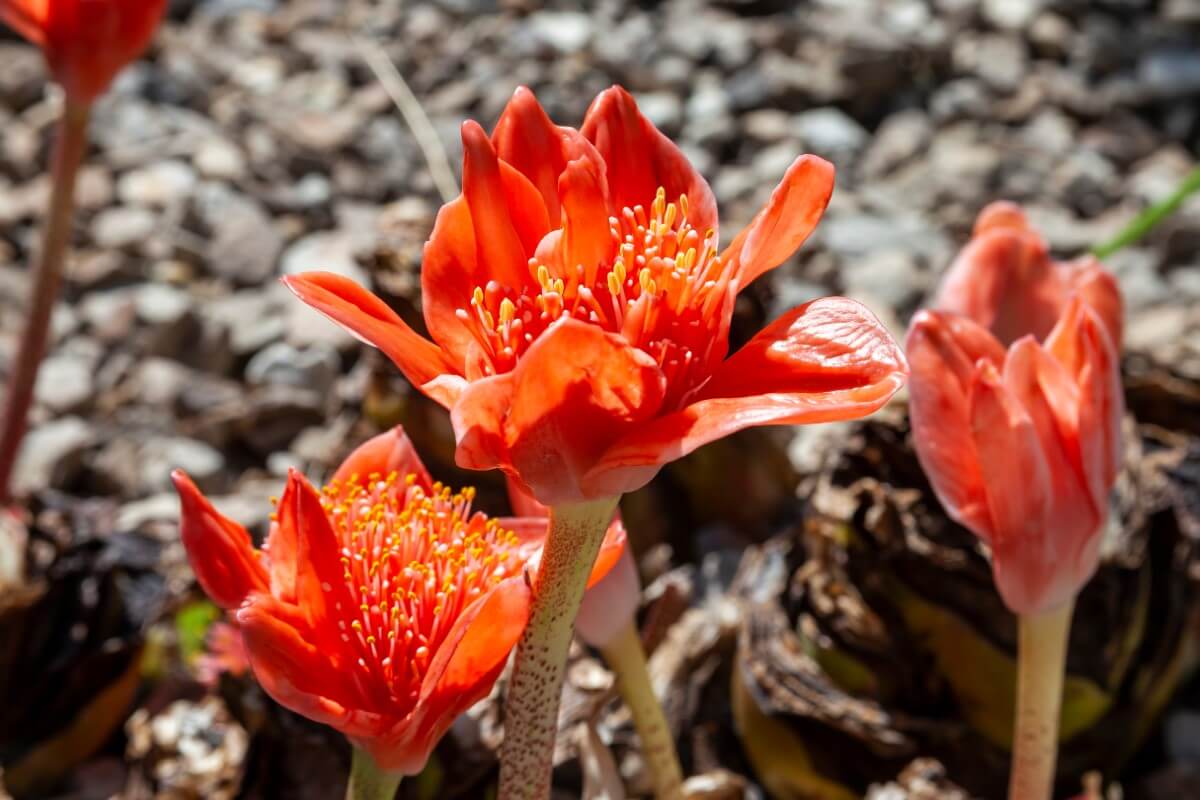
Also known as blood lilies, paintbrush lilies are bulbous perennials from the Amaryllis family. These attractive plants are native to southern regions of Africa. These adaptable plants can thrive in several soil types.
They produce thick, fleshy stems with two or three leaves per bulb. The flower heads have several bright red spathes surrounding the central mass of tiny flowers that resemble a paintbrush.
Scientific Name: Haemanthus coccineus
- Native Range
- Cape Provinces, Namibia
- Light Requirements
- Full sun to partial shade
- Growing Zones
- 10 to 12
- Flowering Season
- Summer to fall
- Mature Height
- 14 inches
35) Pincushion Protea
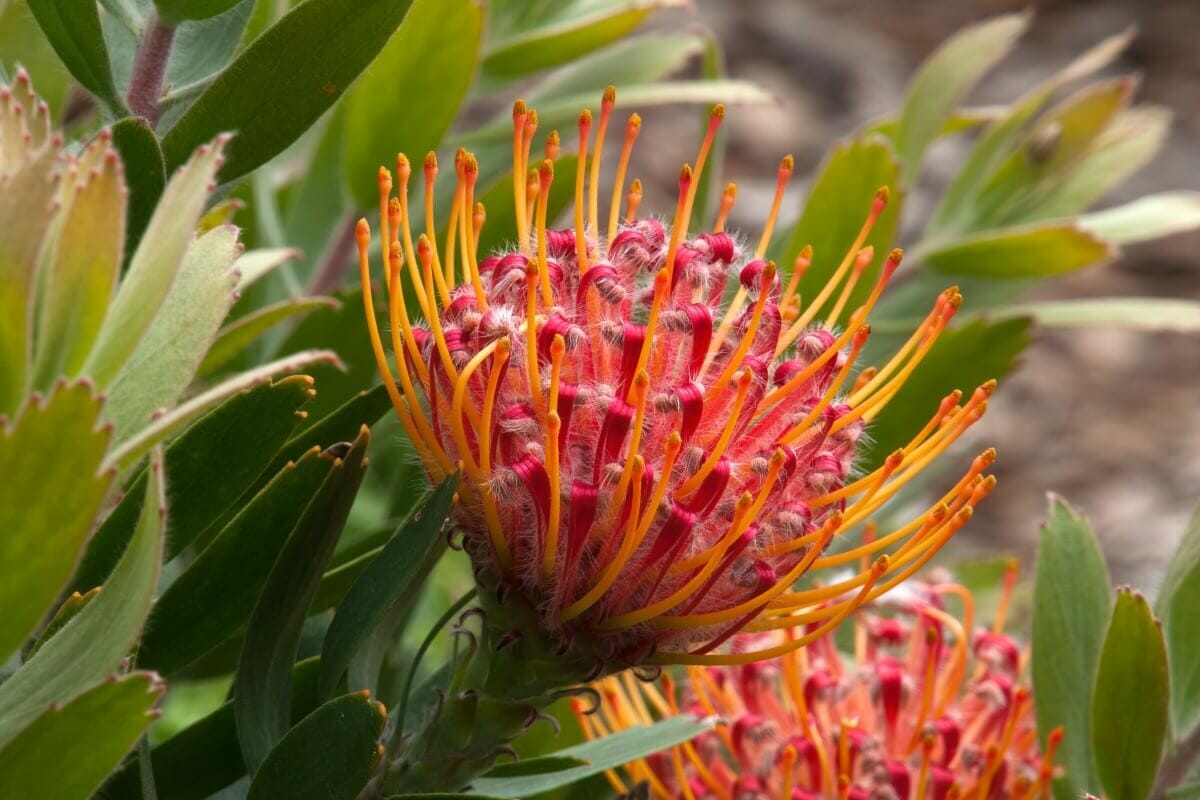
Pincushion proteas are impressive evergreen plants from the Proteaceae family. These plants are named for their large, prolific flowers. The flower heads contain lots of tiny flower buds and bracts that look like pincushions.
They thrive in acidic soils and are native to parts of southern Africa, such as Mozambique, Zimbabwe, and South Africa. These plants have simple, leathery leaves that are often covered in soft hairs.
Scientific Name: Leucospermum spp.
- Native Range
- Genus: Cape Provinces, Eswatini, KwaZulu-Natal, Mozambique, Northern Provinces, Zimbabwe
- Light Requirements
- Full sun
- Growing Zones
- 9 to 11
- Flowering Season
- Spring to summer
- Mature Height
- 3 to 16 ft
36) Pineapple Flower
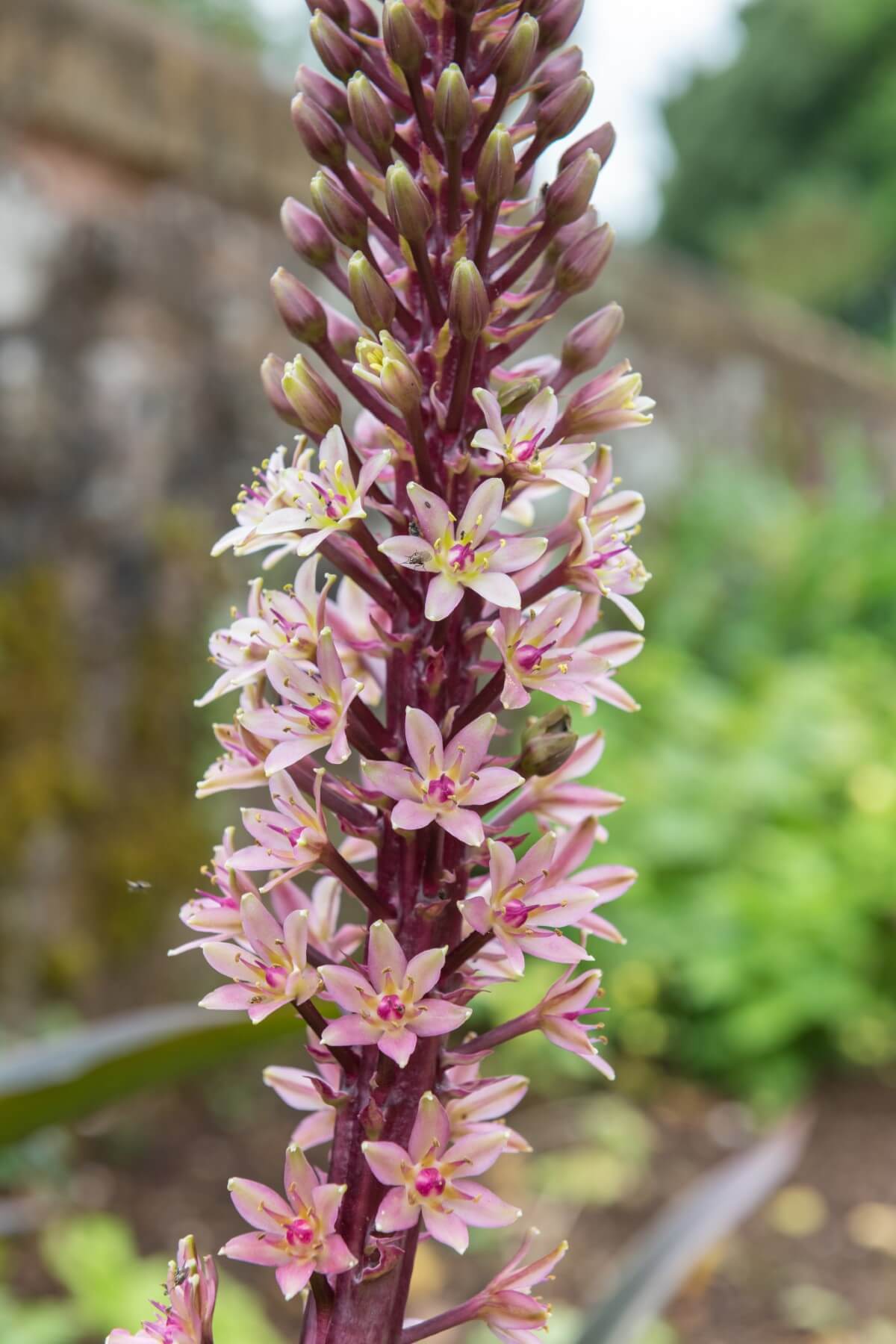
Pineapple flowers are not related to true pineapples. Instead, they come from the asparagus family (Asparagaceae). These beautiful bulbous perennials are native to rocky parts of South Africa.
Pineapple flowers are deciduous plants with rosettes of large, sword-shaped leaves with purple spots. The purple or white flowers are borne on tall racemes. A crown of bracts grows on top of the racemes, making the whole plant resemble a pineapple fruit.
Scientific Name: Eucomis comosa
- Native Range
- Cape Provinces, KwaZulu-Natal
- Light Requirements
- Full sun
- Growing Zones
- 7 to 10
- Flowering Season
- Summer
- Mature Height
- 1 to 2 ft
37) Pink Trumpet Vine
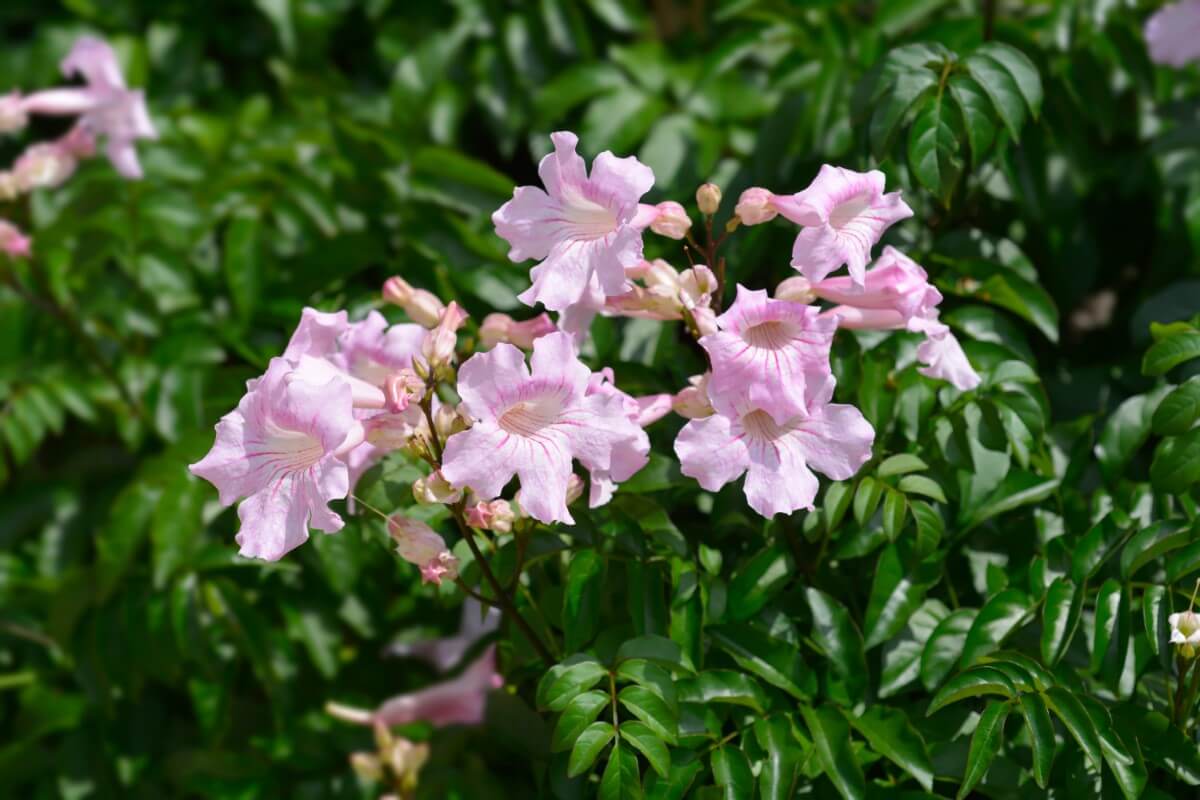
Pink trumpet vines are elegant evergreen shrubs from the trumpet vine family (Bignoniaceae). Pink trumpet vines are native to South Africa's Cape Provinces and KwaZulu-Natal, as well as Malawi, Mozambique, and Zambia, and are naturalized in Spain, Italy, Mexico, Guatemala, and Costa Rica, among other places.
They are vigorous climbers with glossy green leaves. These vines bloom prolifically, producing gorgeous trumpet-shaped pink flowers with reddish veins on the petals. The petals are delicate and have a ruffled appearance.
Scientific Name: Podranea ricasoliana
- Native Range
- Cape Provinces, KwaZulu-Natal, Malawi, Mozambique, Zambia
- Light Requirements
- Full sun
- Growing Zones
- 9 to 12
- Flowering Season
- Summer
- Mature Height
- 10 to 20 ft
38) Red Cluster Bottlebrush
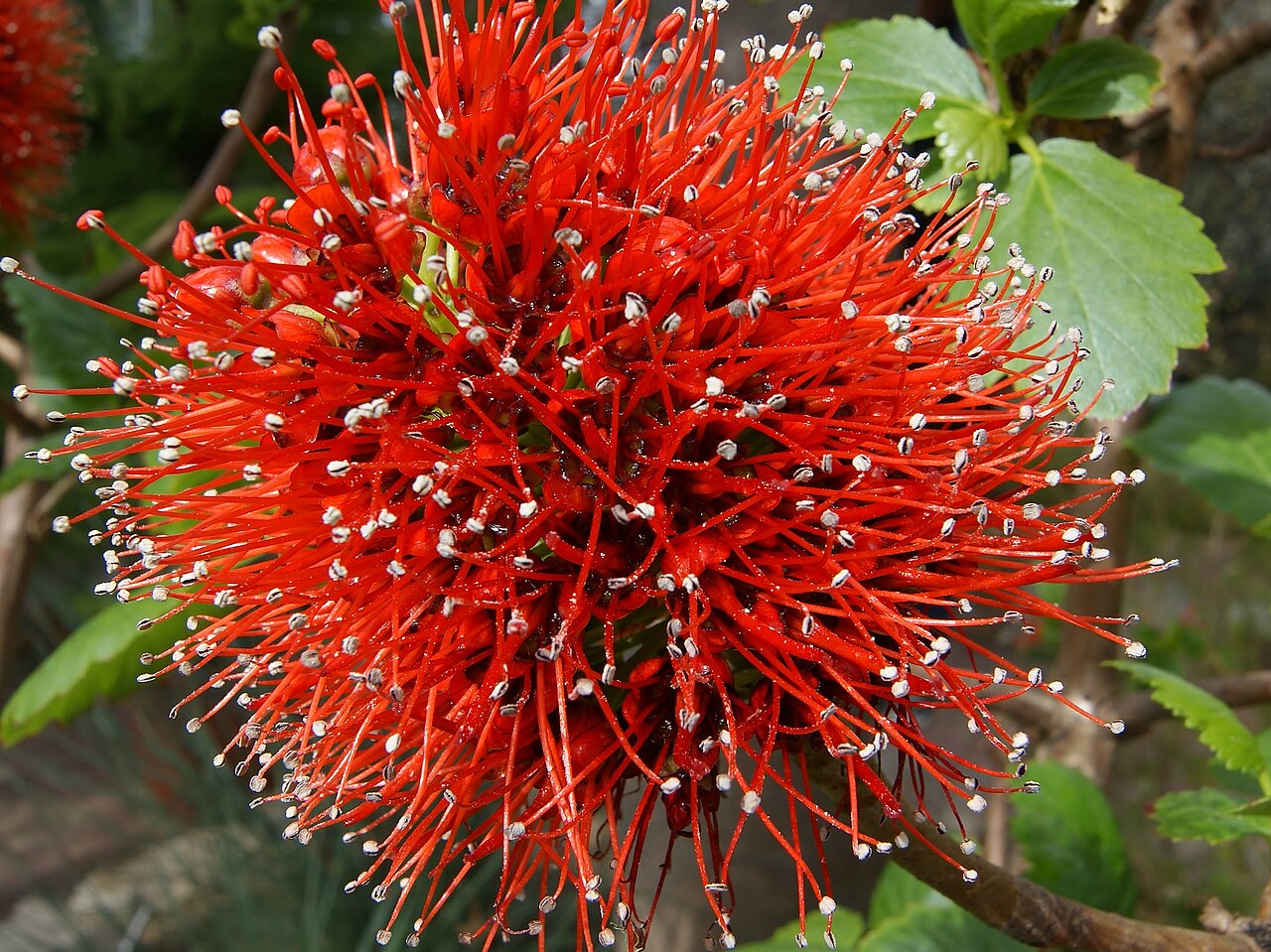
Also known as natal bottlebrushes, red cluster bottlebrushes are attractive shrubs from the Francoaceae family. These deciduous trees are native to South Africa and grow on rocky slopes. The stems and branches are pink and smooth.
As their name suggests, red cluster bottlebrushes produce dense, rounded clusters of red flowers. The stamens protrude outwards and resemble a brush. Red cluster bottlebrushes also have simple, leathery leaves with toothed edges.
Scientific Name: Greyia sutherlandii
- Native Range
- Cape Provinces, Eswatini, Free State, KwaZulu-Natal, Lesotho, Northern Provinces
- Light Requirements
- Full sun
- Growing Zones
- 8 to 11
- Flowering Season
- Spring to summer
- Mature Height
- 10 to 25 ft
39) Red Disa
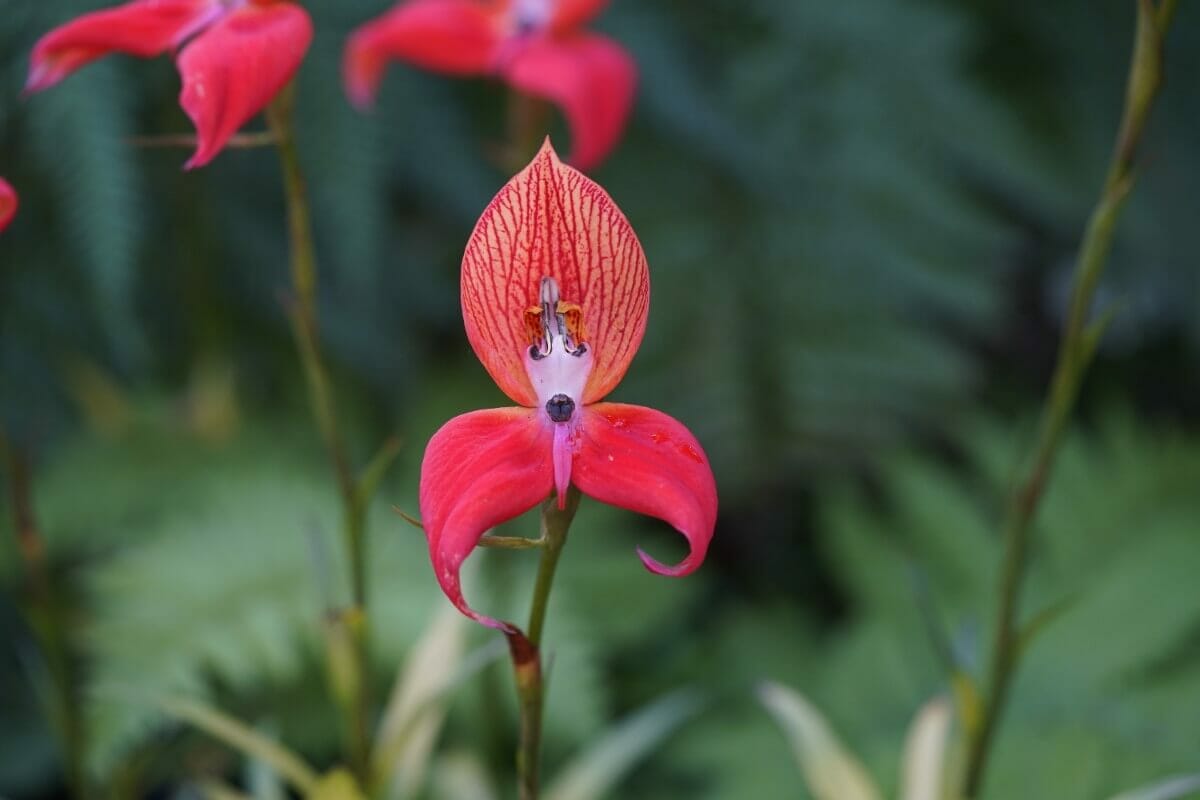
Red disa orchids are stunning orchids native to mountainous areas of South Africa’s Western Cape. These orchids thrive in cool or mild conditions and moist soils. Red disa orchids are also known as “pride of Table Mountain”.
Red disa orchids have large, showy flowers with two bright red lower sepals and a pink upper sepal. The upper sepal also has red veins and surrounds the yellow inner petals.
Scientific Name: Disa uniflora
- Native Range
- Cape Provinces
- Light Requirements
- Full sun to partial shade
- Growing Zones
- 9 to 11
- Flowering Season
- Summer
- Mature Height
- 6 to 24 inches
40) Red Hot Poker
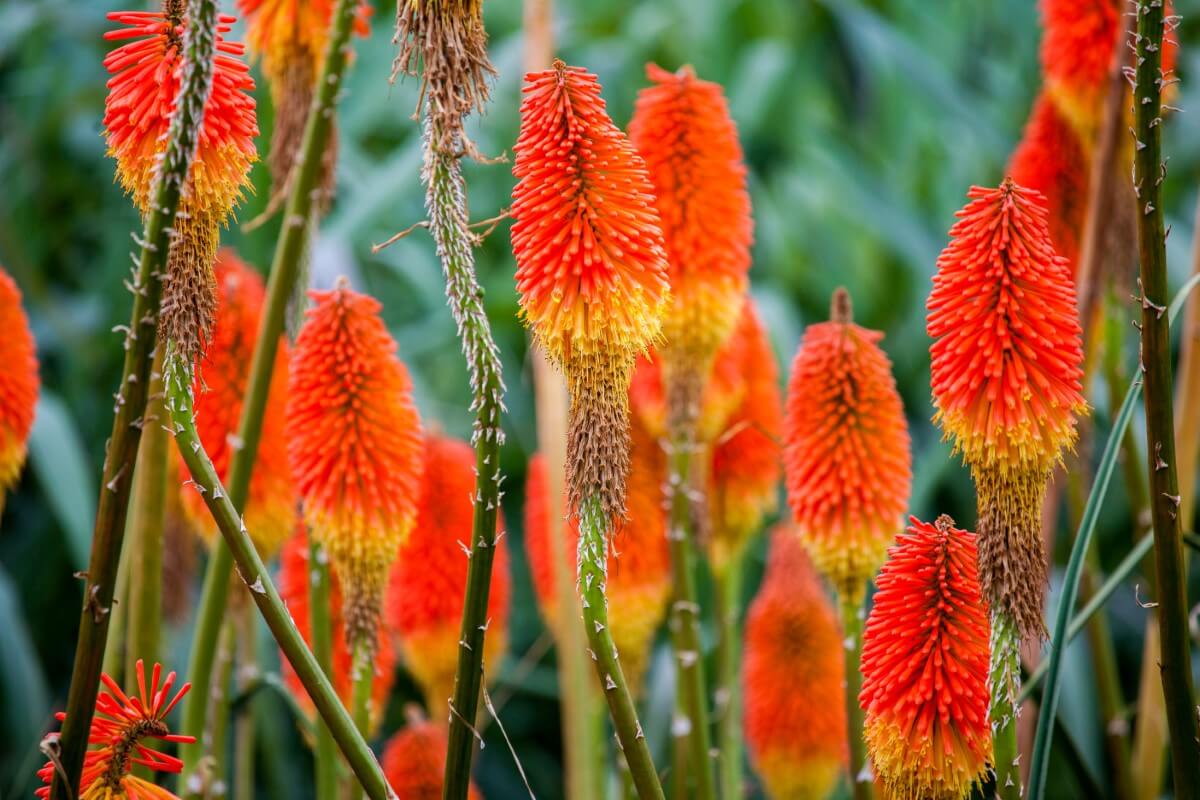
Red hot pokers are some of the most popular African flowers and are grown around the world. These attractive perennials come from the Asphodelaceae family. The Kniphofia genus has numerous cultivars.
Red hot pokers produce upright flower spikes covered in orange, red, or yellow bicolored blooms. The foliage is thin and resembles grass. The nectar-rich flowers are extremely popular with pollinators.
Scientific Name: Kniphofia spp.
- Native Range
- Genus: Angola, Burundi, Cameroon, Cape Provinces, DR Congo, Eritrea, Eswatini, Ethiopia, Free State, Kenya, KwaZulu-Natal, Lesotho, Madagascar, Malawi, Mozambique, Northern Provinces, Rwanda, Sudan-South Sudan, Tanzania, Uganda, Zambia, Zimbabwe
- Light Requirements
- Full sun
- Growing Zones
- 5 to 9
- Flowering Season
- Spring to fall
- Mature Height
- 1 to 6 ft
41) Red Starburst
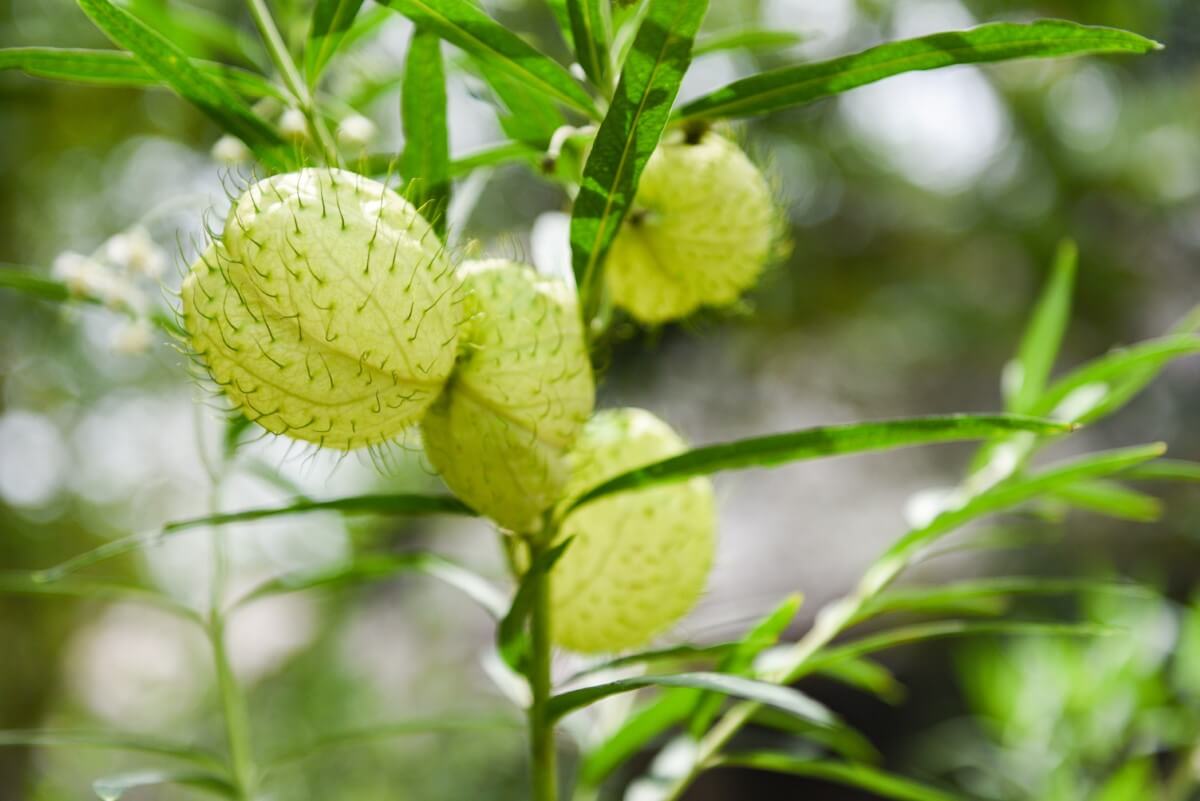
Also known as balloon plants, red starburst plants come from the dogbane family. These soft perennial shrubs are native to South Africa's Cape Provinces, KwaZulu-Natal, and Northern Provinces, as well as Eswatini and Mozambique. Red starburst plants prefer grassland habitats or roadsides.
Red starburst plants have lance-shaped light green leaves and produce small, hooded white flowers. The flowers are followed by odd round green fruits. These hairy, inflated fruits eventually split open to release their seeds.
Scientific Name: Gomphocarpus physocarpus
- Native Range
- Cape Provinces, Eswatini, KwaZulu-Natal, Mozambique, Northern Provinces
- Light Requirements
- Full sun
- Growing Zones
- 8 to 10
- Flowering Season
- Summer
- Mature Height
- 4 to 6 ft
42) River Crinum
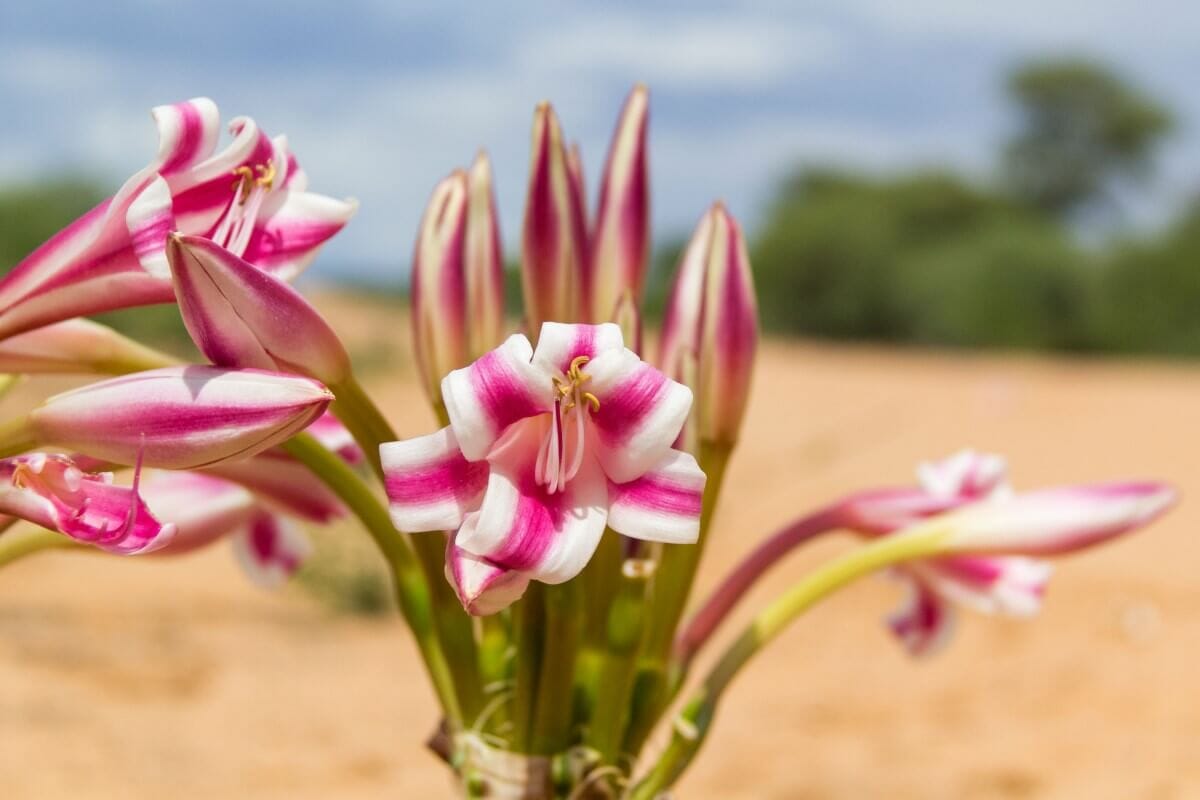
River crinums are bulbous perennials from the Amaryllis family. Also known as Cape coast lilies, river crinums are native to eastern and southern Africa. They are deciduous plants that die back after flowering.
They have lance-shaped leaves with wavy edges. The bulbs produce fleshy stems topped with clusters of white bell-shaped flowers with pink stripes on each petal. These flowers produce a pungent scent
Scientific Name: Crinum macowanii
- Native Range
- Angola, Botswana, Cape Provinces, DR Congo, Eritrea, Eswatini, Ethiopia, Free State, Kenya, KwaZulu-Natal, Malawi, Mozambique, Namibia, Northern Provinces, Seychelles, Somalia, Sudan-South Sudan, Tanzania, Uganda, Zambia, Zimbabwe
- Light Requirements
- Full sun
- Growing Zones
- 8 to 10
- Flowering Season
- Summer
- Mature Height
- 1.5 to 3 ft
43) Silver Tree
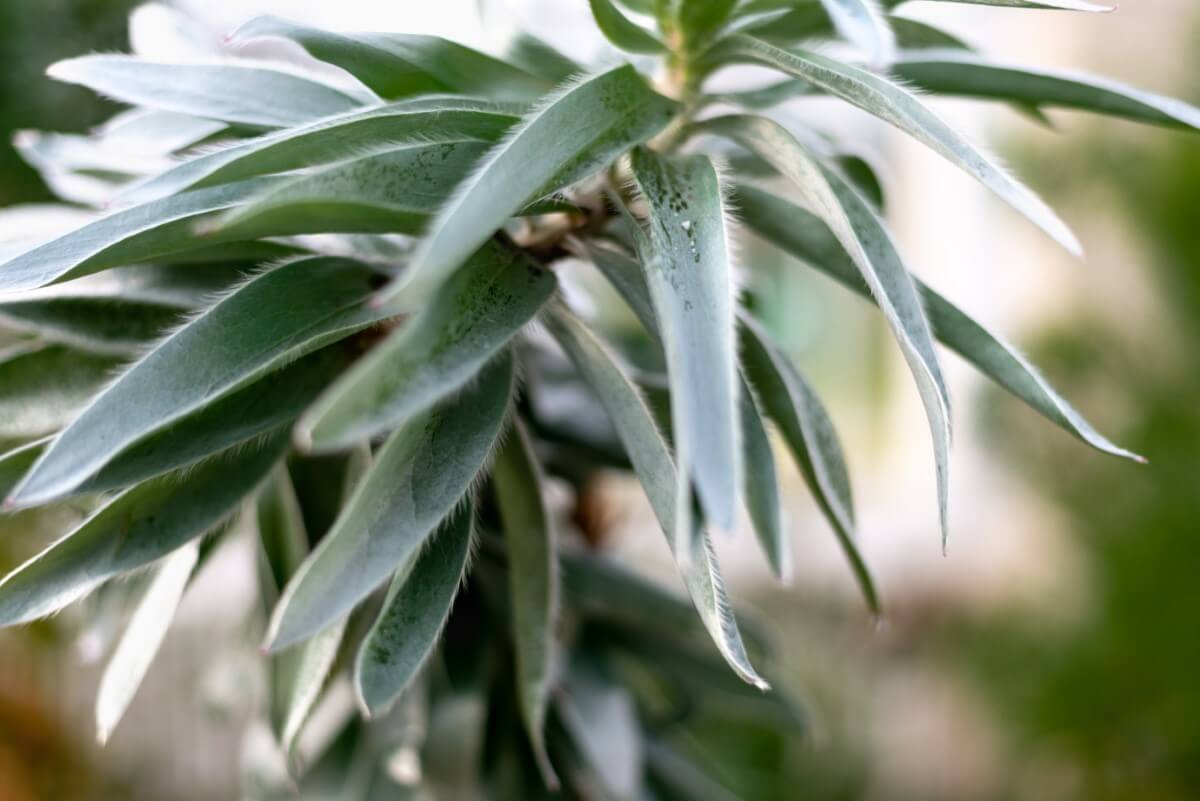
Silver trees are ornamental evergreen trees from the Proteaceae family. It’s named for the silvery appearance of its leaves, caused by the velvety hairs that cover the leaves. The flowers form dense clusters.
Silver trees are native to South Africa’s Cape Peninsula.
Scientific Name: Leucadendron argenteum
- Native Range
- Cape Provinces
- Light Requirements
- Full sun to partial shade
- Growing Zones
- 9 to 11
- Flowering Season
- Spring
- Mature Height
- 20 to 30 ft
44) Small Bush Violet
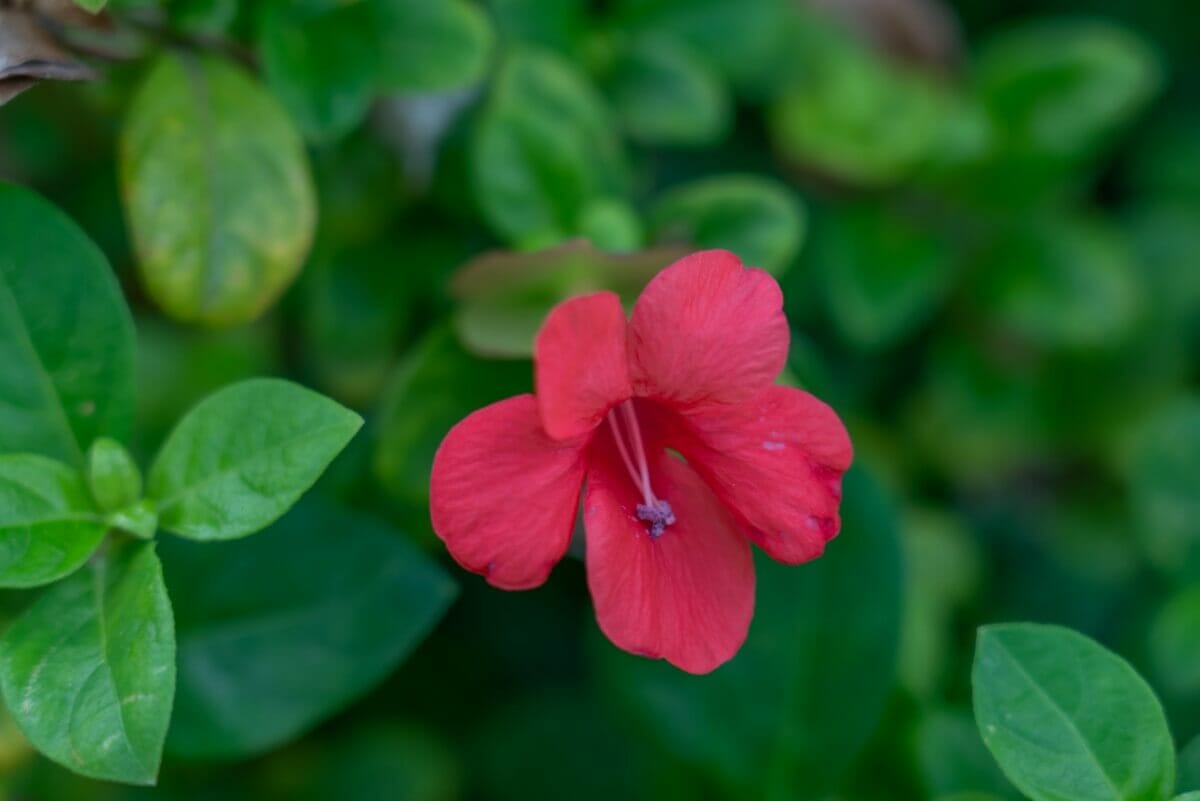
Small bush violets are attractive evergreen shrubs from the acanthus family (Acanthaceae). These colorful plants are native to parts of tropical Africa, including South Africa. Small bush violets grow best in woodland habitats.
Small bush violets have large purple or reddish-purple flowers with five to six lobes. As the branches spread, they root in the soil, so they should be kept in check. Small bush violets also have glossy dark green leaves with a soft texture.
Scientific Name: Barleria repens
- Native Range
- Kenya, KwaZulu-Natal, Mozambique, Tanzania
- Light Requirements
- Full sun to partial shade
- Growing Zones
- 9 to 12
- Flowering Season
- Summer to fall
- Mature Height
- Up to 2.5 ft
45) Spinning Top Conebush
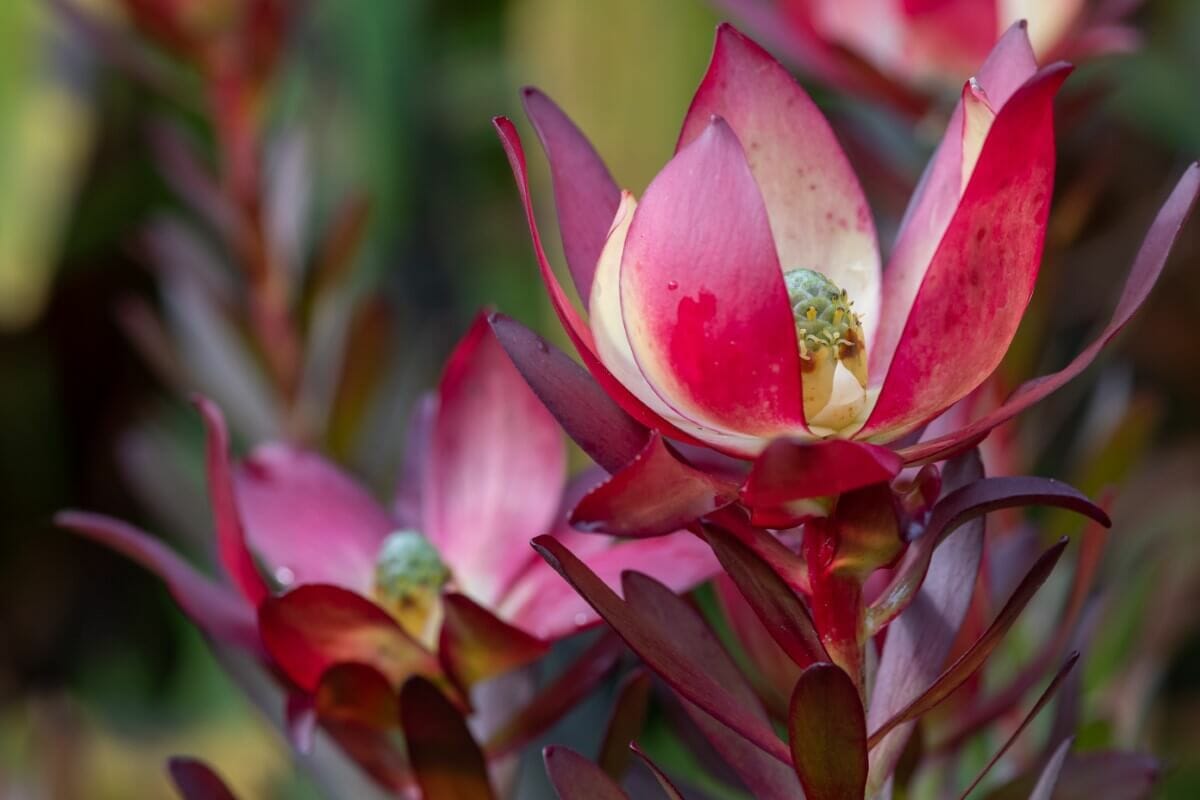
Spinning top conebushes are unusual flowering shrubs from the Proteaceae family. These plants are native to shrublands and mountainous areas in South Africa’s Western Cape province.
Spinning top conebushes have bluish-green leaves, sometimes covered in soft hairs. These plants don’t flower in the traditional sense. Instead, spinning top conebushes produce cones made from green bracts topped with small yellow flowers. The seeds spread on the wind.
Scientific Name: Leucadendron rubrum
- Native Range
- Cape Provinces
- Light Requirements
- Full sun
- Growing Zones
- 8 to 11
- Flowering Season
- Summer to fall
- Mature Height
- Up to 8 ft
46) Star-of-Bethlehem
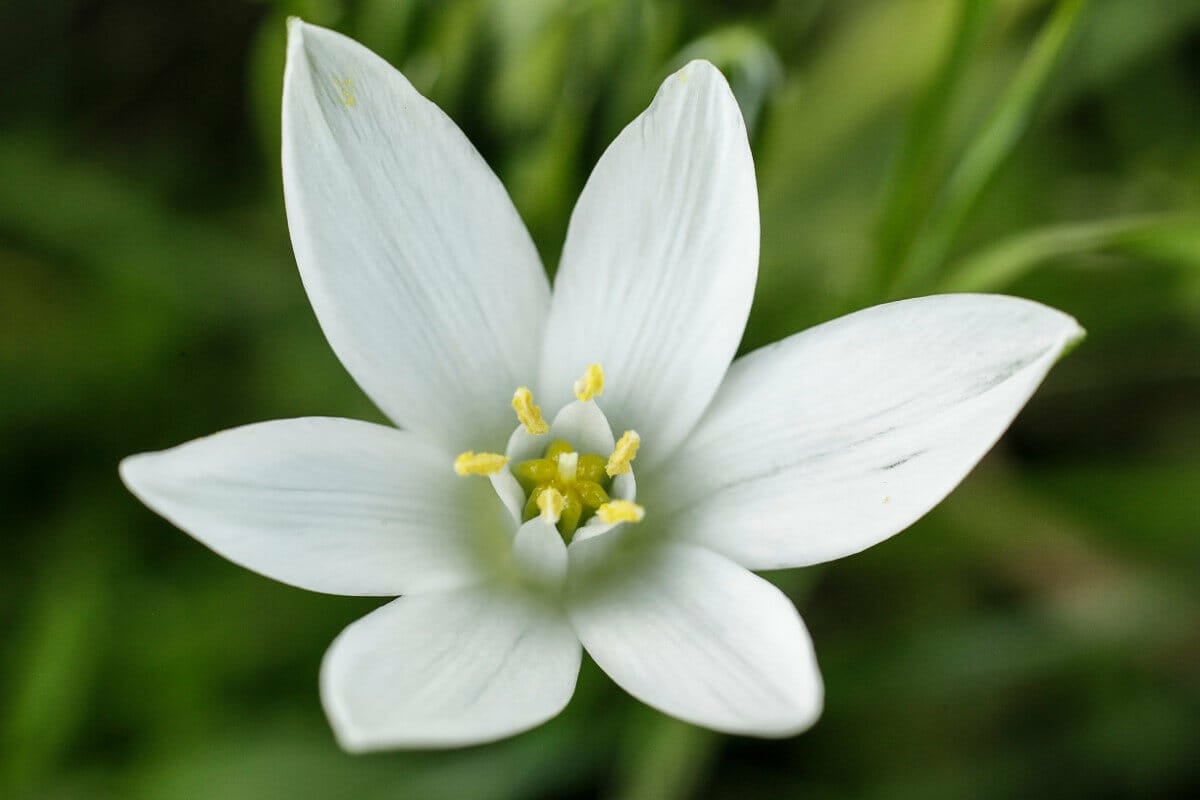
Star-of-Bethlehem plants come from the Ornithogalum genus of the asparagus family. The genus is native across Africa, Europe, and western Asia. Star-of-Bethlehem blooms make excellent cut flowers.
Star-of-Bethlehem plants grow from bulbs and have long, lance-shaped leaves. These perennials produce white star-shaped flowers with six petals that close during the evening. Star-of-Bethlehem plants grow and spread quickly and can potentially become invasive.
Scientific Name: Ornithogalum spp.
- Native Range
- Genus: Algeria, Angola, Canary Is., Cape Provinces, Egypt, Eswatini, Ethiopia, Free State, Kenya, KwaZulu-Natal, Lesotho, Libya, Madagascar, Morocco, Namibia, Northern Provinces, Sierra Leone, Sudan-South Sudan, Tunisia, Uganda, Zambia, Zimbabwe
- Light Requirements
- Full sun to partial shade
- Growing Zones
- 5 to 10
- Flowering Season
- Spring to summer
- Mature Height
- 6 to 12 inches
47) Starfish Flower
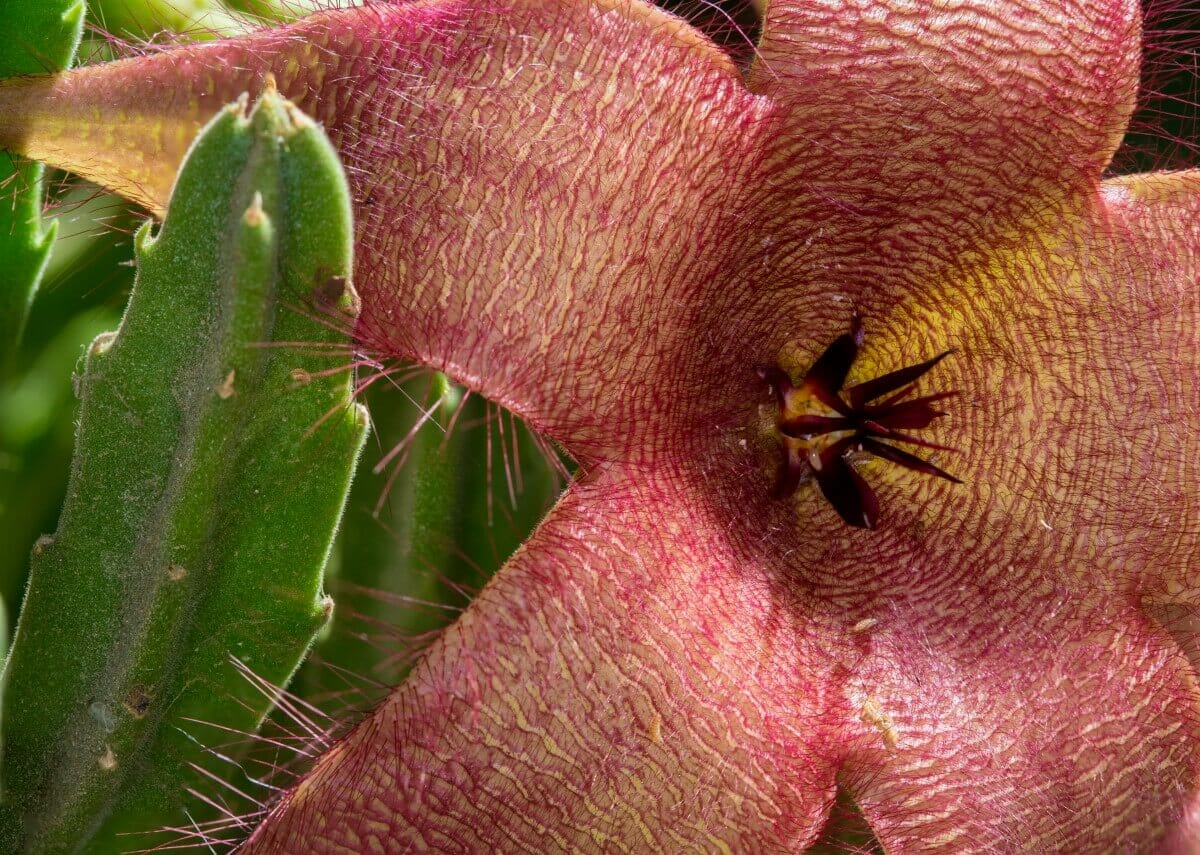
Also known as carrion flowers, starfish flowers are unusual succulents from the dogbane family. Most starfish flowers produce a scent similar to rotting meat to attract flies. These flowers are native across southern Africa, from Angola and the Cape Provinces to Malawi, Mozambique, and Zimbabwe.
Most starfish flowers are low-growing succulents with large, star-shaped flowers. The flowers often have hairy edges rather than spines. The flowers are cream or yellow and have a fleshy texture. Starfish flowers can be grown in containers.
Scientific Name: Stapelia spp.
- Native Range
- Genus: Angola, Botswana, Cape Provinces, Eswatini, Free State, KwaZulu-Natal, Lesotho, Malawi, Mozambique, Namibia, Northern Provinces, Zambia, Zimbabwe
- Light Requirements
- Full sun
- Growing Zones
- 9 to 10
- Flowering Season
- Fall
- Mature Height
- Up to 1 ft
48) Trailing Lobelia
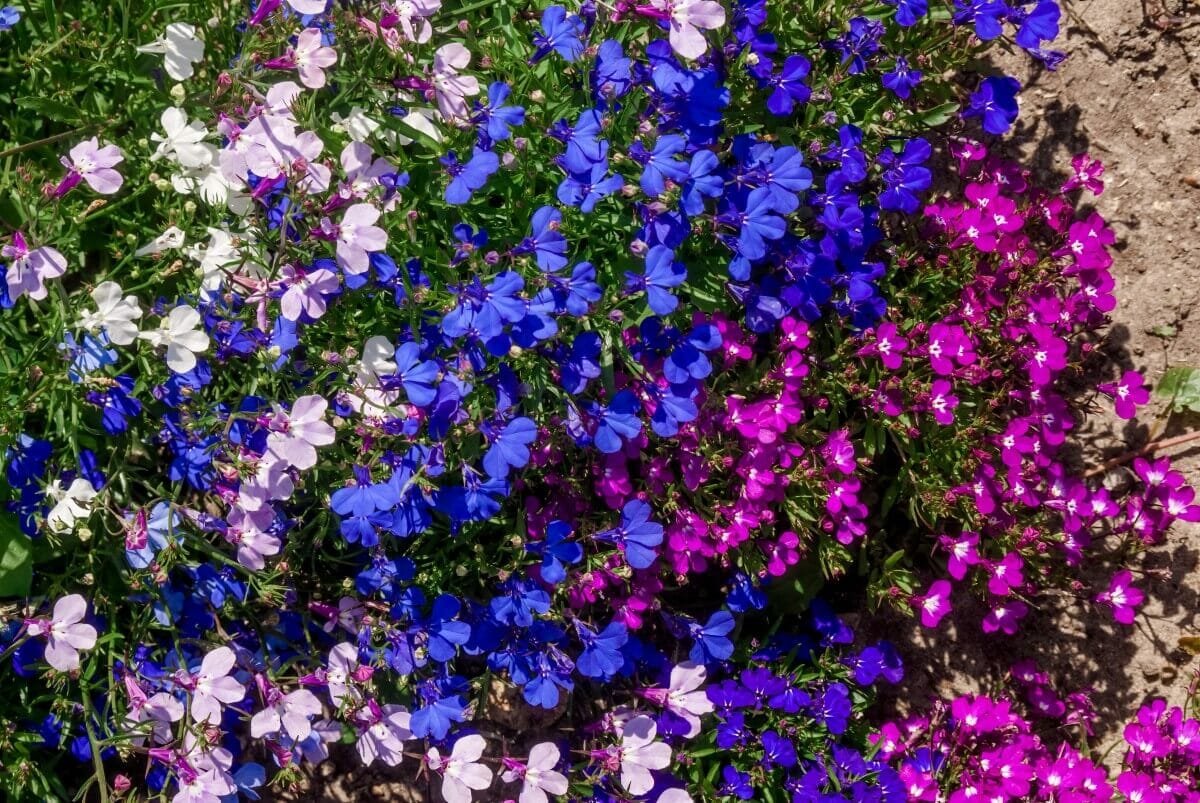
Trailing lobelias are low-growing herbaceous perennials from the bellflower family (Campanulaceae). These beautiful scrambling plants are native from southern Africa through East Africa to West Africa, including Botswana, Mozambique, Zimbabwe, and South Africa.
Trailing lobelias form spreading mats of bright blue or violet flowers. The flowers also have yellow or white centers. These adaptable plants thrive in various climates but grow best in cooler weather.
Scientific Name: Lobelia erinus
- Native Range
- Angola, Botswana, Cape Provinces, Caprivi Strip, Chad, DR Congo, Eswatini, Ethiopia, Free State, KwaZulu-Natal, Lesotho, Malawi, Mozambique, Namibia, Niger, Northern Provinces, Senegal, Somalia, Sudan-South Sudan, Tanzania, Zambia, Zimbabwe
- Light Requirements
- Full sun to partial shade
- Growing Zones
- 2 to 11
- Flowering Season
- Spring to fall
- Mature Height
- 6 to 9 inches
49) Wild Dagga
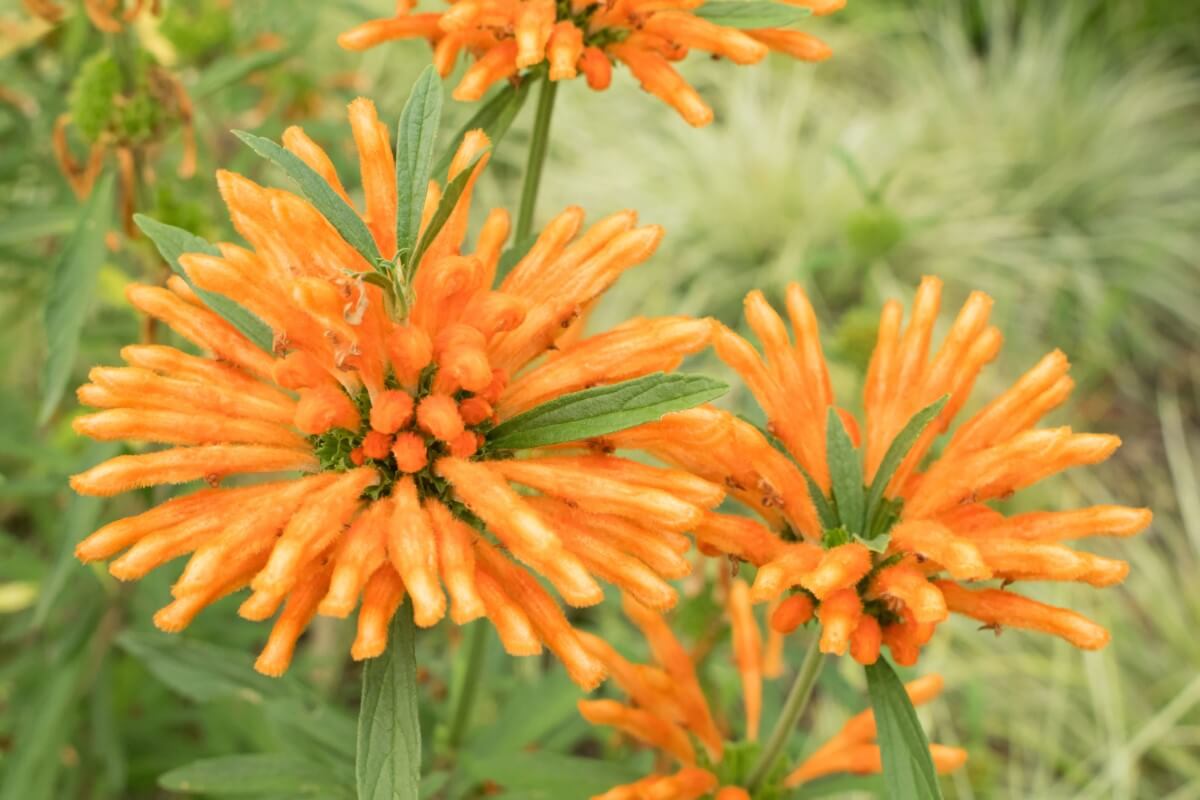
Also known as lion’s tail, wild dagga plants are evergreen shrubs from the mint family (Lamiaceae). These plants are native only to South Africa, in the Cape Provinces, the Free State, KwaZulu-Natal, and the Northern Provinces. Wild dagga plants thrive in moist grasslands.
They produce several whorls of tubular orange blooms on upright stems. These stems emerge from clumps of dark green leaves. The leaves have a strong fragrance when crushed up.
Scientific Name: Leonotis leonurus
- Native Range
- Cape Provinces, Free State, KwaZulu-Natal, Northern Provinces
- Light Requirements
- Full sun
- Growing Zones
- 8 to 11
- Flowering Season
- Spring to fall
- Mature Height
- 4 to 6 ft
50) Yellow Arum Lily
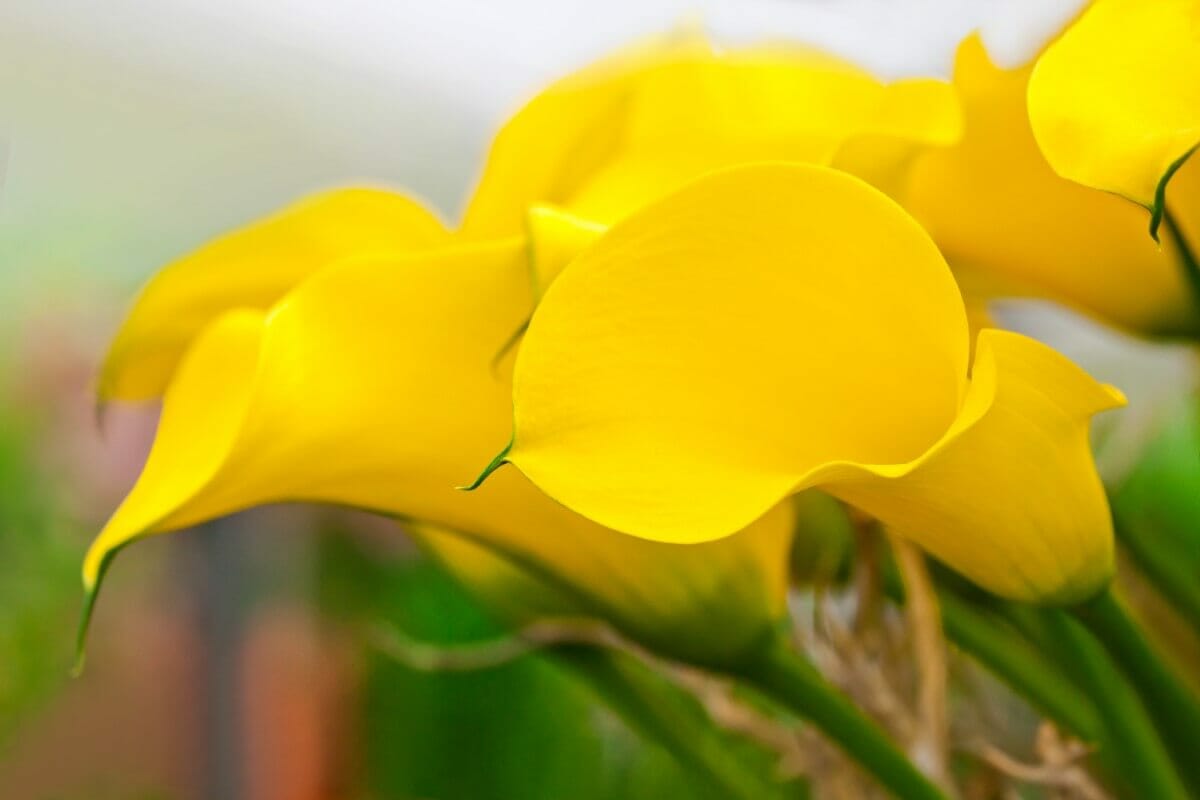


Yellow arum lilies are deciduous perennials from the arum family (Araceae) that grow from bulbs. These lilies grow in northern parts of South Africa and thrive in woodlands and rocky grasslands.
Yellow arum lilies have arrow-shaped green leaves and beautiful flowers. The main part of the flower consists of a yellow bract surrounding the inner flowers. The yellow bracts have a purple dot at their base.
Scientific Name: Zantedeschia pentlandii
- Native Range
- Northern Provinces
- Light Requirements
- Full sun
- Growing Zones
- 9 to 12
- Flowering Season
- Spring to summer
- Mature Height
- 1 to 2 ft
Wrapping Up
Africa is home to an incredibly diverse range of flowers and plants. These range from succulents like aloes to flowering shrubs like the king protea. Many of Africa’s plants are grown in gardens worldwide, including agapanthus and osteospermums.
Other regional guides cover australian native flowers, brazilian plants and flowers, french native flowers, native georgia flowers, italian plants, missouri wildflowers and native spanish flowers to admire.
Questions and Answers
What is the famous flower in Africa?
There is no single famous flower for the whole continent; the sources give a national flower per country. South Africa's national flower is the king protea (Protea cynaroides), widely distributed in the south-western and southern areas of the Western Cape.
Is it illegal to pick wildflowers in South Africa?
Yes, in the Western Cape it is illegal to pick wildflowers without a permit or the landowner's permission. CapeNature's rules ban picking any endangered or protected flora from property you do not own, and no flora may be picked on a public road or within ninety meters of the road's center without a permit. Picking wildflowers can damage fragile ecosystems and can amount to a crime in Protected Areas. Rules differ by province, so in Namaqualand ask the park or reserve office before picking anything.
Which part of Africa has the most native flowers?
The Cape Floral Region, at the south-western tip of South Africa, has the most native flowers. It covers less than 0.5% of Africa's area but holds nearly 20% of the continent's flora, and some 69% of its 9,000 plant species are endemic. South Africa as a whole has about 20,000 indigenous plant species, about 12,000 of them found nowhere else. By contrast, the central Sahara is one of the most species-poor regions on the planet.
Sources59 sources, linked in the text
- Wikipedia: Aloe africana
- Plants of the World Online (Kew): Dietes spp.
- Plants of the World Online (Kew): Agapanthus africanus
- Plants of the World Online (Kew): Salvia africana
- Plants of the World Online (Kew): Saintpaulia ionantha
- Plants of the World Online (Kew): Anchusa capensis
- Plants of the World Online (Kew): Strelitzia reginae
- Plants of the World Online (Kew): Aloe ferox
- Plants of the World Online (Kew): Agapanthus praecox
- Plants of the World Online (Kew): Merwilla plumbea
- Plants of the World Online (Kew): Serruria florida
- Plants of the World Online (Kew): Clivia miniata
- Plants of the World Online (Kew): Zantedeschia aethiopica
- Plants of the World Online (Kew): Osteospermum spp.
- Plants of the World Online (Kew): Tecoma capensis
- Plants of the World Online (Kew): Streptocarpus spp.
- Plants of the World Online (Kew): Crassula capensis
- Plants of the World Online (Kew): Moraea spp.
- Plants of the World Online (Kew): Boophone disticha
- Plants of the World Online (Kew): Erythrina lysistemon
- Plants of the World Online (Kew): Crocosmia spp.
- Plants of the World Online (Kew): Scadoxus multiflorus
- Plants of the World Online (Kew): Gloriosa superba
- Plants of the World Online (Kew): Freesia laxa
- Plants of the World Online (Kew): Gazania spp.
- Plants of the World Online (Kew): Carpobrotus edulis
- Plants of the World Online (Kew): Adenium multiflorum
- Plants of the World Online (Kew): Protea cynaroides
- Plants of the World Online (Kew): Leonotis nepetifolia
- Plants of the World Online (Kew): Ansellia africana
- Plants of the World Online (Kew): Carissa macrocarpa
- Plants of the World Online (Kew): Ursinia calenduliflora
- Plants of the World Online (Kew): Haemanthus coccineus
- Plants of the World Online (Kew): Leucospermum spp.
- Plants of the World Online (Kew): Eucomis comosa
- Plants of the World Online (Kew): Podranea ricasoliana
- Plants of the World Online (Kew): Greyia sutherlandii
- Plants of the World Online (Kew): Disa uniflora
- Plants of the World Online (Kew): Kniphofia spp.
- Plants of the World Online (Kew): Gomphocarpus physocarpus
- Plants of the World Online (Kew): Crinum macowanii
- Plants of the World Online (Kew): Leucadendron argenteum
- Plants of the World Online (Kew): Barleria repens
- Plants of the World Online (Kew): Leucadendron rubrum
- Plants of the World Online (Kew): Ornithogalum spp.
- Plants of the World Online (Kew): Stapelia spp.
- Plants of the World Online (Kew): Lobelia erinus
- Plants of the World Online (Kew): Leonotis leonurus
- Plants of the World Online (Kew): Zantedeschia pentlandii
- sanbi.org: seasons
- southafrica.net: the wild flower route through northern cape feast your eyes and soul on the pride of namaqualand
- gov.za: national flower 0
- pza.sanbi.org: protea cynaroides
- frontiersin.org: full
- capenature.co.za: flora
- capenature.co.za: Nature Conservation Ordinance 19 of 1974 2021 05 31 075828 whkc.pdf
- capenature.co.za: picking a wildflower everyday choices can amount to biodiversity crime in protected areas
- worldheritageoutlook.iucn.org: cape floral region protected areas
- opus.sanbi.org: download
Updates and CorrectionsOct 18, 2026 · 4 corrected
- Added: Every plant's native status, checked against Kew's Plants of the World Online, with the regions where it grows wild, is shown in its entry.
- Corrected: 20 statements about where plants grow wild now follow Kew's records.
- Corrected: 2 unsourced figures (species counts, dates, zones or sizes) were corrected to a source or removed.
- Added: Answers on picking wildflowers in South Africa's Western Cape and on which part of Africa has the most native flowers, each with its source.
- Corrected: The king protea grows wild from the Cedarberg in the Western Cape to near Makhanda in the Eastern Cape, not in the Western Cape alone.
- Corrected: 4 photos that showed a different plant were replaced, and the featured image is now a photograph of Namaqua National Park in flower.
Save and Share
Reader Comments
Have a question? Ask it here.