
Flower Types
39 Native Ohio Wildflowers and Plants: Names and Pictures


Contributing Editor
Credentials
- BA in Professional Writing TheCollector
- Worked at Dover Museum and the Canterbury Archaeological Trust TheCollector
Writing for Petal Republic since 2022 · 92 articles
Expertise
Flowers, Native plants, Wildlife gardening
Published In
TheCollector
Thirty-nine native Ohio wildflowers and plants, each with a picture, its habitat and bloom time, and a native status checked against Kew's Plants of the World Online and the USDA PLANTS database.
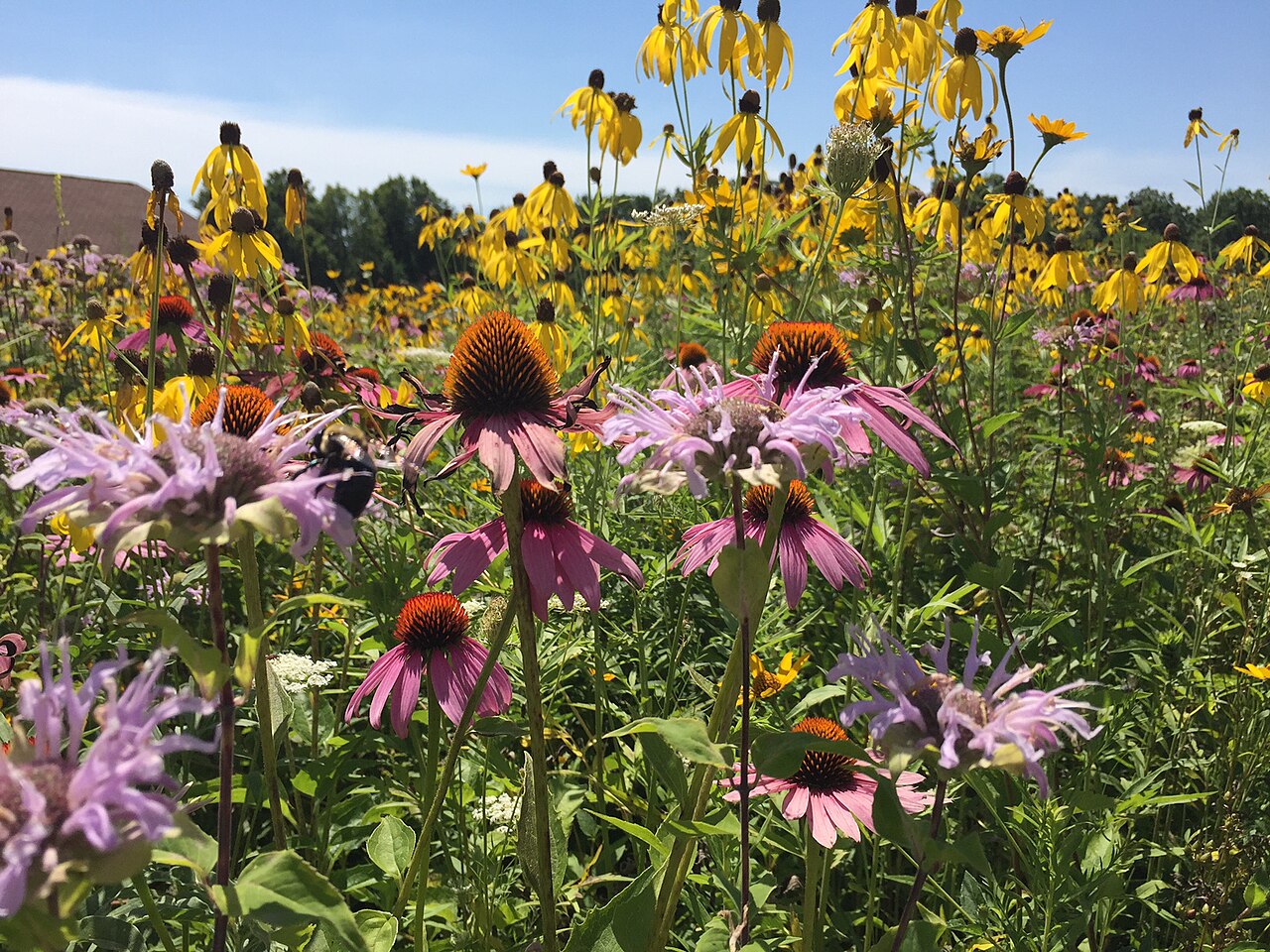
In Short
Ohio's native flowers include the large white trillium, the state wildflower, plus wild columbine, Virginia bluebells, butterfly weed, wild bergamot, and purple coneflower.
- Every plant was checked against Kew and USDA PLANTS: 38 are native in both, wild lupine in USDA alone, and prairie smoke was removed because neither lists it.
- Spring wildflowers bloom from March to mid-May, summer wildflowers from June to August. The best places to see them are prairies, meadows, and wetlands.
More Takeaways
- Picking or digging plants is unlawful in Ohio state parks, state forests, and state nature preserves. Look and photograph instead.
Ohio Native Range & Growing Zones
Ohio is a Midwestern state that’s part of the Great Lakes region. Under the 2023 USDA Growing Zones map, no part of Ohio is rated Zone 5b.
How Are Ohio’s Native Flowers Defined?
Ohio’s native plants are defined as species that grew in the state before European settlers arrived. After Europeans arrived, new species were introduced. Some of these non-native species have become naturalized in Ohio.
How We Checked These 39 Plants
Petal Republic editors checked every plant in this list against Kew's Plants of the World Online and the USDA PLANTS database, state by state, on October 17, 2026. Thirty-eight of the 39 plants are native to Ohio in both sources. The 39th is confirmed by USDA PLANTS alone. Prairie smoke was removed because neither source records it in Ohio.
| What the check found | Plants |
|---|---|
| Native in both Kew and USDA PLANTS | 38 |
| Native in USDA PLANTS only | 1 |
| Checked as a whole genus | 1 |
39 Native Ohio Wildflowers and Plants
1) Black-eyed Susan
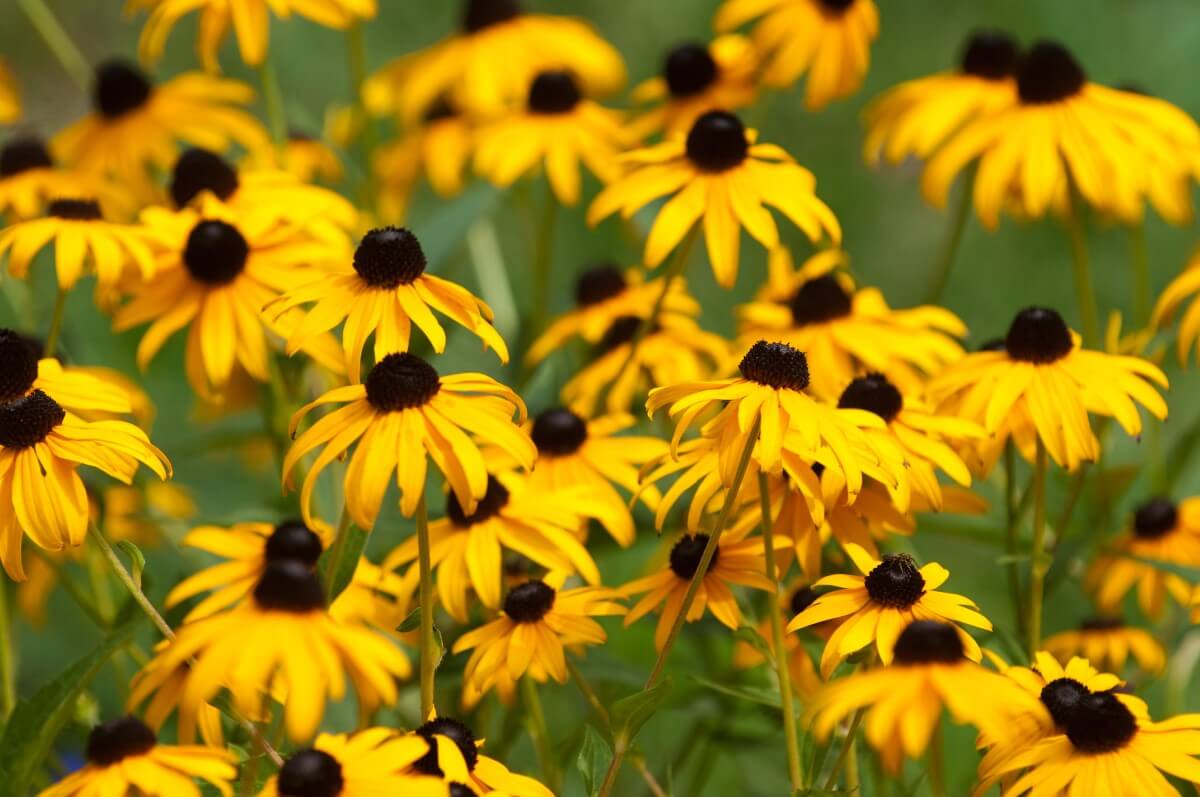
Black-eyed Susan is one of Ohio’s most iconic wildflowers. These bright yellow flowers belong to the Rudbeckia genus from the aster or daisy family (Asteraceae). They thrive on prairies and grasslands in full sun.
Black-eyed Susan flowers have dark brown central florets surrounded by bright yellow ray petals and green oval-shaped leathery leaves. These flowers bloom throughout the summer until the first frost.
Scientific Name: Rudbeckia hirta
- Light Requirements
- Full sun
- Growing Zones
- 3 to 9
- Flowering Season
- Summer to fall
- Mature Height
- 1 to 3 ft
2) Blue Flag Iris
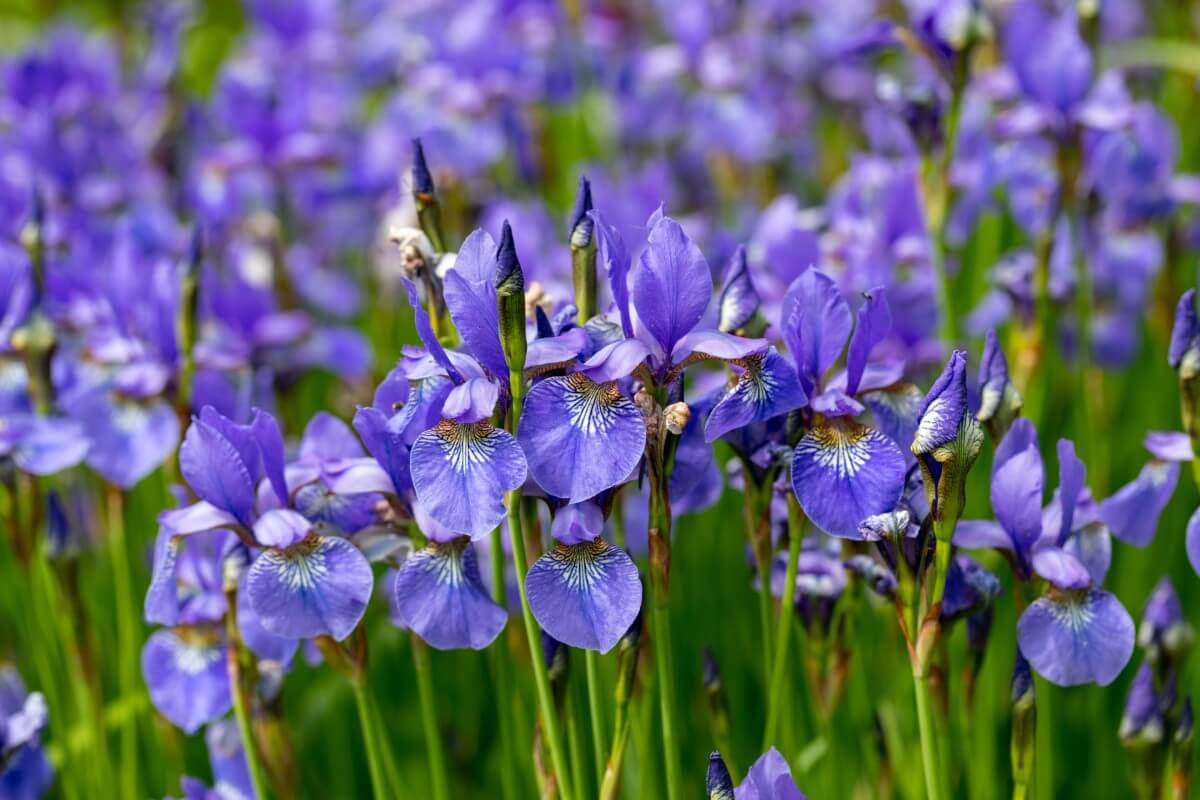
Blue flag iris is a herbaceous perennial from the iris family (Iridaceae). It’s native to eastern parts of North America and thrives in wetland habitats and along riverbanks across Ohio.
Blue flag iris produces large, rich blue iris flowers with yellow markings on the petals. The flowers grow on upright stems from clumps of long, strap-like light green leaves.
Scientific Name: Iris versicolor
- Light Requirements
- Full sun to partial shade
- Growing Zones
- 3 to 9
- Flowering Season
- Spring to summer
- Mature Height
- 2 to 2.5 ft
3) Blue Phlox
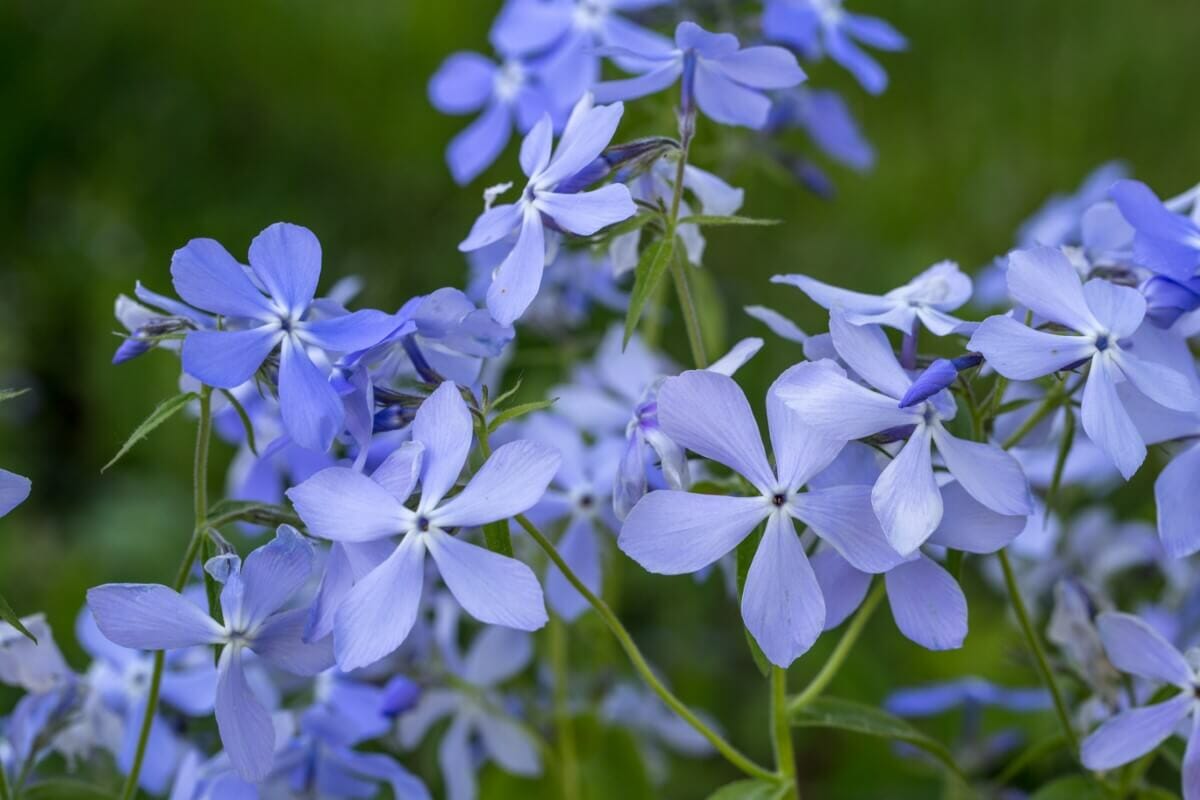
Blue phlox is a flowering perennial from the phlox family (Polemoniaceae). This native Ohio flower thrives in forests and woodland habitats.
Blue phlox grows in clumps of hairy, oval-shaped leaves. In spring, blue phlox produces clusters of tubular pale blue or lilac flowers with five petals. Blue phlox also has a pleasant scent. These semi-evergreen flowers have a spreading habit.
Scientific Name: Phlox divaricata
- Light Requirements
- Partial shade
- Growing Zones
- 3 to 8
- Flowering Season
- Spring
- Mature Height
- Up to 1 ft
4) Butterfly Weed
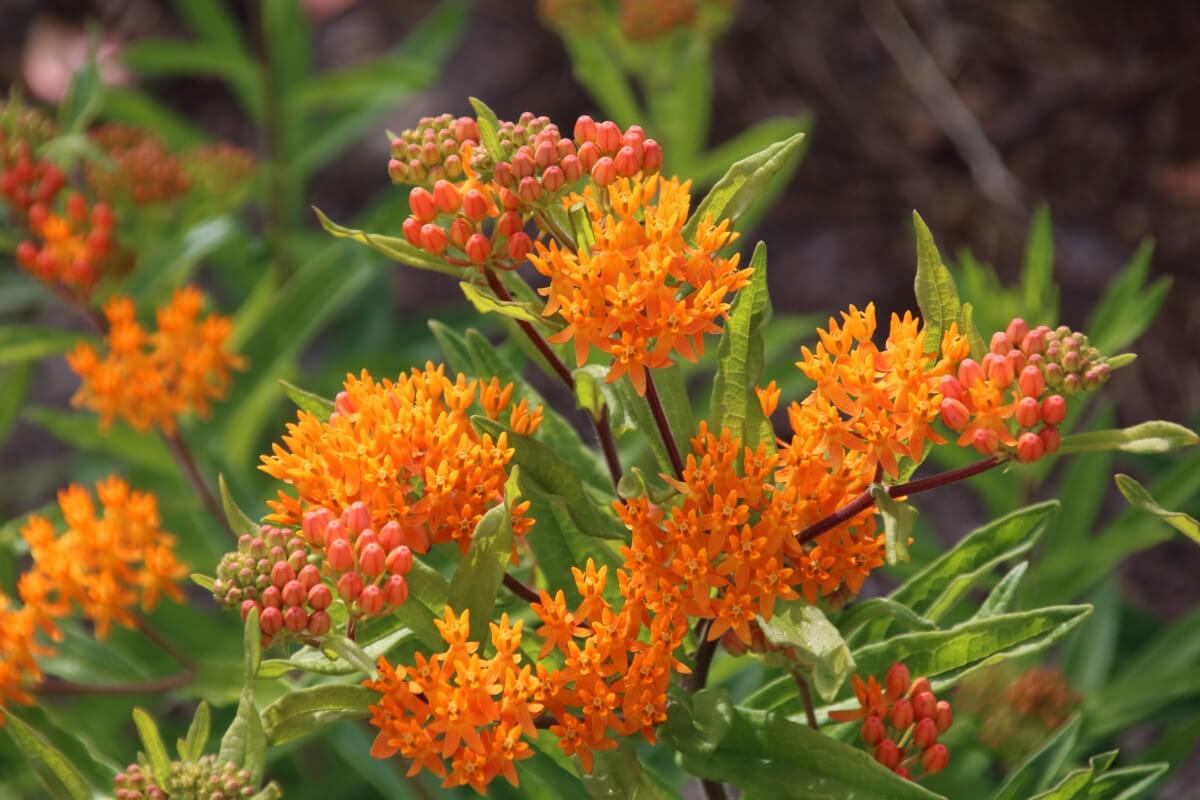
Butterfly weed is a herbaceous perennial from the dogbane family (Apocynaceae). Butterfly weed is native to eastern and southwestern parts of North America. These plants thrive in full sun and dry, loose soils.
These native Ohio flowers produce large clusters of colorful red, yellow, or orange flowers. These flowers attract butterflies and other pollinators, hence their common name. Each flower has five petals and five sepals.
Scientific Name: Asclepias tuberosa
- Light Requirements
- Full sun
- Growing Zones
- 3 to 9
- Flowering Season
- Summer
- Mature Height
- 1 to 2 ft
5) Cardinal Flower
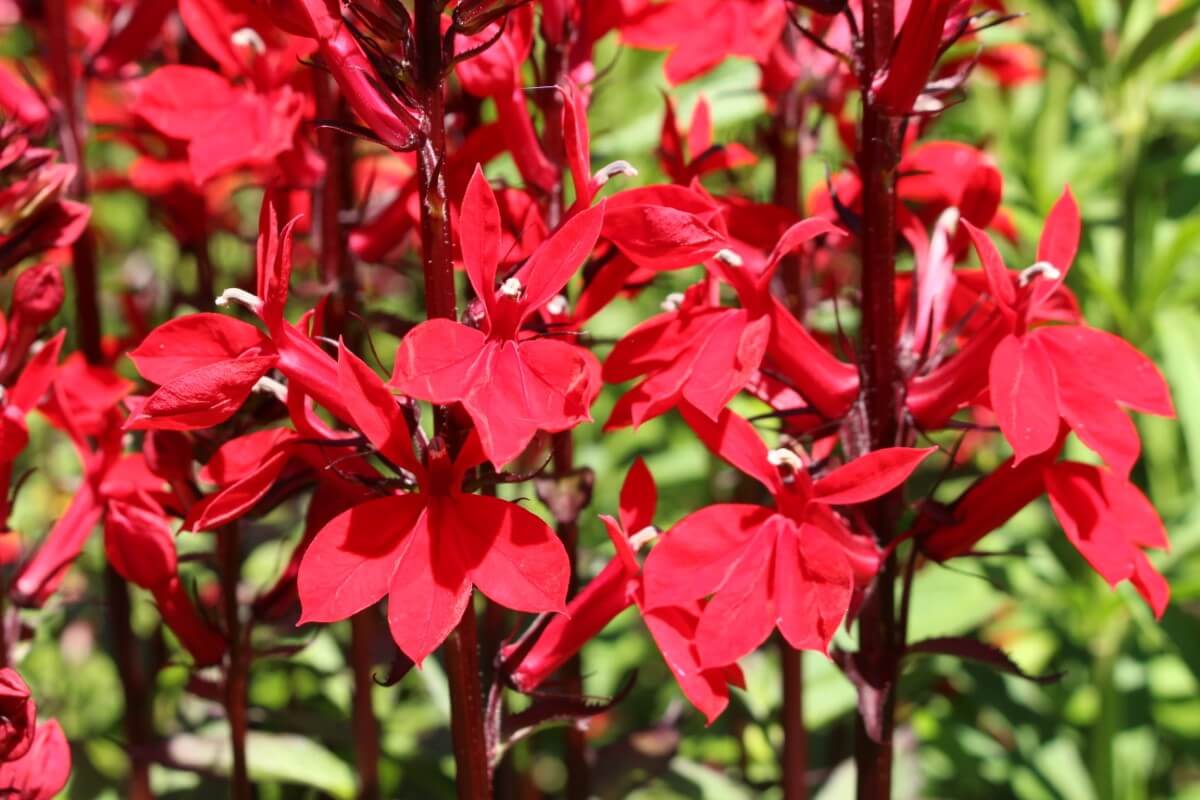
Cardinal flowers are clump-forming herbaceous perennials from the bellflower family (Campanulaceae). They are native to parts of North America, Central America, and Mexico. Cardinal flowers thrive in moist woodlands and wetland habitats like swamps.
These native Ohio plants have upright racemes of bright red flowers with deeply lobed petals. Cardinal flowers also have long oval to lance-shaped leaves with toothed edges.
Scientific Name: Lobelia cardinalis
- Light Requirements
- Full sun to partial shade
- Growing Zones
- 3 to 9
- Flowering Season
- Summer to fall
- Mature Height
- 2 to 4 ft
6) Common Milkweed
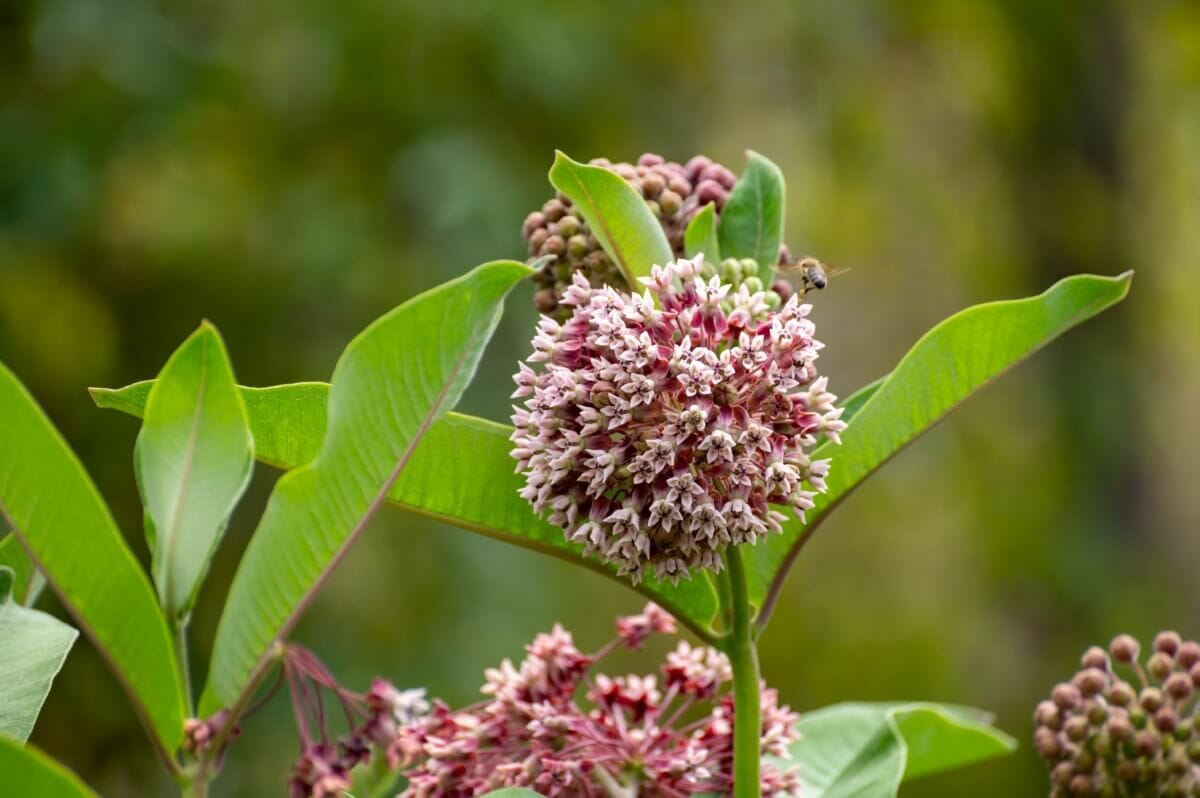
Common milkweed is a herbaceous perennial from the milkweed genus (Asclepias spp.) in the dogbane family. They are native to eastern parts of North America and thrive in sandy conditions.
Common milkweed has broad oval or lance-shaped leaves with prominent veins. Common milkweed also produces rounded clusters of fragrant pink or purple flowers. These plants produce a milky sap when cut.
Scientific Name: Asclepias syriaca
- Light Requirements
- Full sun
- Growing Zones
- 3 to 9
- Flowering Season
- Summer
- Mature Height
- 3 to 4 ft
7) Downy Yellow Violet
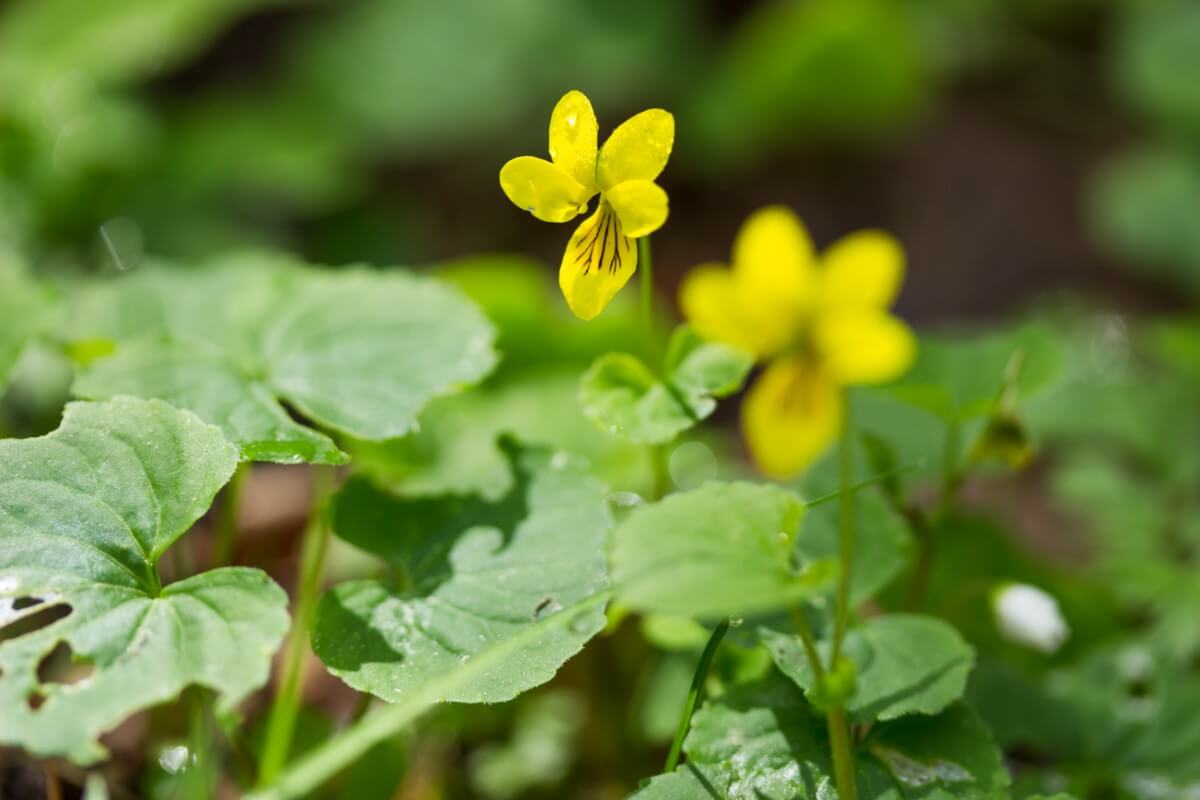
Downy yellow violets are herbaceous perennials from the violet family (Violaceae). They are native to woodlands and beautiful wildflower meadows across North America. These colorful flowers need partial shade.
Downy yellow violets have leathery heart-shaped leaves with toothed edges, producing bright yellow flowers with black veins in the center. The stems and leaves are covered in fine hairs.
Scientific Name: Viola pubescens
- Light Requirements
- Partial shade
- Growing Zones
- 3 to 7
- Flowering Season
- Spring to summer
- Mature Height
- 0.5 to 1 ft
8) Dutchman’s Breeches
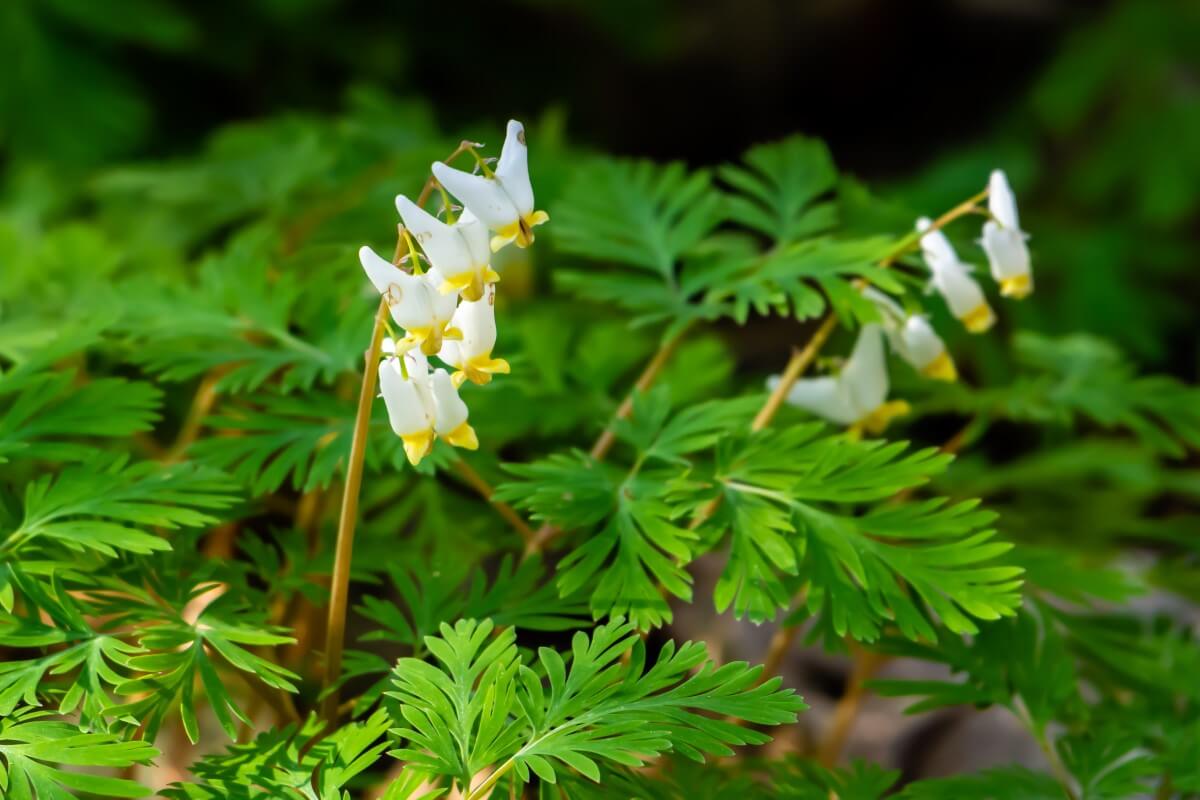
Dutchman’s breeches are herbaceous perennials from the poppy family (Papaveraceae). These plants are native to the eastern parts of North America. Dutchman’s breeches thrive in rich woodland habitats with moist soils.
Dutchman’s breeches produce unusual white flowers shaped like pantaloons, hence the common name. The flowers have yellow tips and a nodding habit. These perennials also have trifoliate leaves divided into three leaflets.
Scientific Name: Dicentra cucullaria
- Light Requirements
- Partial to full shade
- Growing Zones
- 3 to 8
- Flowering Season
- Spring
- Mature Height
- 0.5 to 1 ft
9) Eastern Red Columbine
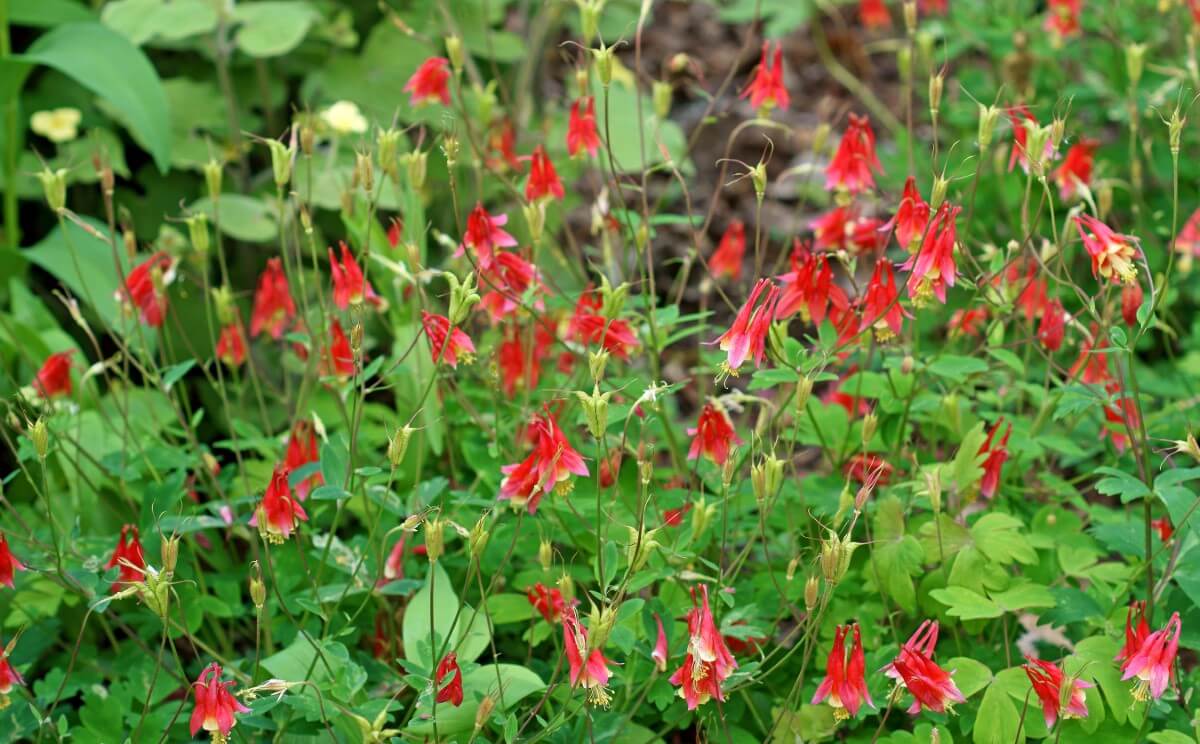
Eastern red columbines are herbaceous perennials from the buttercup family (Ranunculaceae). Also known as Canadian Columbine, Eastern Red Columbines are native to eastern regions of North America.
Eastern red columbines have nodding red flowers with a crown of distinctive spurs at the back of each flower. They have yellow stamens and yellow inner petals.
Scientific Name: Aquilegia canadensis
- Light Requirements
- Full sun to partial shade
- Growing Zones
- 3 to 8
- Flowering Season
- Spring to summer
- Mature Height
- 2 to 3 ft
10) Golden Alexanders
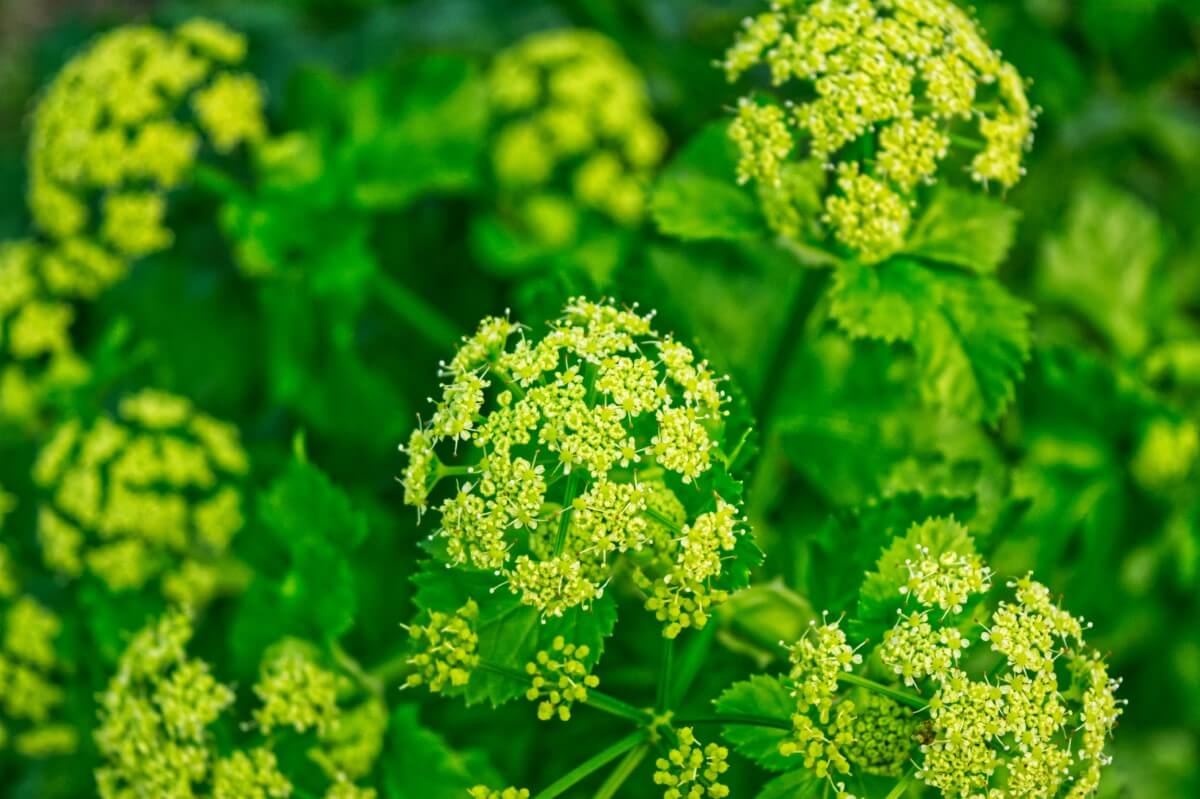
Golden Alexanders are herbaceous perennials native to eastern parts of North America. Golden Alexanders come from the carrot or parsley family (Apiaceae). They are adaptable plants that thrive in various habitats, including prairies and woodlands.
Golden Alexanders have tall branching stems with pinnate lance or oval-shaped leaves. They produce umbel-like clusters of tiny bright yellow flowers in spring and summer.
Scientific Name: Zizia aurea
- Light Requirements
- Full sun to partial shade
- Growing Zones
- 3 to 8
- Flowering Season
- Spring to summer
- Mature Height
- 1 to 3 ft
11) Goldenrod
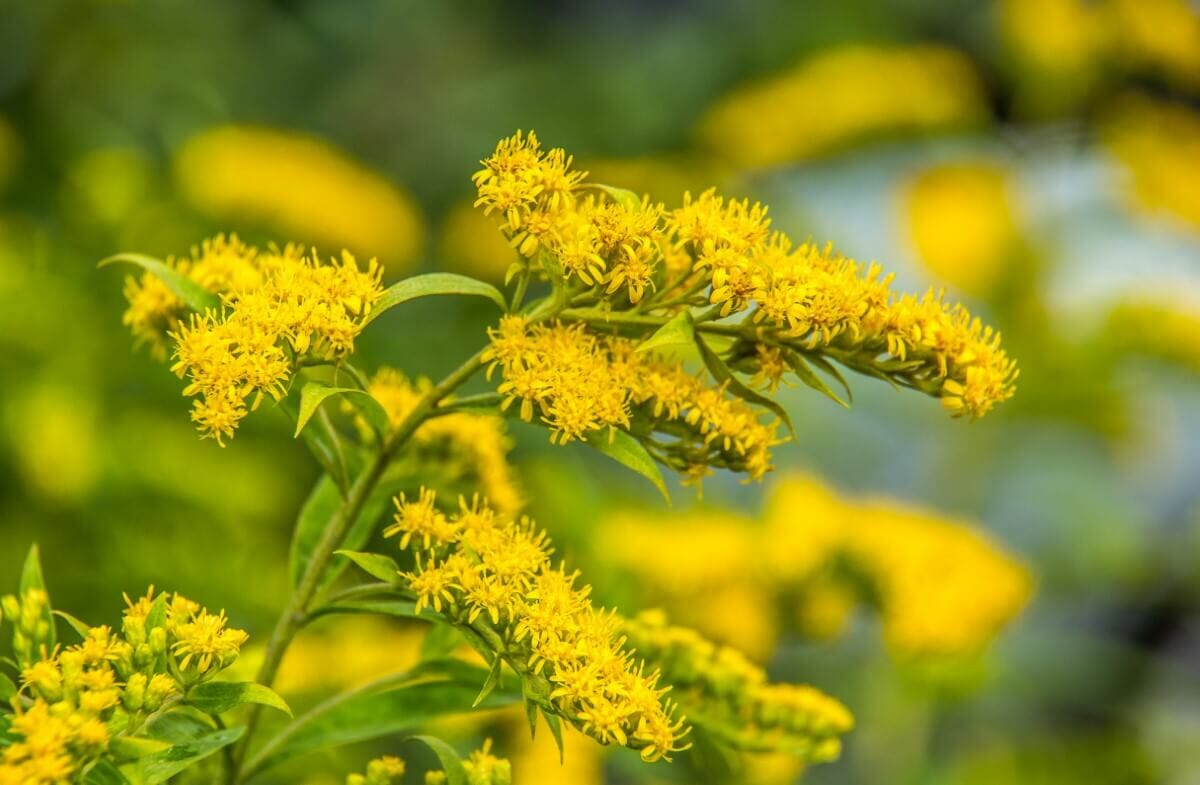
Goldenrods are herbaceous perennials from the aster or daisy family. These brightly-colored plants are native to North America. Goldenrods thrive in sunny, open habitats like meadows and prairies.
These native Ohio flowers produce clumps of reddish stems with slender leaves. When flowering, goldenrods produce clusters of bright yellow flowers at the end of the stems. Some species have more upright stems, while others have downward-curving stems.
Scientific Name: Solidago spp.
- Light Requirements
- Full sun to partial shade
- Growing Zones
- 3 to 8
- Flowering Season
- Summer to fall
- Mature Height
- 3 to 5 ft
12) Great Blue Lobelia
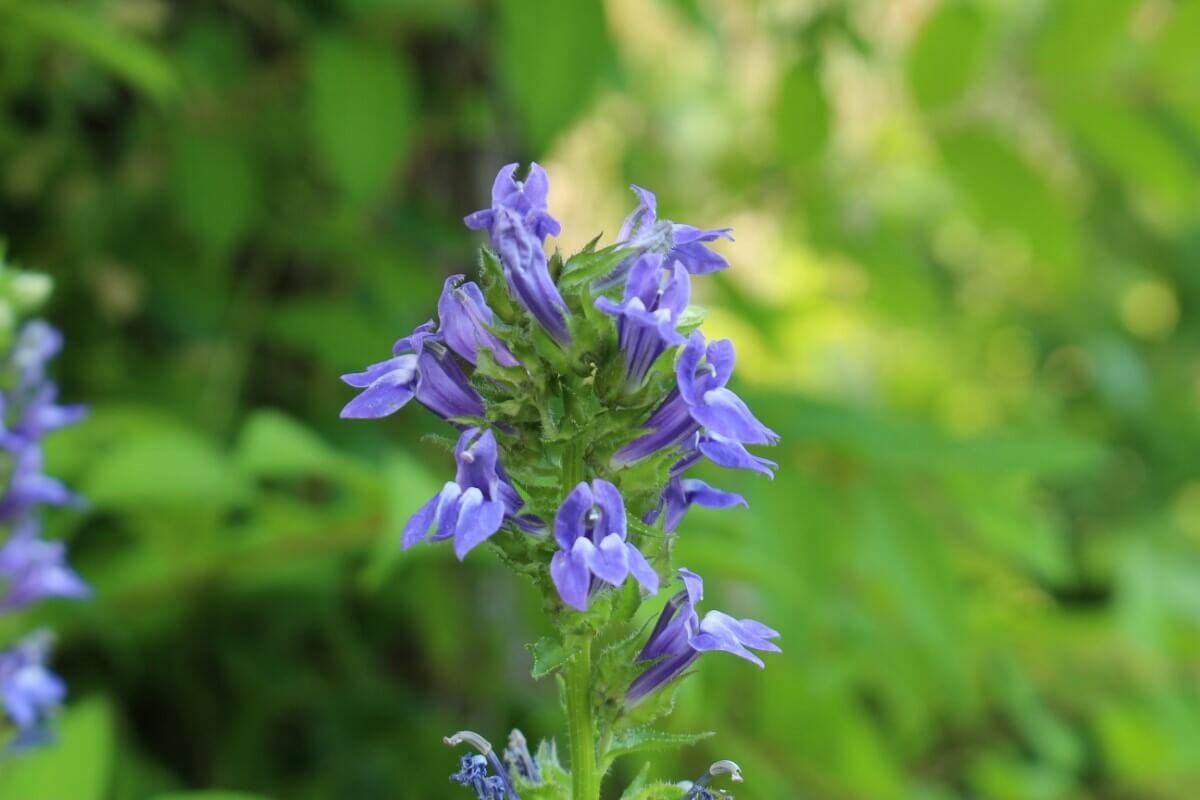
Also known as blue cardinal flowers, great blue lobelias are herbaceous perennials from the bellflower family. Great blue lobelias are native to central and eastern parts of North America.
These beautiful plants have upright, unbranched stems and elliptical or lance-shaped leaves. Great blue lobelias produce bright blue flowers with three fused lower petals and two curled upper petals.
Scientific Name: Lobelia siphilitica
- Light Requirements
- Full sun to partial shade
- Growing Zones
- 4 to 9
- Flowering Season
- Summer to fall
- Mature Height
- 2 to 3 ft
13) Hairy Beardtongue
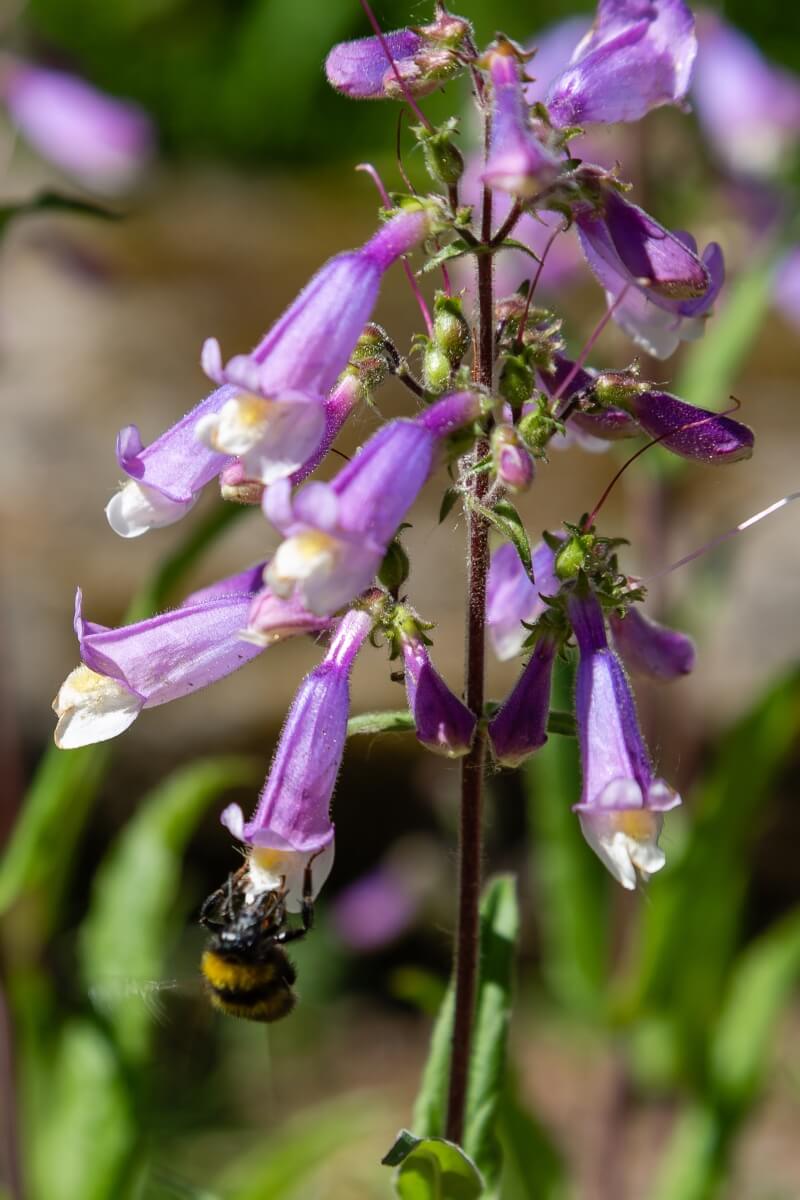
Hairy beardtongue is a herbaceous perennial from the plantain family (Plantaginaceae). Hairy beardtongue is native to eastern parts of North America and grows in dry habitats such as grasslands and prairies.
The plant gets its common name from its hairy stems. The stalks also bear clusters of tubular purple flowers that have white edges to the lobes.
Scientific Name: Penstemon hirsutus
- Light Requirements
- Full sun to partial shade
- Growing Zones
- 3 to 9
- Flowering Season
- Spring to summer
- Mature Height
- 1 to 2 ft
14) Hoary Vervain
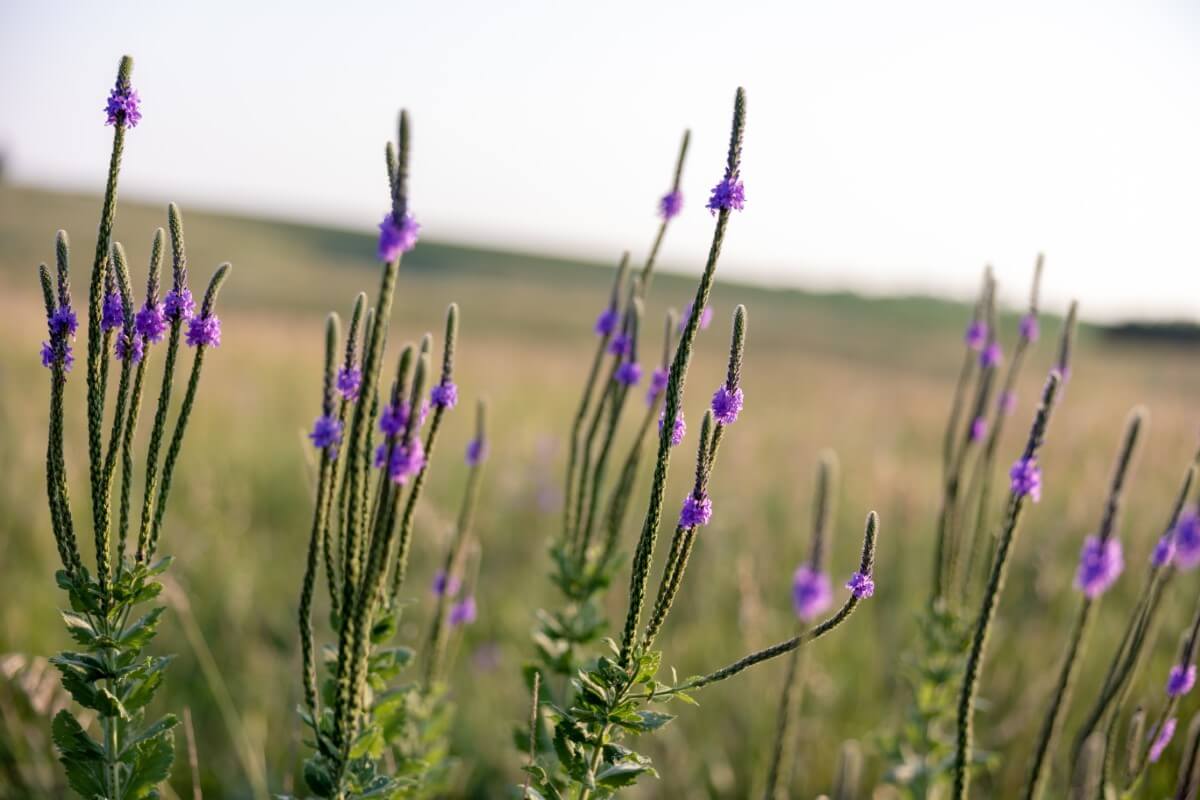
Hoary vervain is a member of the verbena family (Verbenaceae) native to the central United States. Hoary vervains are drought-tolerant perennials that thrive in dry, open meadows and prairies.
These plants have upright stalks topped with seed spikes. Tubular purple, pink, or white flowers emerge from the stalks from spring until fall. The upper spikes produce clusters of tiny seeds that resemble nuts.
Scientific Name: Verbena stricta
- Light Requirements
- Full sun
- Growing Zones
- 4 to 7
- Flowering Season
- Spring to fall
- Mature Height
- 2 to 4 ft
15) Jack-in-the-Pulpit
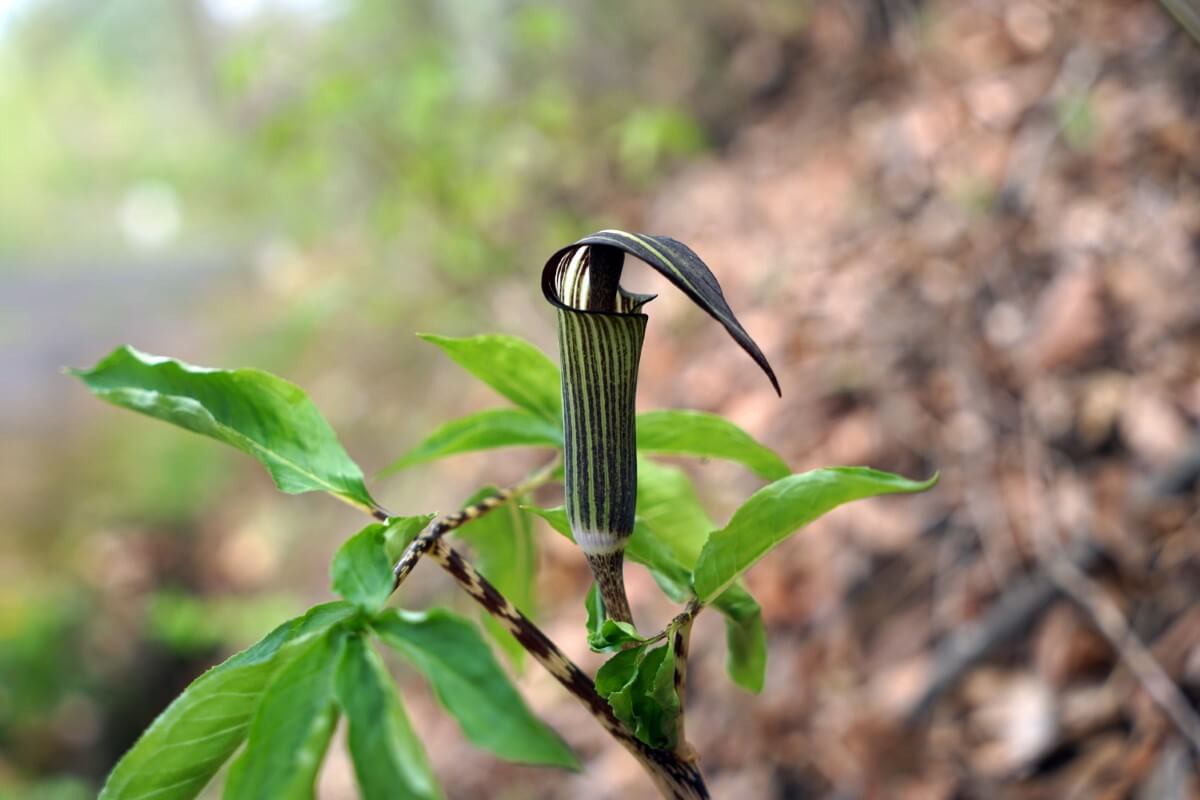
Jack-in-the-Pulpit is a tuberous perennial from the arum family (Araceae). These strange wildflowers look similar to pitcher plants. Jack-in-the-pulpit has hooded purple or green spathes that protect a purple spadix of tiny flowers.
These plants are native to moist, shady woodlands in eastern areas of North America. Jack-in-the-pulpit is also known as the bog onion and has two large leaves consisting of three leaflets.
Scientific Name: Arisaema triphyllum
- Light Requirements
- Partial to full shade
- Growing Zones
- 4 to 9
- Flowering Season
- Spring
- Mature Height
- 1 to 2 ft
16) Large White Trillium
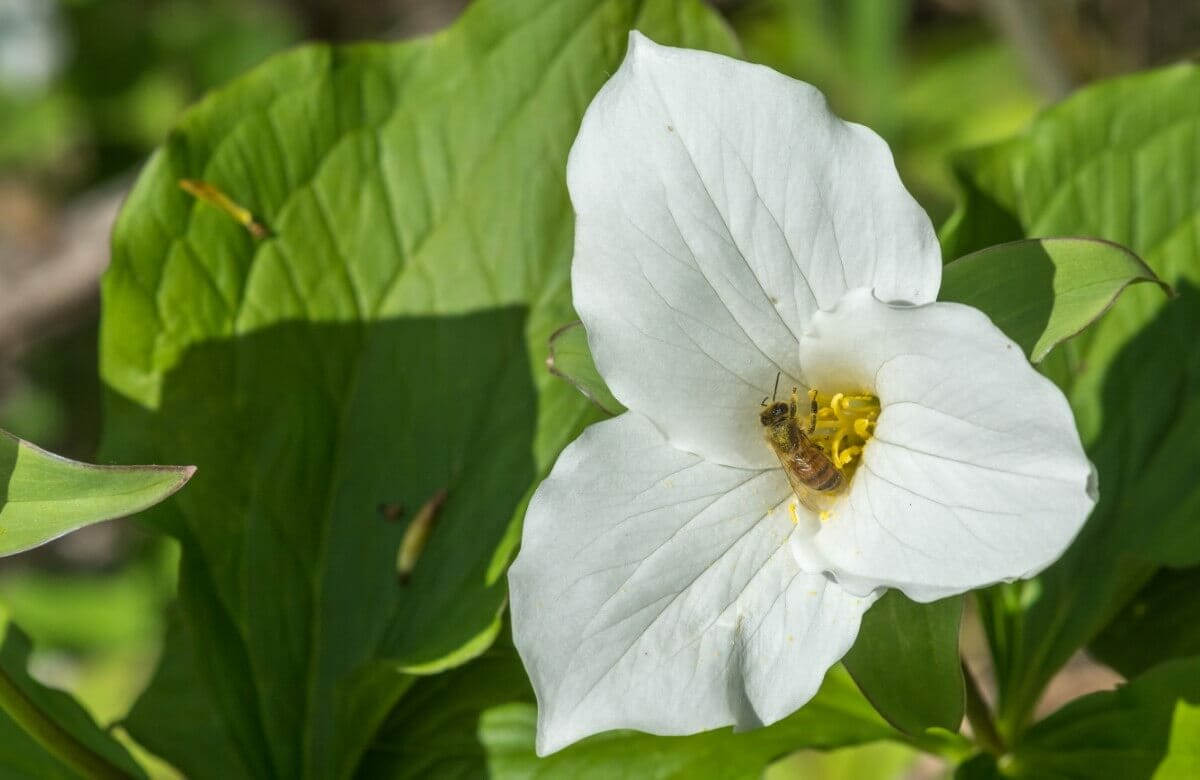
The large white trillium has been Ohio’s official state wildflower since 1987. Large white trilliums are herbaceous perennials from the bunchflower family (Melanthiaceae). These striking plants are native to rich, shady woodlands throughout eastern North America.
Large white trilliums grow via rhizomes and produce a whorl of three green bracts. These trilliums have large white flowers with three petals above the bracts.
Scientific Name: Trillium grandiflorum
- Light Requirements
- Partial to full shade
- Growing Zones
- 4 to 8
- Flowering Season
- Spring
- Mature Height
- 1 to 2 ft
17) Marsh Marigold
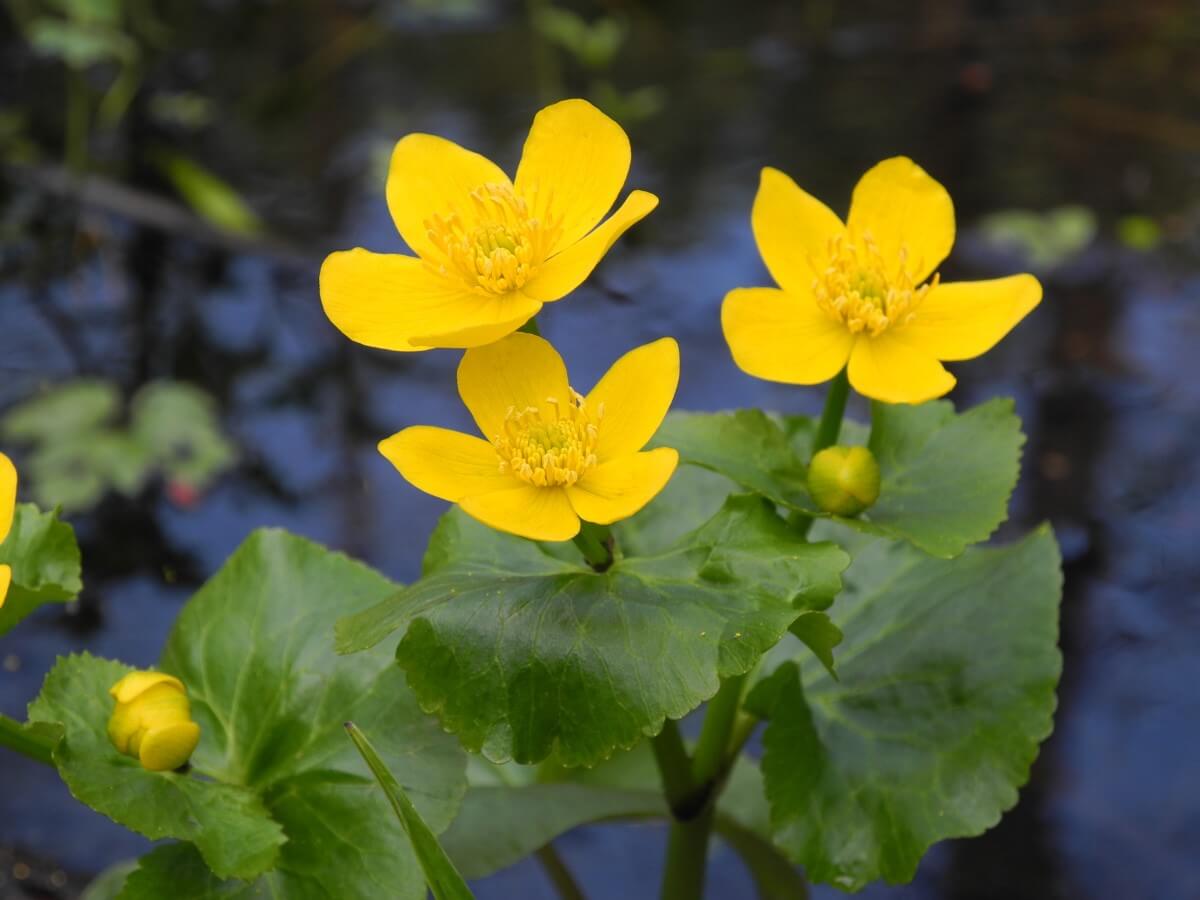
Also known as kingcups, marsh marigolds are herbaceous perennials from the buttercup family. Marsh marigolds are native to the Northern Hemisphere and grow in wetland habitats such as marshes and moist woodlands.
They grow in clumps of kidney-shaped dark green leaves. During spring and summer, marsh marigolds produce bright yellow cup-shaped flowers that are similar to buttercups.
Scientific Name: Caltha palustris
- Light Requirements
- Full sun to partial shade
- Growing Zones
- 3 to 7
- Flowering Season
- Spring to summer
- Mature Height
- 1 to 2 ft
18) Obedient Plant
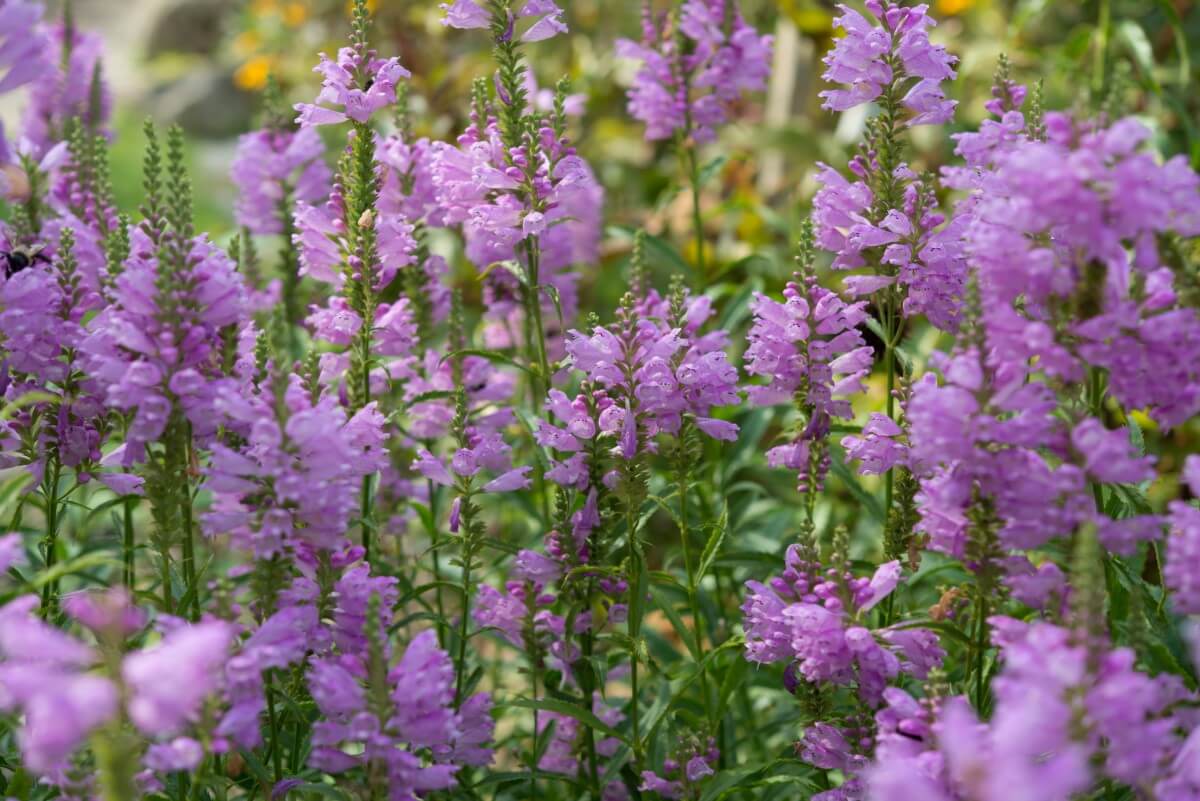
Obedient plants are herbaceous perennials from the mint or sage family (Lamiaceae). These attractive flowers remain in position even when touched, hence their common name. Obedient plants are native to North America and parts of Mexico.
These plants have stiff, upright stems covered in tubular pink flowers with purple speckles inside. These flowers resemble snapdragons and bloom from midsummer until fall.
Scientific Name: Physostegia virginiana
- Light Requirements
- Full sun to partial shade
- Growing Zones
- 3 to 9
- Flowering Season
- Summer to fall
- Mature Height
- 3 to 4 ft
19) Ohio Horsemint
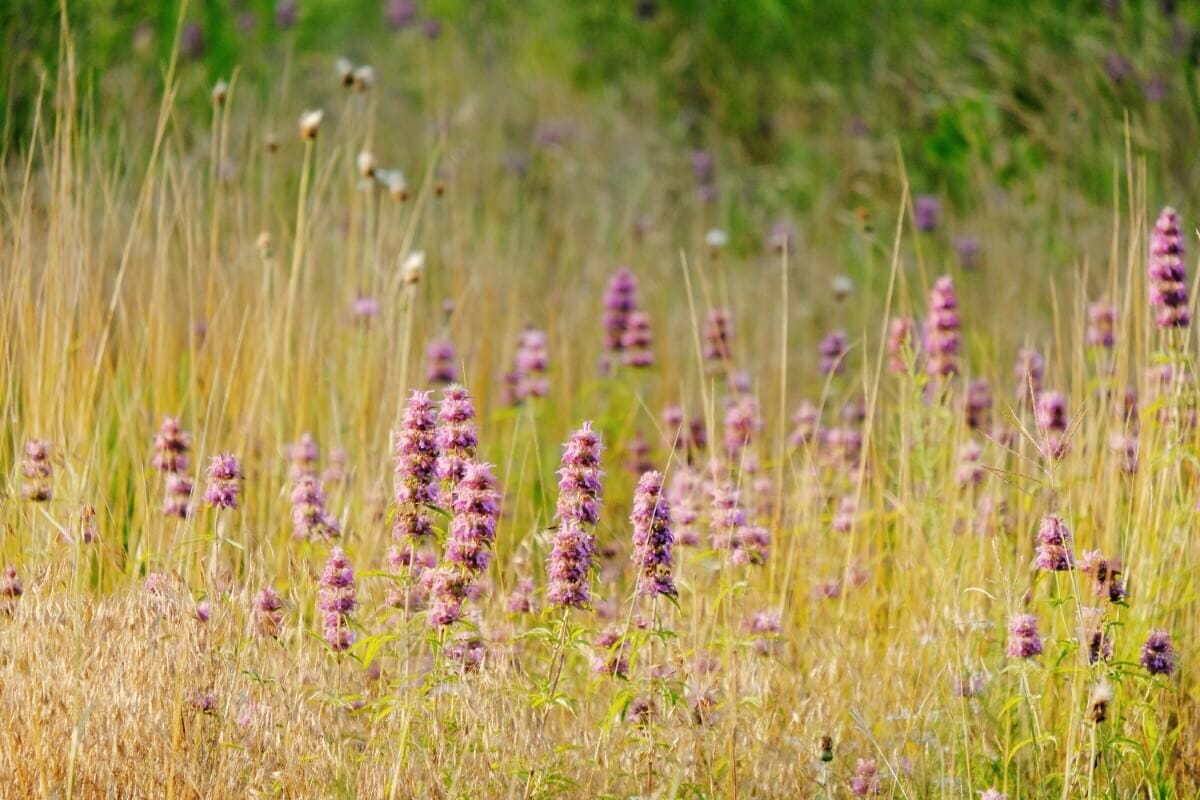
Also known as pagoda horsemint, Ohio horsemint is a herbaceous perennial from the mint family. Ohio horsemint is native to dry open woodlands and meadows in central and eastern North America.
Ohio horsemint plants have square stems topped with up to five ascending clusters of flowers. These tiny blue, purple, or white blossoms sit on top of rings of green bracts, resembling a pagoda.
Scientific Name: Blephilia ciliata
- Light Requirements
- Full sun to partial shade
- Growing Zones
- 4 to 8
- Flowering Season
- Spring to summer
- Mature Height
- 1 to 3 ft
20) Ohio Spiderwort
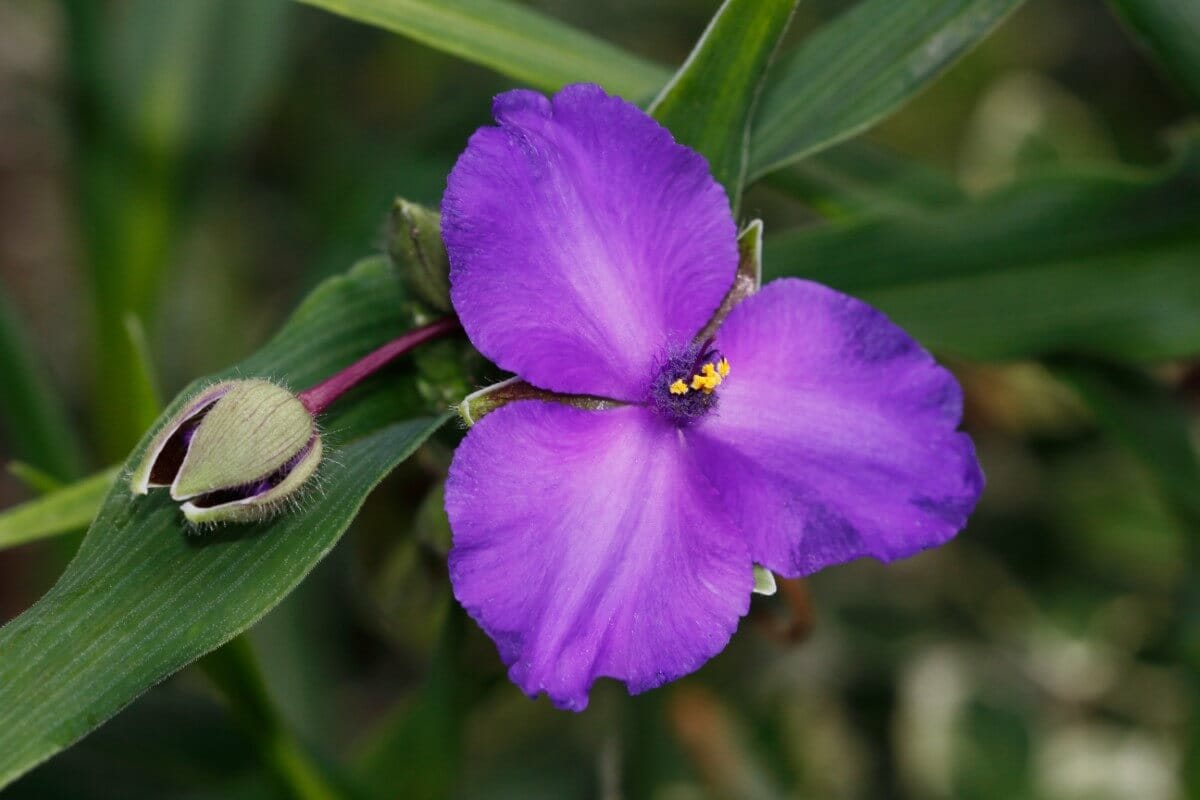
Ohio spiderwort is a herbaceous perennial native to central and eastern parts of North America. These plants come from the spiderwort family (Commelinaceae). They thrive along roadsides but also grow in woodland habitats.
Ohio spiderwort has slender bluish-gray or bluish-green leaves and stems. These Ohio native flowers also produce small, bright blue flowers with three petals that only last for one day.
Scientific Name: Tradescantia ohiensis
- Light Requirements
- Full sun to partial shade
- Growing Zones
- 4 to 9
- Flowering Season
- Spring to summer
- Mature Height
- 2 to 3 ft
21) Purple Coneflower
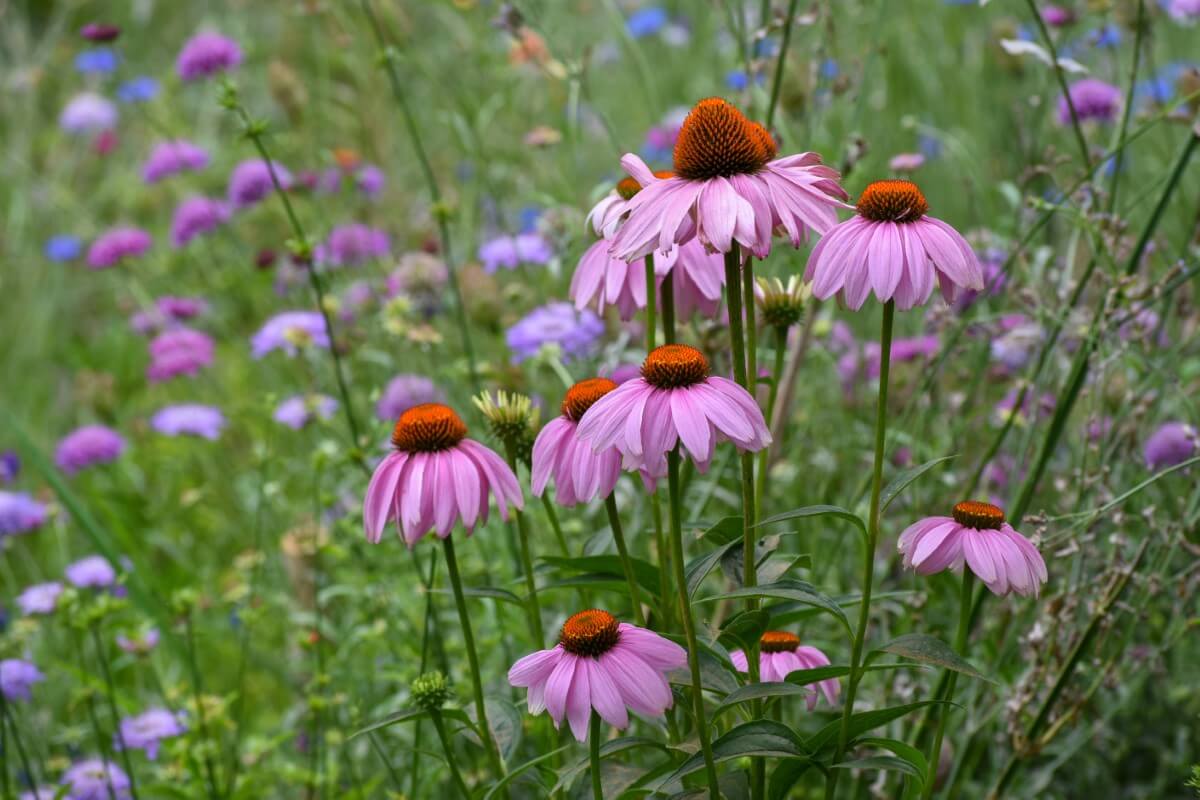
Purple coneflowers are some of America’s most iconic wildflowers. These herbaceous perennials from the daisy family thrive on prairies and grasslands.
Purple coneflowers have large, daisy-like flower heads with orange-brown central cones surrounded by purple ray petals. Purple coneflowers thrive in full sun and prefer nutrient-poor soils. They’re also one of the most accessible types of coneflowers to grow.
Scientific Name: Echinacea purpurea
- Light Requirements
- Full sun
- Growing Zones
- 3 to 8
- Flowering Season
- Summer
- Mature Height
- 2 to 5 ft
22) Purple Joe Pye Weed
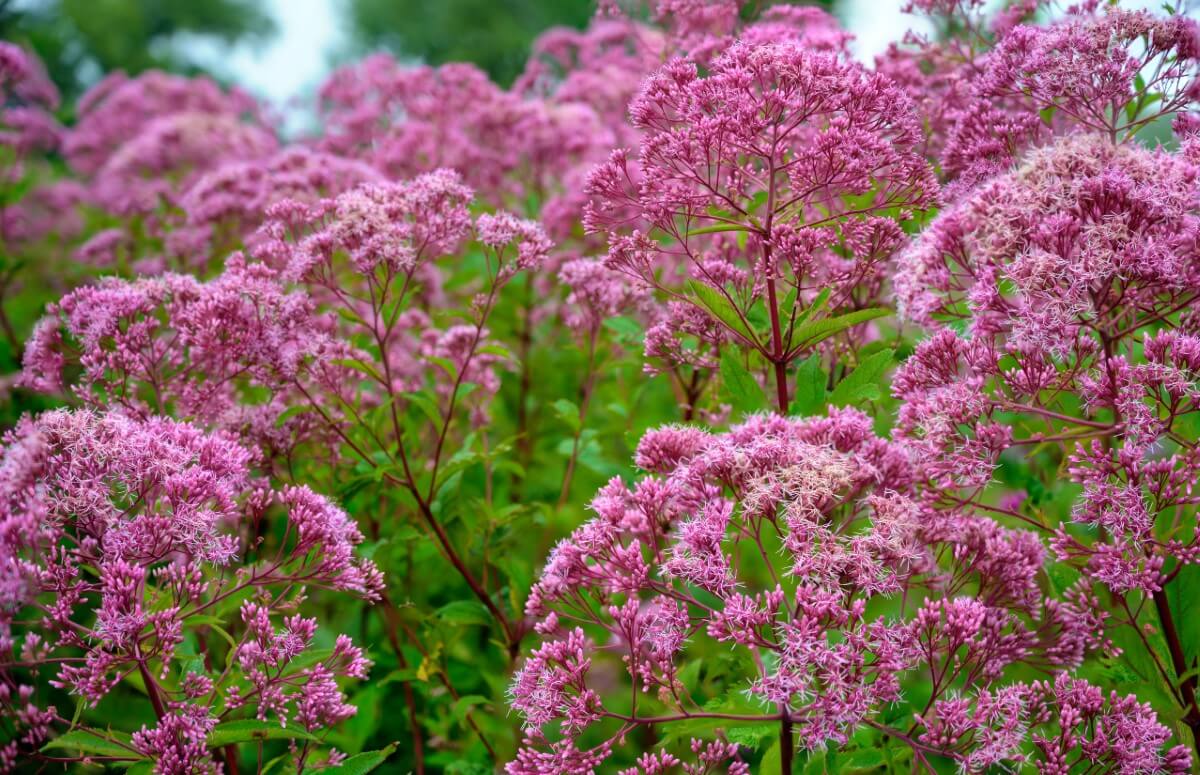
Purple Joe Pye weed is a herbaceous perennial from the daisy family. Purple Joe Pye weed is native to central and eastern parts of North America.
This clump-forming plant produces purple upright stems. Purple Joe Pye weed has long wrinkly leaves and large clusters of purplish-pink flowers. The stems often bend under the weight of the flower heads.
Scientific Name: Eutrochium purpureum
- Light Requirements
- Full sun to partial shade
- Growing Zones
- 3 to 9
- Flowering Season
- Summer to fall
- Mature Height
- 5 to 8 ft
23) Roundleaf Ragwort
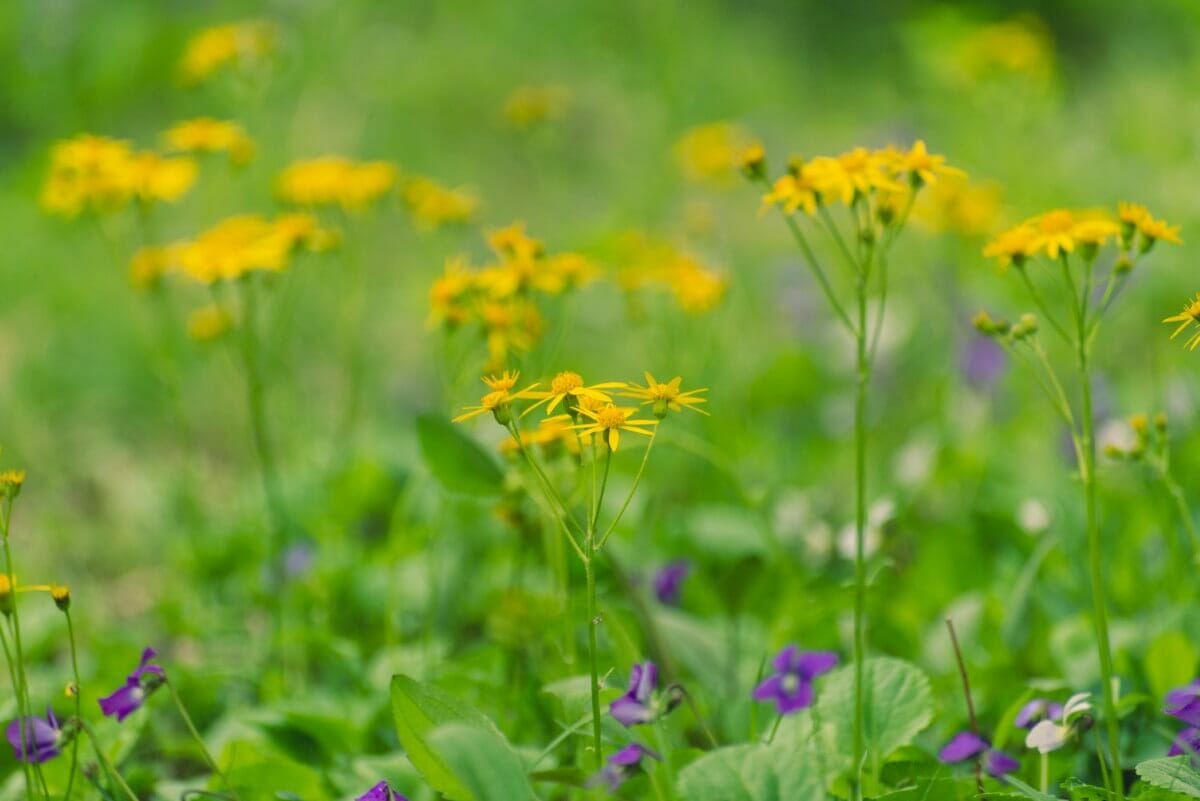
Roundleaf ragwort is a herbaceous perennial native to northern Mexico and eastern parts of North America, including Ohio. Roundleaf ragwort belongs to the daisy family and thrives on rocky slopes or moist woodlands and meadows.
This plant produces upright stems and clumps of round leaves. The stems are topped with clusters of bright yellow flowers.
Scientific Name: Packera obovata
- Light Requirements
- Full sun to partial shade
- Growing Zones
- 3 to 8
- Flowering Season
- Spring to summer
- Mature Height
- 1 to 2 ft
24) Shooting Star
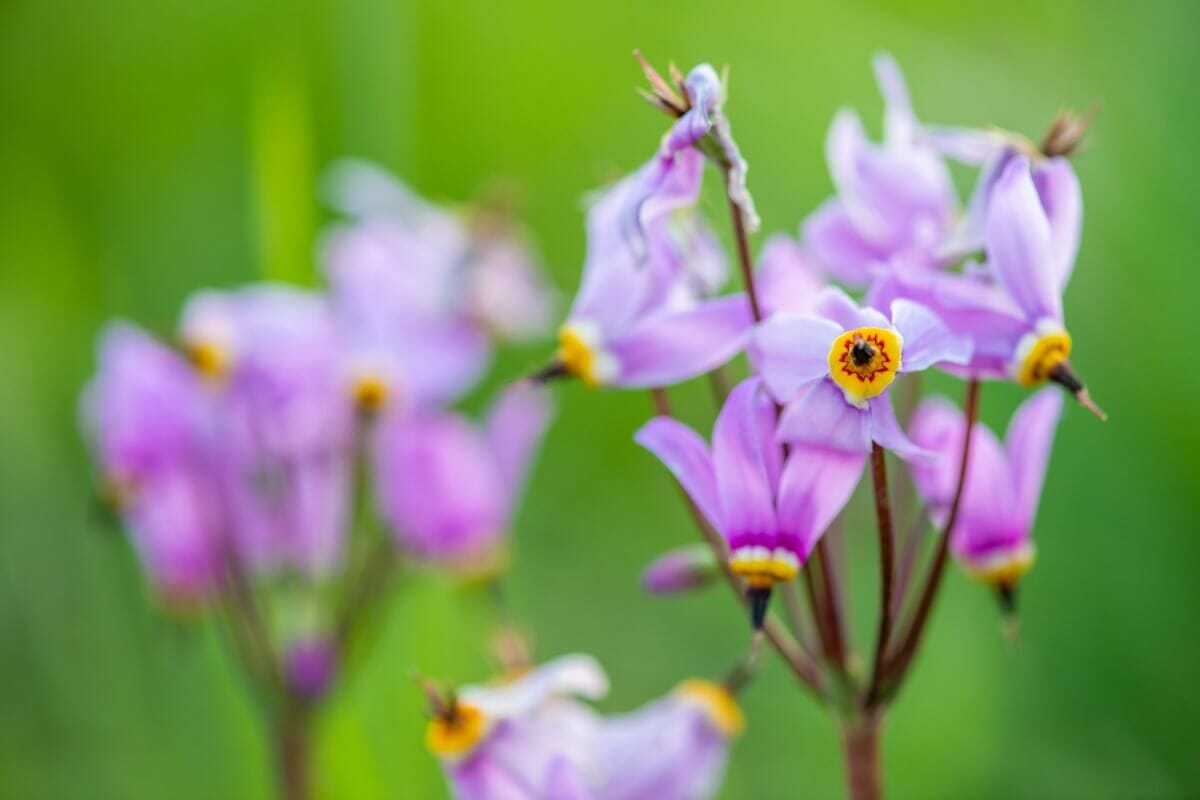
Shooting Star is a herbaceous perennial native to prairies and woodlands in eastern North America. These showy flowers come from the primrose family (Primulaceae).
Shooting star has rosettes of lance-shaped basal leaves that produce leafless stalks. These stalks grow umbels of pink or white flowers with five upright petals. The flowers also have yellow central stamens and resemble cyclamen flowers.
Scientific Name: Dodecatheon meadia
- Light Requirements
- Full sun to full shade
- Growing Zones
- 4 to 8
- Flowering Season
- Spring to summer
- Mature Height
- 1 to 2 ft
25) Showy Tick-Trefoil
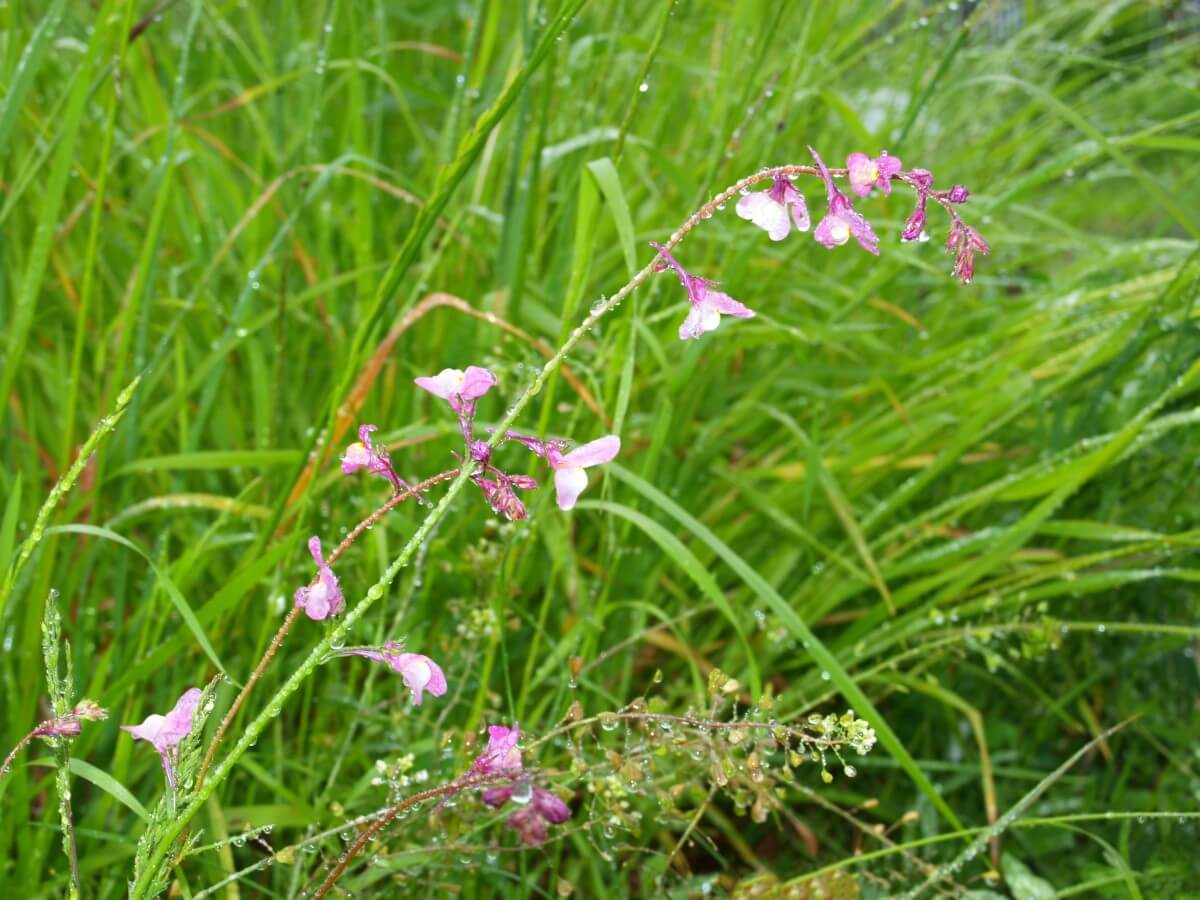
Also known as Canadian tick-trefoil, showy tick-trefoil is a herbaceous perennial from the legume or pea family (Fabaceae). Showy tick-trefoil is native to eastern regions of North America and thrives in woodlands and prairies.
Showy tick-trefoil produces upright, bushy stems and pink or pinkish-purple pea-like flowers. The undersides of the flowers are coated with hooked hairs that attach to passing animals.
Scientific Name: Desmodium canadense
- Light Requirements
- Full sun to partial shade
- Growing Zones
- 3 to 7
- Flowering Season
- Summer to fall
- Mature Height
- 3 to 5 ft
26) Swamp Milkweed
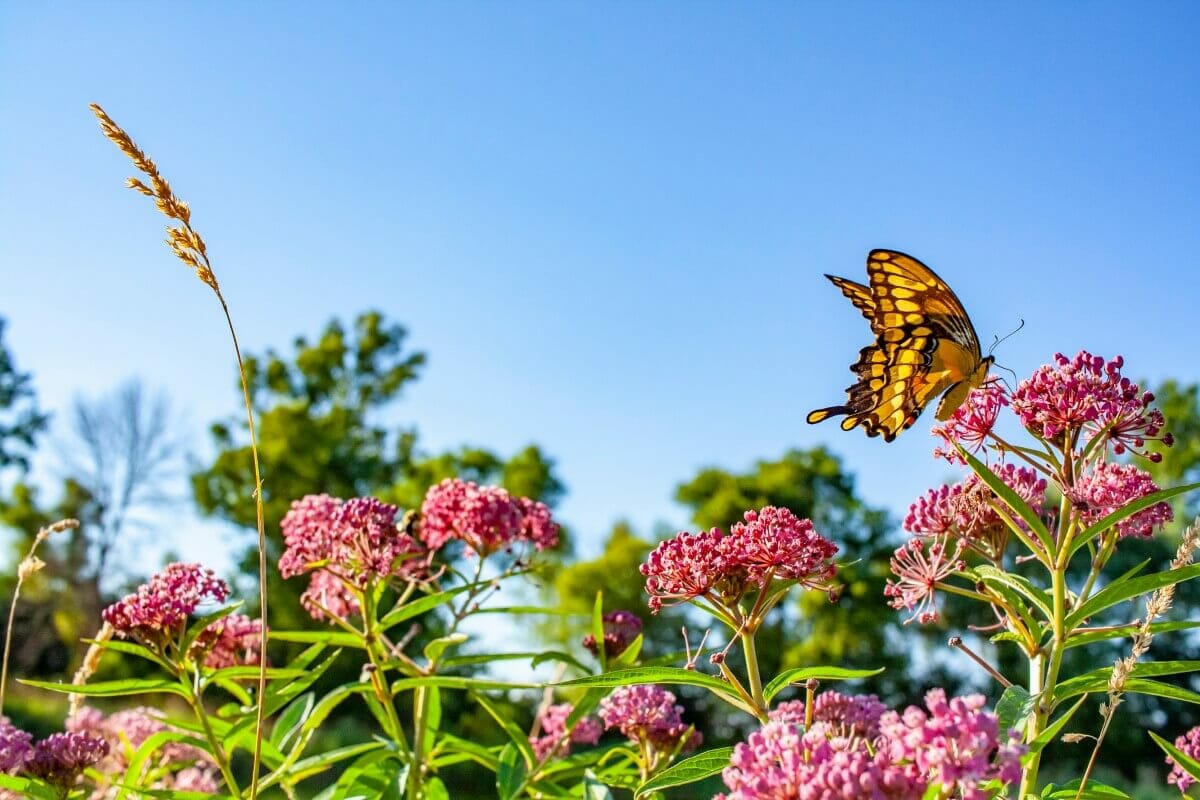
Swamp milkweed is a herbaceous perennial native to North America’s eastern regions. This plant comes from the dogbane family and grows best in wetland habitats such as marshes and swamps.
Swamp milkweed produces large clusters of tiny pink fragrant flowers. These flowers attract several types of butterflies that use swamp milkweeds as larval food plants. Like other milkweeds, swamp milkweed produces milky sap when damaged.
Scientific Name: Asclepias incarnata
- Light Requirements
- Full sun
- Growing Zones
- 3 to 6
- Flowering Season
- Summer
- Mature Height
- 3 to 4 ft
27) Tall Bellflower
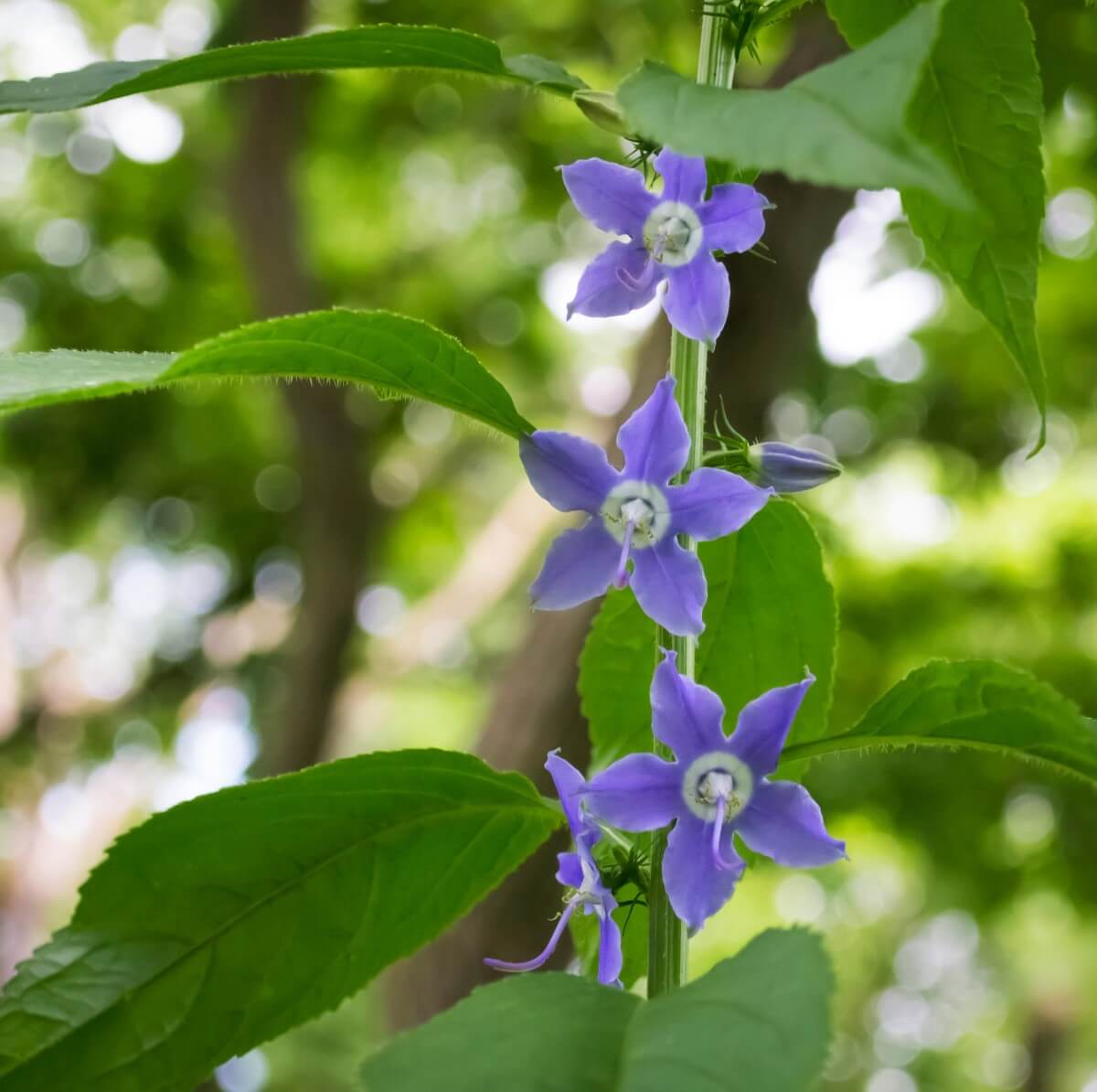
Also known as American bellflowers, tall bellflowers are herbaceous plants from the Campanulaceae family. Tall bellflowers are native to woodlands and glades across eastern North America.
These Ohio native plants are annuals or biennials with basal rosettes that produce tall, hairy light green stems. Tall bellflowers produce delicate blue star-shaped flowers with a white ring in the center. Unlike other bellflowers, this species has flat flowers.
Scientific Name: Campanula americana
- Light Requirements
- Full sun to partial shade
- Growing Zones
- 4 to 7
- Flowering Season
- Summer
- Mature Height
- 3 to 6 ft
28) Virginia Bluebells
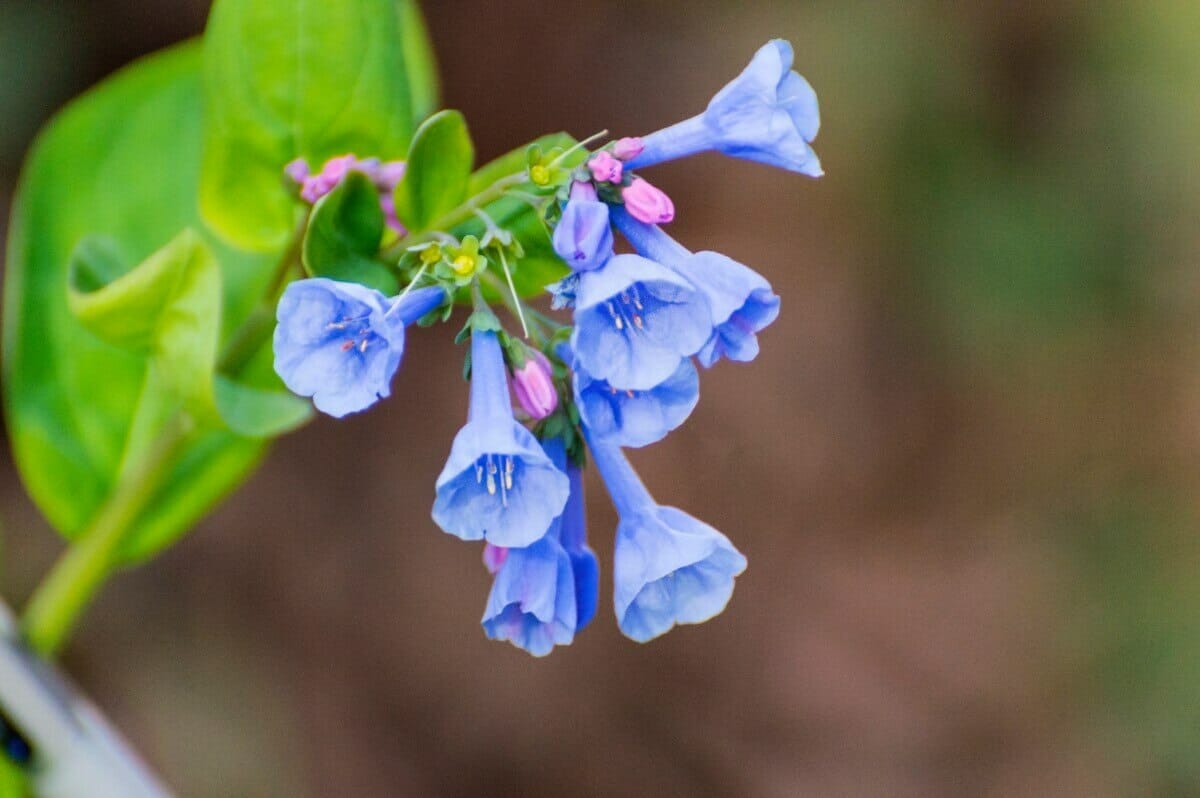
Virginia bluebells are herbaceous perennials native to moist woodlands across eastern North America, including Ohio. These clump-forming plants come from the borage family (Boraginaceae).
Virginia bluebells have grayish-green oval-shaped leaves with a wrinkled texture. During the spring, Virginia bluebells produce clusters of nodding flower buds at the end of the stems. These open into pink trumpet-shaped flowers that quickly turn pale blue or violet.
Scientific Name: Mertensia virginica
- Light Requirements
- Partial to full shade
- Growing Zones
- 3 to 8
- Flowering Season
- Spring
- Mature Height
- 1 to 2 ft
29) Wild Bergamot
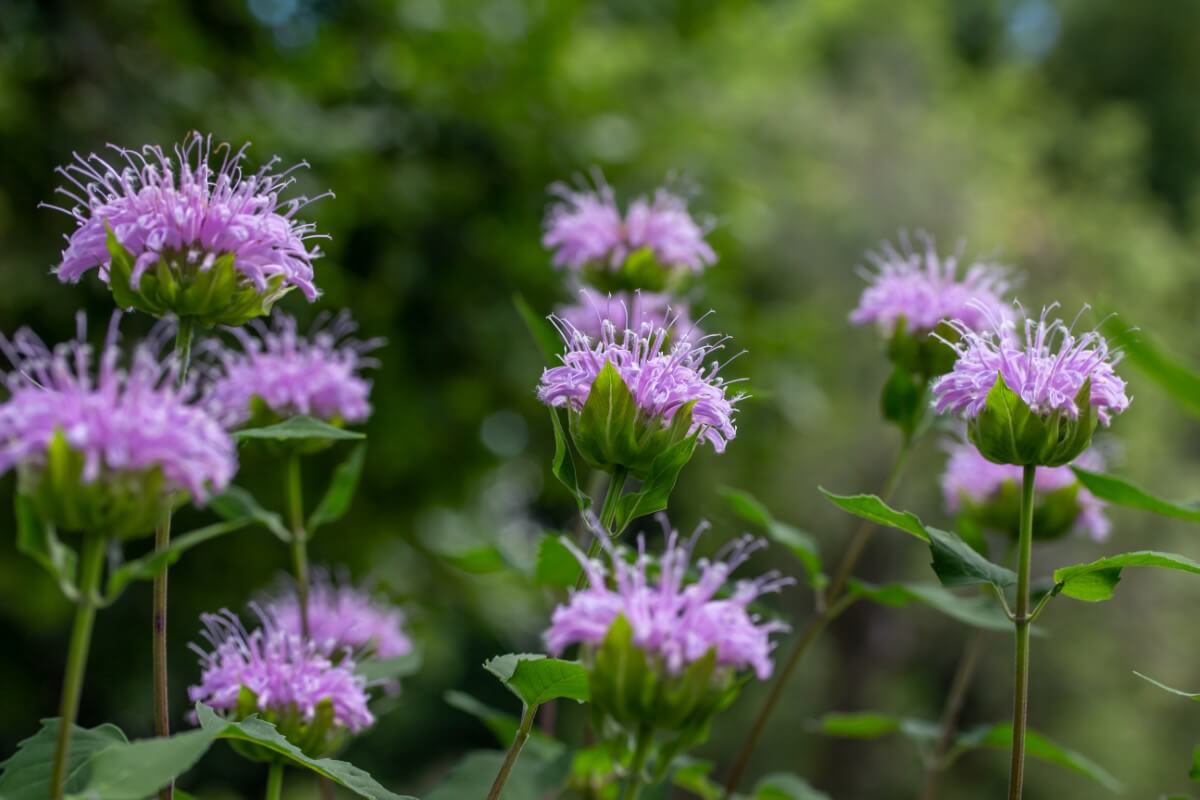
Also known as bee balm, wild bergamot is a herbaceous perennial from the mint family. Wild bergamot is native to North America and thrives in dry, open habitats such as fields, prairies, and meadows.
Wild bergamot produces tall stems topped with large clusters of purple tubular with white bracts.
Scientific Name: Monarda fistulosa
- Light Requirements
- Full sun to partial shade
- Growing Zones
- 3 to 9
- Flowering Season
- Summer to fall
- Mature Height
- 2 to 4 ft
30) Wild Geranium
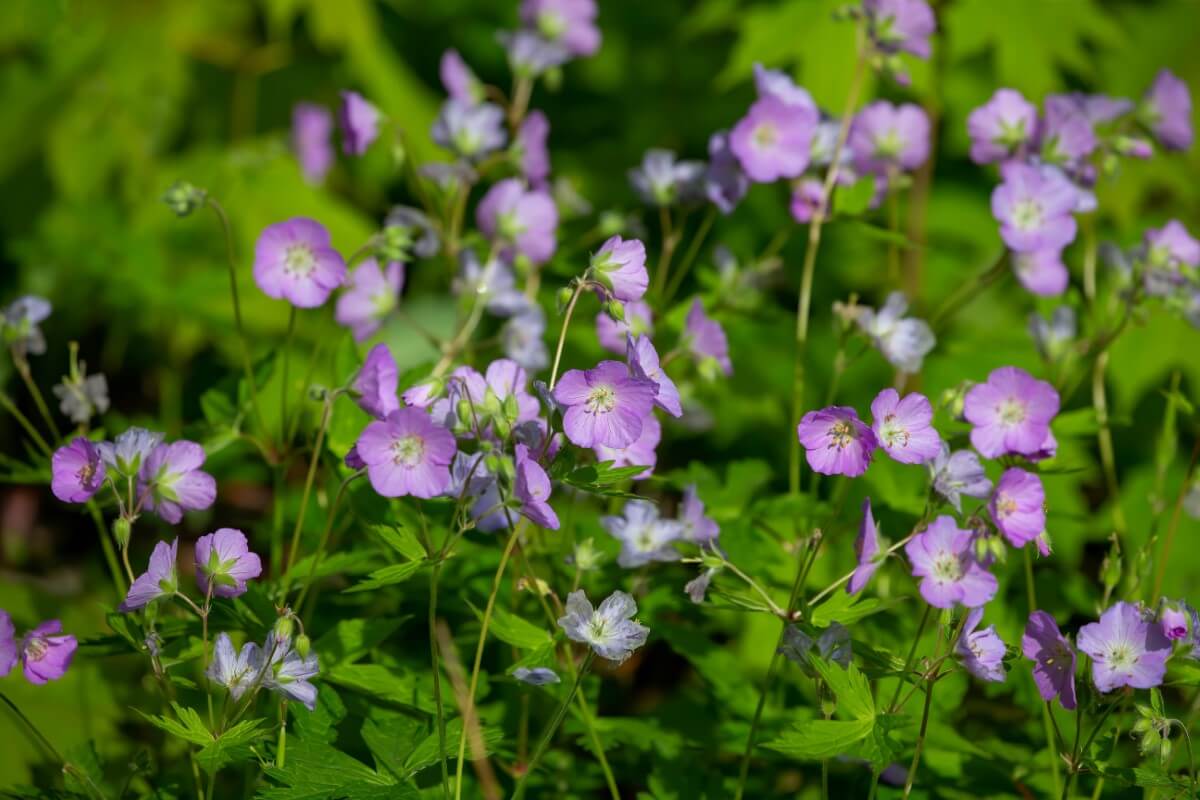
Wild geraniums are herbaceous perennials from the Geraniaceae family. Also known as spotted geraniums, these wildflowers are native to eastern North America. Wild geraniums are frequently found in woodland habitats.
These native Ohio flowers are clump-forming plants with upright stems. Wild geraniums have palmate leaves with five to seven lobes with toothed edges and also produce pale pink or purple cup-shaped flowers.
Scientific Name: Geranium maculatum
- Light Requirements
- Full sun to partial shade
- Growing Zones
- 3 to 8
- Flowering Season
- Spring to summer
- Mature Height
- 1 to 2 ft
31) Wild Ginger
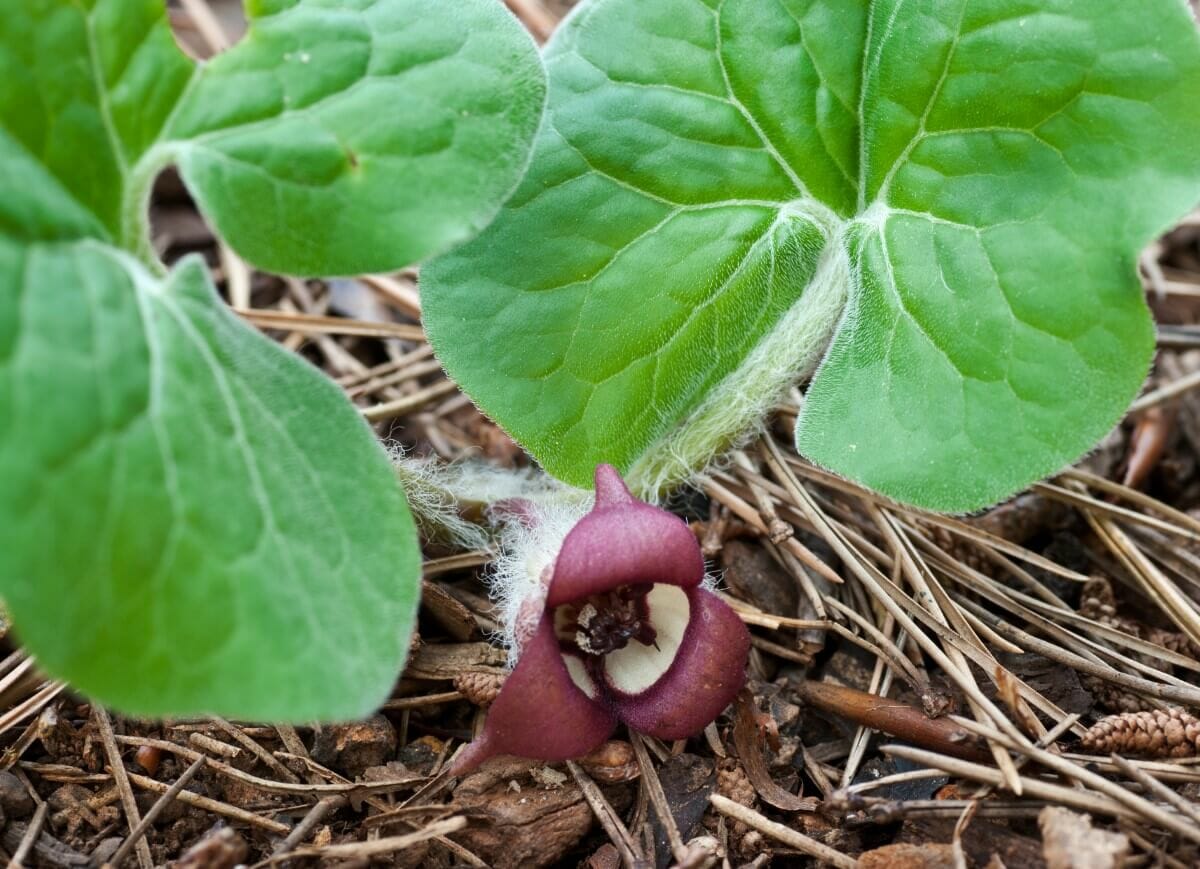
Wild ginger is a herbaceous perennial native to deciduous woodlands in eastern parts of North America. Also known as Canadian snakeroot, these plants come from the birthwort family (Aristolochiaceae).
Wild ginger spreads via underground rhizomes and produces clumps of dark green kidney-shaped leaves. These plants have small purplish-brown flowers with three petals that are usually hidden underneath the leaves.
Scientific Name: Asarum canadense
- Light Requirements
- Partial to full shade
- Growing Zones
- 4 to 6
- Flowering Season
- Spring
- Mature Height
- 6 to 12 inches
32) Wild Lupine
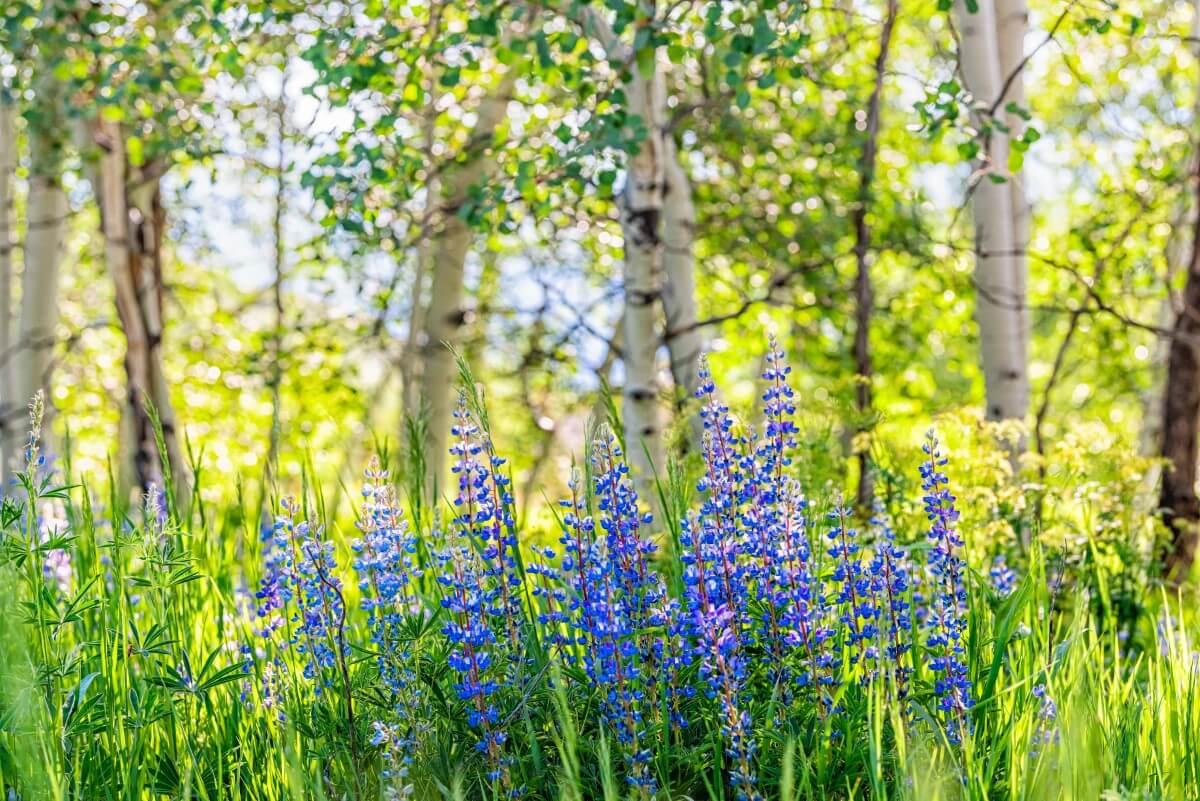
Wild lupine is a herbaceous perennial from the legume family (Fabaceae) that’s also known as old maid’s bonnets. These plants are native to the eastern parts of North America. These wildflowers thrive in meadows and prairies with sandy soils.
Wild lupines produce upright stems topped with spikes of pea-like flowers. These blue, pink, purple, or white flowers bloom from mid-spring until midsummer.
Scientific Name: Lupinus perennis
- Native Status
- Confirmed by USDA PLANTS
- Light Requirements
- Full sun to partial shade
- Growing Zones
- 3 to 8
- Flowering Season
- Spring to summer
- Mature Height
- 1 to 2 ft
33) Wild Phlox
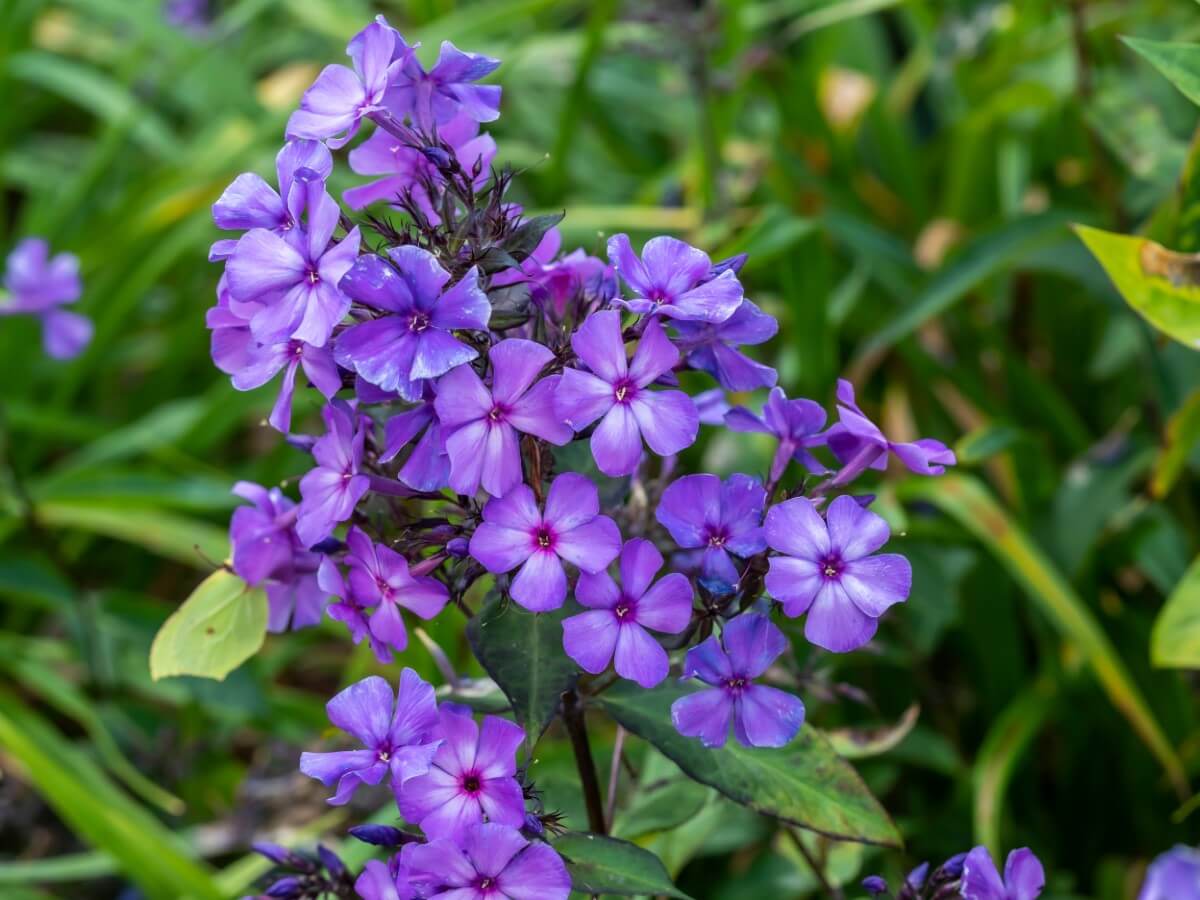
Also known as summer phlox, wild phlox is a herbaceous perennial from the phlox family (Polemoniaceae). These native Ohio flowers thrive in moist woodlands.
Wild phlox plants have green upright stems and simple, opposite leaves. They also produce rounded clusters of fragrant pink, purple, or white flowers with five petals.
Scientific Name: Phlox paniculata
- Light Requirements
- Full sun to partial shade
- Growing Zones
- 4 to 8
- Flowering Season
- Summer to fall
- Mature Height
- 2 to 4 ft
34) Wild Senna
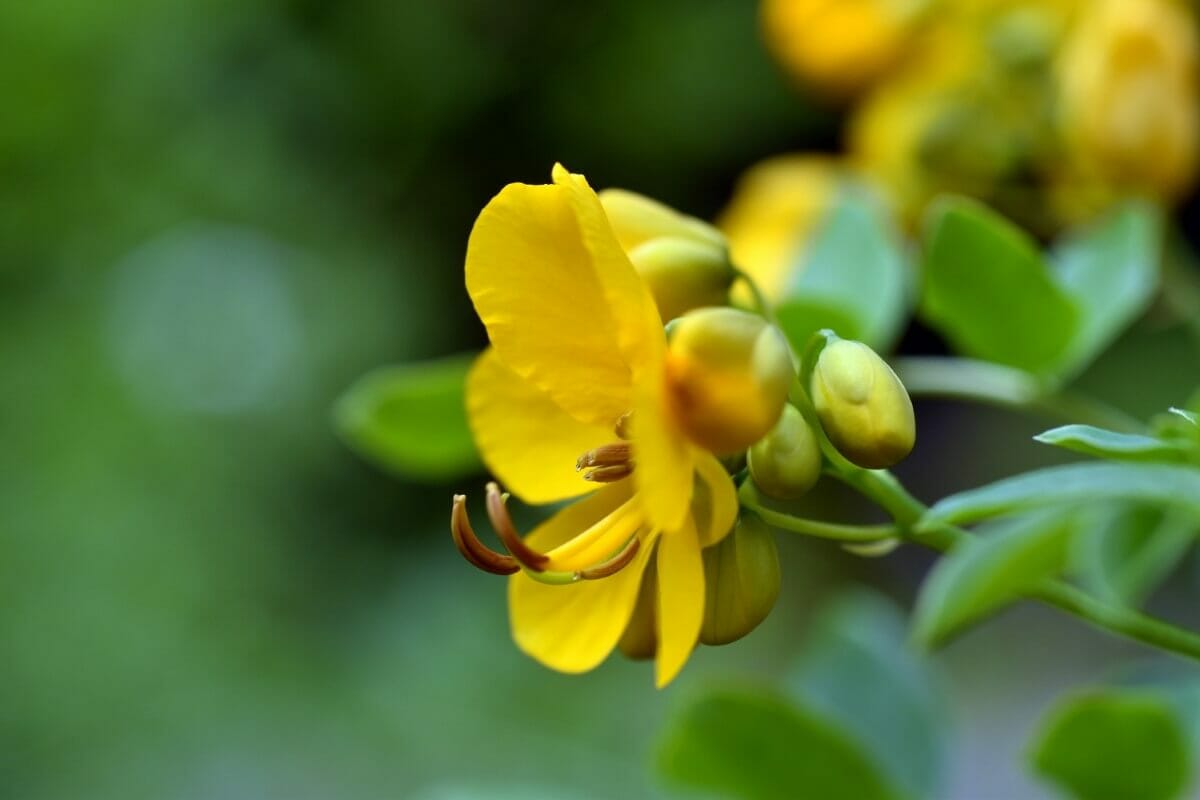
Wild senna is a herbaceous perennial from the legume family. These native Ohio plants thrive in moist woodlands in the Great Lakes region.
Wild senna produces upright stems with stalks of small elliptical alternate compound leaves. The central stem is topped with clusters of bright yellow flowers with stamens topped with black anthers.
Scientific Name: Senna hebecarpa
- Light Requirements
- Full sun to partial shade
- Growing Zones
- 4 to 8
- Flowering Season
- Summer
- Mature Height
- 3 to 6 ft
35) Woodland Sunflower
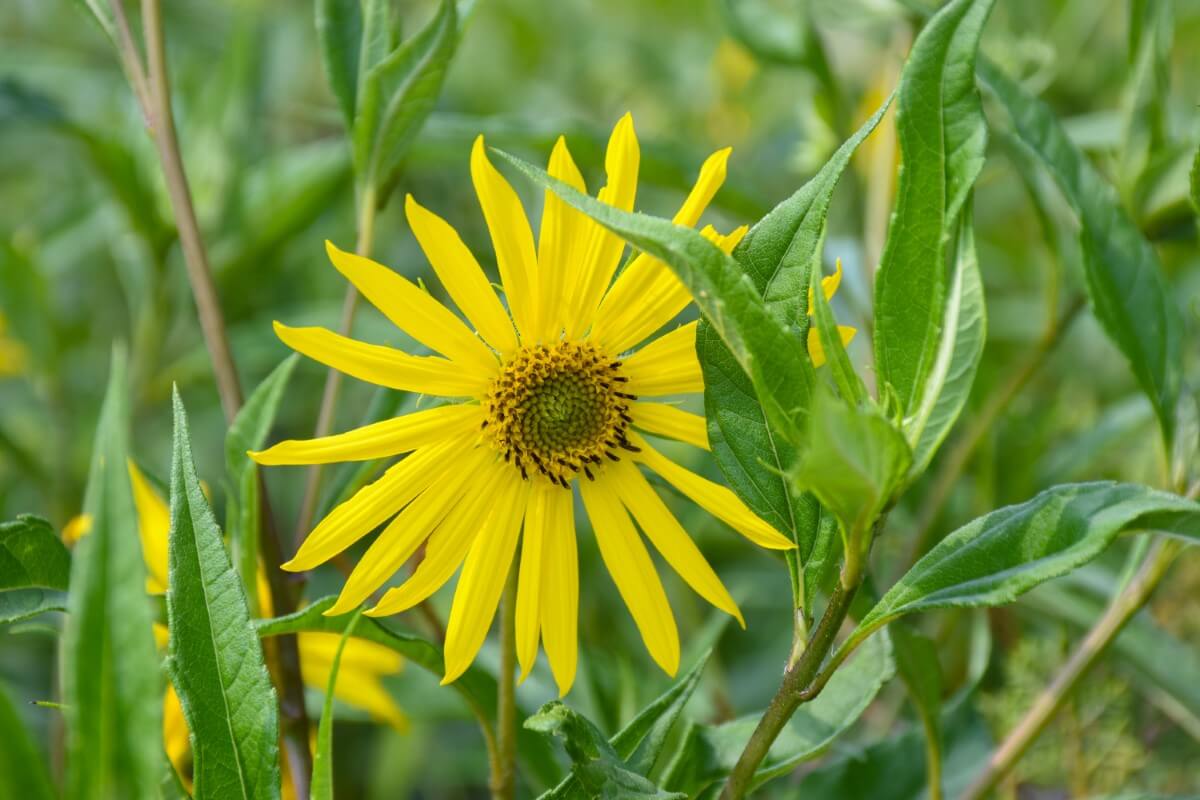
Woodland sunflowers are herbaceous perennials from the aster family. These sunflowers grow extensively in dry woodlands.
Woodland sunflowers spread via rhizomes and have smooth leaves with hairy undersides. The plants produce showy yellow flowers.
Scientific Name: Helianthus divaricatus
- Light Requirements
- Partial shade
- Growing Zones
- 3 to 8
- Flowering Season
- Summer to fall
- Mature Height
- 2 to 6 ft
36) Yellow Coneflower
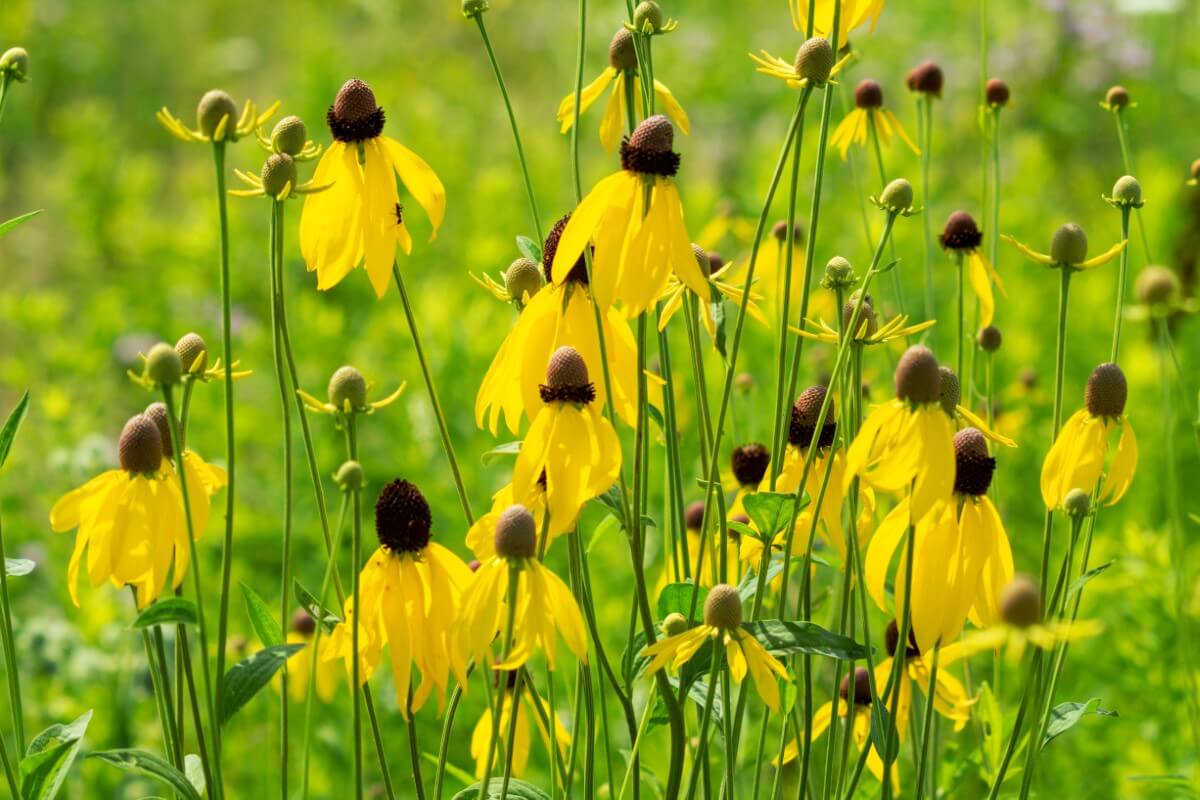
Yellow coneflowers are colorful herbaceous perennials from the daisy family. These native Ohio flowers grow up to five feet tall and bloom from midsummer to fall on prairies and grasslands.
Yellow coneflowers have rough, hairy stems and leaves. From summer until fall, yellow coneflowers produce bright yellow flowers with drooping petals and gray central cones. The cones gradually turn brown as the season progresses.
Scientific Name: Ratibida pinnata
- Light Requirements
- Full sun to partial shade
- Growing Zones
- 3 to 8
- Flowering Season
- Summer to fall
- Mature Height
- 3 to 5 ft
37) Yellow Lady’s Slipper
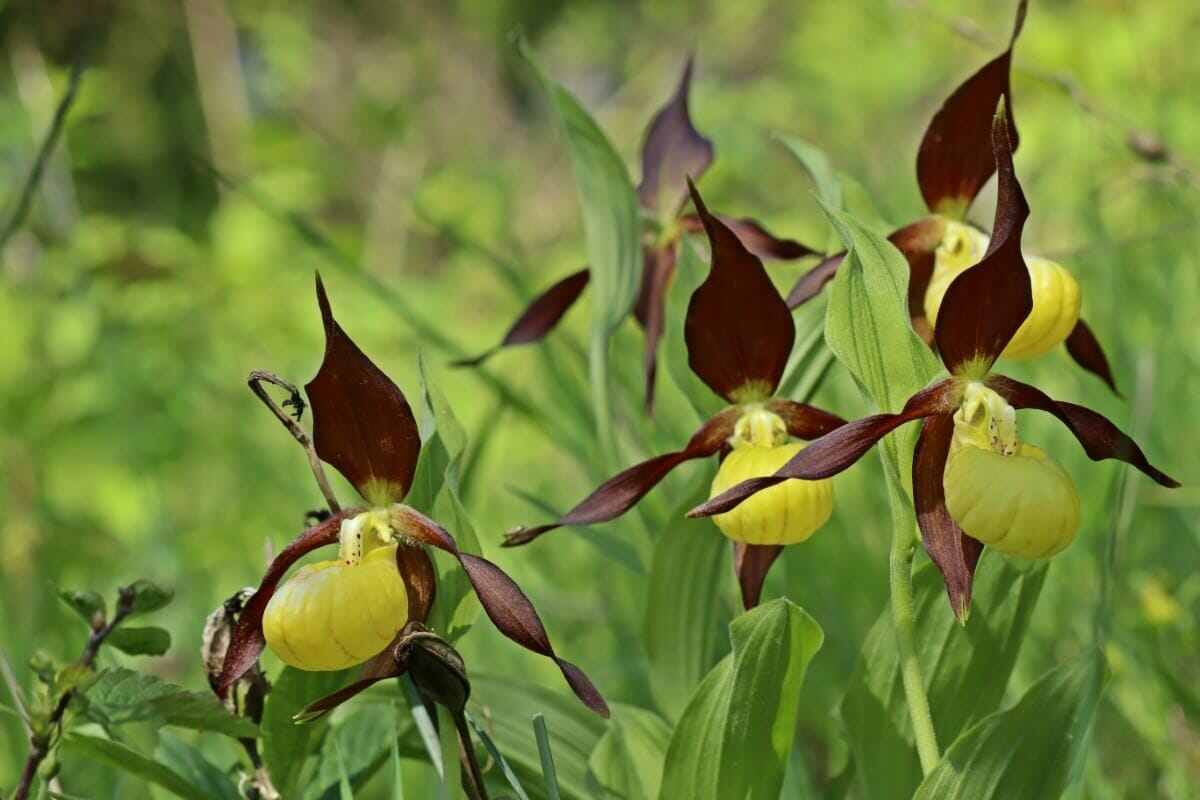
Yellow lady’s slipper orchids are beautiful types of orchids that have a bright yellow slipper-like pouch. These pouches have red spots inside and are surrounded by three twisted green petals.
Yellow lady’s slipper orchids are perennial orchids. You’ll spot them frequently in wetland habitats such as marshes and moist woodlands.
Scientific Name: Cypripedium parviflorum
- Light Requirements
- Partial shade
- Growing Zones
- 3 to 7
- Flowering Season
- Spring to summer
- Mature Height
- 1 to 2 ft
38) Yellow Trout Lily
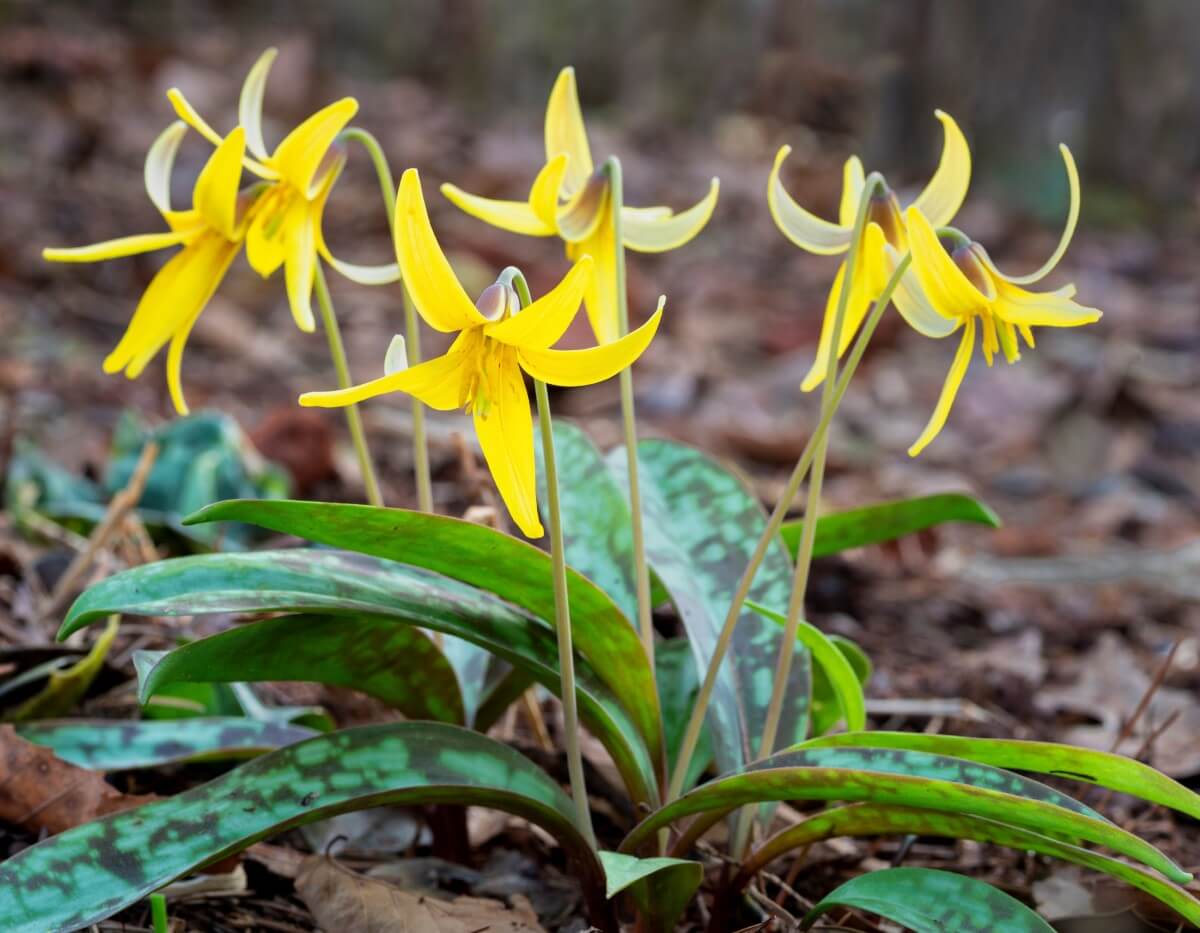
Yellow trout lilies belong to the lily family (Liliaceae). These perennial lilies thrive in woodland habitats throughout Ohio.
Yellow trout lilies have grayish-green mottled leaves that look like the scales of a trout. These lilies also have bright yellow flowers with three petals and three curved sepals. The flowers open in the morning and close in the evening.
Scientific Name: Erythronium americanum
- Light Requirements
- Partial to full shade
- Growing Zones
- 3 to 9
- Flowering Season
- Spring
- Mature Height
- 4 to 6 inches
39) Yellow Wild Indigo
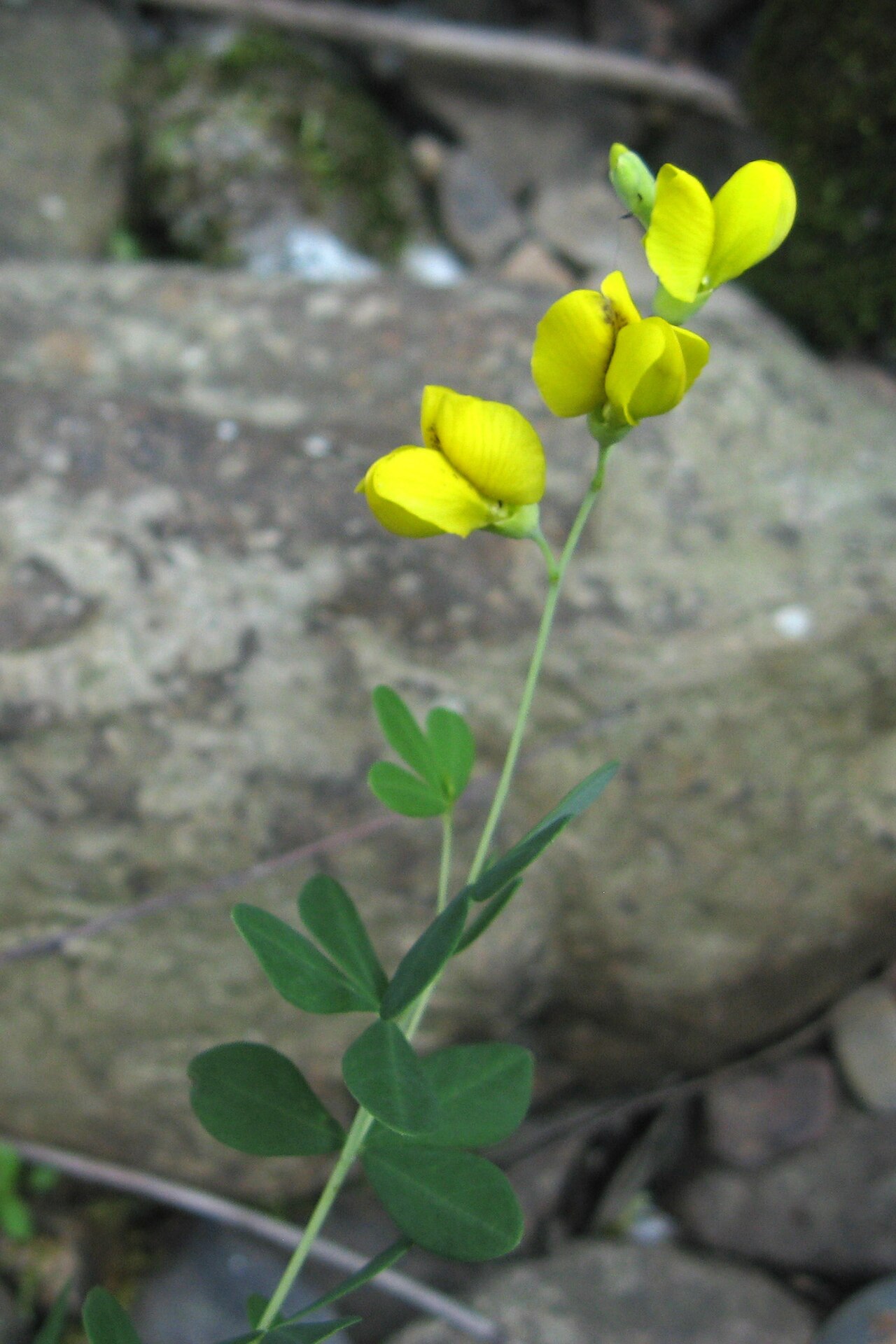


Yellow wild indigo is a herbaceous perennial from the pea family. These native Ohio wildflowers thrive in dry woodlands and meadows.
Yellow wild indigo plants produce several bushy upright stems with silvery-green clover-like leaves. In late spring, yellow wild indigo plants have sparse clusters of bright yellow pea-like flowers.
Scientific Name: Baptisia tinctoria
- Light Requirements
- Full sun to partial shade
- Growing Zones
- 3 to 9
- Flowering Season
- Spring to summer
- Mature Height
- 2 to 3 ft
Wrapping Up
Ohio is home to a fantastic range of native flowers, plants, and wildflowers. Some of Ohio’s most recognizable native flowers include black-eyed Susan, purple coneflowers, and large white trilliums. It's illegal to pick native flowers in Ohio state parks and state forests, and on most public land including State Nature Preserves. On private land, an endangered or threatened listed plant may not be removed without the owner's written permission.
Other regional guides cover native British plants, Michigan wildflowers identification, Arizona native plants, common Colorado wildflowers, French wild flowers, Oregon wildflowers and native Texas flowers.
Questions and Answers
Are chicory and Queen Anne’s lace native to Ohio?
No. Chicory, Queen Anne's lace, and dame's rocket all grow wild in Ohio but are introduced species, according to USDA PLANTS and Kew's Plants of the World Online. None of these three appears among the 39 native plants in this list.
When can you plant wildflower seeds in Ohio?
In Ohio, plant native wildflower seeds in spring or in late fall just after a hard frost but before the ground freezes. Fall planting mimics the natural cycle, when ripened seeds drop to the ground and lie dormant until spring. Choose a sunny spot, rake or till the soil surface up to 1 inch deep, scatter the seeds evenly, and compress them into the soil. Keep the seedlings moist until they are about 6 to 8 inches tall.
What flowers bloom all summer in Ohio?
No single Ohio wildflower blooms all summer; hundreds of the state's summer wildflowers bloom from June to August, so combine species that flower in sequence. Black-eyed Susan and purple coneflower bloom June to October, butterfly weed June to September, and wild bergamot July to August. Gray-headed coneflower and blazingstar run from July into September or October. These are species bloom periods, not guarantees for one plant.
Where can you see wildflowers in Ohio?
Ohio's best wildflower viewing is in state nature preserves and metro parks. Spring locations include Caesar Creek Gorge, Davis Memorial, Fort Hill, Hueston Woods, Miller Nature Sanctuary, Scioto Brush Creek, Rocky Fork Gorge, and Whipple. Wild lupine nears peak in the Oak Openings region near Toledo at Lou Campbell and Kitty Todd state nature preserves and Oak Openings Preserve Metro Park, and the Lakeside daisy blooms in late April and early May at Lakeside Daisy State Nature Preserve. Summer wildflowers are strong at Cedar Bog, Chaparral Prairie, Smith Cemetery, Irwin Prairie, and Daughmer Prairie Savannah state nature preserves.
Sources13 sources, linked in the text
- planthardiness.ars.usda.gov: planthardiness.ars.usda.gov
- Plants of the World Online (Kew): Kew's Plants of the World Online
- USDA PLANTS: USDA PLANTS database
- Plants of the World Online (Kew): Lupinus perennis
- ohiodnr.gov: Wildflower bloom report 26 6
- dam.assets.ohio.gov: wildflowerchecklist summer.pdf
- law.cornell.edu: Ohio Admin Code 1501 46 3 10
- law.cornell.edu: Ohio Admin Code 1501 17 3 02
- ohiodnr.gov: pollinators
- chadwickarboretum.osu.edu: NATIVE chart grow condition pollinators 2020.pdf
- ohiodnr.gov: Wildflower bloom report 26 8
- ohiodnr.gov: Wildflower bloom report 26 7
- dam.assets.ohio.gov: Pub 5553 Summer Wildflowers of Ohio R1225 WEB.pdf
Updates and CorrectionsOct 18, 2026 · 5 corrected, 1 clarified, 1 removed
- Added: Every plant was checked against Kew's Plants of the World Online and the USDA PLANTS database; a plant the two sources do not both confirm shows its status in its entry.
- Removed: Prairie Smoke, which neither Kew nor USDA PLANTS records as native to Ohio.
- Corrected: 6 statements about where plants grow wild now follow Kew and USDA PLANTS.
- Corrected: The note on picking wildflowers now says what the law covers, with the law named.
- Corrected: 4 unsourced figures (species counts, dates, zones or sizes) were corrected to a source or removed.
- Clarified: The large white trillium is Ohio's state wildflower under Ohio Revised Code 5.021, effective March 5, 1987.
- Added: Answers on when to plant wildflower seed in Ohio, which flowers bloom all summer and where to see wildflowers, each with its source.
- Corrected: The large white trillium flowers in spring, not from spring to summer.
- Corrected: 2 photos that showed a different plant were replaced, and the featured image is now a photograph of an Ohio prairie in bloom.
Save and Share
Reader Comments
Have a question? Ask it here.