
Flower Types
75 Blue Flowers With Names and Pictures (and Which Are Truly Blue)


Contributing Editor
Credentials
- MA in Anthropology Hearst contributor page
- Master of Library and Information Science Hearst contributor page
Writing for Petal Republic since 2021 · 104 articles
Expertise
Floriography, Flower meanings, Floral design
Published In
SFGate Home Guides
This guide gives 75 blue flowers with pictures, a sorter by light, plant type, season, and use, and a table showing which blues are natural, soil-dependent, or dyed.
In Short
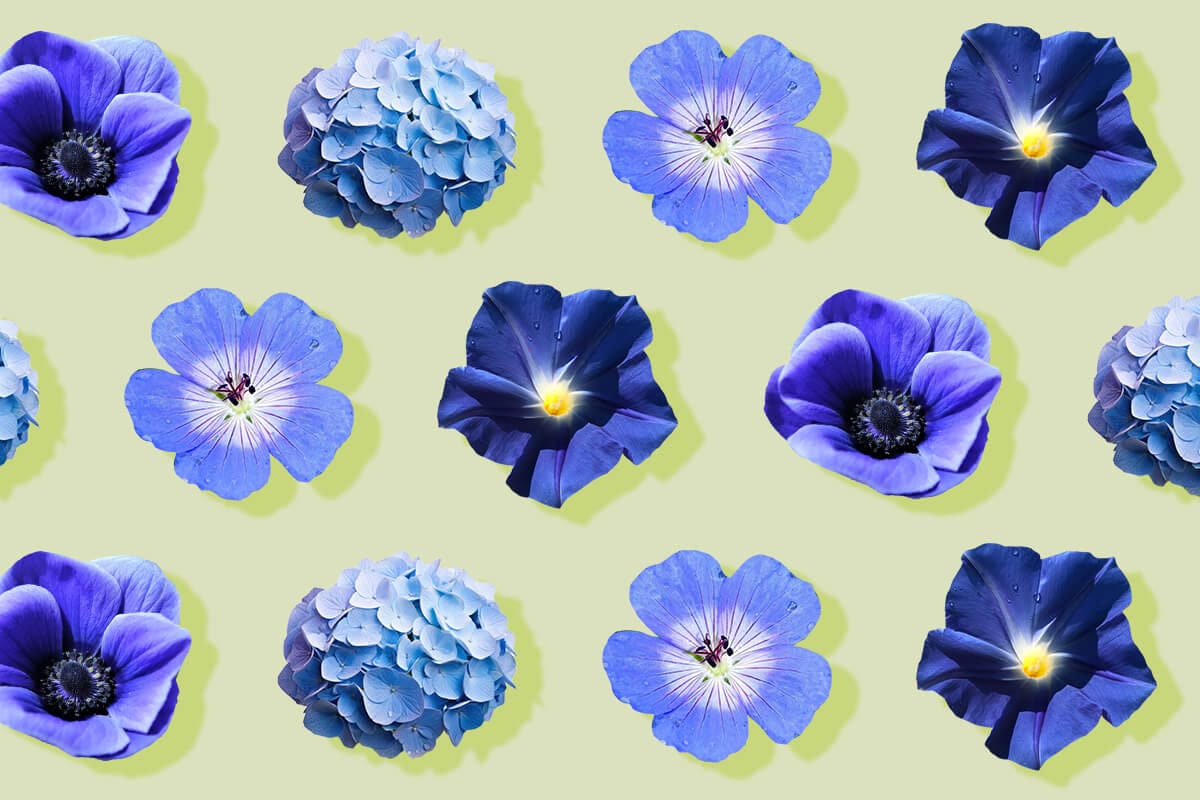
Blue flowers are rare in nature: fewer than 10 percent of flowers are blue or bluish, and many shop blues are not what they seem. We checked which blues are natural, and some shop favorites are dyed.
- For homes with cats or dogs, pick cornflower, Felicia daisy, Rose of Sharon, or globe thistle; hydrangea and delphinium suit bouquets but not homes with pets.
- For shade, plant brunnera, lungwort, or Virginia bluebells; for scent, sweet pea, phlox, or butterfly bush.
More Takeaways
- Hydrangeas turn blue in acidic soil and pink in alkaline soil, so test your soil pH before buying a blue one.
Find Your Blue Flower
Sort the 75 by light, plant type, bloom season, cut flowers, long-lasting blooms, fragrance, or whether cats and dogs share your home. Badges flag the blues that are dyed, soil-dependent, or not truly blue, and every card links to its entry.
All 75 blue flowers, in page order. Answer any question to sort them.
Blue by cultivarSafe for cats and dogs
Growing data from NC State Extension's Plant Toolbox (Missouri Botanical Garden where NC State has no record); the blue badges from our true-blue check; pet safety from the ASPCA’s plant lists and NC State. A blank means no record gave it; “not listed” is not the same as safe.
Which Blue Flowers Are Really Blue?
True blue is rare, so some garden favorites only look the part. The table below separates naturally blue flowers from those that depend on soil or age, and from ones that are dyed or just blue-looking.
| Flower | Really blue? | Why |
|---|---|---|
| Blue orchids | Dyed (Blue Mystique); naturally pale blue (Vanda coerulea) | Shop blue Phalaenopsis are white orchids dyed blue and rebloom white |
| Hydrangea | Depends on soil | Blue in acidic soil (pH about 5.0 to 5.5), pink in alkaline soil |
| Lungwort | Changes with age | Opens pink, turns violet, then blue as the flower matures |
| Flower | Really blue? | Why |
|---|---|---|
| Morning glory | Naturally blue | Petals turn blue as the pH inside the cells rises; other plants of the species flower purple, pink or white |
| Rose of Sharon (hibiscus) | Depends on the cultivar | Flowers range from white, pink and red to violet and blue |
| Delphinium | Depends on the cultivar | Cultivars run from blue and violet to white, cream and pink |
| Flower | Really blue? | Why |
|---|---|---|
| Tweedia | Naturally blue, ageing to purple | Clear pale blue flowers turn purple with age |
| Blue cosmos | Not blue | The species flowers maroon, pink, lavender or white; no blue form is listed |
| Blue fescue | Blue leaves, not flowers | An ornamental grass grown for blue-gray blades; its flowers are green |
1. Morning Glory (Ipomoea tricolor)
- Toxicity
- Toxic to cats and dogs (ASPCA, for the genus); low-severity poison
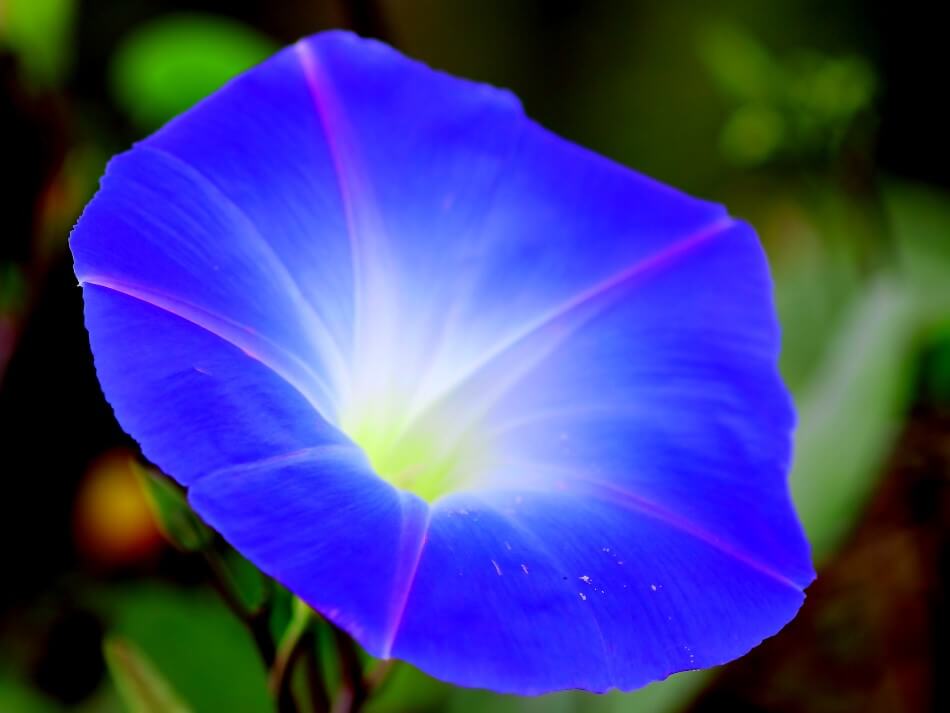
Morning glories (Ipomoea tricolor or Ipomoea indica) are blue-flowering plants in the Convolvulaceae family. As you may have guessed, this species gets its name from its early morning blooms.
Ipomoea tricolor is grown as an annual vine and is a perennial in its native Mexico.
What’s more, morning glories grow quickly and are known for their bold colors. This flower can grow in many hues, including blues, purples, and pinks.
2. Blue Anemone (Anemone oregana)
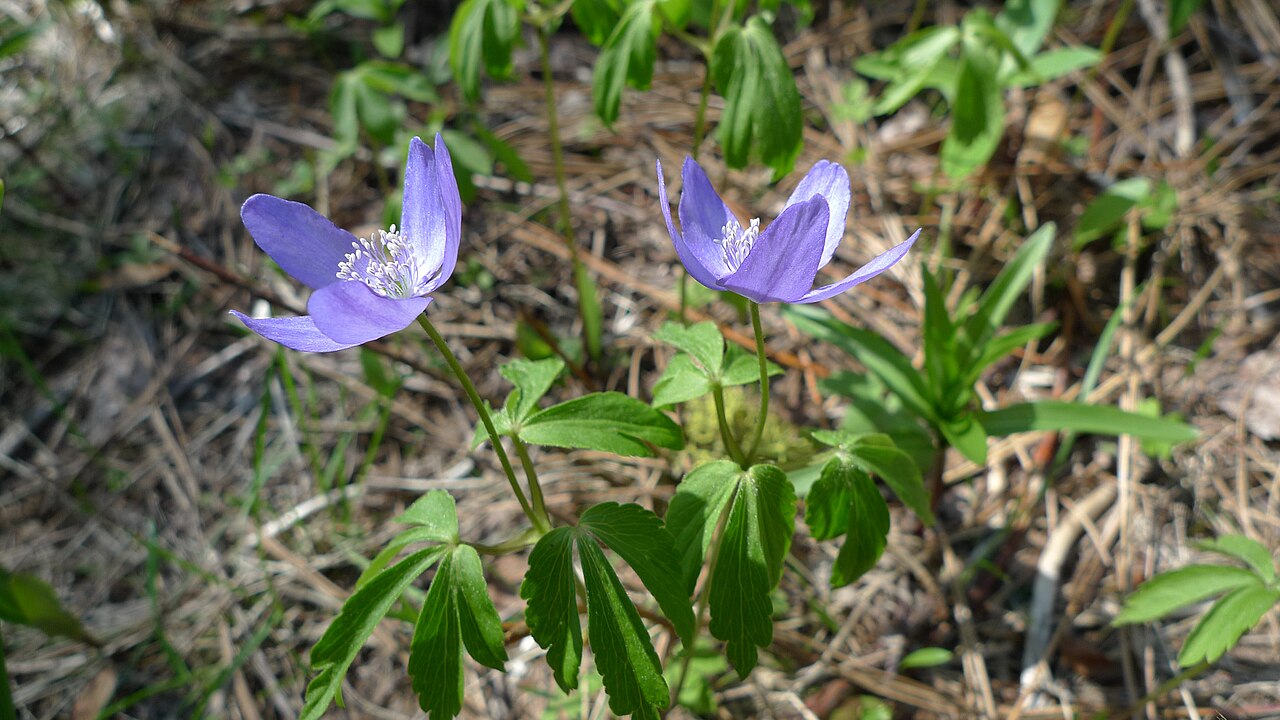
The blue anemone, or Anemonoides oregana, is a member of the buttercup family. A common nickname for this blue beauty is the blue windflower. The species is native to the forests of several states in North America, including Oregon and Washington.
When it blooms, there are no petals. Instead, several sepals stand in for petals.
3. Hydrangea (Hydrangea macrophylla)
- Toxicity
- Toxic to cats and dogs (ASPCA, for the genus); low-severity poison
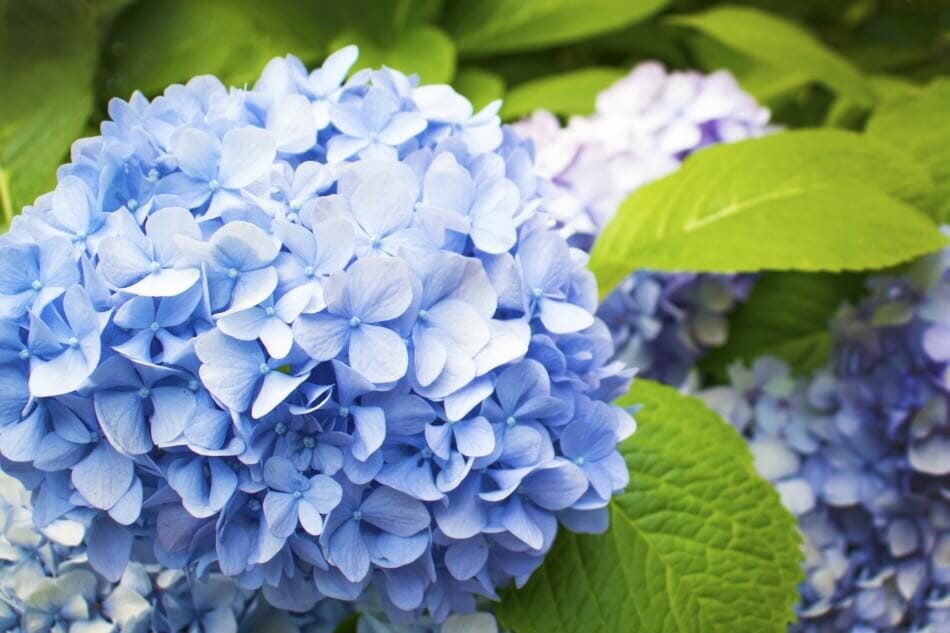
The blue hydrangea, or Hydrangea macrophylla, is a deciduous shrub native to Japan. The expansive heads bloom in summer, blue in acidic soil and pink in alkaline soil, so the color depends on the soil. The shrub forms round flower heads, blue or pink depending on the soil.
This shrub generally grows 3 to 6 feet tall and wide. Its long-lasting blooms cut well.
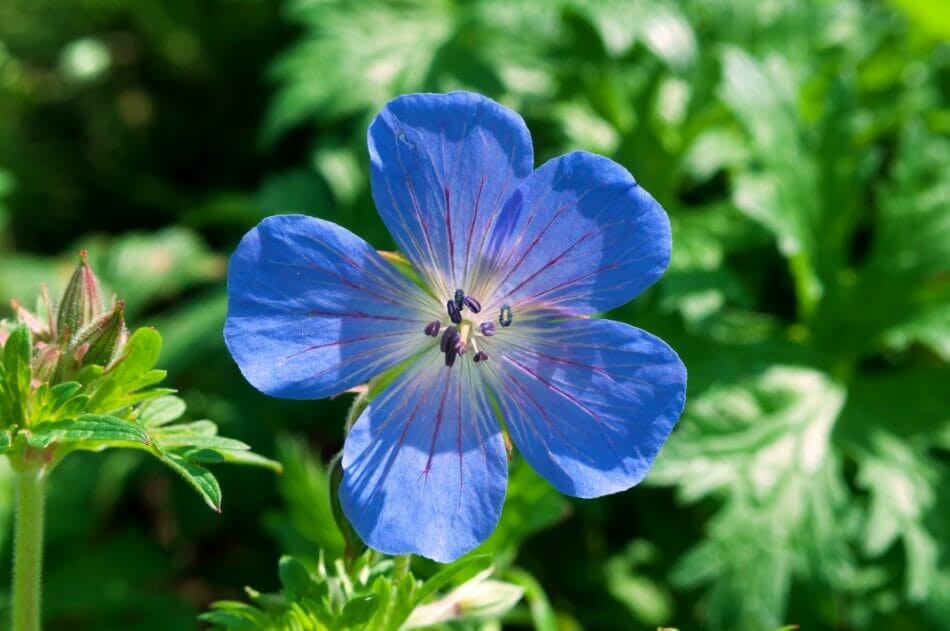
4. Geranium (Geranium)
Cranesbills (Geranium) are native to temperate regions of Europe, Asia, Africa, and the Americas. The flowers have five petals and bloom in shades of blue, purple, pink, or white.
Some members of the geranium genus make a great winter-hardy addition to a garden.
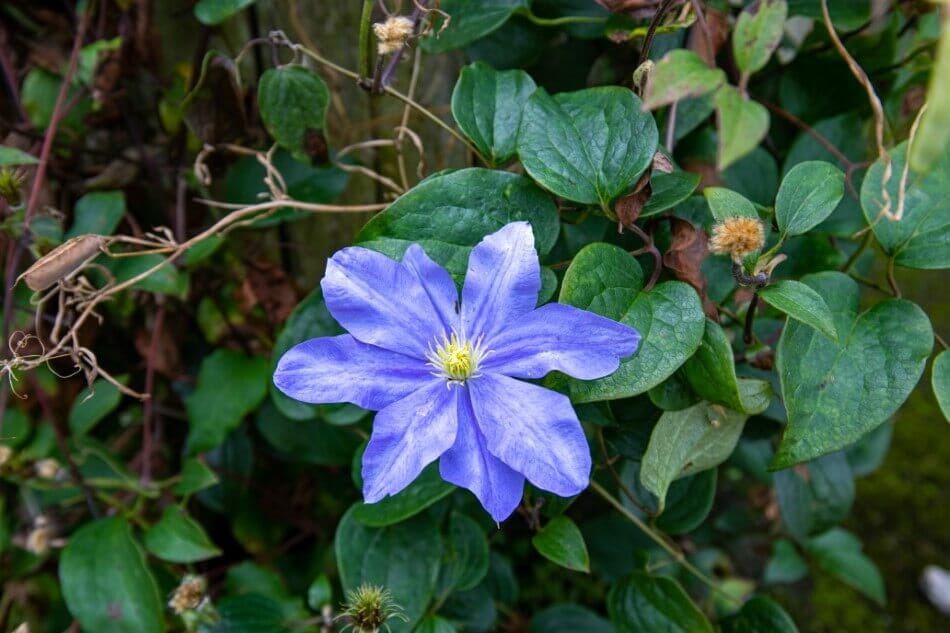
5. Clematis (Clematis)
- Toxicity
- Toxic to cats and dogs (ASPCA, for the genus)
Clematis is a genus of flowering plants belonging to the buttercup family Ranunculaceae.
Flowers in this genus have adopted several names over the years, from traveler’s joy to vase vine and leather flower. These names reflect the characteristics of the specific flower or the location where it is grown.
The name Clematis comes from the Ancient Greek word, which translates to climbing plant. The climbing vines or lianas of the flower give it a magical appearance. This flower grows best in full sun and moist, well-drained soil and is available in various colors, including brilliant blue flower tones.
For more, see our expert guides to growing Clematis Montana and Clematis Nelly Moser at home.
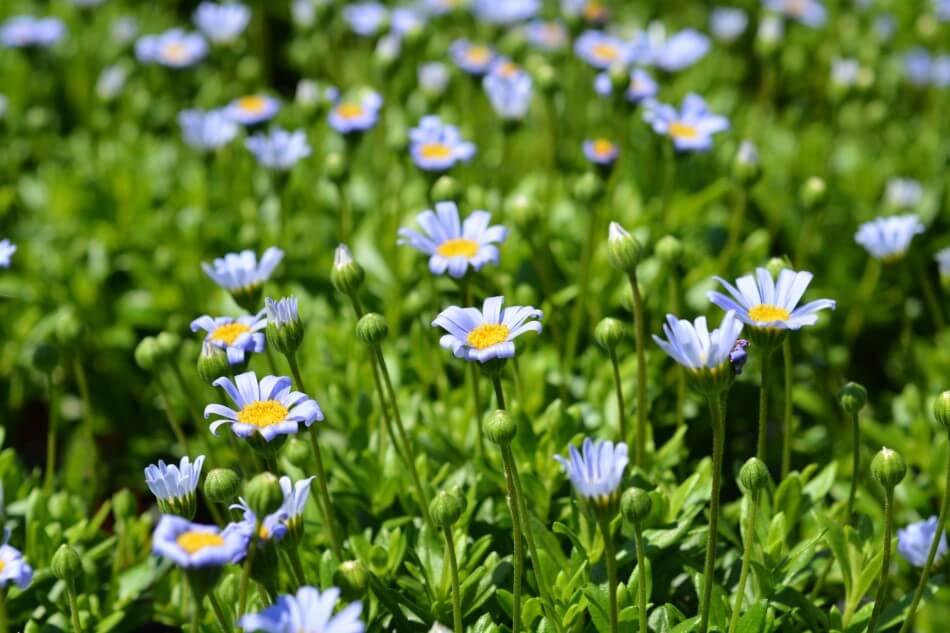
6. Felicia Daisy (Felicia amelloides)
Felicia amelloides, or the Felicia daisy belongs to the daisy family. This is a perennial, evergreen plant grown primarily for ornamental purposes.
The Felicia daisy is native to South Africa. The flower’s colorful heads grow from long, dark green stems on a plant that reaches about 2 feet high and 2 feet wide. This daisy’s soft blue petals complement the yellow florets at the center of the flower.
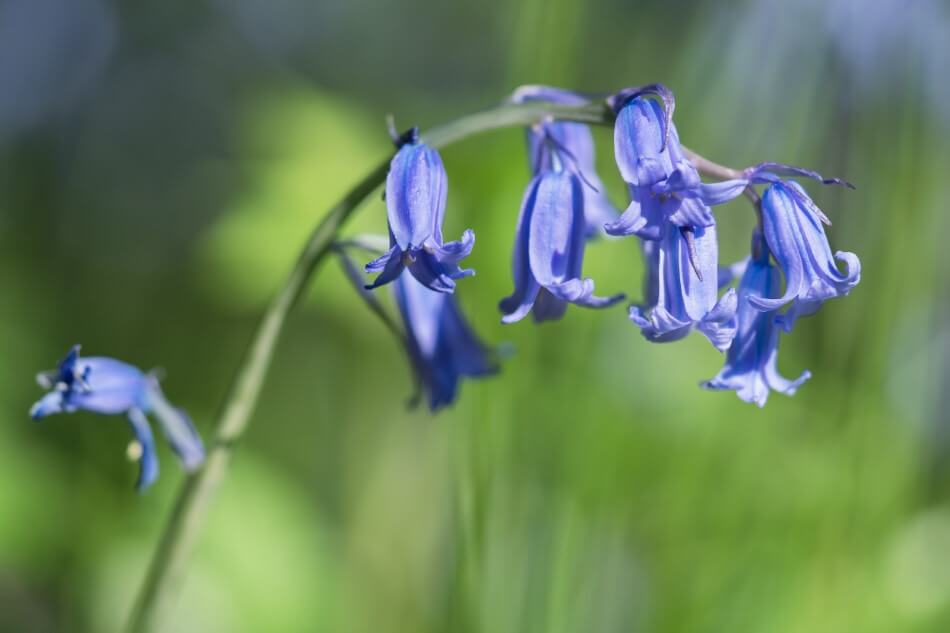
7. Bluebells (Hyacinthoides non-scripta)
Bluebells, or Hyacinthoides non-scripta, are bulbous perennial plants. The species gets its common name from the bell-like appearance of its blooms.
Bluebells have thin stems that produce a series of bell-shaped flowers, and they are native to Belgium, France, Great Britain, Ireland, the Netherlands, Portugal, and Spain. Many people travel to bluebell fields in the UK and northern Spain to see this unique flower growing wild in its natural habitat.
In the Victorian language of flowers, bluebells symbolized humility, gratitude, and everlasting love. Today, the flower is grown primarily for ornamental purposes.
8. Native Blue Lupine (Lupinus)
- Toxicity
- Poisonous if eaten, low severity
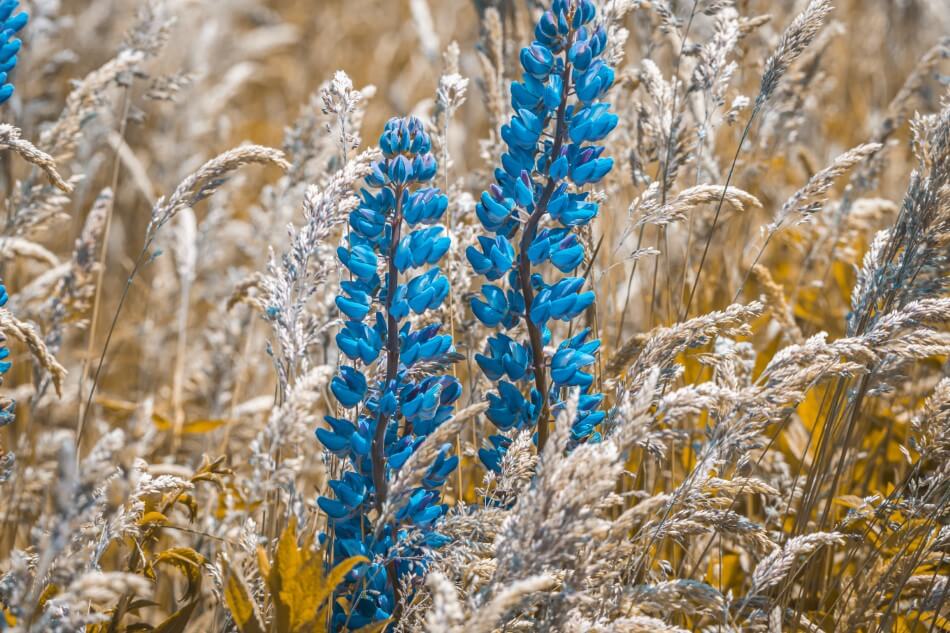
The native blue lupine, or Lupinus, is a flowering plant genus that belongs to the Fabaceae legume family.
Much like bluebells, Lupinus flowers can form a sea of blue when they grow wild in fields. Lupines (the genus Lupinus) are native to the Americas and the Mediterranean region. Wild lupine (Lupinus perennis) is native to the eastern United States, and the seeds are poisonous if eaten in quantity. However, they are cultivated in many countries for food and ornamental purposes.
This plant’s blooms grow in whorls around a solitary stem, with individual flowers that are pea-like in shape. This flower’s curious form has led to the nicknames quaker bonnets and bluebonnets.
9. Forget-Me-Nots (Myosotis scorpioides)
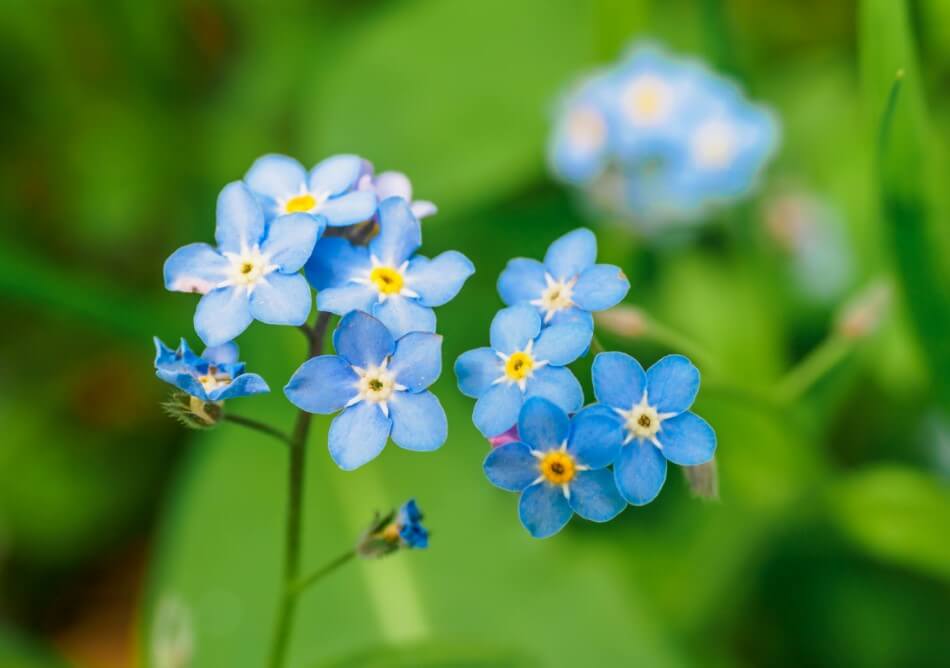
Myosotis scorpioides, or Forget-Me-Nots, are perennial flowering plants that belong to the borage family or Boraginaceae.
This plant is native to Asia and Europe. However, it has spread to many countries like the United States and the UK.
Forget-Me-Nots grow best in damp habitats like bogs and streams. The flowers may even form lilypad-like rafts that float along the water’s surface.
This plant typically grows about 10 inches high, though it can sometimes reach 18 inches. Its small flowers start off pink before blooming into a vibrant shade of blue.
10. Iris (Iris sibirica)
- Toxicity
- Toxic to cats and dogs (ASPCA, for the genus); low-severity poison
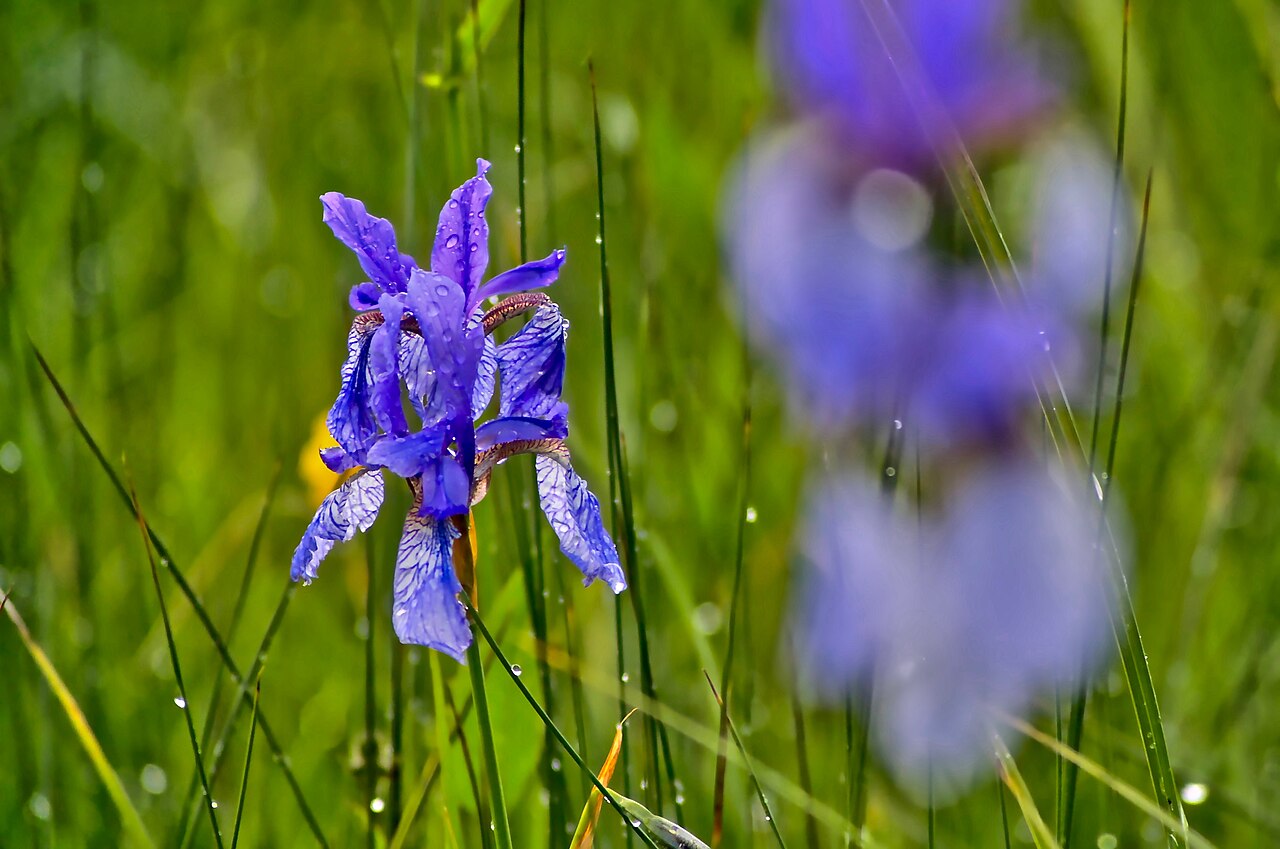
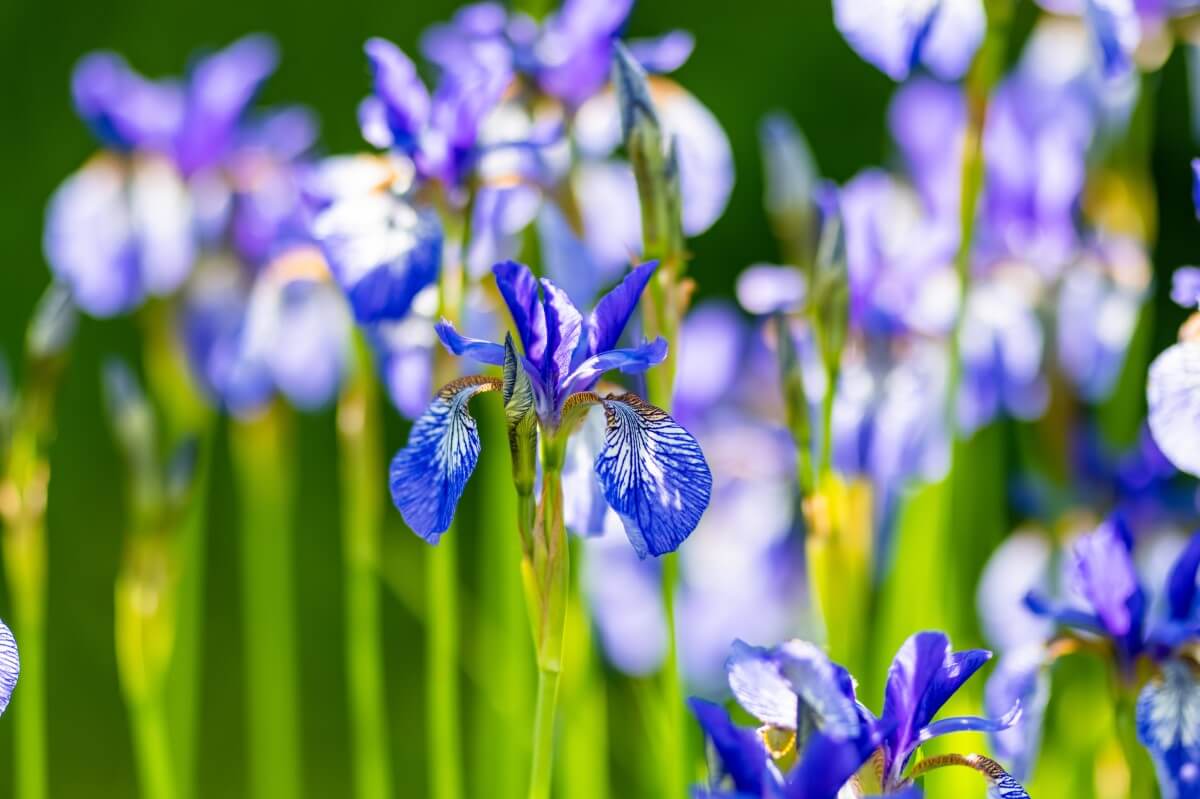
Iris flowers are part of the Iris genus, which also goes by the Siberian iris or Siberian flag. Siberian iris is native to central and eastern Europe and reaches into Russia and Kazakhstan.
This attractive blue flower has a tall stem resembling a grass blade and typically grows two to five bright purple-blue petals. While some petals stand up, others arch downward to create an interesting visual.
11. Brunnera (Brunnera macrophylla)
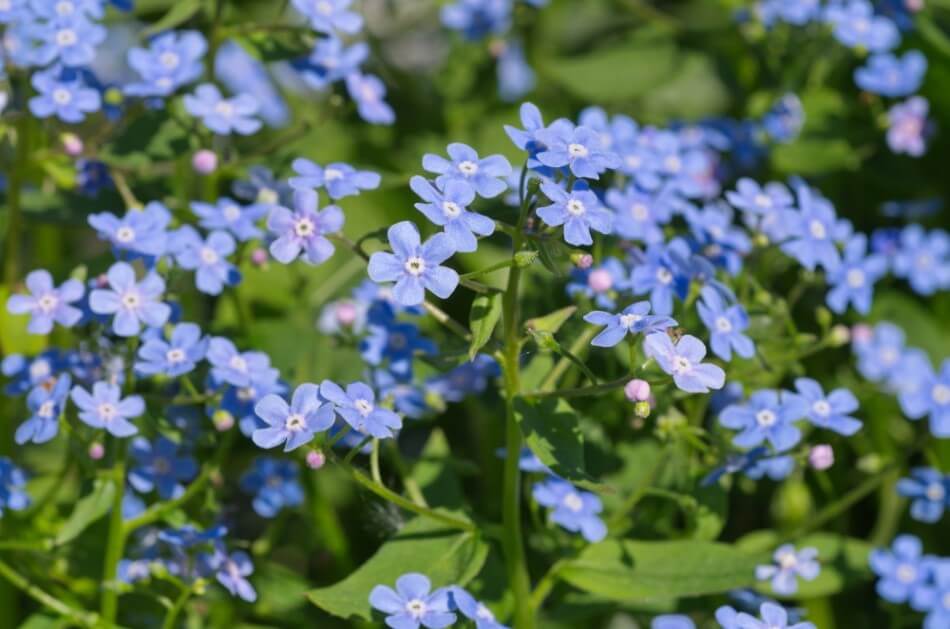
Brunnera macrophylla, also known as the great forget-me-not or heartleaf, is a flowering plant species native to the Caucasus region that spans Europe and Asia.
This herbaceous perennial can grow around a foot tall and features a series of small, delicate blue petals. The flowers resemble forget-me-nots in appearance, and they bloom during the months of spring.
The Brunnera flower is often used as ground cover in areas with enough shade and moisture for the plant to thrive.
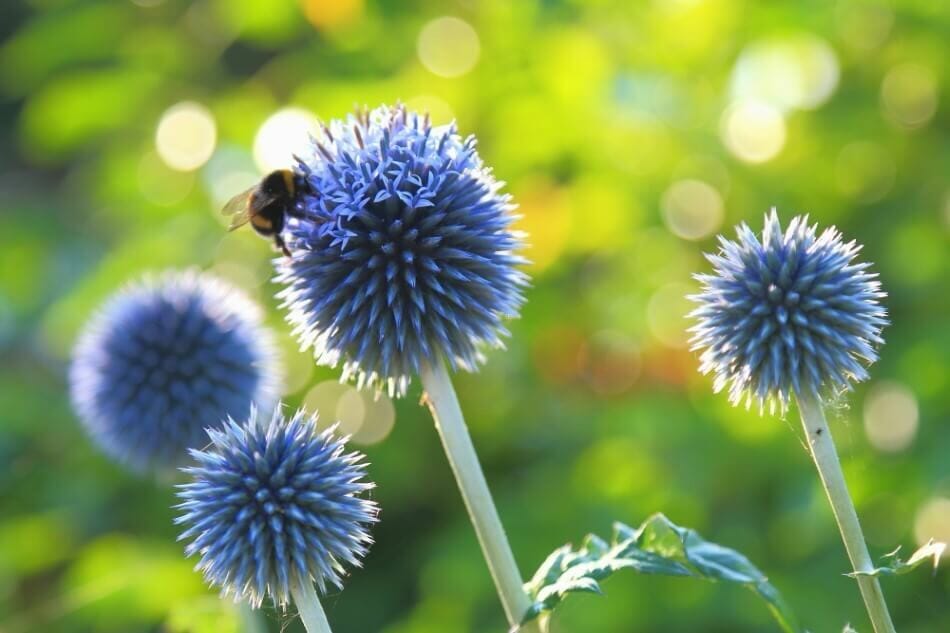
12. Globe Thistle (Echinops)
The globe thistle, or Echinops, is a flowering plant genus belonging to the Asteraceae family or the daisy family. The plant is native to Europe, Africa, and parts of Asia.
Globe thistles get their name due to their spherical shape. Their blooms resemble a firework, with a series of blue or purple spines growing outward uniquely and textured.
Some of the varieties within the species include Echinops bannaticus, Echinops exaltatus, and Echinops niveus. You’ll find these species growing anywhere from fields in Japan to wild patches along the coastline.
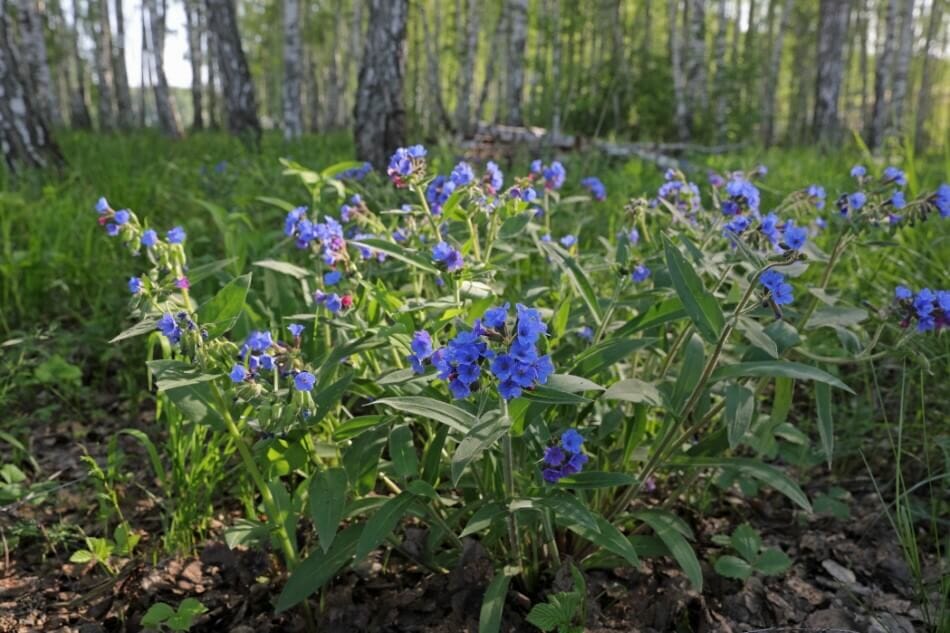
13. Lungwort (Pulmonaria ‘Blue Ensign’)
The Pulmonaria ‘Blue Ensign’ is a cultivar of Lungworts from the genus Pulmonaria.
The flower is native to both Europe and western Asia. These colorful flowers have rough hairs across their leaves, which gives them a bristly texture.
Curiously, the origin of the name comes from the Latin word ‘pulmo,’ which means lung. The leaves of this plant were once thought of as a symbol of diseased lungs.
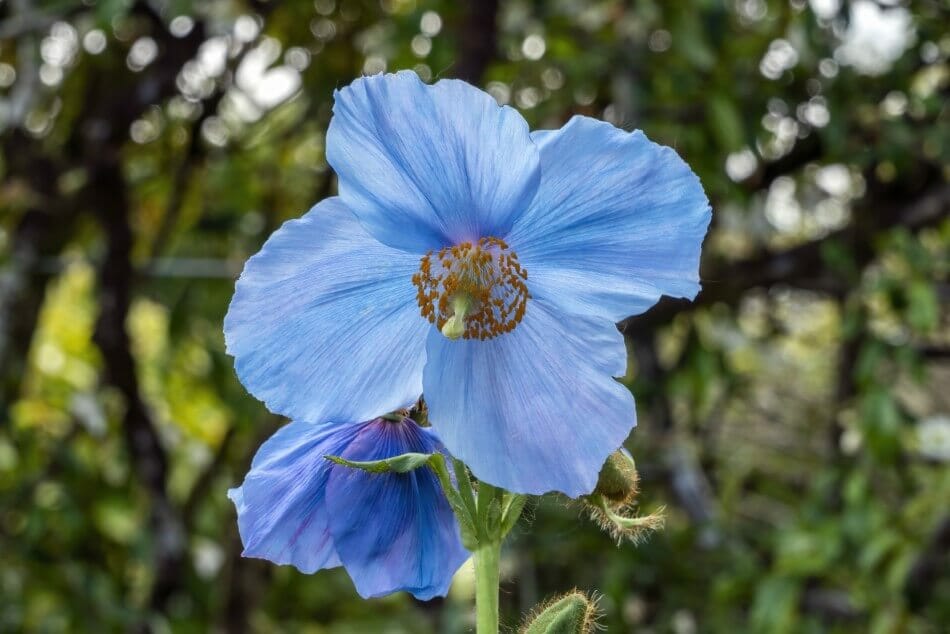
14. Himalayan Blue Poppy (Meconopsis betonicifolia)
The Himalayan blue poppy, or Meconopsis betonicifolia, belongs to the Papaveraceae family.
This flower has large flowers that bloom in a shade of powder blue.
The Himalayan blue poppy grows wild in its native mountains of south-central China.
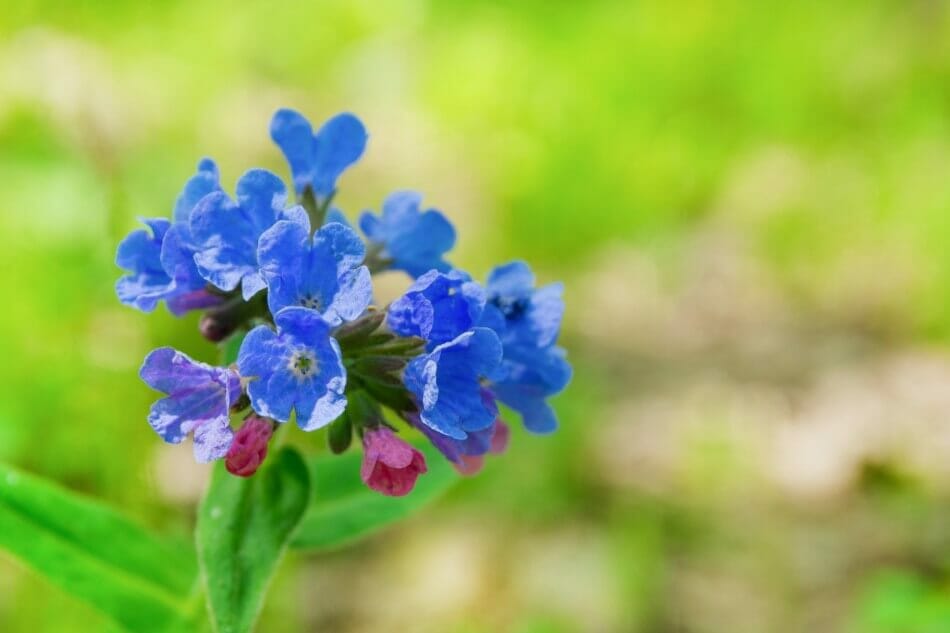
15. Lungwort (Pulmonaria officinalis)
Pulmonaria officinalis is a plant that belongs to the genus Pulmonaria and goes by many other names, like Mary’s tears and Our Lady’s milk drops.
The common name lungwort comes from medieval herbalists who thought the spotted leaves looked like diseased lungs.
This lungwort has long, green leaves with a bumpy and hairy surface. The flowers open pink, turn rose-violet, and are blue when mature, as the pH inside the flower changes.
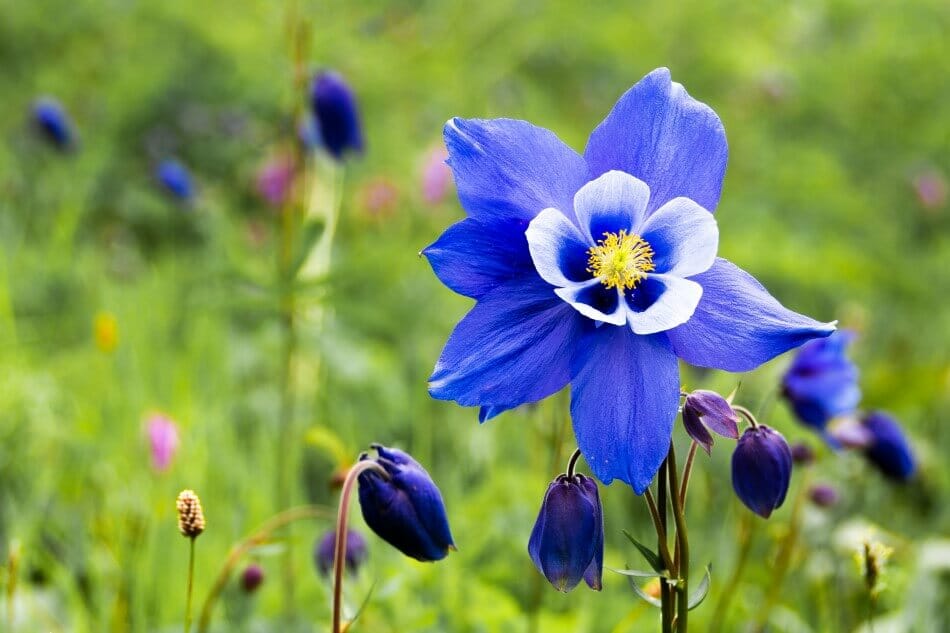
16. Columbine (Aquilegia)
Columbines, or Aquilegia, are native to the Northern Hemisphere. The so-called granny’s bonnet grows primarily for horticultural purposes.
Once in full bloom, this flower’s petals have been said to resemble an eagle’s claw. This is why the plant’s name is Aquilegia, derived from the Latin word ‘aquila,’ meaning eagle.
The Colorado blue columbine is the official flower of the US state of Colorado. The flower has represented many qualities throughout history, including aspiration, peace, and strength.
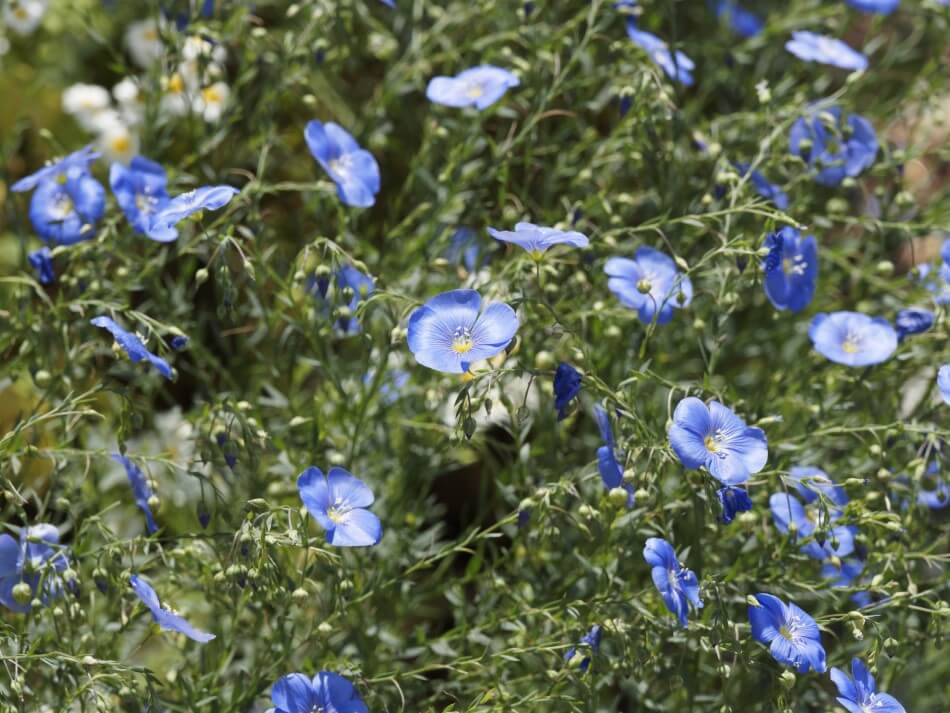
17. Flax (Linum usitatissimum)
Flax, or Linum usitatissimum, is a flowering plant that belongs to the Linaceae family. Typically, the flower blooms with five pale blue petals, though some varieties are white, yellow, or red.
Linum usitatissimum is cultivated around the world for its many uses.
If flax sounds familiar, it may be because fiber-rich flax seeds are a food item available in supermarkets. The flower’s linseed oil is also famous for painting or varnishing wood. Additionally, flax is used to make linen for sheets and clothing.
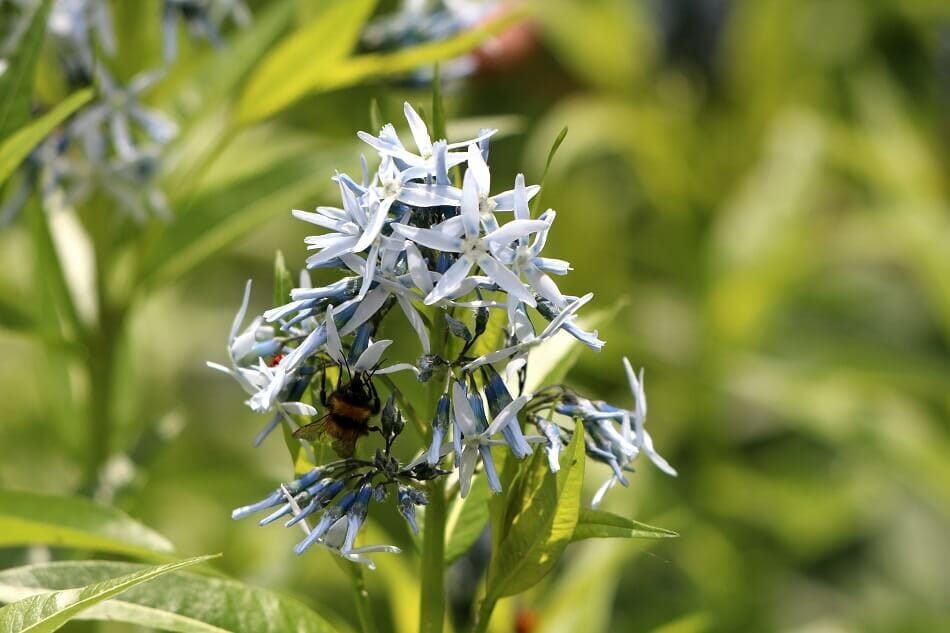
18. Bluestar (Amsonia tabernaemontana)
Amsonia tabernaemontana, or the eastern Bluestar, is a flowering plant belonging to the Apocynaceae family. The flower is native to North America and can be found in the central and eastern regions of the continent.
Bluestar flowers were named for their shape. The plant’s blooms are small and delicate, with five petals resembling a star. Generally, this species won’t grow taller than two or three feet.
Despite their small size, these flowers come together to create a striking visual. They form pale blue clusters that look great growing in a garden.
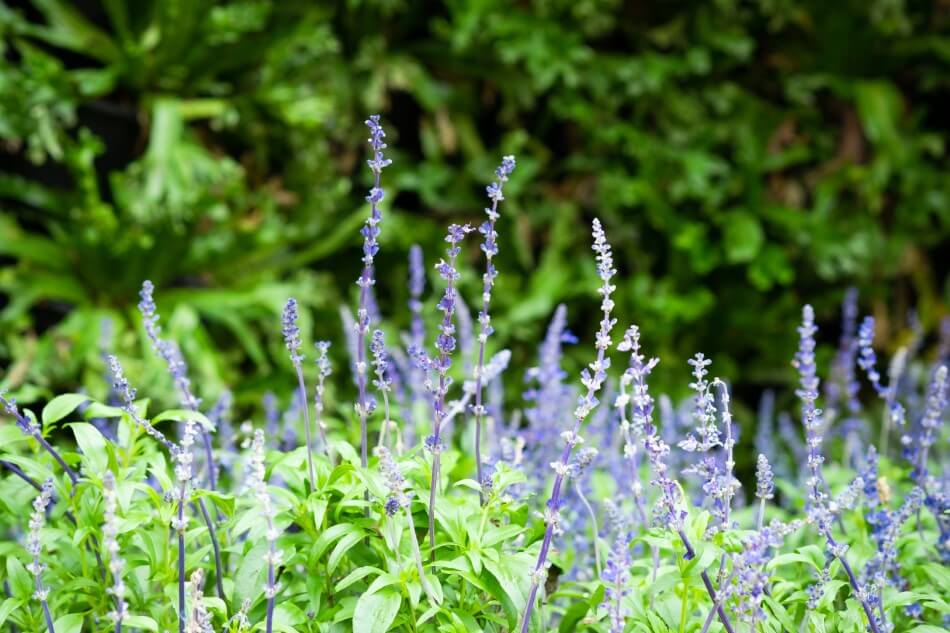
19. Salvia (Salvia)
Salvia is a plant genus belonging to the Lamiaceae family or the sage family. The Salvia genus is found in the Americas, the Mediterranean, and parts of Asia.
This plant is named after the Latin word ‘salvere,’ which is a verb indicating good health.
Within the species are perennial, biennial, and annual plants consisting of many blue or almost purple flowers. The common traits among these plants include angled stems and toothed or divided leaves.
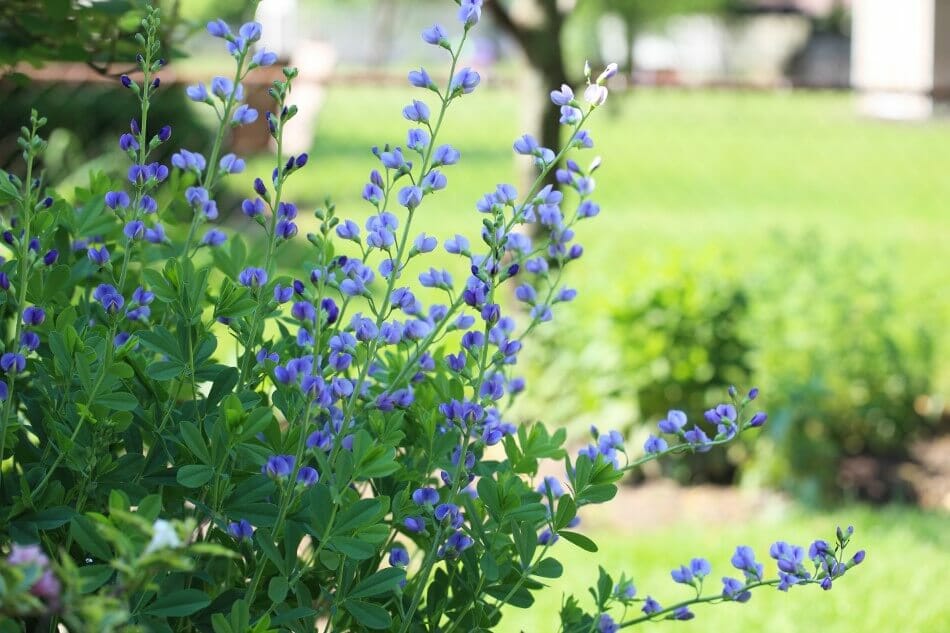
20. Blue False Indigo (Baptisia australis)
- Toxicity
- Poisonous if eaten, low severity
Blue false indigo, or Baptisia australis, is a flowering plant that belongs to the Fabaceae family, or the legume family.
The plant is native to central and eastern North America and usually grows at the edge of forested areas. Like bluebells, the blue false indigo’s stems grow like a tall blade of grass. The blooms grow vertically along the stem in a deep purple-blue tone.
American Indian tribes like the Cherokees have used this plant throughout history to make blue dyes for textiles. They have also used the seeds to make rattles for children.
21. Harvestbells (Gentiana saponaria)
Harvestbells, or Gentiana saponaria, are also known as soapwort gentians. The flower grows to be between one and two feet tall and belongs to the Gentianaceae family.
This flowering plant is native to North America.
Harvest bells grow best in sandy soils and bloom from September into November. The plant prefers full sun to partial shade and looks great growing in the garden along with other autumnal blooms.
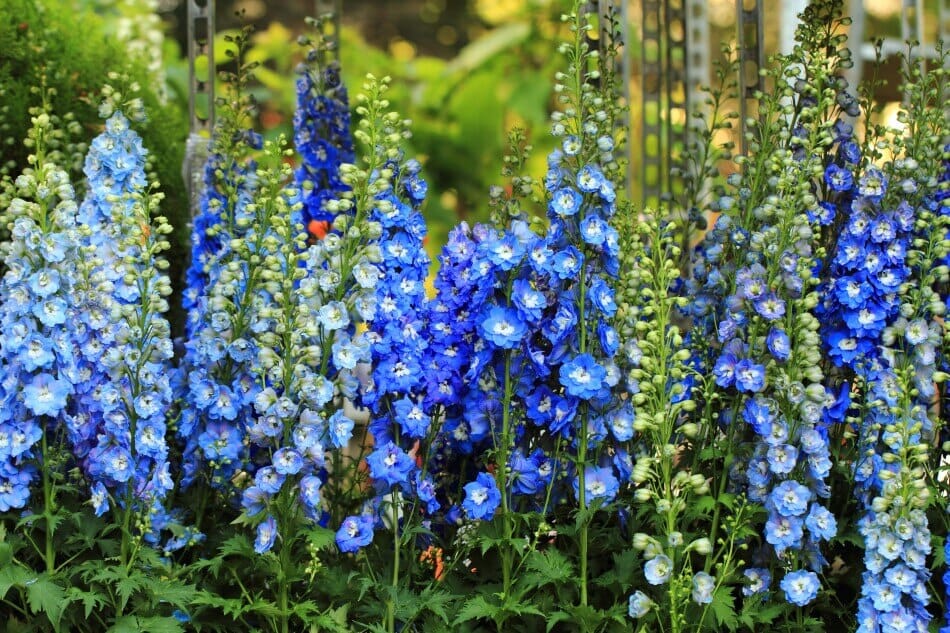
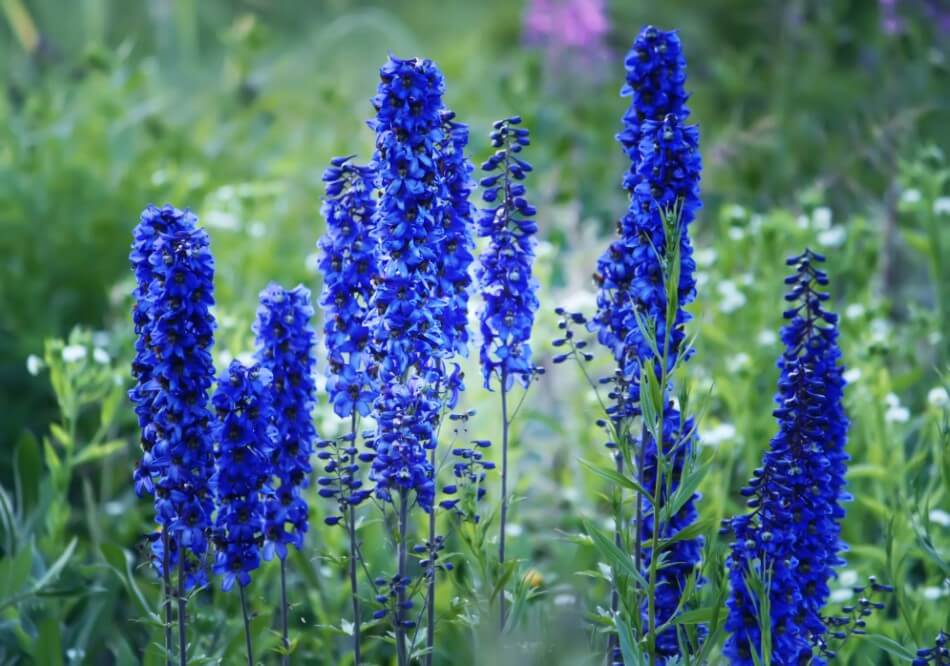
22. Blue Delphiniums (Delphinium)
- Toxicity
- Toxic to cats and dogs (ASPCA, as larkspur); medium-severity poison
The blue delphinium is a flowering plant that belongs to the genus Delphinium. This genus belongs to the Ranunculaceae family and is native to Europe, Asia, North America, North Africa, and the mountains of tropical Africa.
Many of the species in the Delphinium genus are blue. Blue delphinium cultivars Clifford Sky and Galileo have both won the Royal Horticultural Society’s Award of Garden Merit.
The name delphinium comes from the Ancient Greek word ‘delphinion,’ which translates to dolphin. This is because the flower’s petals have a dolphin-like shape.
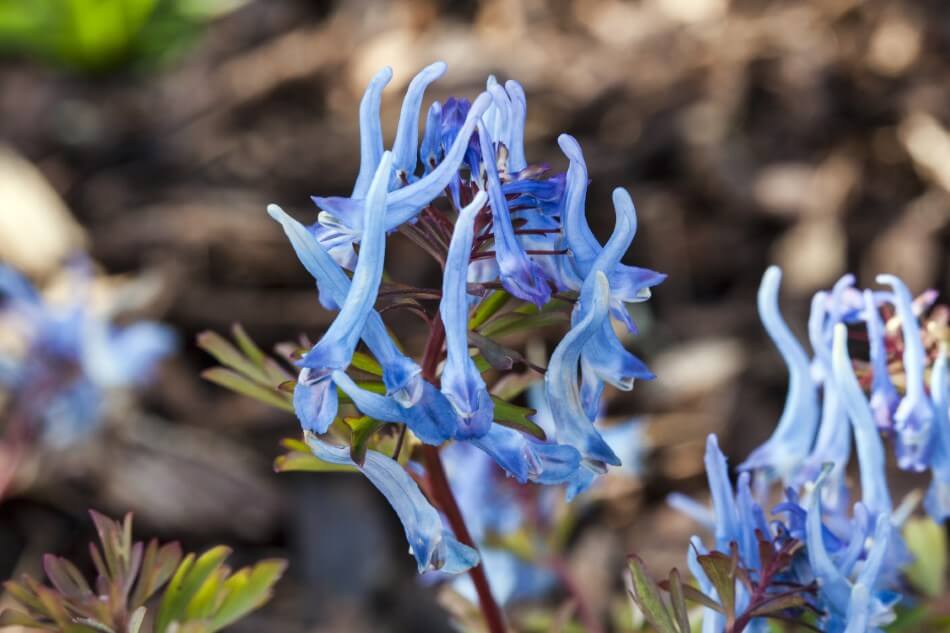
23. Blue corydalis (Corydalis flexuosa)
Blue corydalis or Corydalis flexuosa is a flowering plant native to woodlands and mountainous parts of China. It is a member of the Papaveraceae along with poppies and hundreds of other species.
Blue corydalis blooms have pale blue two-lipped flowers that cluster around white throats. The plant thrives in partial shade and grows dormant in the summer months.
A few cultivars of blue corydalis have earned the Royal Horticultural Society’s Award of Garden Merit. These include the ‘Blue Panda’ and ‘Purple Leaf’ cultivars.
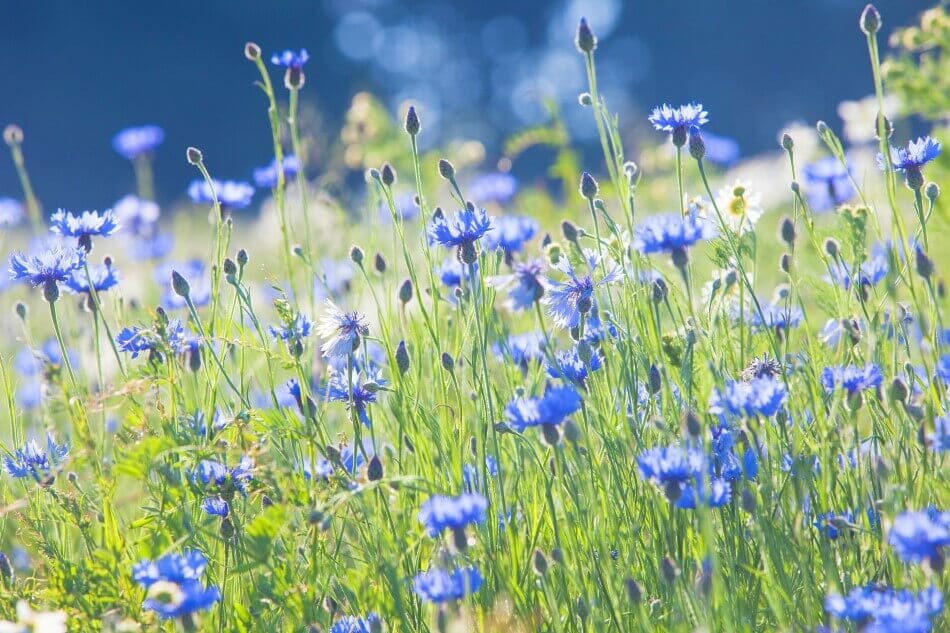
24. Cornflower (Centaurea cyanus)
Cornflower, or Centaurea cyanus, is a flowering plant that belongs to the Asteraceae family. Native to southeastern Europe and Turkey, the plant was once considered a weed growing in cornfields, which is where it got its name.
However, it has been naturalized in other parts of the world. The flowers are edible, and cornflower is a long-lasting cut flower.
The blue cornflower was once a national icon representing Germany. It also appears in folklore as a symbol for young men in love.
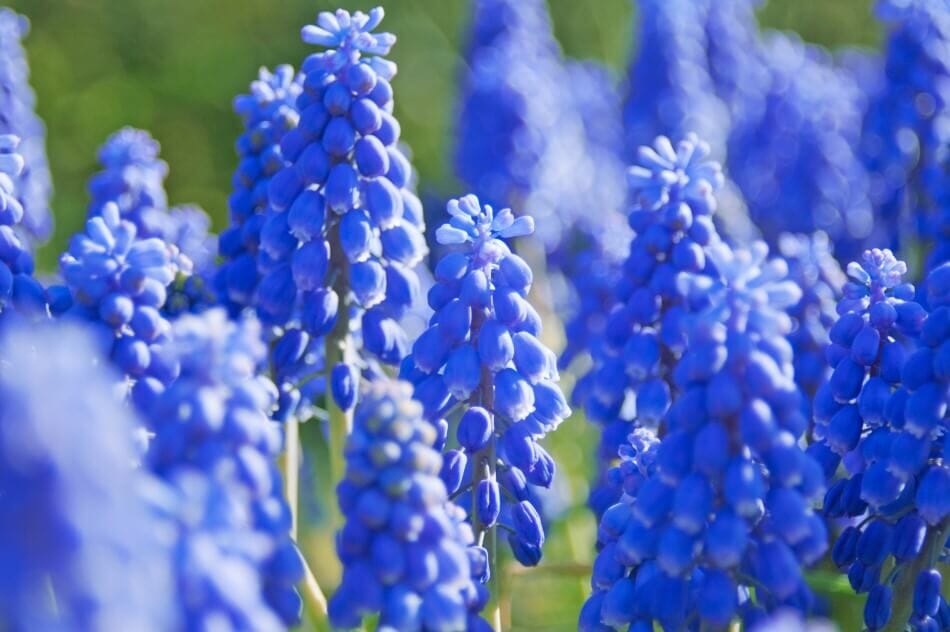
25. Grape Hyacinth (Muscari)
The grape hyacinth, or Muscari, is a spring-blooming flower that belongs to the Asparagaceae family. This hyacinth look-alike is native to Europe and gets its scientific name from the Greek word muschos, meaning musk.
The reference to grapes comes from the way this flower’s blooms form along its stems. The blue-purple petals grow in a series of small heads that cluster together, resembling a bunch of grapes.
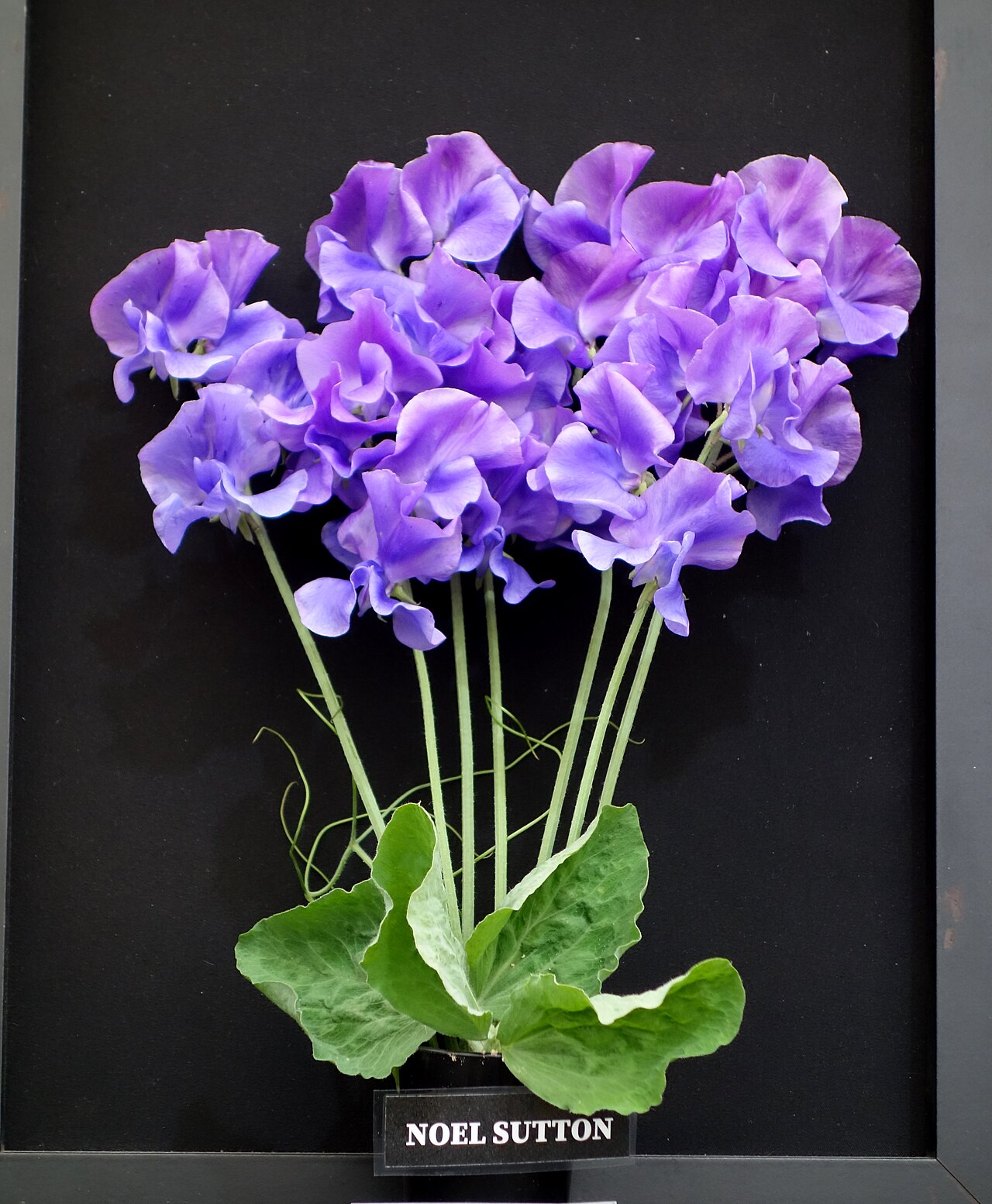
26. Sweet pea (Lathyrus odoratus)
- Toxicity
- Non-toxic to cats and dogs (ASPCA, for the genus); low-severity risk for people
Sweet pea, or Lathyrus odoratus, is a fragrant flowering plant that belongs to the Fabaceae family or the legume family.
This climbing plant is native to Sicily and southern Italy. Its leaflets are attached to a tendril that wraps around nearby plants, buildings, or walls.
This plant can grow in a pastel blue-purple color. The species is well known in floristry, and its flowers are very fragrant.
27. Blue Larkspur (Consolida)
- Toxicity
- Toxic to cats and dogs (ASPCA, for the genus)
Consolida is a plant genus in the Ranunculaceae family that is commonly known as larkspur within seed catalogs. This genus is native to areas of Western Europe, Asia, and the Mediterranean.
Consolida is now treated as part of Delphinium, so the larkspur sold in seed catalogs is a Delphinium (Delphinium ajacis).
The blue larkspur has deep blue, vertical blooms that are common in gardens. It is also popular as a cut flower arranged in bouquets.
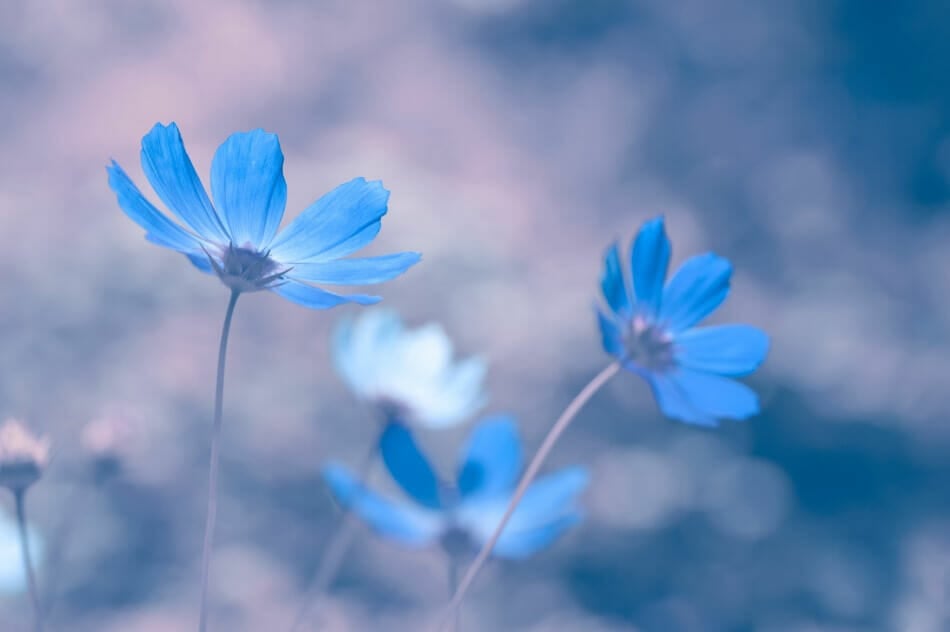
28. Blue cosmos (Cosmos bipinnatus)
Cosmos bipinnatus belongs to the daisy family and bears maroon, pink, lavender, and white flowers. The plant sold as blue cosmos is the lavender shade. It is native to the Americas and is sometimes called the Mexican aster.
This flower is a common addition to gardens, as it is attractive to both humans and pollinators. The blue cosmos adds a unique focal point to gardens, inviting honey bees, monarch butterflies, and pollinating birds.
Like other cosmos, the blue cosmos may symbolize innocence, harmony, or peace. The flower creates a sense of tranquility, similar to its relative, the daisy.
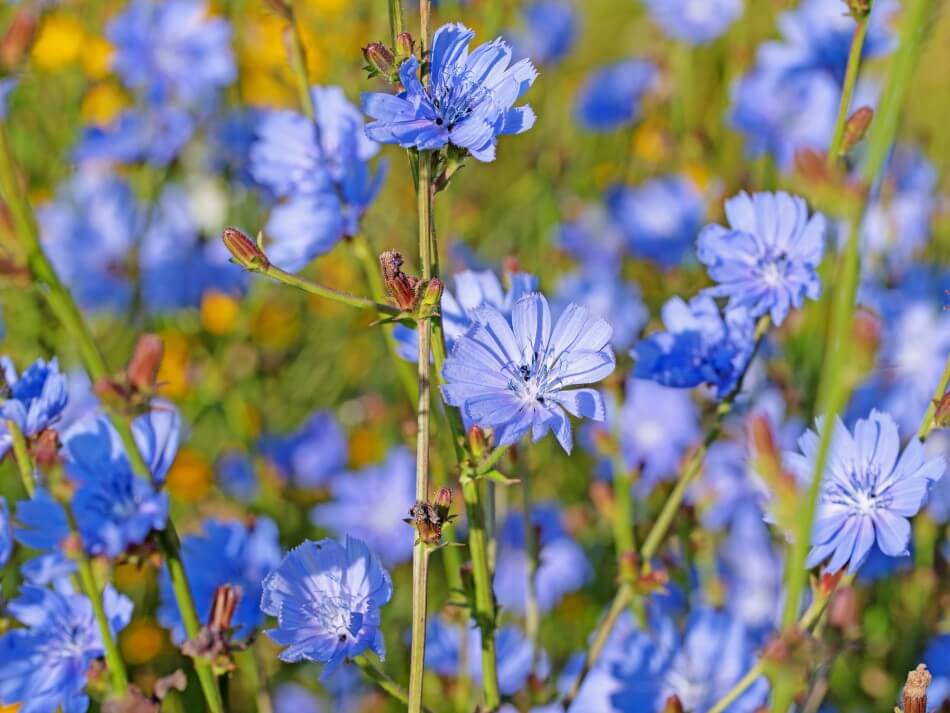
29. Chicory Flower, Blue Dandelion (Cichorium intybus)
Cichorium intybus, sometimes called the chicory flower or the blue dandelion, is a biennial member of the daisy family. It is native to North Africa, western Asia, and Europe, and its roots are dried, ground, and used as a coffee substitute.
The chicory flower blooms in the summer and fall in Europe, North America, China, and Australia.
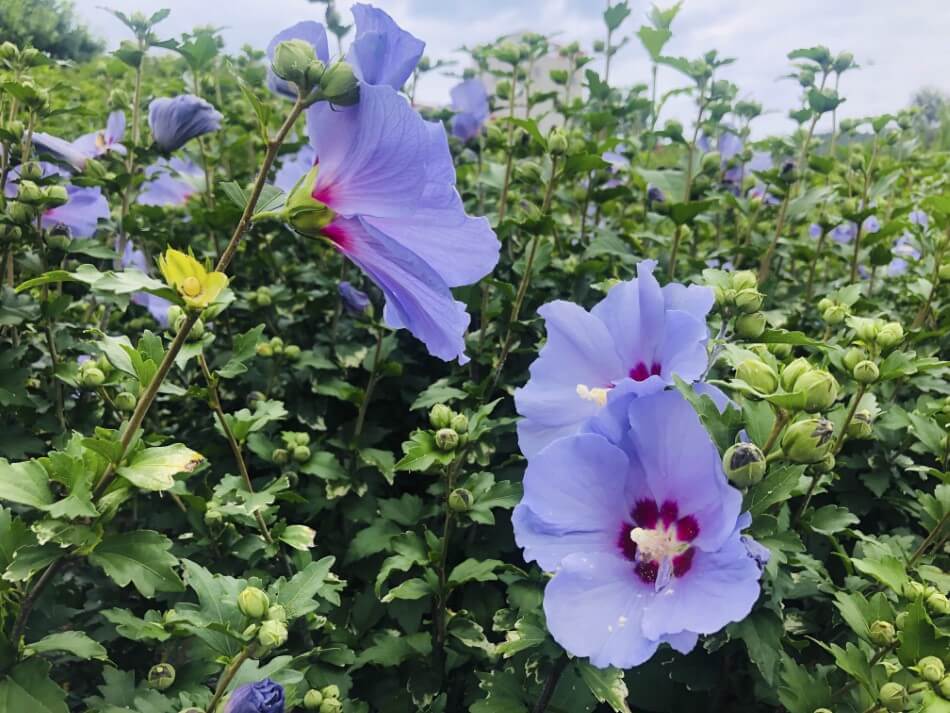
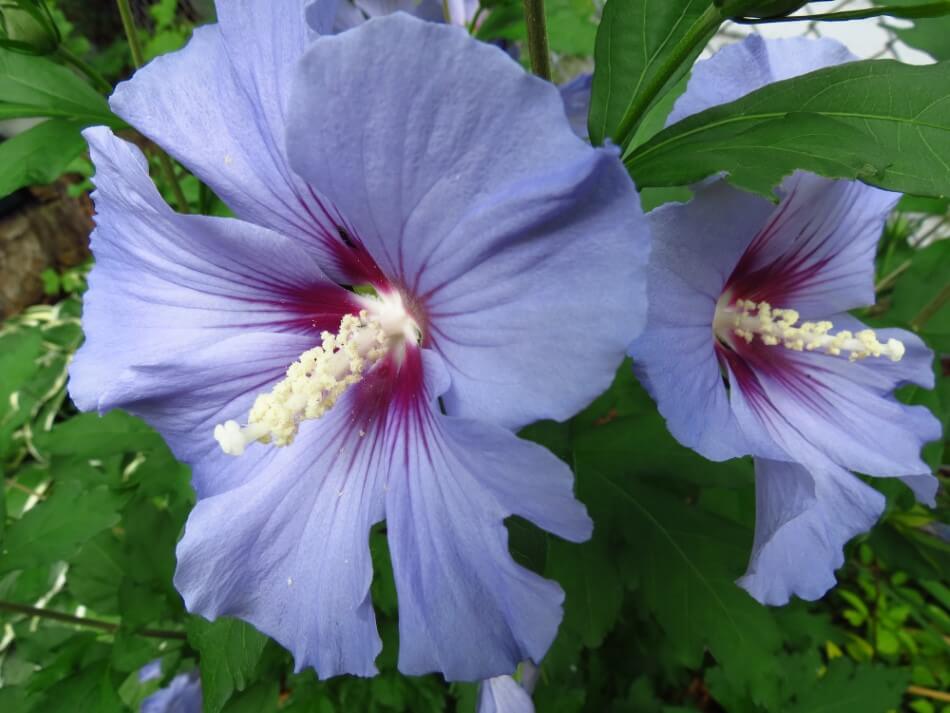
30. Hibiscus (Hibiscus syriacus)
Hibiscus syriacus is a flowering plant species that belongs to the Malvaceae family or the mallow family. While it’s native to areas of southern China, the plant can be found all over Asia.
Hibiscus syriacus, also called Rose of Sharon, has become popular in North America and the UK.
This plant grows as a deciduous shrub. It has large flowers with five petals around a prominent column of stamens.
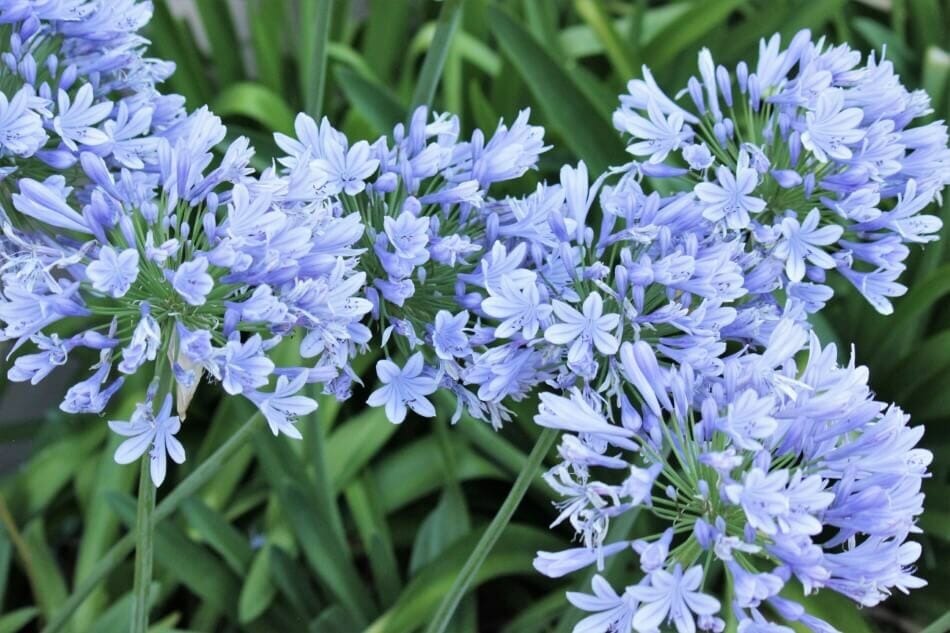
31. Lily of the Nile (Agapanthus)
- Toxicity
- Poisonous if eaten, low severity
Lily of the Nile, or Agapanthus, is a genus in the amaryllis family (Amaryllidaceae). The genus gets its name from the Greek words ‘agape,’ meaning love, and ‘anthos,’ meaning flower. This flowering plant is native to areas of southern Africa.
The Lily of the Nile grows green stems and pale blue blooms that expand outward in all directions. The plant enjoys full sunlight or partial shade and moist, well-drained soil.
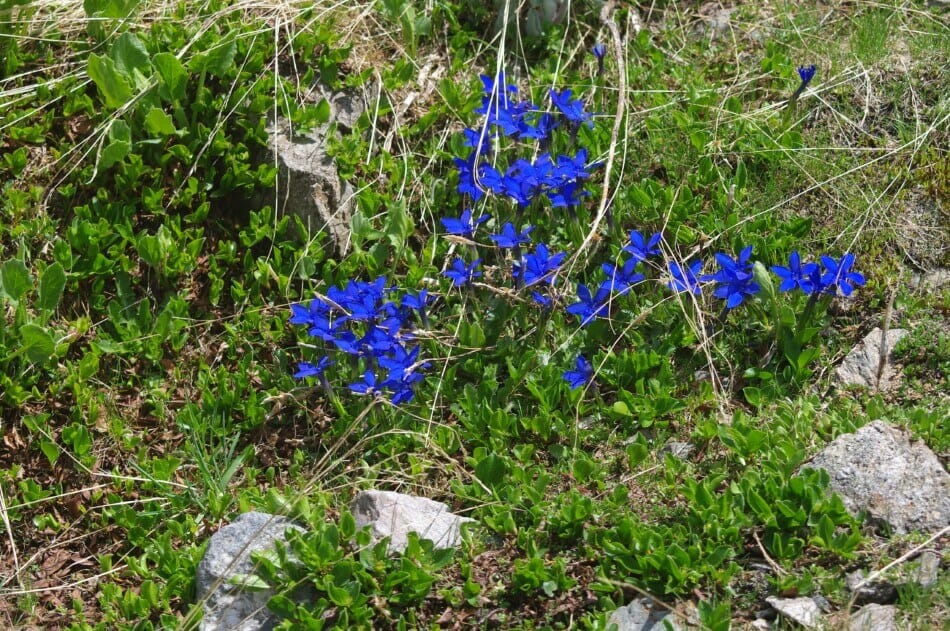
32. Gentian Flower (Gentiana)
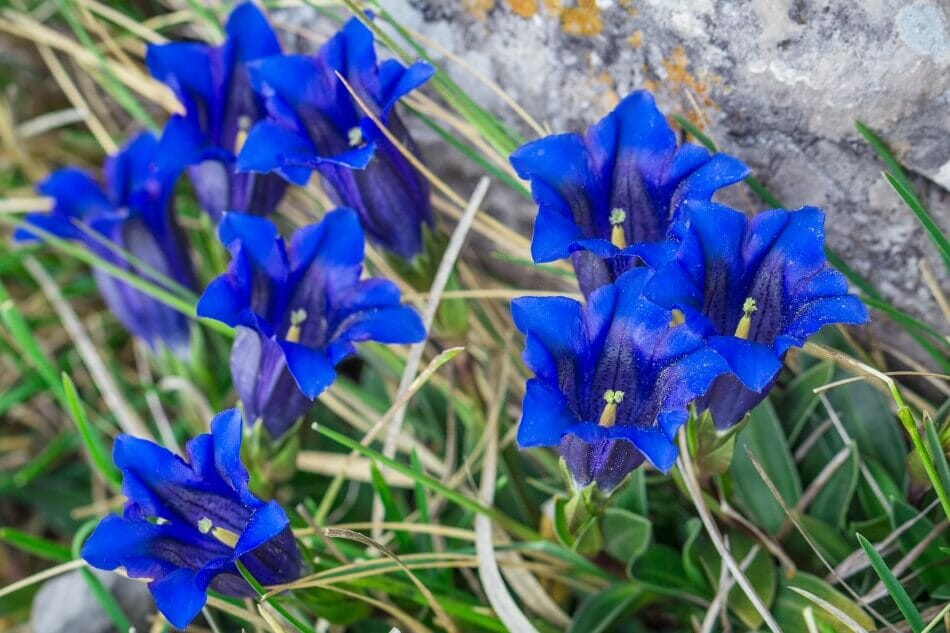
The Gentian flower belongs to the Gentiana genus and Gentianaceae family. This flower grows in a deep, bold shade of blue, with blooms that have a trumpet-like shape.
This flower’s azure petals create a spectacular focal point for any garden space. You’ll find it growing everywhere, from Europe and the Americas to alpine regions in Asia.
33. Virginia Bluebells (Mertensia virginica)
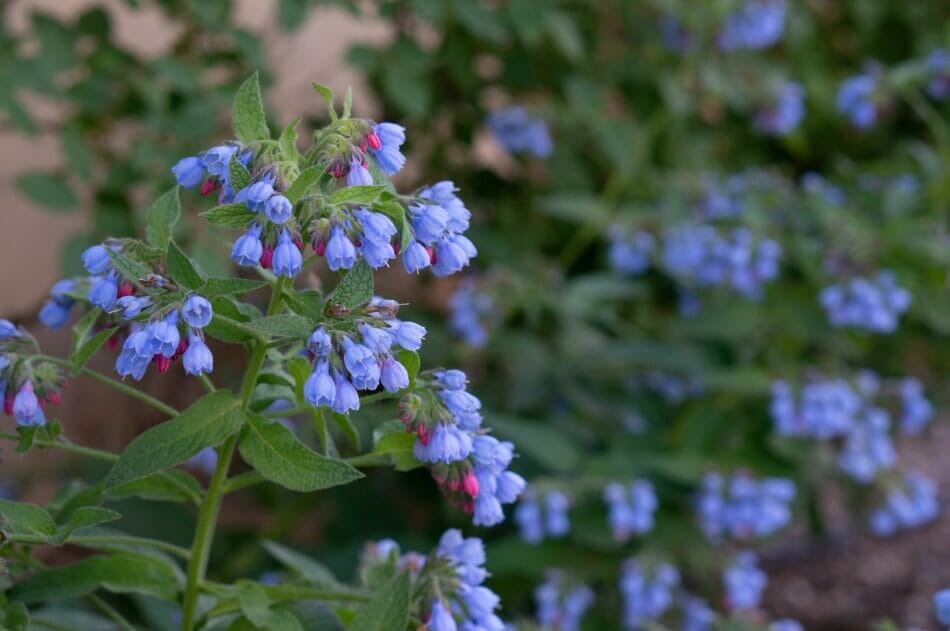
Virginia bluebells, or Mertensia virginica, are native to North America. These flowers bloom in spring, revealing pink buds that transform into tubular flowers ranging from deep blue to sky blue in color.
You may find this flower growing wild in woodlands or river floodplains. You can also grow it in a wildflower garden alongside other spring-blooming flowers.
Virginia bluebells attract pollinators like butterflies and bumblebees. Its blooms will last around three weeks around those spring and summer months.
34. Speedwell (Veronica)
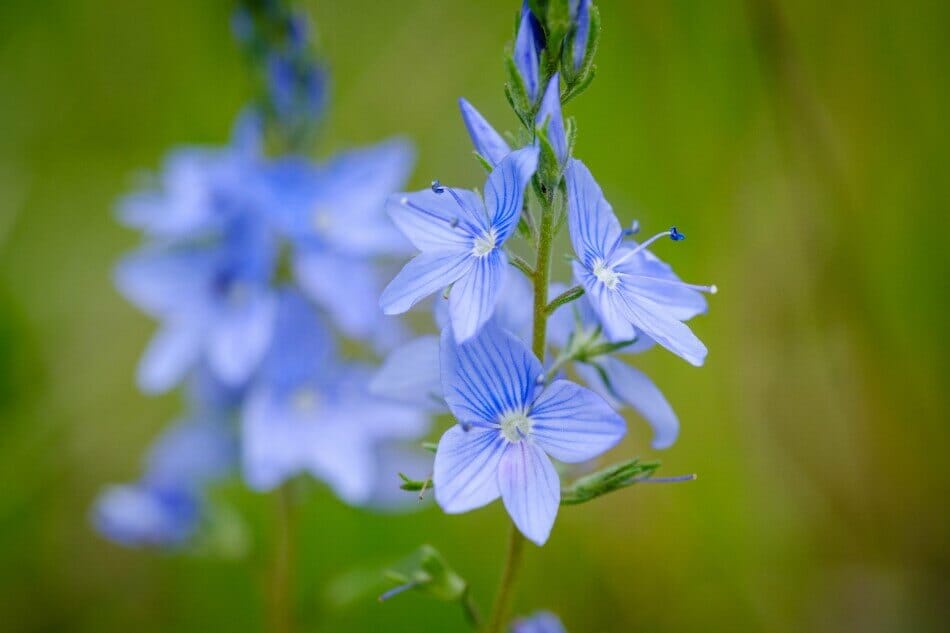
Veronica is the largest genus within the Plantaginaceae flowering plant family. This genus is also called Speedwell or bird’s eye.
The Veronica genus has many different types of blue flowers. Some grow as ground cover, while others contribute a striking, cone-shaped appearance to landscaping and wildflower gardens.
Most species in the Veronica genus reside in the Northern Hemisphere.
35. Desert Bluebells (Phacelia campanularia)
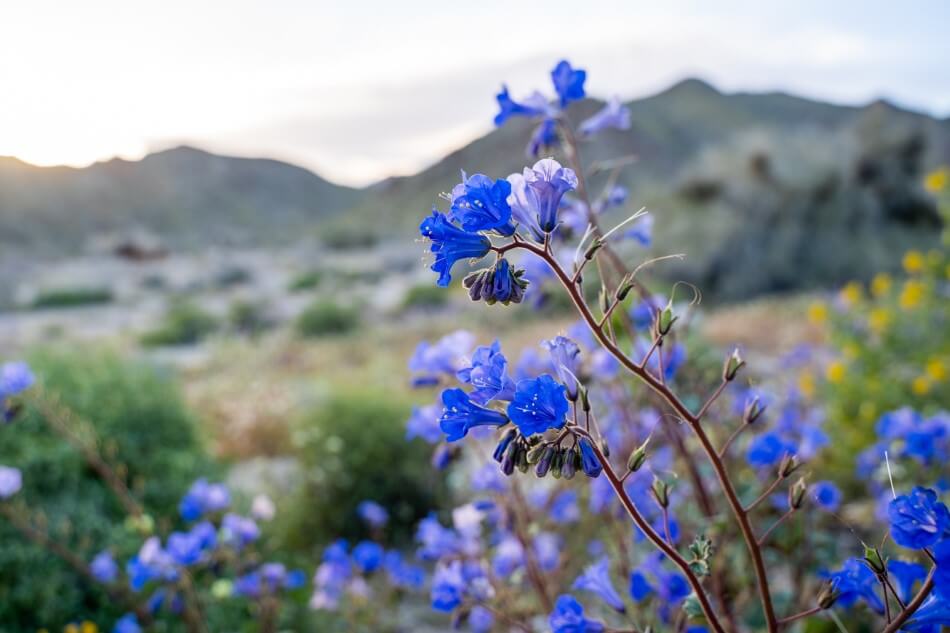
Desert bluebells, or Phacelia campanularia, are a flowering plant species in the Boraginaceae family. You may have heard of this flower called desert scorpionweed or California-bluebells.
The Phacelia campanularia flower grows primarily in California and deserts like the Mojave and Sonoran. It also grows as an introduced species in other parts of the world.
This flower’s rounded petals are a rich, deep blue, with long white-tipped stamens at the center. The desert bluebell grows well in the wild and as an ornamental plant.
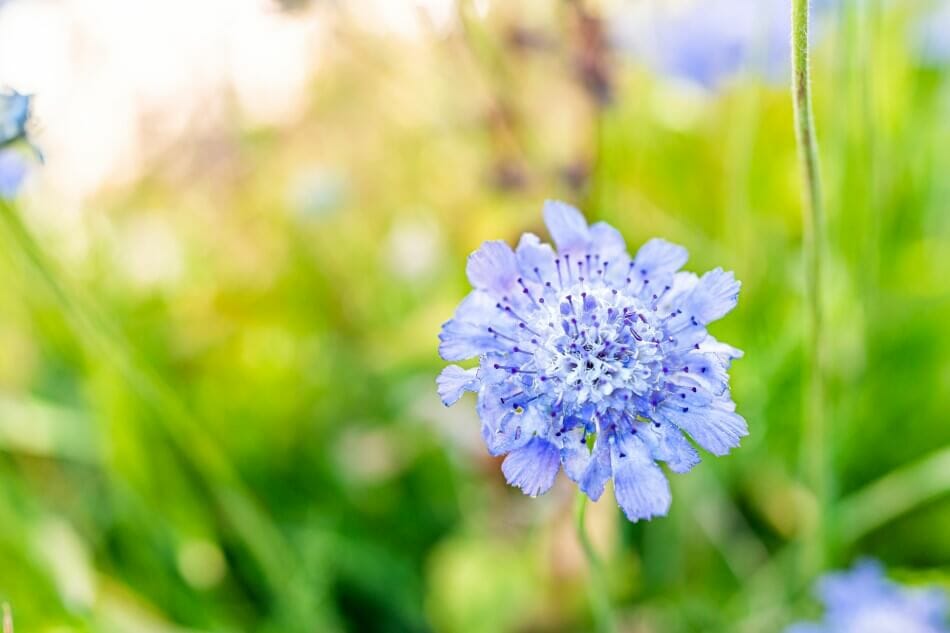
36. Scabiosa (Scabiosa)
Scabiosa is a genus from the Caprifoliaceae flowering plant family, or the honeysuckle family. Plants in the Scabiosa genus are native to Asia, Europe, and Africa.
These blooms are also commonly known as pincushion flowers. They have fringed, sprawling leaves that form a round head at the end of the stem.
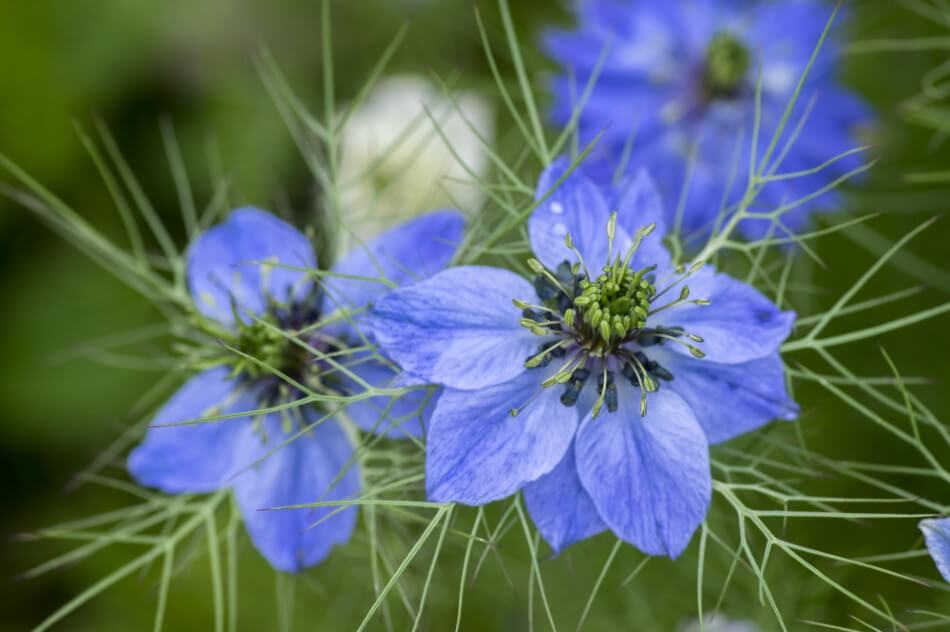
37. Love in a Mist (Nigella damascena)
Love in a Mist, or Nigella damascena, belongs to the Ranunculaceae or the buttercup family.
The plant’s romantic name points to its origin in southern Europe. It grows in a lacy bush of foliage, making it a mist-like appearance.
The plant can bloom in various colors, including blue, white, pink, and purple. It has been famous as a garden plant since the Elizabethan era.
38. Rose of Sharon
Rose of Sharon refers to several flowering plant species, notably a deciduous flowering shrub in the mallow family. The name Rose of Sharon is a biblical reference, but the exact flower it refers to remains unclear.
Hibiscus syriacus is the shrub most gardeners mean by Rose of Sharon.
The name covers several plants. Hibiscus syriacus has flowers that range from white and pink to red, violet, or blue depending on the cultivar.
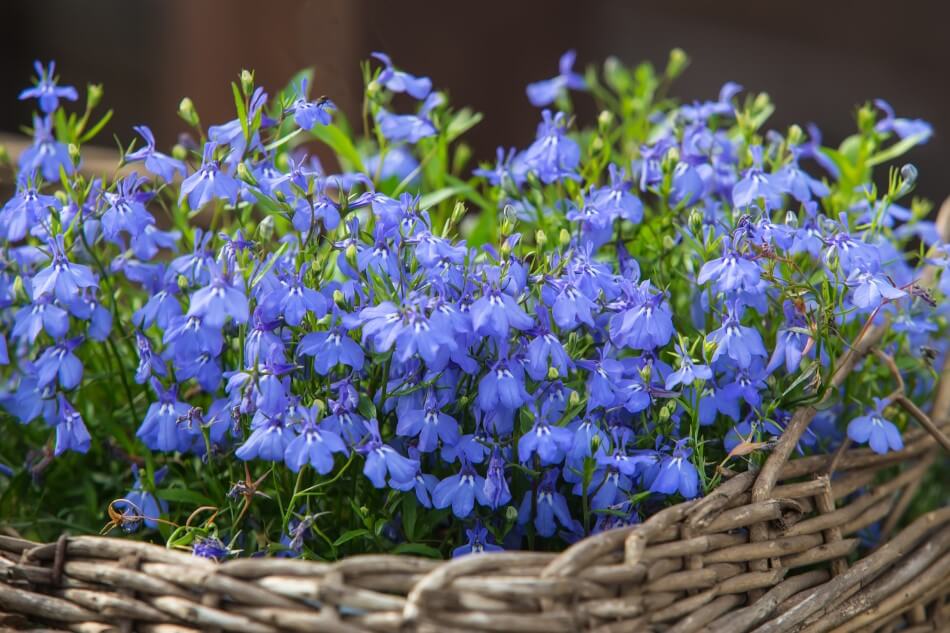
39. Lobelia (Lobelia)
- Toxicity
- Toxic to cats and dogs (ASPCA, for the genus); medium-severity poison
Lobelia is a genus encompassing various flowers that thrive in warm or tropical climates.
Lobelias can be annual or perennial shrubs that come in many colors, including a deep shade of purple-blue. Interestingly, it seems that no two lobelias are alike, as each flower in the genus has unique characteristics that separate it from the rest.
This genus is a popular option among gardeners, as it produces beautiful, full blooms in a range of bold colors.
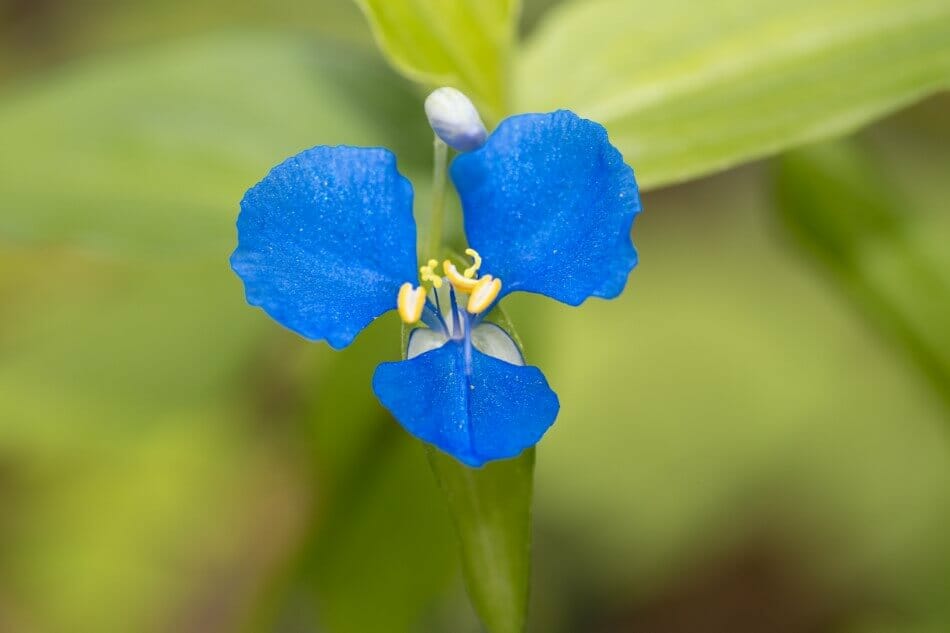
40. Birdbill Dayflower (Commelina dianthifolia)
The Bird Bill Dayflower, or Commelina dianthifolia, is a perennial herb belonging to the Commelinaceae spiderwort family. It grows primarily in the American Southwest and northern Mexico.
This plant is notable for its small blooms, each flower with three blue petals and green sepals. It gets its name, dayflower because its blooms open at dawn and close up around the afternoon.
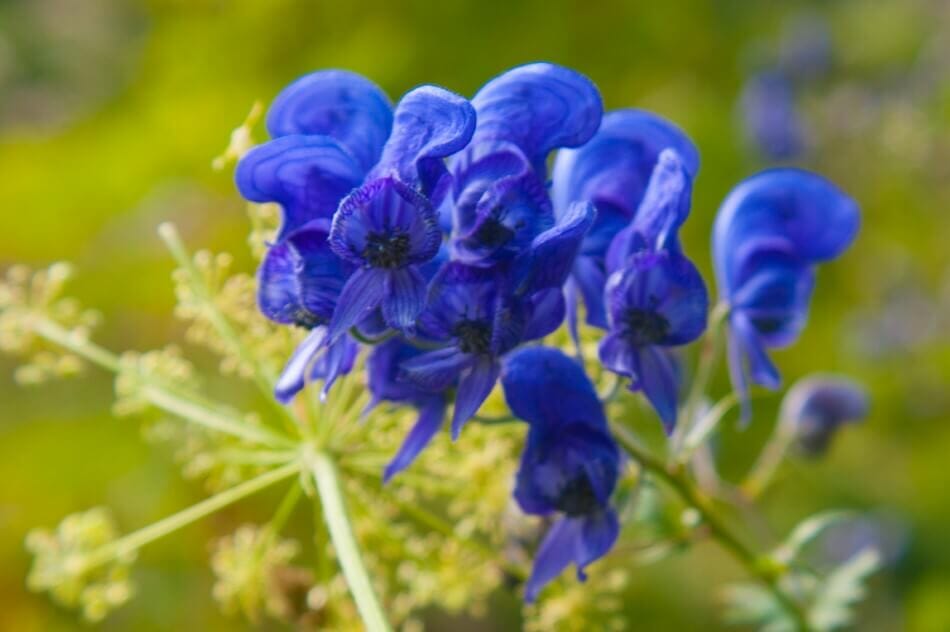
41. Blue Monkshood (Aconitum napellus)
- Toxicity
- Poisonous if eaten, high severity
The blue monkshood, or Aconitum napellus, is a flowering plant in the Ranunculaceae family. Also known as wolfsbane or aconite, this toxic plant is one you’ll have to admire from afar, as it is poisonous to touch and consume.
You can recognize the blue monkshood by its tall stem and blue-purple bell-shaped blooms. The ‘Spark’s Variety’ cultivar has received the Royal Horticultural Society’s Award of Garden Merit.
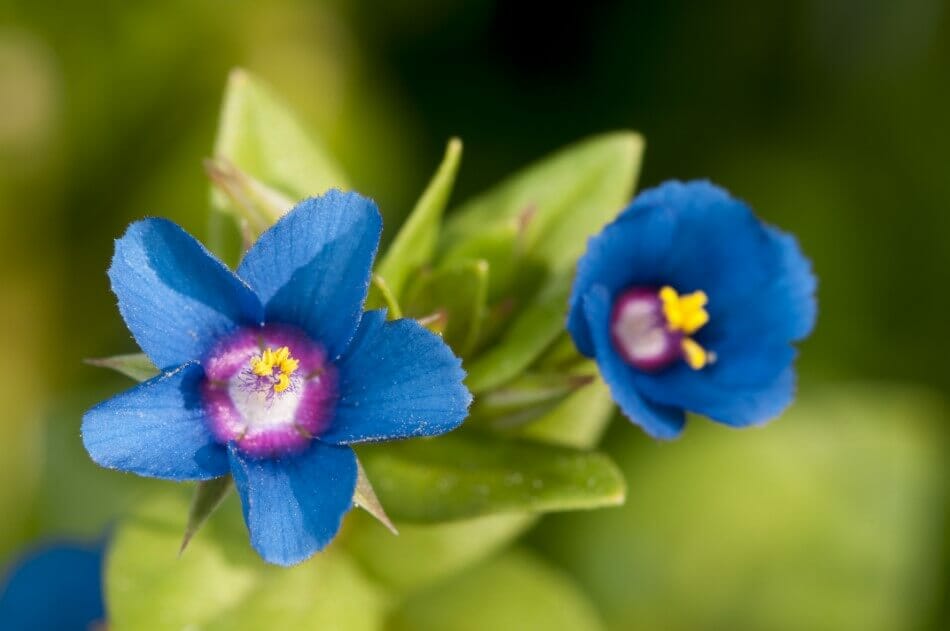
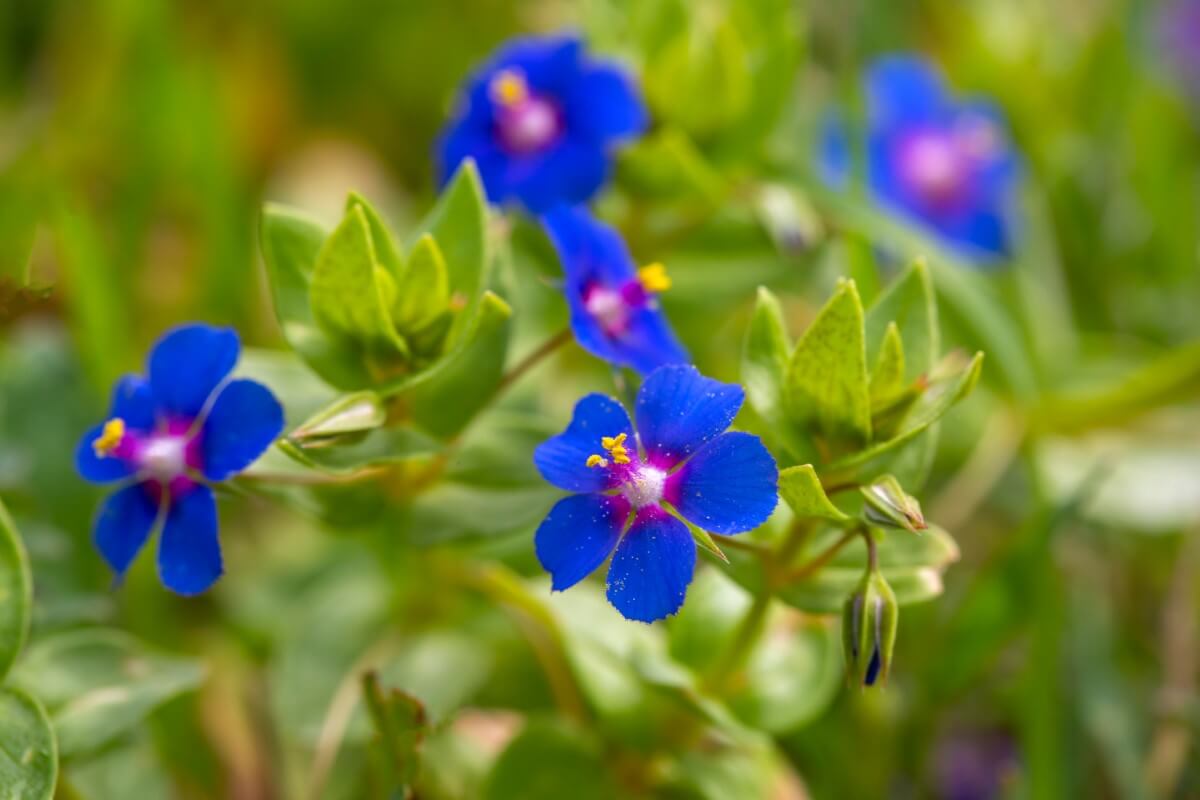
42. Poor Man’s Weather Glass (Anagallis arvensis)
Anagallis arvensis, sometimes called the poor man’s weather glass or shepherd’s clock, is an annual plant that blooms in bright shades of pink or blue.
It belongs to the Primulaceae, or the primrose family, and is native to Europe, North Africa, and Western Asia. However, it has since been introduced to many other parts of the world.
This flower blooms with five round, blue petals around a violet-purple center and several yellow stamens. It grows wild along roadsides but has also been cultivated for medical and agricultural purposes.
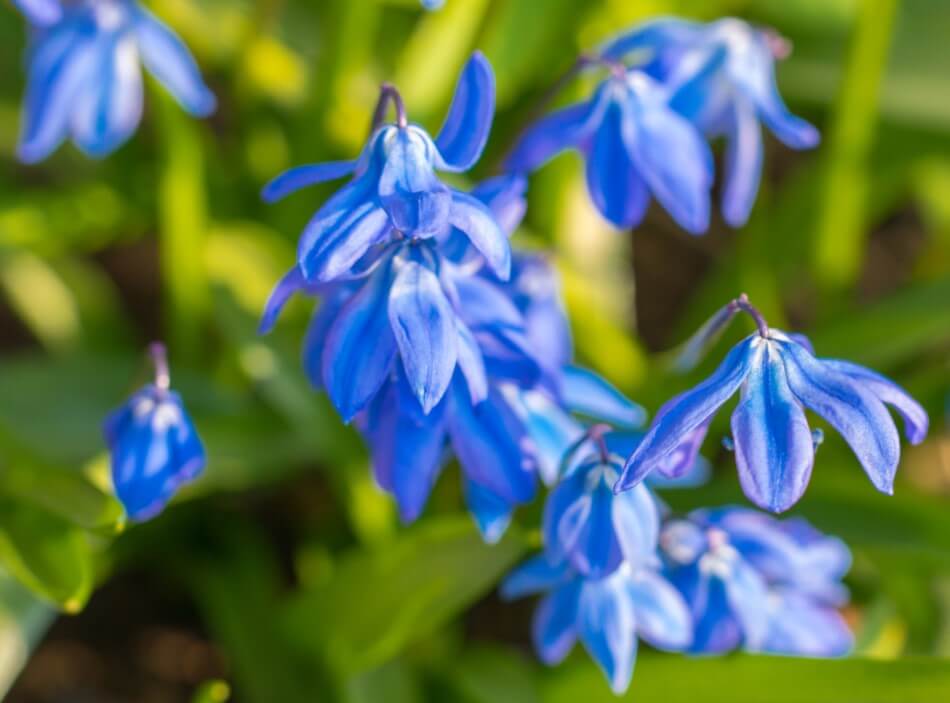
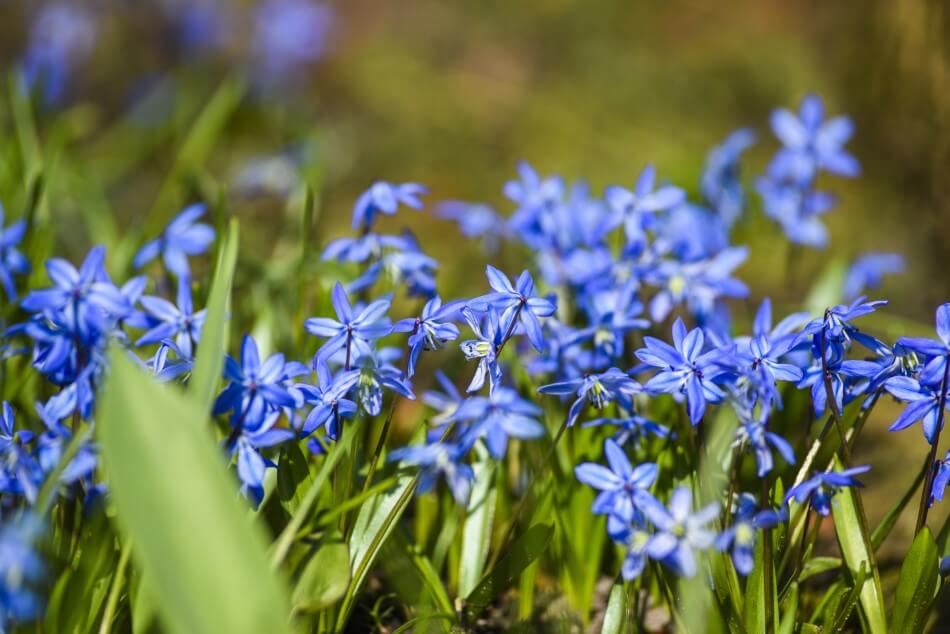
43. Siberian Squill (Scilla siberica)
- Toxicity
- Poisonous if eaten, high severity
The Siberian squill, or Scilla siberica, is a flowering plant species belonging to the Asparagaceae family. Interestingly, the plant is not native to Siberia. Instead, it is native to Turkey, the Caucasus region, and parts of southern Russia.
Otherwise known as the wood squill, this plant is a bulbous perennial. It blooms at spring’s start, producing beautiful blue flowers. The flower grows to a height of around four to eight inches tall.
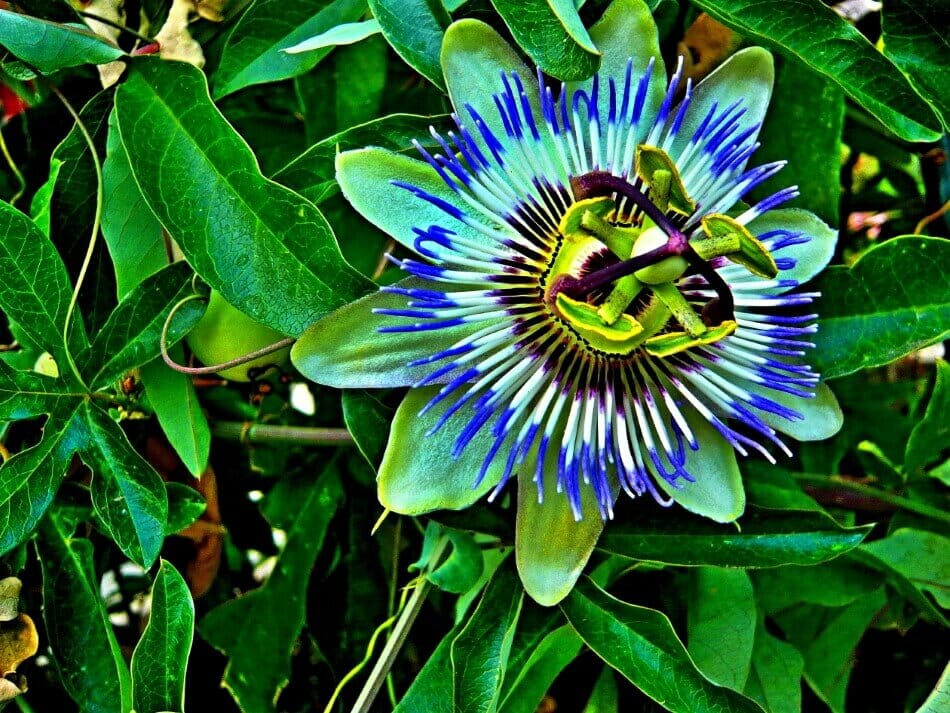
44. Bluecrown Passionflower (Passiflora caerulea)
- Toxicity
- Poisonous if eaten, medium severity
The bluecrown passionflower, or Passiflora caerulea, is a flowering plant native to South America.
The tendril vine is often deciduous, though it can also be semi-evergreen and reach around 33 feet in length. The plant’s blooms open up into a mesmerizing mandala of blue and white fringe and pale petals.
The bluecrown passionflower’s vines latch onto nearby trees for support. The bluecrown passionflower contains cyanogenic glycosides and is poisonous, a problem for cats, dogs, and children.
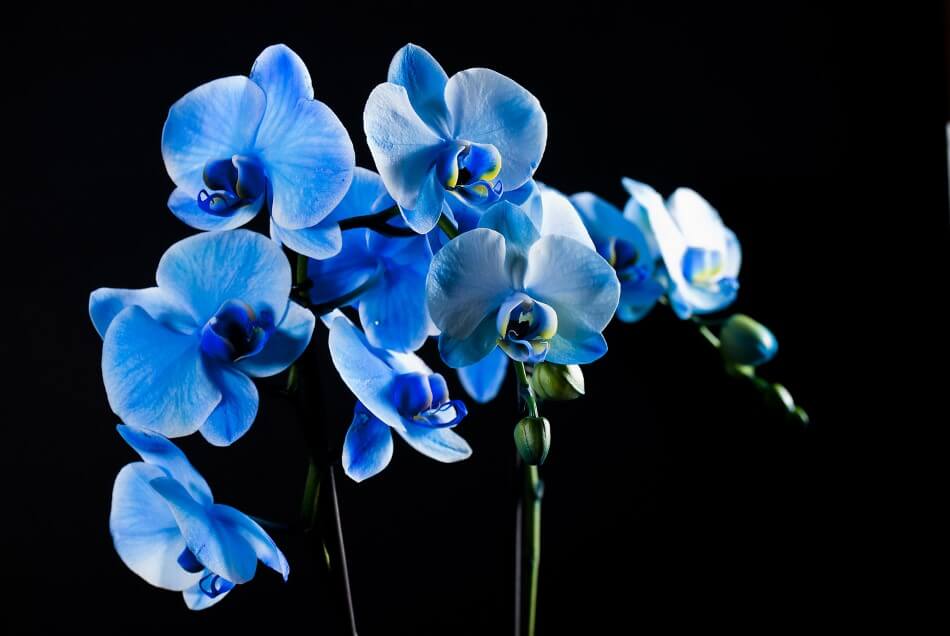
45. Blue Orchids (Orchidaceae)
There are tens of thousands of species of orchid, making the family one of the largest flowering plant families, and many orchids grow high in trees. They usually take their place high up in the trees with free-hanging roots.
You may have come across a blue orchid known as Blue Mystique. Blue Phalaenopsis sold as Blue Mystique are white orchids given their color through dyeing. Any new flowers that open on a later bloom will be white. Once the blue flowers drop, they will grow back to their original white color.
However, that doesn’t mean blue orchids don’t exist. Vanda coerulea is a naturally blue orchid. Pale blue is the best known of three color forms that occur in the wild, and the others are white and pale pink.
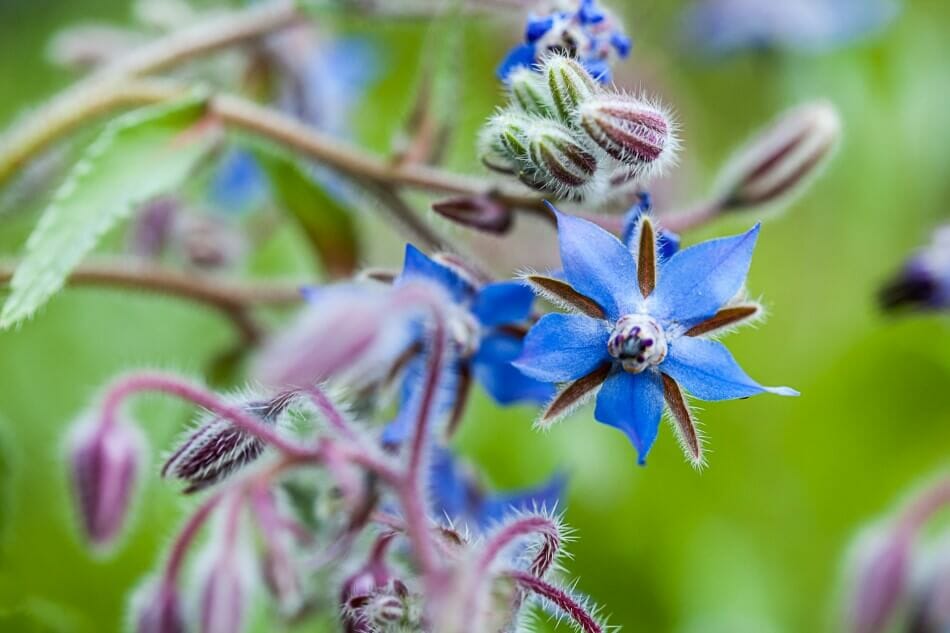
46. Starflower (Borago officinalis)
- Toxicity
- Toxic to cats and dogs (ASPCA, as borage); low-severity poison
The starflower, or Borago officinalis, is native to the Mediterranean. However, it can be found in many countries around the world.
This is a great flower to grow if you’re based in Europe due to favorable conditions for cultivation. The leaves and stems are edible in small amounts, but the plant contains alkaloids that can damage the liver and lungs and is toxic to cats and dogs.
The flower itself has pointed petals with a blue-purple hue, though you can also find it with white flowers.
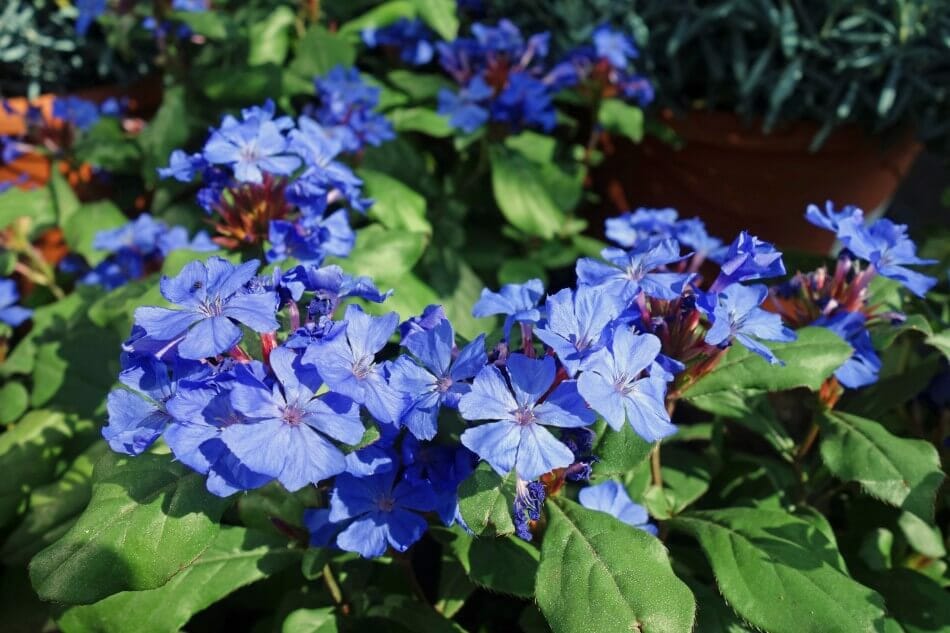
47. Lead Plant (Ceratostigma plumbaginoides)
The lead plant, or Ceratostigma plumbaginoides, belongs to the Plumbaginaceae family, or plumbago family, and is native to China.
The lead plant is a herbaceous perennial with blue flowers that blooms from late summer into autumn and spreads as a ground cover.
This species enjoys full sunlight and will grow well in well-drained soil of almost any quality. This is a tolerant plant that gardeners can grow for ornamental purposes. It can also aid in erosion control.
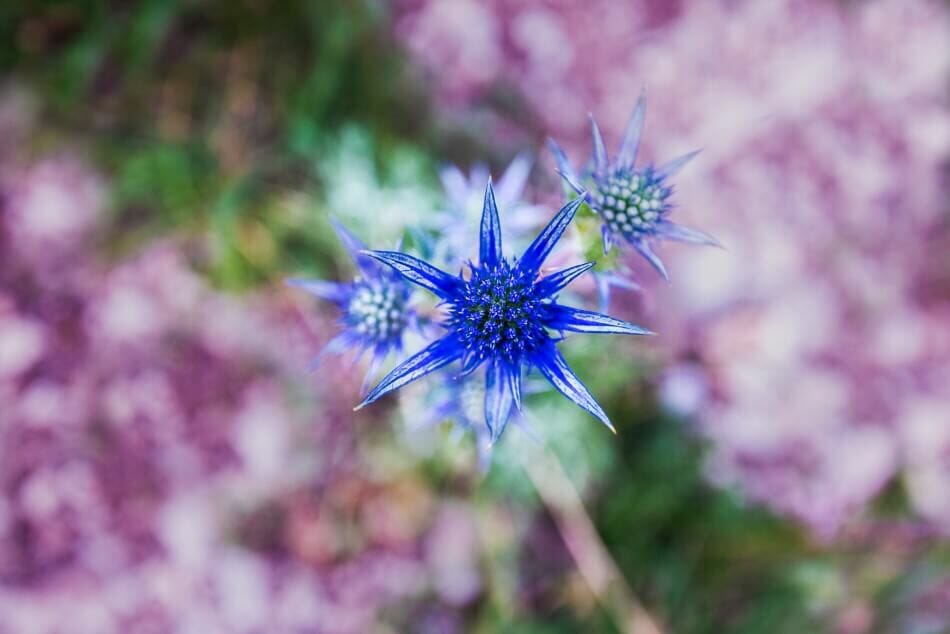
48. Mediterranean sea holly (Eryngium bourgatii)
Mediterranean sea holly, or Eryngium bourgatii, is a flowering plant species in the Apiaceae family. The plant is native to France, Spain, and Morocco.
The herbaceous perennial has a spiky appearance, with a rounded flowerhead and several spiny leaves.
49. Glory-of-the-snow (Chionodoxa)
Glory-of-the-snow, or Chionodoxa, is a perennial flowering plant in the Asparagaceae family. This plant has small bulbous flowers that bloom in blue, white, and pink colors.
It is an early spring bulb that blooms from February to March and can push up through late snow. The plant tends to flower in alpine zones once the snow melts at the start of spring.
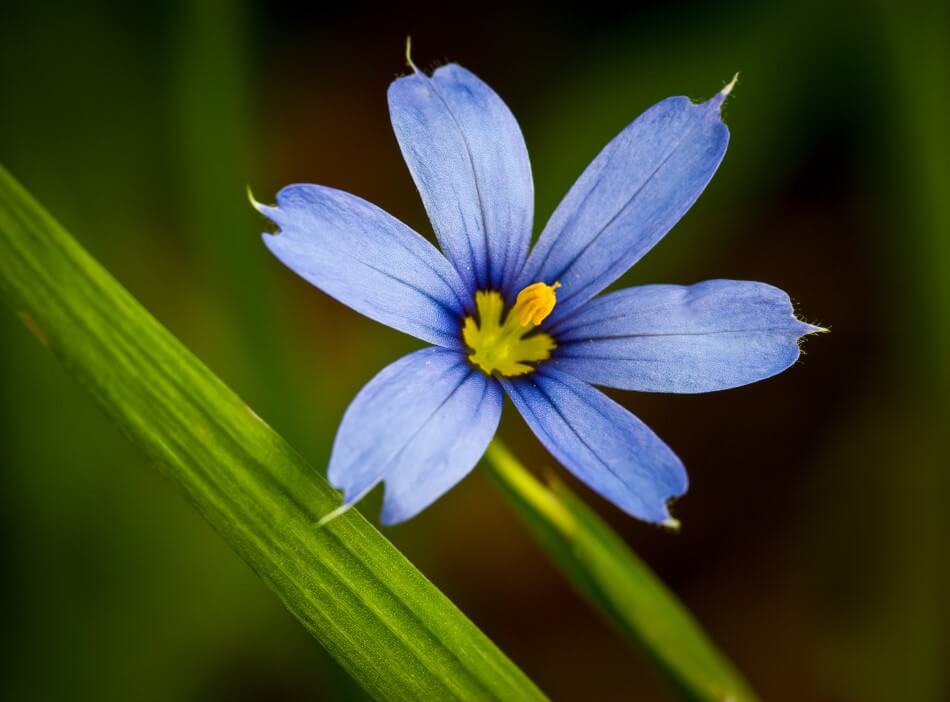
50. Blue-Eyed Grass (Sisyrinchium demissum)
Blue-eyed grass, or Sisyrinchium demissum, is a perennial wildflower from the iris family.
Native to North America, the flower has a grouping of blue or purple petals at the top of a long, thin stem. The plant grows to around one foot and features a yellow eye in the center.
This is a popular garden flower as its blooms provide a nice contrast to the green grassy stems.
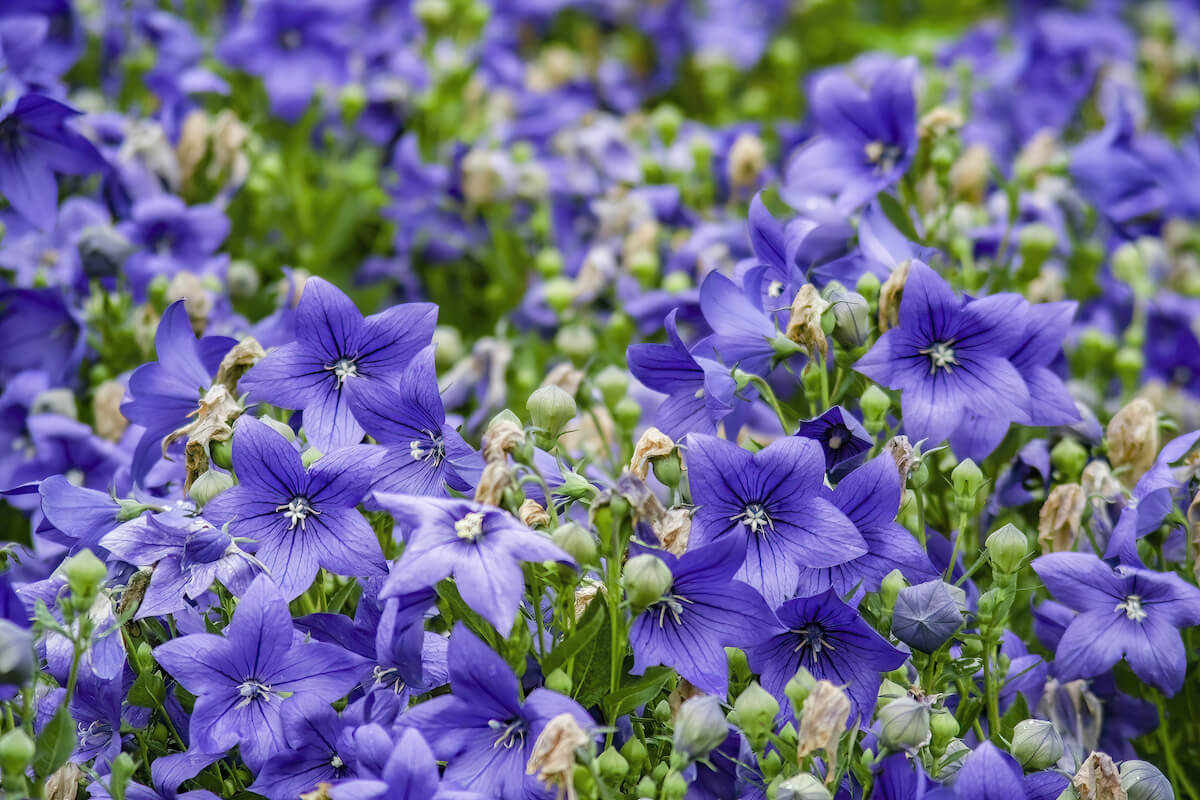
51. Balloon Flower (Platycodon grandiflorus)
These perennials have spherical inflated blooms that burst into a blue star shape, hence the balloon flower. The flowers are a purplish-blue pastel color that looks wonderful in cottage gardens.
Balloon flowers are related to several popular ornamentals in the Campanulaceae family. They are straightforward to care for and attract many pollinators to the garden.
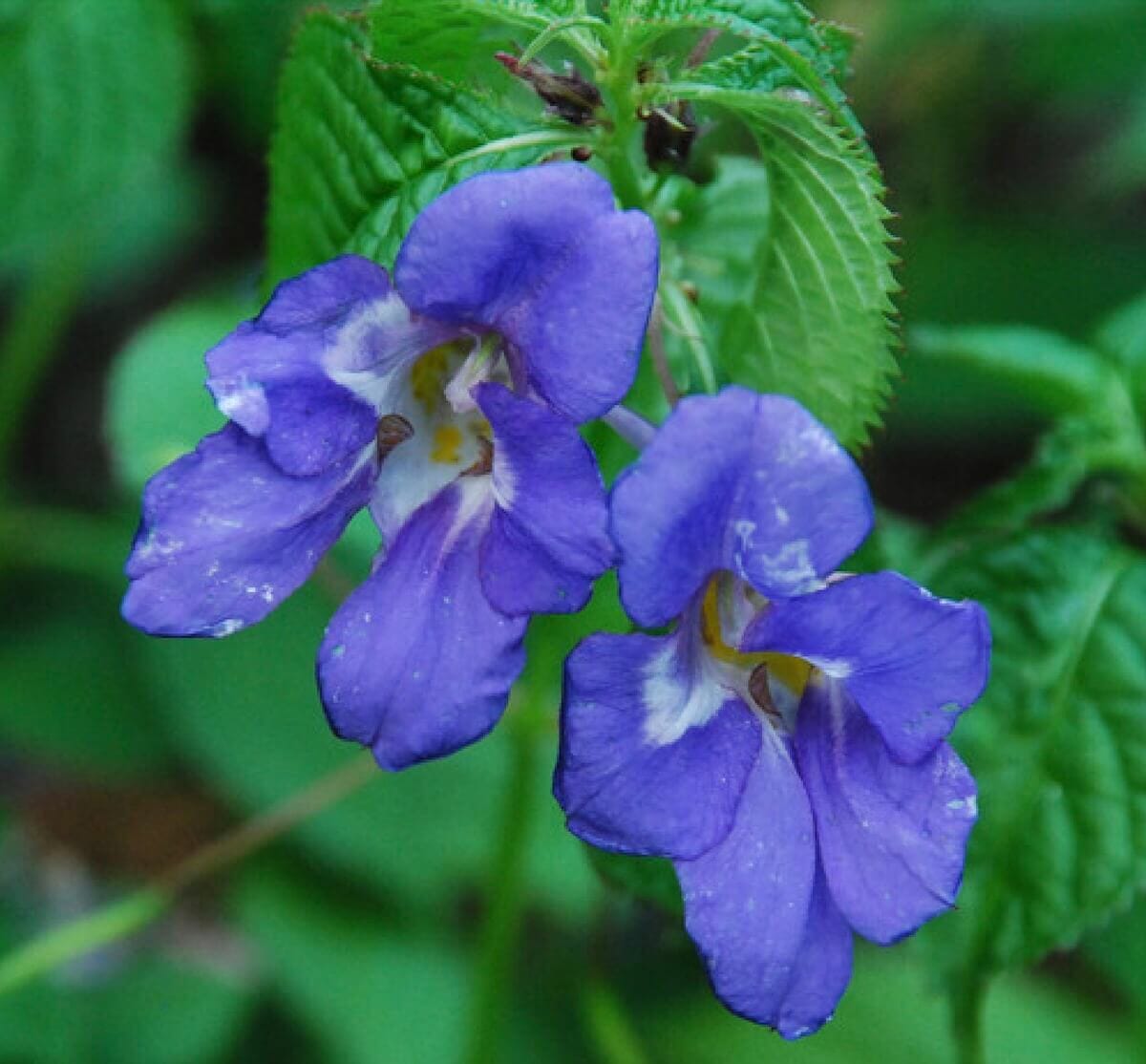
52. Blue Diamond Impatiens (Impatiens namchabarwensis)
Also known as Blue Diamond Impatiens, this annual is a rare blue flower native to the Himalayas. It is a rare blue annual from the Himalayas, known from Tibet.
They are beloved for their blue color. Impatiens flower from spring to late summer, dying back when the weather cools.
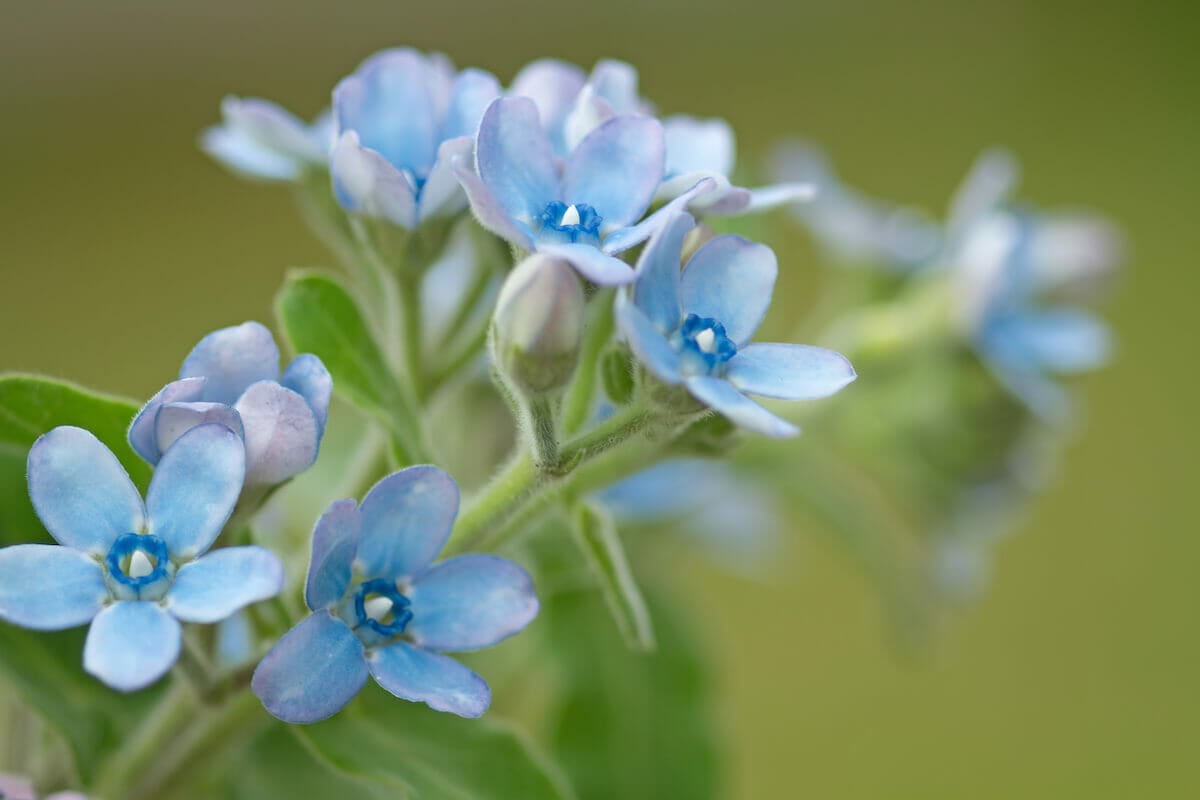
53. Tweedia (Oxypetalum coeruleum)
Native to South America, this flowering plant has delicate pastel blue blooms emerging from slivery-green foliage. The star-shaped flowers are great fillers for bouquets due to their long-lasting nature.
This plant is also known by the scientific name Tweedia caerulea.
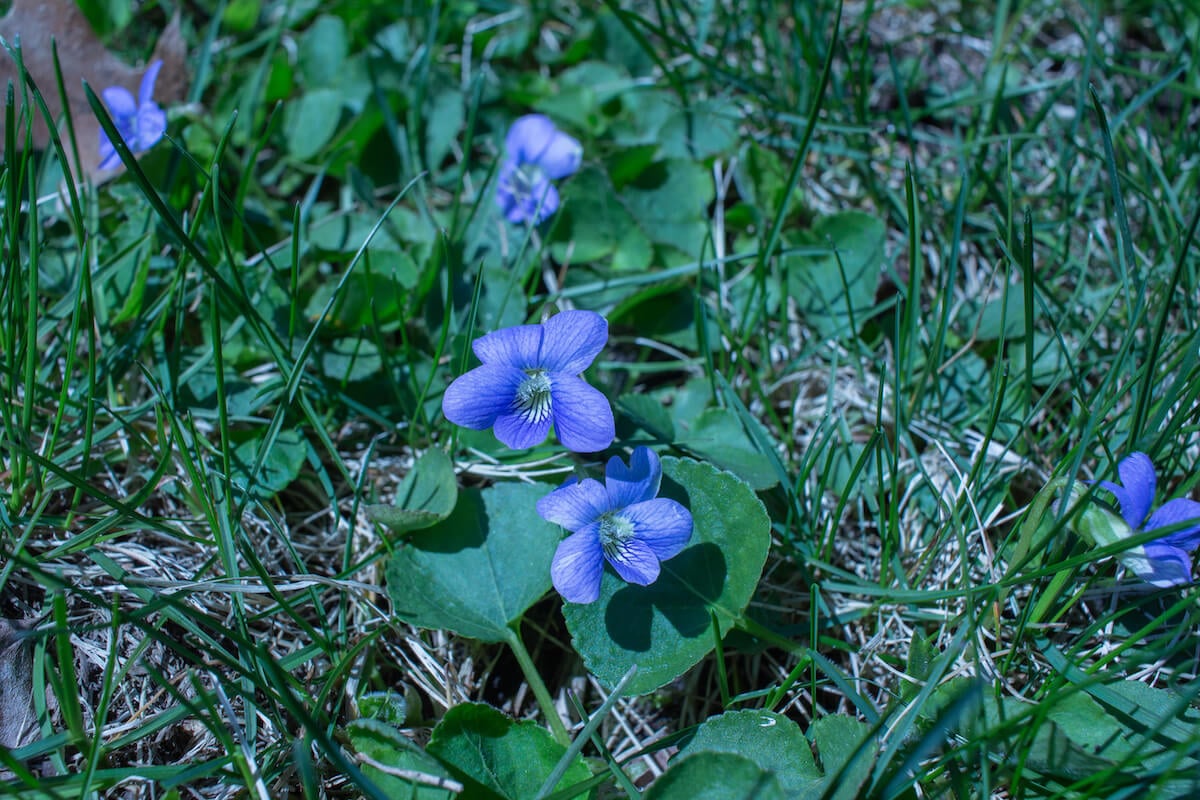
54. Blue Violet (Viola sororia)
Featuring stunning blue-purple flowers on short stems, this perennial plant is native to North America. Part of the Violaceae family, they grow in moist habitats and thrive in the shade.
The flowers of the common blue violet are edible.
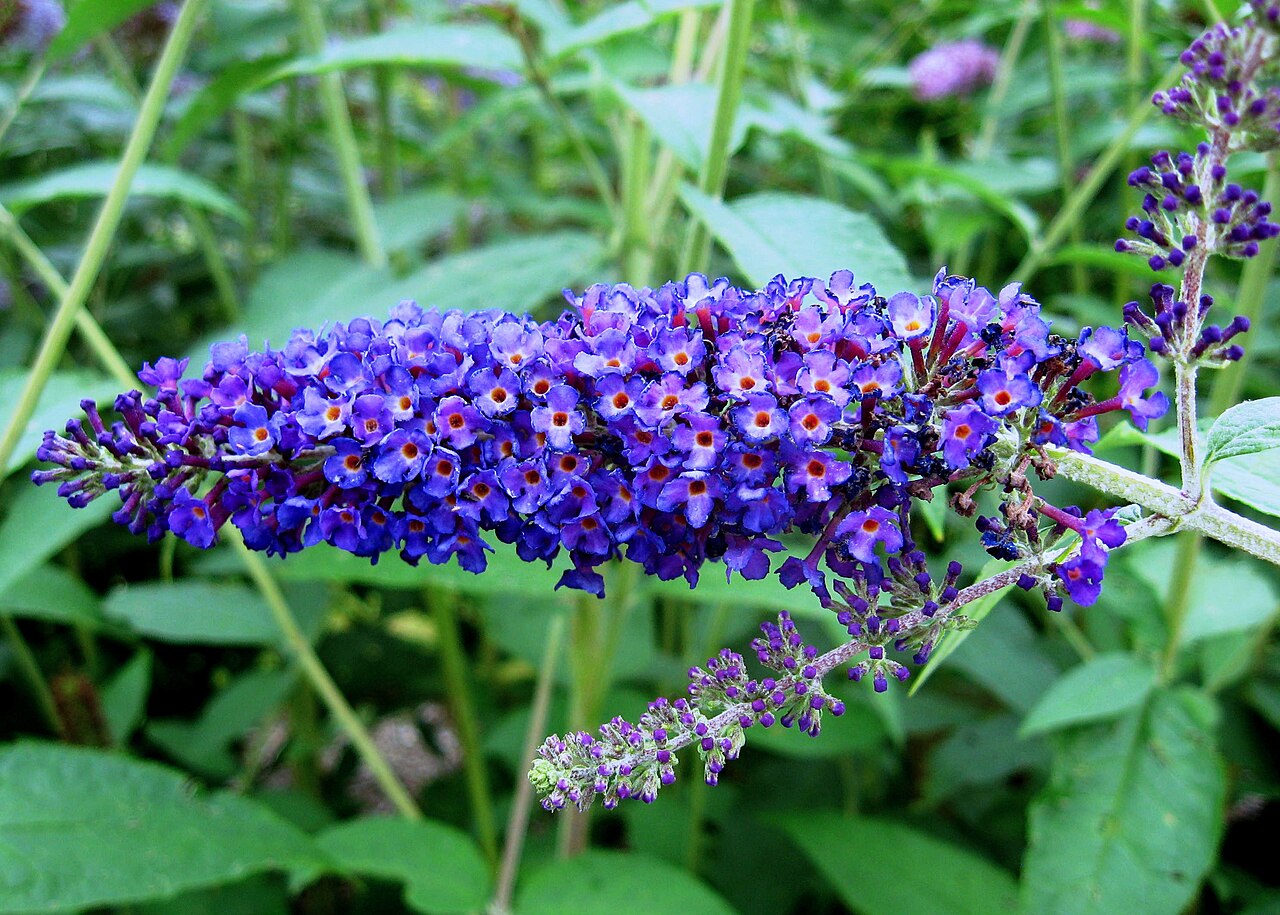
55. Empire Blue Butterfly Bush (Buddleja davidii ‘Empire Blue’)
Empire Blue Butterfly Bush is a deciduous shrub sporting large light blue to violet flowers with a sweet scent. The flowers are clustered together on long branches, intensifying the scent and filling the air in your garden.
The long-lasting blooms are perfect for flower arrangements or as gifts. They also attract many pollinators to the garden with their scent and lovely blue color.
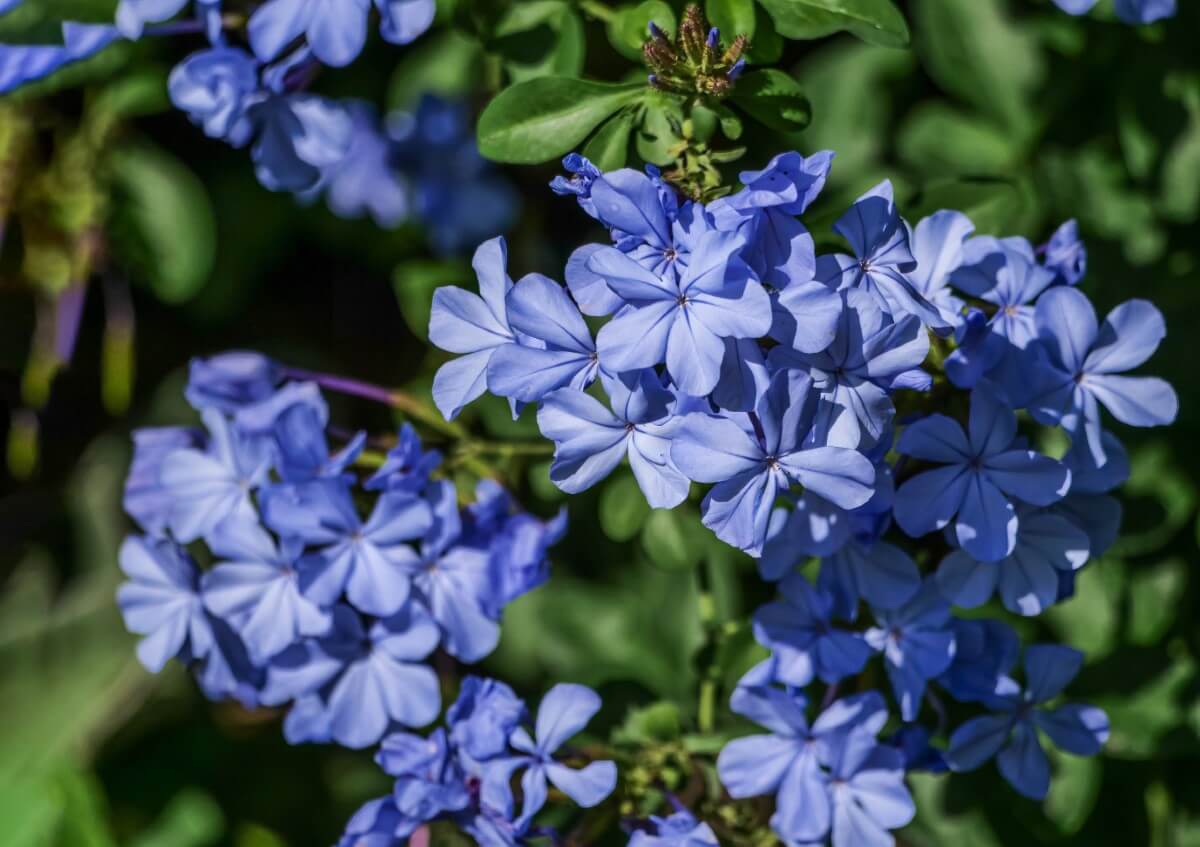
56. Plumbago (Plumbago auriculata)
- Toxicity
- Poisonous if eaten, medium severity
Plumbago auriculata, commonly known as Cape Plumbago, Cape Leadwort, or Skyflower, is an evergreen shrub native to South Africa. It belongs to the Plumbaginaceae family and is renowned for its stunning blue or white flowers.
This plant prefers full sun to partial shade and well-drained soil. It is heat and drought-tolerant, making it an ideal choice for xeriscaping or in coastal gardens.
They symbolize loyalty, trust, and depth of feelings. In a spiritual context, it may also represent inspiration and high ideals.
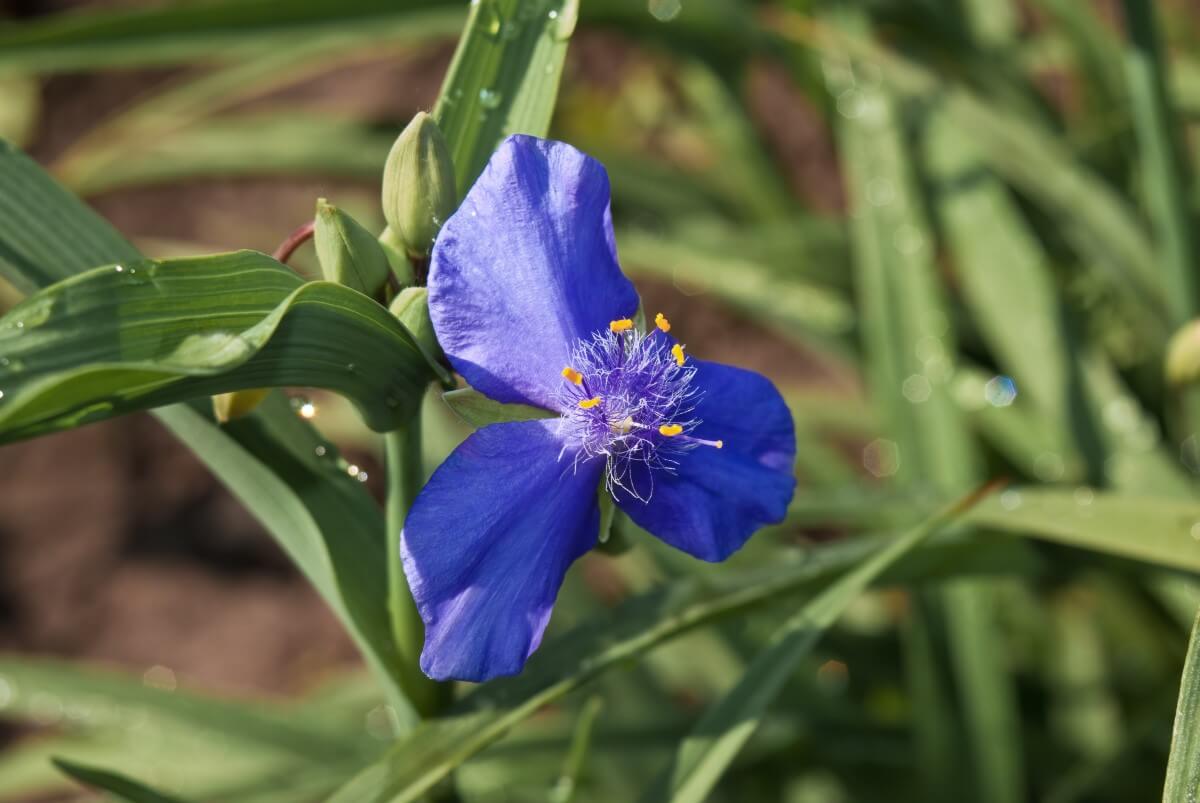
57. Spiderwort (Tradescantia virginiana)
- Toxicity
- Toxic to cats and dogs (ASPCA, as inch plant); low-severity poison
Tradescantia virginiana, commonly known as Spiderwort or Virginia Spiderwort, is a perennial flowering plant native to the eastern United States.
The blue-purple colors of the flowers often represent deep emotions, trust, and longing, making this plant a fitting symbol of steadfast affection.
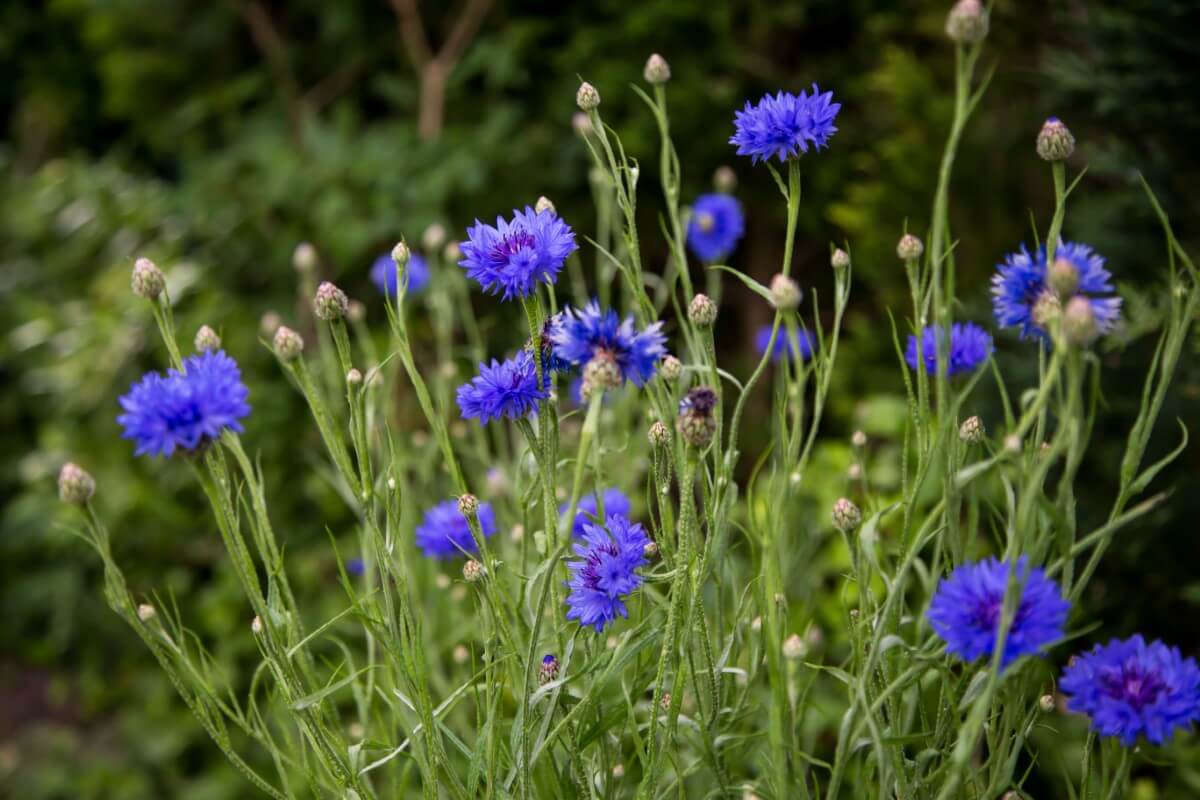
58. Bachelor’s Button (Centaurea cyanus)
Bachelor’s Button can grow up to 90 cm tall, and its stems are slender and branched. Its most distinguishing feature is its vibrant blue flowers, which bloom from late spring until early autumn. The flowers attract a variety of pollinators, particularly bees and butterflies.
Bachelor’s button stood for single blessedness in the language of flowers. It often represents loyalty and trust.
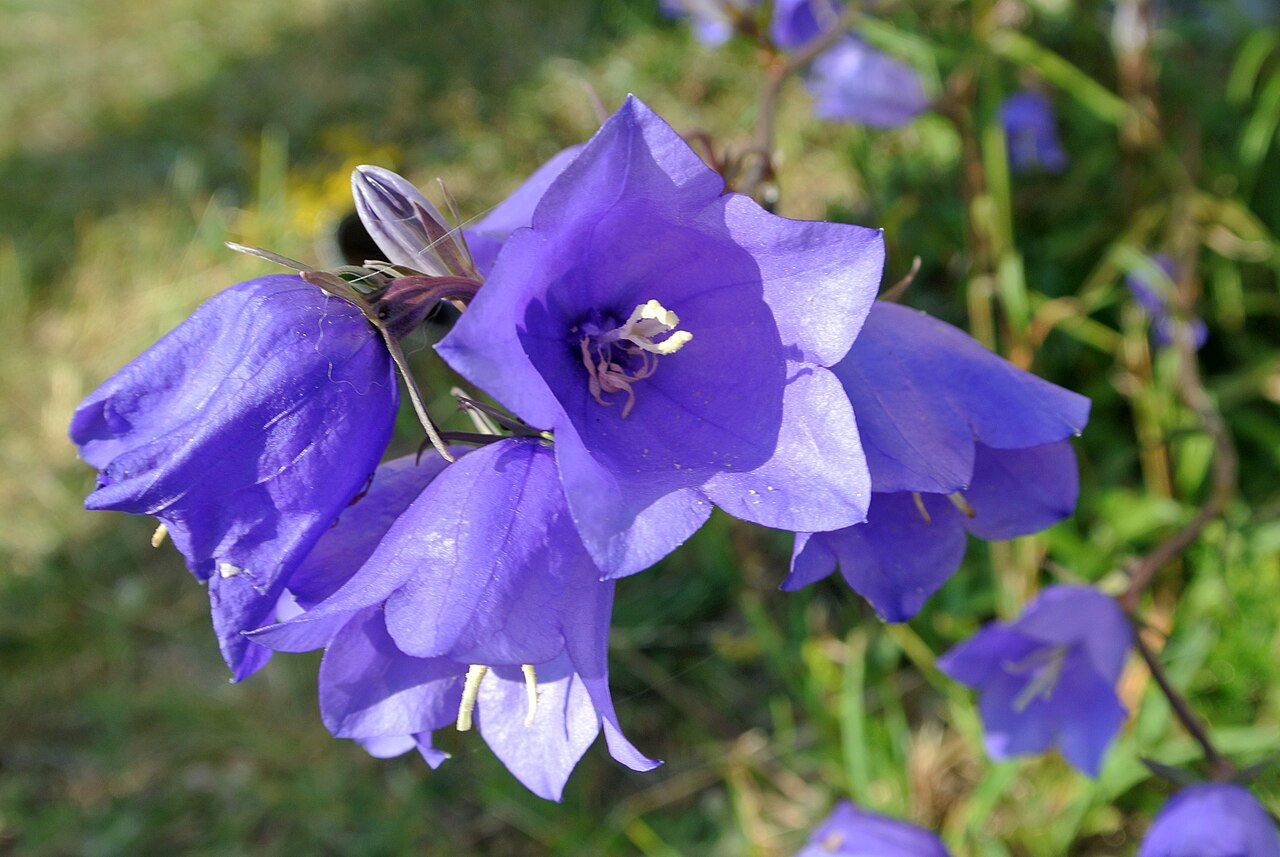
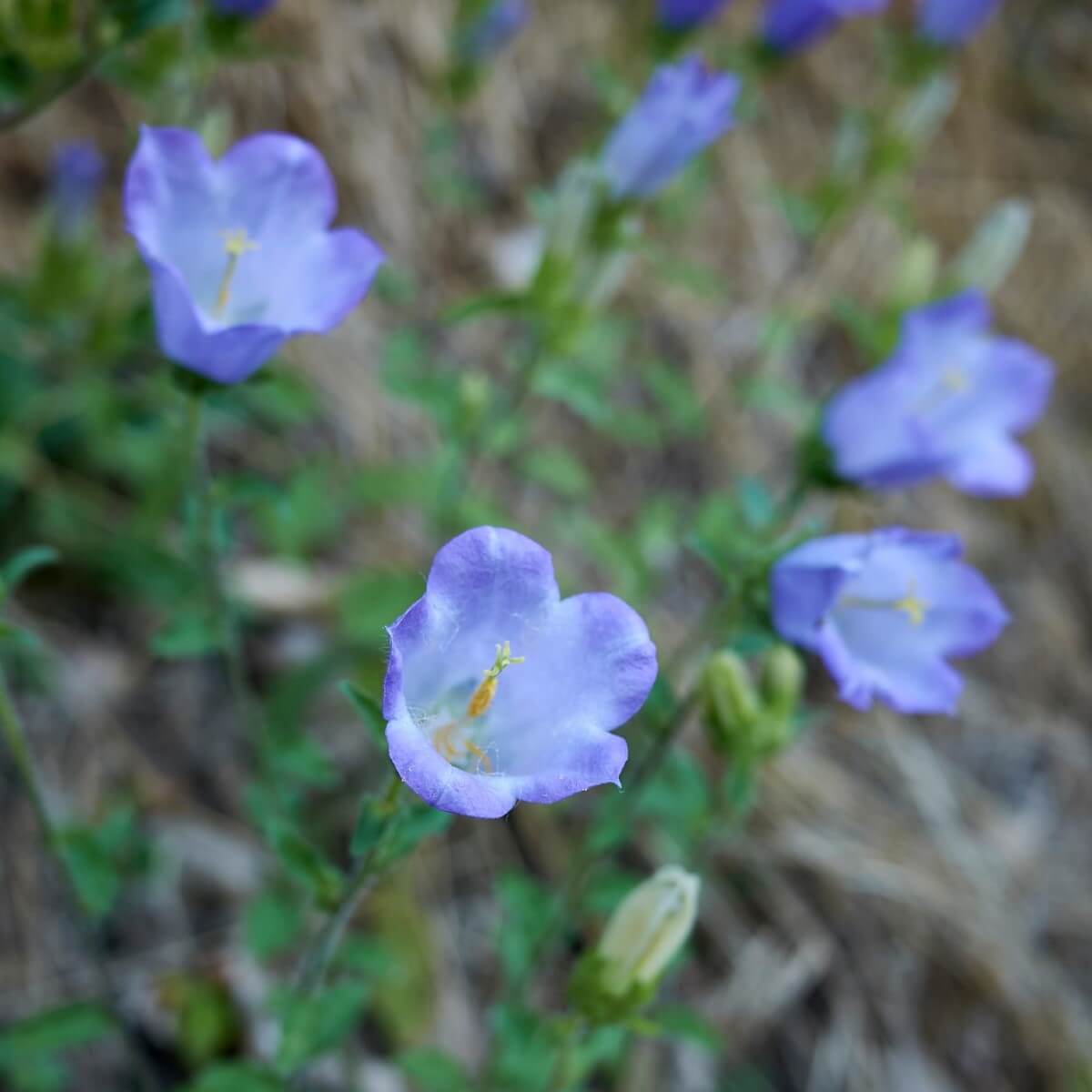
59. Blue Bellflower (Campanula)
Campanula, commonly known as Bellflowers, is a diverse genus of flowering plants native across Europe, the Mediterranean, and Asia. Their name derives from the Latin “campana” meaning bell, referring to the bell-like shape of the flowers.
Bellflowers typically have showy, bell-shaped blooms in shades of blue, purple, pink, or white. Their leaves are generally lance-shaped or rounded.
These beautiful flowers are often used to express the sentiment “thinking of you” in the world of floriography. The blue or purple Bellflowers can symbolize loyalty, trust, and deep admiration.
60. Blue Pimpernel (Anagallis foemina)
Anagallis foemina, or Blue Pimpernel, is an annual herbaceous plant native to the Mediterranean region. It features petite, elliptical to ovate leaves in opposite arrangements, and from spring to autumn, it produces small, solitary, sky-blue flowers with a red-purple eye in the center.
Blue pimpernel also signifies loyalty, trust, and tranquility. Given its survival in harsh conditions, it can symbolize resilience and perseverance.
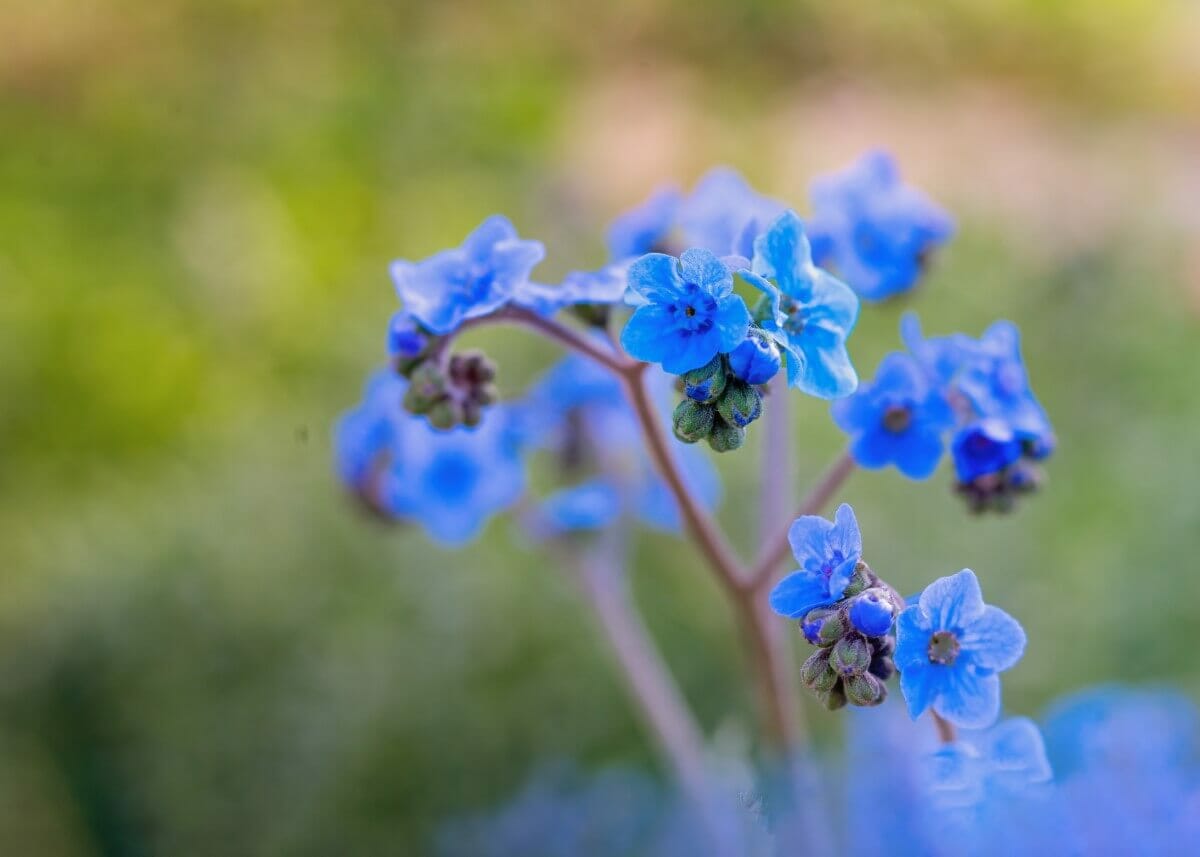
61. Chinese Forget-Me-Not (Cynoglossum amabile)
Cynoglossum amabile, commonly known as Chinese Forget-Me-Not, is an annual flowering plant native to Asia. Despite its common name, it is not closely related to the true Forget-Me-Nots (Myosotis species) but is a part of the borage family.
The flowers bloom from midsummer to early fall and give off a delicate, sweet fragrance that attracts pollinators, including bees and butterflies.
In the language of flowers, Forget-Me-Nots symbolize true love, remembrance, and memory. While the symbolism isn’t exactly identical to the Chinese Forget-Me-Not, it carries similar associations due to its common name. Its blue flowers also often symbolize loyalty and trust.
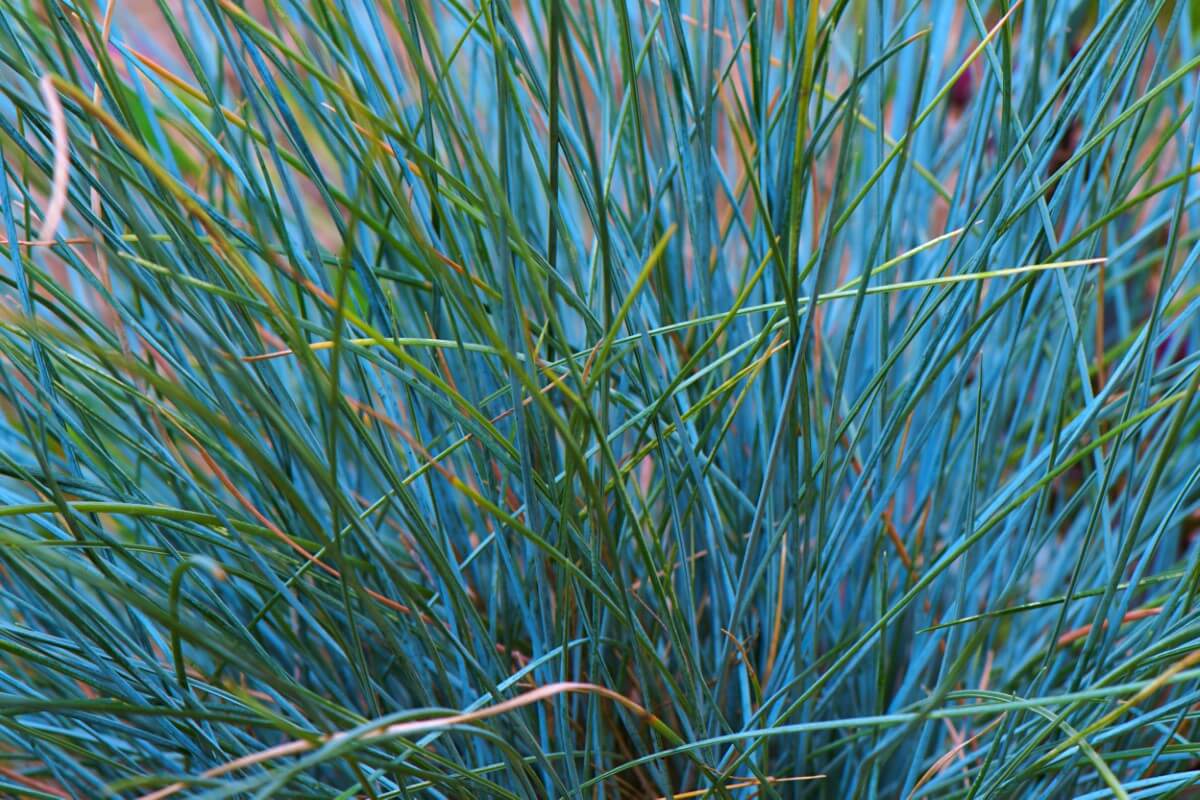
62. Blue Fescue (Festuca glauca)
Festuca glauca, commonly known as Blue Fescue, is a perennial grass known for its compact size and blue-gray foliage. Its flowers are green with a purple tinge. It’s native to Spain, France, Italy, and Switzerland, but has been cultivated widely in many regions across the globe.
Its foliage is characterized by narrow, glaucous blue-gray leaves, providing an exciting color and textural contrast to many other garden plants. It’s also drought-resistant, making it a popular choice for xeriscaping and rock gardens.
In summer, Blue Fescue produces tall, flowering spikes that protrude above the tufted foliage. The flowers are small and greenish-blue, transitioning to a straw color as the season progresses.
While Blue Fescue is relatively easy to care for, it thrives best in full sun and requires well-drained soil. Overly fertile soil or excessive watering can cause the plant to lose its tight, mounded shape. Propagation is typically achieved through division in the spring.
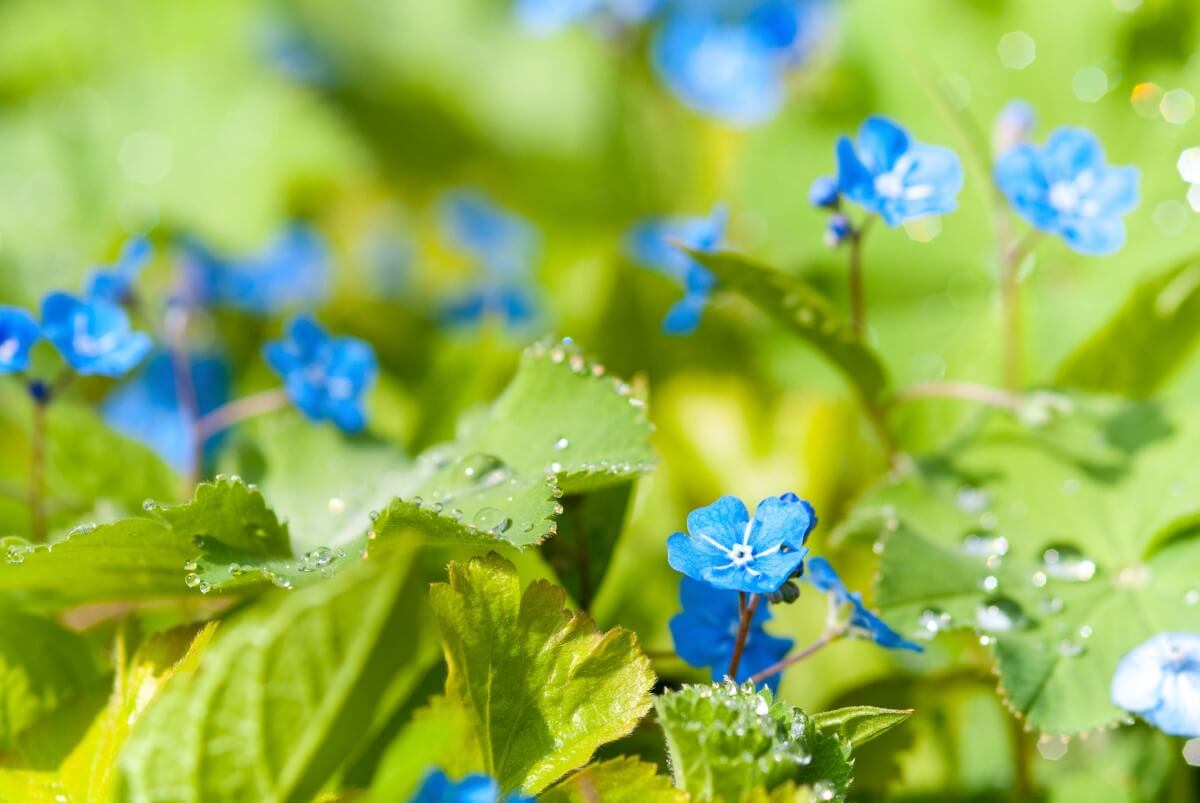
63. Blue-Eyed Mary (Omphalodes verna)
Omphalodes verna, commonly known as Blue-Eyed Mary or Creeping Forget-Me-Not, is a perennial plant native to southern Europe. This charming plant is primarily known for its stunning spring blooms, often carpeting the ground in woodland areas where it thrives.
Botanically, Omphalodes verna features oval-shaped leaves and small, bright-blue or white flowers. The flowers have five petals with a white eye at the center, which gives the plant its common name, Blue-Eyed Mary. The plant usually spreads out as it grows, forming a dense mat of green foliage covered in blue flowers in the spring.
In the language of flowers, Blue-Eyed Mary symbolizes trust and hope, which can be a reflection of the way it lights up shady woodland areas with its bright blooms every spring.
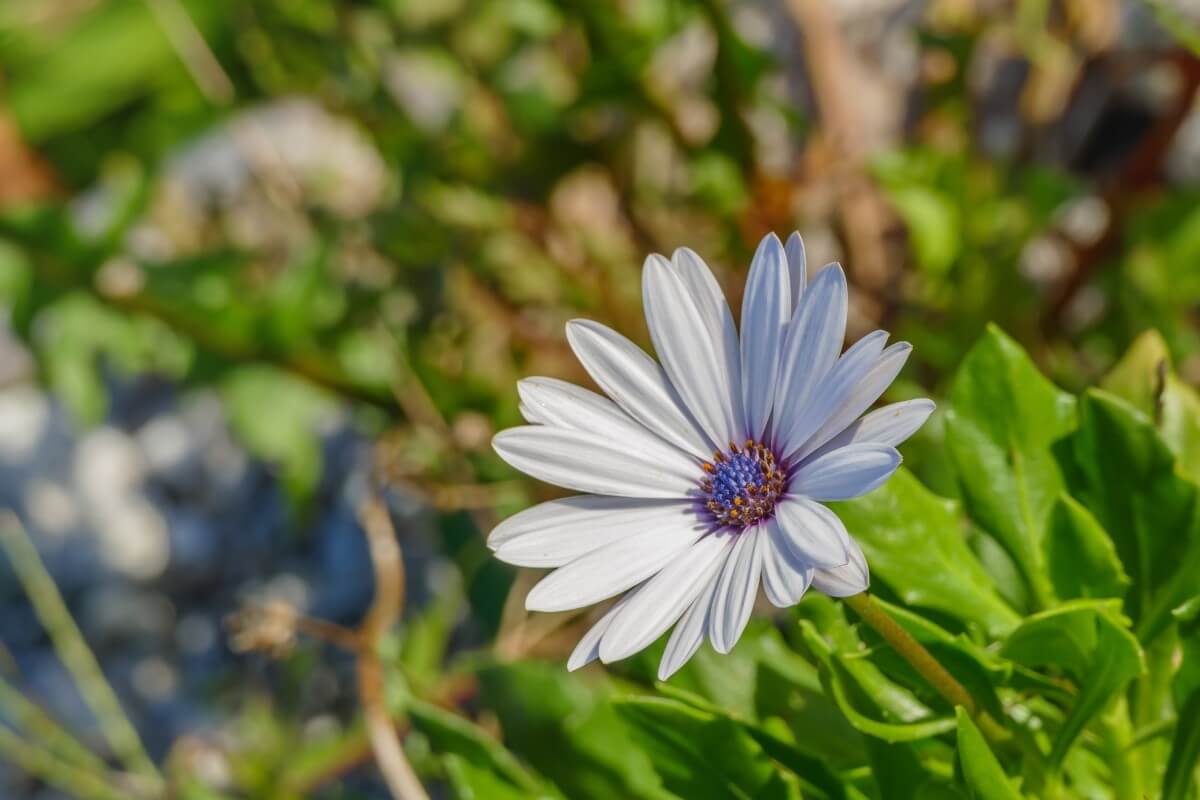
64. Blue-Eyed African Daisy (Osteospermum ‘Blue Eyed Beauty’)
The Blue-Eyed African Daisy, scientifically known as Osteospermum ‘Blue Eyed Beauty’, is native to South Africa. As the name suggests, the central disk of this daisy-like flower is deep blue, surrounded by white or light yellow petals.
The stunning flowers bloom abundantly from late spring until the first frost. Each flower head measures about 5cm across and comprises a central disk of deep blue florets surrounded by a ring of light yellow or white ray florets.
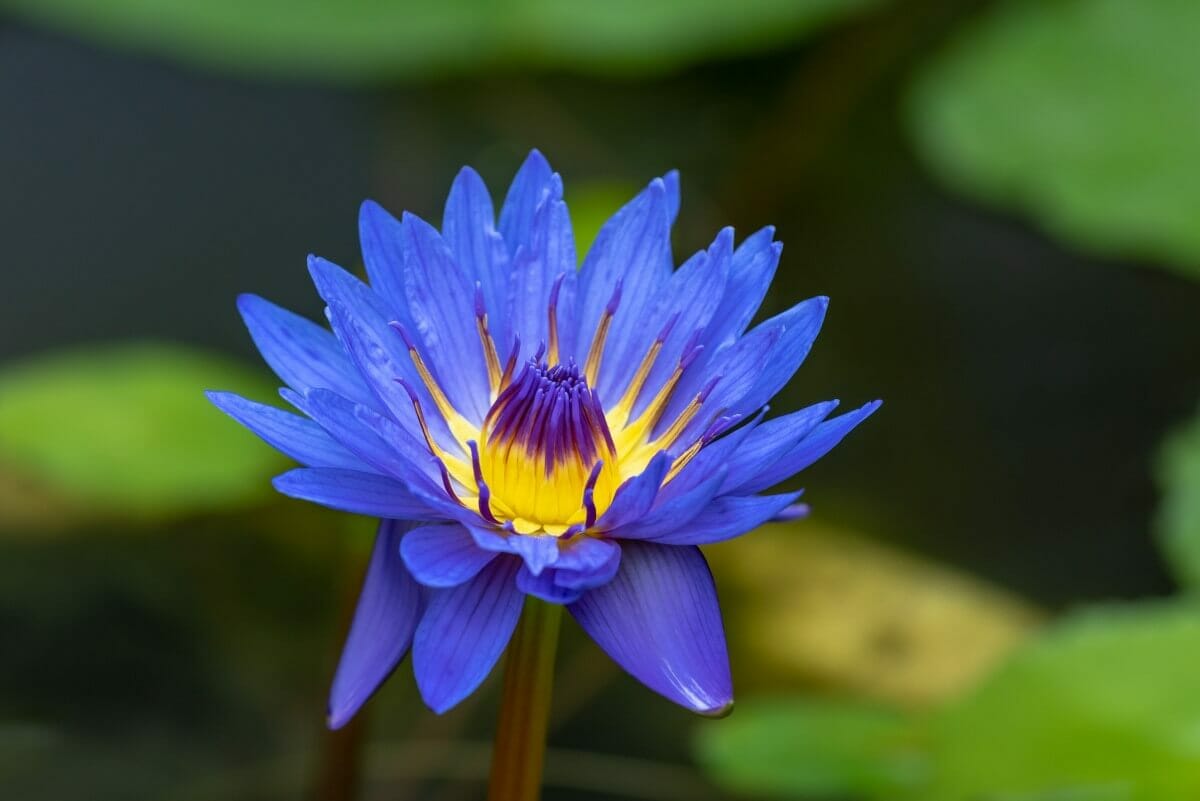
65. Blue Waterlily (Nymphaea caerulea)
Nymphaea caerulea is an aquatic perennial known as the Blue Waterlily, Blue Egyptian Lotus, or Sacred Blue Lily. It is classified as Nymphaea nouchali var. caerulea and is native across eastern and southern Africa and Egypt. The plant has a long history of use and significance in Egyptian culture.
Botanically, Nymphaea caerulea grows from rhizomes or tubers anchored in the mud at the bottom of freshwater bodies. It sends up long stems with round, floating leaves and striking, aromatic blue flowers that bloom from spring through to autumn.
Historically, Blue Waterlily was considered sacred by the ancient Egyptians. The flowers are frequently depicted in ancient Egyptian art, symbolizing rebirth and the sun.
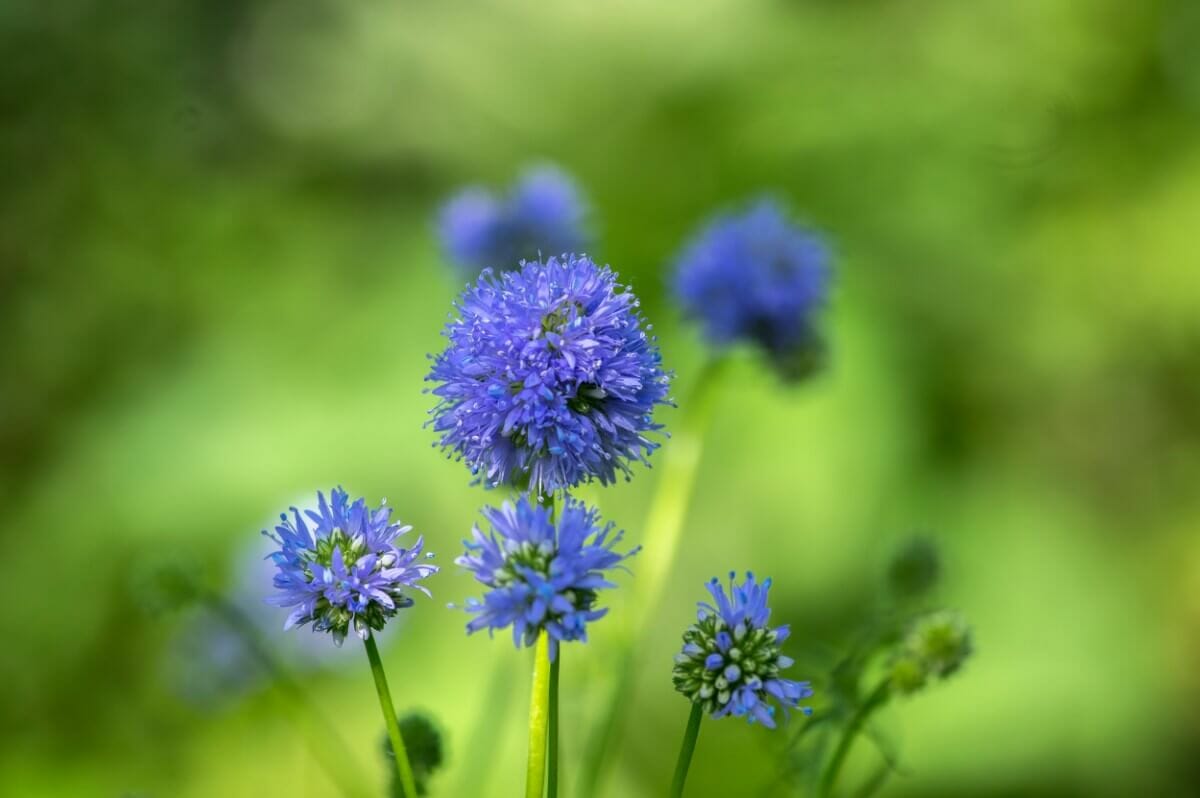
66. Bluehead Gilia (Gilia capitata)
Gilia capitata, commonly known as Bluehead Gilia or Blue Thimble Flower, is a flowering plant native to the western United States. This charming wildflower is a favorite among gardeners who prefer native and drought-tolerant species.
Bluehead Gilia is an annual or biennial plant that typically grows between 30 to 90 cm tall. Its most distinctive feature is the spherical clusters of blue to lavender flowers at the end of each stem, which indeed resembles a blue thimble or cap. The leaves are finely divided and primarily clustered at the base of the plant.
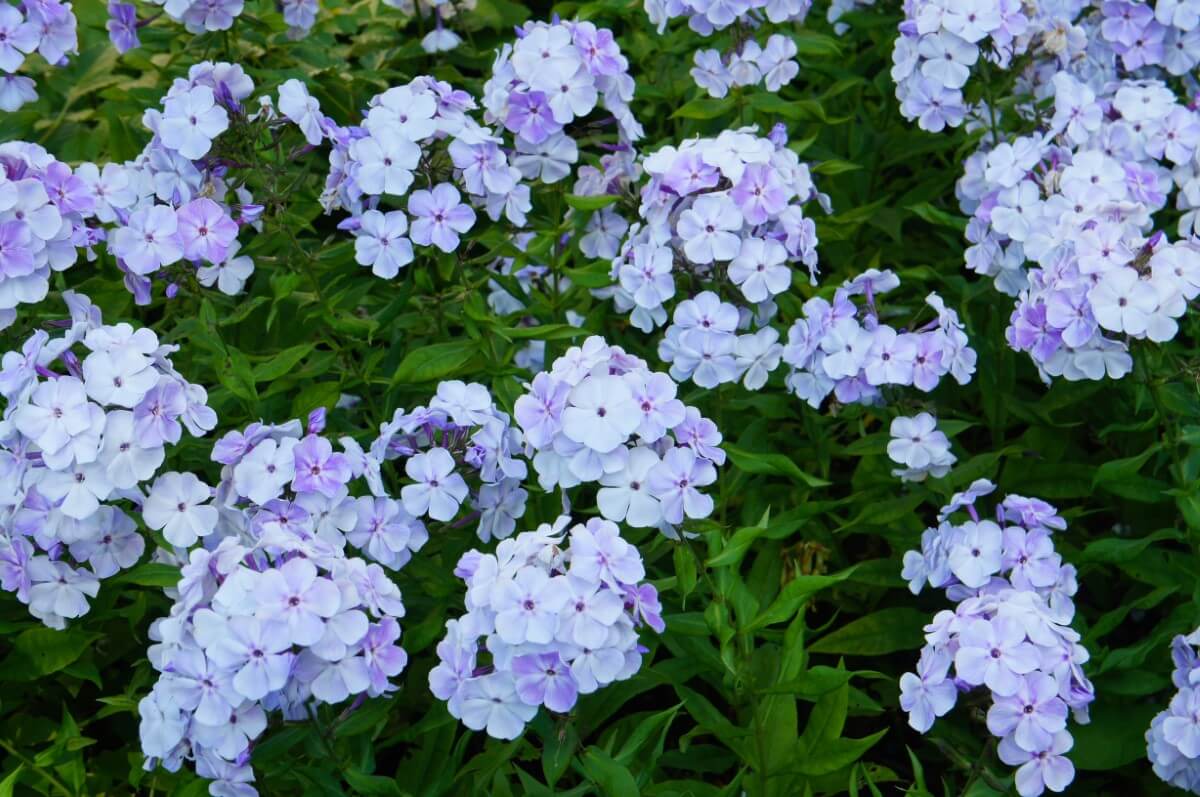
67. Phlox (Phlox paniculata)
Phlox paniculata, or Garden Phlox or Summer Phlox, is a perennial flowering plant native to the eastern and central United States. It’s a popular garden plant due to its impressive flower clusters and pleasant fragrance.
The plant produces large panicles of fragrant flowers that attract a range of pollinators, especially butterflies and hummingbirds. The leaves are lance-shaped and arranged in opposite pairs along the stem.
Phlox symbolizes partnership and harmony in the language of flowers, likely due to how the individual flowers come together in one vibrant display. It’s also associated with sweet dreams—a nod to its gentle fragrance—and the recurring theme of unity and togetherness.
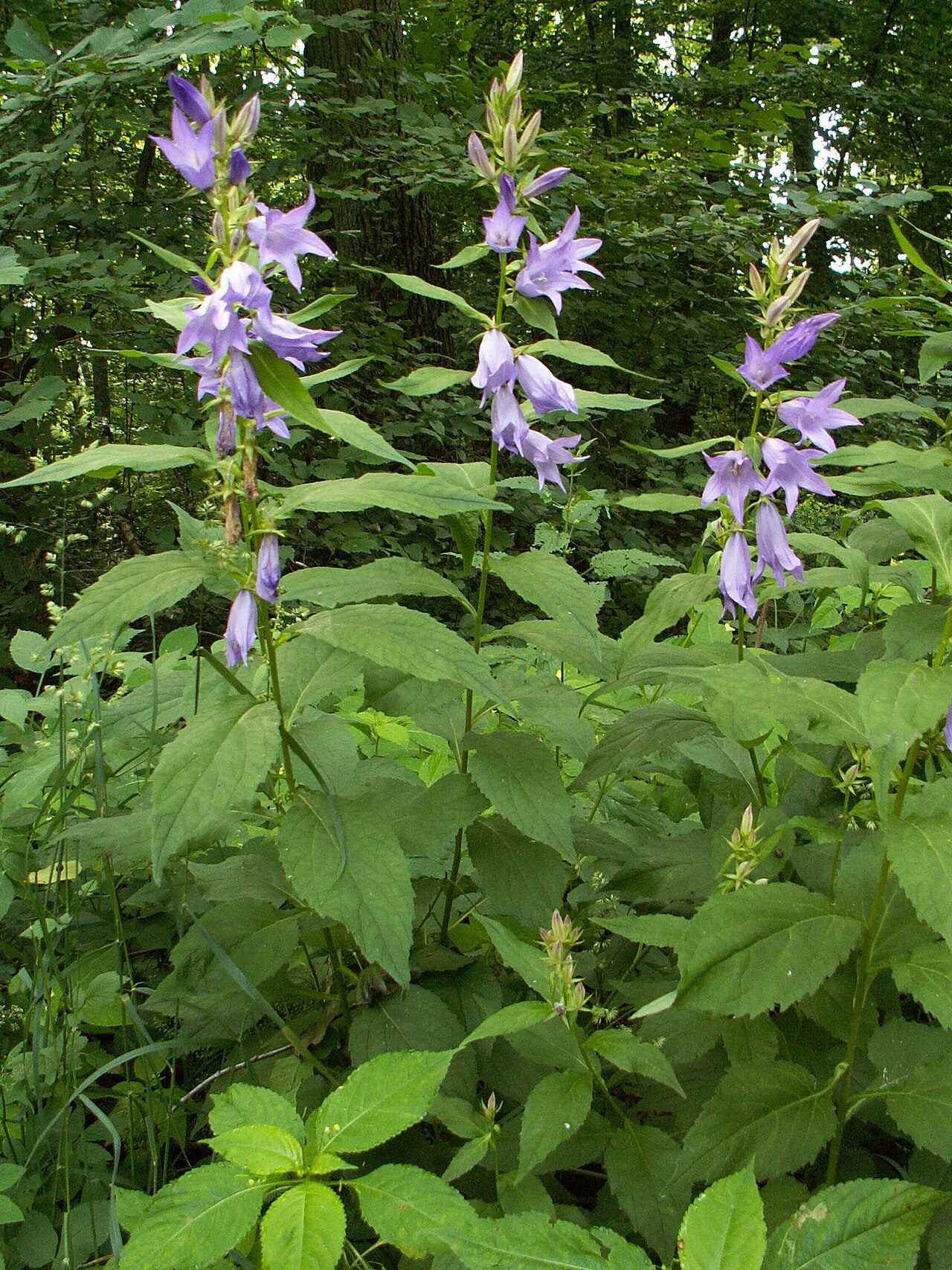
68. Himalayan Bellflower (Campanula latifolia)
Campanula latifolia, commonly known as the Broad-Leaved Bellflower or Giant Bellflower, is a perennial plant native to Europe and Western Asia. It thrives in woodland areas and on rocky hillsides, displaying its impressive blooms from June to September.
The plant bears clusters of large, bell-shaped, violet-blue flowers that hang from tall, erect stems. The delicate flowers attract a wide range of pollinators, including bees, butterflies, and hummingbirds.
In the language of flowers, Campanula generally symbolizes gratitude, humility, attractiveness, and everlasting love. The bell shape of the flowers is often associated with a connection to the ‘voice of the unconscious’ or the language of dream states.
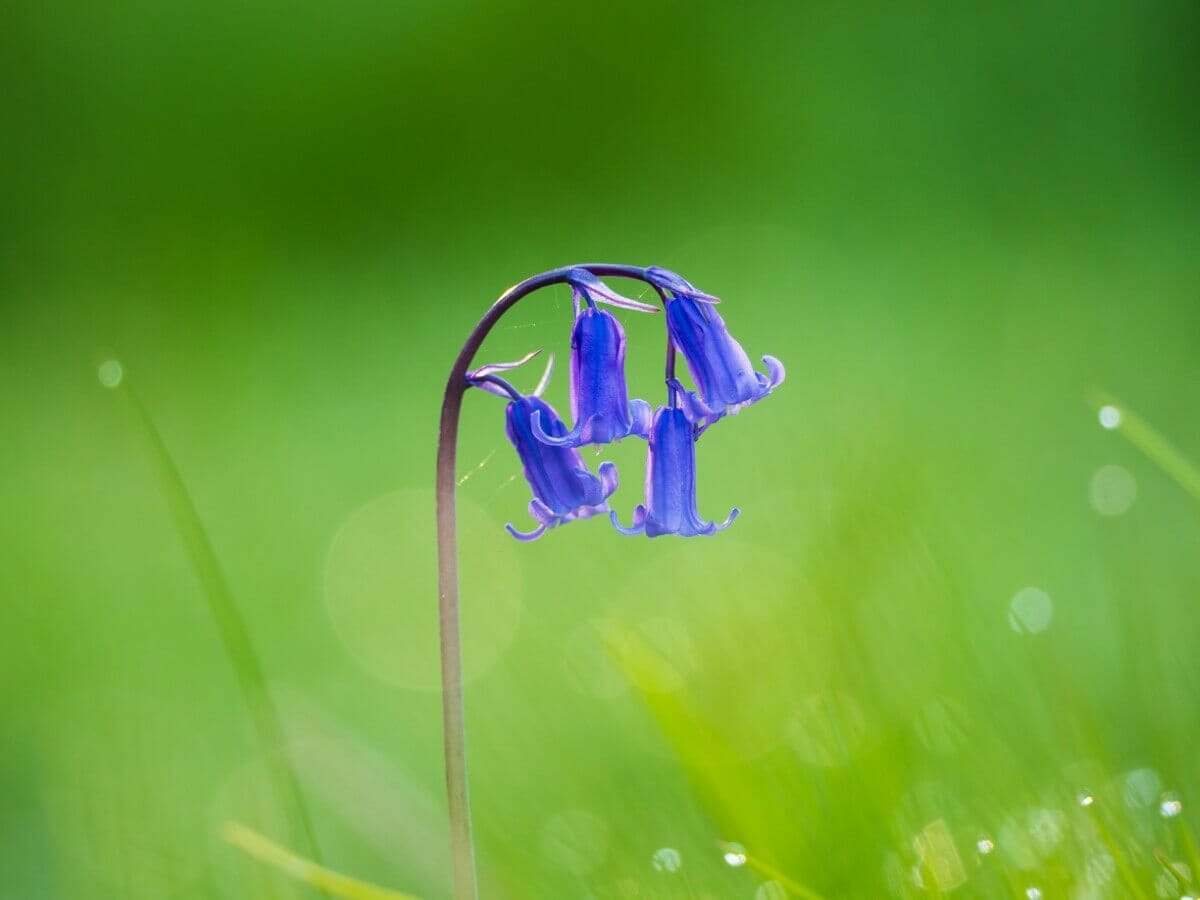
69. Hyacinthoides (Hyacinthoides non-scripta)
Hyacinthoides non-scripta, also known as the English Bluebell or simply Bluebell, is a perennial bulbous plant native to Western Europe, most notably the British Isles.
This plant produces sweet-scented violet-blue flowers arranged in a drooping, one-sided inflorescence. The flowers are bell-shaped, with the petal tips curled back. The narrow, strap-like leaves are deep green.
In the language of flowers, Bluebells symbolize constancy, humility, and everlasting love. They are also associated with gratitude. There’s an old folklore that a field of bluebells is intricately woven with fairy enchantments, signifying the presence of magical beings.
70. Canterbury Bells (Campanula medium)
Campanula medium, commonly known as Canterbury Bells, is a biennial flowering plant native to southern Europe.
In the language of flowers, Canterbury Bells symbolize gratitude, faith, and constancy. Their unique bell shape is often associated with connections to the spiritual or unconscious realms. They are commonly linked with tranquility, trust, and wisdom.
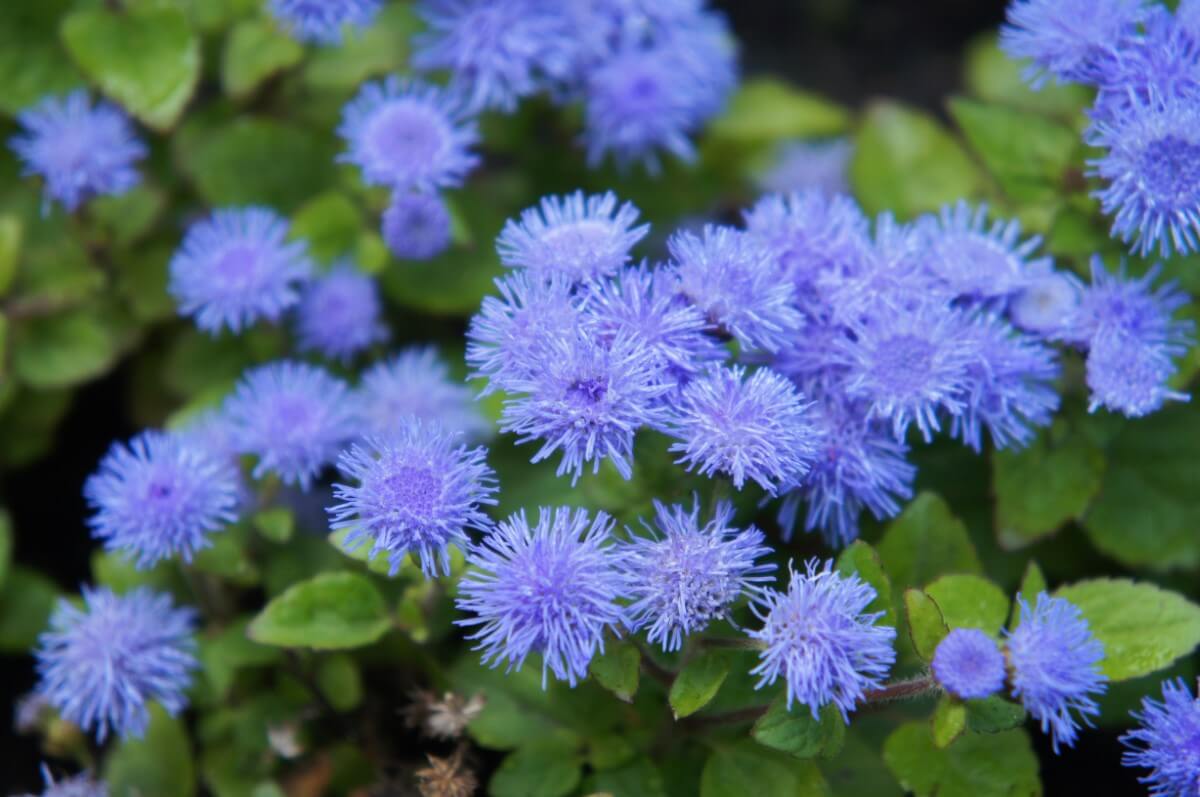
71. Ageratum (Ageratum houstonianum)
Ageratum houstonianum, commonly known as Flossflower, Blue Mink, or simply Ageratum, is an annual native to Mexico and Central America, introduced elsewhere, including the United States.
Its most distinctive feature is the small, fluffy, blue flower clusters that bloom from late spring until the first frost. The flowers give off a strong, sweet scent attracting butterflies and pollinators.
In the language of flowers, Ageratum symbolizes politeness. Its long flowering period could also symbolize endurance and immortality. Its blue flowers often represent peace, tranquility, and openness.
72. Japanese Iris (Iris ensata)
- Toxicity
- Toxic to cats and dogs (ASPCA, for the genus); low-severity poison
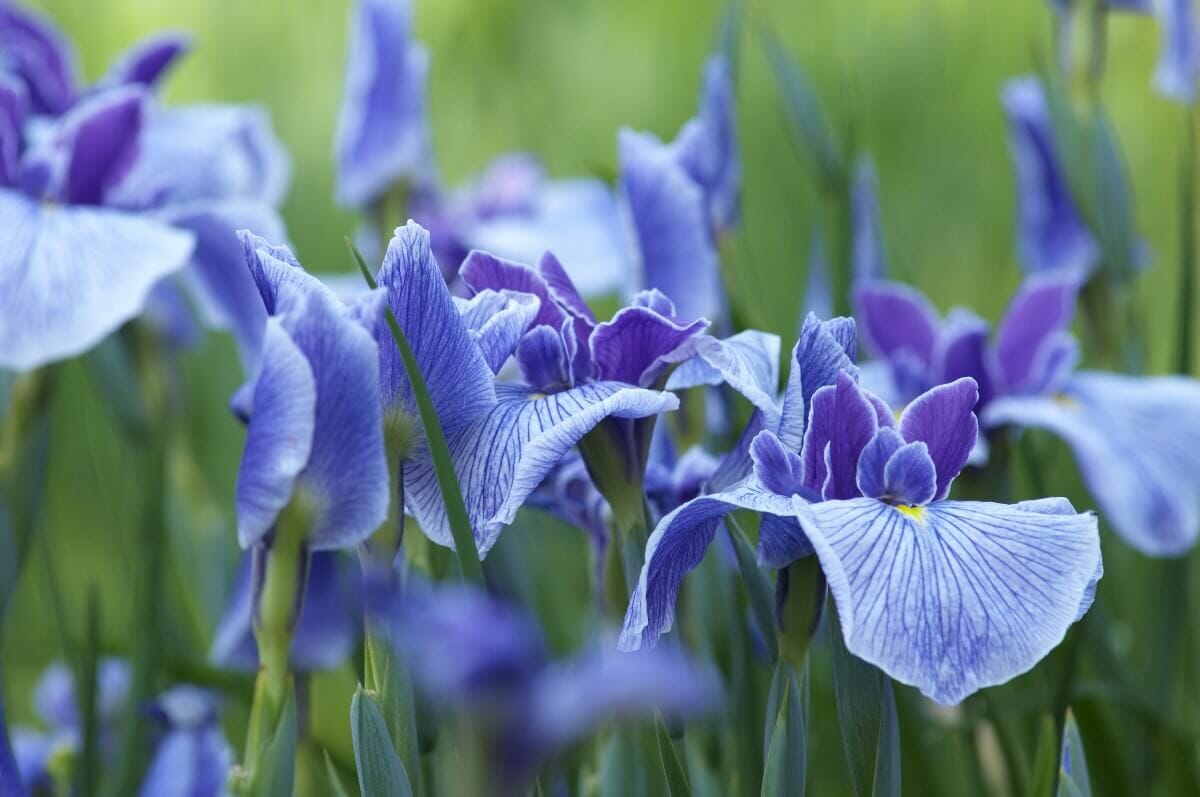
Iris ensata, commonly known as the Japanese Iris or Hanashōbu, is a species of Iris native to eastern Asia, from Siberia to Japan, Korea, and China. Celebrated for centuries in Japanese art and culture, this plant blooms in early summer, displaying an array of unique colors. Unlike other Iris species, their leaves are sword-shaped and longer, giving the plant a graceful arching habit.
In the language of flowers, the Iris symbolizes wisdom, hope, trust, and valor.
73. Blue Flag Iris (Iris versicolor)
- Toxicity
- Toxic to cats and dogs (ASPCA, for the genus); low-severity poison
Iris versicolor, also known as the Blue Flag Iris or Harlequin Blueflag, is a perennial plant native to North America. It is mainly found in wetlands and along the edges of water bodies, making it a popular choice for water gardens and pond edges. The flowers bloom in late spring and early summer, attracting various pollinators, especially bees and hummingbirds.
In the language of flowers, Irises symbolize faith, wisdom, peace of mind, and hope. The Blue Flag Iris, with its unique habitat and beautiful blooms, can also indicate adaptability and strength. The blue-violet color of the flowers often conveys mystery, depth, and intuition.
74. Meadow Sage (Salvia nemorosa)
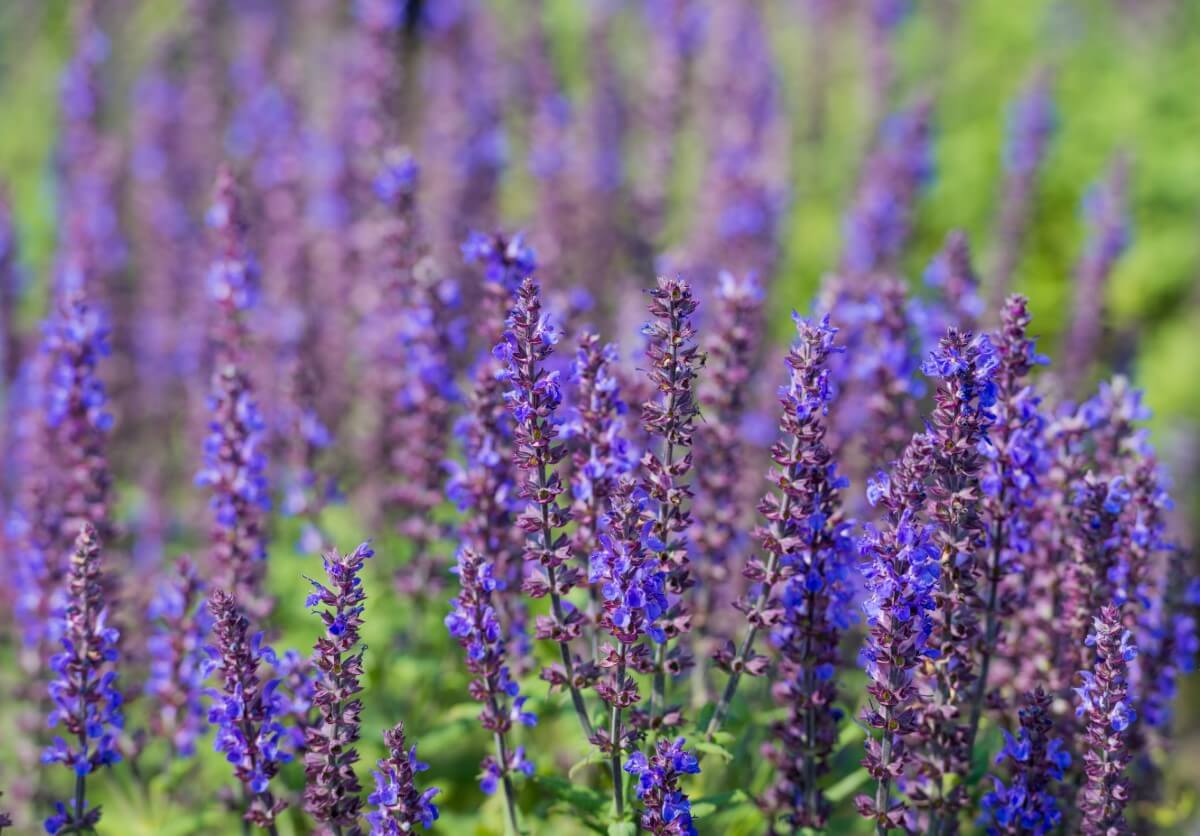
Salvia nemorosa, commonly known as Meadow Sage or Woodland Sage, is a hardy perennial native to a wide range in Central Europe and Western Asia. Its stunning blue-violet flowers make it a popular choice for gardeners worldwide.
This plant is versatile, drought-tolerant, and deer-resistant, making it an excellent choice for many garden settings. It thrives in full sun and well-drained soil and is often used in borders, rock gardens, and pollinator gardens.
In the language of flowers, Salvia represents wisdom, good health, and longevity, drawing from the plant’s long history of medicinal use. Meadow sage is commonly associated with tranquility, trust, and loyalty. In a spiritual or symbolic context.
75. Jacob’s Ladder (Polemonium caeruleum)
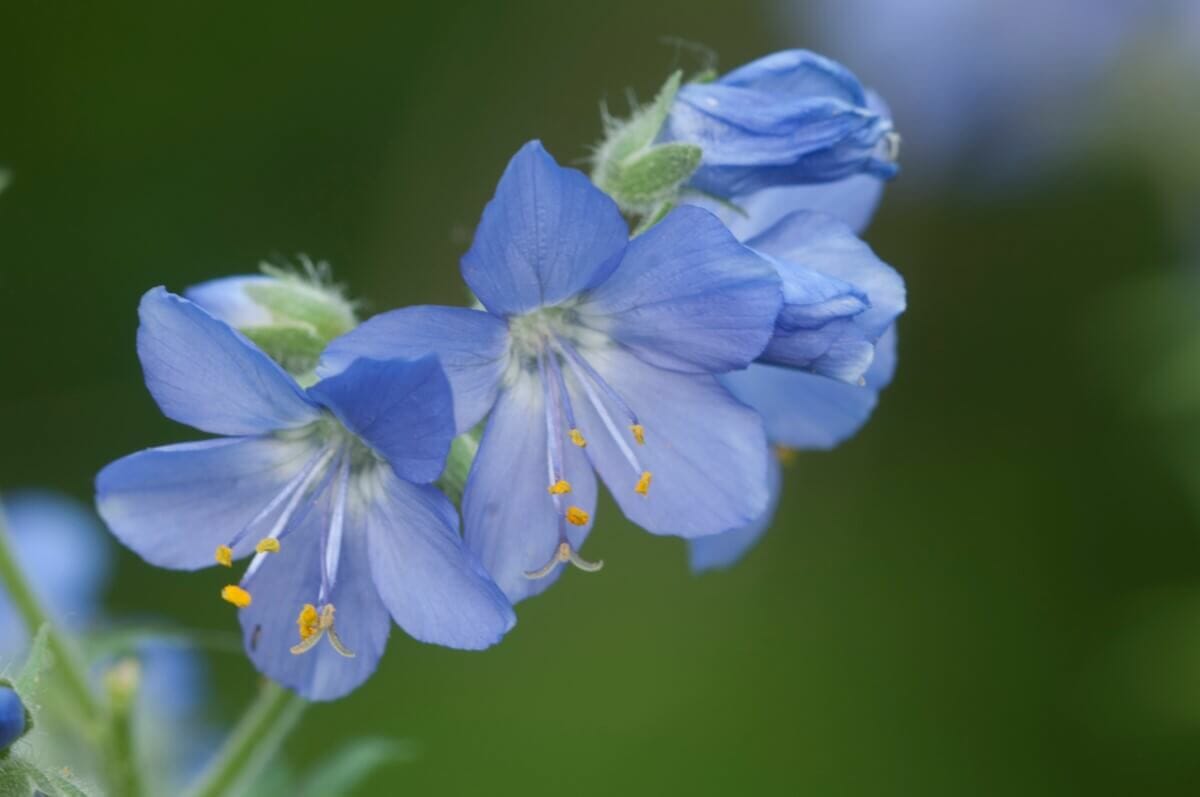
Polemonium caeruleum, commonly known as Jacob’s Ladder or Greek Valerian, is a hardy perennial native to Europe and Asia. Named for the biblical figure Jacob, it is said that the arrangement of its leaves is reminiscent of the ladder to heaven that appeared in Jacob’s dream.
Its blooms are bell-shaped, predominantly blue or white, and appear in loose clusters at the tops of stems during late spring or early summer. The flowers attract a range of pollinators, especially bees.
Wrapping Up
Blue flowers add a beautiful focal point in a garden or a vase. If you’re looking for an easy way to bring a splash of color to your garden, then you can’t go wrong with a deep blue flower or two. For a long-lasting blue in a vase, cut cornflower.
For more flowers by color, see our guides to black flowering plants, fragrant purple bush, fragrant white flowers, fragrant yellow flowers, orange plants, naturally green flowers and light yellow flowers.


Questions and Answers
Are there any naturally blue flowers?
Yes, blue flowers get their color from delphinidin, a pigment a plant must alter with enzymes. Fewer than 10% of flowers are blue or bluish, making it the most uncommon shade. Some blues get help from metals such as iron, magnesium, aluminum, copper, or tin, and in morning glory petals blue appears as cell pH rises from 6.6 to 7.7. One naturally blue orchid, Vanda coerulea, occurs in pale blue, white, and pale pink forms, with pale blue the most famous.
Are blue roses real?
No, not truly blue. Roses can make red and yellow pigments but lack the enzyme needed to make blue pigments. A 2004 attempt produced purplish roses rather than blue ones. A newer method added four genes from other blue flowers to a light pink rose, and the result rated violet blue on a flower color chart. Breeding blue roses has been an intense and largely unsuccessful pursuit for flower breeders.
Do blue tulips exist?
No true blue tulip has ever existed. Some sellers label violet or lilac shades as 'blue tulips,' but these are not true blue.
Why do hydrangeas turn blue?
Hydrangeas turn blue when aluminum is present, and soil pH controls how available it is to the roots. In acidic soil (pH 5.0 to 5.5), aluminum is generally more available to the roots, so the flowers are blue; in alkaline soil (pH 6.0 and up), aluminum is less available and the flowers are pink.
Sources43 sources, linked in the text
- aspca.org: toxic and non toxic plants
- NC State: Morning Glory (Ipomoea tricolor)
- NC State: Hydrangea (Hydrangea macrophylla)
- Wikipedia: Felicia amelloides
- NC State: Native Blue Lupine (Lupinus)
- NC State Extension: Pulmonaria officinalis
- NC State Extension: Centaurea cyanus
- NC State Extension: Cosmos bipinnatus
- Purdue Arboretum
- NC State: Blue Monkshood (Aconitum napellus)
- Wikipedia: Anagallis arvensis
- NC State: Bluecrown Passionflower (Passiflora caerulea)
- Iowa State University Extension
- RHS
- NC State: Starflower (Borago officinalis)
- NC State Extension: Scilla luciliae
- NC State Extension: Viola sororia
- Wikipedia: Plumbago auriculata
- NC State Extension: Festuca glauca
- UC Berkeley Botanical Garden
- Science News
- Amsterdam Tulip Museum
- Clemson Cooperative Extension
- ASPCA: Morning Glory (Ipomoea tricolor)
- ASPCA: Hydrangea (Hydrangea macrophylla)
- ASPCA: Clematis (Clematis)
- NC State: Iris (Iris sibirica)
- ASPCA: Iris (Iris sibirica)
- NC State: Blue False Indigo (Baptisia australis)
- NC State: Blue Delphiniums (Delphinium)
- ASPCA: Blue Delphiniums (Delphinium)
- NC State: Sweet pea (Lathyrus odoratus)
- ASPCA: Sweet pea (Lathyrus odoratus)
- NC State: Lily of the Nile (Agapanthus)
- NC State: Lobelia (Lobelia)
- ASPCA: Lobelia (Lobelia)
- NC State: Siberian Squill (Scilla siberica)
- ASPCA: Starflower (Borago officinalis)
- NC State: Plumbago (Plumbago auriculata)
- NC State: Spiderwort (Tradescantia virginiana)
- ASPCA: Spiderwort (Tradescantia virginiana)
- NC State: Japanese Iris (Iris ensata)
- NC State: Blue Flag Iris (Iris versicolor)
Updates and CorrectionsOct 19, 2026 · 4 corrected, 1 clarified
- Added: A sorter of all 75 (light, plant type, bloom season, cut flowers, long-lasting blooms, fragrance, cats or dogs) with true-blue badges, a table of which blue flowers are really blue, and an ASPCA pet-safety row on each entry that is toxic to cats or dogs.
- Clarified: 2 health, edibility and toxicity statements now follow a named source; unsourced ones were removed.
- Corrected: 9 unsourced figures (zones, counts, sizes or dates) were corrected to a source or removed.
- Corrected: 7 statements about where plants grow wild now follow the sources.
- Corrected: Blue cosmos is not blue: Cosmos bipinnatus flowers maroon, pink, lavender or white. Blue Mystique orchids are white orchids dyed blue.
- Corrected: Six photos were replaced because they showed a different plant: blue anemone, Siberian iris, sweet pea (a butterfly pea), Empire Blue butterfly bush, blue bellflower and the broad-leaved bellflower.
Save and Share
Reader Comments
Have a question? Ask it here.