Flower Types
75 Red Flowers With Names and Pictures: From Burgundy to Scarlet


Editorial Director
Credentials
- BSc in Plant Sciences , Cornell University
- Floristry training , École des Fleuristes de Paris
- Floristry training , Flower School New York
Writing for Petal Republic since 2021 · 405 articles
Expertise
Horticulture, Floristry, Houseplants
Quoted In
Homes & Gardens, Livingetc, Realtor.com, ChromaQueen and 8 more
Published In
Thompson & Morgan
Seventy-five popular red flowers, each with names, pictures, and the growing facts you need to pick one for your garden.
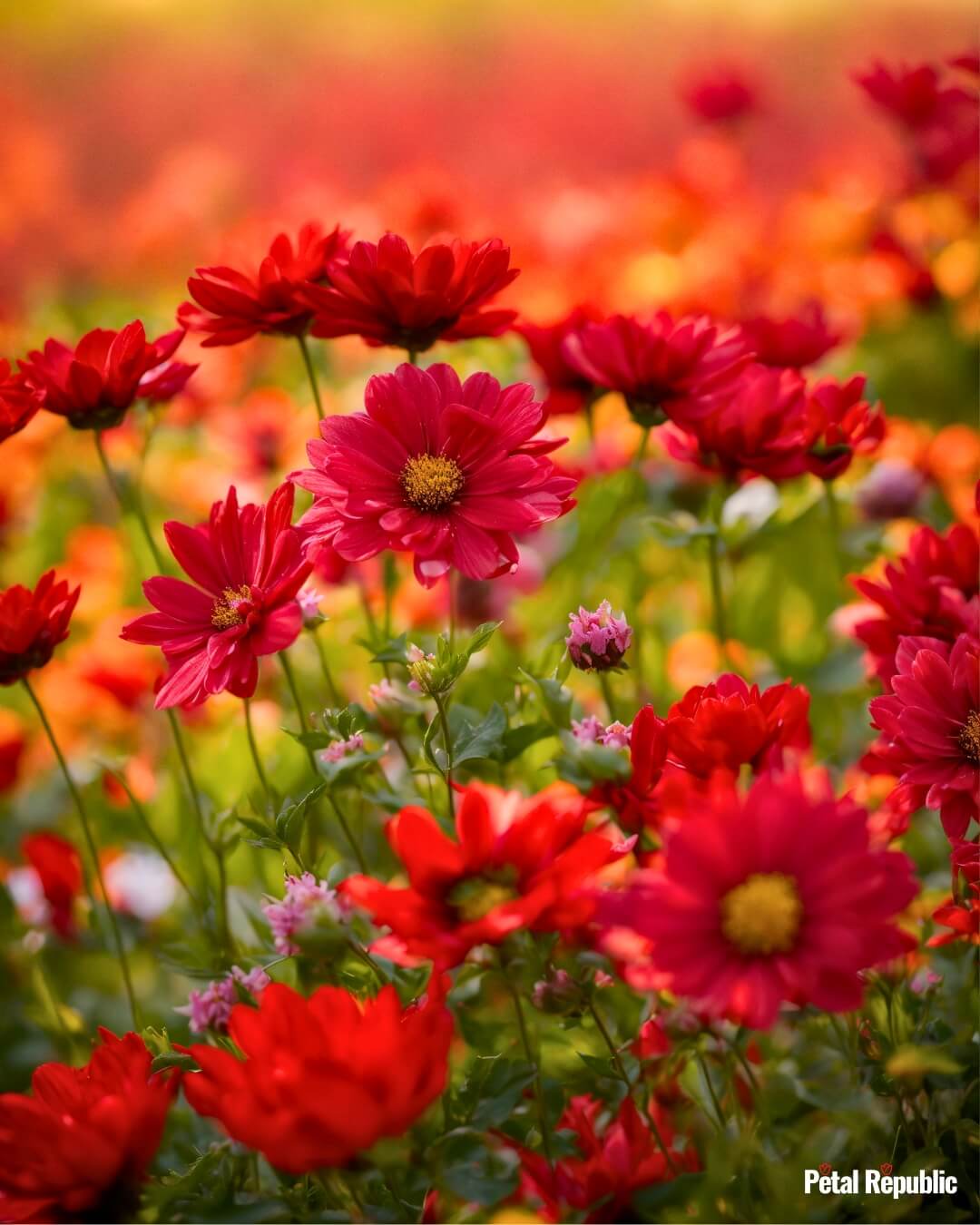
In Short
Red flowers range from burgundy to scarlet and include roses, tulips, dahlias, poppies, hibiscus, and carnations. This list covers 75 popular types you can grow at home.
- Red flowers grow in full-sun beds, shaded woodland gardens, containers, hanging baskets, trellises, and even ponds.
- Some red flowers carry cautions: oleander, azalea, and lycoris are toxic, and the crown of thorns has densely spiked stems.
More Takeaways
- Blood sage, coral honeysuckle, tickseed, red aster, vervain, red black-eyed Susan, and pineapple sage attract hummingbirds, butterflies, or bees.
- Drought-tolerant reds like yarrow, blanket flower, and African daisy need little water once established.
In This List
Filter and Sort
 1Blood Sage
 2Scarlet Sage
 3Red Dahlia
 4Red Bush Monkeyflower
 5Bleeding Hearts
 6Common Hyacinth
 7Anthurium
 8Blanket Flower
 9Begonia
 10Coral Honeysuckle
 11Amaranth
 12Gerbera Daisy
 13Hollyhock
 14Hibiscus
 15Tickseed
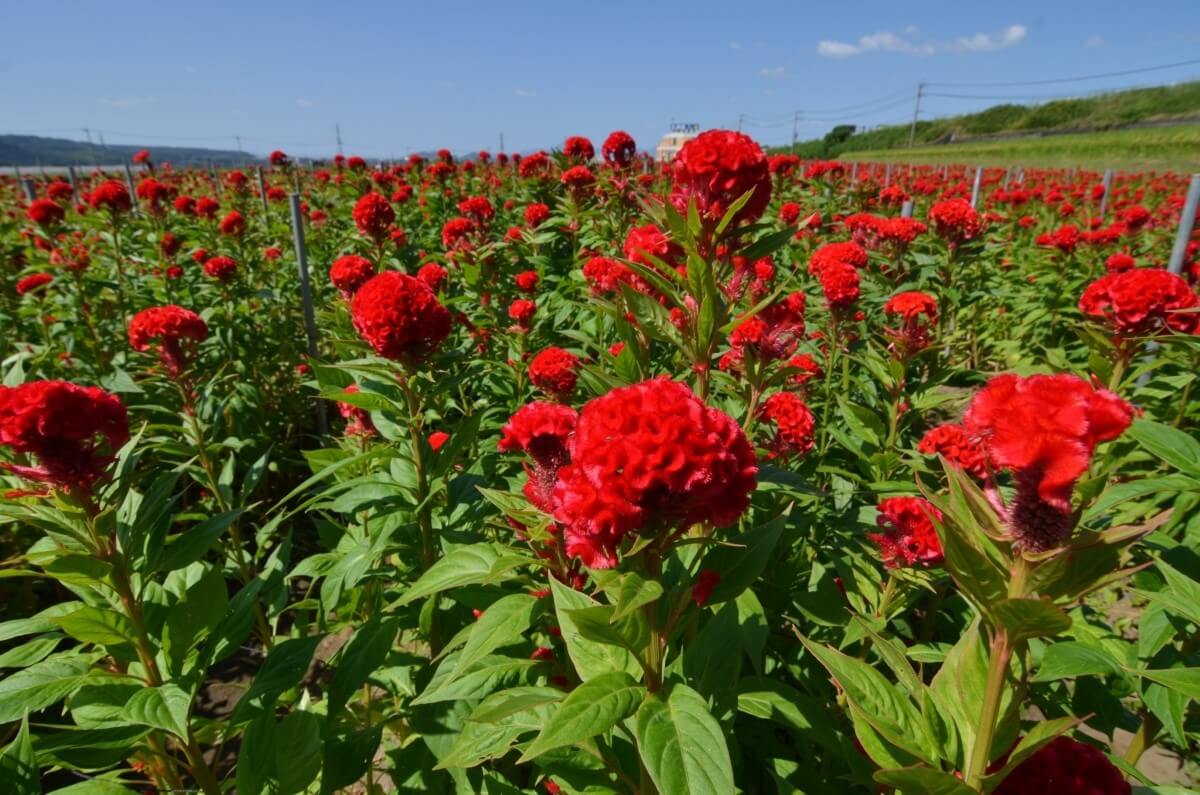 16Cockscomb
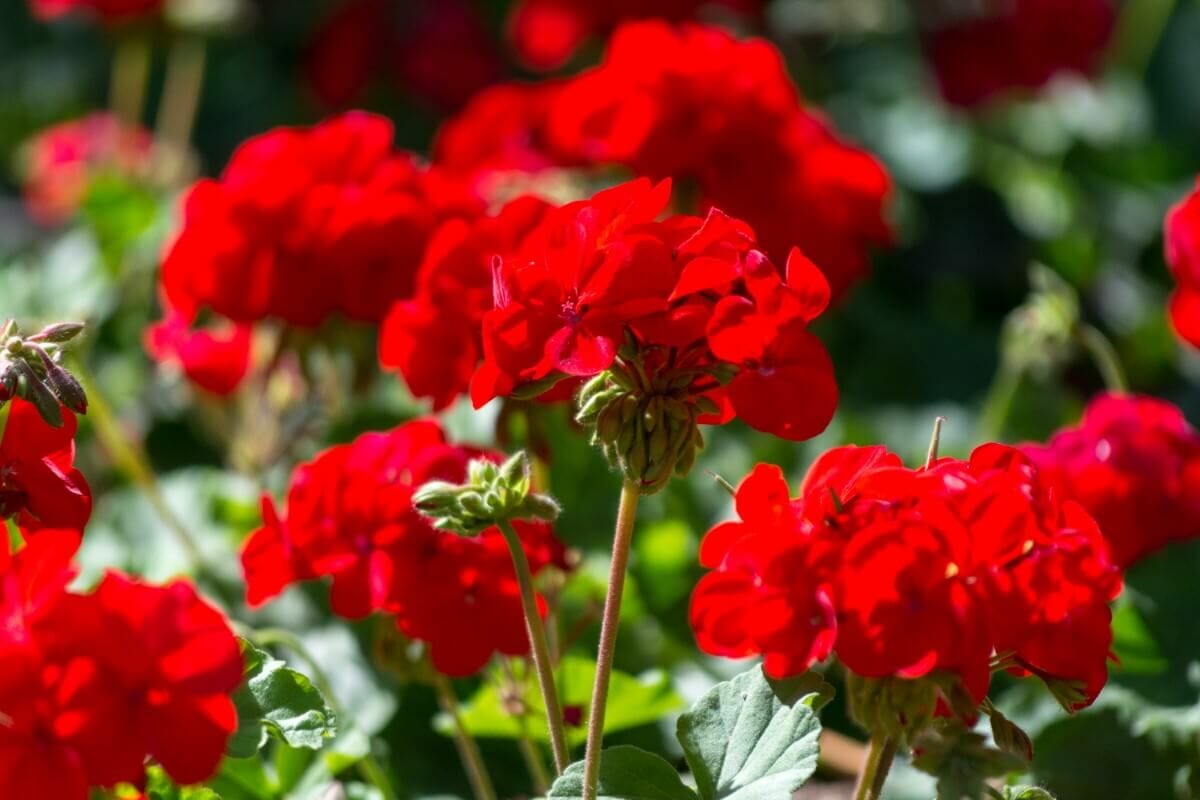 17Geranium
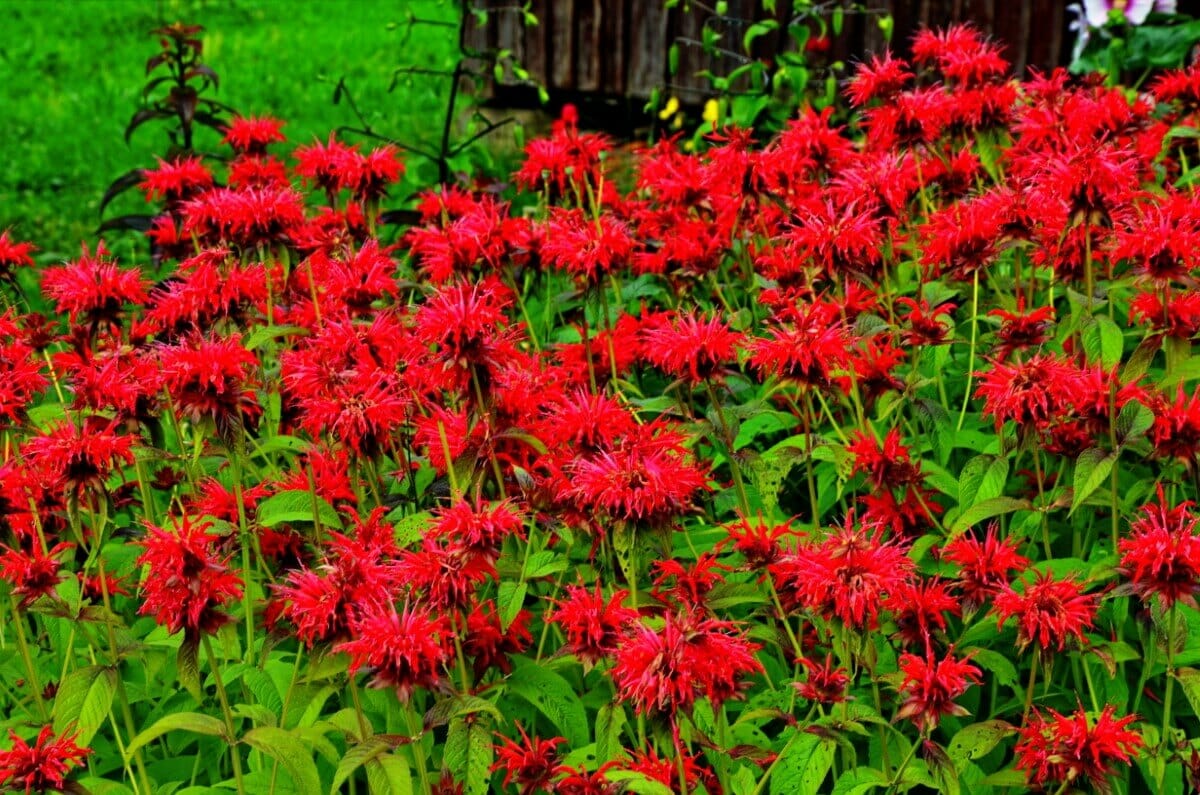 18Scarlet Beebalm
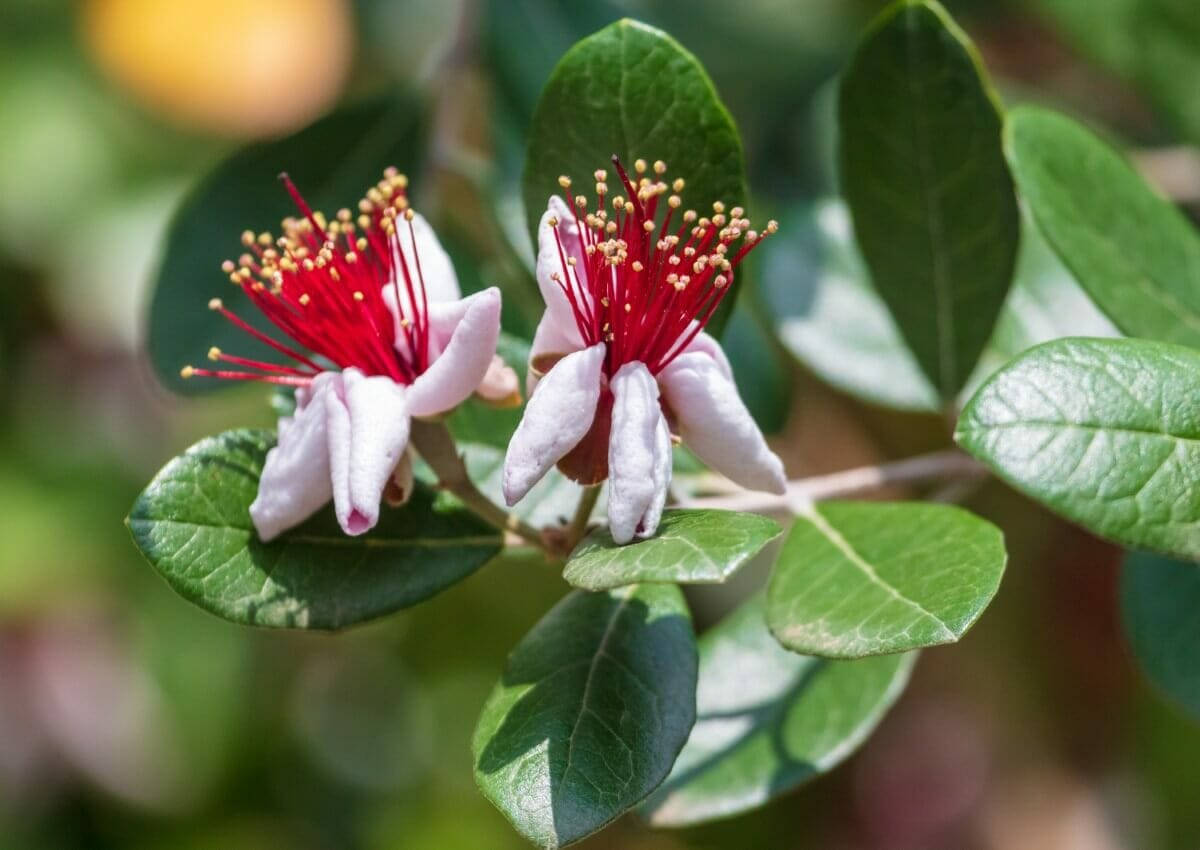 19Pineapple Guava
 20Tulips
 21Red Aster
 22Egyptian Stars
 23Chocolate Cosmos
 24Red Sunflower
 25Vervain
 26Red Trumpet Creeper
 27Gloxinia
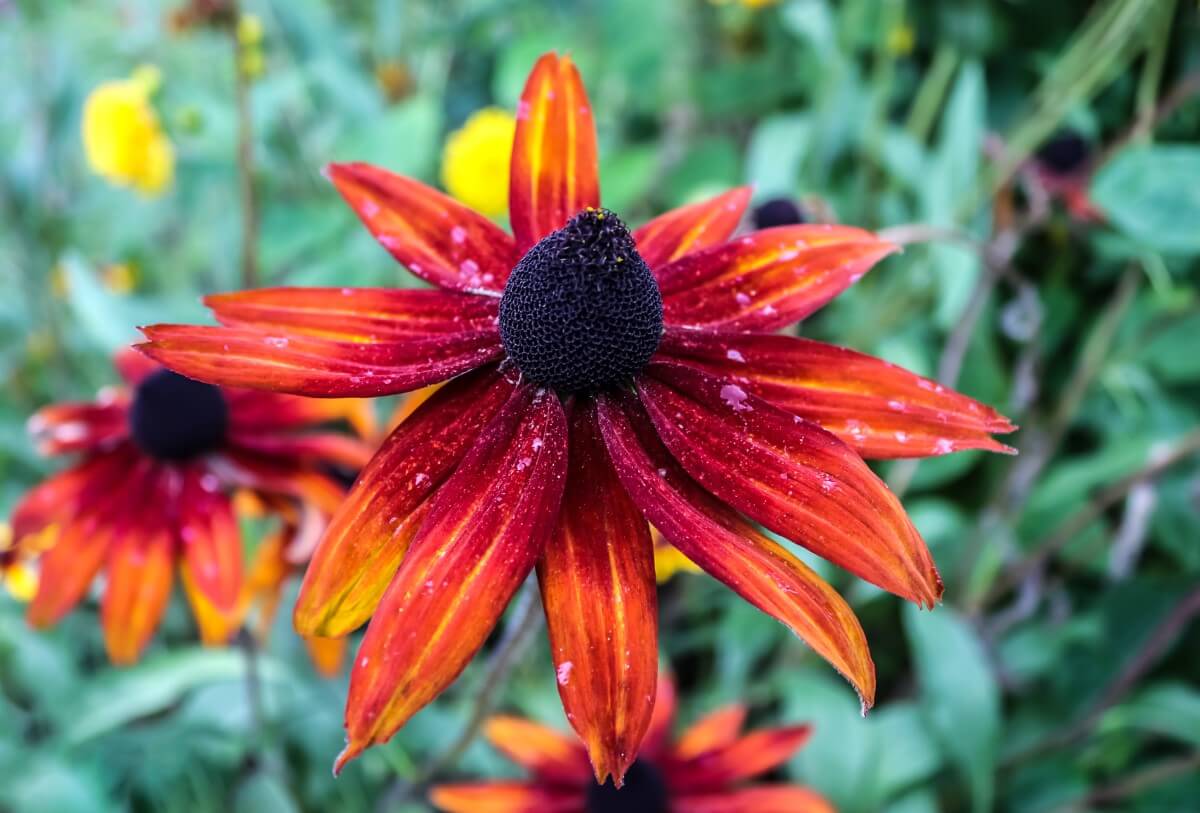 28Red Black-Eyed Susan
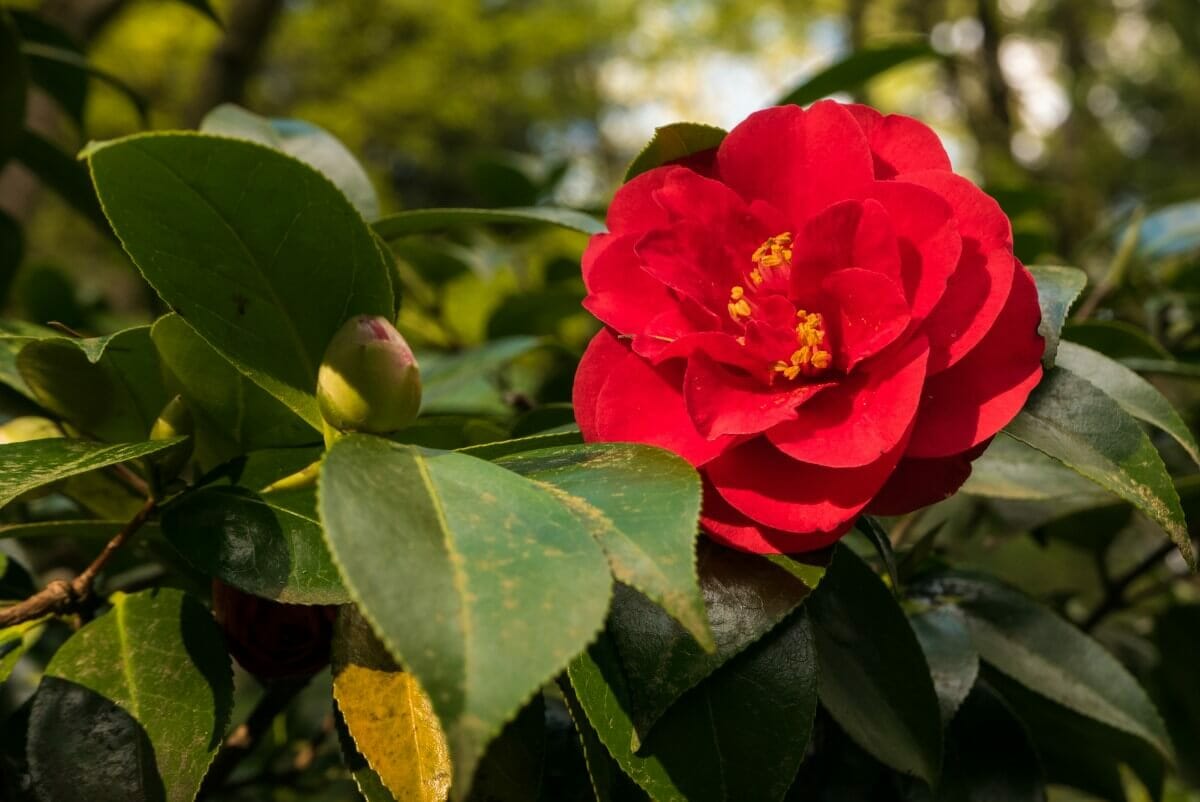 29Camellia
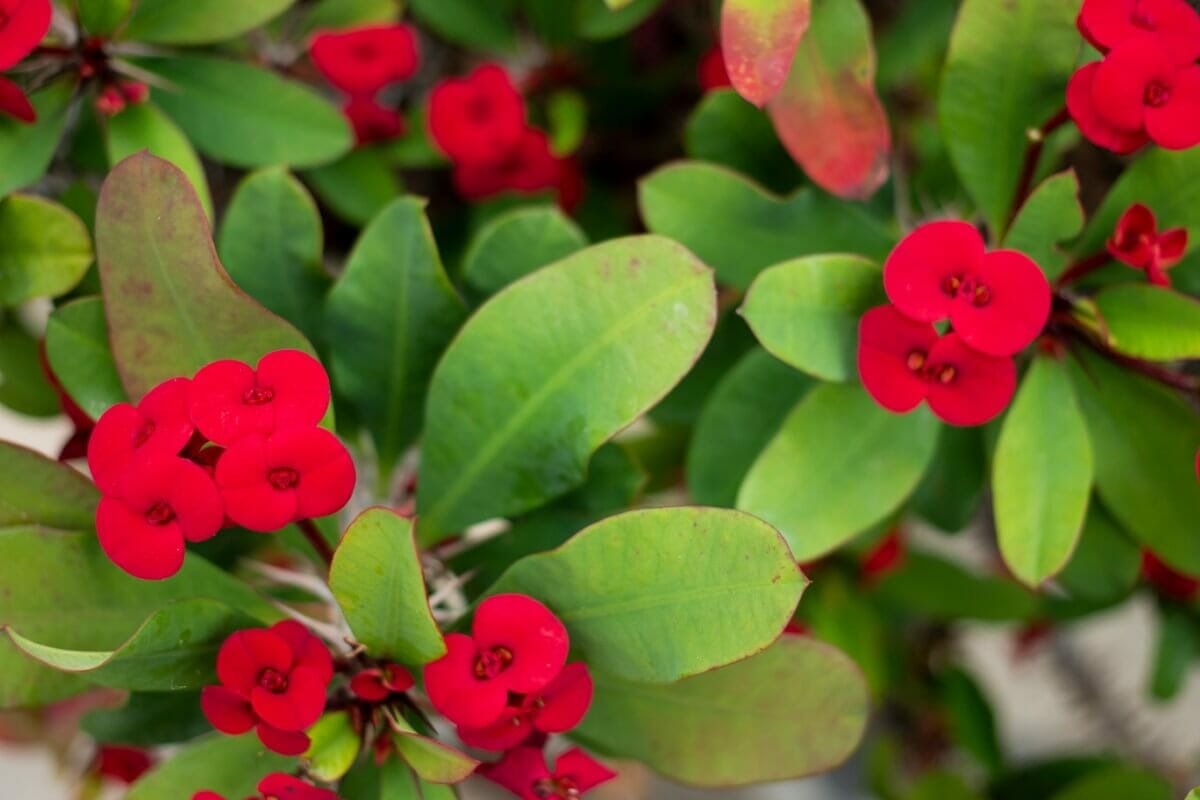 30Crown of Thorns
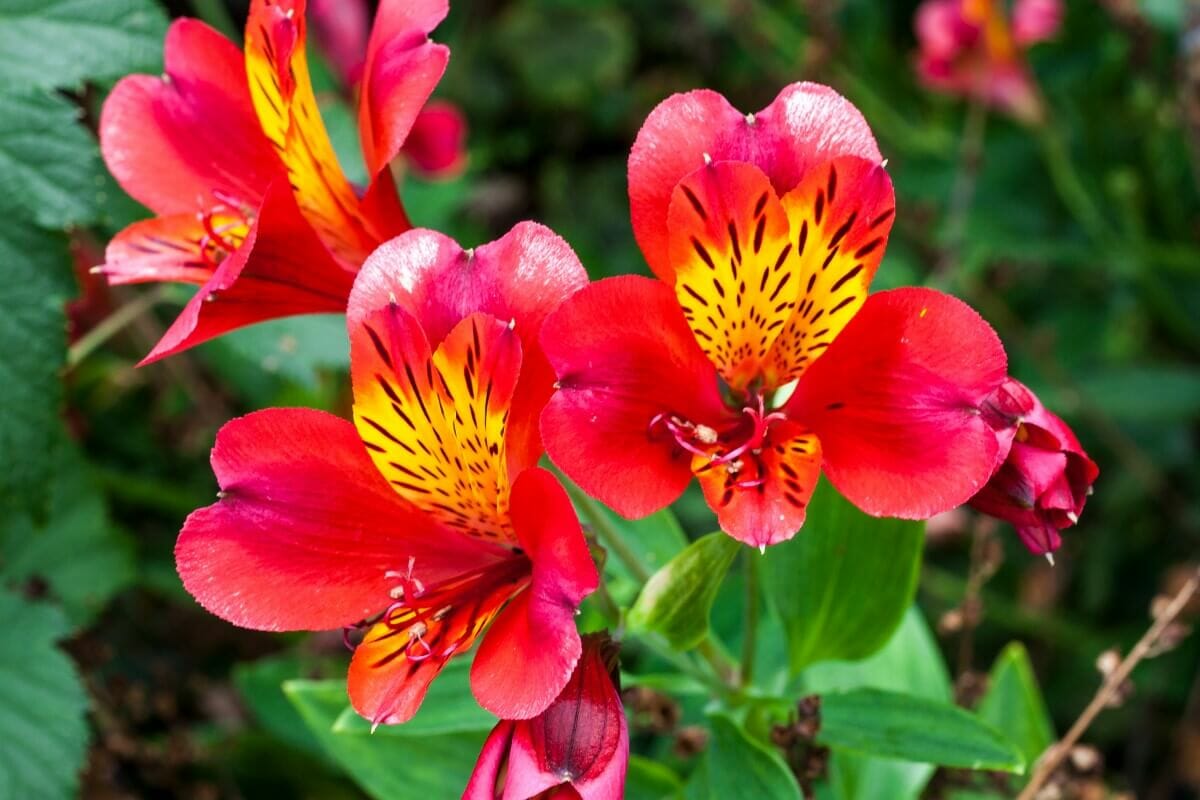 31Peruvian Lily
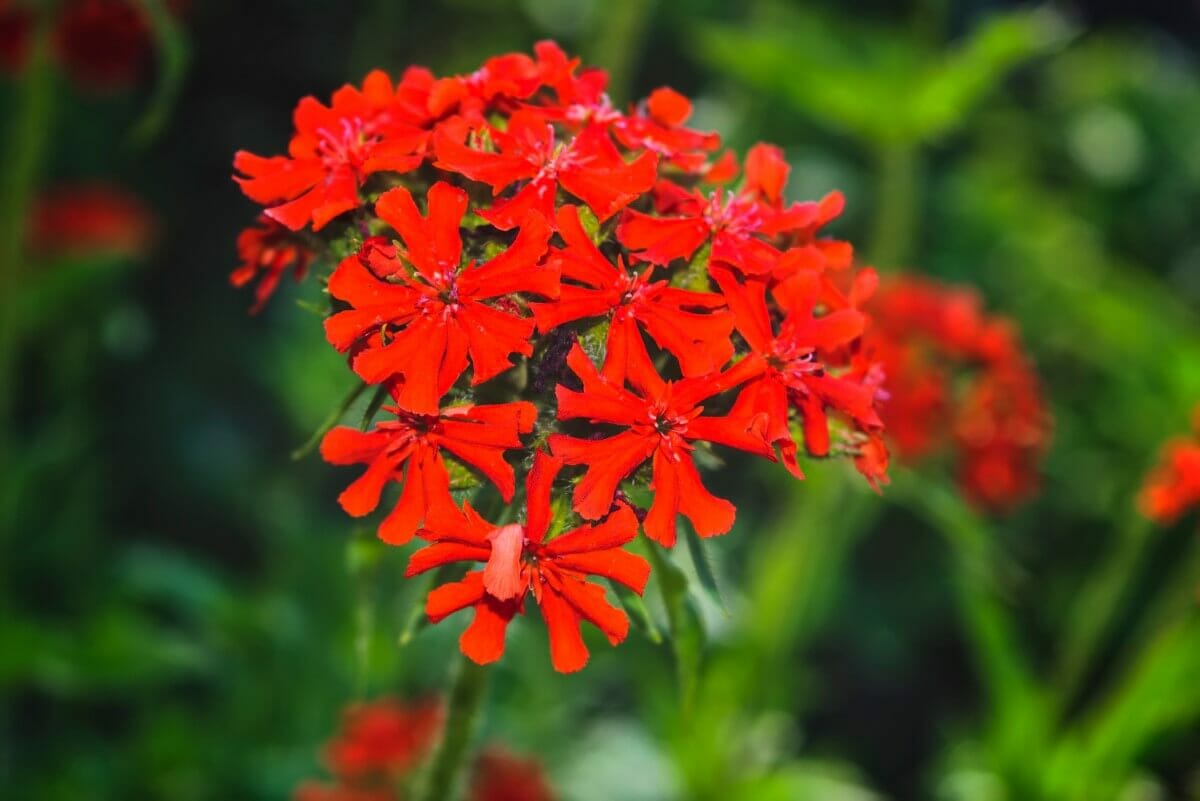 32Maltese Cross
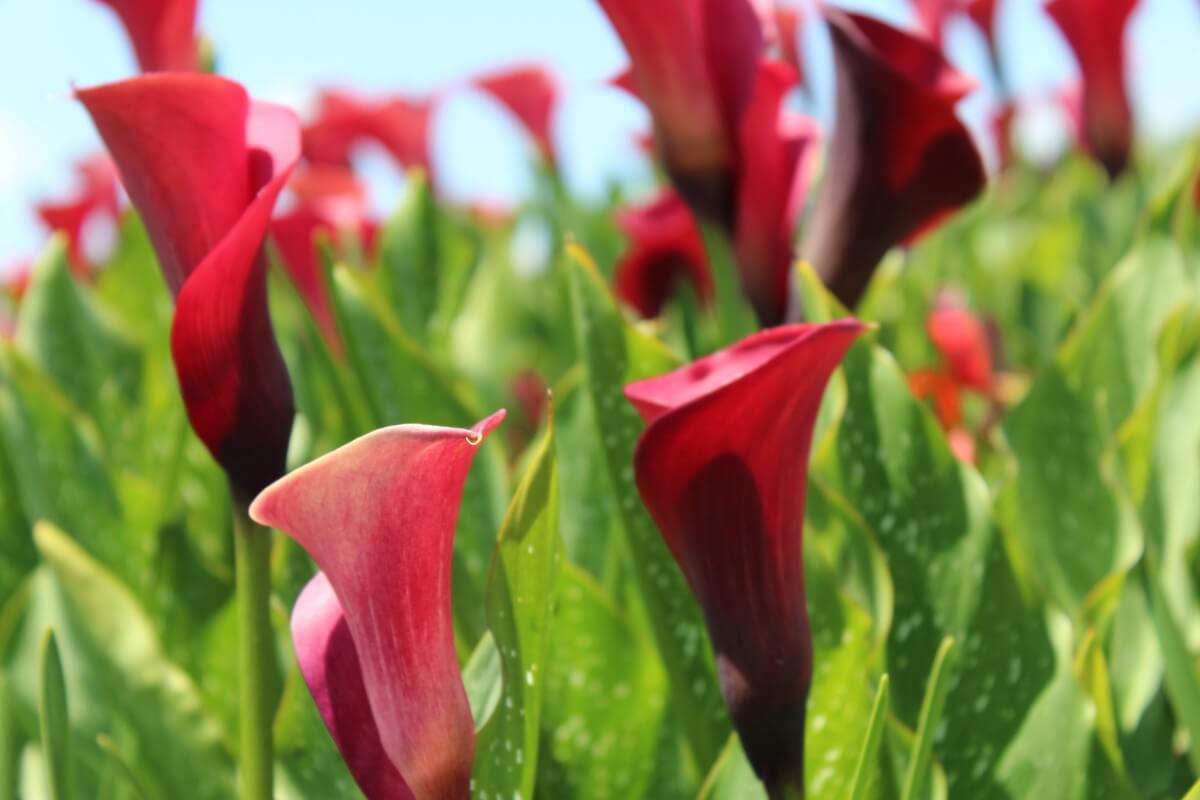 33Calla Lily
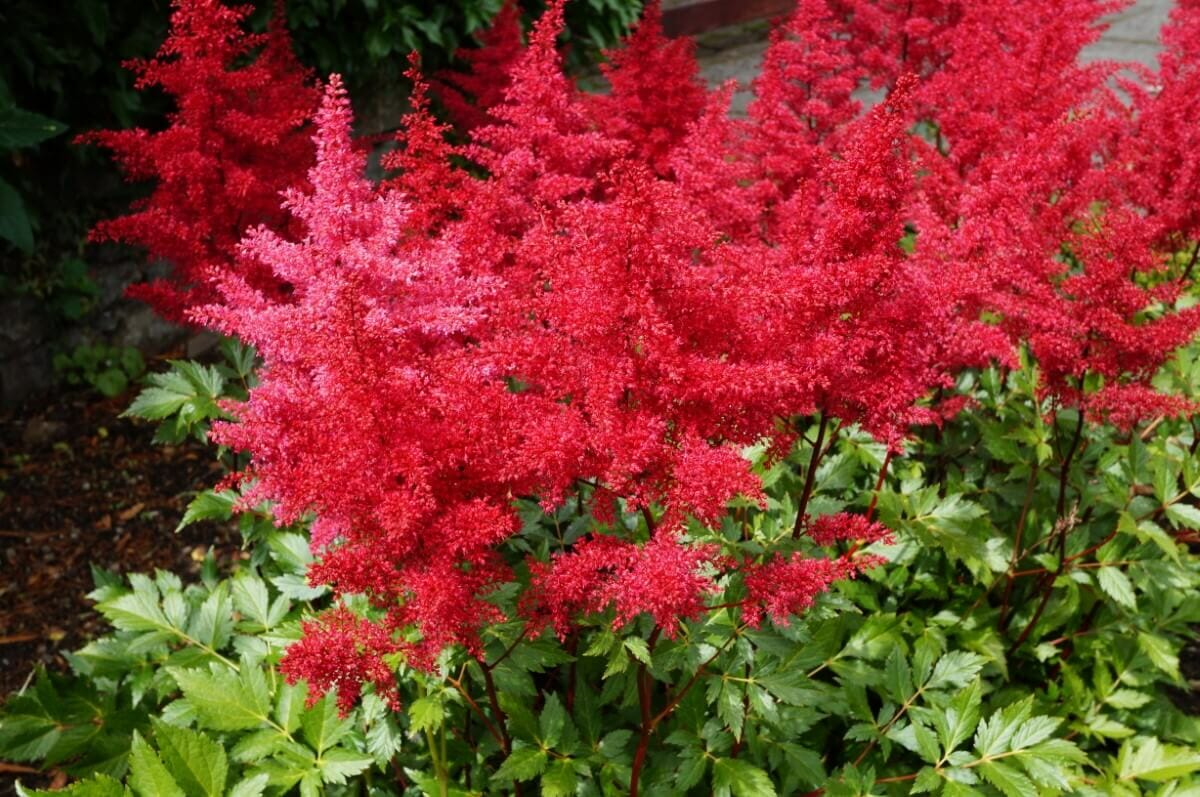 34False Goat’s Beard
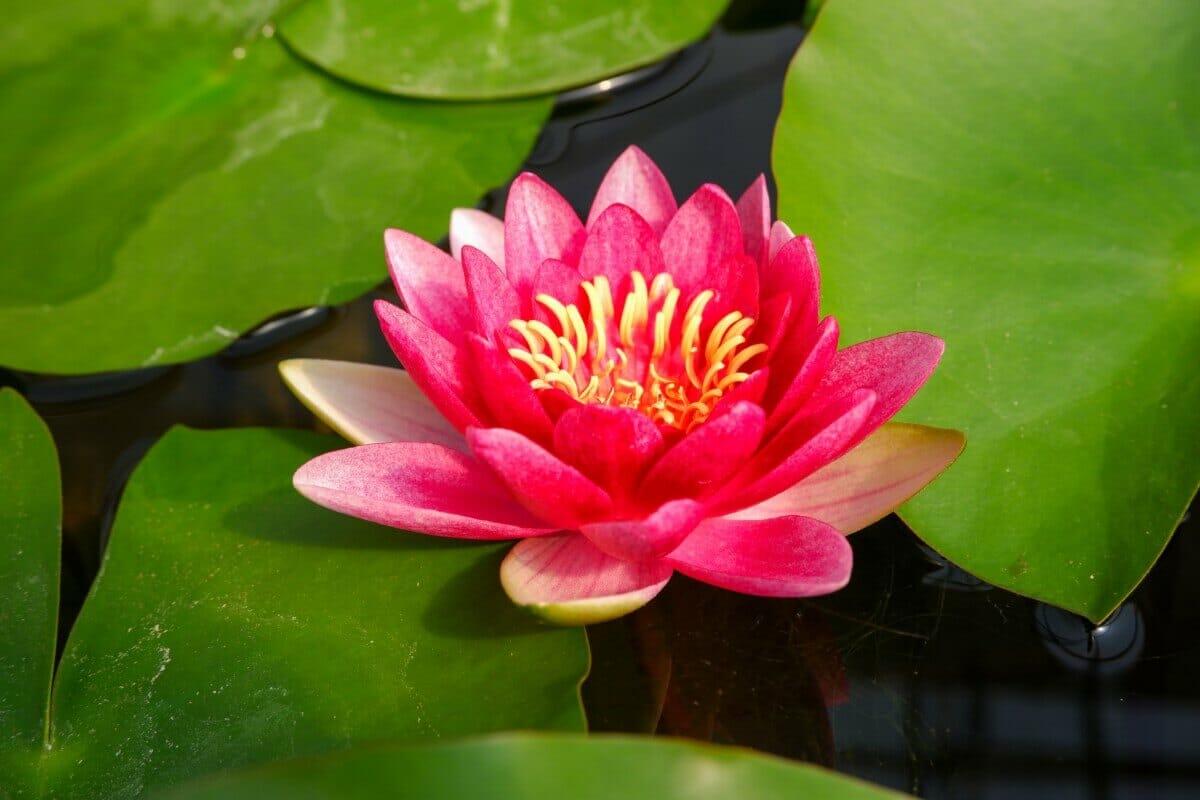 35Pygmy Water Lily
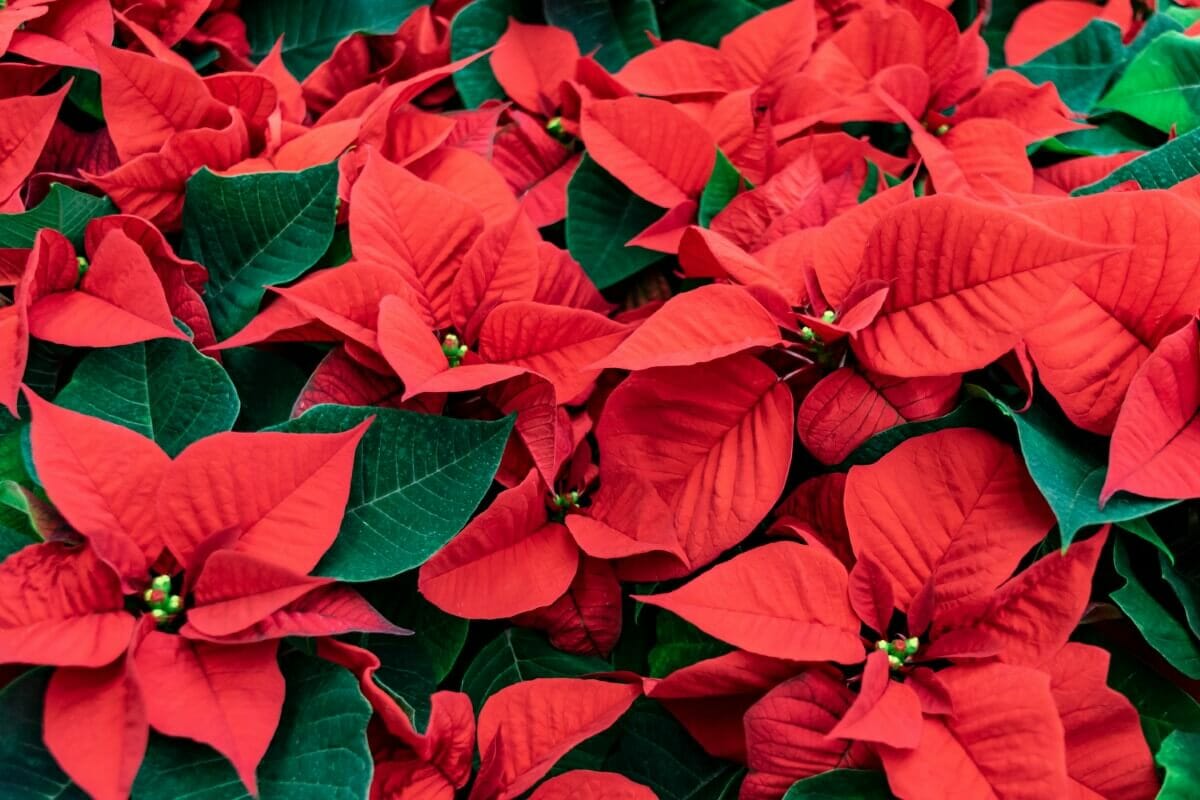 36Poinsettia
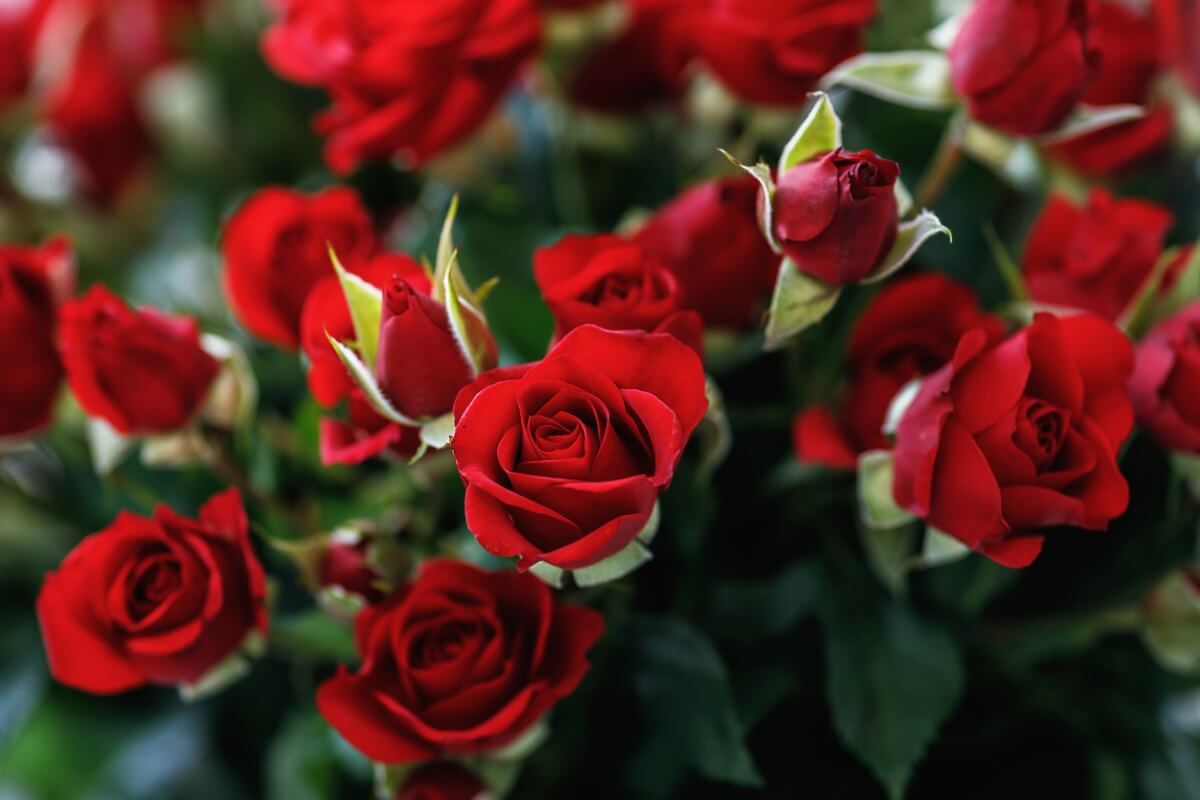 37Rose
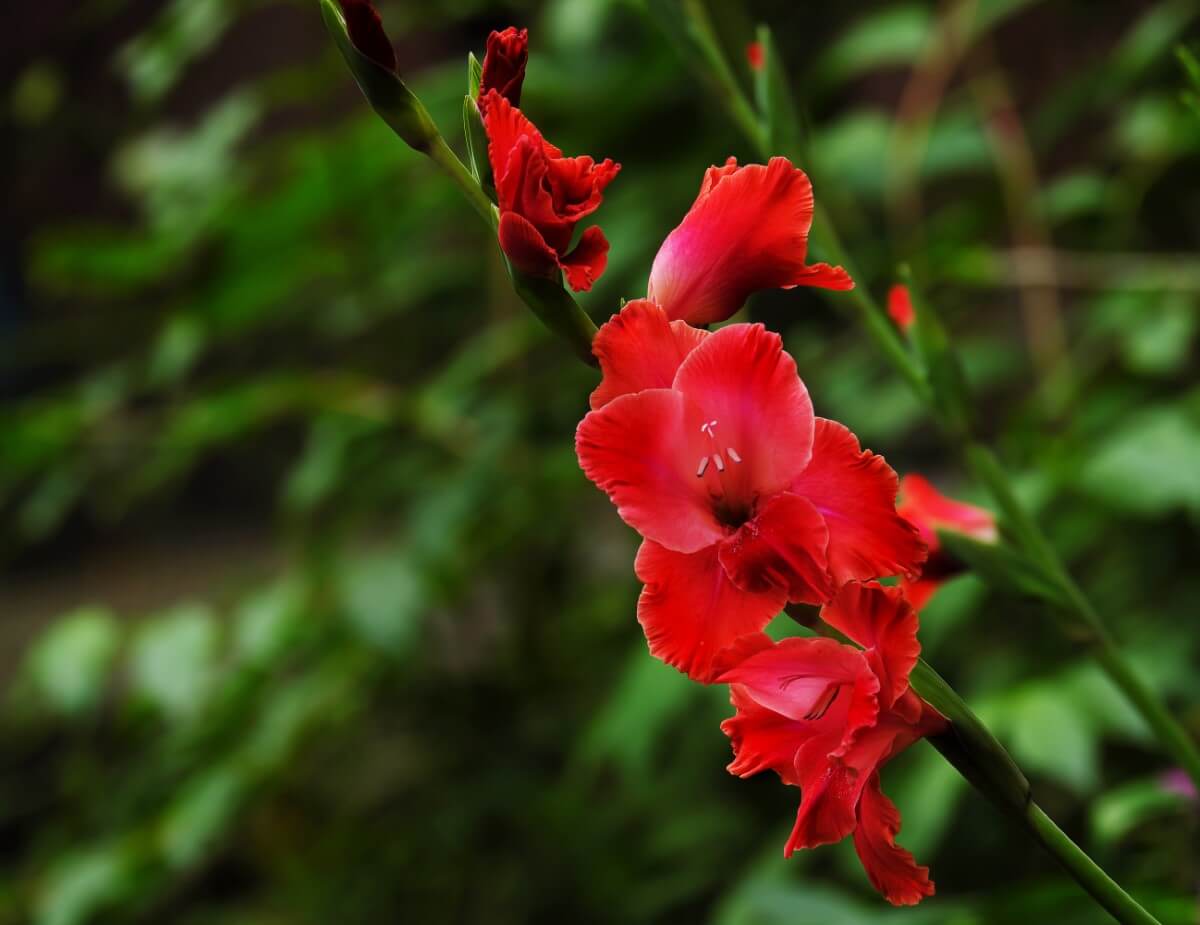 38Gladiolus
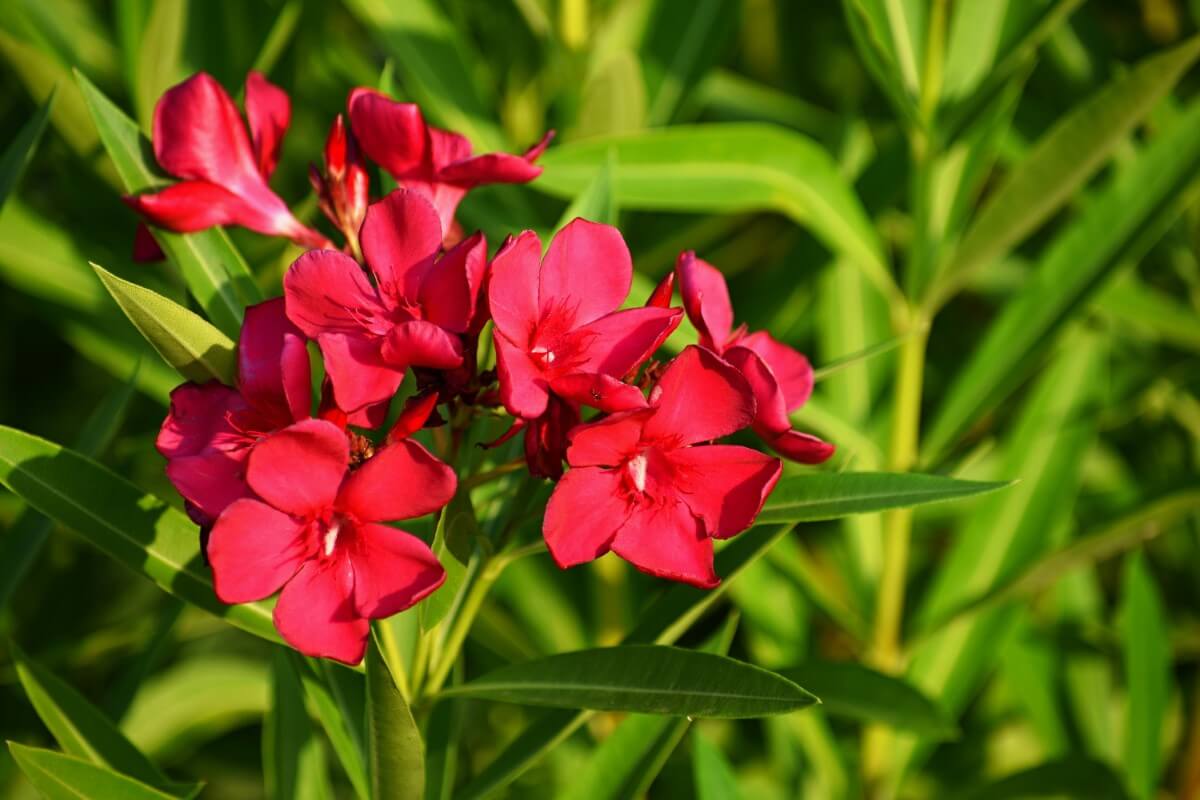 39Oleander
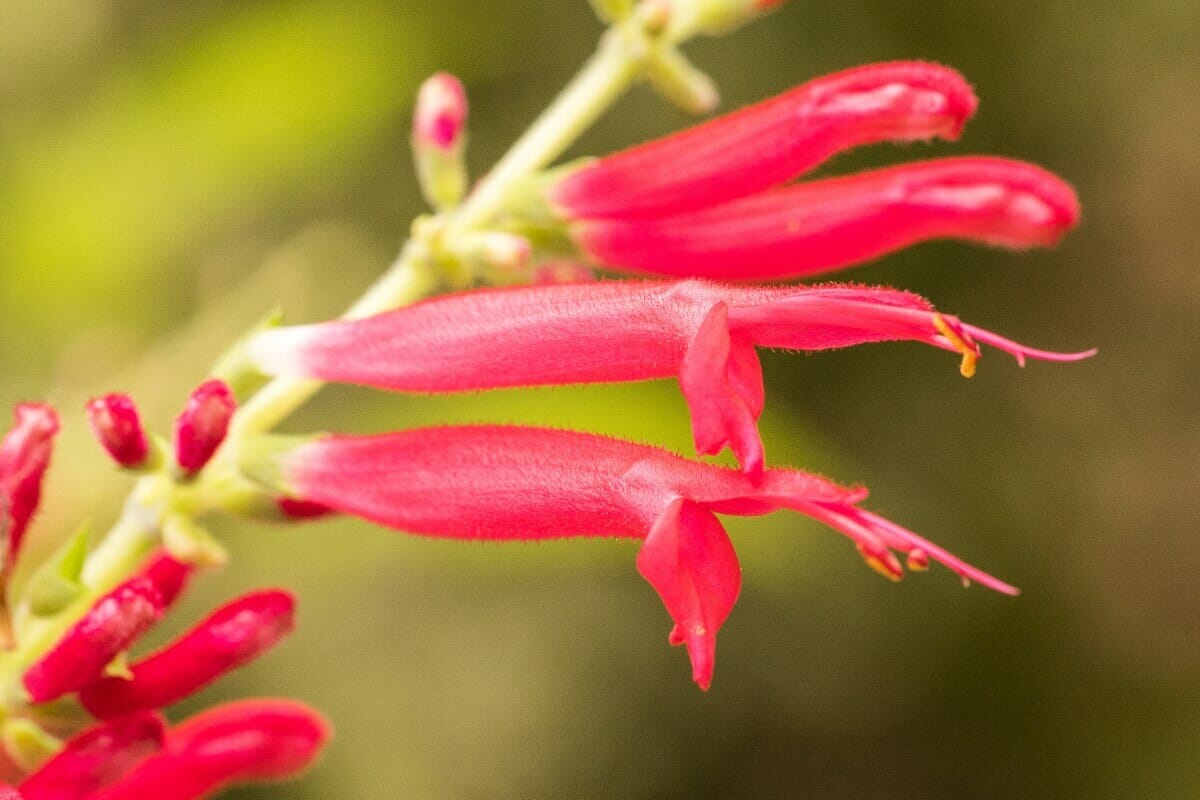 40Pineapple Sage
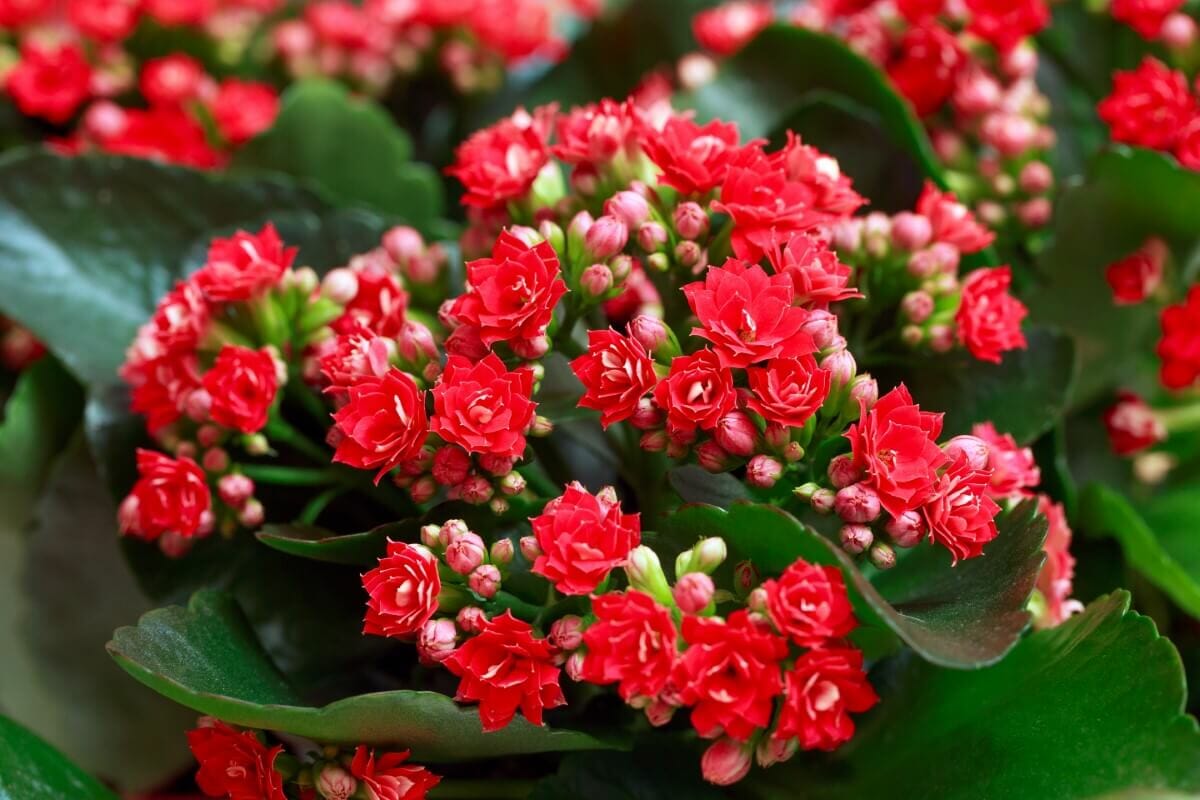 41Kalanchoe
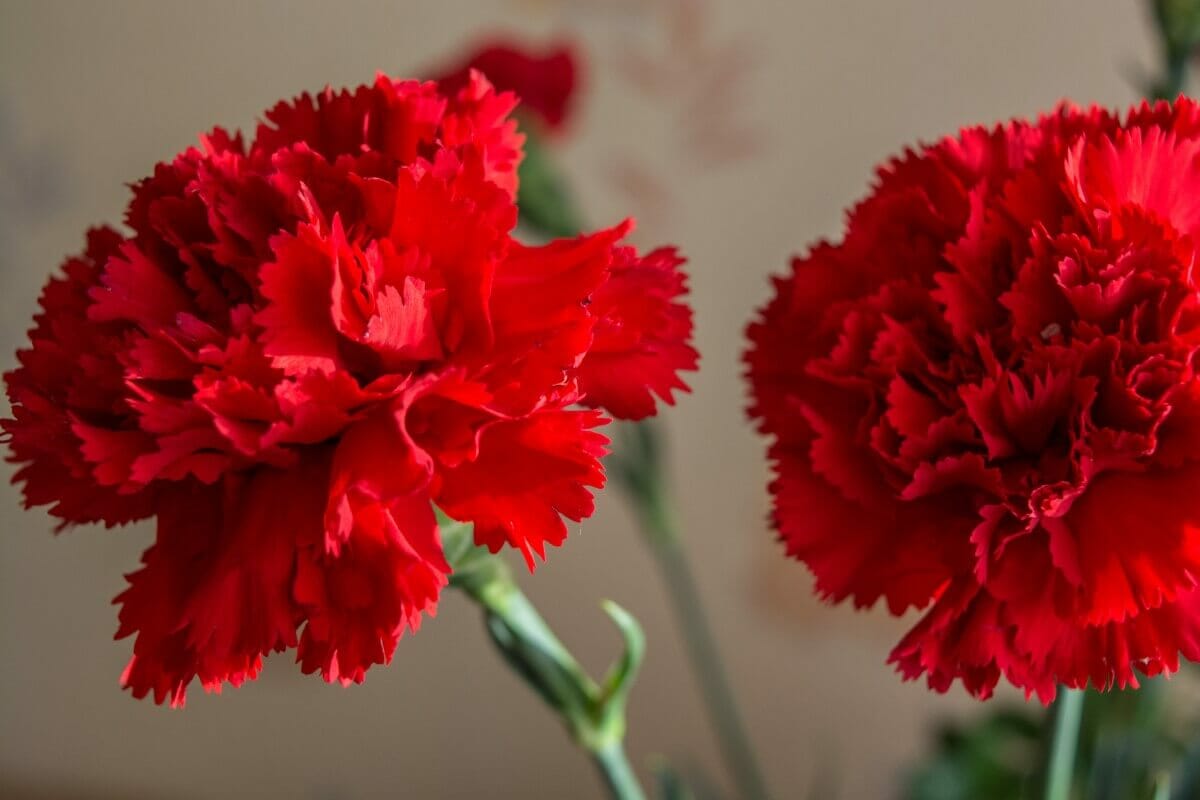 42Carnation
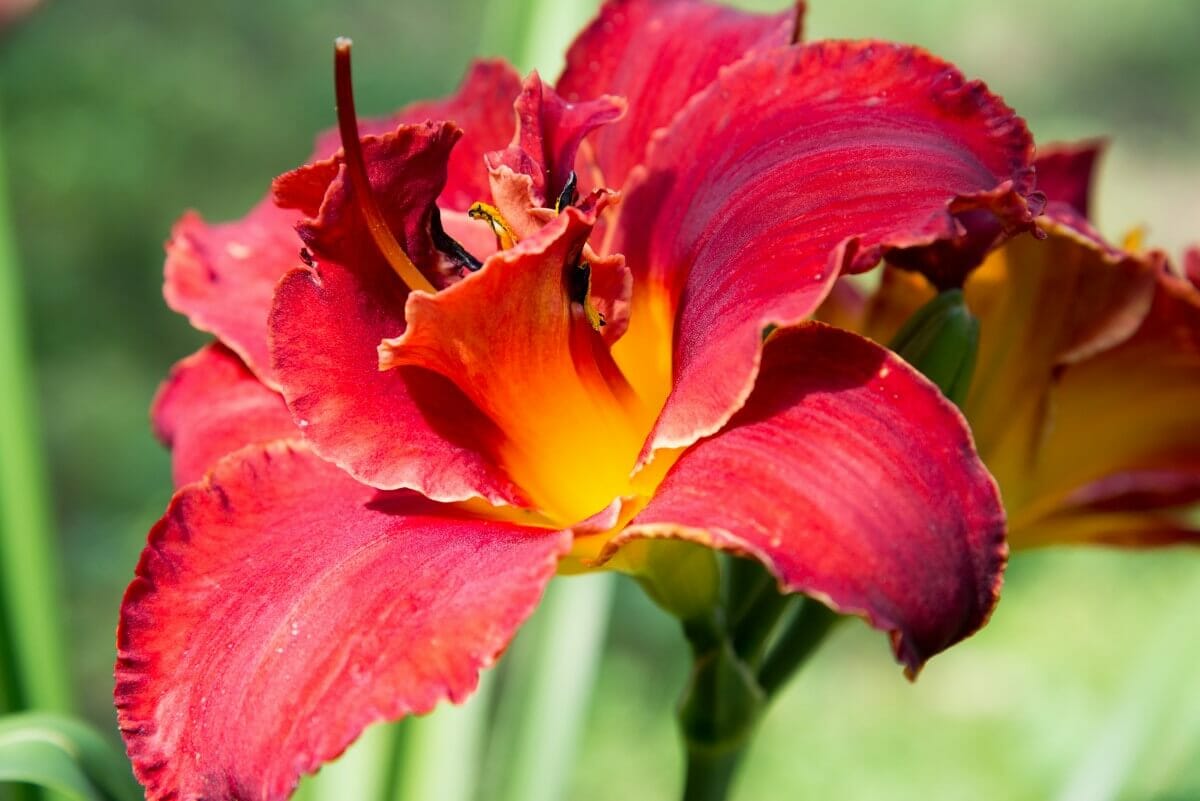 43Daylily
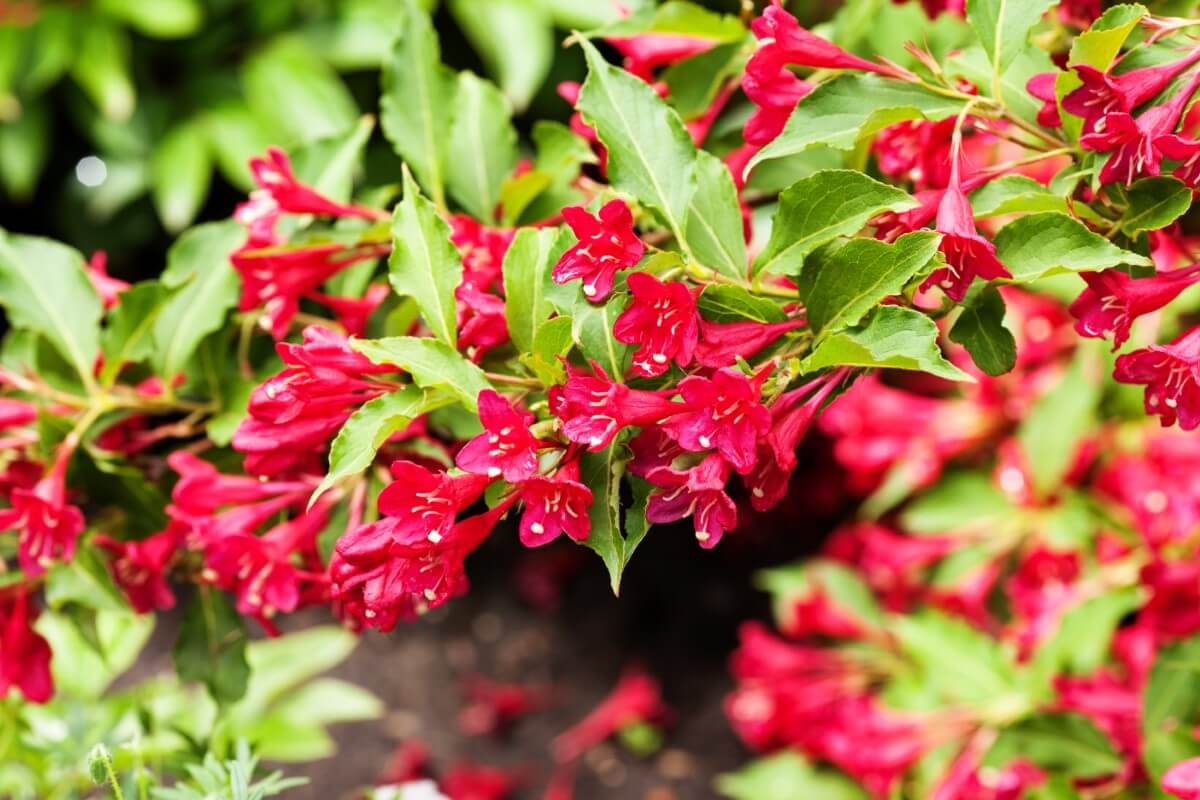 44Weigela
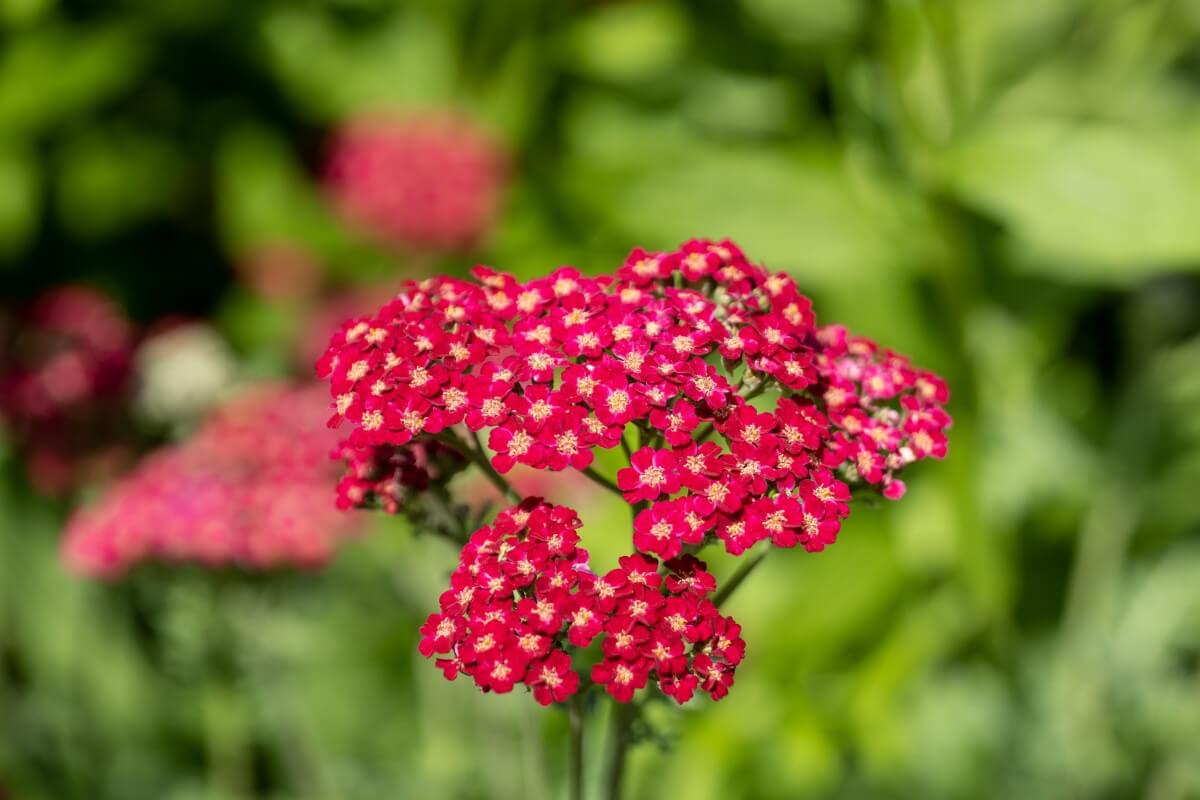 45Yarrow
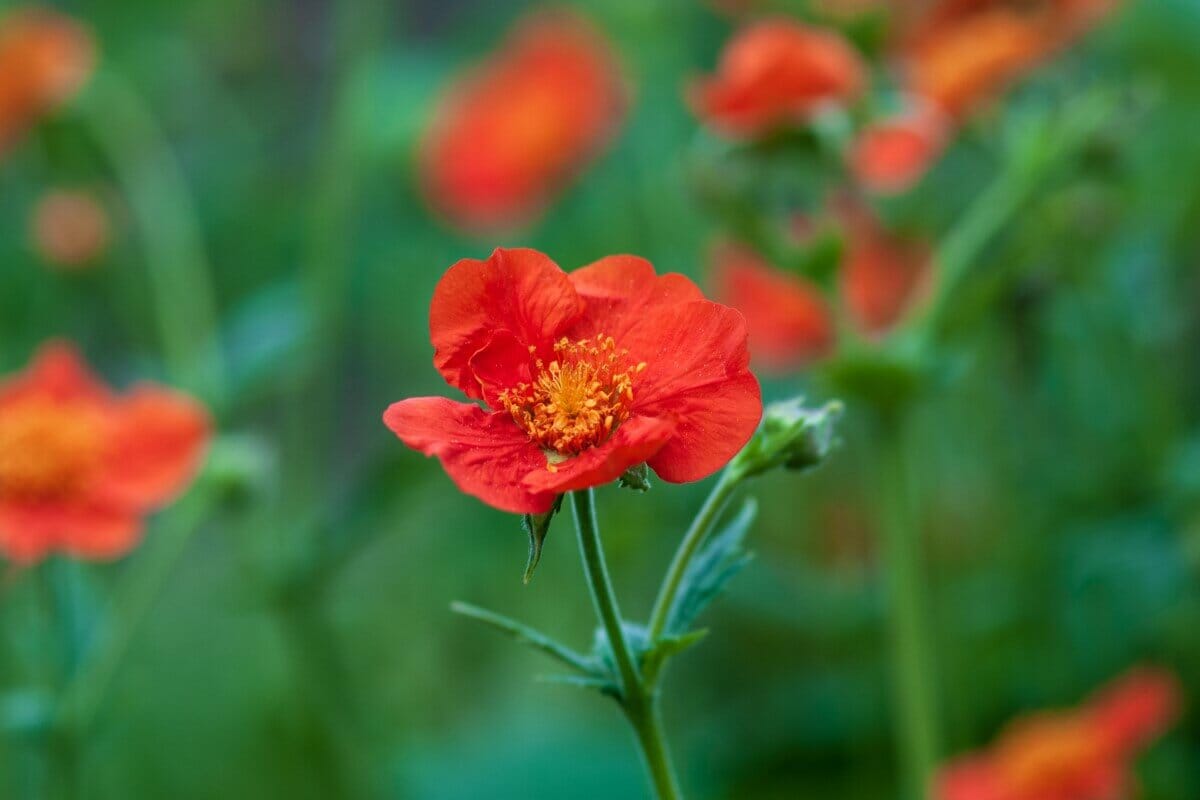 46Avens
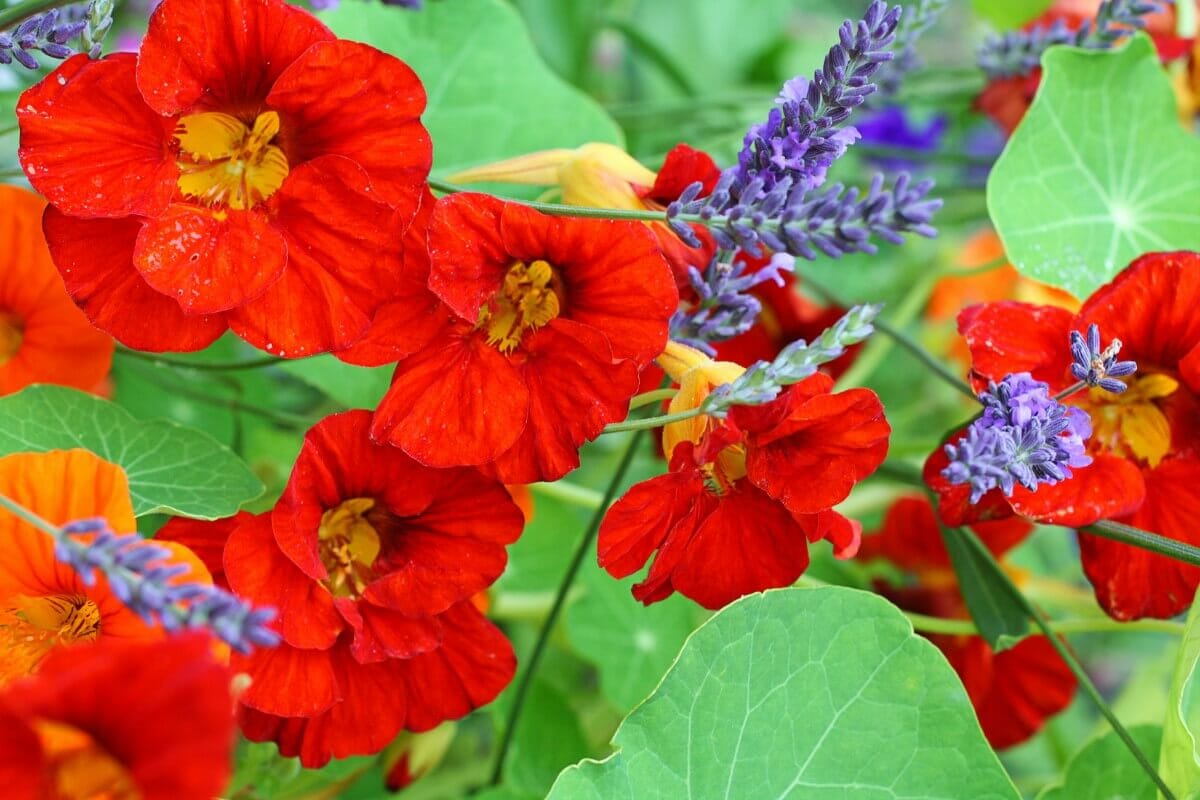 47Nasturtium
 48Cypress Vine
 49Dragon’s Blood Stonecrop
 50Crepe or Crape Myrtle
 51Orchids
 52Columbine
 53Chrysanthemum
 54African Daisy
 55Azalea
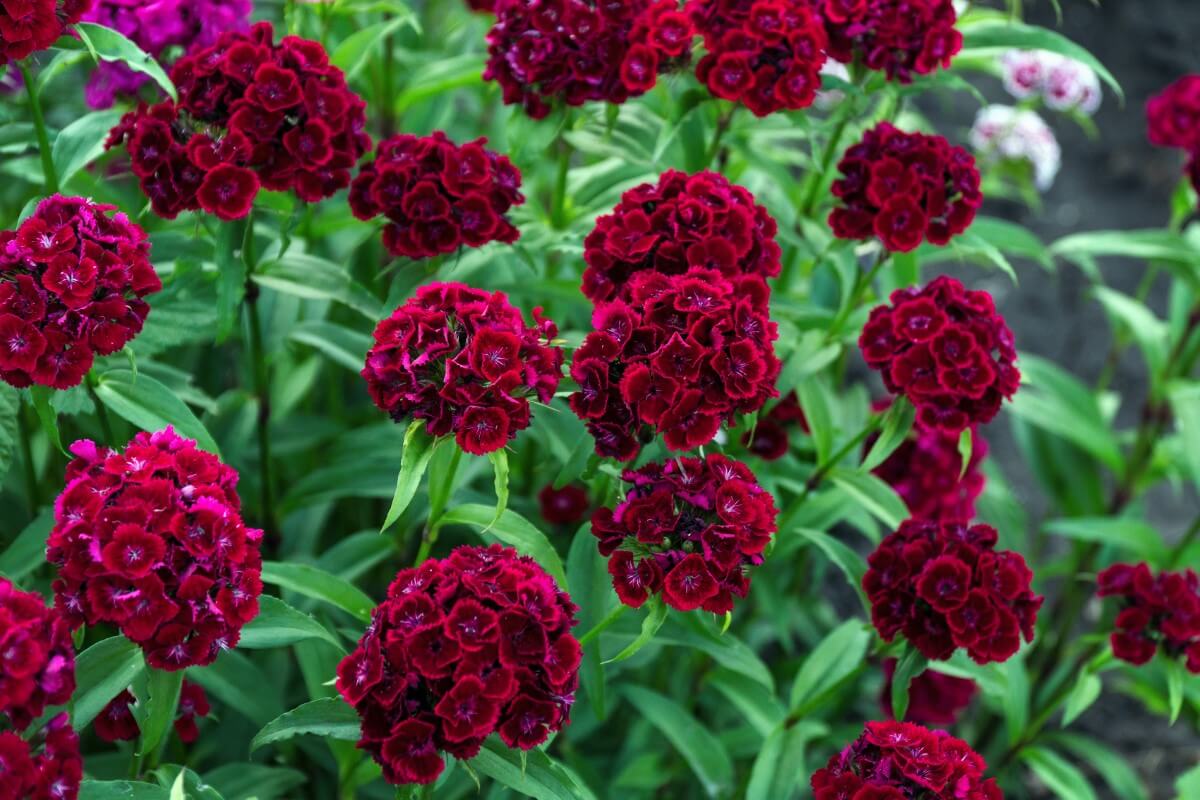 56Dianthus
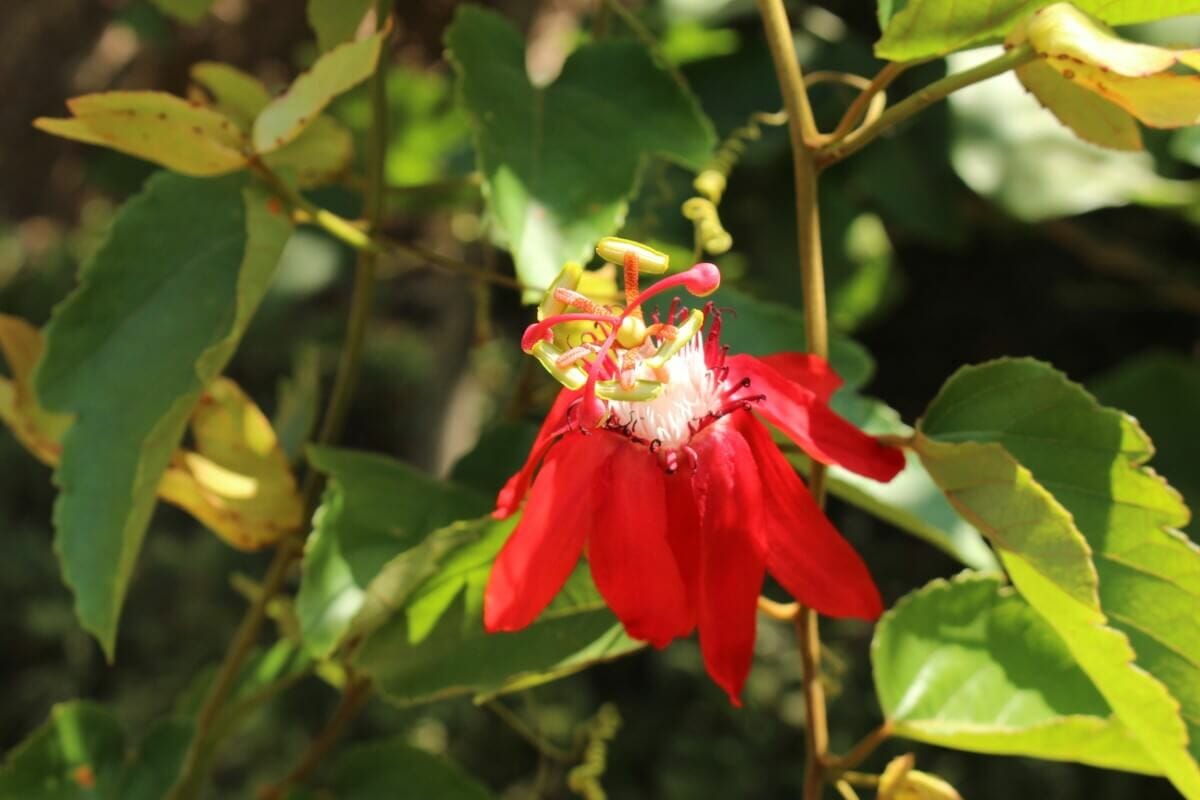 57Red Passion Flower
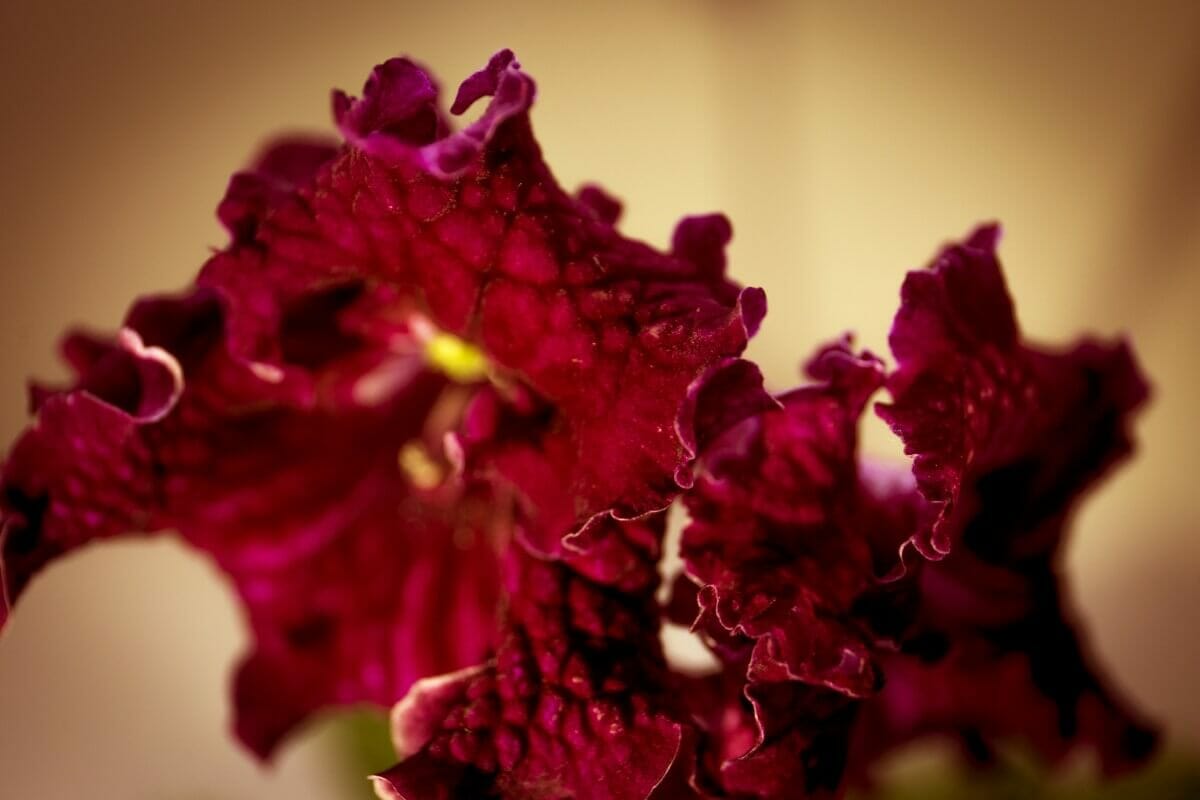 58Streps
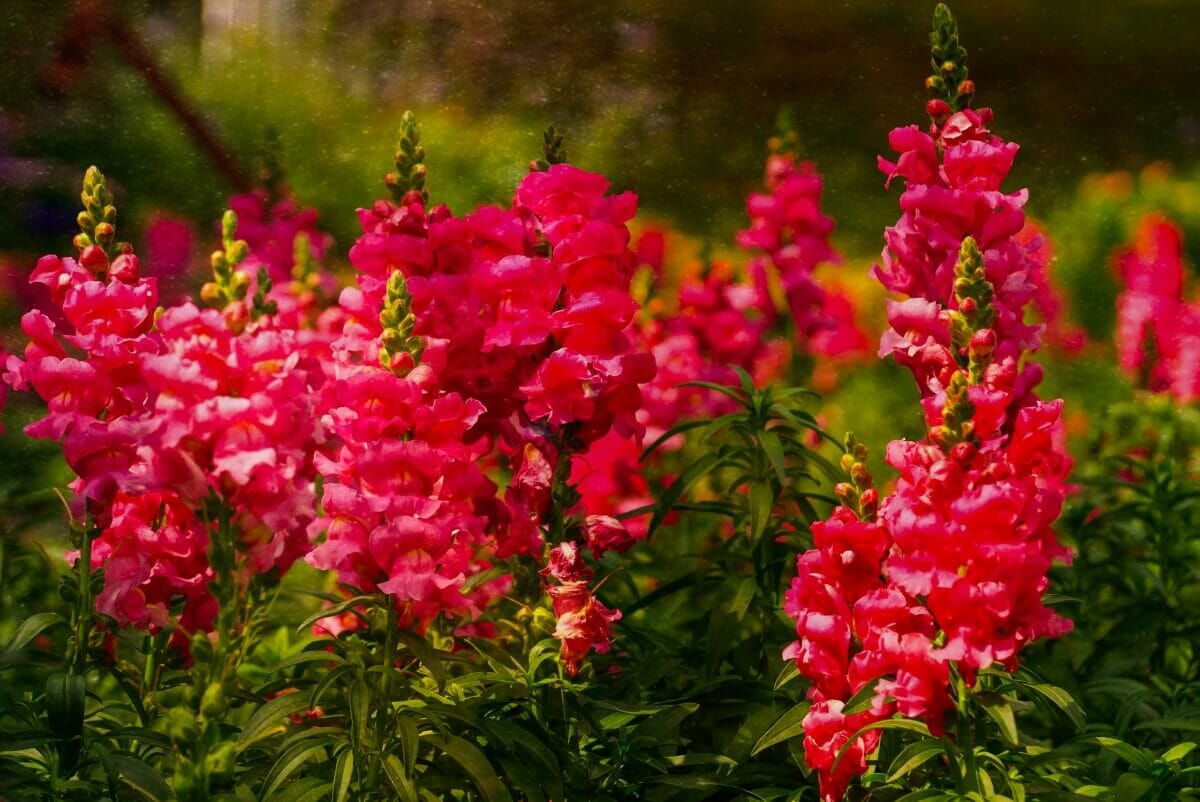 59Snapdragon
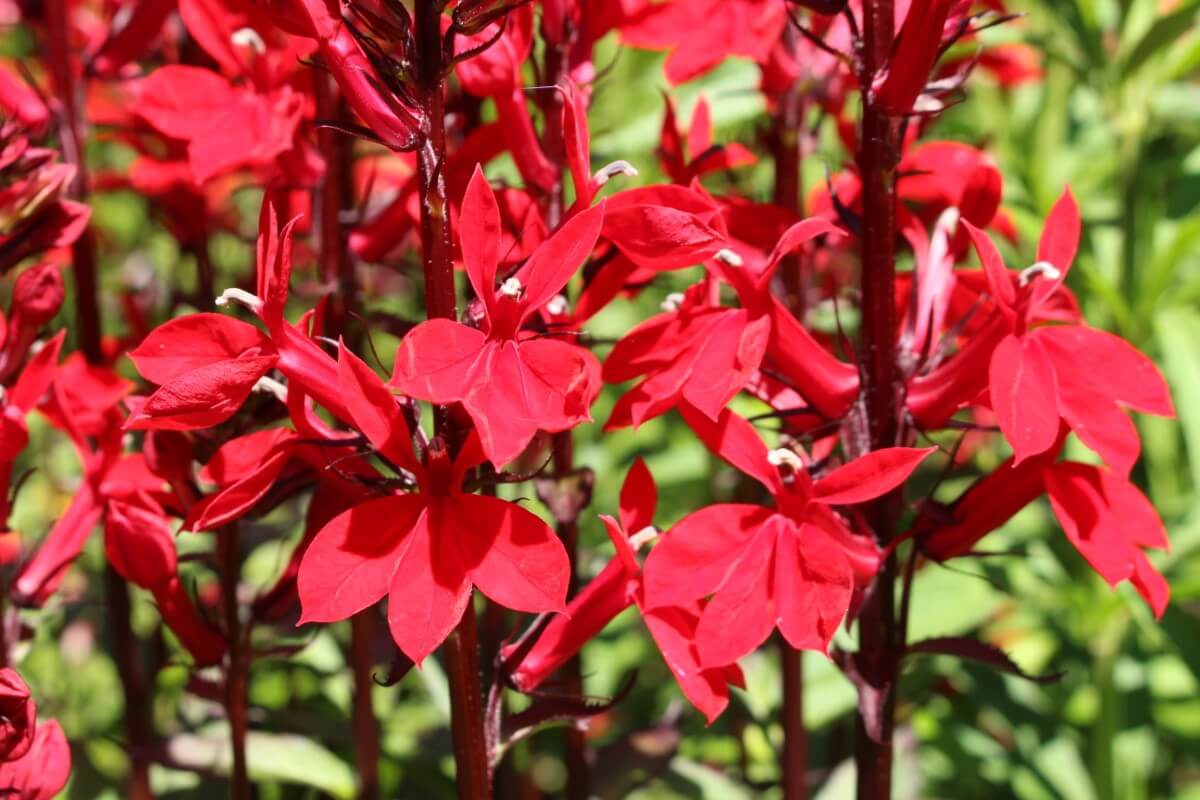 60Cardinal Flower
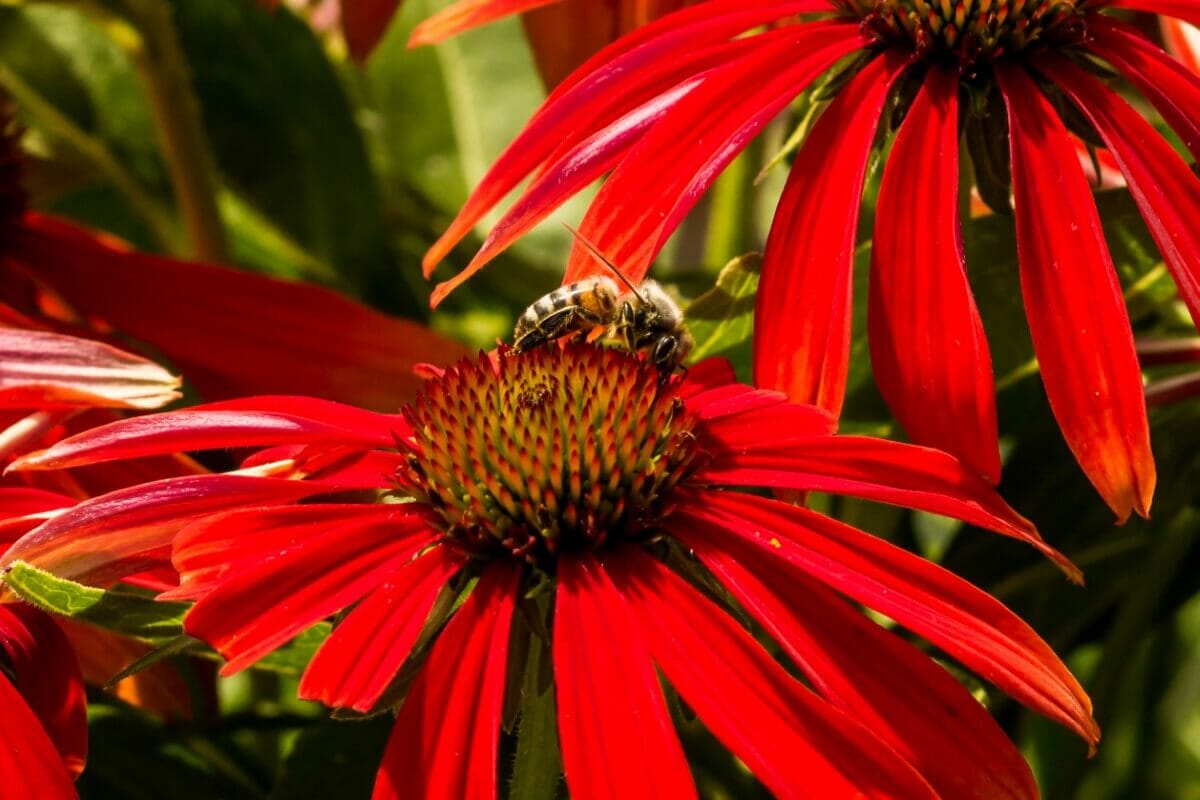 61Coneflowers
 62Poppy
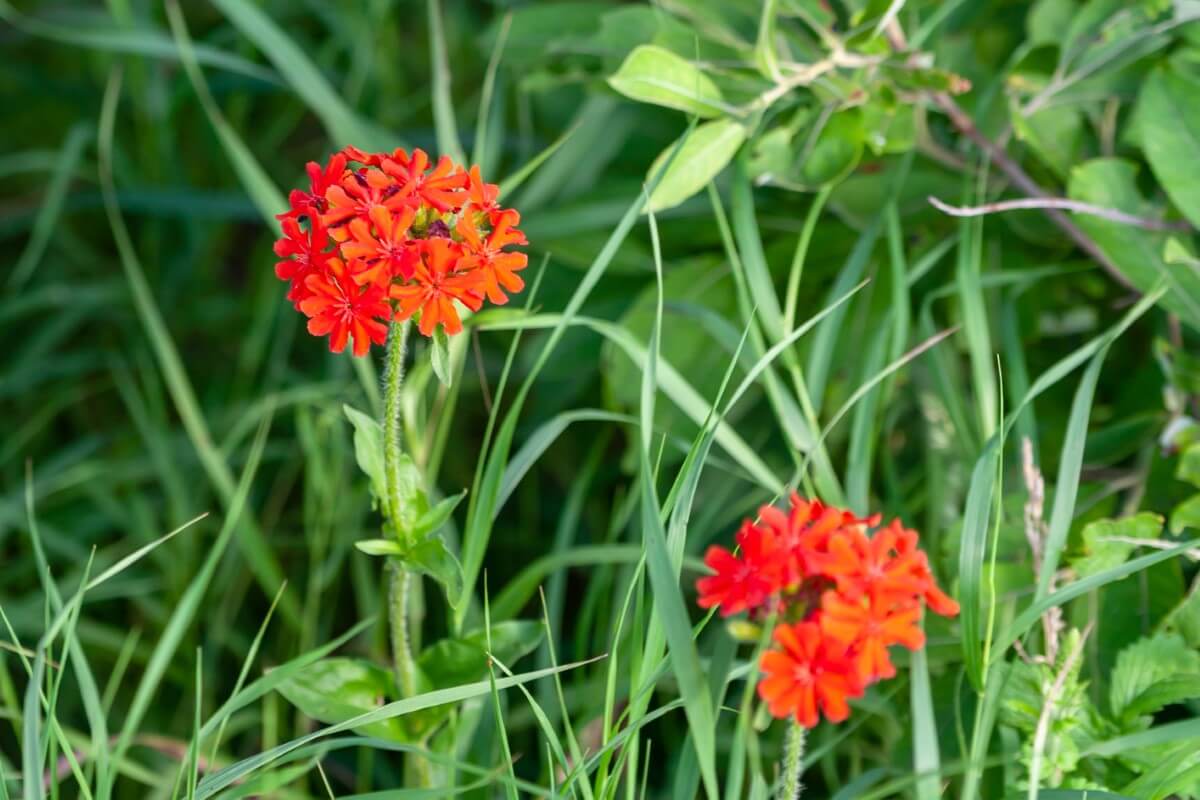 63Vesuvius
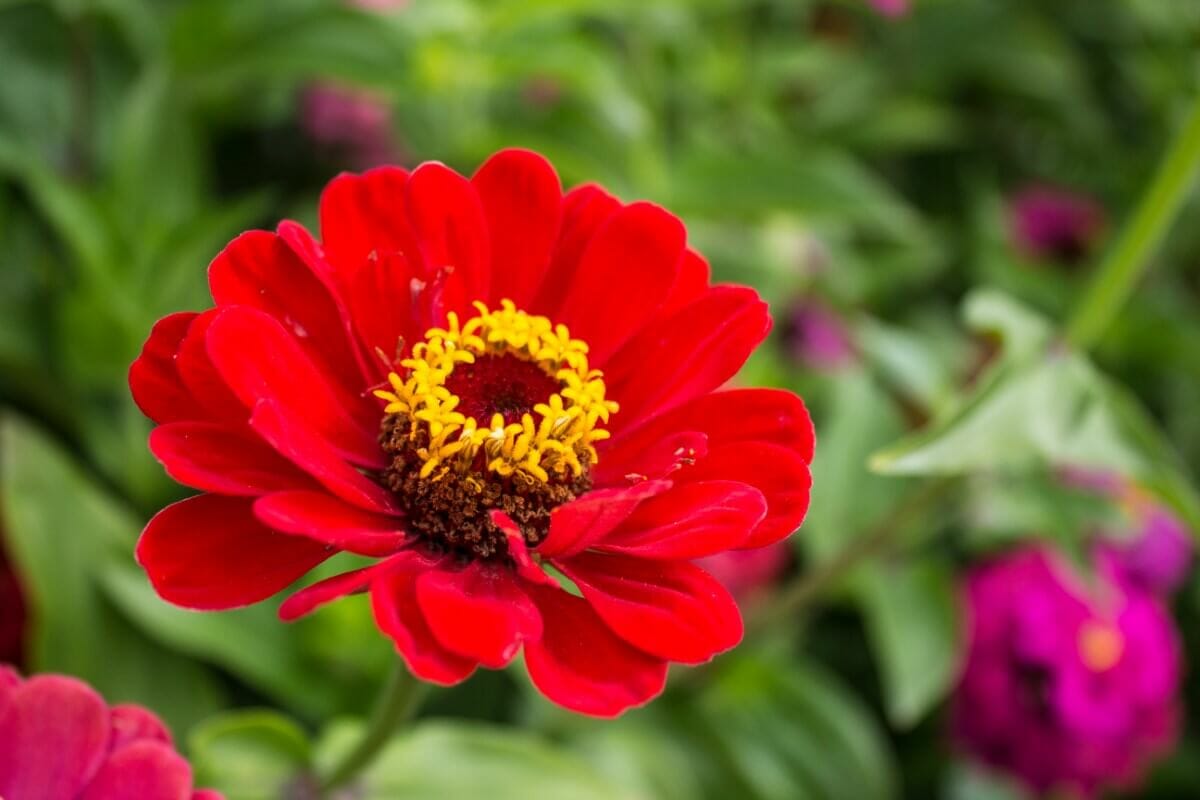 64Zinnia
 65Marigold
 66Peony
 67Petunia
 68Coleus
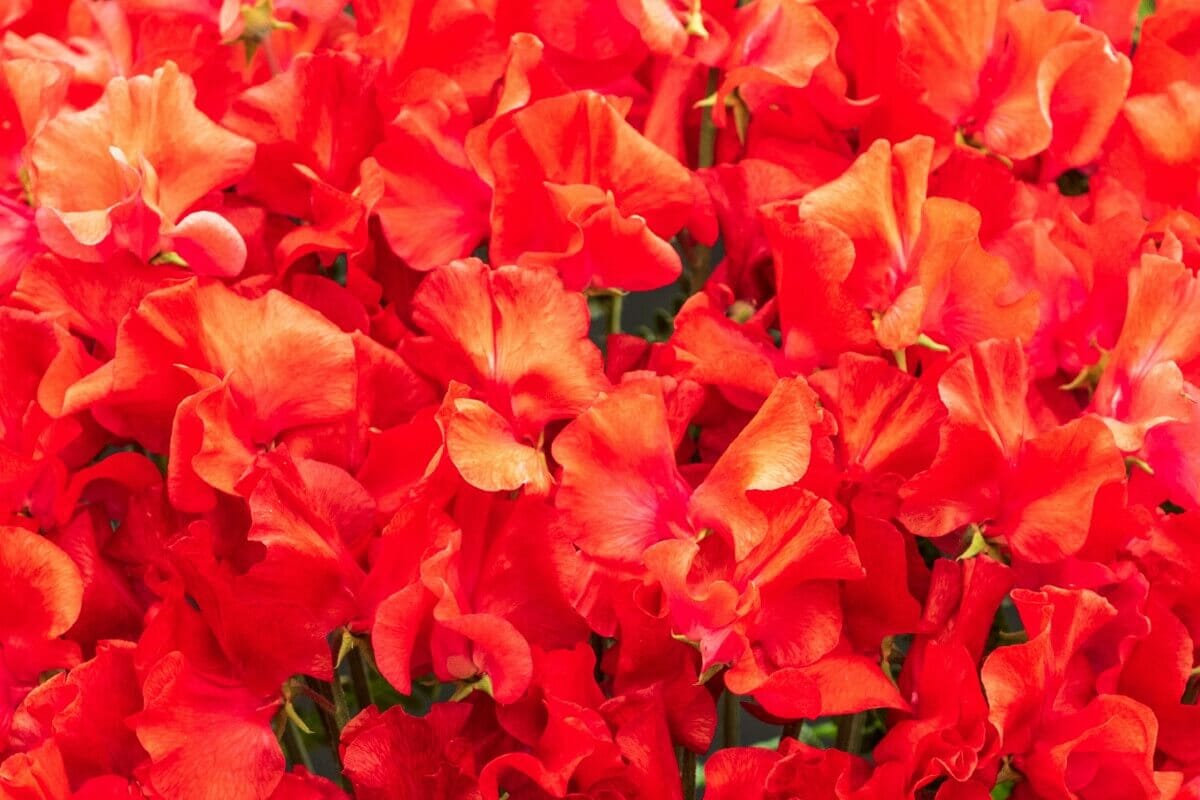 69Sweet Pea
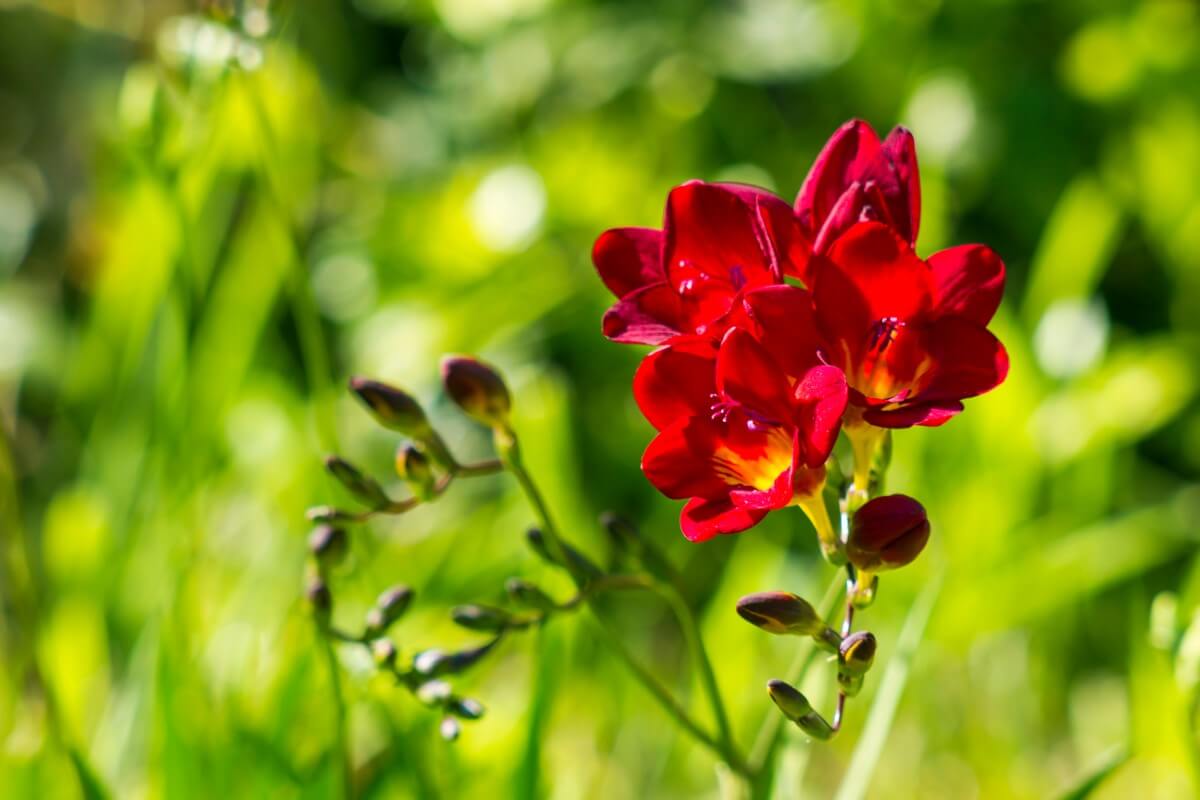 70Freesia
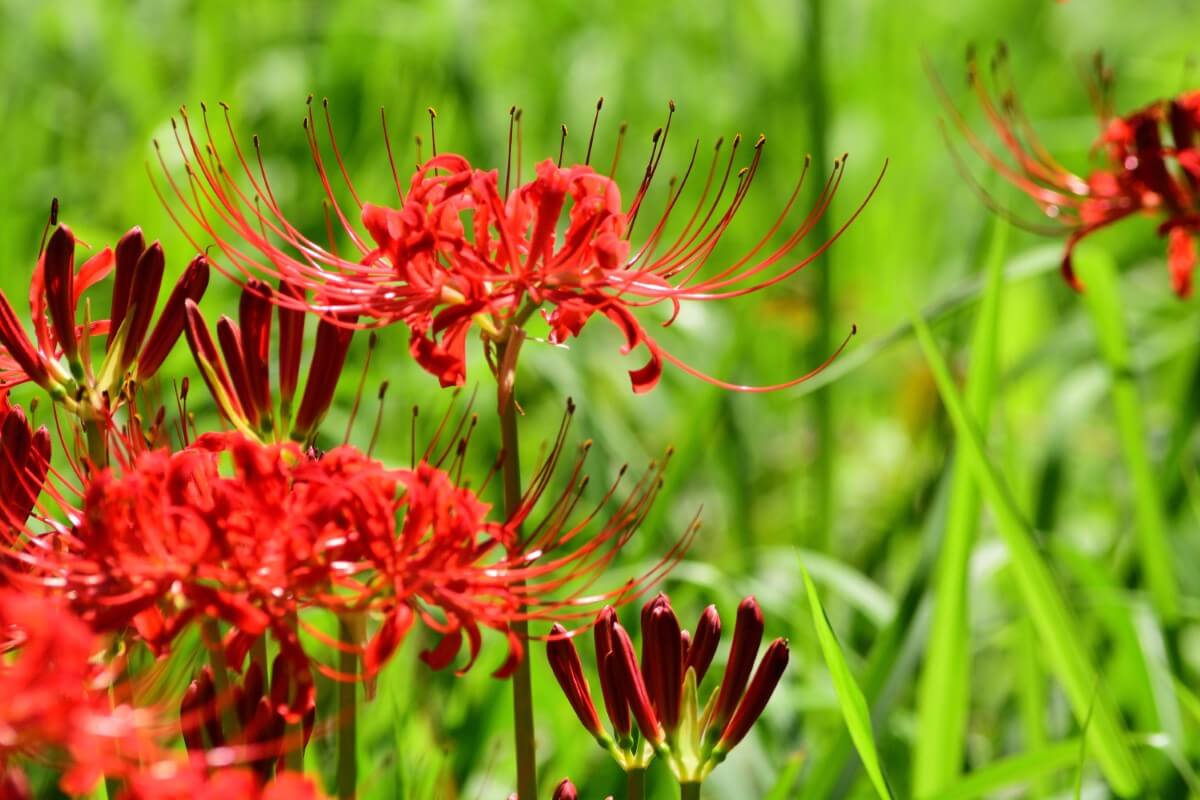 71Lycoris
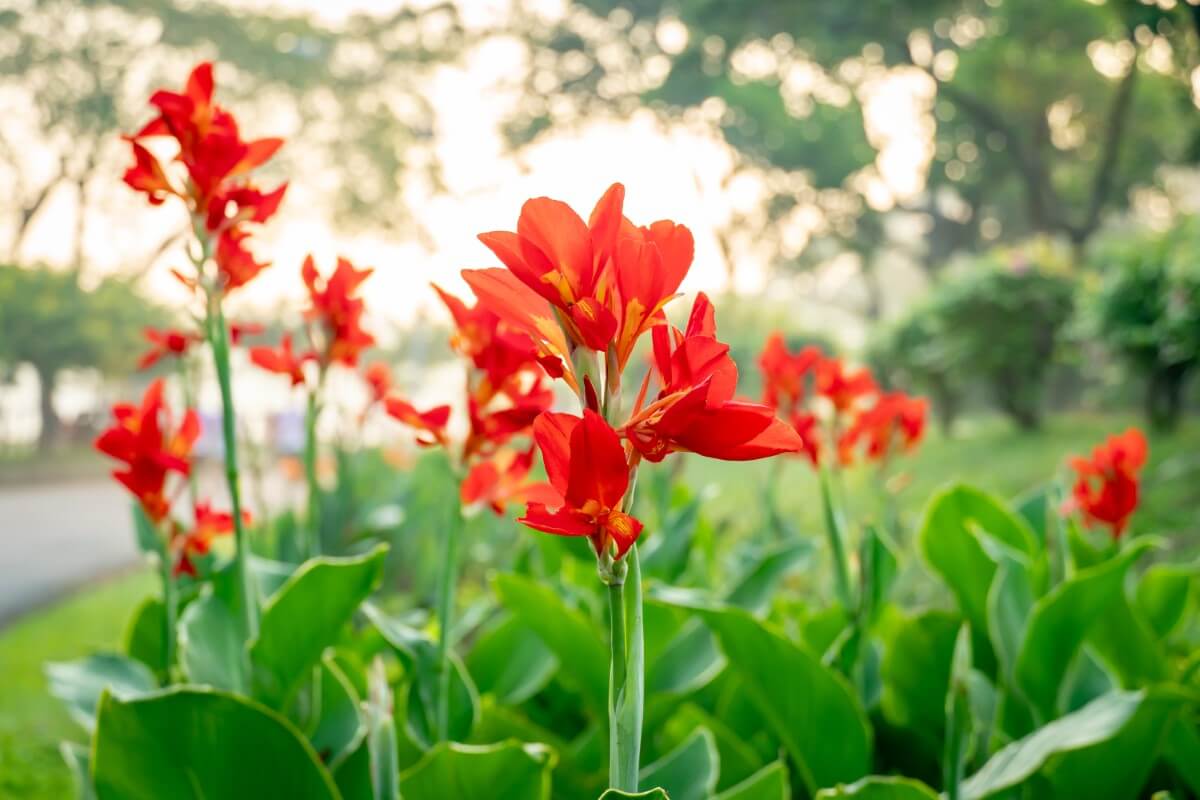 72Canna Lily
 73Christmas Cactus
 74Garden Pansy
 75Wood Lily
None match
Red Bouquets to Send
From national florists we’ve ordered from and reviewedDelivered prices include fees
Chosen independently. Some links earn us a commission, at no cost to you. Learn more
 20% off via our link
One Dozen Red Roses
Petal TestedRecommended 4.0View BouquetFrom $24.99
$49.99$41.98 delivered
From You Flowers · rose
 20% off via our link
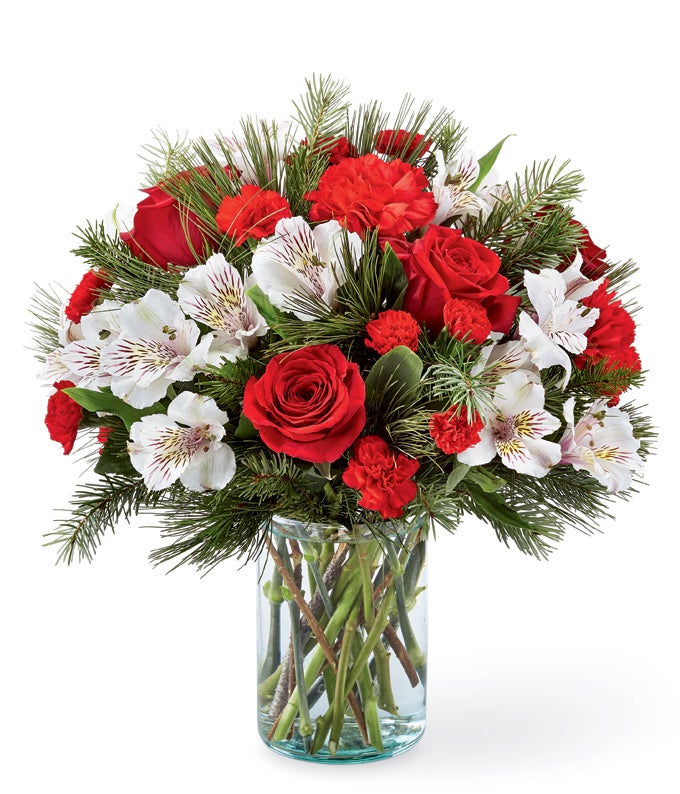
Merry & Bright Blooms
Petal TestedRecommended 4.0View BouquetFrom $29.99
$39.99$46.98 delivered
From You Flowers · rose, carnation, alstroemeria
15% off via our link
Kindest Heart Bouquet
Petal TestedRecommended 4.5View BouquetFrom $29.74
$34.99$49.73 delivered
Teleflora
15% off via our link
Red And White Delight Bouquet
Petal TestedRecommended 4.5View BouquetFrom $33.99
$39.99$53.98 delivered
Teleflora · carnation, daisy, chrysanthemum
Red Flowers by Growing Situation
The table below picks out the red flowers on this list that suit each growing situation, from shade and cold winters to dry soil, indoors, walls and fences, hanging baskets, and wet ground. Each pick comes straight from the entry's Key Facts, so you can jump to the plants that fit your garden.
| If you have | Red flowers on this list | How we picked |
|---|---|---|
| Shade | 5. Bleeding Hearts, 9. Begonia, 29. Camellia, 34. False Goat’s Beard, 55. Azalea, 68. Coleus | Sunlight is part or full shade |
| Cold winters (zone 3) | 5. Bleeding Hearts, 8. Blanket Flower, 13. Hollyhock, 20. Tulips, 28. Red Black-Eyed Susan, 32. Maltese Cross, 37. Rose, 43. Daylily, 45. Yarrow, 49. Dragon’s Blood Stonecrop, 52. Columbine, 56. Dianthus, 60. Cardinal Flower, 61. Coneflowers, 66. Peony | Growing Zones start at 3; annuals left out |
| If you have | Red flowers on this list | How we picked |
|---|---|---|
| Dry soil | 4. Red Bush Monkeyflower, 8. Blanket Flower, 25. Vervain, 39. Oleander, 45. Yarrow, 49. Dragon’s Blood Stonecrop, 54. African Daisy, 61. Coneflowers, 62. Poppy | Watering is low or drought tolerant |
| Indoors | 7. Anthurium, 27. Gloxinia, 30. Crown of Thorns, 36. Poinsettia, 41. Kalanchoe, 51. Orchids, 58. Streps, 73. Christmas Cactus | Where to Plant names indoors |
| Walls and fences | 10. Coral Honeysuckle, 26. Red Trumpet Creeper, 48. Cypress Vine, 57. Red Passion Flower, 69. Sweet Pea | Where to Plant names trellises or fences |
| If you have | Red flowers on this list | How we picked |
|---|---|---|
| Hanging baskets | 9. Begonia, 17. Geranium, 47. Nasturtium, 67. Petunia | Where to Plant names hanging baskets |
| Wet ground or ponds | 34. False Goat’s Beard, 35. Pygmy Water Lily, 60. Cardinal Flower | Where to Plant names ponds or water features |
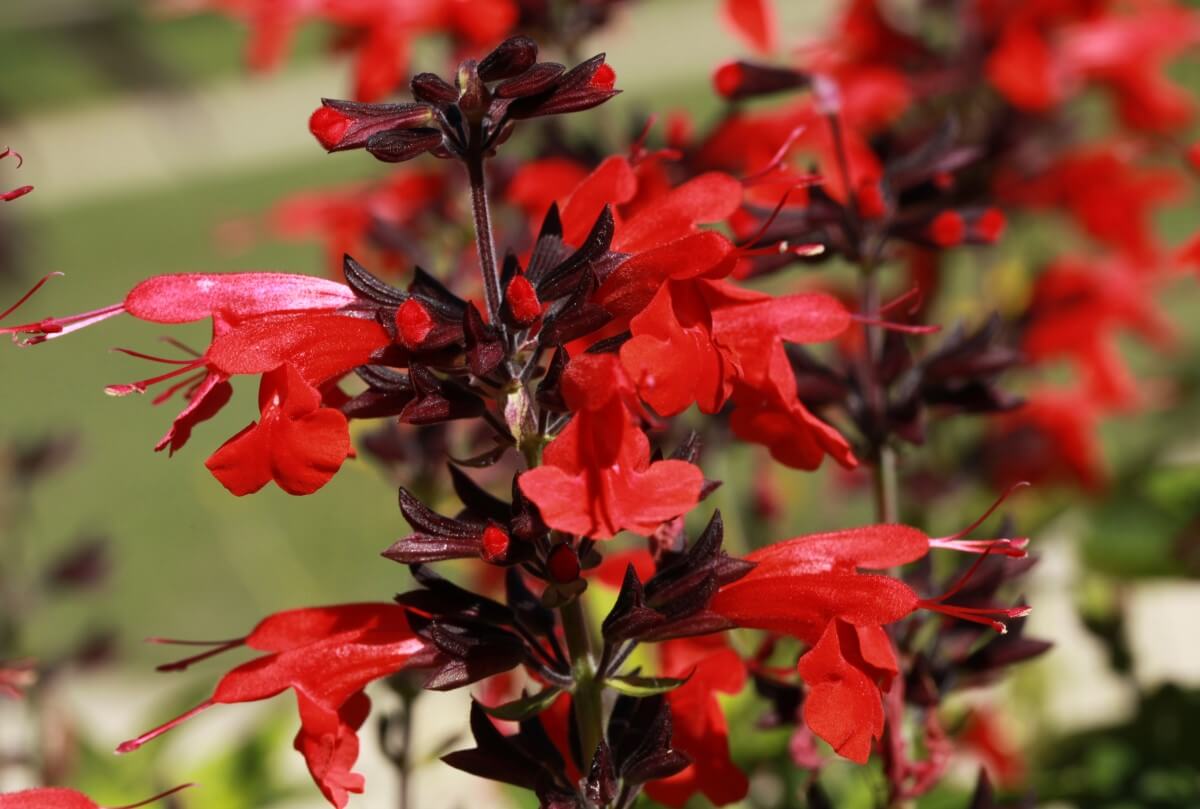
1. Blood Sage (Salvia coccinea)
Best for: Warm-climate pollinator gardens in zones 8 to 10.
Salvia coccinea is an herbaceous perennial. It produces slightly hairy, scalloped leaves in a muted green color, and racemes with slightly spread-out, deep-red-colored blossoms. The flowers are typically tube-shaped, but the shape can vary between cultivars. The flowers are fragrant and attract bees, butterflies, and hummingbirds.
The blood sage’s genetic profile seems to point to an origin in Mexico, but it grows naturally throughout the southeastern United States, Central America, and northern South America. Common names include blood sage, tropical sage, and Texas sage.
Key Facts:
Botanical Name: Salvia coccinea
- Sunlight
- Full sun to partial shade.
- Watering
- Moderate.
- Growing Zones
- 8-10
- Where to Plant
- Well-drained soil in borders, beds, or containers.
- Soil
- Average, well-draining soil.
- Feeding
- Balanced, general-purpose fertilizer.
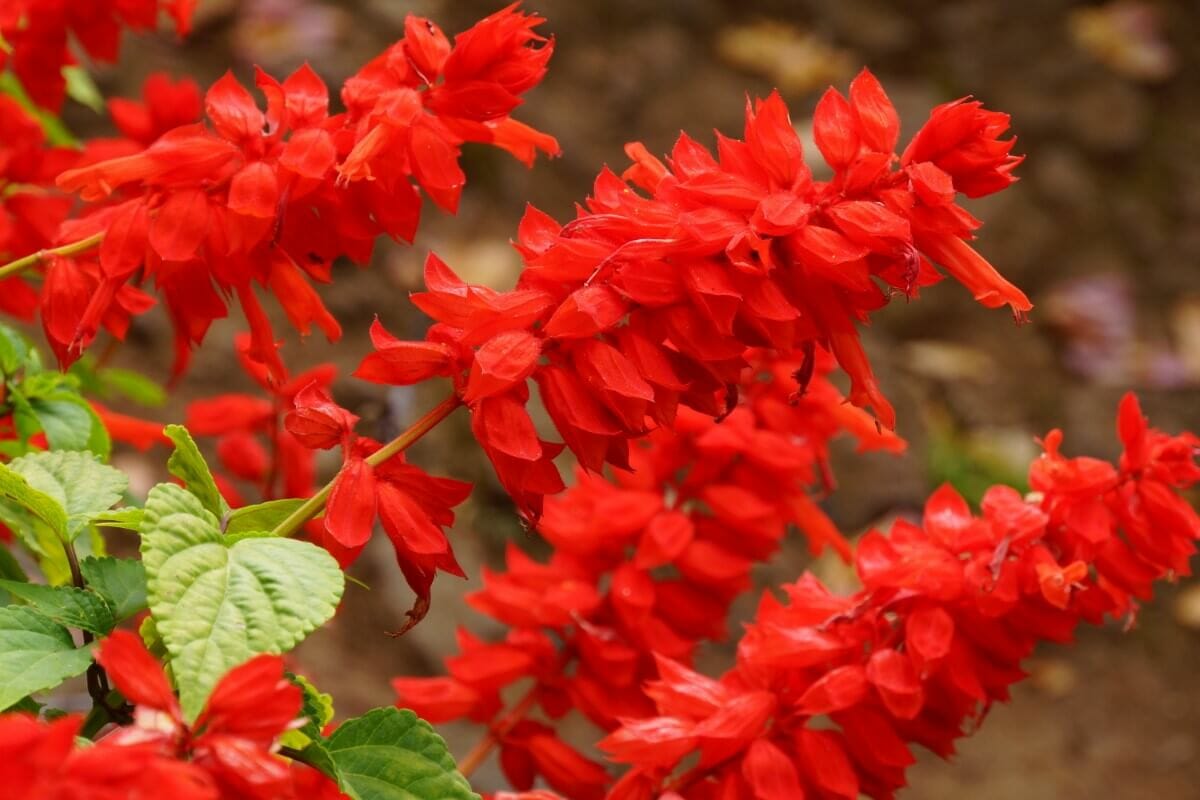
2. Scarlet Sage (Salvia splendens)
Best for: Sunny beds and containers in warm zones, annual elsewhere.
Salvia splendens is commonly called scarlet sage. It is native to the mountains and high elevations of Brazil, where the weather is warm and humid throughout the year, and is grown as a perennial in zones 10 to 11 and as an annual elsewhere.
Wild varieties of this plant grow to be more than 4-feet tall, but cultivars such as Scarlet Sage are easy to grow in gardens and are typically more compact. These plants produce spikes of bright-scarlet-colored, bell-shaped flowers.
Key Facts:
Botanical Name: Salvia splendens
- Sunlight
- Full sun.
- Watering
- Regular.
- Growing Zones
- 10-11 (as a perennial), elsewhere as an annual
- Where to Plant
- Beds, borders, and containers.
- Soil
- Moderately fertile, well-draining soil.
- Feeding
- Balanced fertilizer.
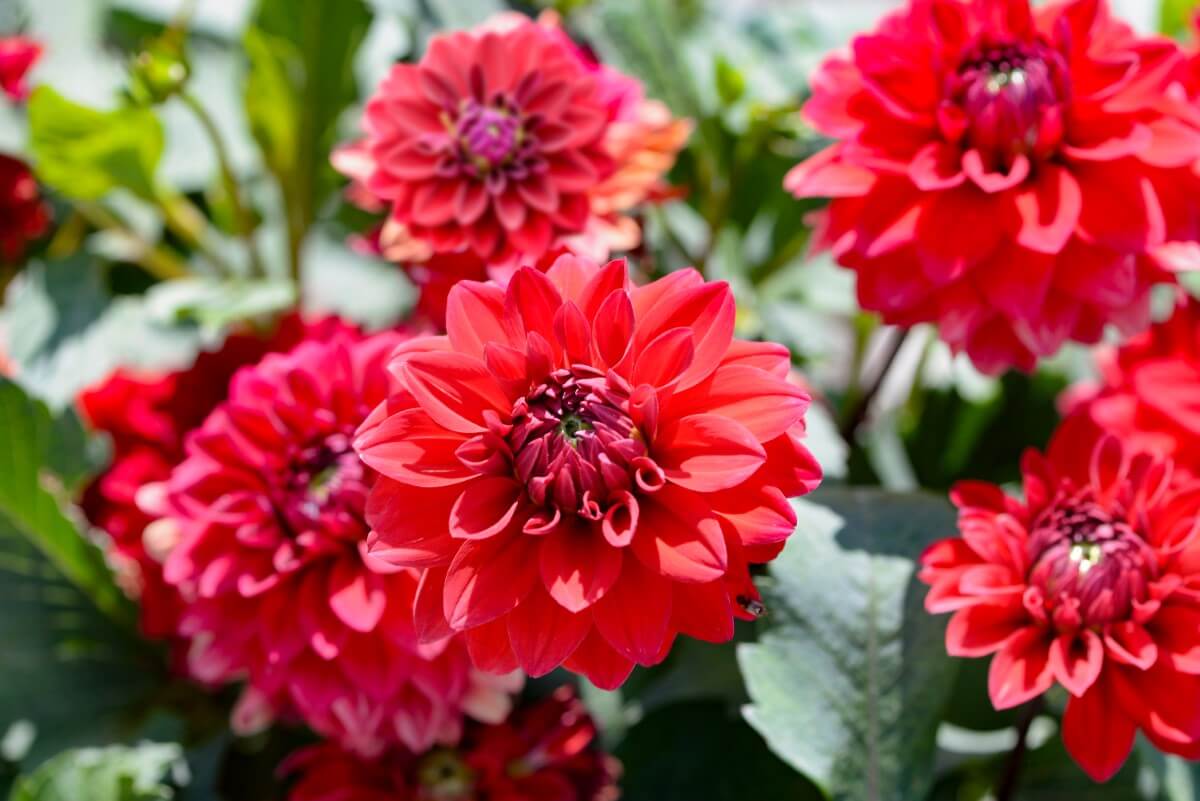
3. Red Dahlia (Dahlia coccinea)
Best for: Sunny garden beds in zones 7 to 10.
Dahlias are flowers native to Mexico and belong to the Asteraceae plant family. They are commonly known as the daisy, aster, or composite plant family. This species of dahlia is commonly called the red dahlia, although its cultivars sometimes also bloom in orange or yellow.
The Aztecs grew dahlias alongside corn and beans, and the tubers were a dependable source of nutrition and hydration for them. Today, however, red dahlias are mainly prized for the ornamental value of their bright and showy flowers.
Key Facts:
Botanical Name: Dahlia coccinea
- Sunlight
- Full sun.
- Watering
- Moderate to high.
- Growing Zones
- 7-10
- Where to Plant
- Garden beds, borders.
- Soil
- Well-draining, fertile soil.
- Feeding
- Balanced, general-purpose fertilizer.
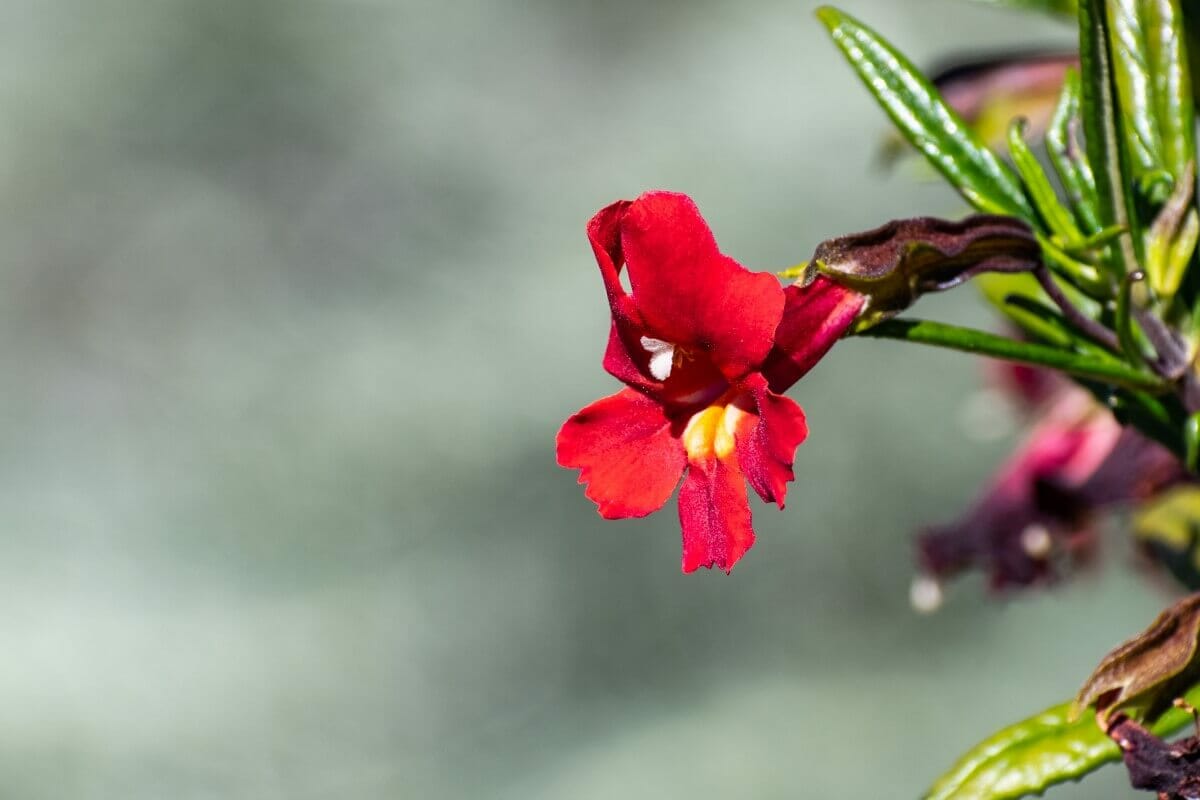
4. Red Bush Monkeyflower (Diplacus puniceus)
Best for: Dry, sunny slopes in Southern California, zones 8 to 10.
Commonly called the red bush monkeyflower, mission diplacus, or San Diego monkeyflower, the Diplacus puniceus is a perennial shrub in the Phrymaceae (lopseed) plant family that produces reddish-orange flower blossoms in a shape that roughly resembles a monkey’s face. These evergreen shrubs grow to be about two feet tall and three-feet wide and are native flowers to Southern California and Baja California.
Key Facts:
Botanical Name: Diplacus puniceus
- Sunlight
- Full sun to light shade.
- Watering
- Low.
- Growing Zones
- 8-10
- Where to Plant
- Dry slopes, in shrub borders.
- Soil
- Sandy or gritty, well-draining.
- Feeding
- Little to none.
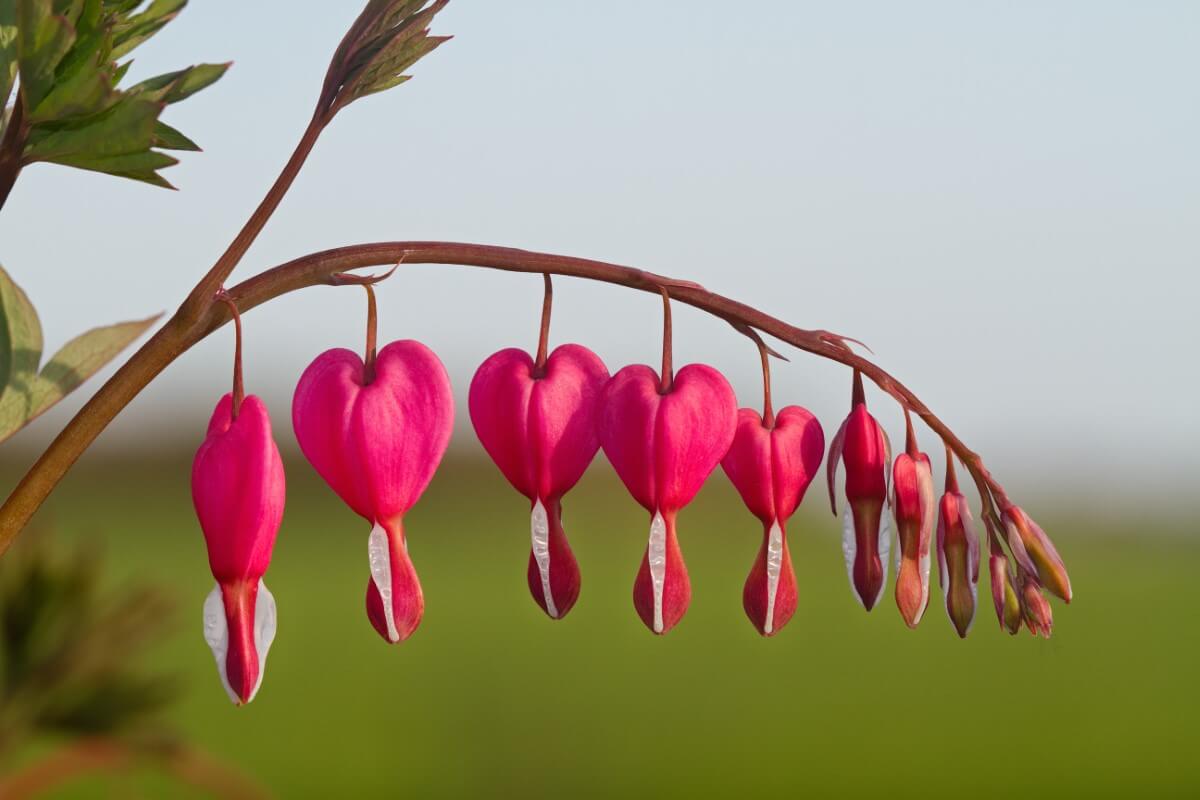
5. Bleeding Hearts (Lamprocapnos spectabilis, formerly Dicentra spectabilis)
Best for: Shady woodland gardens in zones 3 to 9.
The Lamprocapnos spectabilis (commonly referred to as a bleeding heart, Asian bleeding heart, or fallopian buds) is a flowering, shrub-like plant that is native to Japan, Korea, northern China, and Siberia. It belongs to the Fumarioideae subfamily within the larger Papaveraceae (poppy) plant family.
This plant was previously classified as a member of the Dicentra plant genus. However, the plant’s classification has officially been changed, but the plant’s previous scientific name, Dicentra spectabilis is still accepted as a synonym.
The Dicentra spectabilis ‘Valentine’ variety of bleeding hearts is noted for its candy-red, heart-shaped blossoms that hang from the shrub’s stems.
Key Facts:
Botanical Name: Lamprocapnos spectabilis (formerly Dicentra spectabilis)
- Sunlight
- Part shade.
- Watering
- Regular.
- Growing Zones
- 3-9
- Where to Plant
- Woodland gardens, shady borders.
- Soil
- Rich, moist, well-draining.
- Feeding
- Balanced fertilizer in early spring.
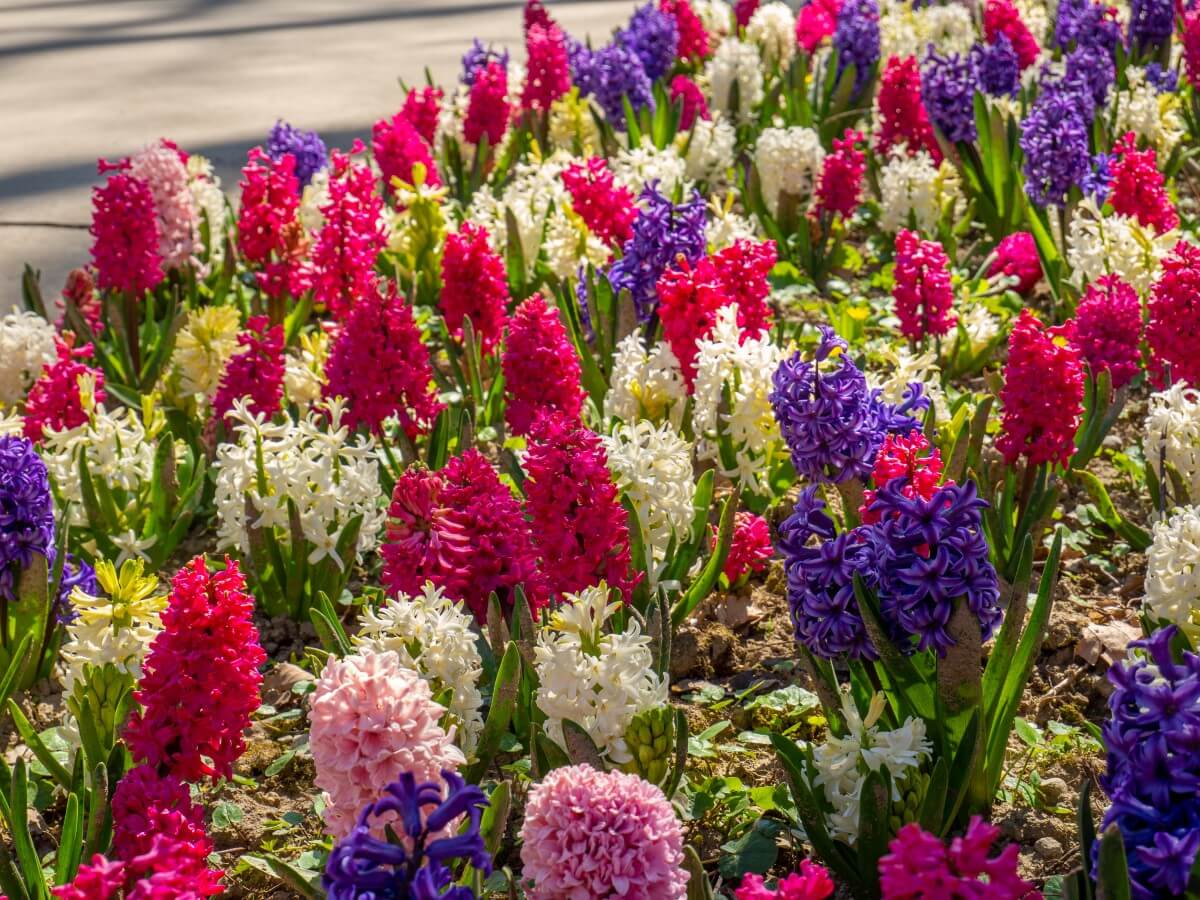
6. Common Hyacinth (Hyacinthus orientalis)
Best for: Fragrant borders and containers in zones 4 to 8.
Hyacinthus orientalis (also called the common hyacinth, Dutch hyacinth, or garden hyacinth) is the most common hyacinth species. A member of the Asparagaceae (asparagus) plant family, this species is native to a broad region of the Mediterranean and the Middle East and was commercially cultivated in France and the Netherlands.
It is the species of hyacinth that is commonly grown in gardens and is available to purchase today. Hyacinth racemes carry trumpet-shaped flowers with a strong, sweet fragrance, like many fragrant white flowers. In addition to deep red, they blossom in various shades of purple, blue, white, yellow, and pink.
Key Facts:
Botanical Name: Hyacinthus orientalis
- Sunlight
- Full sun to partial shade.
- Watering
- Moderate.
- Growing Zones
- 4-8
- Where to Plant
- Borders, containers, under trees.
- Soil
- Well-draining, moderately fertile.
- Feeding
- Low, can benefit from bulb food.
7. Anthurium (Anthurium)
Best for: Indoor containers with indirect light.
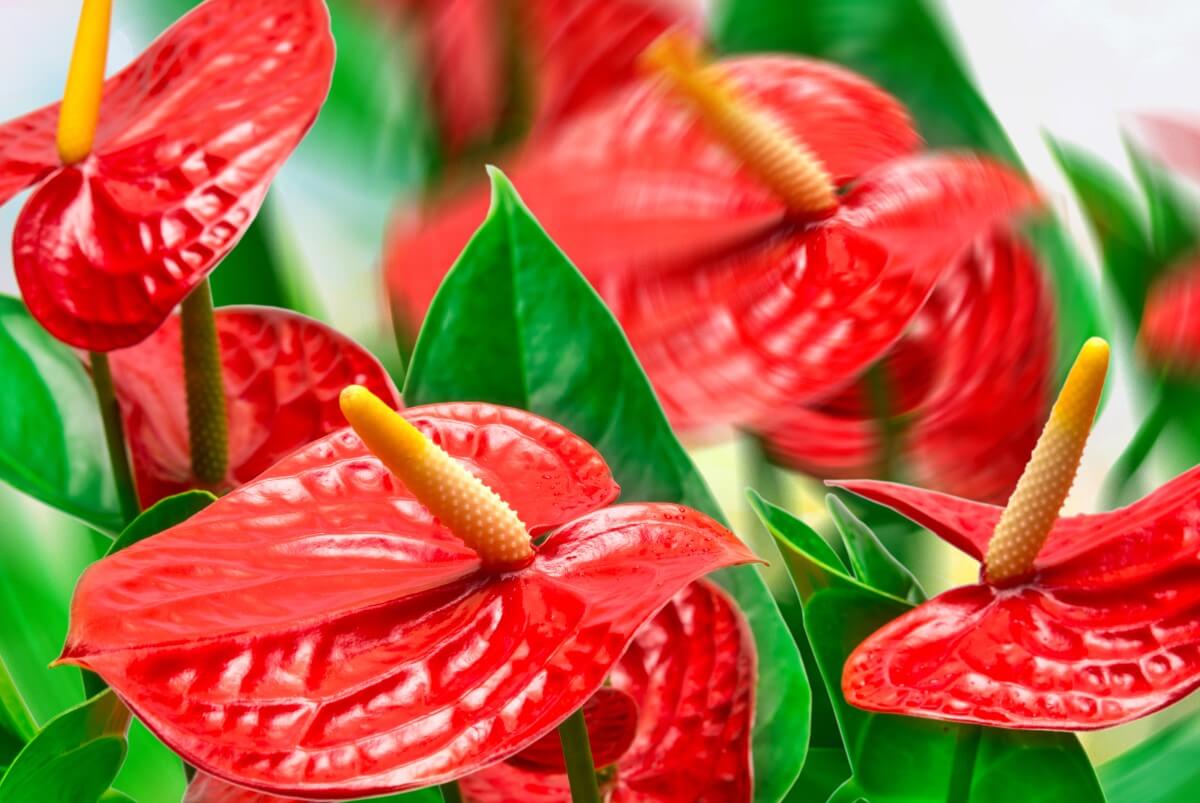
About 1,000 species of flowering plants belong to the Anthurium genus within the Araceae (arum) plant family. These plants are native to the tropical Americas and are commonly called anthurium, flamingo flower, tailflower, and laceleaf. They produce heart or spade-shaped, glossy, green foliage, and the flowers consist of brightly colored spathes (a type of bract) and spadices. In their native habitat, they blossom year-round.
Two species of anthuriums produce bright-red spathes, the Anthurium andraeanum, and the Anthurium scherzerianum.
Key Facts:
Botanical Name: Anthurium
- Sunlight
- Indirect light.
- Watering
- Keep soil consistently moist.
- Growing Zones
- 10-11, typically grown indoors.
- Where to Plant
- Containers indoors or shaded outdoor locations.
- Soil
- Well-draining, peat-based mix.
- Feeding
- Balanced liquid fertilizer every 6-8 weeks.
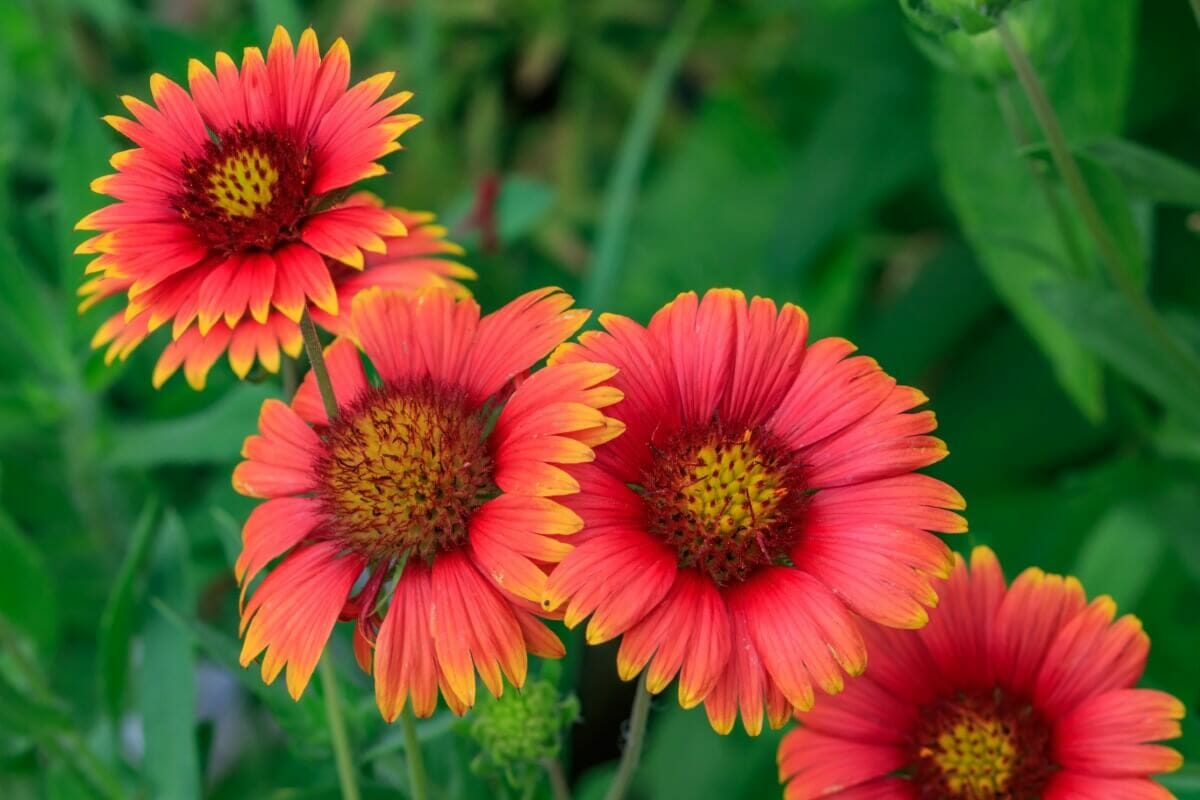
8. Blanket Flower (Gaillardia)
Best for: Dry, sunny borders and rock gardens in zones 3 to 10.
Gaillardia is a genus of about 25 species and subspecies of flowering, shrub-like plants that belong to the Asteraceae plant family and are commonly called blanket flowers. They are native to both North and South America and are rich in meaning and symbolism. The ray florets of their flower heads have a striking, color gradient that shifts from red to orange to yellow and radiates from the purplish-brown center, giving them a warm, sunset-like appearance.
Key Facts:
Botanical Name: Gaillardia
- Sunlight
- Full sun.
- Watering
- Moderate to low.
- Growing Zones
- 3-10
- Where to Plant
- Dry, sunny locations like borders or rock gardens.
- Soil
- Well-draining, not too fertile.
- Feeding
- Little to none.
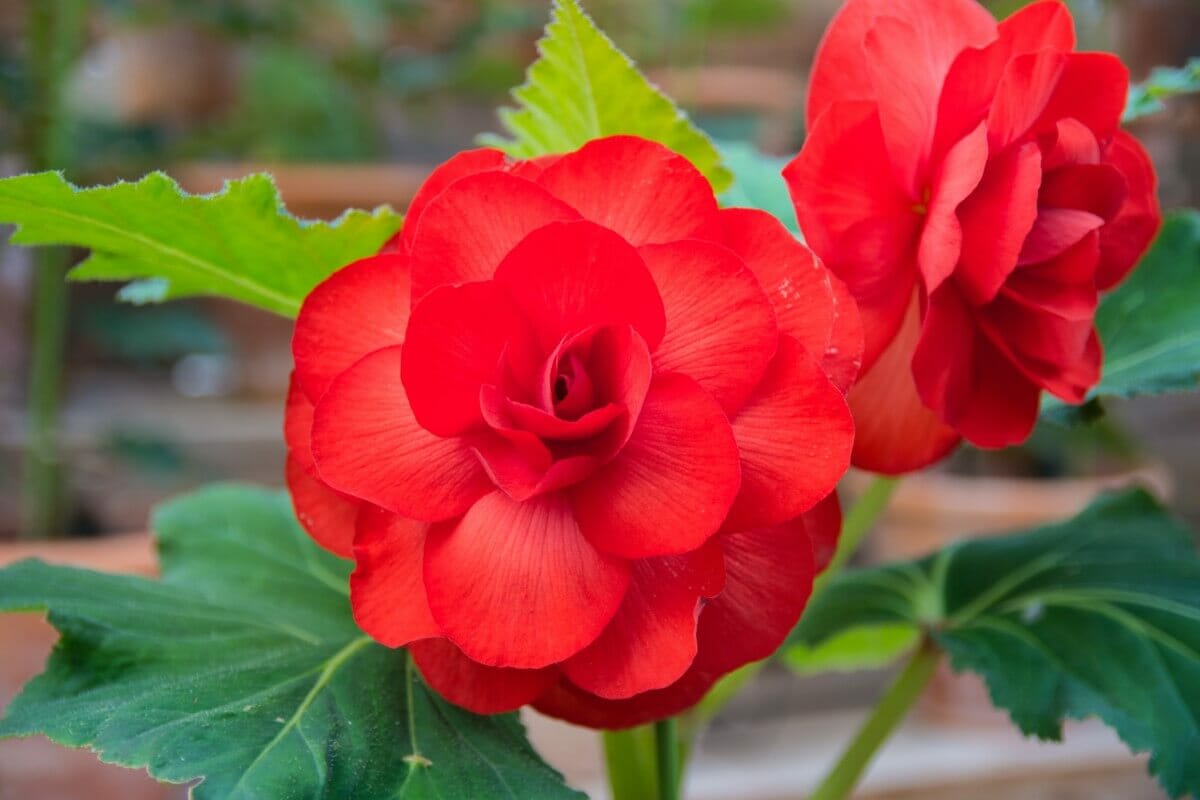
9. Begonia (Begonia)
Best for: Shaded containers and hanging baskets in zones 6 to 11.
Begonia is one of two genera in the Begoniaceae plant family. More than 2,000 species of flowering perennials that are native to tropical and subtropical climates around the world make up the Begonia genus.
Different species of begonias are popularly cultivated for growing in gardens and indoors, and their appearance varies greatly. They produce attractive, showy flower blossoms in a variety of colors, including various shades of red, and their foliage ranges in color from deep green to deep burgundy or red and from smooth and glossy to soft and fuzzy.
Key Facts:
Botanical Name: Begonia
- Sunlight
- Partial shade to bright indirect light.
- Watering
- Regular, avoid waterlogged soil.
- Growing Zones
- 6-11 (depends on the species)
- Where to Plant
- Containers, hanging baskets, shaded garden spots.
- Soil
- Light, well-draining with organic matter.
- Feeding
- Balanced, general-purpose fertilizer.
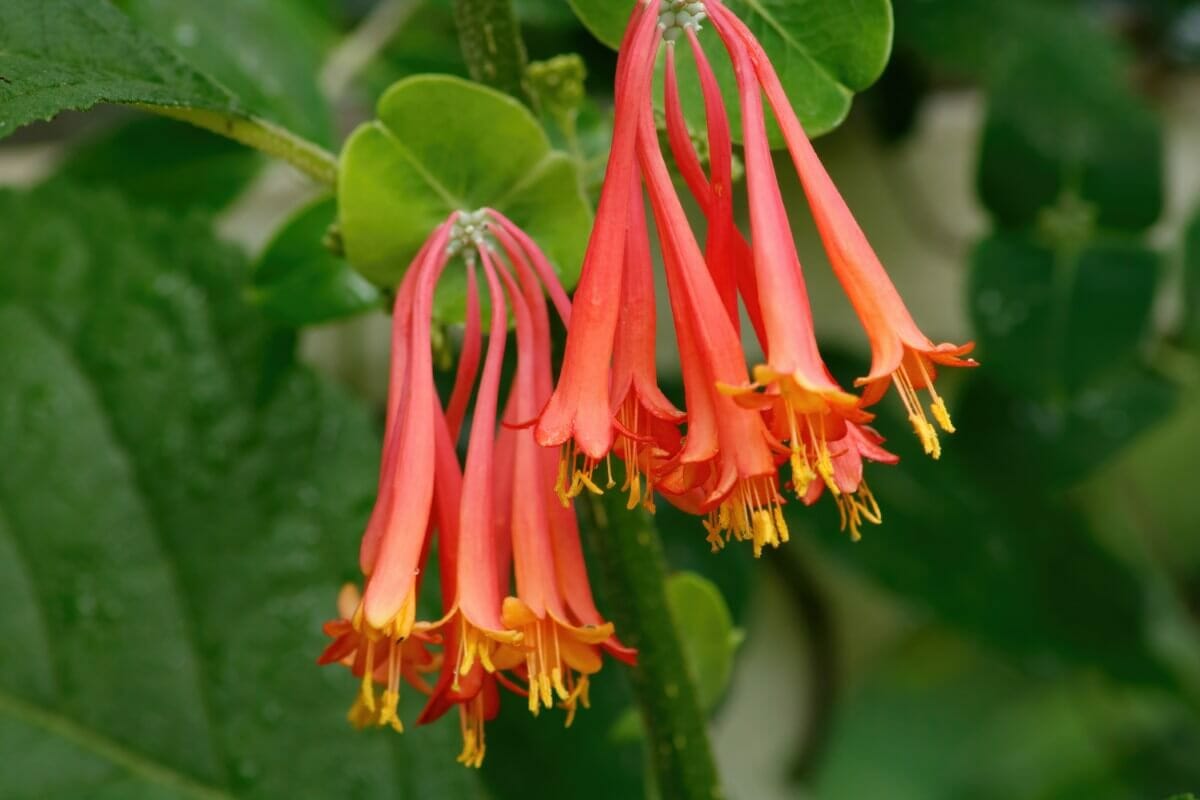
10. Coral Honeysuckle (Lonicera sempervirens)
Best for: Pollinator-friendly trellises and fences in zones 4 to 9.
Native to the United States, Lonicera sempervirens is a species of honeysuckle plant that belongs to the Caprifoliaceae (honeysuckle) plant family. It is commonly called the coral honeysuckle, scarlet honeysuckle, or trumpet honeysuckle.
The flowering vine produces firework-shaped clusters of skinny, red, trumpet-shaped flowers and is commonly grown in pollinator gardens to attract butterflies and hummingbirds with its sweet fragrance. Since this plant is a vine, it needs a trellis, fence, or another type of support to truly proliferate. It’s a beautiful, sweet-smelling choice for growing along a privacy fence.
Key Facts:
Botanical Name: Lonicera sempervirens
- Sunlight
- Full sun to partial shade.
- Watering
- Moderate.
- Growing Zones
- 4-9
- Where to Plant
- Trellises, fences, walls.
- Soil
- Well-draining.
- Feeding
- Balanced, general-purpose fertilizer.
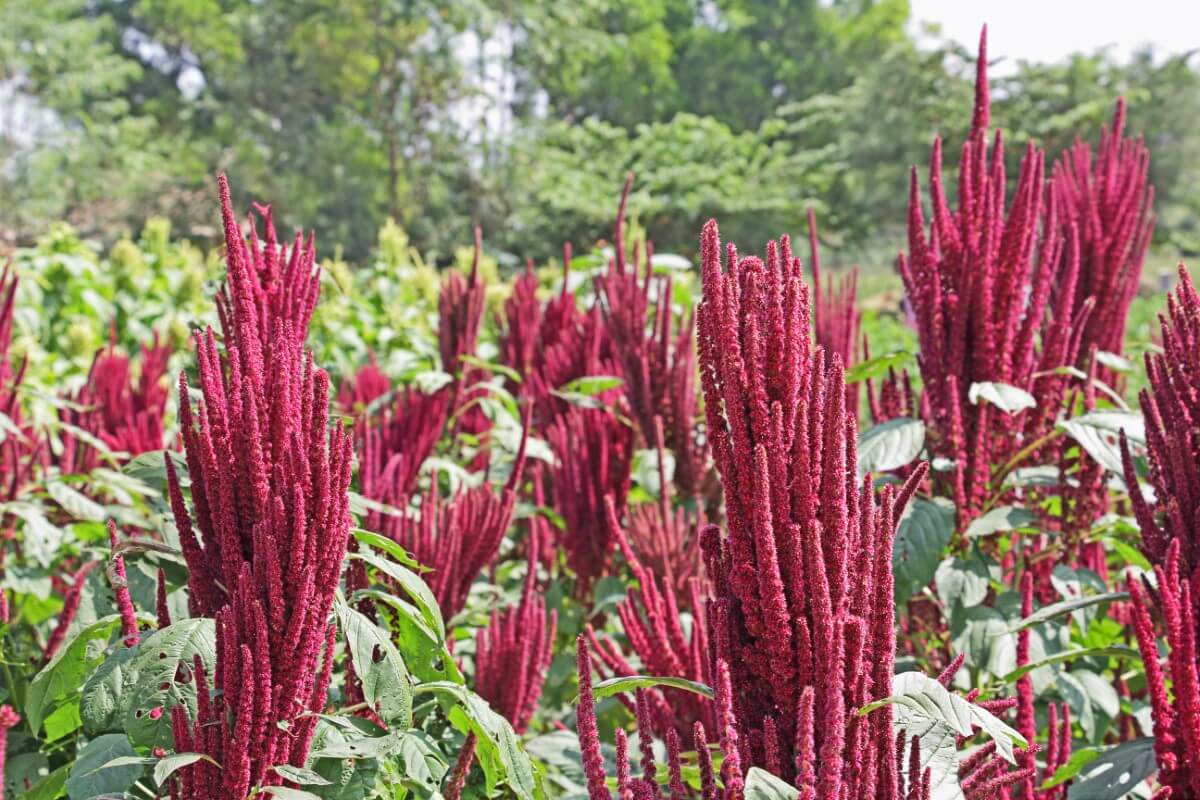
11. Amaranth (Amaranthus)
Best for: Sunny annual beds and containers in most zones.
The Amaranthus genus belongs to the Amaranthaceae plant family and contains flowering perennial shrubs or plants that produce a wide variety of flower types. These plants are considered a cosmopolitan genus, meaning their native range wraps around the world.
Some amaranths have showy, drooping clusters of flowers grown for ornament, and the red ones are crimson.
Key Facts:
Botanical Name: Amaranthus
- Sunlight
- Full sun.
- Watering
- Moderate.
- Growing Zones
- 2-11 (as an annual)
- Where to Plant
- Beds, borders, and containers.
- Soil
- Rich, well-draining.
- Feeding
- Light feeding with a balanced fertilizer.
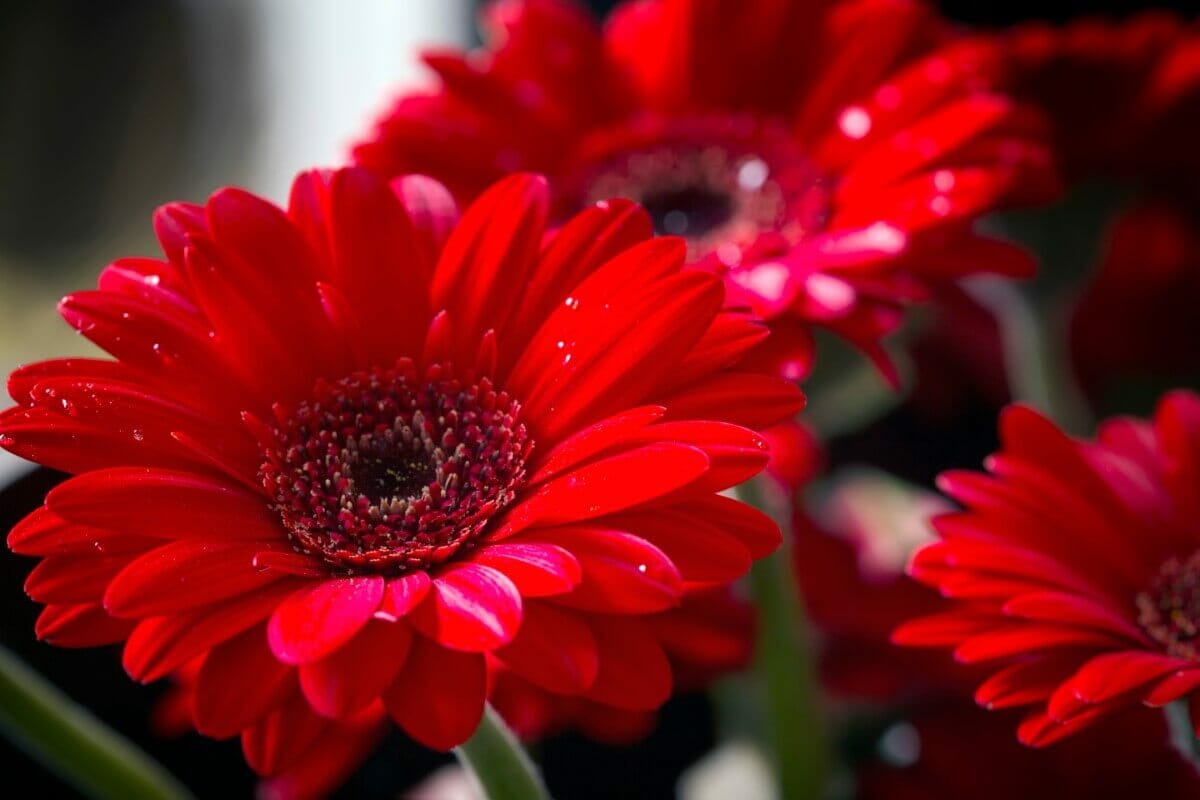
12. Gerbera Daisy (Gerbera)
Best for: Sunny containers and beds in zones 8 to 10.
Gerbera is a genus of flowering plants native to the tropical areas of Africa. They are commonly called gerbera daisies, African daisies, or Transvaal daisies.
These plants produce large, showy flower heads that feature layers of petals in very bright colors, including red. They are primarily used as ornamental flowers. In the floral design industry, gerbera daisies are a widely used cut flower.
Key Facts:
Botanical Name: Gerbera
- Sunlight
- Full sun.
- Watering
- Regular, avoid overhead watering.
- Growing Zones
- 8-10
- Where to Plant
- Containers, garden beds.
- Soil
- Well-draining, enriched soil.
- Feeding
- Balanced, general-purpose fertilizer.
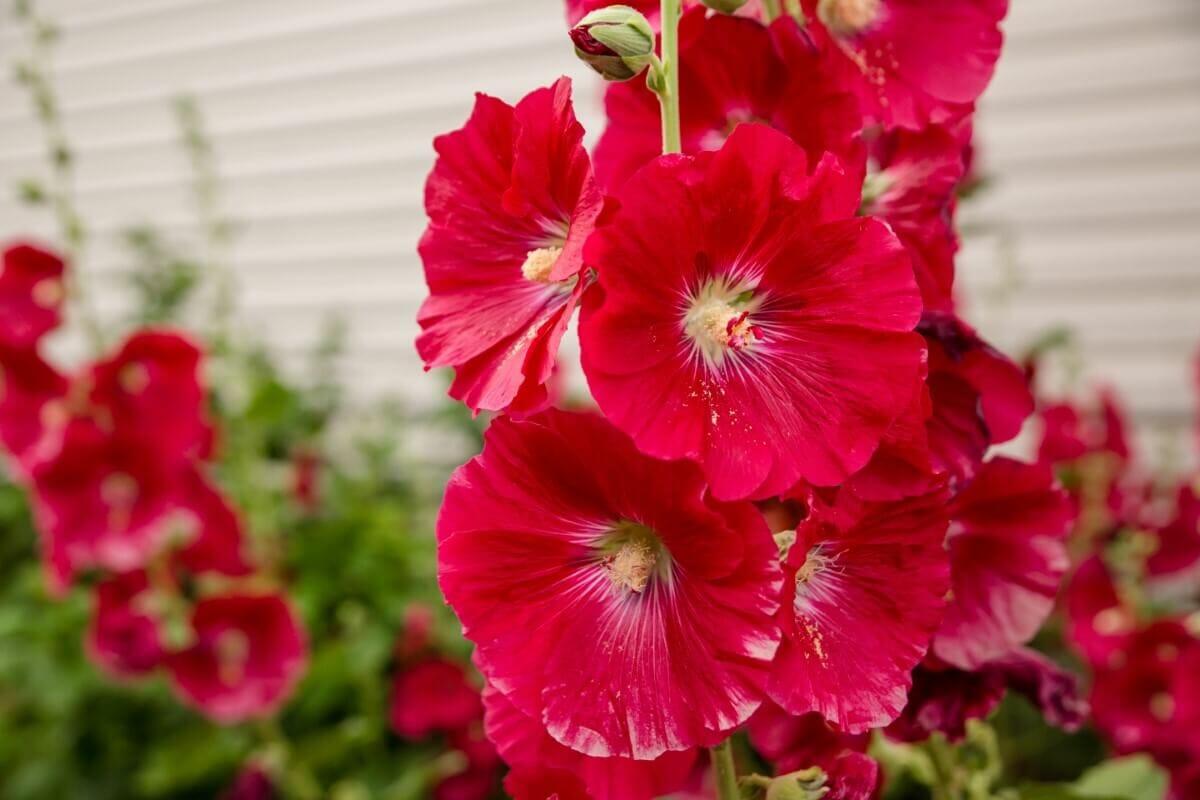
13. Hollyhock (Alcea)
Best for: Back of sunny cottage borders in zones 3 to 8.
More than 80 species of flowering plants commonly called hollyhocks, belong to the Alcea genus in the Malvaceae (mallow) plant family. All species of the Alcea plant genus are native to Europe and Asia. Hollyhocks bloom in a variety of colors.
They produce tall, sturdy stalks that feature racemes of large, bowl-shaped flowers with different styles of petals that vary depending on the species. They blossom in a whole rainbow of colors, including red.
Key Facts:
Botanical Name: Alcea
- Sunlight
- Full sun.
- Watering
- Regular.
- Growing Zones
- 3-8
- Where to Plant
- Back of borders, cottage gardens.
- Soil
- Rich, well-draining.
- Feeding
- Light feeding with a balanced fertilizer.
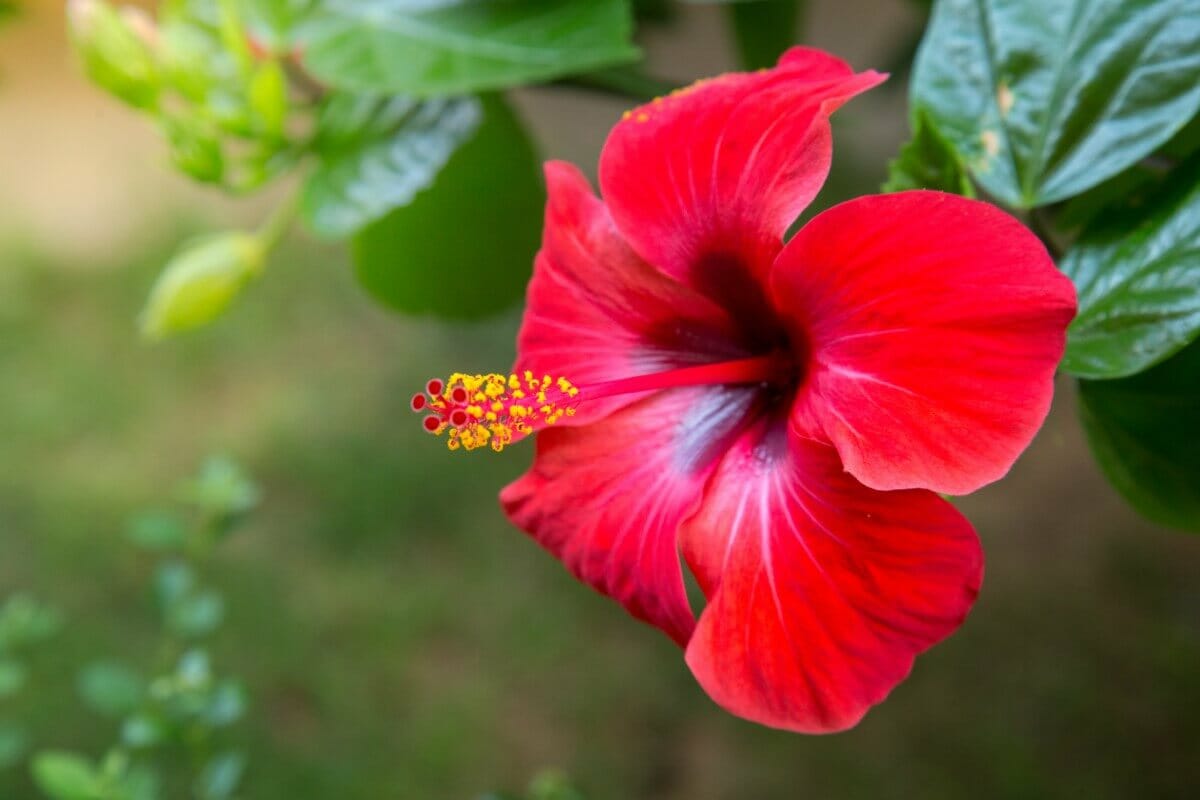
14. Hibiscus (Hibiscus)
Best for: Moist, sunny garden beds in zones 5 to 9.
Another genus of the Malvaceae plant family, the Hibiscus genus contains hundreds of species of flowering plants. Hibiscus plants are most commonly associated with the tropics, but they are actually native to a variety of tropical, subtropical, and even temperate climates worldwide.
They produce exotic-looking, trumpet-shaped flowers with fluttery petals and prominent stamens. The flowers are primarily bright crimson red but also bloom in other colors like white, pink, and yellow.
Key Facts:
Botanical Name: Hibiscus
- Sunlight
- Full sun to partial shade.
- Watering
- Regular to abundant.
- Growing Zones
- 5-9 (depends on the species)
- Where to Plant
- Garden beds, borders, containers.
- Soil
- Rich, moist, well-draining.
- Feeding
- Balanced, general-purpose fertilizer.
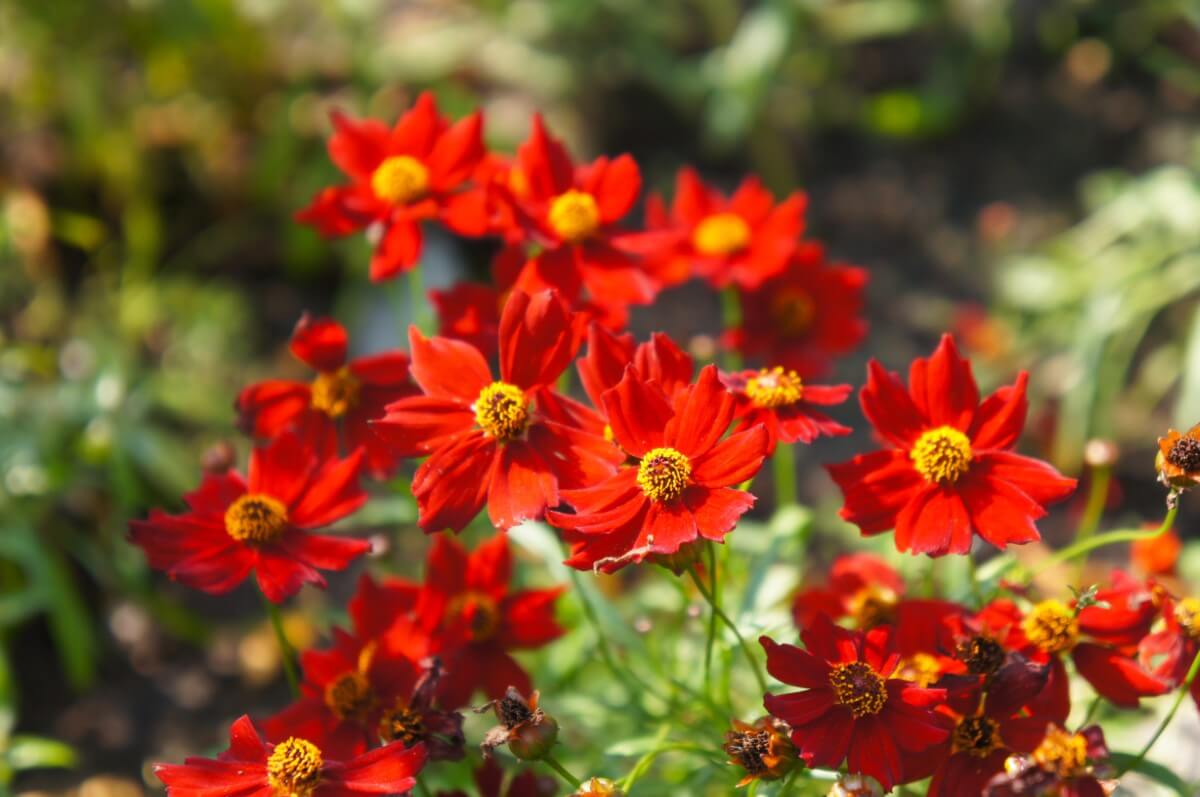
15. Tickseed (Coreopsis ‘Red Satin’)
Best for: Sunny mass plantings and borders in zones 4 to 9.
Coreopsis is a genus of flowering plants that are commonly referred to as tickseed or calliopsis. The genus contains roughly 75 to 80 species and belongs to the Asteraceae plant family.
Although most tickseed flowers bloom in a bright, golden-yellow color, the Coreopsis ‘Red Satin’ was specially cultivated by Darrell Probst to produce satiny petals in a deep scarlet hue. These flowers attract butterflies and spread quickly via their underground, rhizomatic root systems.
Key Facts:
Botanical Name: Coreopsis ‘Red Satin’
- Sunlight
- Full sun.
- Watering
- Moderate.
- Growing Zones
- 4-9
- Where to Plant
- Borders, containers, mass plantings.
- Soil
- Well-draining, not too fertile.
- Feeding
- Light feeding with a balanced fertilizer.
16. Cockscomb (Celosia)
Best for: Sunny annual beds and containers in most zones.
Native to the tropical regions of Africa, the Celosia genus contains species of plants that are prized for their ornamental purpose. This genus belongs to the Amaranthaceae plant family.
The genus name comes from the ancient Greek word, kḗleos, which means flame. This is about the flame-like shape of the plants’ flower heads, which mostly resemble flames, although some have a flatter or more rounded shape. They bloom in vibrant colors, including red, fuchsia, yellow, and orange.
Key Facts:
Botanical Name: Celosia argentea var. cristata
- Sunlight
- Full sun.
- Watering
- Moderate.
- Growing Zones
- 2-11 (as an annual)
- Where to Plant
- Garden beds, containers.
- Soil
- Moderately fertile, well-draining.
- Feeding
- Balanced, general-purpose fertilizer.
17. Geranium (Pelargonium)
Best for: Containers and hanging baskets, annual in cooler zones.
Pelargonium is a genus of roughly 800 species of plants that are natively distributed throughout the temperate and subtropical climates of the world.
Although plants of the Pelargonium genus are what we most strongly associate with the geraniums that we can purchase at garden stores everywhere (beloved for their bulbous clusters of brightly colored flowers), they are not true geraniums in the sense that they do not actually belong to the Geranium genus of flowering plants.
However, the plants of both genera are cousins within the same plant family, Geraniaceae. To help keep the two straight, plants of the Pelargonium genus are also commonly referred to as storksbills, while plants of the Geranium genus are called cranesbills.
Key Facts:
Botanical Name: Pelargonium
- Sunlight
- Full sun to partial shade.
- Watering
- Regular, allowing soil to dry between waterings.
- Growing Zones
- 10-11, often grown as an annual in cooler climates
- Where to Plant
- Containers, hanging baskets, garden beds.
- Soil
- Well-draining potting mix.
- Feeding
- Balanced, water-soluble fertilizer.
18. Scarlet Beebalm (Monarda didyma)
Best for: Pollinator borders and meadows in zones 4 to 9.
Native to a region that spans from Maine to Ontario in eastern North America, the Monarda didyma is a species of aromatic flowering herb. It belongs to the Lamiaceae (sage or mint) plant family. It produces oddly shaped flowers with tubular petals that attract a variety of pollinators.
The fragrance of scarlet beebalm flowers is sweet and citrusy, and it is often compared to the fragrance of bergamot oranges.
Key Facts:
Botanical Name: Monarda didyma
- Sunlight
- Full sun to partial shade.
- Watering
- Regular.
- Growing Zones
- 4-9
- Where to Plant
- Borders, wildflower meadows, cottage gardens.
- Soil
- Rich, well-draining.
- Feeding
- Light feeding with a balanced fertilizer.
19. Pineapple Guava (Feijoa sellowiana)
Best for: Edible landscaping shrubs in zones 8 to 11.
Native to southern Brazil and Uruguay, Feijoa sellowiana is a flowering evergreen shrub or small tree. It belongs to Myrtaceae (myrtle) plant family. The pineapple guava gets its name for the edible, guava-like fruits it produces.
Key Facts:
Botanical Name: Feijoa sellowiana
- Sunlight
- Full sun to partial shade.
- Watering
- Moderate.
- Growing Zones
- 8-11
- Where to Plant
- Landscapes as shrubs or small trees.
- Soil
- Well-draining.
- Feeding
- Balanced, general-purpose fertilizer.
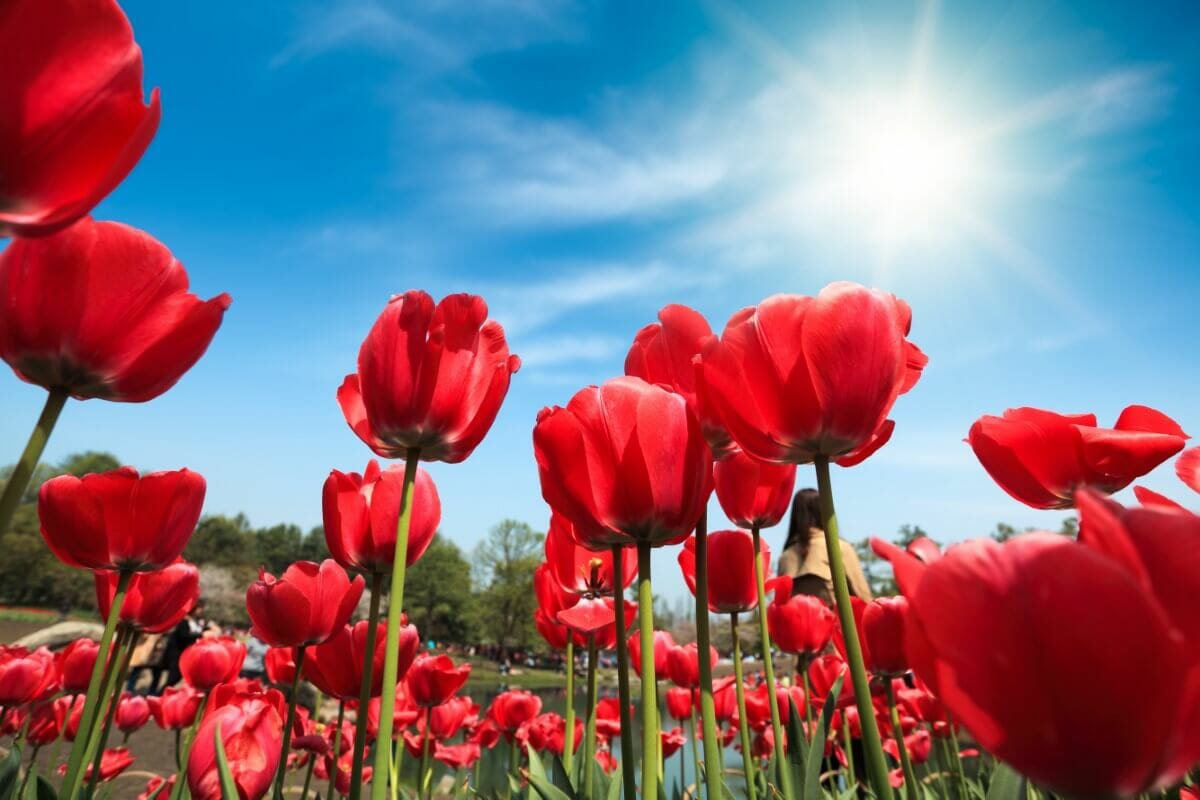
20. Tulips (Tulipa)
Best for: Sunny beds and containers in zones 3 to 8.
Tulipa are perennial flowering plants that grow from bulbs, with countless cultivars and hybrids.
Tulips are native to a region that stretches from southern Europe into central Asia. Today, however, they have been naturalized globally thanks to their popularity in trade throughout millennia.
Some favorite red tulip varieties include the Apeldoorn tulip, red dynasty tulip, and the doll’s minuet tulip.
Key Facts:
Botanical Name: Tulipa
- Sunlight
- Full sun.
- Watering
- Regular during growth, dormant after blooming.
- Growing Zones
- 3-8
- Where to Plant
- Garden beds, containers, meadows.
- Soil
- Well-draining, sandy loam.
- Feeding
- Bulb fertilizer during planting and growth.
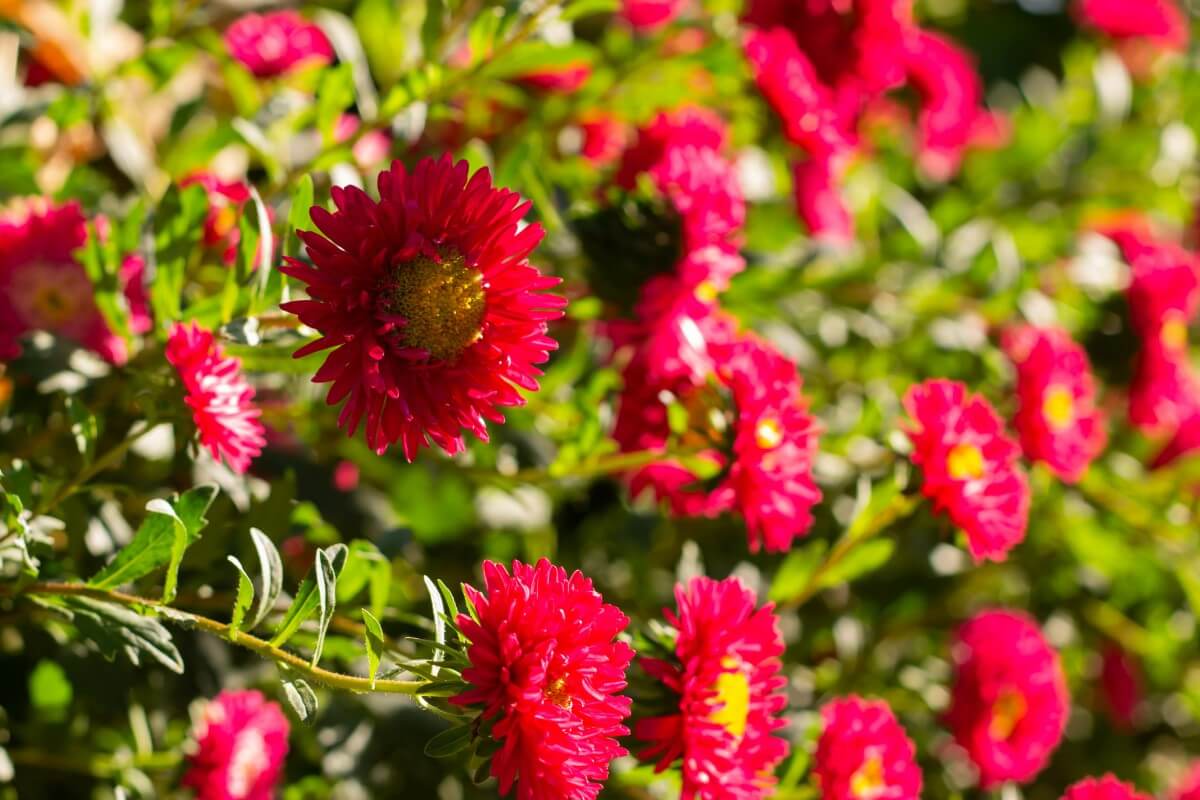
21. Red Aster (Aster novae-angliae ‘KICKIN Carmine Red’)
Best for: Late-summer borders and meadows in zones 4 to 8.
The red aster is a cultivar of the Symphyotrichum novae-angliae (formerly Aster novae-angliae) which belongs to the Astereae plant tribe. This plant is commonly called the New England aster, as it is native to most of the middle west and eastern parts of the United States and Canada.
While most asters are a purple, amethyst color, this cultivar has been bred to feature petals with a reddish hue. With the copious blossoms they produce from late summer into the middle of fall, KICKIN Carmine Red aster flowers attract birds and butterflies.
Key Facts:
Botanical Name: Aster novae-angliae ‘KICKIN Carmine Red’
- Sunlight
- Full sun.
- Watering
- Moderate.
- Growing Zones
- 4-8
- Where to Plant
- Borders, meadows, cottage gardens.
- Soil
- Well-draining, average fertility.
- Feeding
- Light feeding with a balanced fertilizer.
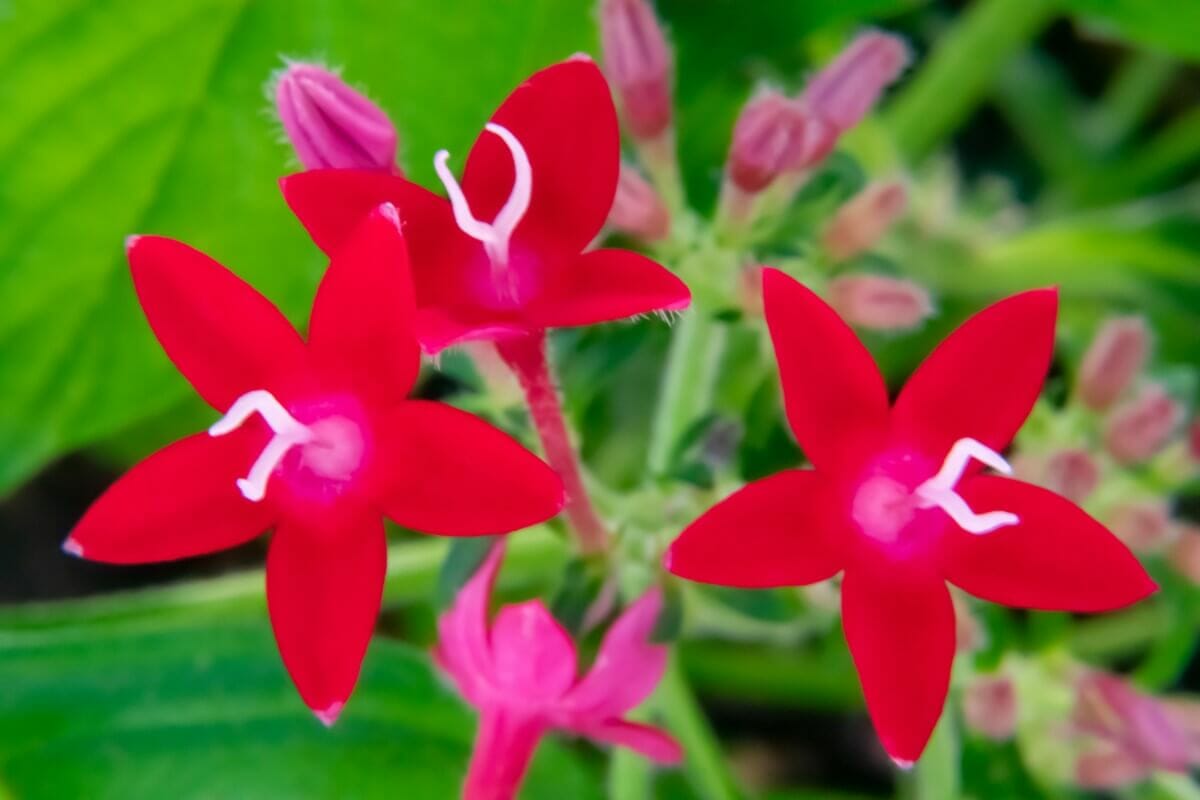
22. Egyptian Stars (Pentas)
Best for: Sunny beds and containers in warm zones, annual elsewhere.
Native to the tropical regions of Africa, the Arabian Peninsula, Madagascar, and Comoros, Pentas is a genus of about 16 species of flowering plants in the Rubiaceae plant family. They are commonly called Egyptian stars and produce clusters of flowers. With five petals each, the individual flowers are distinctly star-shaped, and, in addition to red, varieties bloom in pink, white, and purple.
Key Facts:
Botanical Name: Pentas lanceolata
- Sunlight
- Full sun.
- Watering
- Regular.
- Growing Zones
- 9-11, usually grown as an annual elsewhere.
- Where to Plant
- Garden beds, borders, containers.
- Soil
- Fertile, well-draining.
- Feeding
- Balanced, general-purpose fertilizer.
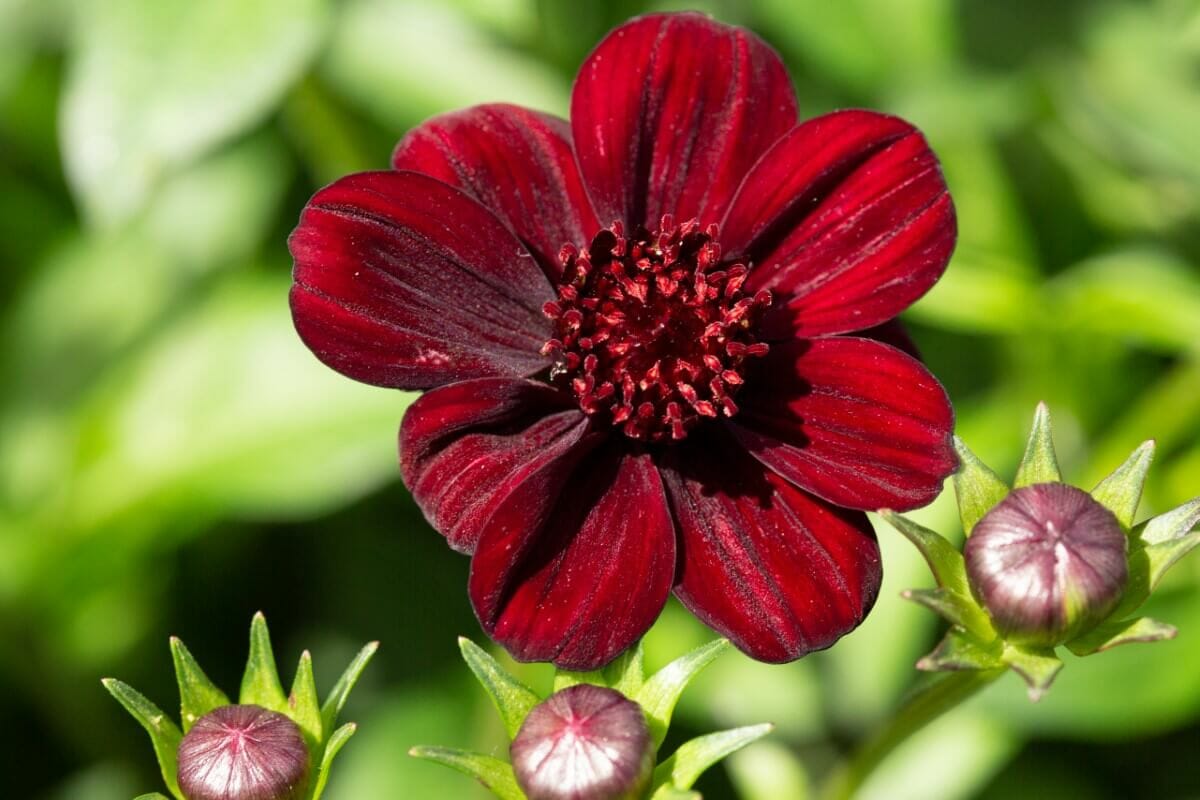
23. Chocolate Cosmos (Cosmos astrosanguineus)
Best for: Sunny borders and containers in zones 7 to 10.
An herbaceous perennial plant, the Cosmos astrosanguineus is one of several species in the Cosmos genus and belongs to the Asteraceae plant family. This species of cosmos features blood-red flower blossoms with maroon, almost brown centers. Commonly called the chocolate cosmos, this flower emits a sweet fragrance that resembles the scent of chocolate.
Key Facts:
Botanical Name: Cosmos astrosanguineus
- Sunlight
- Full sun.
- Watering
- Moderate.
- Growing Zones
- 7-10
- Where to Plant
- Borders, containers.
- Soil
- Well-draining.
- Feeding
- Light feeding with a balanced fertilizer.
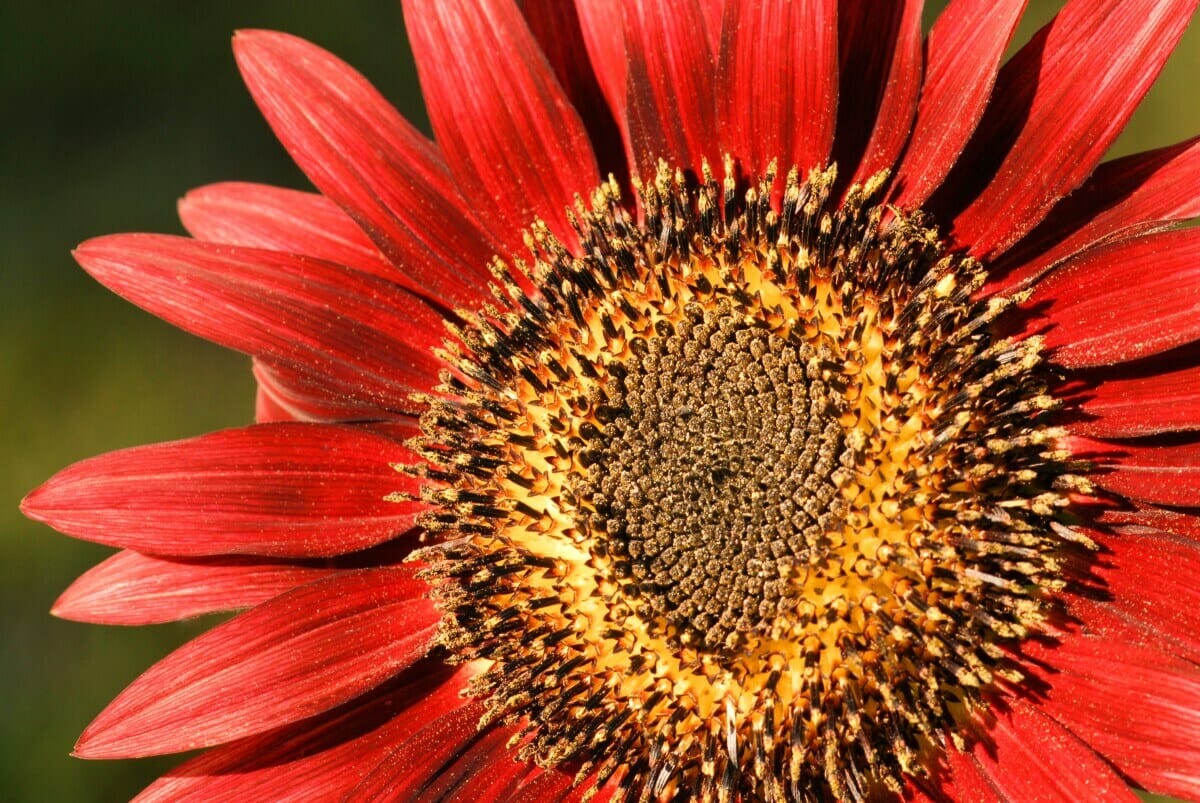
24. Red Sunflower (Helianthus annuus)
Best for: Sunny annual beds and meadows in most zones.
Native to the Americas, the Helianthus annuus belongs to the Asteraceae plant family. This species is known as the common sunflower, and it naturally blossoms with large flower heads in a golden or lemony-yellow hue.
Despite its classic appearance, there are several cultivars and hybrids of the species that blossom in stunning red, maroon, crimson, and burnt-orange colors. Some of these red varieties include the Prado Red, Red Wave, Ruby Eclipse, Moulin Rouge, and Eclipse.
Key Facts:
Botanical Name: Helianthus annuus (red varieties)
- Sunlight
- Full sun.
- Watering
- Regular.
- Growing Zones
- 2-11 (as an annual)
- Where to Plant
- Garden beds, meadows.
- Soil
- Well-draining.
- Feeding
- Balanced, general-purpose fertilizer.
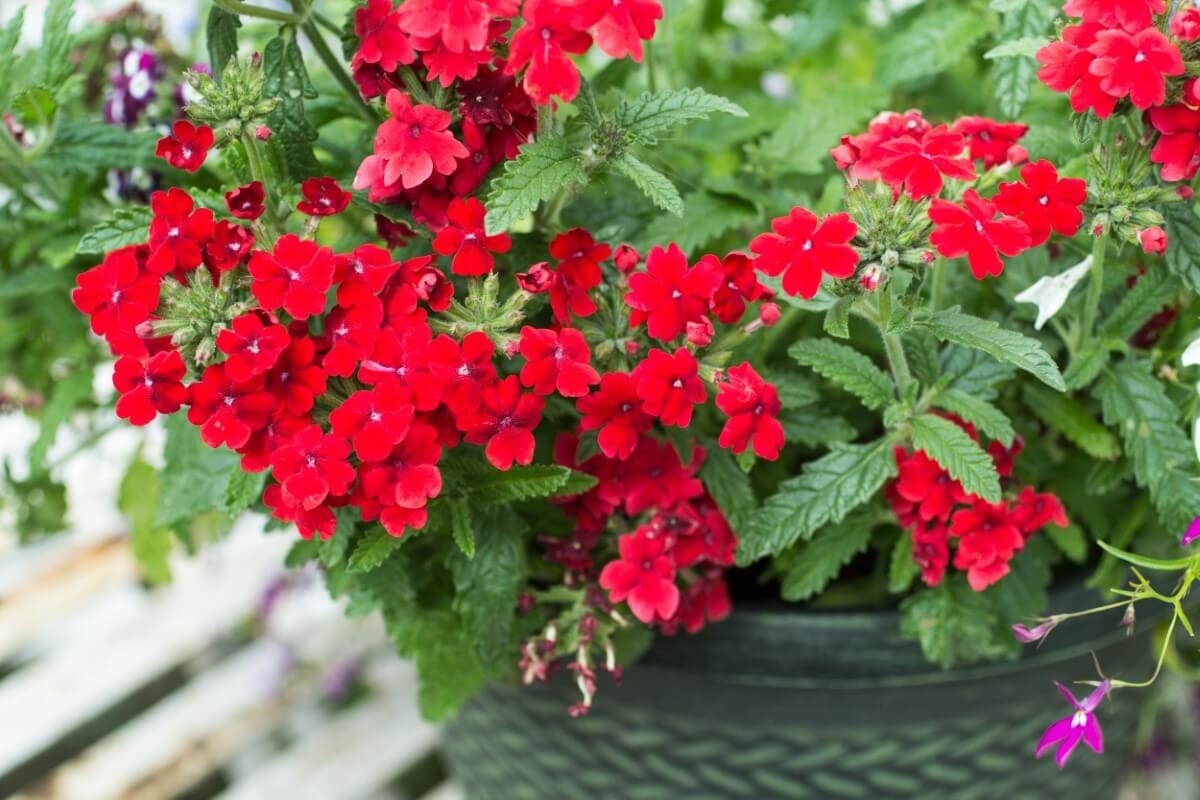
25. Vervain (Verbena peruviana)
Best for: Drought-tolerant ground cover in zones 7 to 10.
A member of the Verbenaceae plant family, the Verbena peruviana is a species of vervain that produces scarlet-red clusters of flowers. The flowers are strong attractants for butterflies and hummingbirds. This species is a perennial and grows well as a blooming ground cover. Strangely enough despite the scientific name, Verbena peruviana is not native to Peru but grows naturally in southern Brazil, Bolivia, Uruguay, Paraguay, and northern Argentina.
Key Facts:
Botanical Name: Verbena peruviana
- Sunlight
- Full sun.
- Watering
- Drought tolerant once established.
- Growing Zones
- 7-10
- Where to Plant
- Front of borders, rock gardens, containers.
- Soil
- Well-draining, even slightly rocky.
- Feeding
- Light feeding.
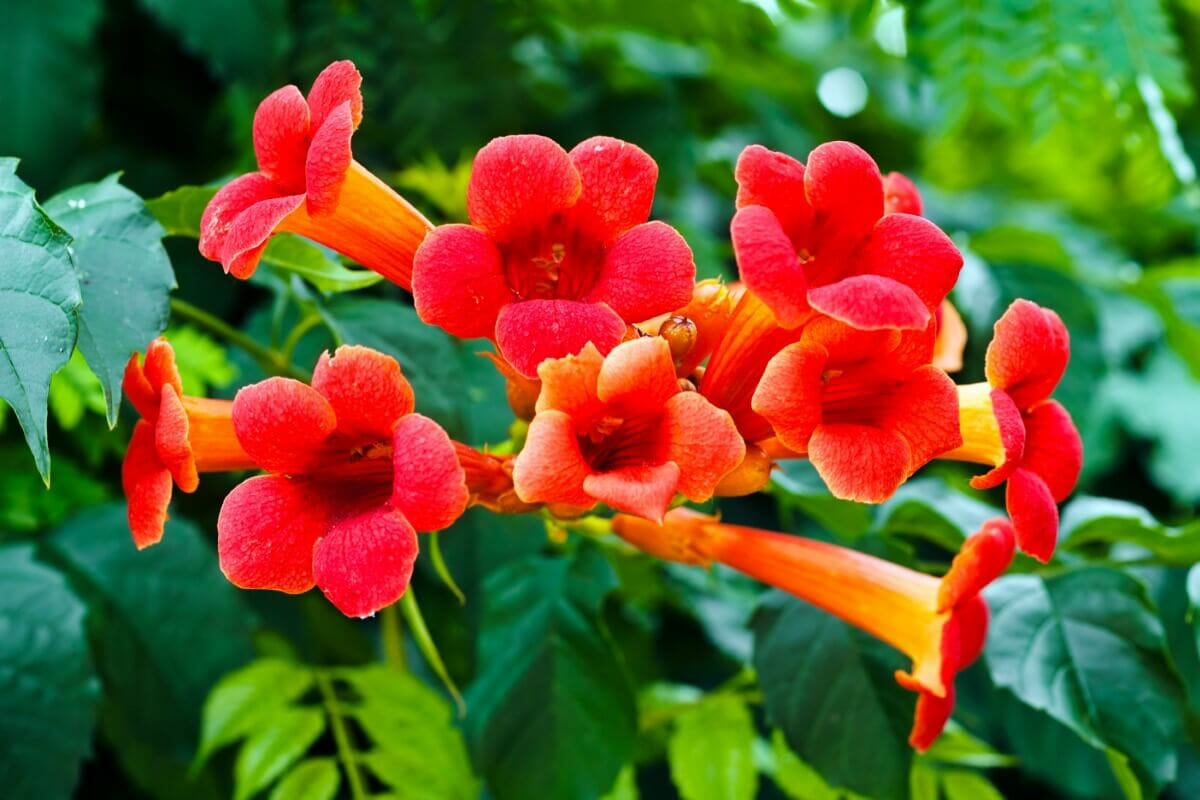
26. Red Trumpet Creeper (Campsis radicans)
Best for: Vigorous climbing vine for fences in zones 4 to 9.
Native to the eastern United States, the Campsis radicans is a flowering vine that belongs to the Bignoniaceae plant family. The vine is woody and deciduous with bright-green foliage and clumps of distinctly trumpet-shaped flowers that bloom in a cherry-red color. The vine can grow to be more than 30 feet long. Common names include trumpet creeper and trumpet vine.
Key Facts:
Botanical Name: Campsis radicans
- Sunlight
- Full sun to partial shade.
- Watering
- Regular to moderate.
- Growing Zones
- 4-9
- Where to Plant
- Trellises, fences, walls.
- Soil
- Average, well-draining.
- Feeding
- Balanced fertilizer in spring.
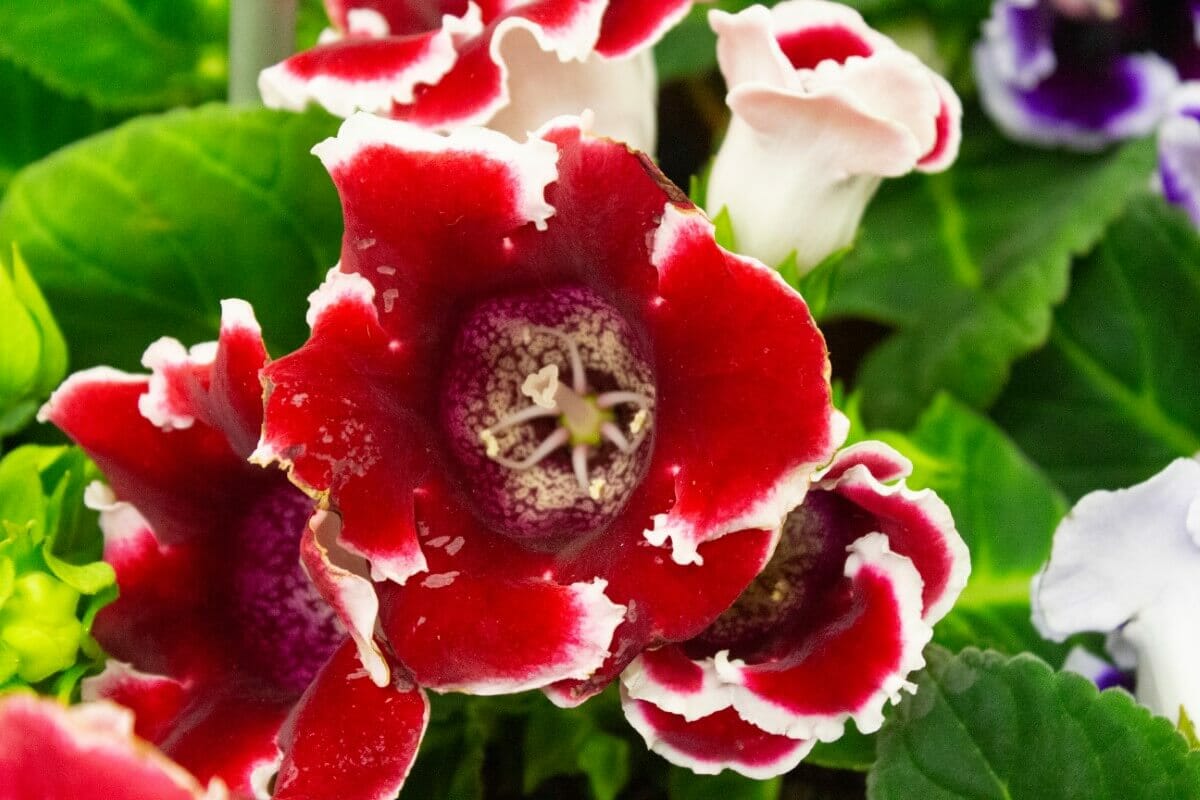
27. Gloxinia (Gloxinia)
Best for: Indoor containers with bright, indirect light.
A member of the Gesneriaceae plant family, Gloxinia is a genus of just three species of herbaceous flowering plants that are native to parts of the Andes, Central America, and the West Indies. These plants are beautiful ornamentals, featuring lush rosettes of foliage atop which clusters of large, trumpet-shaped flowers blossom. The flowers can grow to be about 2 inches long and feature softly ruffled petals along their edges.
Key Facts:
Botanical Name: Sinningia speciosa
- Sunlight
- Bright, indirect light.
- Watering
- Keep soil consistently moist.
- Growing Zones
- 10-11, usually grown as a houseplant elsewhere.
- Where to Plant
- Indoors in containers.
- Soil
- Light, well-draining potting mix.
- Feeding
- Balanced, water-soluble fertilizer during growth.
28. Red Black-Eyed Susan (Rudbeckia hirta ‘Cherry Brandy’)
Best for: Sunny beds and meadows in zones 3 to 7.
Native to eastern and central North America, Rudbeckia hirta is an herbaceous perennial that belongs to the Asteraceae plant family. Naturally, black-eyed susans have golden-yellow petals and dark, brownish, almost-black centers. The Rudbeckia hirta ‘Cherry Brandy’ cultivar, however, features velvety red petals around a nearly purple center. These lovely blossoms look cheerful in a garden and will attract butterflies for pollination.
Key Facts:
Botanical Name: Rudbeckia hirta ‘Cherry Brandy’
- Sunlight
- Full sun.
- Watering
- Moderate.
- Growing Zones
- 3-7
- Where to Plant
- Garden beds, meadows, borders.
- Soil
- Average, well-draining.
- Feeding
- Light feeding.
29. Camellia (Camellia)
Best for: Acidic, shaded garden beds in zones 7 to 9.
Camellia is a genus of flowering shrubs and small trees that belongs to the Theaceae (tea) plant family. The genus contains between 100 and 300 species, and the wide variance in estimated numbers is due to the fact that the place of several species in the genus is still up for debate.
Camellias blossom in shades of red, pink, and white and feature various flower types, including single, semi-double, and double. The double blossoms come in several forms too, such as anemone, rose, peony, and formal double.
Key Facts:
Botanical Name: Camellia
- Sunlight
- Partial shade.
- Watering
- Regular.
- Growing Zones
- 7-9
- Where to Plant
- Garden beds, borders, under tall trees.
- Soil
- Acidic, well-draining.
- Feeding
- Acidic fertilizer after blooming.
30. Crown of Thorns (Euphorbia milii)
Best for: Sunny indoor or outdoor containers in warm zones.
Euphorbia milii is a flowering succulent plant that belongs to the Euphorbiaceae (spurge) plant family. This plant is commonly called the crown of thorns, Christ thorn, or Christ plant. Although it was first introduced to Europe in the 1800s, it is thought that Euphorbia milii made its way to the Middle East from its native Madagascar much earlier during ancient human history. The plant’s woody stems are densely spiked, and it produces blood-red flower bracts around its blossoms. As a result, the plant is often associated with the crown of thorns placed upon Jesus Christ’s head during the crucifixion.
Key Facts:
Botanical Name: Euphorbia milii
- Sunlight
- Full sun.
- Watering
- Allow soil to dry between waterings.
- Growing Zones
- 9-11, usually grown as a houseplant elsewhere.
- Where to Plant
- Indoors in containers or outdoors in well-draining areas.
- Soil
- Well-draining cactus mix.
- Feeding
- Cactus fertilizer during growth.
31. Peruvian Lily (Alstroemeria)
Best for: Beds and borders in zones 7 to 10 for year-round cut flowers.
Alstroemeria is a genus of almost entirely perennial flowering plants that belong to the Alstroemeriaceae plant family. They are commonly called lily of the Incas or Peruvian lily. All species of this genus are native to South America, with a large group from eastern Brazil and another large group from central Chile.
As a result of human-directed hybridization between Brazilian and Chilean species, florists have benefited from alstroemeria plants that blossom throughout the year for year-round inclusion in seasonal bouquets.
Key Facts:
Botanical Name: Alstroemeria
- Sunlight
- Full sun to partial shade.
- Watering
- Regular.
- Growing Zones
- 7-10
- Where to Plant
- Garden beds, borders, containers.
- Soil
- Fertile, well-draining.
- Feeding
- Balanced fertilizer in the growing season.
32. Maltese Cross (Silene chalcedonica)
Best for: Sunny borders and wildflower gardens in zones 3 to 7.
Native to parts of central and western Asia, Silene chalcedonica is a species of ornamental flowering plant that belongs to the Caryophyllaceae plant family. It features thick, sturdy stems atop which globe-shaped clusters of tiny flowers blossom. The flowers consist of four, red, v-shaped petals that intersect at perpendicular angles, resulting in a close resemblance to the Maltese cross – hence the plant’s common name. Other common names include burning love, the flower of Bristol, Jerusalem cross, and many more.
Key Facts:
Botanical Name: Silene chalcedonica
- Sunlight
- Full sun.
- Watering
- Moderate.
- Growing Zones
- 3-7
- Where to Plant
- Borders, wildflower gardens.
- Soil
- Average, well-draining.
- Feeding
- General-purpose fertilizer in spring.
33. Calla Lily (Zantedeschia)
Best for: Beds and containers in zones 8 to 10; try 'Majestic Red' or 'Red Alert'.
Zantedeschia is a genus of perennial flowering plants that are native to southern Africa. Despite the plant’s common name, calla lily, these plants are not actually lilies as they belong to the Araceae (arum) plant family – not Liliaceae.
Calla lilies are leafy plants that have attractive foliage and blossoms that feature prominent spathes in a variety of colors and spadices that are usually yellow or white. ‘Majestic Red’ and ‘Red Alert’ are two of the most popular red types of calla lilies.
Key Facts:
Botanical Name: Zantedeschia
- Sunlight
- Full sun to partial shade.
- Watering
- Regular.
- Growing Zones
- 8-10
- Where to Plant
- Garden beds, borders, containers.
- Soil
- Rich, well-draining.
- Feeding
- Balanced fertilizer during growth.
34. False Goat’s Beard (Astilbe)
Best for: Moist, shaded woodland gardens in zones 4 to 9.
Astilbe is a genus comprised of 18 flowering plants belonging to the Saxifragaceae plant family. They grow natively in parts of North America and Asia but are popularly grown in gardens for their ornamental value. Their foliage is richly green in color and sometimes fern-like, and they produce unusual flower blossoms that are feathery in texture and brightly colored. Popular red varieties include ‘Vision in Red’ and ‘Red Sentinel.’
Key Facts:
Botanical Name: Astilbe
- Sunlight
- Partial to full shade.
- Watering
- Regular, prefers moist conditions.
- Growing Zones
- 4-9
- Where to Plant
- Borders, woodland gardens, near water features.
- Soil
- Moist, well-draining.
- Feeding
- Balanced fertilizer in early spring.
35. Pygmy Water Lily (Nymphaea tetragona)
Best for: Sunny ponds and water features in zones 4 to 10.
Native to northern Europe and North America, the Nymphaea tetragona is a perennial aquatic flowering plant in the Nymphaeaceae (water lily) plant family. These plants feature floating leaves that support many-petalled, bowl-shaped blossoms. Naturally, the dwarf water lily produces white flowers, but there are cultivars that produce bright-red blossoms that are very eye-catching bobbing on the surface of a pond.
Key Facts:
Botanical Name: Nymphaea tetragona
- Sunlight
- Full sun.
- Watering
- Submerged in water.
- Growing Zones
- 4-10
- Where to Plant
- Ponds, water features.
- Soil
- Pond or aquatic soil.
- Feeding
- Specialized aquatic plant food.
36. Poinsettia (Euphorbia pulcherrima)
Best for: Holiday containers indoors or out in zones 9 to 11.
The Euphorbia pulcherrima is a species of plant that is much more commonly known as the popular holiday poinsettia plant. It is a shrub or small tree species belonging to the Euphorbiaceae (spurge) plant family.
Poinsettia plants are native to Mexico and Central America, and they need at least six hours of bright, indirect sunlight daily, which is why keeping them thriving after the New Year can be challenging in a northern climate with short winter days. The red is the color of the bracts rather than the tiny flowers.
Key Facts:
Botanical Name: Euphorbia pulcherrima
- Sunlight
- Full sun to partial shade.
- Watering
- Regular.
- Growing Zones
- 9-11
- Where to Plant
- Garden beds, containers, indoors.
- Soil
- Well-draining.
- Feeding
- Balanced fertilizer.
37. Rose (Rosa)
Best for: Sunny garden beds in zones 3 to 10.
Red roses symbolize romantic love. Belonging to the Rosaceae plant family, the Rosa genus contains more than 300 species and tens of thousands of hybrids and cultivars, which means there are countless red-colored roses in different styles, shapes, and sizes to choose from when it comes to planting your garden or creating a bouquet. Most species are native to Asia. However, others grow natively on the continents of North America, Europe, and Africa.
Key Facts:
Botanical Name: Rosa
- Sunlight
- Full sun.
- Watering
- Regular.
- Growing Zones
- Varies by species, typically 3-10
- Where to Plant
- Garden beds, borders, containers.
- Soil
- Rich, well-draining.
- Feeding
- Specialized rose fertilizer.
38. Gladiolus (Gladiolus)
Best for: Sunny beds and borders in zones 7 to 10.
Gladiolus is a genus of flowering perennials that belong to the Iridaceae (Iris) plant family. These plants grow natively in tropical Africa and South Africa, across Asia, and in the Mediterranean.
The genus name comes from the Latin word gladius, which means sword and refers to the sword-like shape of the plant’s impressively large flower spikes, which produce several rows of showy, brightly colored, trumpet-shaped flowers. Although the genus name most commonly refers to them, these flowers are also sometimes called sword flowers.
Key Facts:
Botanical Name: Gladiolus
- Sunlight
- Full sun.
- Watering
- Regular.
- Growing Zones
- 7-10 (with winter protection in cooler zones)
- Where to Plant
- Garden beds, borders.
- Soil
- Well-draining.
- Feeding
- Bulb fertilizer at planting.
39. Oleander (Nerium oleander ‘Hardy Red’)
Best for: Drought-tolerant hedges in zones 8 to 10.
Nerium oleander is the only species in its genus. It grows as a flowering shrub or can be trained into the form of a small tree with pruning. It has dark green foliage and produces clusters of five-petaled flowers that can be red, white, or pink—Oleander blooms throughout the year, with most blossoms appearing during the longer days of summer.
It belongs to the Apocynaceae (dogbane) plant family and is toxic to humans and animals. Oleander, however, has an unpleasant, bitter taste, so poisoning occurs relatively rarely.
Key Facts:
Botanical Name: Nerium oleander ‘Hardy Red’
- Sunlight
- Full sun.
- Watering
- Drought tolerant once established.
- Growing Zones
- 8-10
- Where to Plant
- Garden beds, hedges, containers.
- Soil
- Well-draining.
- Feeding
- Balanced fertilizer in spring.
40. Pineapple Sage (Salvia elegans)
Best for: Sunny herb gardens and borders in zones 8 to 11.
Native to the forests of Mexico at high elevations, Salvia elegans is an herbaceous perennial shrub that belongs to the Lamiaceae plant family. There are a few different varieties of this salvia species, including pineapple sage, tangerine sage, and honey melon sage, and these names refer to the slightly different fragrances of the different types. These shrubs produce racemes of bright red flowers that attract both butterflies and hummingbirds.
Key Facts:
Botanical Name: Salvia elegans
- Sunlight
- Full sun.
- Watering
- Moderate.
- Growing Zones
- 8-11
- Where to Plant
- Herb gardens, borders.
- Soil
- Average, well-draining.
- Feeding
- Light feeding.
41. Kalanchoe (Kalanchoe)
Best for: Indoor containers or rock gardens in warm zones.
Native to tropical Africa and Madagascar, Kalanchoe is a genus of about 125 flowering, tropical, perennial, succulent plants that belong to the Crassulaceae (stonecrop) plant family. They have broad, waxy leaves and produce bright clusters of small, delicate, tube-shaped flowers. In their native habitats, kalanchoe plants often bloom throughout the year. They are also commonly grown as houseplants that bloom from late winter through spring.
Key Facts:
Botanical Name: Kalanchoe
- Sunlight
- Full sun to partial shade.
- Watering
- Allow to dry between watering.
- Growing Zones
- 10-12
- Where to Plant
- Containers, rock gardens, indoor.
- Soil
- Cactus or succulent mix.
- Feeding
- Balanced fertilizer during growth, reduce in winter.
42. Carnation (Dianthus caryophyllus)
Best for: Sunny beds with alkaline soil in zones 6 to 9.
The Dianthus caryophyllus, commonly called the carnation or clove pink, is a species of flowering plant that belongs to the Caryophyllaceae (carnation or pink) plant family. Carnations are thought to have originated in the Mediterranean, but they have been widely cultivated for thousands of years, making their exact native origin challenging to determine.
Carnations will likely be forever associated with high school dance corsages, but they do have their own unique symbolism. Unlike the red rose that always symbolizes romantic love, the symbolic meaning of red carnations varies depending on the shade of the color. Dark red represents love and affection, while lighter shades of red symbolize admiration.
Key Facts:
Botanical Name: Dianthus caryophyllus
- Sunlight
- Full sun.
- Watering
- Moderate.
- Growing Zones
- 6-9
- Where to Plant
- Garden beds, borders, containers.
- Soil
- Well-draining, neutral to alkaline pH.
- Feeding
- Balanced fertilizer in spring.
43. Daylily (Hemerocallis)
Best for: Sunny to part-shade beds and borders in zones 3 to 9.
More than 100,000 daylily cultivars in the Hemerocallis genus have been registered. They are all native to eastern Asia. The common name, daylily, comes from the blooming habit of many species, with blossoms opening early in the morning, being spent by night, and being replaced with new flowers by the next morning.
Daylily flowers closely resemble true lilies. However, they actually belong to the Asphodelaceae plant family and not the Liliaceae plant family.
Key Facts:
Botanical Name: Hemerocallis
- Sunlight
- Full sun to partial shade.
- Watering
- Regular to moderate.
- Growing Zones
- 3-9
- Where to Plant
- Garden beds, borders.
- Soil
- Average, well-draining.
- Feeding
- Balanced fertilizer in early spring.
44. Weigela (Weigela)
Best for: Flowering hedges and borders in zones 4 to 8.
Native to eastern Asia, Weigela is a genus of flowering shrubs that belong to the Caprifoliaceae (honeysuckle) plant family. The shrubs produce branches stretching like long arms from a starburst. They have dark green foliage, and when in bloom, the arms become proliferated with colorful clusters of flowers.
Key Facts:
Botanical Name: Weigela
- Sunlight
- Full sun to partial shade.
- Watering
- Moderate.
- Growing Zones
- 4-8
- Where to Plant
- Garden beds, hedges, borders.
- Soil
- Well-draining.
- Feeding
- All-purpose fertilizer in early spring.
45. Yarrow (Achillea millefolium)
Best for: Drought-tolerant beds and meadows in zones 3 to 9.
Commonly called yarrow or common yarrow, Achillea millefolium is a species of herbaceous, perennial, flowering plant that belongs to the Asteraceae plant family. It is native to the temperate regions of Europe, Asia, and North America.
When in bloom, they produce large masses of flat-topped flower clusters that feature delicate ray florets. They most commonly bloom in shades of white and yellow, but other varieties have pink or red flowers. ‘Red Velvet’ is one of the most popular varieties of red yarrow.
Key Facts:
Botanical Name: Achillea millefolium
- Sunlight
- Full sun.
- Watering
- Drought-tolerant once established.
- Growing Zones
- 3-9
- Where to Plant
- Garden beds, borders, wildflower meadows.
- Soil
- Well-draining, can tolerate poor soil.
- Feeding
- Balanced fertilizer in spring.
46. Avens (Geum)
Best for: Beds and borders in zones 5 to 7 for single or double blooms.
Roughly 50 species of herbaceous perennial plants belong to the Geum genus of the Rosaceae plant family. They produce rosettes of evergreen ovate leaves in climates where temperatures do not fall below 0°F. Flowers come in single or more ruffled double forms and, in addition to red, blossom in shades of yellow, orange, pink, and white. They grow commonly across all continents (except, of course, Antarctica).
Key Facts:
Botanical Name: Geum
- Sunlight
- Full sun to partial shade.
- Watering
- Regular.
- Growing Zones
- 5-7
- Where to Plant
- Garden beds, borders.
- Soil
- Well-draining.
- Feeding
- Balanced fertilizer in early spring.
47. Nasturtium (Tropaeolum)
Best for: Sunny annual beds and hanging baskets.
The only genus of the Tropaeolaceae plant family, Tropaeolum, is a genus containing about 80 species of herbaceous flowering plants that are native to Central America and South America. Some of these are annuals, and some are perennials.
The common name, nasturtium, refers to the spicy, watercress-like scent of the plant’s flowers. It is Latin and translates to “nose twister”. These plants have lily-pad-shaped leaves and ornate, trumpet-shaped flowers.
Key Facts:
Botanical Name: Tropaeolum
- Sunlight
- Full sun.
- Watering
- Moderate.
- Growing Zones
- Annual in most zones.
- Where to Plant
- Garden beds, containers, hanging baskets.
- Soil
- Well-draining, tolerates poor soil.
- Feeding
- Low nitrogen fertilizer.
48. Cypress Vine (Ipomoea quamoclit)
Best for: Annual climbing vine for trellises and fences.
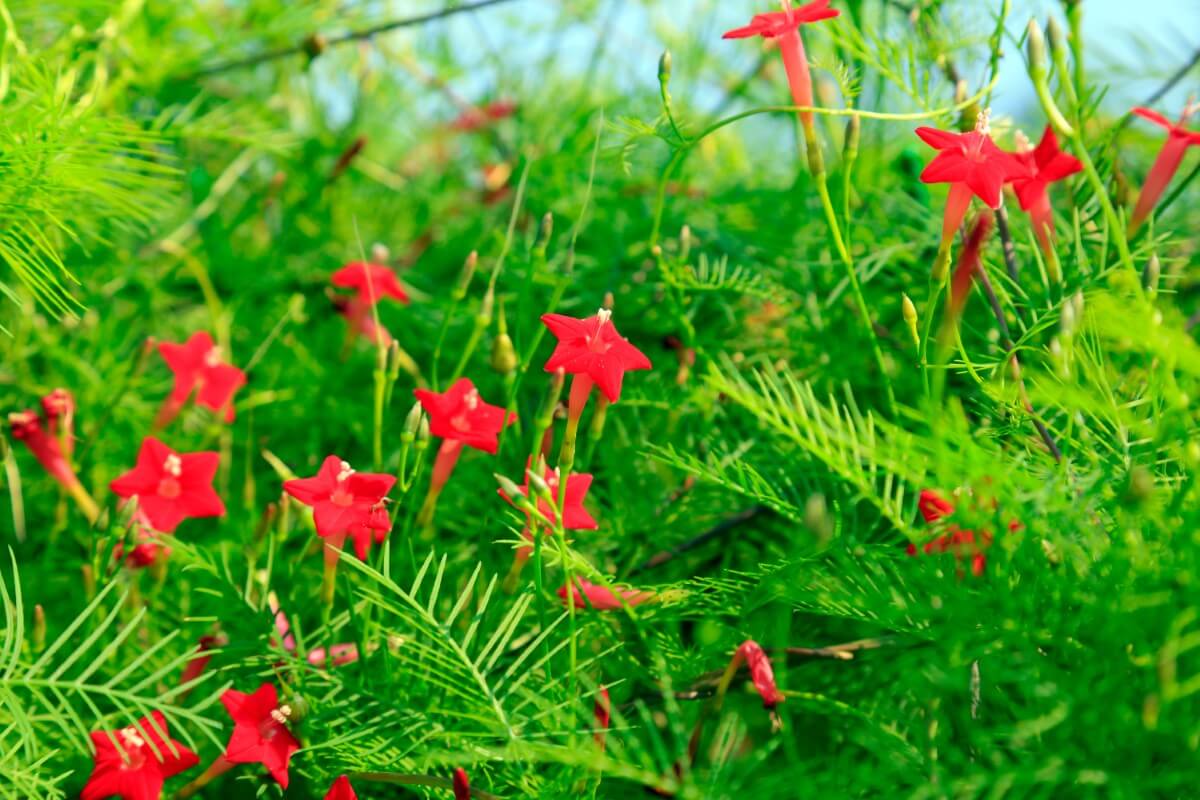
Native to the tropical regions of the Americas, Ipomoea quamoclit is a flowering vine species belonging to the Convolvulaceae (morning glory) plant family. In addition to cypress vine, the vine has several common names, including cardinal creeper, star glory, Star of Bethlehem, cypress vine morning glory, and hummingbird vine.
The vines have very narrow and pinnate-shaped leaves and produce large, bright-red, trumpet-shaped flowers that unfold into perfect, five-pointed stars.
Key Facts:
Botanical Name: Ipomoea quamoclit
- Sunlight
- Full sun.
- Watering
- Regular.
- Growing Zones
- Annual in most zones.
- Where to Plant
- Trellises, fences, containers.
- Soil
- Well-draining.
- Feeding
- Balanced fertilizer.
49. Dragon’s Blood Stonecrop (Sedum spurium ‘Dragon’s Blood’)
Best for: Rock gardens and groundcover in zones 3 to 9.
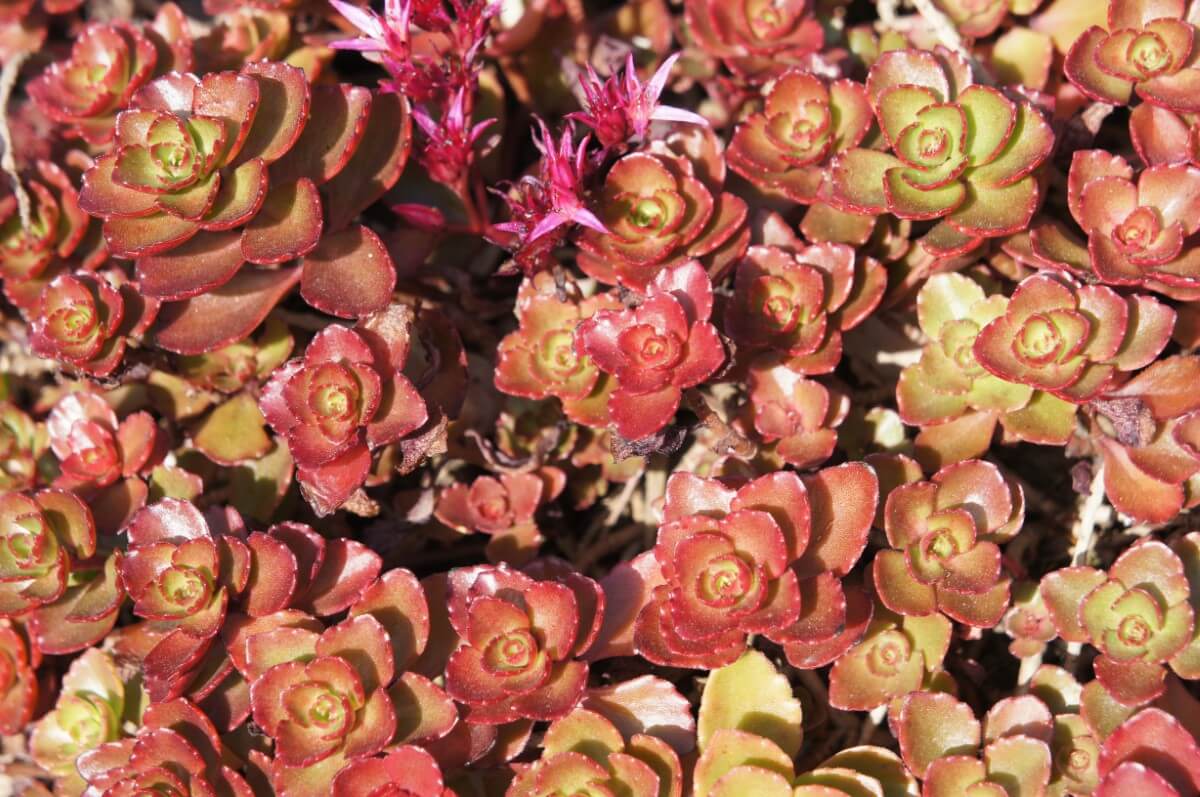
Native to the Caucasus, Sedum spurium (commonly called Caucasian stonecrop) is an evergreen, perennial, succulent species belonging to the Crassulaceae (stonecrop) plant family. It has a creeping spreading habit, making for an attractive ground cover. The ‘Dragon’s Blood’ cultivar produces reddish-green fleshy leaf segments and ruby-red, star-shaped flowers.
Key Facts:
Botanical Name: Sedum spurium ‘Dragon’s Blood’
- Sunlight
- Full sun to partial shade.
- Watering
- Drought-tolerant.
- Growing Zones
- 3-9
- Where to Plant
- Rock gardens, containers, groundcover.
- Soil
- Well-draining, sandy.
- Feeding
- Light feeding with a balanced fertilizer.
50. Crepe or Crape Myrtle (Lagerstroemia)
Best for: Sunny street trees and hedges in zones 7 to 9.
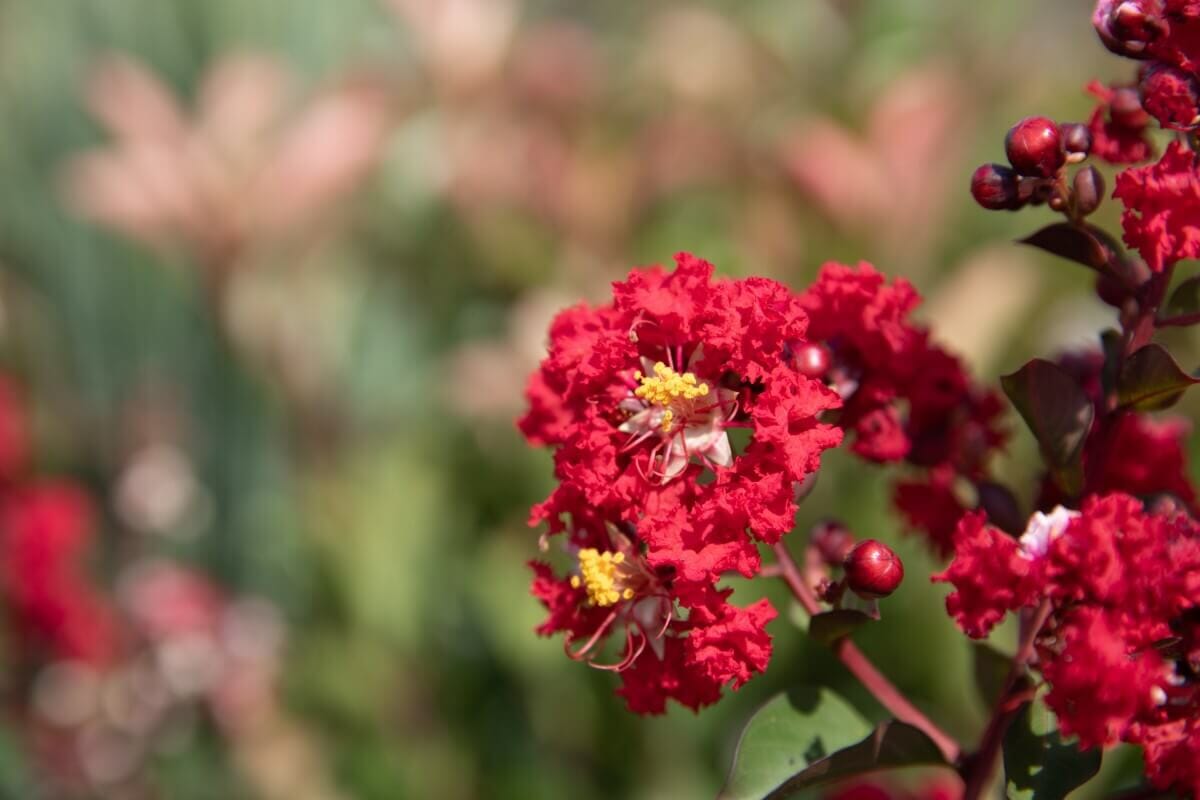
A member of the Lythraceae plant family, Lagerstroemia is a genus comprising about 50 species of flowering trees and shrubs that are deciduous and evergreen in nature. Plants of the genus are native to areas around eastern Asia, India, Oceania, and northern Australia.
The trees and shrubs are popularly planted as ornamentals because their blooming season stretches throughout the warmer months. While in bloom, the trees are heavily covered in brightly colored clusters of flowers that appear in cooler shades of red and pink.
Key Facts:
Botanical Name: Lagerstroemia
- Sunlight
- Full sun.
- Watering
- Moderate.
- Growing Zones
- 7-9
- Where to Plant
- Garden beds, hedges, street trees.
- Soil
- Well-draining.
- Feeding
- Balanced fertilizer in spring.
51. Orchids (Orchidaceae)
Best for: Indoor growing with bright, indirect light.
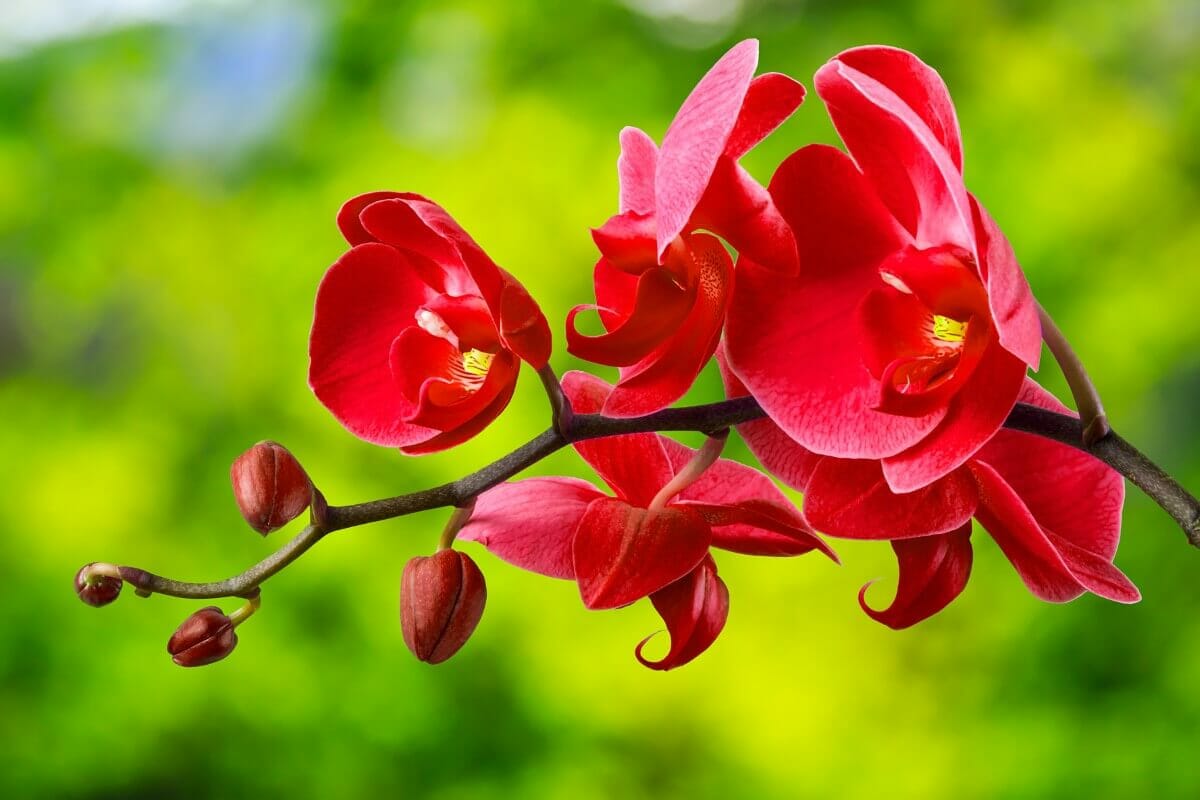
The orchid plant family (Orchidaceae) is large, grows in many climates and regions worldwide, and includes popular ornamental orchids commonly grown as houseplants, such as Phalaenopsis and Dendrobium. Among these thousands of orchid types, several species, cultivars, and hybrids feature blossoms in all shades of red.
Key Facts:
Botanical Name: Orchidaceae
- Sunlight
- Bright, indirect light (varies by species).
- Watering
- Varies by species; many require letting roots nearly dry between watering.
- Growing Zones
- Varies by species; many are tropical.
- Where to Plant
- Indoors, greenhouses, or outdoors in suitable climates.
- Soil
- Orchid mix (bark-based).
- Feeding
- Orchid-specific fertilizer.
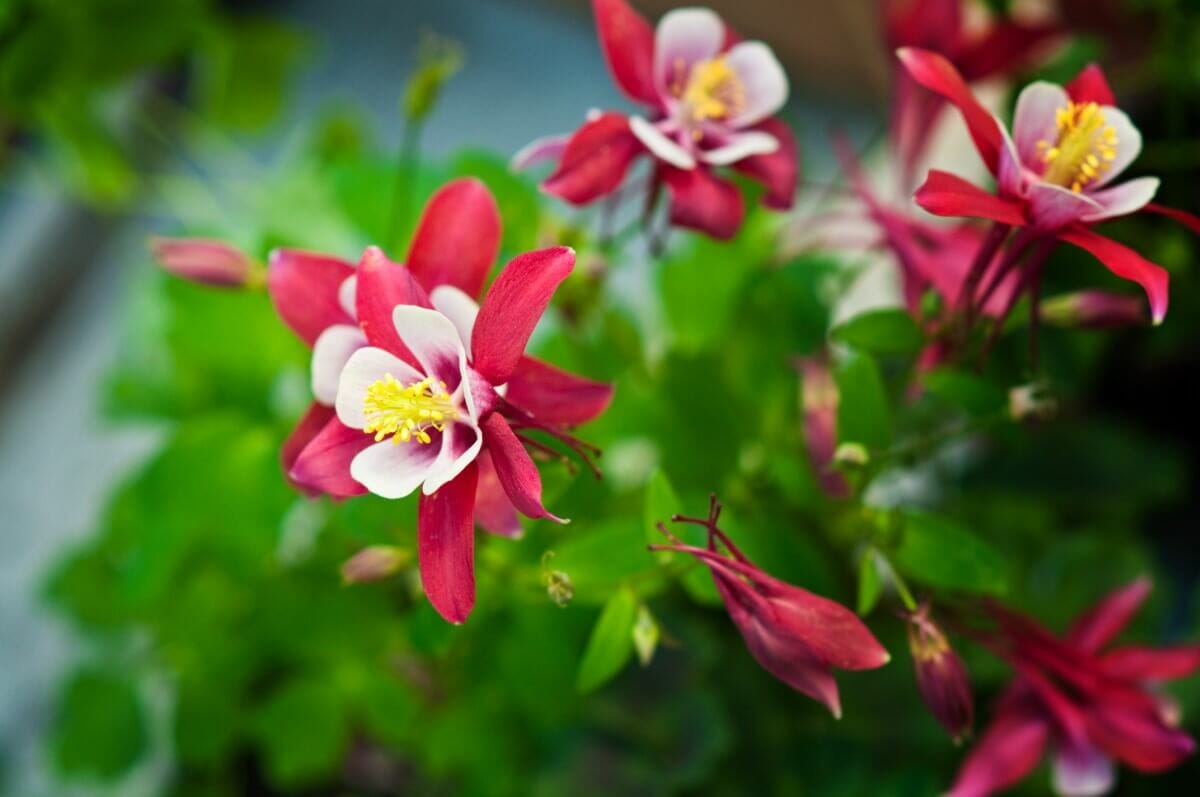
52. Columbine (Aquilegia)
Best for: Woodland gardens and borders in zones 3 to 9.
Aquilegia is a genus of between 60 and 70 flowering perennial plants that belong to the Ranunculaceae plant family and are native to higher elevation areas throughout the Northern Hemisphere.
The flowers of these plants are complex, featuring several layers of petals and a row of uniquely spurred petals that make columbine flowers almost instantly recognizable. Cultivars and hybrids intended for ornamental planting feature highly ornate blossoms that often have a variety of colors on a single flower.
Key Facts:
Botanical Name: Aquilegia
- Sunlight
- Full sun to partial shade.
- Watering
- Moderate.
- Growing Zones
- 3-9
- Where to Plant
- Garden beds, woodland gardens, borders.
- Soil
- Rich, well-draining.
- Feeding
- Balanced fertilizer in spring.
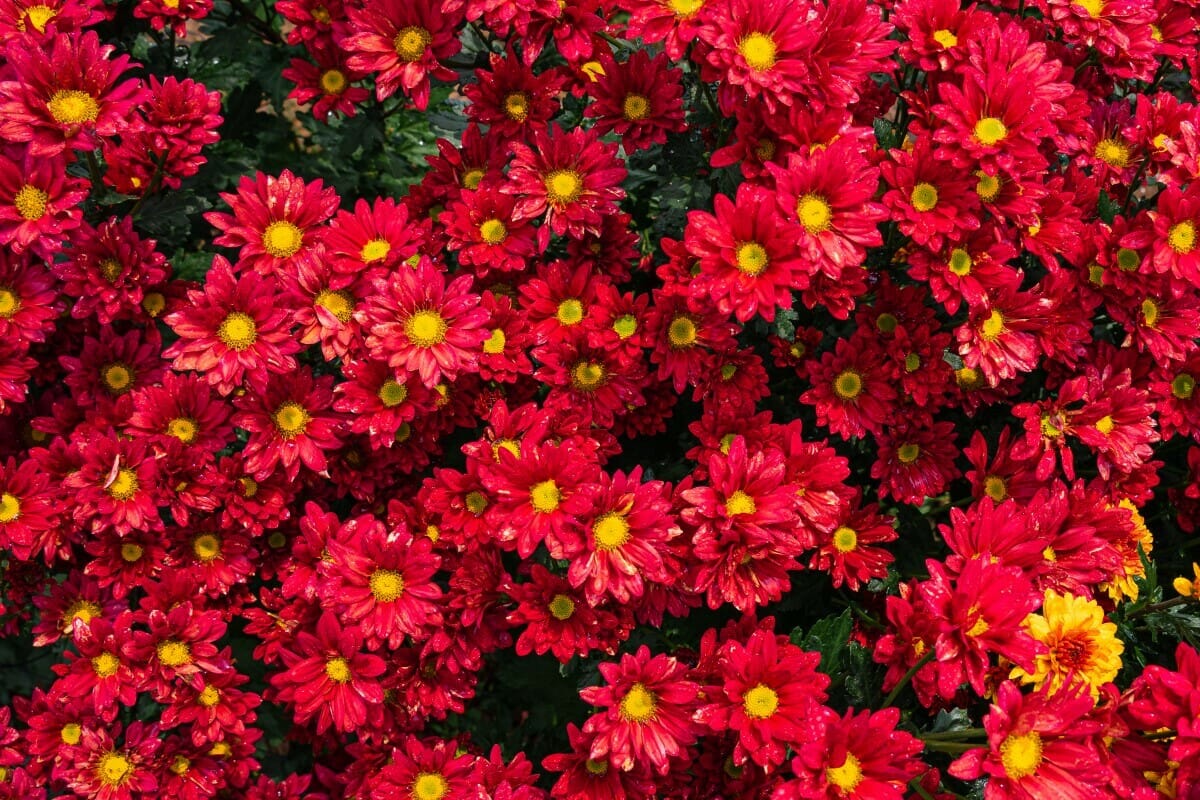
53. Chrysanthemum (Chrysanthemum)
Best for: Sunny beds and containers in zones 5 to 9 for arrangements.
Chrysanthemum is a genus of herbaceous flowering perennial plants and subshrubs belonging to the Asteraceae family. Most chrysanthemums are native to Asia, but some originated in northern Europe.
Thanks to their diversity of varieties, colors (including several attractive shades of red), bloom types, shapes, and sizes, chrysanthemums are some of the most popular flowers to grow in gardens, include in floral arrangements, and for decorating during holiday celebrations of all seasons.
A few favorite red chrysanthemum varieties include ‘Grapeberry Red,’ ‘Autumn Sunset,’ ‘Five Alarm Red,’ and ‘Cynthia Scarlet.’
Key Facts:
Botanical Name: Chrysanthemum
- Sunlight
- Full sun.
- Watering
- Regular.
- Growing Zones
- 5-9
- Where to Plant
- Garden beds, containers, borders.
- Soil
- Fertile, well-draining.
- Feeding
- Balanced fertilizer.
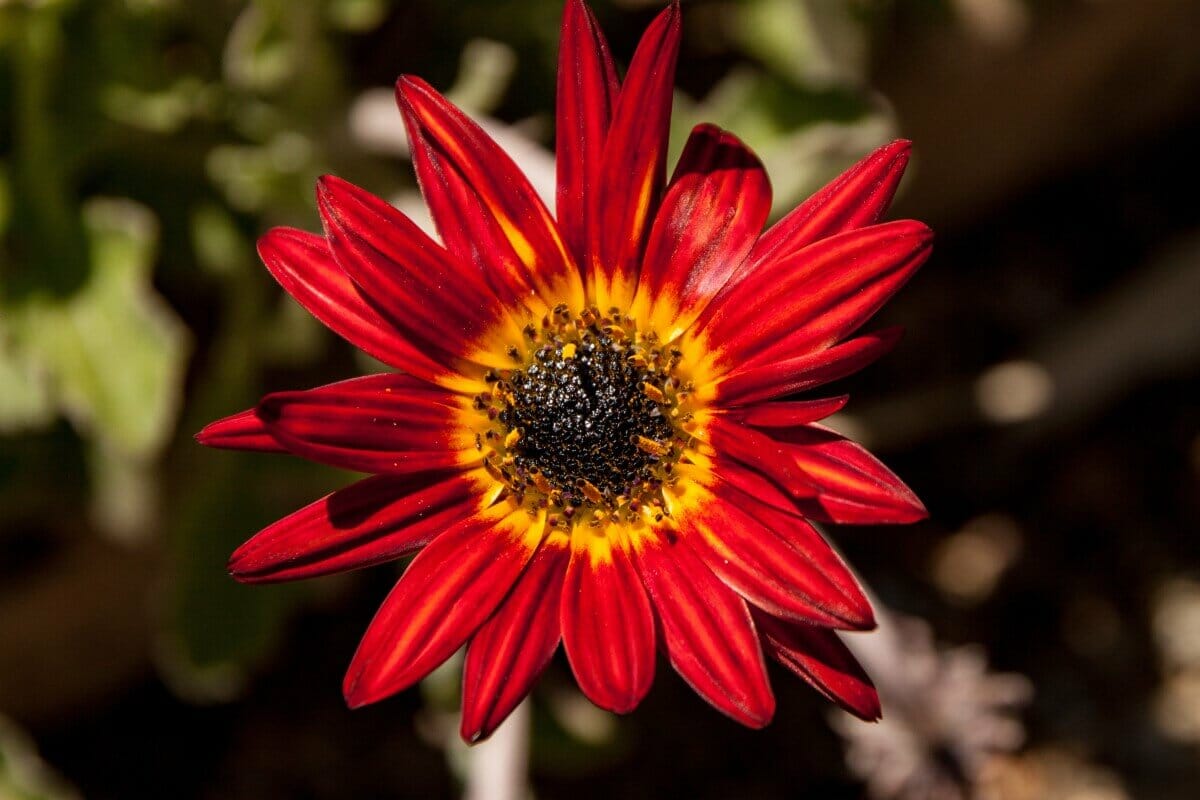
54. African Daisy (Gazania)
Best for: Sunny, sandy beds in warm zones, annual elsewhere.
Gazania is a genus of flowering plants belonging to the Asteraceae family native to Southern Africa. They produce large, attractive, flat, daisy-like composite flower heads in bright shades of yellow and orange (most common), pink, and red.
All species of African daisies are native to the southern parts of Africa. They can bloom from spring through fall with a warm, sunny location and well-draining soil.
Key Facts:
Botanical Name: Gazania
- Sunlight
- Full sun.
- Watering
- Drought-tolerant; water moderately.
- Growing Zones
- 9-11 (treated as an annual in cooler zones)
- Where to Plant
- Garden beds, borders, containers.
- Soil
- Sandy, well-draining.
- Feeding
- Light feeding with a balanced fertilizer.
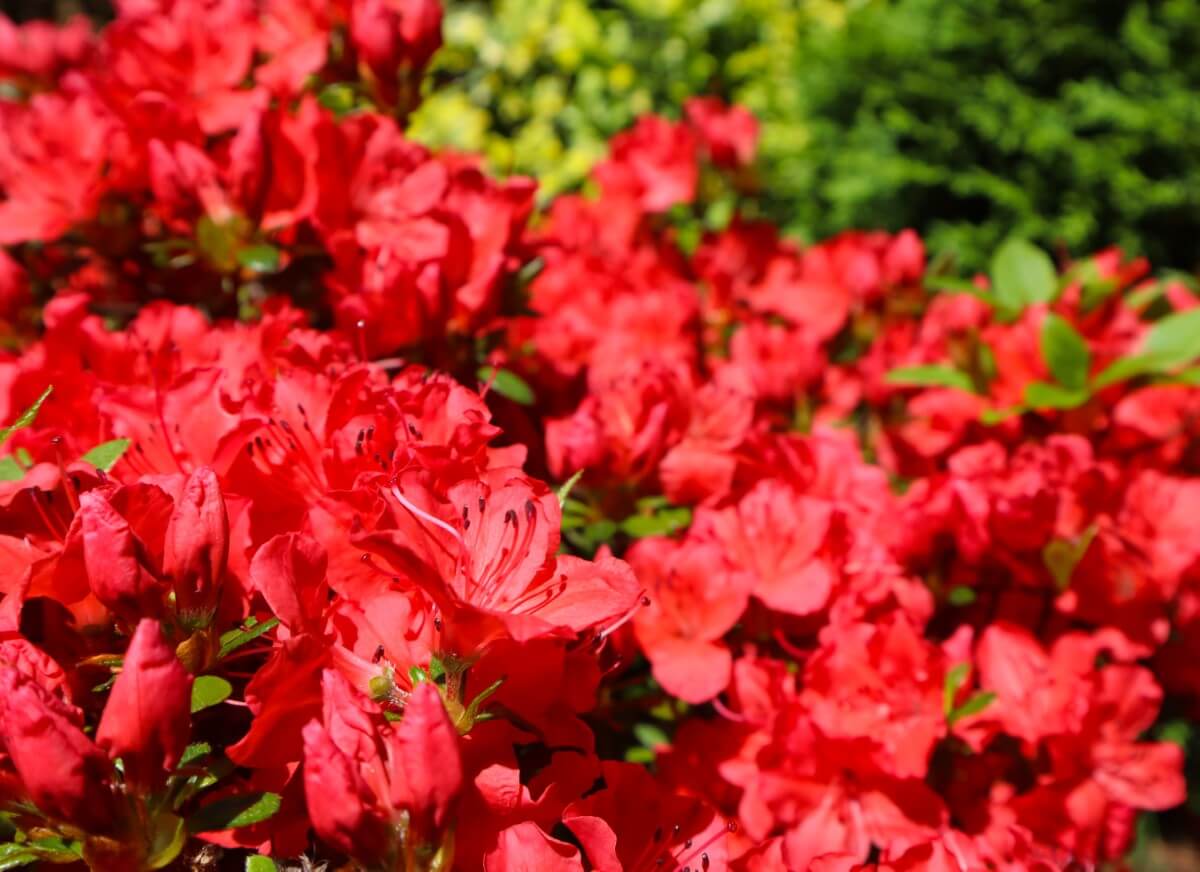
55. Azalea (Azaleastrum)
Best for: Acidic, shaded woodland gardens in zones 5 to 9.
Azalea is the common name used to refer to the species of plants that belong to Azaleastrum, a subgenus of the Rhododendron genus belonging to the Ericaceae (heather) plant family. More than 10,000 cultivars exist.
Azaleas are woody flowering shrubs (some deciduous and some evergreen) that produce a proliferation of fluttery, papery flowers when in bloom. They blossom in bright shades of red, pink, and white. Though beautiful, azaleas are highly toxic to pets, including dogs, cats, and horses.
Key Facts:
Botanical Name: Azaleastrum (Rhododendron subgroup)
- Sunlight
- Partial shade.
- Watering
- Regular.
- Growing Zones
- 5-9 (varies by type)
- Where to Plant
- Garden beds, woodland gardens.
- Soil
- Acidic, well-draining.
- Feeding
- Acidic fertilizer in spring.
56. Dianthus (Dianthus)
Best for: Sunny beds with alkaline soil in zones 3 to 9.
Dianthus is the genus that carnations belong to (see the Carnation entry above). These flowers are primarily native to Asia and Europe, with a few species in northern and southern Africa and one in North America.
These plants are commonly referred to by their genus name, but common names for some specific species include pink, carnation, and sweet william. They come in both annual and perennial varieties, and flowers are commonly pink or red with five petals. However, certain ruffled species, such as the carnation, have notably more petals.
Key Facts:
Botanical Name: Dianthus
- Sunlight
- Full sun.
- Watering
- Moderate.
- Growing Zones
- 3-9
- Where to Plant
- Garden beds, containers, borders.
- Soil
- Well-draining, slightly alkaline.
- Feeding
- Balanced fertilizer in spring.
57. Red Passion Flower (Passiflora racemosa)
Best for: Trellises and fences in zones 10 to 11.
Passiflora racemosa is a highly ornate flowering plant species in the Passifloraceae plant family that is native to Brazil. An evergreen flowering vine, it stretches upward, clinging to the bark of trees. Their leaves have three lobes, giving them a shape that resembles a dinosaur track. These passion flowers have pinnate petals in a fiery shade of red-fringed, purple-and-white corona.
Key Facts:
Botanical Name: Passiflora racemosa
- Sunlight
- Full sun to partial shade.
- Watering
- Regular.
- Growing Zones
- 10-11
- Where to Plant
- Trellises, fences, containers.
- Soil
- Rich, well-draining.
- Feeding
- Balanced fertilizer during the growth period.
58. Streps (Streptocarpus)
Best for: Indoor containers with bright, indirect light.
Streptocarpus is a genus of flowering plants from the Gesneriaceae (gesneriad) plant family that are native to the tropical regions of Africa. They are commonly called streps or by the full genus name.
Key Facts:
Botanical Name: Streptocarpus
- Sunlight
- Bright, indirect light.
- Watering
- Keep soil evenly moist.
- Growing Zones
- Indoor plant in most zones.
- Where to Plant
- Indoor containers.
- Soil
- African violet mix.
- Feeding
- Balanced liquid fertilizer.
59. Snapdragon (Antirrhinum)
Best for: Sunny rock gardens in zones 7 to 10.
Antirrhinum is a genus of flowering plants in the Plantaginaceae (plantain) plant family. Commonly called snapdragons, they produce upright stalks of flowers resembling dragons’ heads, complete with “jaws” that move up and down when squeezed laterally.
They grow wildly and natively in rocky places in North Africa, Europe, Canada, and the United States. Snapdragons are an excellent choice for growing in rock gardens. Cultivating them is as simple as spreading their seeds over your rocky garden in springtime, watering, and watching them grow.
Key Facts:
Botanical Name: Antirrhinum
- Sunlight
- Full sun.
- Watering
- Moderate.
- Growing Zones
- 7-10 (treated as an annual in cooler zones)
- Where to Plant
- Garden beds, borders, containers.
- Soil
- Well-draining, moderately fertile.
- Feeding
- Balanced fertilizer in spring.
60. Cardinal Flower (Lobelia cardinalis)
Best for: Moist beds near water in zones 3 to 9.
A perennial herbaceous flowering plant, the Lobelia cardinalis belongs to the Campanulaceae (bellflower) plant family and is native to a large swath of the Americas. They’re most commonly found in wet, marshy, or swampy areas, as they require lots of moisture.
Cardinal flowers grow in clumps of upright stalks from which 8-inch-long, lanceolate or ovate leaves sprout. From the tops of these spikes grow racemes of five-lobed flowers in a brilliant shade of cardinal red.
Key Facts:
Botanical Name: Lobelia cardinalis
- Sunlight
- Full sun to partial shade.
- Watering
- Regular.
- Growing Zones
- 3-9
- Where to Plant
- Garden beds, woodland gardens, near water features.
- Soil
- Moist, well-draining.
- Feeding
- Light feeding with a balanced fertilizer.
61. Coneflowers (Echinacea)
Best for: Drought-tolerant meadows and beds in zones 3 to 9.
Echinacea belongs to the Asteraceae plant family, a genus of herbaceous flowering plants. Plants of this genus are commonly called coneflowers due to the cone shape created by the petals that fall back from their flowers’ fuzzy centers.
Growing wildly, they are typically purple or amethyst in color, but types of coneflowers have been created to bloom in various colors, including several attractive red varieties. Coneflowers grow natively in the dry prairies of eastern and central North America. They are commonly used in teas for their medicinal properties.
Key Facts:
Botanical Name: Echinacea
- Sunlight
- Full sun.
- Watering
- Moderate; drought-tolerant.
- Growing Zones
- 3-9
- Where to Plant
- Garden beds, borders, meadows.
- Soil
- Well-draining.
- Feeding
- Light feeding with a balanced fertilizer.
62. Poppy (Papaveroideae)
Best for: Sunny beds and borders, zones vary by species.
The subfamily Papaveroideae of the Papaveraceae (poppy) plant family contains several herbaceous flowering plants commonly referred to as poppies. Different species grow natively worldwide.
Due to their presence in Flanders Fields during WWI, red poppies (Papaver rhoeas) became a symbol of remembrance for fallen soldiers.
Key Facts:
Botanical Name: Papaveroideae
- Sunlight
- Full sun.
- Watering
- Low to moderate.
- Growing Zones
- Varies by species.
- Where to Plant
- Garden beds, borders.
- Soil
- Well-draining.
- Feeding
- Light feeding with a balanced fertilizer.
63. Vesuvius (Lychnis x Arkwrightii ‘Vesuvius’)
Best for: Moist, sunny beds and borders in zones 4 to 9.
This plant belongs to the same genus, Lychnis, as other popular species, the Maltese cross and rose champion. The genus name comes from the ancient Greek word for lamp and is a likely reference to the plant’s brightly colored flowers.
The Vesuvius variety of Lychnis has lava-red flowers and is a hybrid.
Key Facts:
Botanical Name: Lychnis x Arkwrightii ‘Vesuvius’
- Sunlight
- Full sun.
- Watering
- Regular.
- Growing Zones
- 4-9
- Where to Plant
- Garden beds, borders.
- Soil
- Moist, well-draining.
- Feeding
- Balanced fertilizer in spring.
64. Zinnia (Zinnia)
Best for: Sunny beds and containers in zones 3 to 10.
Within the Asteraceae plant family and the Heliantheae plant tribe, you’ll find the genus Zinnia, which contains just over 20 types of zinnia flower species. Their native range spans from the southwestern United States to South America, with most species coming from Mexico.
Their flowers are striking and vary in appearance, some featuring a single ring of ray flowers (petals) and others with several layers. The centers of the flowers go through their own blooming process as several miniature disc florets open gradually as the flowers mature.
Key Facts:
Botanical Name: Zinnia
- Sunlight
- Full sun.
- Watering
- Moderate.
- Growing Zones
- 3-10 (as an annual)
- Where to Plant
- Garden beds, containers, borders.
- Soil
- Well-draining.
- Feeding
- Balanced fertilizer.
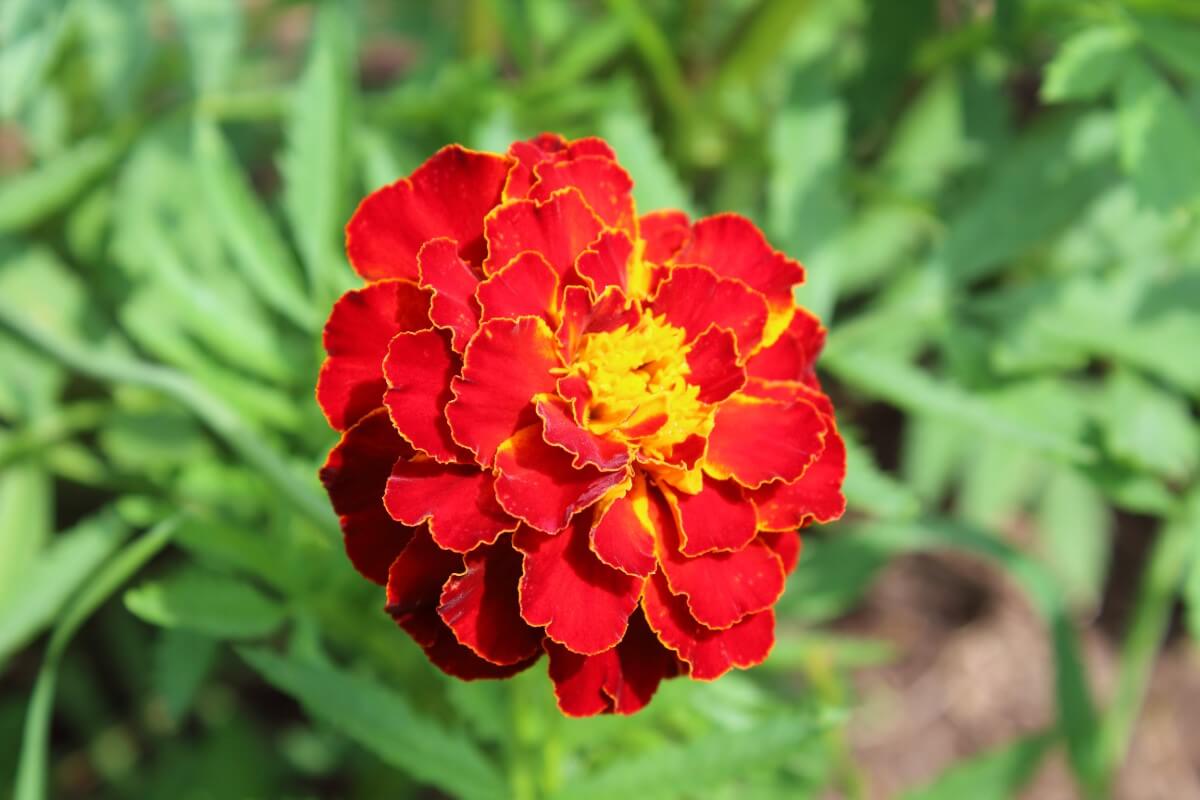
65. Marigold (Tagetes)
Best for: Vegetable garden borders.
Tagetes is a genus of herbaceous perennial and annual flowers that belong to the Asteraceae plant family. Like zinnias, their native range spans the southwestern United States to South America.
Although marigold flowers are traditionally yellow or golden in color, certain marigold varieties blossom in shades of deep orange, red, and maroon. Planted together in a garden or container, they create a stunning sunset effect with their warm, variegated hues.
Key Facts:
Botanical Name: Tagetes
- Sunlight
- Full sun.
- Watering
- Moderate.
- Growing Zones
- 2-11
- Where to Plant
- Garden beds, containers.
- Soil
- Well-draining.
- Feeding
- Light feeding with a balanced fertilizer.
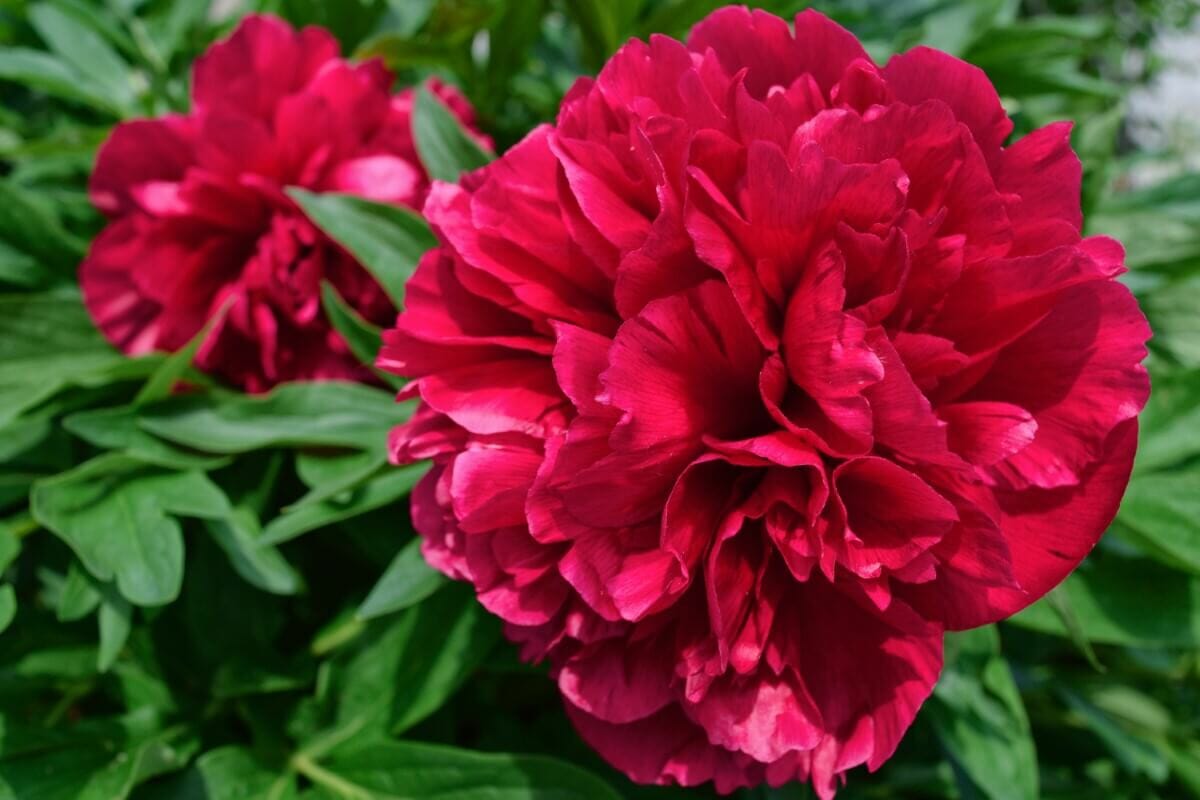
66. Peony (Paeonia)
Best for: Deep, fertile beds in zones 3 to 8.
Peonies are native to areas of western North America, Europe, and Asia. The number of species within the Paeonia genus (the only genus of the Paeoniaceae plant family) is disputed and ranges from 25 to 40 types of peonies.
However large or small the genus may be, peonies are some of the loveliest flowers around. Their blossoms vary in size, shape, style, and color, with several different flower forms available.
Although they blossom in many shades of pink, yellow, lavender, apricot, and white, the ‘Karl Rosenfield’, ‘Buckeye Belle,’ ‘Red Emperor’, and ‘Flame’ are some popular varieties of red-colored peonies.
Key Facts:
Botanical Name: Paeonia
- Sunlight
- Full sun to partial shade.
- Watering
- Regular.
- Growing Zones
- 3-8
- Where to Plant
- Garden beds, borders.
- Soil
- Deep, fertile, well-draining.
- Feeding
- Balanced fertilizer in spring.
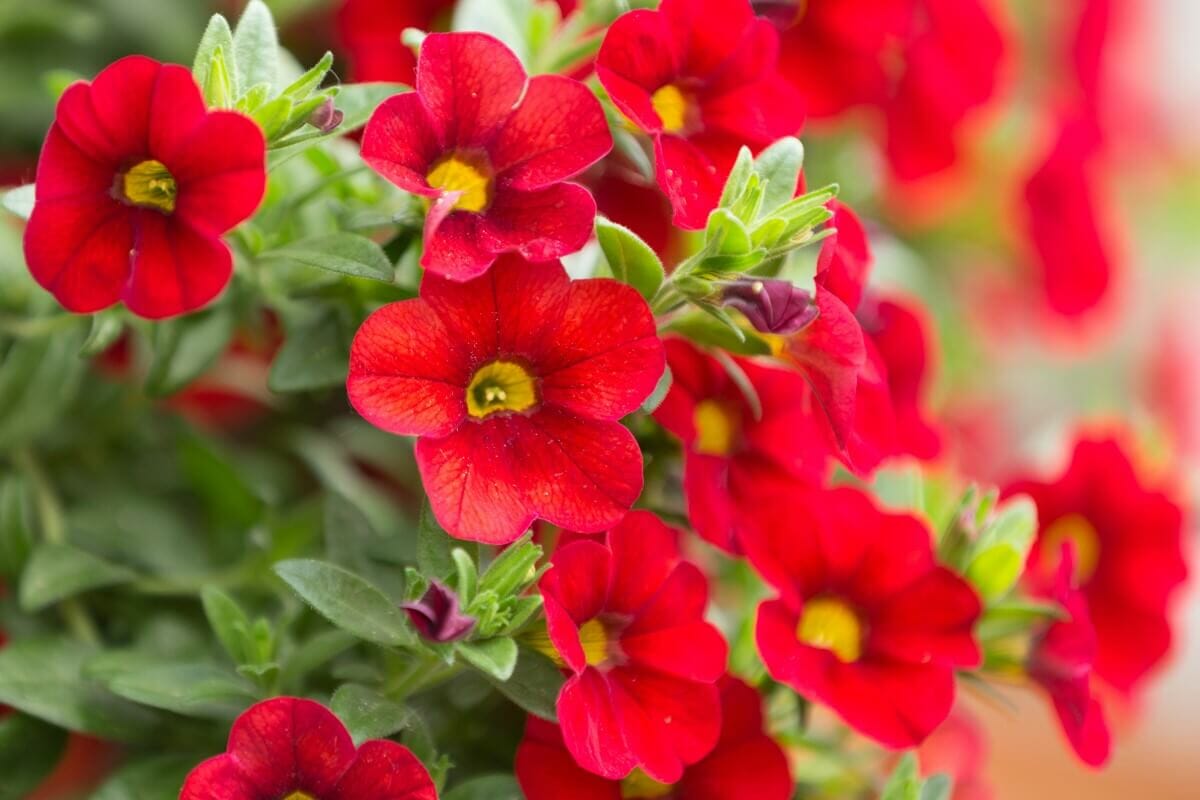
67. Petunia (Petunia)
Best for: Hanging baskets and window boxes, annual in cooler zones.
A member of the Solanaceae (nightshade) plant family, Petunia is a genus of perennial flowering plants that are native to South America. They are a highly popular garden plant. Thanks to a trailing growth habit, they are perfect for growing in hanging baskets and window boxes.
Most of the petunia varieties grown in gardens happen to be hybrids and cultivars bred for their bright colors, color combinations, and large flowers. The red petunia symbolizes passionately strong love, making the flowers, plants, or seeds of red petunias an excellent gift for your significant other, as long as you are serious about loving them.
Key Facts:
Botanical Name: Petunia
- Sunlight
- Full sun.
- Watering
- Regular.
- Growing Zones
- 9-11 (often grown as an annual elsewhere)
- Where to Plant
- Garden beds, containers, hanging baskets.
- Soil
- Well-draining.
- Feeding
- Balanced liquid fertilizer.
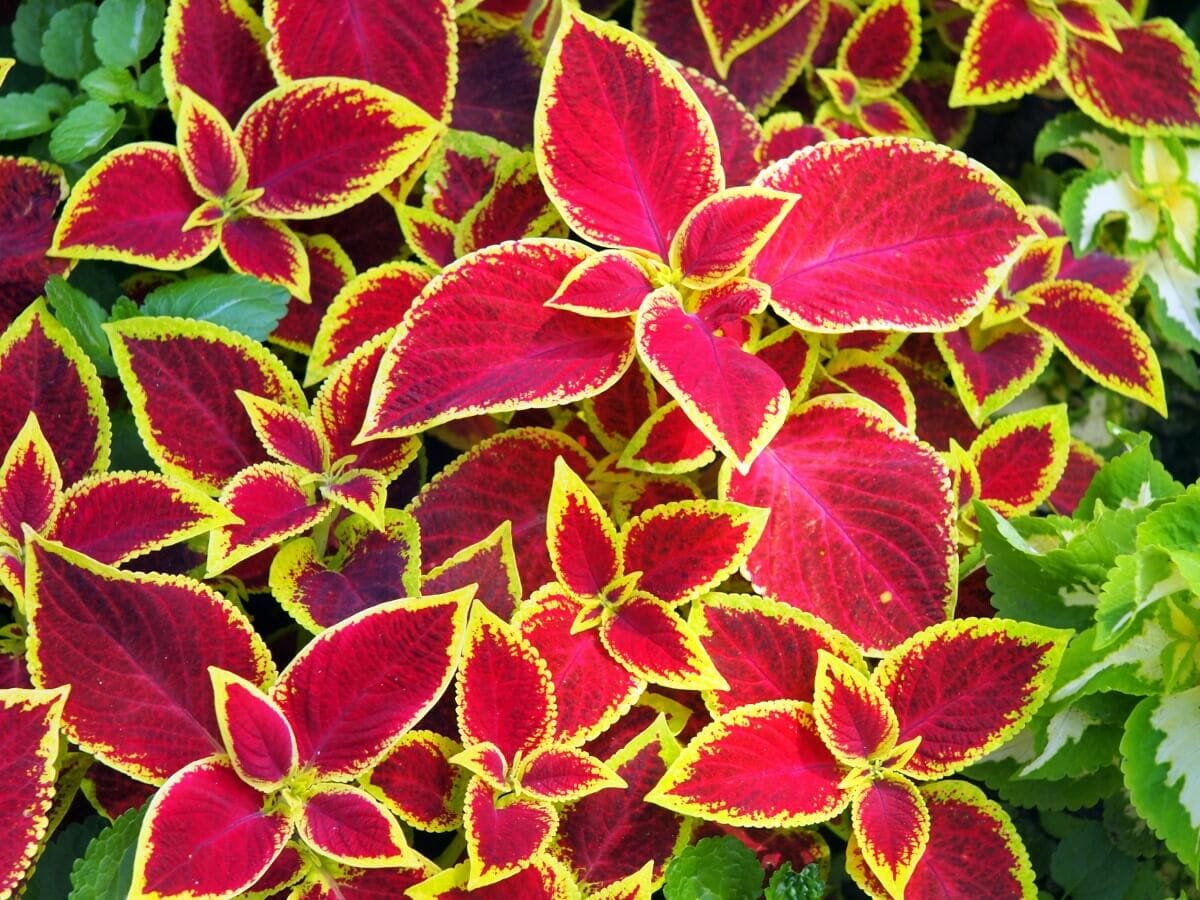
68. Coleus (Coleus)
Best for: Shaded beds and containers, annual in cooler zones.
Native to the tropical and subtropical regions of Asia, Europe, and Africa, Coleus is a genus of flowering plants that can be annual or perennial and come in many different forms, depending on the species. The genus belongs to the Lamiaceae (mint or sage) plant family.
Coleus plants are grown for their colorful, patterned foliage, which includes red leaves, rather than their small, plain flowers.
Key Facts:
Botanical Name: Coleus
- Sunlight
- Shade to partial sun (color is best in shade).
- Watering
- Keep soil evenly moist.
- Growing Zones
- 10-11 (often grown as an annual elsewhere)
- Where to Plant
- Garden beds, containers, shaded areas.
- Soil
- Well-draining, rich.
- Feeding
- Balanced liquid fertilizer.
69. Sweet Pea (Lathyrus odoratus)
Best for: Fragrant trellises and fences in zones 7 to 10.
Commonly called the sweet pea, Lathyrus odoratus is a fragrant flowering plant species belonging to the Fabaceae (legume) plant family.
Sweet peas grow natively in southern Italy, the islands of the Aegean Sea, and Sicily. They have delicate, grass-like stems and lovely flowers that are sometimes solid or variegated with colors that come in just about every color of the rainbow, including several shades of red.
Sweet peas are most notable for their pleasantly sweet fragrance that smells like a combination of rose, hyacinth, and citrusy orange blossoms.
Key Facts:
Botanical Name: Lathyrus odoratus
- Sunlight
- Full sun.
- Watering
- Regular.
- Growing Zones
- 7-10
- Where to Plant
- Trellises, fences, garden beds.
- Soil
- Fertile, well-draining.
- Feeding
- Balanced fertilizer.
70. Freesia (Freesia)
Best for: Fragrant beds and containers in zones 9 to 10.
Another fragrant favorite, Freesia, is a genus of flowering perennial plants that belong to the Iridaceae (iris) plant family. Freesia flowers grow natively in southern Africa, but the wild species of freesia do not look much like the cultivated hybrids that are found growing in gardens and filling out bouquets of cut flowers. These are much more ornate, with large tube-shaped flowers, and they are even cultivated to produce a more pungent fragrance.
Key Facts:
Botanical Name: Freesia
- Sunlight
- Full sun.
- Watering
- Regular.
- Growing Zones
- 9-10
- Where to Plant
- Garden beds, containers.
- Soil
- Well-draining.
- Feeding
- Balanced fertilizer.
71. Lycoris (Lycoris)
Best for: Beds and borders in zones 5 to 9; poisonous, so plant with care.
Native to the southern and eastern parts of Asia, Lycoris is a genus of between 12 and 20 flowering plants that belong to the Amaryllidaceae plant family. In the United States, their common names include cluster amaryllis and hurricane lily.
In the United Kingdom, they are commonly referred to as spider lilies. The tall, slender stems support clusters of short flower stalks that produce four to eight flowers with finger-like petals in a cherry-red hue. Be careful where you plant bulbs of this genus, as they are poisonous and contain the alkaloid lycorine.
Key Facts:
Botanical Name: Lycoris
- Sunlight
- Full sun to partial shade.
- Watering
- Moderate.
- Growing Zones
- 5-9
- Where to Plant
- Garden beds, borders.
- Soil
- Well-draining.
- Feeding
- Light feeding with a balanced fertilizer in the spring.
72. Canna Lily (Canna)
Best for: Moist, sunny beds and containers in zones 7 to 10.
The only genus in the Cannaceae plant family, Canna is a genus of 10 species of flowering plants that are commonly called canna lilies. These perennial plants have a clumping growth habit as they spread via rhizomatic root systems.
They produce showy flowers but are not true lilies, as they belong to a different plant family. They are native to the tropical and subtropical regions of the Americas.
Popular red varieties include the ‘Black Knight’, which has black foliage, and ‘The President’, which produces more traditional green foliage.
Key Facts:
Botanical Name: Canna
- Sunlight
- Full sun.
- Watering
- Regular, especially in hot weather.
- Growing Zones
- 7-10
- Where to Plant
- Garden beds, containers.
- Soil
- Rich, moist.
- Feeding
- Balanced fertilizer every month during the growing season.
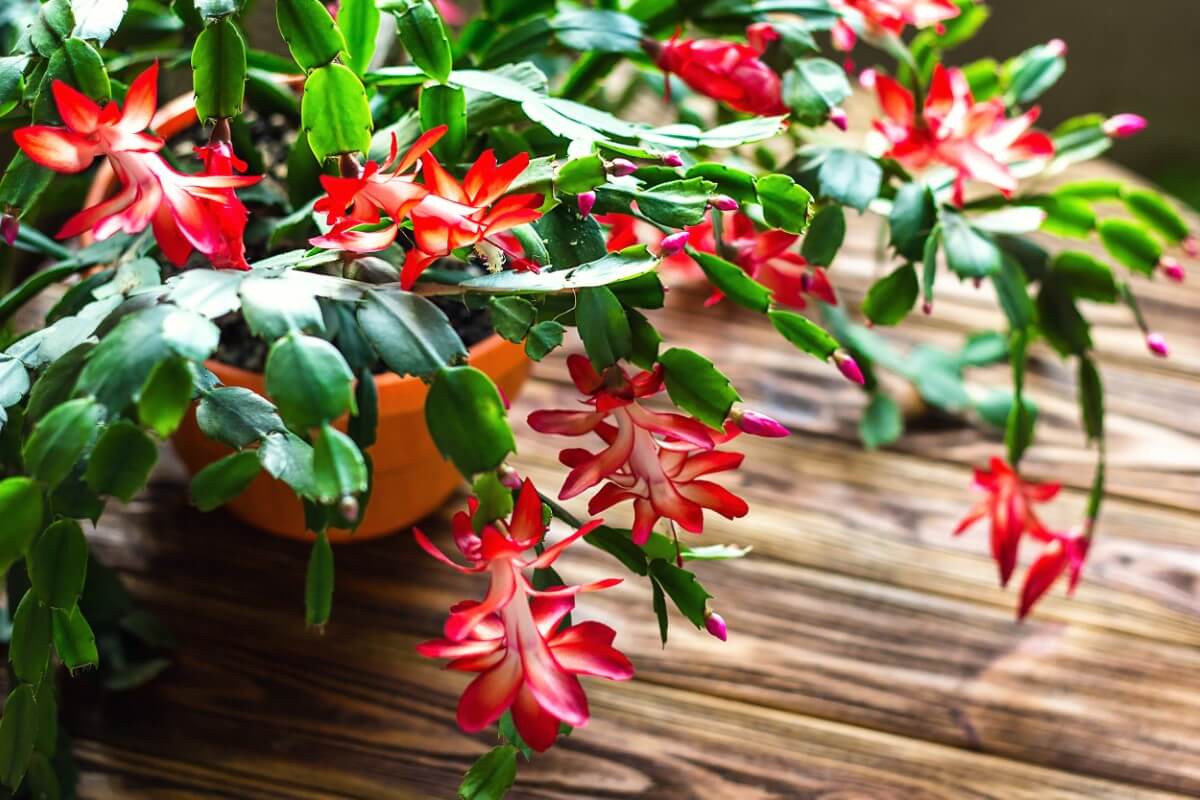
73. Christmas Cactus (Schlumbergera)
Best for: Indoor pots with bright, indirect light.
Schlumbergera is a small genus of just six to nine flowering plants that belong to the Cactaceae (cactus) plant family and are native to the coastal mountains of Brazil. These plants have waxy, succulent-like leaf segments that grow in long chains of sorts. From the ends of these, the plants produce ornate tubular flowers in shades of red, pink, orange, and white.
Depending on the species, they typically flower around November or December in the Northern Hemisphere. This has led to their common names of Christmas cactus or Thanksgiving cactus.
Key Facts:
Botanical Name: Schlumbergera
- Sunlight
- Bright, indirect light.
- Watering
- When the top inch of soil feels dry.
- Growing Zones
- 10-12 (indoors in cooler zones)
- Where to Plant
- Indoors in pots.
- Soil
- Well-draining potting mix.
- Feeding
- Balanced liquid fertilizer every month.
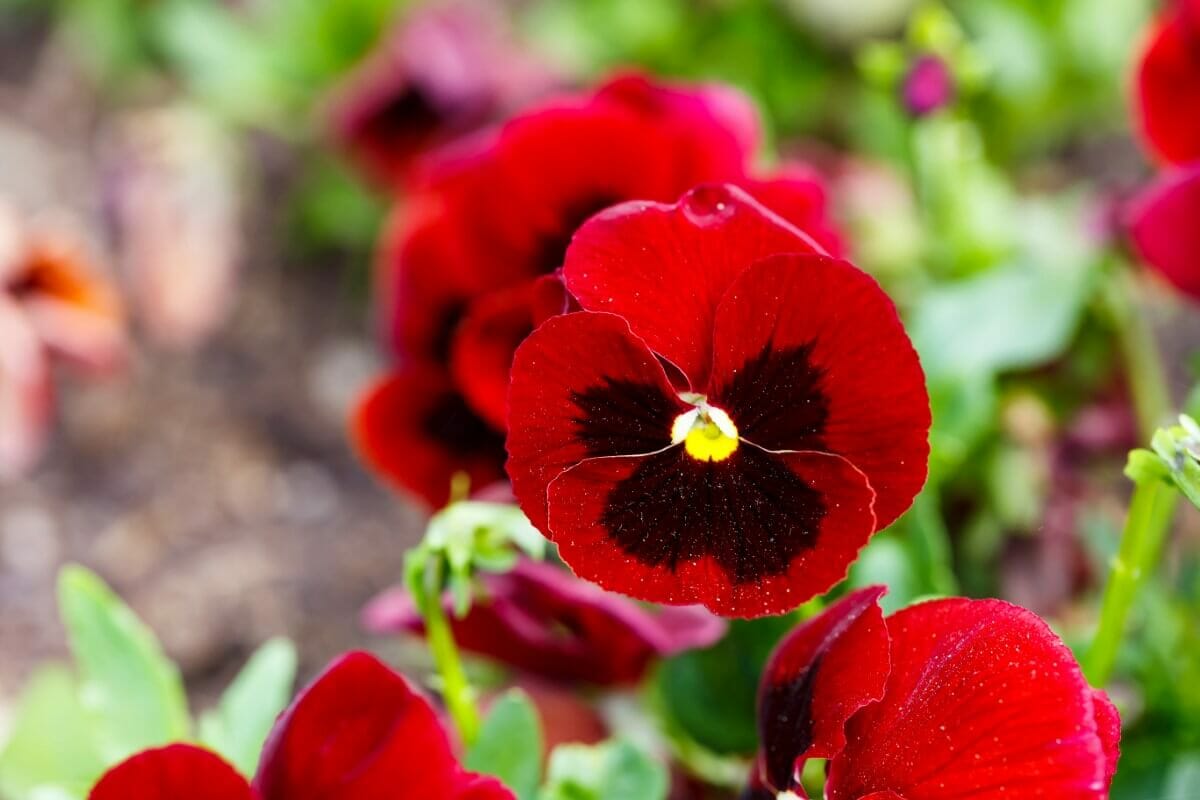
74. Garden Pansy (Viola x wittrockiana)
Best for: Beds and containers in zones 6 to 10.
Garden pansies are a large group of flowering plants that are all hybridized cultivars of flowering plants from the Melanium group of the Viola genus, which belongs to the Violaceae (viola) plant family. Their parent flowers are primarily native to western Asia and Europe.
Pansies are cheerful plants that self-seed with a clumping habit and produce face-like flower blossoms in many different colors and combinations of colors, including striking ruby-red and deep maroon.
Key Facts:
Botanical Name: Viola x wittrockiana
- Sunlight
- Full sun to partial shade.
- Watering
- Regular.
- Growing Zones
- 6-10
- Where to Plant
- Garden beds, containers, borders.
- Soil
- Rich, well-draining.
- Feeding
- Balanced fertilizer in spring and mid-summer.
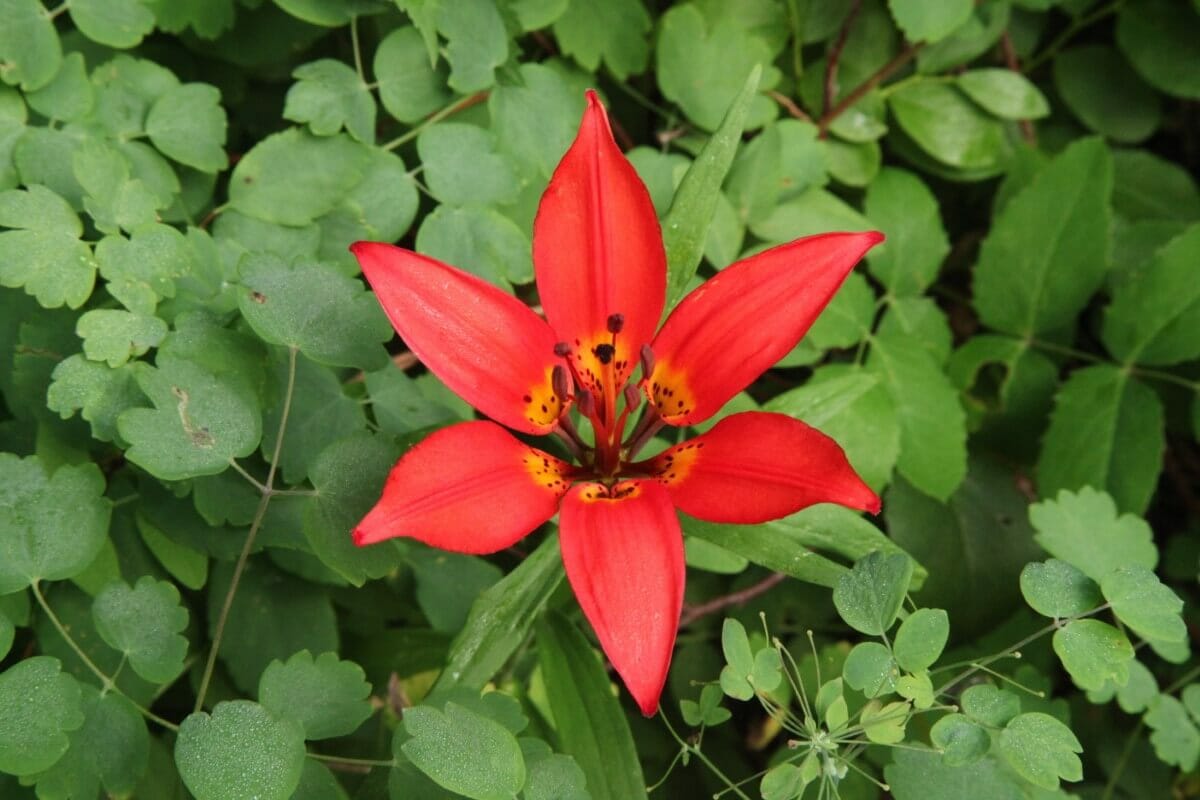
75. Wood Lily (Lilium philadelphicum)
Best for: Sunny beds and meadows in zones 4 to 8; blooms June to August.
Lilium philadelphicum is a perennial lily that belongs to the Liliaceae plant family. Native to much of Canada and the United States, the wood lily blooms from June to August. Although it grows wild, the species is secure overall but locally threatened or endangered in southern and isolated populations.
Its blossoms feature six black-speckled, ovate petals in a striking shade of orangish-red. In addition to wood lily, its common names include Philadelphia lily, western red lily, and prairie lily.
Key Facts:
Botanical Name: Lilium philadelphicum
- Sunlight
- Full sun.
- Watering
- Regular.
- Growing Zones
- 4-8
- Where to Plant
- Garden beds, meadows.
- Soil
- Well-draining.
- Feeding
- Light feeding with a balanced fertilizer in the spring.
Add a Dash of Love to Your Garden with Red Flowers
No matter what climate or USDA hardiness zone you live in, there are countless plants, blooming with red flowers, that can thrive in your garden and inside your home. Pick a few of your favorite types of red flowers from the list, or explore other flower colors in our guides. If you're drawn to warm colors, see our lists of orange flowers and yellow flowers.
The list spans many hardiness zones and includes plants that grow indoors. Explore growing guides for scarlet sage, dahlias, and cosmos.
Questions and Answers
What are some tall red flowers?
Hollyhocks produce tall, sturdy stalks topped with racemes of bowl-shaped flowers. Wild scarlet sage grows more than 4 feet tall, and lycoris has tall, slender stems. The red trumpet creeper is a vine that can reach more than 30 feet long.
What types of red lilies can I grow?
The list includes several flowers called lilies, though not all are true lilies. The wood lily (Lilium philadelphicum) is a lily in the Liliaceae family with black-speckled, orangish-red petals. Calla lilies, daylilies, and canna lilies belong to other plant families but all offer red blooms.
Which Red Flowers Are Toxic to Cats and Dogs?
True lilies (Lilium), including the wood lily, are toxic to cats, and tulips, hyacinths, and geraniums (Pelargonium) are toxic to cats and dogs. In cats, lily exposure causes kidney failure, and in tulips the bulb holds the highest concentration of the toxins Tulipalin A and B. Roses, sunflowers, and zinnias are non-toxic to dogs, cats, and horses. If you suspect your pet has eaten any of these, contact your veterinarian or the ASPCA Animal Poison Control Center.
Do Hummingbirds Really Prefer Red Flowers?
Hummingbirds prefer flowers that have a tubular or trumpet shape, and they also visit orange, pink, purple, yellow, blue, and white flowers. What keeps them coming back is sugar type, sugar concentration, and nectar flow rate. On this list, tubular red flowers include blood sage, coral honeysuckle, pineapple sage, cypress vine, and red trumpet creeper, and NC State Extension notes that red columbine's tubular flowers attract hummingbirds, butterflies, and bumblebees.
Which Red Flowers Grow in Shade?
Begonias and coleus are red plants for shady sites. Bleeding heart suits part shade, camellia and azalea suit partial shade, and astilbe grows in partial to full shade. Columbine performs well in areas that receive afternoon shade, but not full shade.
Sources11 sources, linked in the text
- plants.ces.ncsu.edu: lamprocapnos spectabilis
- herbaria.plants.ox.ac.uk: Acca
- plants.ces.ncsu.edu: pentas lanceolata
- plants.ces.ncsu.edu: campsis radicans
- aspca.org: oleander
- daylilies.org: registration q a
- aspca.org: azalea
- rhs.org.uk: details
- veterans.gc.ca: poppy
- plant-directory.ifas.ufl.edu: lycoris radiata
- liliumspeciesfoundation.org: lilium philadelphicum
Updates and CorrectionsOct 17, 2026 · 9 corrected, 2 removed
- Corrected: The red trumpet creeper belongs to the Bignoniaceae family, not Begoniaceae.
- Corrected: Pineapple guava is native to southern Brazil and Uruguay, not northern South America.
- Corrected: More than 100,000 daylily cultivars are registered; we had said 80,000.
- Corrected: The wood lily is secure overall but locally threatened or endangered.
- Corrected: Lycoris toxicity sits in the bulbs, which contain lycorine.
- Corrected: Thirteen "best for" notes on individual plants.
- Removed: Unsupported claims: gerberas as the fifth most used cut flower, red dahlia tubers as highly nutritious, and an answer naming red-and-white gloxinia and columbine.
- Corrected: Scarlet sage is grown as a perennial only in zones 10 to 11 and as an annual elsewhere; blood sage is not called scarlet sage.
- Corrected: Red asters belong to the Astereae tribe, not a plant family; azaleas are toxic to pets, as the ASPCA lists.
- Corrected: Spelling of several botanical names (Dicentra, Rosaceae, Helianthus annuus, Papaveroideae).
- Removed: Off-topic digressions (fruit recipes, herbal medicine, opium) and species-count padding.
- Added: Sources linked at each claim in place of Wikipedia, an opening summary, and answers on pet safety, hummingbirds, and red flowers for shade.
- Added: A table of the flowers on this list that suit shade, cold winters, dry soil, indoors, walls and fences, hanging baskets, and wet ground.
Save and Share
Reader Comments
Have a question? Ask it here.