
Floriography
Crocus Flower Symbolism, From Saffron Gatherers to Spring


Briana Yablonski (Full Profile)
Senior Editor
Credentials
- BS in Plant Sciences , focus on agroecology Modern Farmer
- Flower farmer , Creekside Flower Farm, since 2024 Creekside Flower Farm
- Founder , Under Foot Farm, a market garden, since 2019 Under Foot Farm
Writing for Petal Republic since 2021 · 182 articles
Expertise
Plant sciences, Agroecology, Market gardening
Published In
Modern Farmer, Gardener's Path, HuffPost
A wall painting shows people collecting saffron on Thera by 1600 BC, and our guide gives the readings by color and the occasions a crocus suits.
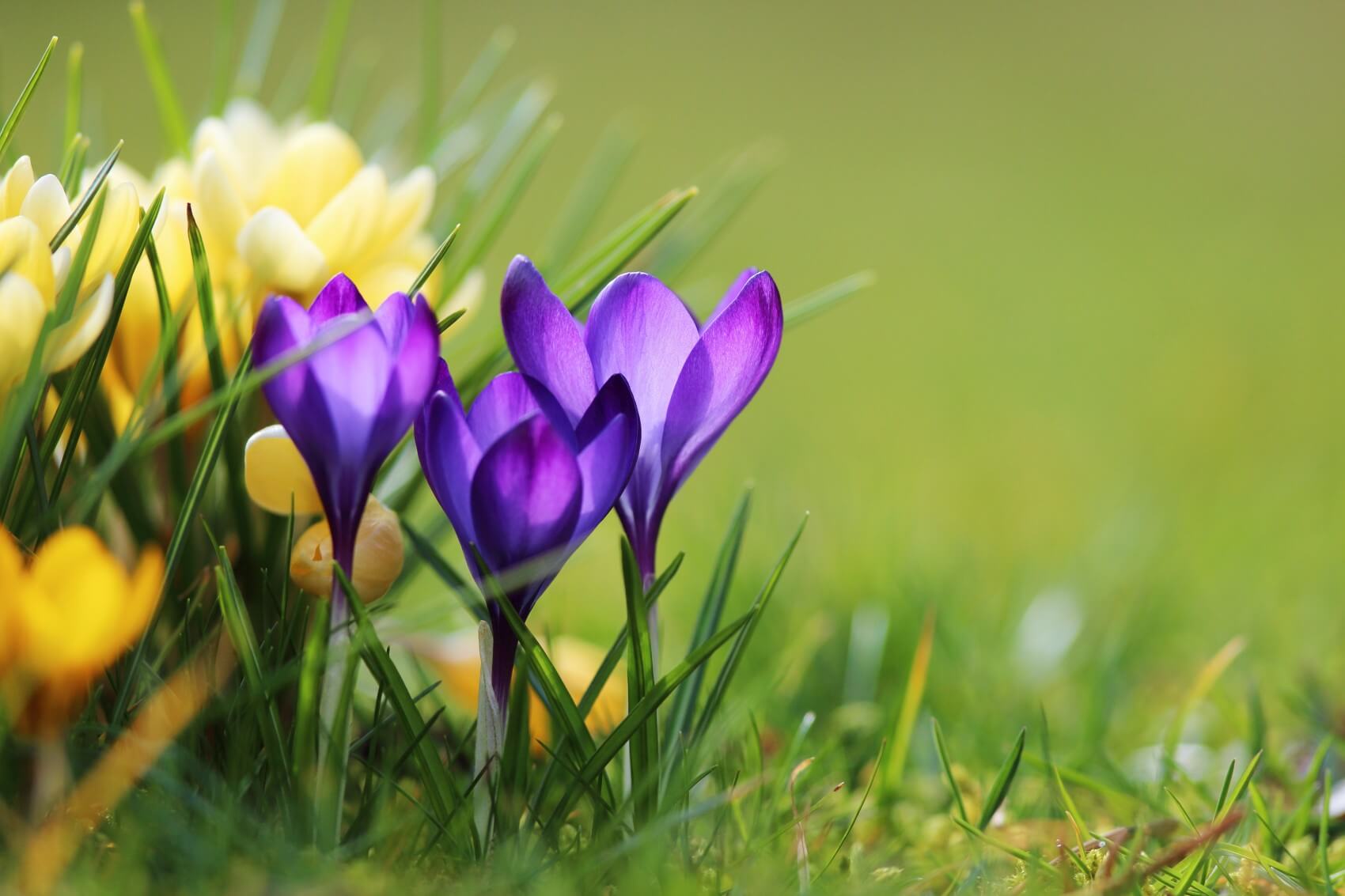
In Short
Crocus flower symbolism starts with youthful gladness, the Victorian reading of the spring crocus, and today the bloom stands for spring and renewal. One 1884 flower dictionary gives the crocus, the spring crocus and the saffron crocus three different readings.
- Florists read yellow crocus as cheerfulness and purple crocus as pride and success, both modern color readings.
- The saffron crocus is sterile, so it survives only because people plant and divide its corms.
More Takeaways
- The plant usually sold as autumn crocus, Colchicum autumnale, is toxic to cats and dogs, so read the Latin name before buying.
Crocus Through Time
By 1884 the Victorian language of flowers gave three different crocuses three different readings, long after a wall painting on Thera showed saffron gatherers.
By 1600 BC · Thera
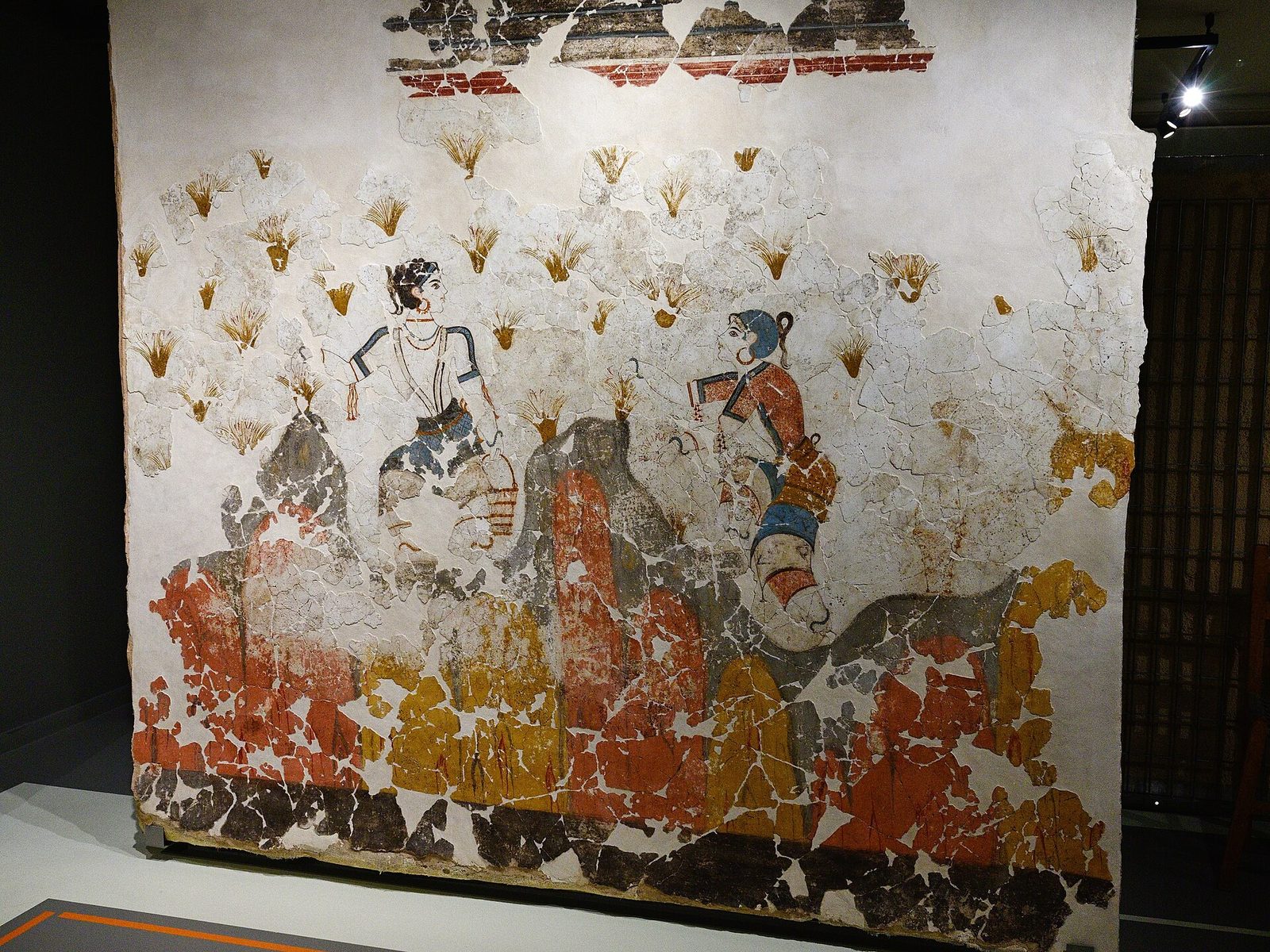
Saffron gatherers on a wall
A wall painting known as the Saffron Gatherers, from the Bronze Age city of Akrotiri on the Greek island of Thera, shows people collecting saffron.
About 2,000 years ago · Rome
Crocus in Greek mythology
In his Metamorphoses the Roman poet Ovid mentions Crocus, a youth changed into small flowers together with Smilax, and passes on without telling the story.
1560s · Constantinople
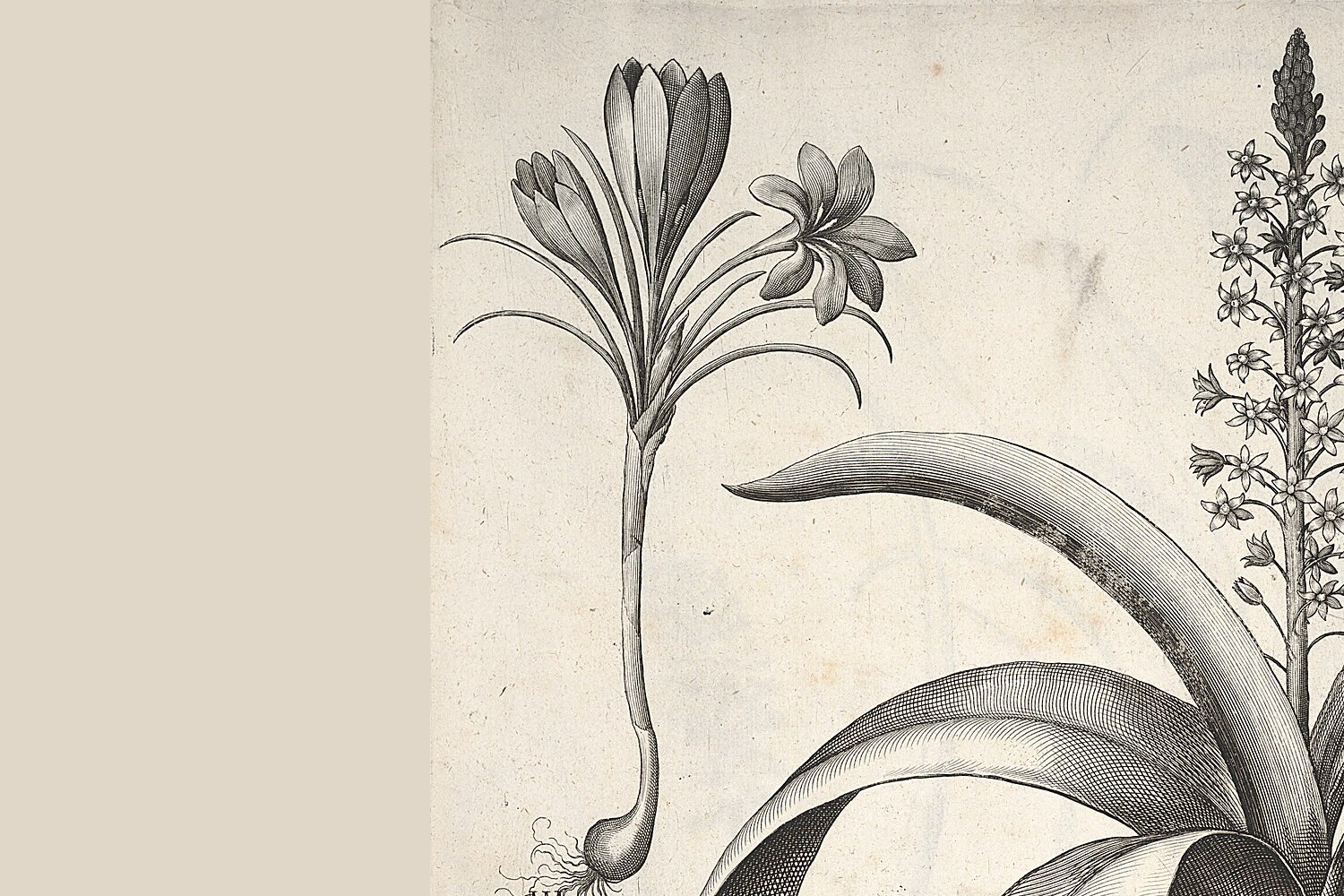
Crocuses reach northwest Europe
The first crocuses seen in northwest Europe were grown from corms, underground bulb-like stems, carried from Constantinople in the 1560s.
1851 · Dumont
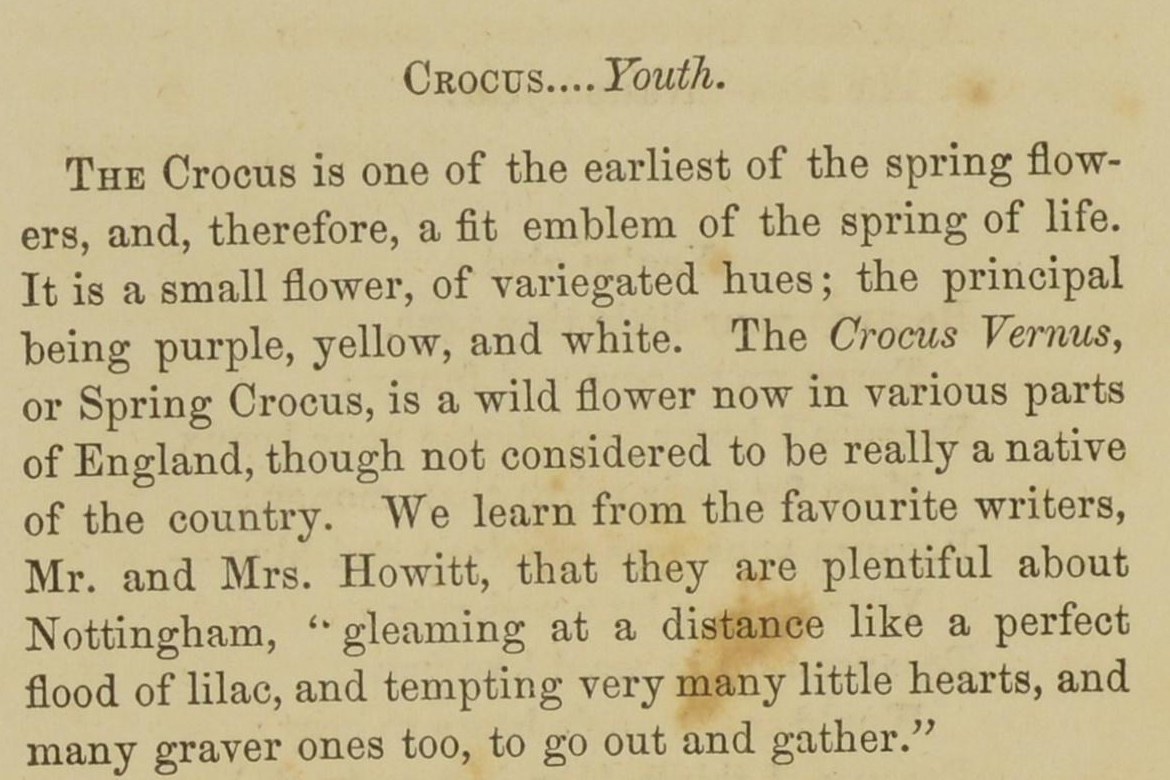
Dumont reads the crocus as youth
An 1851 flower dictionary reads the crocus as 'Youth,' one of the earliest spring flowers, a fit emblem of the spring of life, and names purple, yellow and white as its colors.
1884 · Greenaway
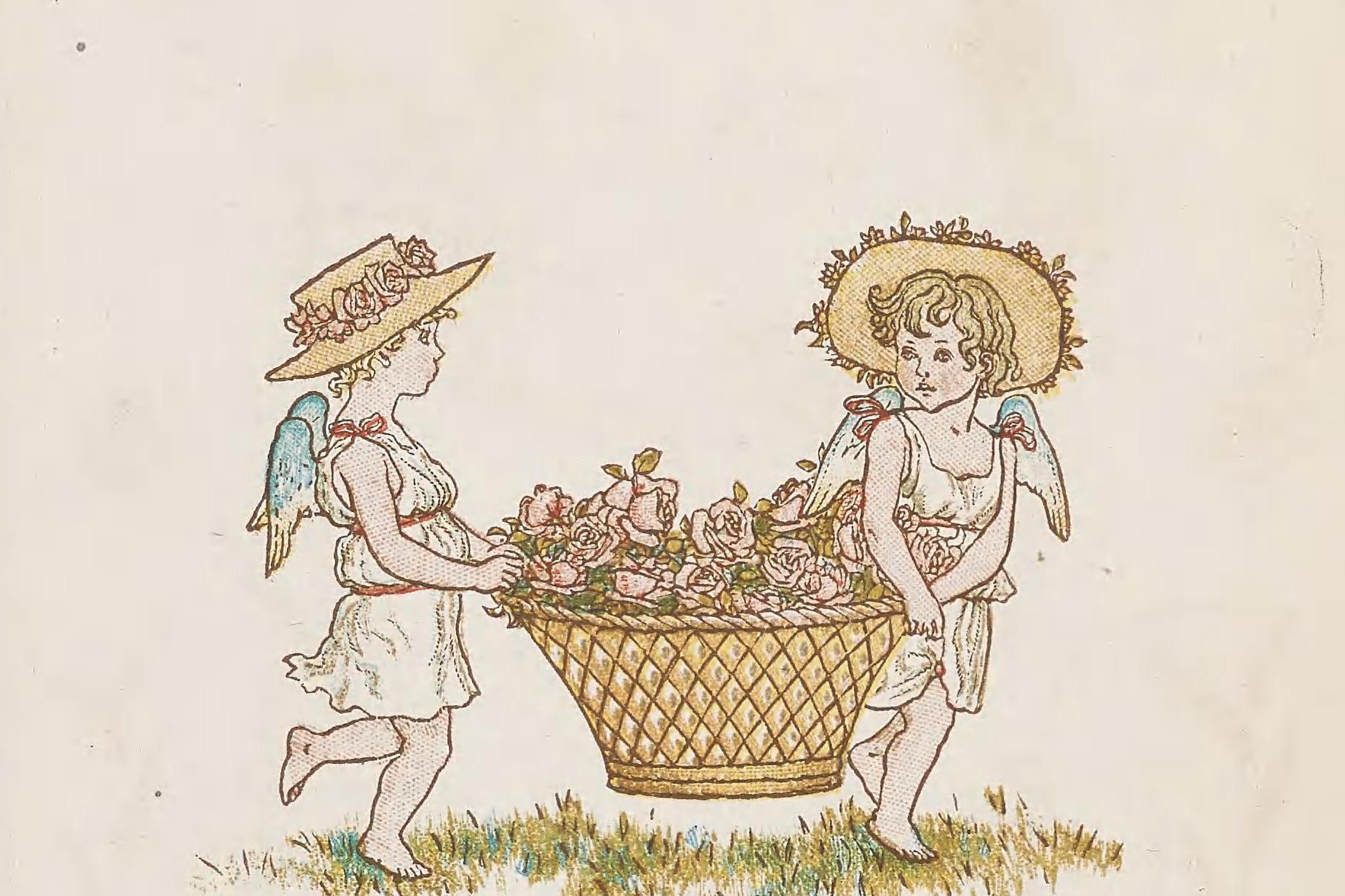
Three crocuses, three readings
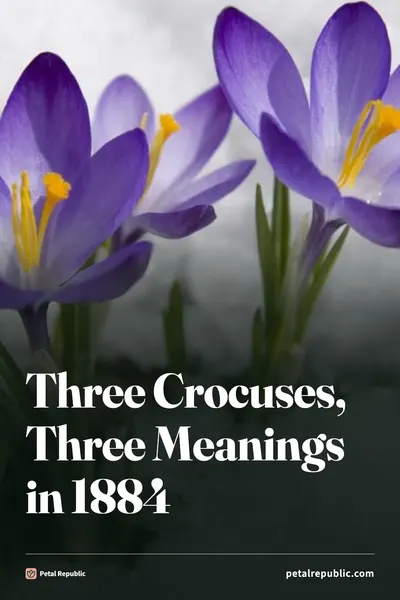
An 1884 flower dictionary lists three different crocuses with three different readings: crocus 'Abuse not,' spring crocus 'Youthful gladness' and saffron crocus 'Mirth.'
Did you know? Greenaway also lists plain saffron on its own, as “Beware of excess.”
Today · Late winter
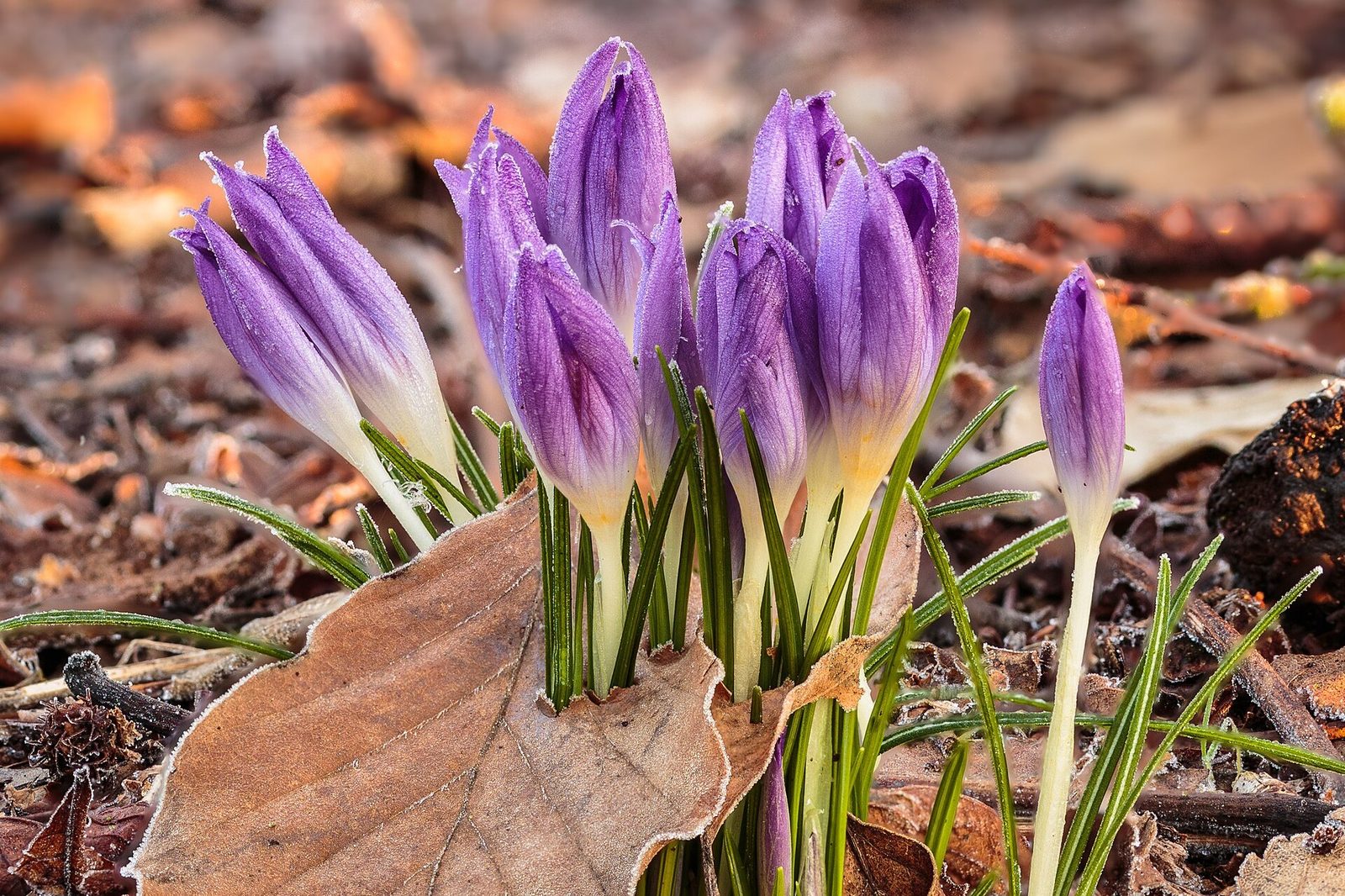
First flowers of spring
Today the crocus carries modern readings of spring, renewal and rebirth, partly because the snow crocus (Crocus tommasinianus) flowers from late winter to early spring, even in snow.
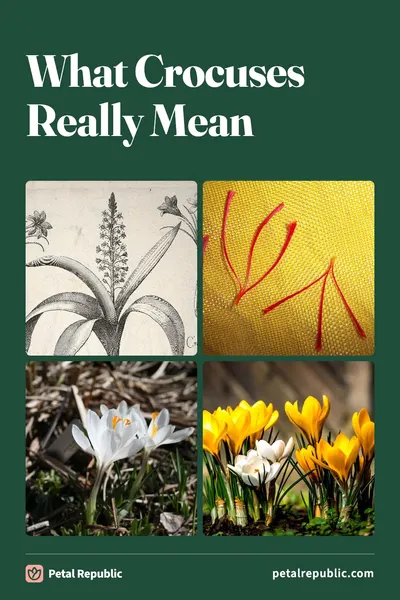
Photos via Wikimedia Commons: saffron threads by Emilie40 (CC0), saffron crocus by Zeynel Cebeci, white crocus by Uleli, fresco by Zde and snow crocus by Dominicus Johannes Bergsma (CC BY-SA). Plates from Besler (1640), Dumont (1851) and Greenaway (1884), public domain.
A Crocus Made by People
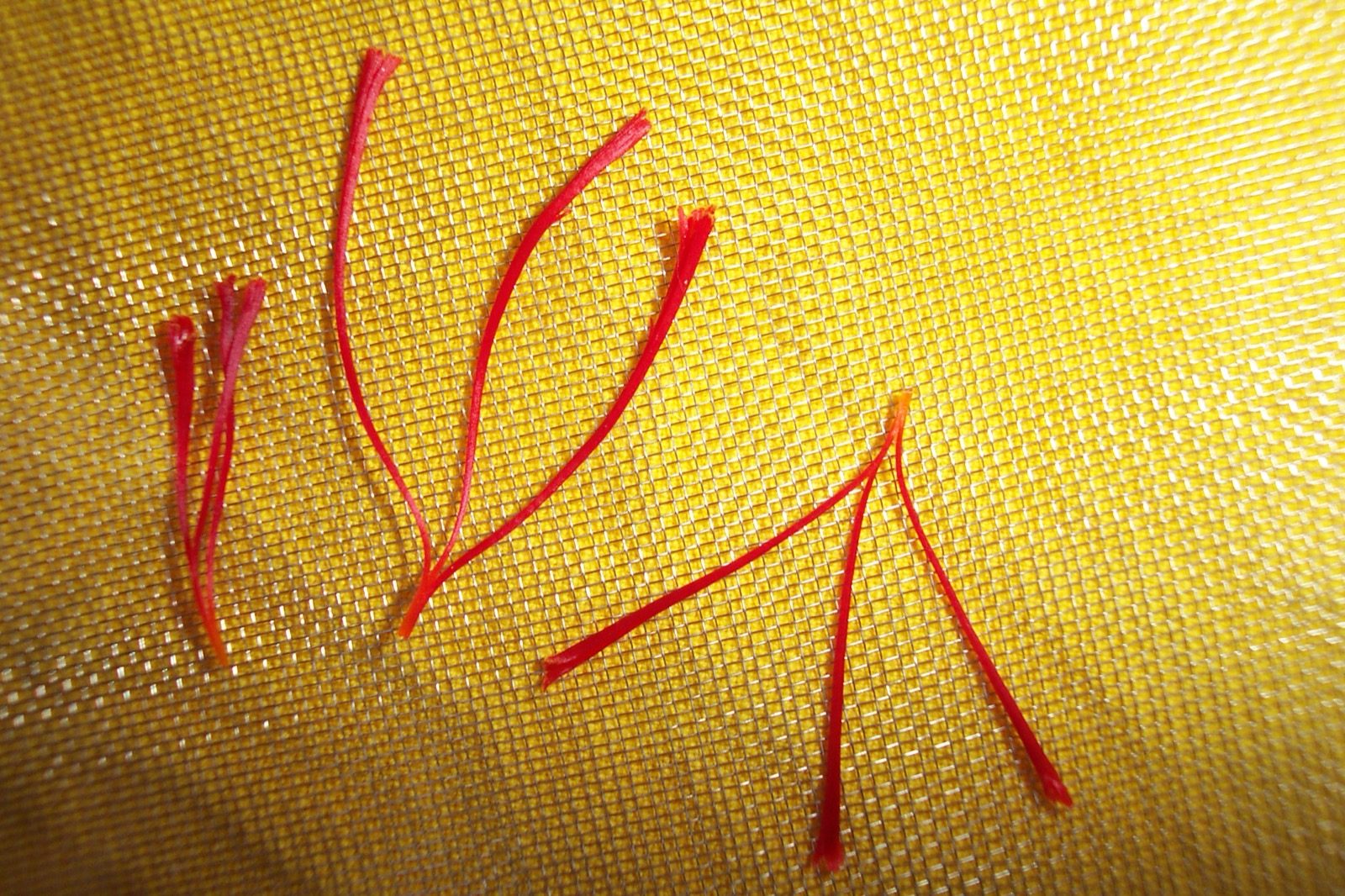
The saffron crocus (Crocus sativus), the flower that gives the spice saffron, is not found growing anywhere in the wild. Several civilizations bred it selectively for about 3,500 years. It is probably a form of a wild crocus, Crocus cartwrightianus, which is known as wild saffron. Its flowers are sterile and set no fruit, and so the plant can only spread when growers divide its corms, which multiply each year.
Its purple to lavender flowers appear in the fall for only one to two weeks, and that short window is when the saffron is collected. Each corm bears several flowers, and the saffron threads are the flower's crimson stigmas and styles, dried. By weight, saffron is the most expensive spice in the world. In the 16th and 17th centuries saffron was an important crop in parts of southern England, and the place name Saffron Walden in Essex reflects that history.
Crocus Name Meaning and Origin
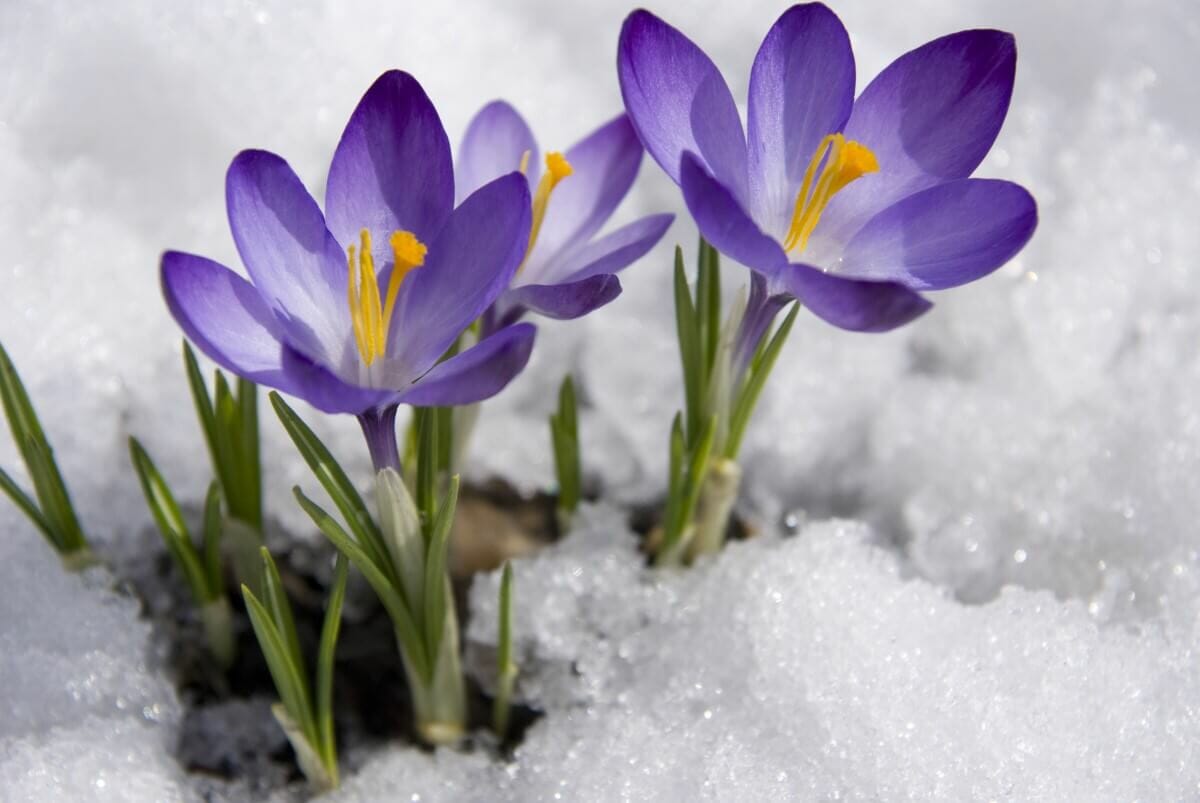
The name Crocus traces back to the Greek krokos, 'saffron,' likely from a Semitic source such as Arabic kurkum. The origin of the crocus as an English word dates to the 1300s; Linnaeus gave the genus its scientific name Crocus in 1753. It comprises about 90 species, native from the Mediterranean and eastern Europe to northwest China.
Crocus Color Meanings Today
The crocus color meanings are modern florist readings. The Victorian books gave their readings to the plant, not the color.
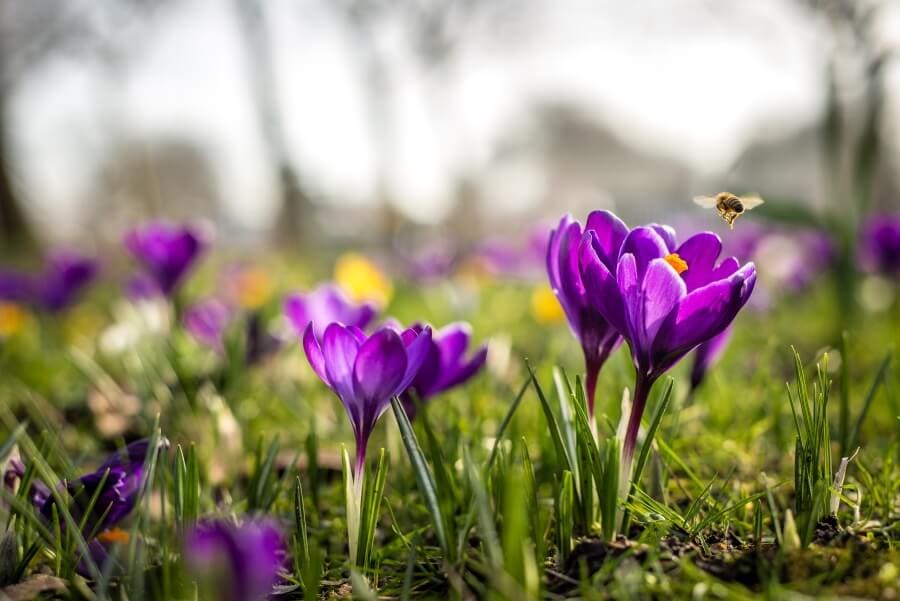 Purple crocus1851 calendar 28 February, in Dumont’s list of flowers for each day
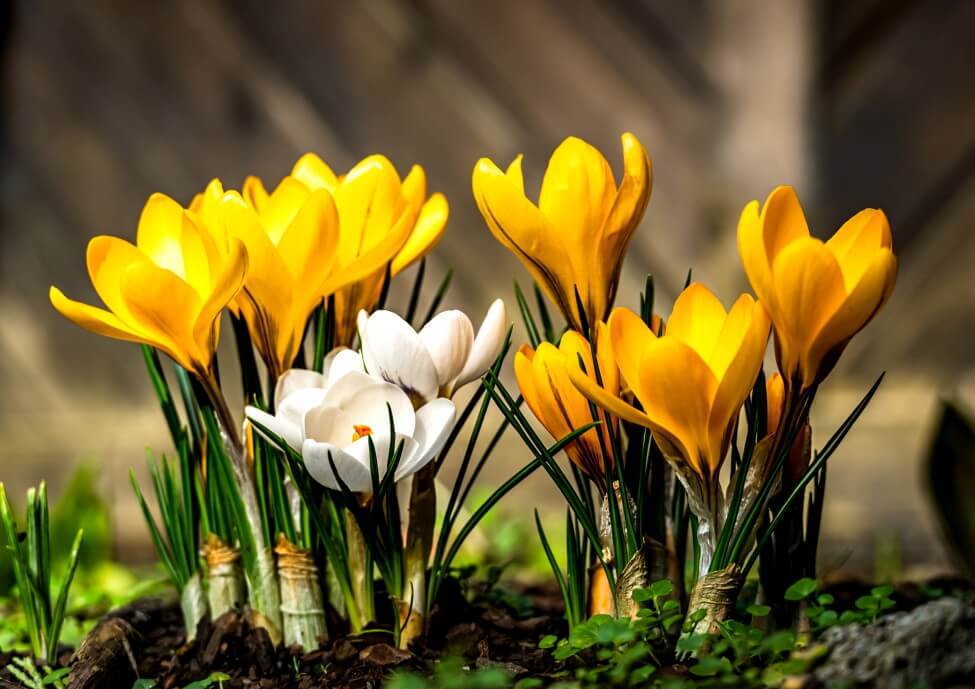
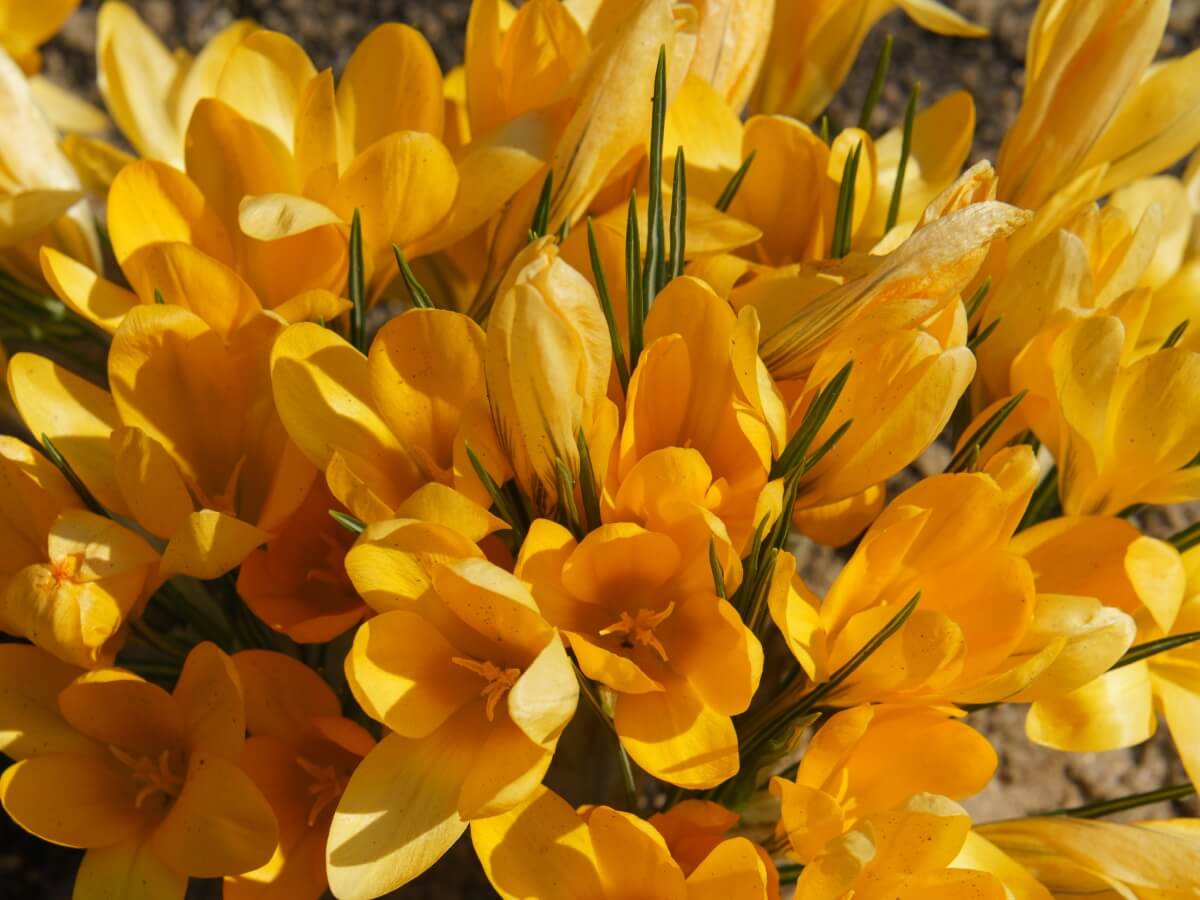 Yellow crocus1851 calendar 14 February, St. Valentine’s dayToday Cheerfulness and spring joy
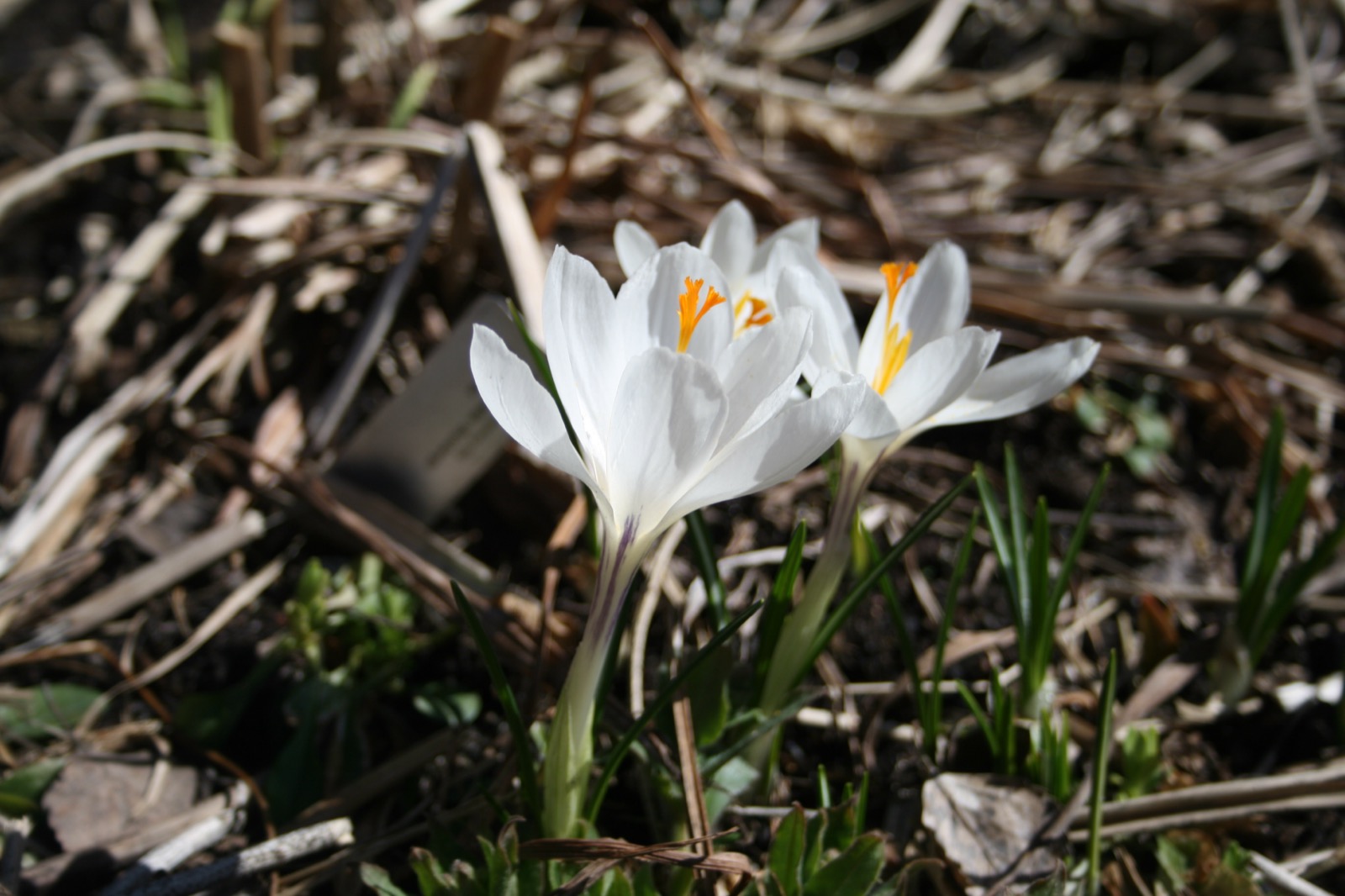 White crocus1851 calendar 21 February, in Dumont’s list of flowers for each day
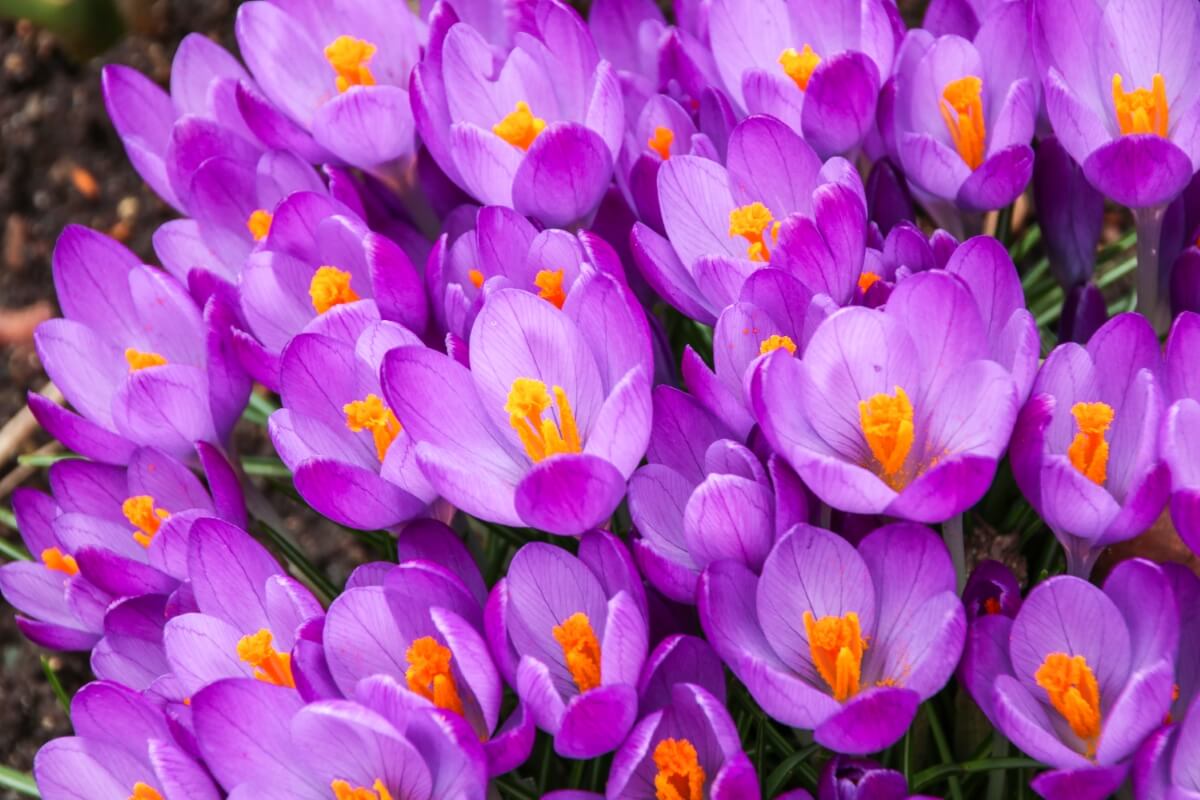 Lilac crocusToday Delicacy and faith
Purple Crocus
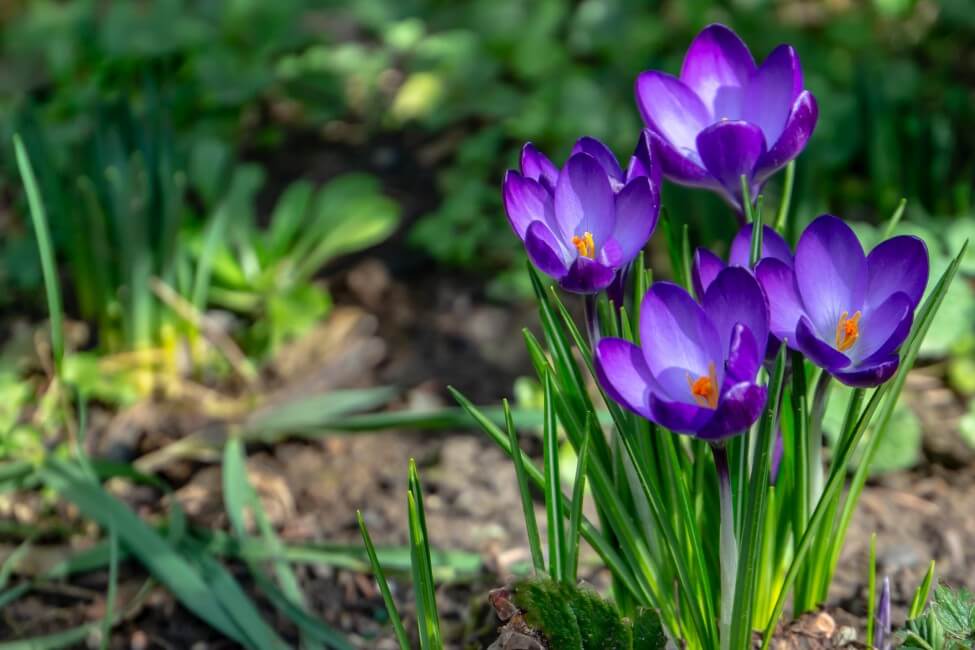
Today, purple crocus signals pride, success, and dignity, with its color linking it to royalty. A purple crocus suits someone celebrating a recent accomplishment.
White Crocus
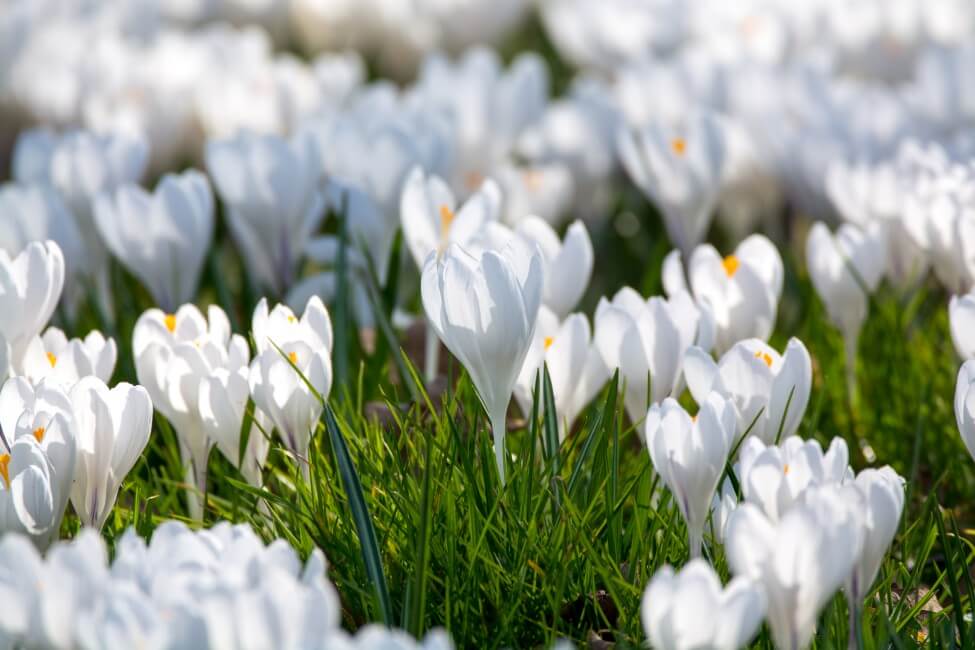
White crocus is read today as purity and new beginnings.
Before You Give It
Some autumn-blooming bulbs are sold under crocus names. A true crocus is not on the ASPCA toxic lists; the look-alike is toxic to dogs, cats and horses.
Spring crocus
- Botanical name
- Crocus species, such as C. vernus
- Family
- Iridaceae
- Blooms
- Late winter to early spring
- Pets
- Not on the ASPCA lists; Pet Poison Helpline says ingestion causes drooling, vomiting, loss of appetite and diarrhea
A true crocus
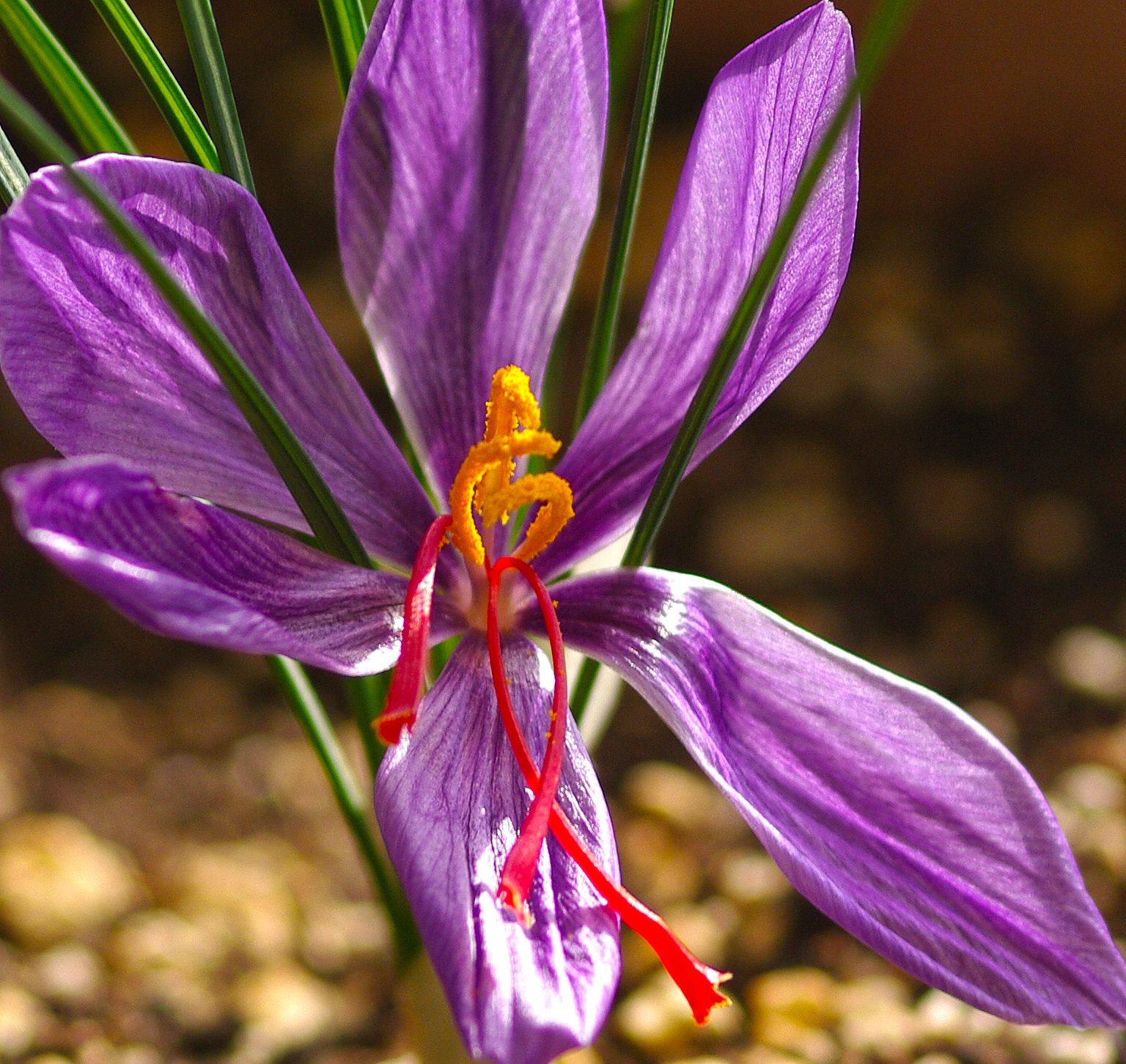
Saffron crocus
- Botanical name
- Crocus sativus
- Family
- Iridaceae
- Blooms
- Fall
- Pets
- Not on the ASPCA lists, like other crocus species
A true crocus
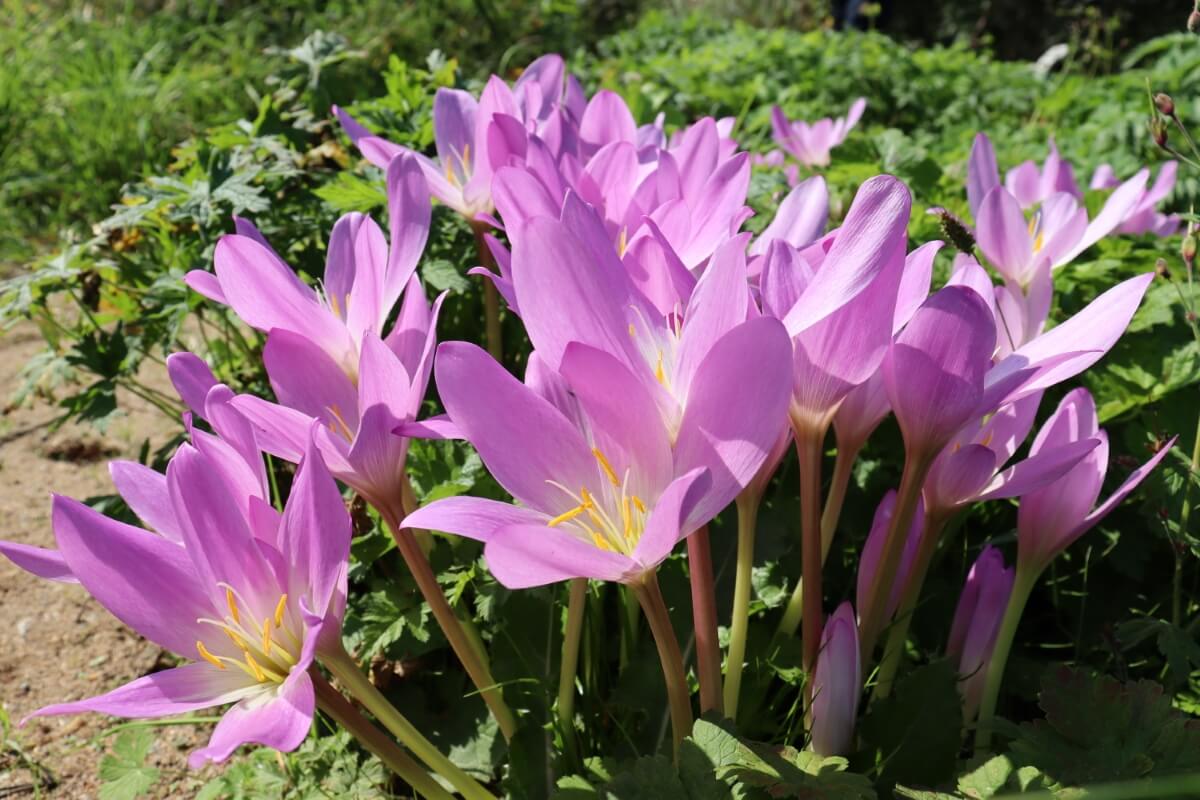
Autumn crocus
- Botanical name
- Colchicum autumnale, also called meadow saffron
- Family
- Colchicaceae
Not a crocus
Which Crocus to Give
Florists, gift guides and gardening magazines suggest these gifts, all of them modern customs.
Crocus for an Easter table
A gardening magazine lists the crocus among its Easter favorites for joy, because it stands for youth and happiness.
Potted crocus for a spring birthday
Florists suggest a potted crocus in flower, or bulbs to plant, for a February or March birthday, because it blooms in that season.
White crocus for a hard stretch
For someone in illness, loss or hard times, florists suggest a white crocus as a gentle sign of light ahead.
Choose the crocus that fits the moment, a potted one in flower, and add a handwritten card. To give one to someone else, see where to send flowers.
Related flower meanings
Questions and Answers
Do all crocuses produce saffron?
No. Only Crocus sativus yields saffron, out of about 90 species in the genus, and it takes around 140,000 of its flowers to make a kilogram of dried saffron. The other species are grown as ornamentals (among the most popular early-spring garden flowers), and several bloom in autumn and winter.
What is the crocus in the Bible?
The crocus appears once by name in common English translations, in Isaiah 35:1. The NIV, NRSVUE, and ESV render the verse with the desert blossoming "like the crocus," while the KJV translates it "as the rose."
Is autumn crocus the same as the saffron crocus?
No, the name autumn crocus is used for two plants: the saffron crocus (Crocus sativus, once called Crocus autumnalis) and Colchicum autumnale, also called meadow saffron. Colchicum autumnale blooms about when the leaves begin to fall from the trees. Its toxic principle is colchicine and other alkaloids.
Sources22 sources, linked in the text
- cyclades.culture.gov.gr: the museum of prehistoric thera
- thelatinlibrary.com: ovid.met4.shtml
- Oxford Plants 400, Crocus
- Internet Archive: An 1851 flower dictionary
- Kate Greenaway, The Language of Flowers (1884)
- plants.ces.ncsu.edu: crocus tommasinianus
- NC State Extension, Crocus sativus
- Wikipedia, Saffron
- American Heritage Dictionary, crocus
- Dictionary.com, crocus
- gbif.org: 2747303
- NC State Extension, Crocus
- Internet Archive: 28 February
- Internet Archive: 14 February
- Bloomingexpert, Crocus meaning
- interflora.in: the ultimate flower gifting guide with their meanings
- ASPCA, Autumn Crocus
- petpoisonhelpline.com: crocus
- Internet Archive: Dumont
- plants.ces.ncsu.edu: colchicum autumnale
- Bible Gateway, Isaiah 35:1
- Henrietta Dumont, The Language of Flowers: The Floral Offering (1851)
Updates and CorrectionsNov 21, 2026 · 5 corrected, 1 removed
- Added: A timeline from the Bronze Age wall paintings of Thera to the flower dictionaries of 1851 and 1884, a story chapter on the saffron crocus, a color strip with photos, look-alike cards that separate spring and saffron crocuses from the toxic autumn crocus, gift cards from florist and gardening sources and FAQs.
- Corrected: 2 unsourced figures (zones, counts, sizes or dates) were corrected to a source or removed.
- Corrected: The page treated autumn-blooming crocuses as symbols of hope. The plant most often meant, autumn crocus or meadow saffron (Colchicum autumnale), is not a crocus, and Greenaway's 1884 dictionary and Dumont's 1851 dictionary both read it “My best days are past.” It is also toxic to cats, dogs and horses.
- Corrected: The page said Crocus the youth “died of sadness” when the gods forbade his marriage. That ending is not in Ovid, who names Crocus changed into small flowers alongside Smilax and moves on, so the retelling was cut.
- Corrected: The page traced the name to Sanskrit and credited the Hittites with the earliest saffron cultivation. Dictionaries trace crocus to Greek krokos, perhaps from a Semitic source, and no source opened supports the Hittite claim.
- Corrected: The Pink Crocus photo showed pink tulips and white daffodils. It was removed, and no pink chip was added because no true pink crocus photo was found.
- Removed: The Greek-wedding and wedding-bouquet lines, the claims that saffron stands for divinity, power and health, the line about gifts in the Middle East and Asia, the red-crocus bouquet suggestion and the three poet links, none of which had an open source behind them.
Save and Share


Reader Comments
Have a question? Ask it here.