Floral Design
Ikebana: An Essential Guide to the Japanese Art of Flower Arrangement


Senior Contributing Editor
Credentials
- Features Editor and Designer , Lonehill Media Lonehill Media
- Formal training in nature photography
Writing for Petal Republic since 2023 · 17 articles
Expertise
Floral design, Gardening
Published In
The Gardener
Learn what ikebana is, how the three main schools differ, and what you need to begin arranging flowers in the Japanese tradition.
In Short
Ikebana is the Japanese art of arranging flowers built on a few main stems, taught in schools such as Ikenobo, Ohara and Sogetsu. We checked each school's own pages; the oldest school's first dated record is 1462.
- Start with a kenzan (pin holder), a shallow vessel and sharp shears.
- Build the arrangement on three main stems: shin, soe and tai, or hikae for the third in the Sogetsu school.
More Takeaways
- Choose a school by style: Ikenobo for formal rikka and shoka, Ohara for moribana in a shallow bowl, Sogetsu for free-form with any material.
What the Word Means
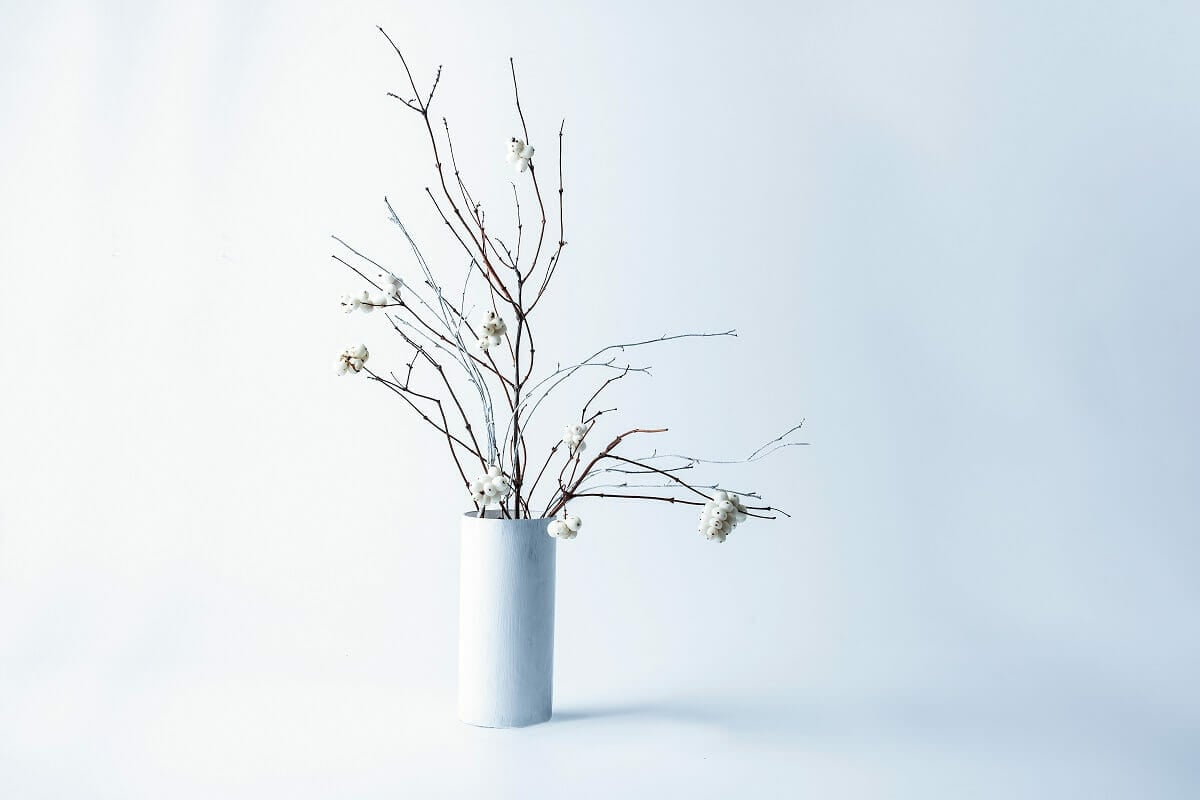
The word ikebana is Japanese for “living flowers” (生け花).
While non-Japanese speakers may simply think of it as being the Japanese art of flower arranging, a more direct translation is to give life to flowers. As a result, it can be thought of as living floral arrangements.
Ikebana is also called kadō (華道), a Japanese word for flower arranging.
History and Origins
Buddhism reached Japan in the 6th century, and the custom of offering flowers on the Buddhist altar became common.
Initially, flowers were simply placed in vases and on altars as offerings.
Rikka took shape in the Muromachi period; the Sen'ei kadensho of 1545 includes a drawing of a style built on seven yakueda (main parts), which was later called rikka.
Ikebana books appeared in the Edo period, for example the Shinsen Heikazui, a collection of 100 rikka drawings published in 1698. Today, several schools exist, and the art is widely taught and practiced in Japan.
Shinto Roots
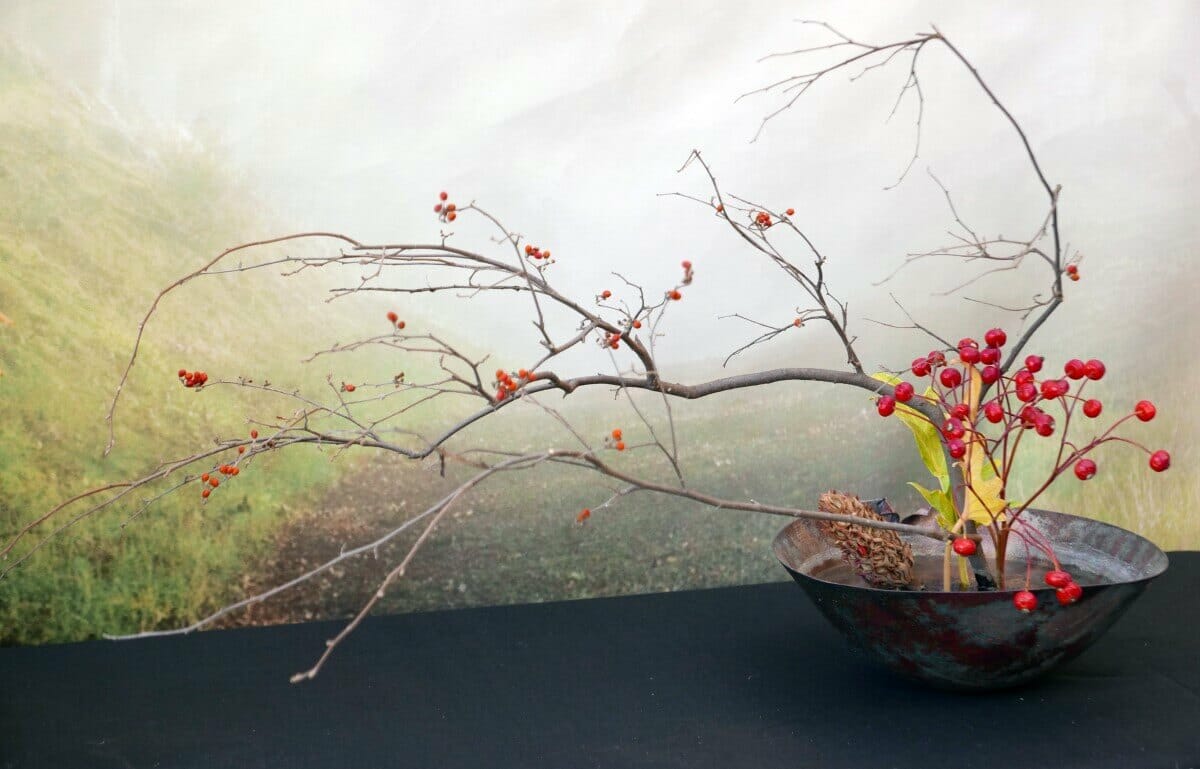
Shinto, Japan's native belief system, is often linked with ikebana's attention to nature and seasons. Shinto literally translates to “the way of the gods.”
The Buddhist Connection
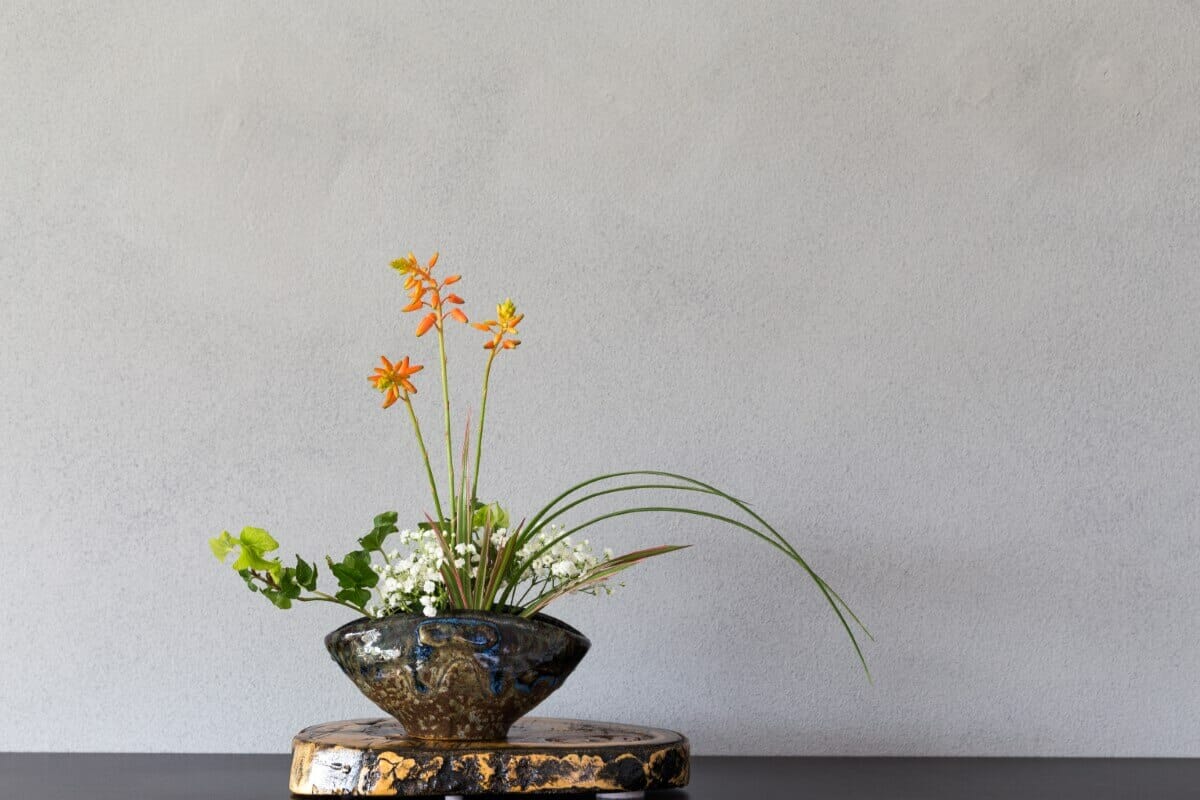
In Buddhist tradition, ikebana grew from flower offerings on the altar, and the arrangements on altars carried symbolism.
In Buddhist tradition, making an arrangement is a meditative practice. The work or journey is just as important as the final result or floral arrangement.
What Does Ikebana Look Like?
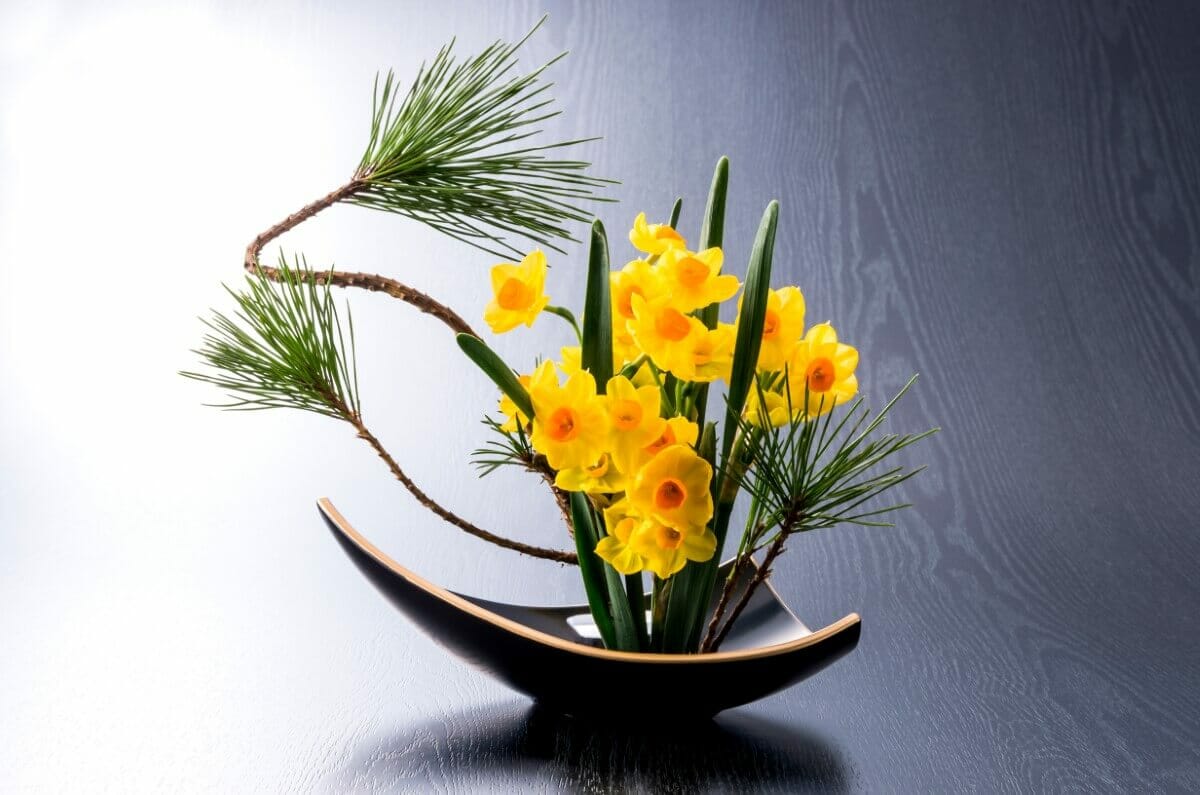
Ikebana is a true art form, like floral sculpture. Like any fine visual art, the design uses movement, form, lines, weight, color, space, shape, balance, and harmony to create an elegant and visually pleasing result. However, the sculptures are highly varied in appearance, size, shape, and color.
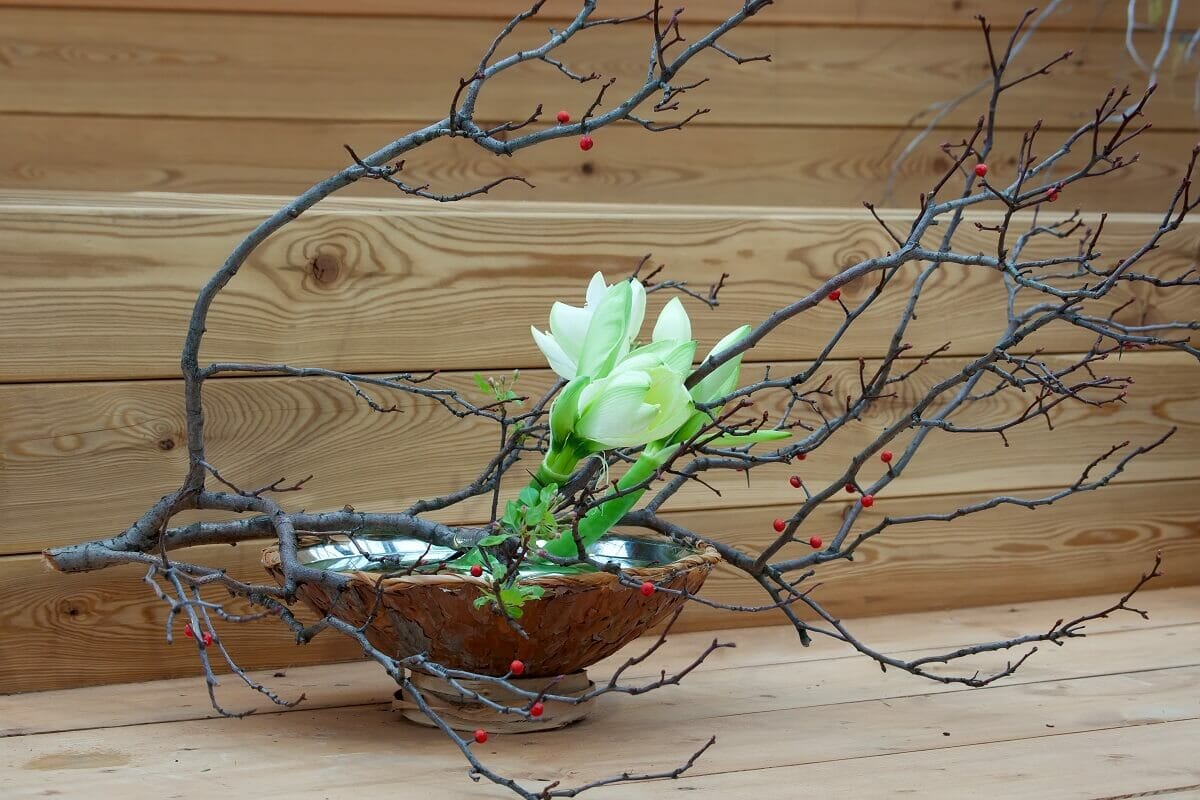
While some arrangements might consist of a single flower and bare branches, others can incorporate several elements, including flowers and branches and other natural objects like moss, stones, leaves, and even fruit.
The Basic Rules and Theory
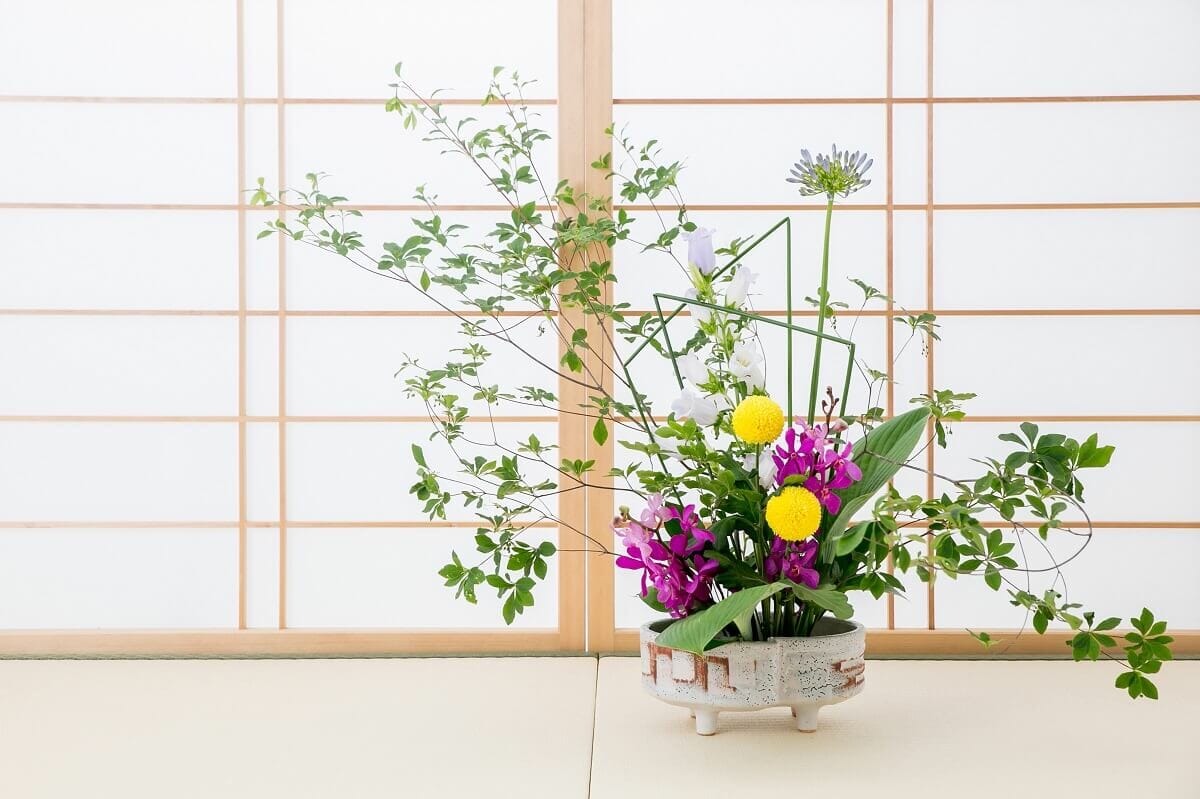
Ikebana incorporates several rules intended to enhance designs, infuse symbolic meaning, and preserve the life of the flowers on display.
Hanakotoba is Japan's language of flowers, a separate tradition from ikebana, and some arrangers choose Japanese flowers for their hanakotoba meanings. This practice assigns symbolic meanings to different flowers and to flower colors.
The seven principles below summarize what the art aims for.
- Silence – Ikebana is meant to bring peace through work in addition to concentration and the observation of nature.
- Minimalism – Ikebana designs should achieve a powerful impact using minimal materials.
- Shape and Line – Ikebana practitioners cultivate desirable shapes and lines in plants from the moment the seeds are sown until the branches or blossoms are ready to be cut and used in a design.
- Form – Although ikebana practitioners try to encourage certain shapes and lines, they must also realize that nature cannot be completely controlled. As a result, the ultimate form of a design is found in nature and must be accepted.
- Humanity – Although many ikebana designs attempt to capture the natural beauty of nature, ikebana is also about humanity. It can be used to depict human emotions, as well as nature.
- Culture and Aesthetics – Ikebana is firmly rooted in Japanese culture. As a result, ikebana designs should honor the cultural aesthetics and rich symbolism provided by this part of the world.
- Triangle Structure: Many arrangements are built on three main stems.
How Is a Basic Ikebana Arrangement Made?
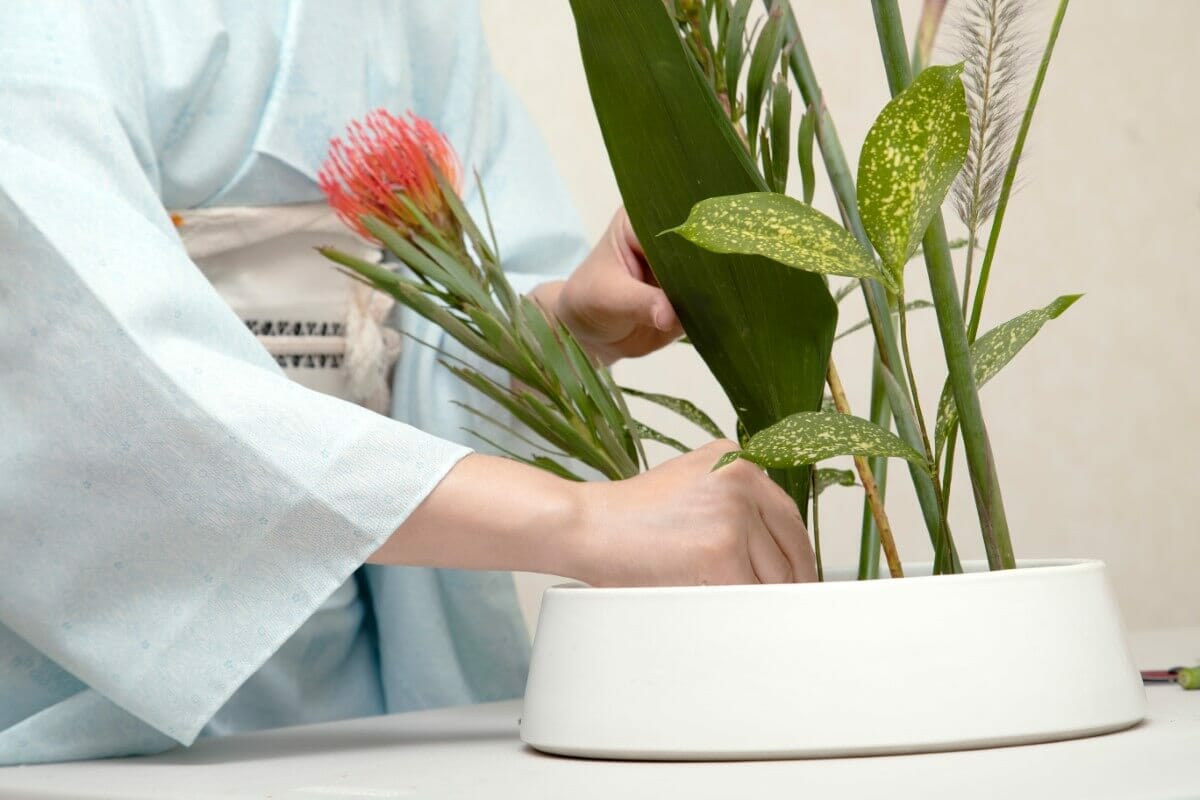
Professional ikebanists study for years to become masters in the art. However, ikebana is a practice, which means you can start practicing at any level and create designs inspired by it even without years and years of training.
Strive to follow the basic principles of the art while honoring nature, focusing on form, shape, and lines, and sticking with a minimalistic design.
Start by collecting natural objects that catch your eye and trigger certain emotions inside of you. If you see a branch that makes you feel happy, wistful, or playful, pick it up and continue your search for additional natural objects that spark similar emotions.
Once you have gathered a collection of objects, you’ll likely need to curate them by eliminating some of your findings from what you will include in your final design – remember, minimalism is key. As you curate your collection, keep the stems that suit a minimal design.
Finally, you’ll begin to compose your design.
Pour water into a shallow vessel and set a kenzan inside. The stems then go on its pins.
Choose your three main stems. Stem lengths and angles differ by school, so follow your teacher's or school's textbook. Press each stem firmly onto the kenzan pins, then add supporting stems, grasses or foliage.
Ikenobo and the Traditional Styles
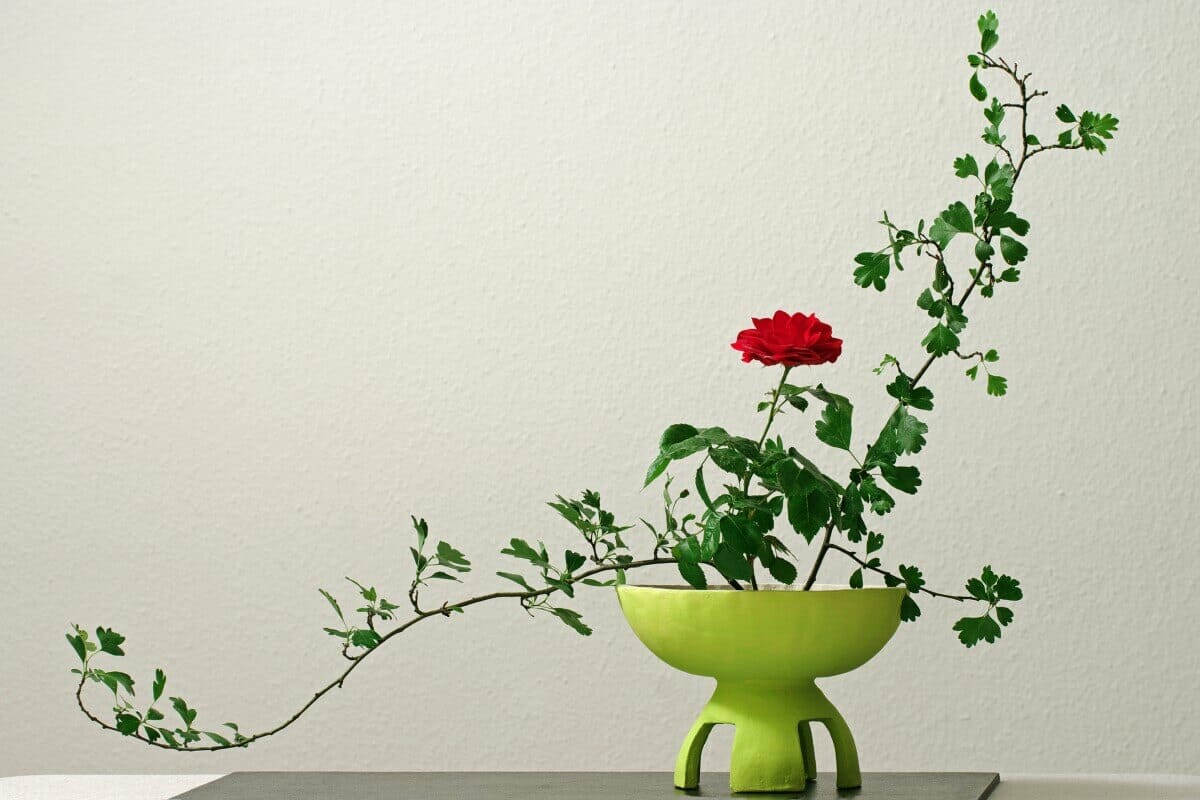
Ikenobo is said to be the origin of ikebana, and it was first recorded in 1462, when Senkei Ikenobo, a priest at the Rokkakudo temple, was invited by a warrior to arrange flowers. Rikka, the oldest style of ikebana, is built on seven or nine yakueda (main parts) and was named after a seven-part style drawn in the Sen'ei kadensho of 1545.
Shoka is a style formalized in the late Edo period. Shoka consists of three yakueda called shin, soe and tai, likened to heaven, earth and humanity.
Nageirebana is a lighter style of arrangement for small rooms and tea rooms, and the Ikenobo school later formalized it as shoka.
Ohara, Sogetsu and the Modern Schools
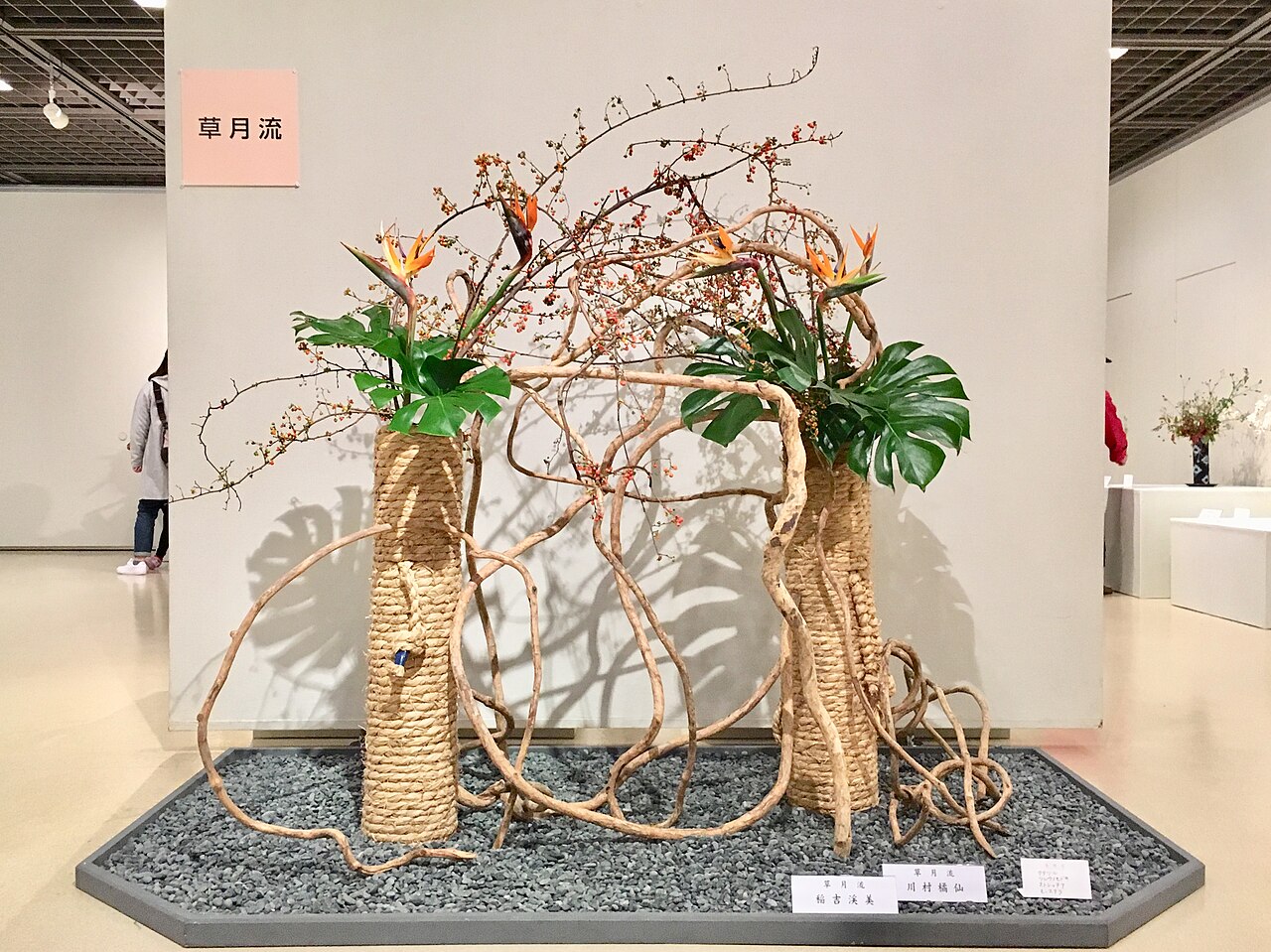
In the Meiji period, nageire and moribana arose as ikebana that responded to the westernization of lifestyles. The Ohara school was founded in 1895 by Unshin Ohara, who devised the moribana style. Moribana is arranged in a shallow, flat vessel called a suiban.
After World War II, styles related to nageire and moribana began to be called jiyuka (free style). The Sogetsu school, founded in 1927 by Sofu Teshigahara, is built on free-form arranging with any material.
Which Ikebana School Should You Try?
The three main schools differ by style: Ikenobo for formal rikka and shoka, Ohara for moribana in a shallow bowl, Sogetsu for free-form work. Ikenobo and Sogetsu offer trial lessons for beginners.
| School | Founded | Style | Good for |
|---|---|---|---|
| Ikenobo (池坊) | First record 1462 | Formal forms: rikka, shoka (shin, soe, tai) and free style | The oldest formal tradition; trial lessons in Kyoto |
| Ohara (小原流) | 1895 | Moribana: a broad arrangement in a shallow, flat vessel on a kenzan | Arrangements in a shallow bowl; chapters in Japan and abroad |
| Sogetsu (草月流) | 1927 | Free-form, with any material, for Japanese or Western rooms | Free choice of material; trial lessons and tools to borrow |
How to Start: Tools and the Three Main Stems
A beginner needs only three tools: a kenzan (pin holder), a shallow vessel and sharp shears.
- Kenzan (pin holder): a heavy, needle-pointed weight that holds stems and branches in place.
- A shallow vessel (suiban): a flat container, used for moribana and sometimes shoka.
- Shears (hasami): sharp scissors for cutting stems and small branches.
- Three main stems: shin, soe and tai in Ikenobo; shin, soe and hikae in Sogetsu.
Choosing a Vessel
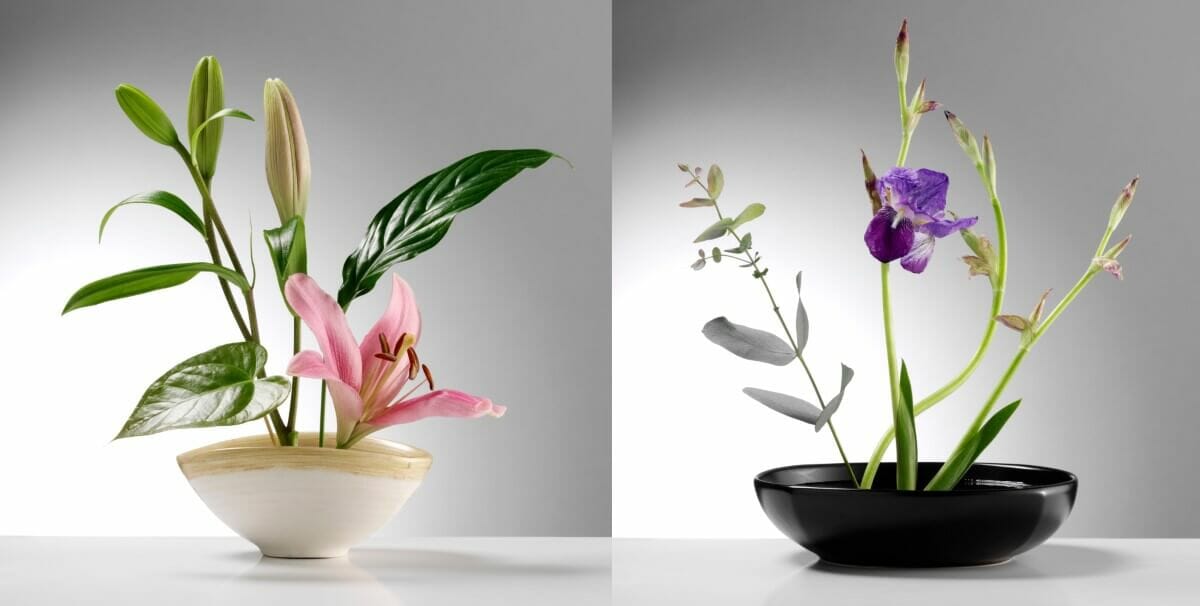

The vessel in which you display your flowers is an integral part of the overall design and should not simply be an afterthought. The vessel provides the foundation or ground from which the rest of your design can grow.
The shallow, flat suiban is the usual vessel for moribana.
Start Your Own Practice
Ikebana can start with a kenzan, a shallow vessel and a few stems, and a trial lesson at one of the schools above is the easiest first step.
For more on floral design, see our guides to floral design classes in NYC, color theory, floral design tools, posies and floral vases and containers.
For fresh stems to practice with, compare flower delivery services.
Questions and Answers
Where can you take an ikebana class?
You can take a trial lesson at Ikenobo's Rokkakudo Temple in Kyoto on Thursdays from 13:30 to 15:30, except national holidays, for 7,000 yen per person. Sogetsu welcomes visits and trial lessons by appointment at Sogetsu Kaikan in Akasaka, Minato-ku, Tokyo. Ohara has the Ohara Center plus 160 chapters in Japan and 57 chapters outside Japan.
Do you need your own tools for a first ikebana lesson?
No, you do not need your own tools for a first lesson. Ikenobo provides lesson vases, a pin frog and scissors, though they cannot be removed from the classroom. Sogetsu also lets you borrow all the items required for lessons, and suggests buying the tools you find easiest to use gradually.
Is ikebana the same as flower arranging?
No, ikebana is a specific Japanese art of flower arrangement, not just any flower arranging. The word means 'living flowers,' and the practice has a long history: Ikenobo school's earliest dated record is from 1462, and Sogetsu was created to give ikebana more freedom, open to anyone, any material, in Japanese or Western spaces, with the motto 'Ikebana. Life itself.'
Sources9 sources, linked in the text
Updates and CorrectionsOct 19, 2026 · 4 corrected, 1 removed
- Added: A comparison of the Ikenobo, Ohara and Sogetsu schools from their own sites, and a beginner's list of tools and the three main stems.
- Corrected: One unsourced figure (a zone, count, size or date) was corrected to a source or removed.
- Corrected: The page said Ikenobo was founded in the 15th century. Ikenobo's own history gives 1462 as its first dated record, not a founding date.
- Corrected: The pin holder is a kenzan, not a 'kenzen', and is a needle-pointed weight, not foam. Rikka, shoka and nageire are styles, not separate schools.
- Removed: Unsourced rules on red flowers and odd numbers, the kakeizu, a list of masters, the popular culture section, and gifting prices.
- Corrected: One photo that showed a different plant was replaced.
Save and Share
Reader Comments
Have a question? Ask it here.