
Flower Types
30 Caribbean Flowers, Native and Introduced


Contributing Editor
Credentials
- BA in Professional Writing TheCollector
- Worked at Dover Museum and the Canterbury Archaeological Trust TheCollector
Writing for Petal Republic since 2022 · 92 articles
Expertise
Flowers, Native plants, Wildlife gardening
Published In
TheCollector
The Caribbean flower you picture is often a plant from somewhere else entirely.
In Short
Caribbean flowers: only a handful of our 30, like yellow elder, are natives; many came from Asia, Africa and South America. Sort our 30 by native or introduced, color, sun and pets, and keep lantana, oleander, desert rose and Barbados lily from cats and dogs.
- Check Florida's invasive plant list before planting lantana or orchid tree, since both are listed as invasive there.
- Buy by species, not just by common name: canna, columnea, frangipani, heliconia, mandevilla, passion flower and prickly pear include both native and introduced Caribbean species.
More Takeaways
- Check your hardiness zone first: about half of these Caribbean flowers need zone 10 or warmer and won't survive a frost.
Find Your Caribbean Flower
Your winters, the sunlight you can give, and whether you have pets determine which of these flowers will thrive for you.
All 30 Caribbean flowers, in page order. Answer any question to sort them.
Nerium oleander
Mediterranean, North Africa, southwest to south-central Asia
Toxic to cats and dogs
Ipomoea sagittata
Coasts of the Caribbean, Gulf, and the Mediterranean
Toxic to cats and dogs
Invasive: Category I on Florida's 2023 invasive plant list. “Not on the ASPCA lists” is not the same as safe.
30 Stunning Types of Caribbean Flowers
1. Allamanda
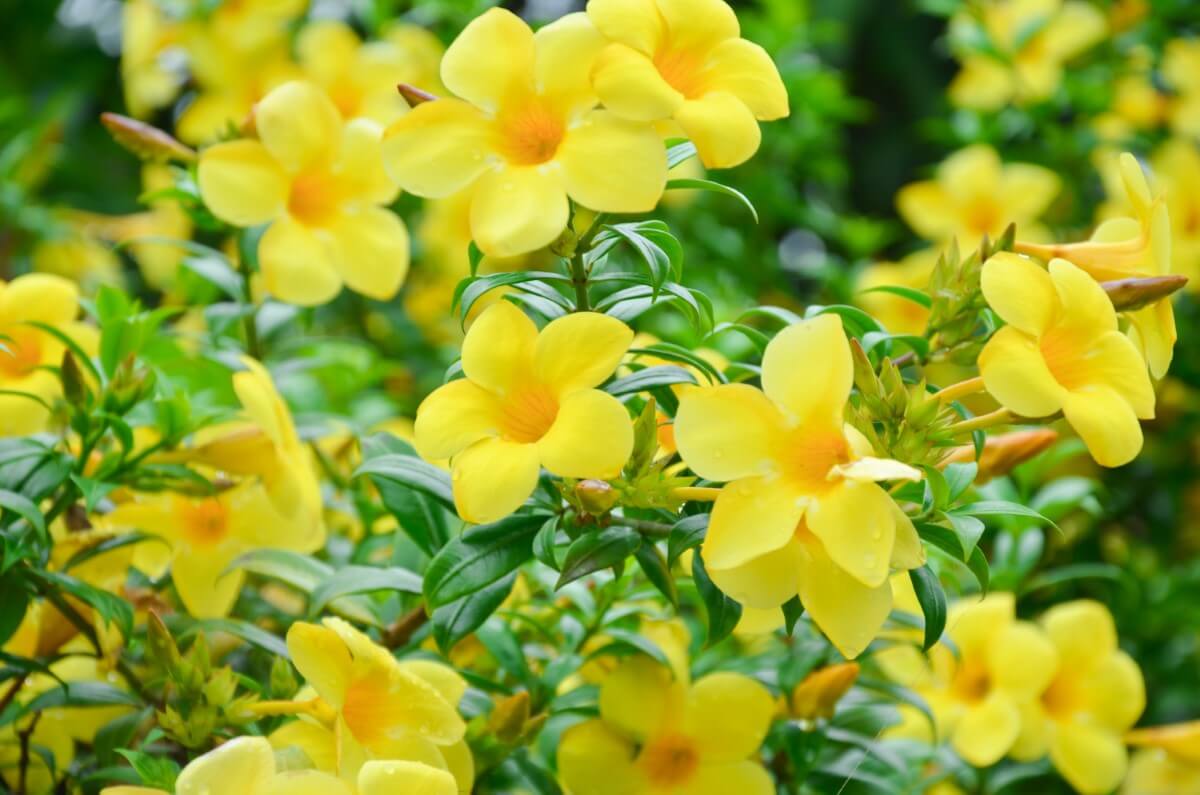
Native to northern and eastern South America, Allamanda cathartica (commonly called allamanda, yellow allamanda, or golden trumpet) is a member of the Apocynaceae (dogbane) plant family and is recorded as introduced in the Caribbean, in Puerto Rico and Trinidad and Tobago.
It is an evergreen climbing shrub whose stems twine to 19 feet or more and contain milky sap. It produces lovely, golden-yellow, single or double blossoms shaped like large trumpet horns. The flowers emit a strong fragrance that is slightly sweet and freshly floral.
Scientific Name: Allamanda cathartica
- Sunlight Requirements
- Full sun
- Flowering Season
- Summer through fall
- Flowering Colors
- Yellow or golden
- Toxicity
- Poisonous if eaten, low severity
2. Anthurium
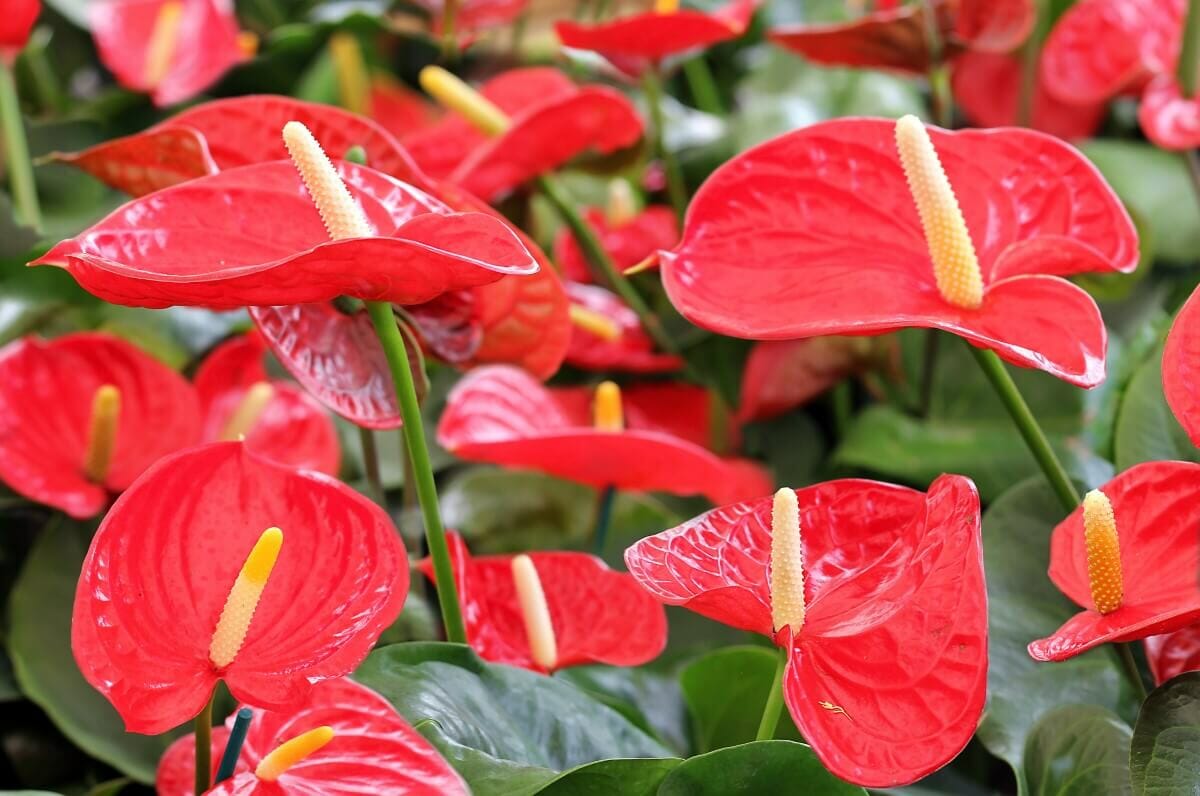
Anthurium andraeanum belongs to the Araceae (arum) plant family and is commonly referred to as anthurium, flamingo flower, painter’s palette, laceleaf, and oilcloth flower. Native to Colombia and Ecuador, it is introduced in Trinidad and Tobago, the Venezuelan Antilles, and the Windward Islands.
The plants produce glossy, green, spade-shaped foliage at the ends of slender stems. The inflorescences consist of spade-shaped, brightly colored flower bracts with white or yellow, finger-shaped spadices protruding from the bases.
Anthuriums are popularly grown indoors as houseplants. However, it’s essential to be careful with pets and small children around them, as anthuriums are toxic to cats and dogs and can cause oral irritation and swelling, drooling, and vomiting.
For more, see our in-depth guide to flowers that are toxic to cats, dogs and other pets.
Scientific Name: Anthurium andraeanum
- Sunlight Requirements
- Bright, indirect sunlight
- Growing Zones
- USDA Hardiness Zones 11-12
- Flowering Season
- Year-round
- Flowering Colors
- Red, pink, rose, and white
- Toxicity
- Toxic to cats and dogs (ASPCA, as flamingo flower); low-severity poison
3. Bananaquit Flower (Erythrina herbacea)
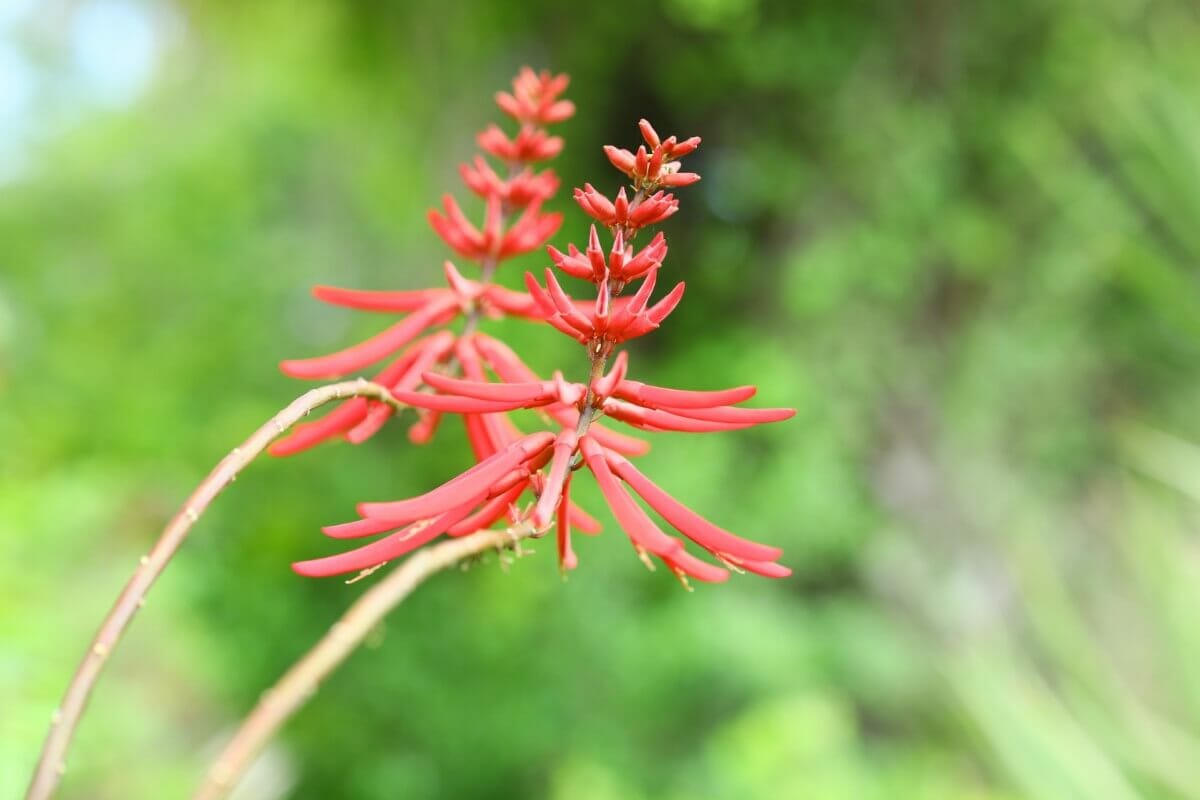
Erythrina herbacea is a flowering shrub or small tree belonging to the Fabaceae (pea) plant family, native to the southeastern United States and northeastern Mexico. It has no Caribbean range, so it is grown in the Caribbean only as a garden plant.
Its common names include the Mamou plant, red cardinal, cardinal spear, coral bean, Cherokee bean, and the bananaquit flower because bananaquit birds sometimes feed on the nectar produced by the plant’s clusters of bright-red tubular blossoms. The flowers also attract hummingbirds.
Various parts of the plant also have a history of medicinal uses by several Native American Tribes. These uses included relief for stomach pains and other digestive troubles. In Mexico, the seeds and bark are used respectively to make rat and fish poisons.
Scientific Name: Erythrina herbacea
- Sunlight Requirements
- Full to partial sun
- Growing Zones
- USDA Hardiness Zones 6-9
- Flowering Season
- Spring and fall
- Flowering Colors
- Cardinal red
- Toxicity
- Poisonous if eaten, low severity
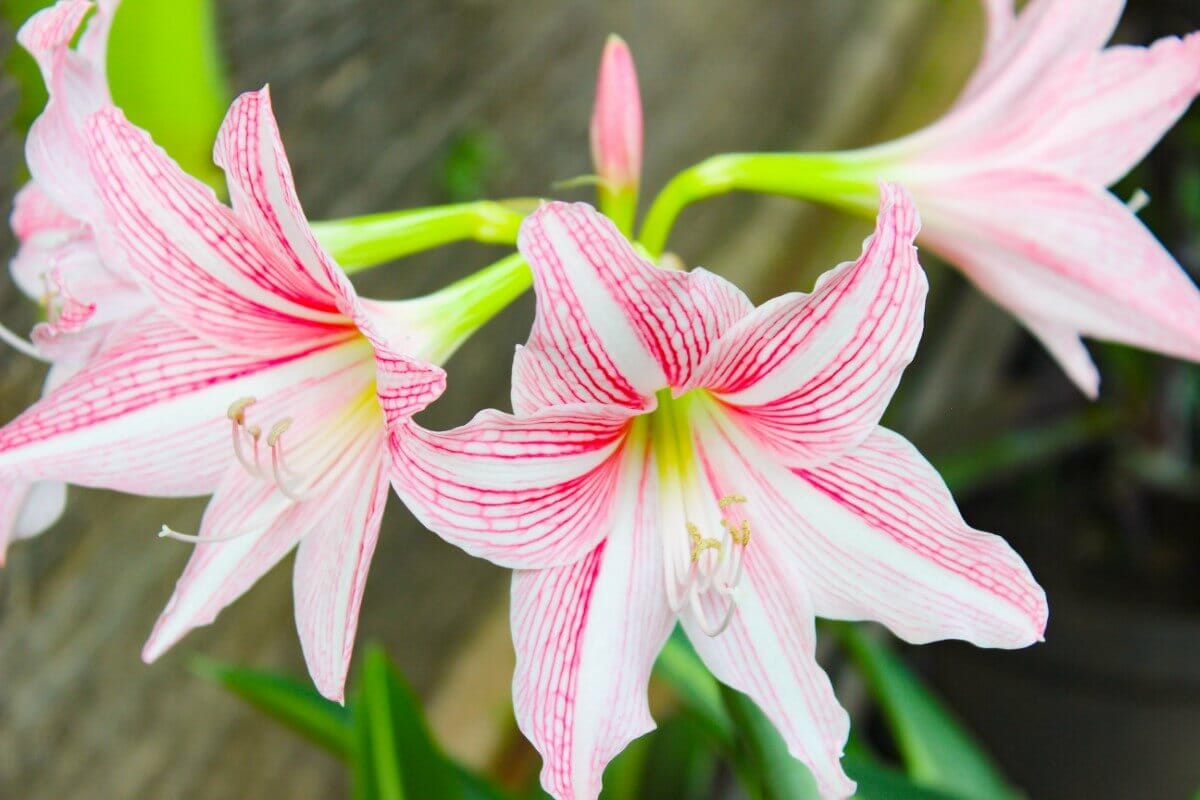
4. Barbados Lily
Hippeastrum striatum (commonly called Barbados lily or striped Barbados lily) is a member of the Amaryllidaceae (amaryllis) plant family, native to eastern Brazil. It has no Caribbean range, so it is a South American plant grown in Caribbean gardens. These bulbous, herbaceous plants produce rosettes of long, strap-like foliage and produce terminal clusters of two to four flower blossoms.
These Caribbean flowers resemble lilies – hence the plant’s common name – in that they are star-shaped with slender, back-turned petals in bright colors with prominent, central stamens.
Scientific Name: Hippeastrum striatum
- Sunlight Requirements
- Full sun to partial shade
- Growing Zones
- USDA Hardiness Zones 7-10
- Flowering Season
- Spring
- Flowering Colors
- Red, pink, salmon, white, and bicolor combinations
- Toxicity
- Toxic to cats and dogs (ASPCA, for the genus)
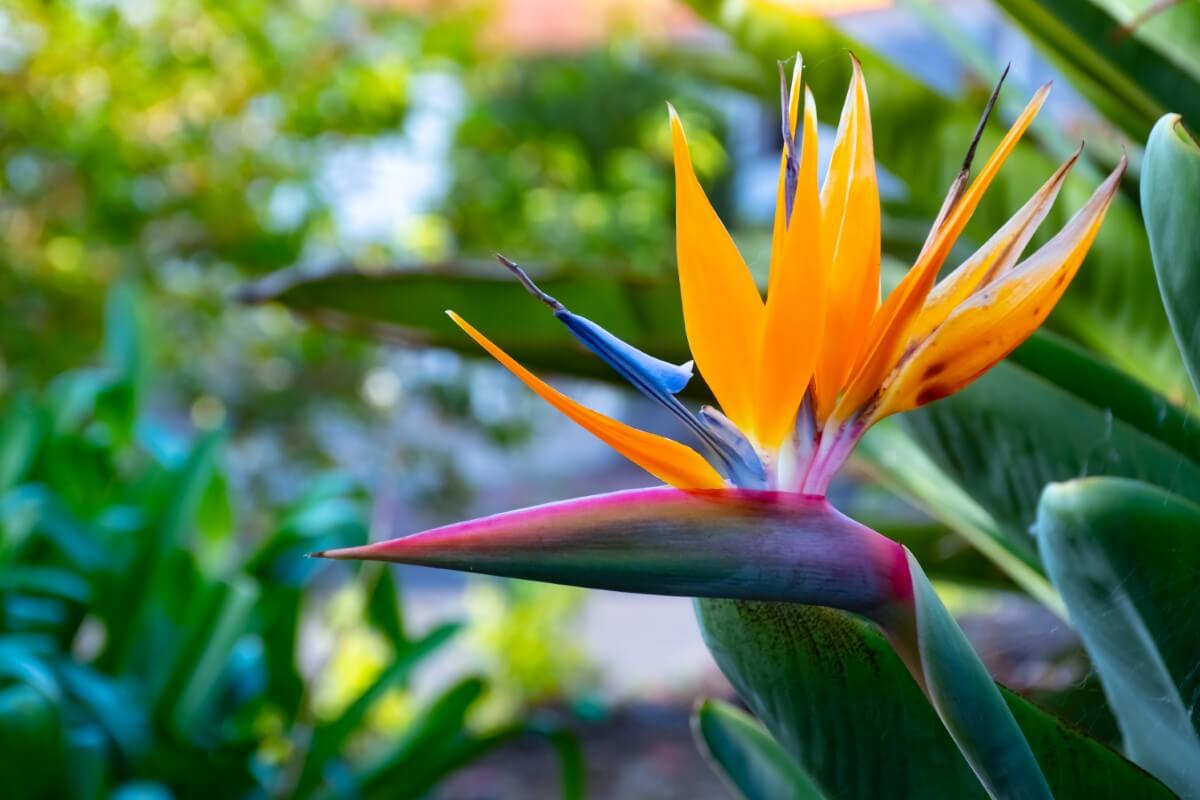
5. Bird of Paradise
Commonly called the crane flower or bird of paradise, Strelitzia reginae is an evergreen perennial belonging to the Strelitziaceae plant family, native to South Africa and introduced in warm gardens elsewhere, including the Caribbean. Birds of paradise are large plants that grow to be over six feet tall. They produce fan-shaped foliage and impressive flowers atop stalks that reach above the leaves.
When fully open, the multicolored flowers resemble the plumage and beak of an exotic bird with its wings outstretched in flight.
Scientific Name: Strelitzia reginae
- Sunlight Requirements
- Full sun to partial shade
- Growing Zones
- USDA Growing Zones 10-12
- Flowering Season
- Late winter through spring
- Flowering Colors
- Combination of tangerine, midnight blue, red, and green
- Toxicity
- Toxic to cats and dogs (ASPCA); low-severity poison
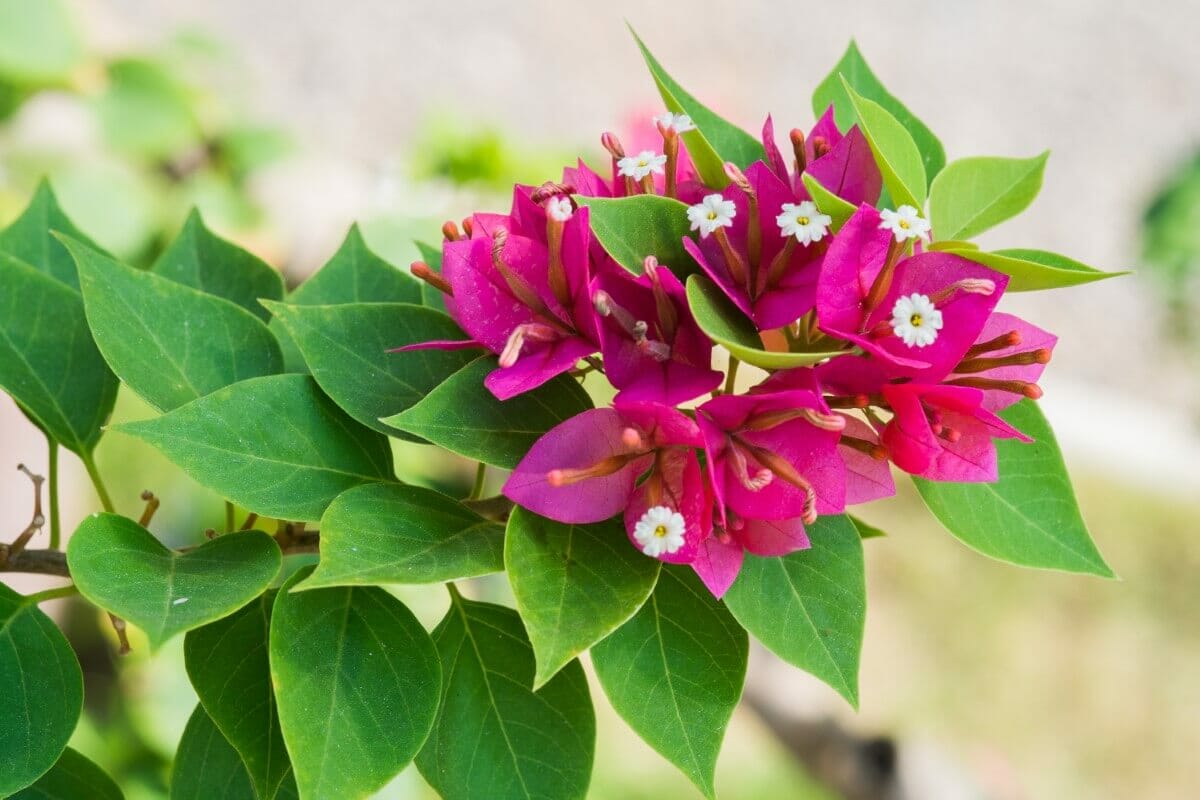
6. Bougainvillea
The Bougainvillea genus contains 18 accepted species of flowering vines, bushes, and trees belonging to the Nyctaginaceae (four-o-clock) plant family. They are native to South America, and none grows wild on the islands, where three are introduced.
The plants’ branches are covered with spiky thorns that allow them to easily climb over other plants and the sides of walls and fences. They produce attractive evergreen foliage and brightly colored flower bracts throughout their flowering season.
The bracts completely cover the bougainvillea, transforming them into a wash of color. As a result, these Caribbean plants are famous for planting along walls, fences, and hedgerows because they make striking privacy screens.
Scientific Name: Bougainvillea spp.
- Sunlight Requirements
- Full sun
- Growing Zones
- USDA Hardiness Zones 9-11
- Flowering Colors
- Magenta, pink, purple, red, orange, yellow, and white
- Flowering Season
- Fall to mid-spring
- Toxicity
- Not on the ASPCA’s cat and dog lists
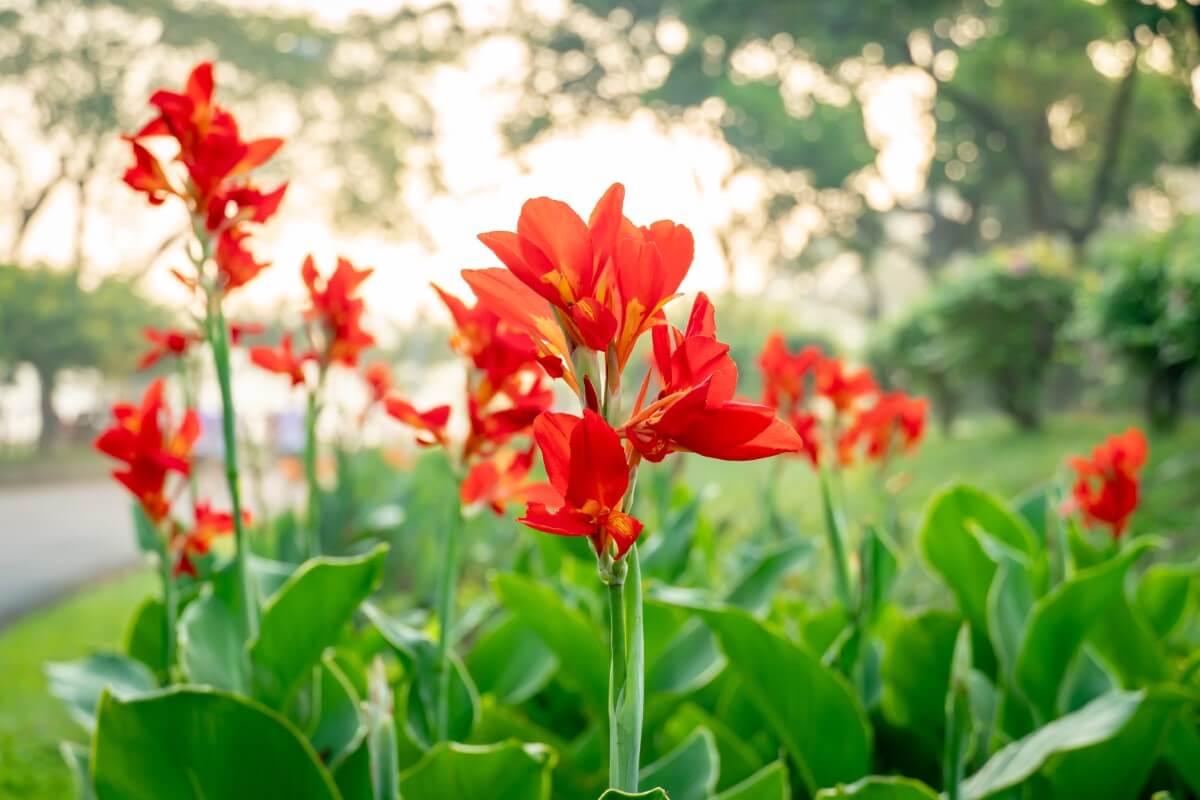
7. Canna Lily
Native to the Gulf Coast of the United States, Mexico, Central America, and South America, the Canna genus contains 15 accepted flowering plants commonly called canna lilies, with some Caribbean natives such as Canna indica, and belongs to the Cannaceae family, so the plants are not true lilies. Despite their common name, the plants are actually members of the Cannaceae plant family and are not true lilies.
Canna lilies are produced from rhizomes and spread easily in a garden. They produce broad, attractive foliage that can be green and sometimes have reddish markings. The most noticeable portions of the flowers that look like petals are actually the reproductive parts of the flowerheads with extravagant pistils and stamens.
Scientific Name: Canna spp.
- Sunlight Requirements
- Full sun
- Growing Zones
- USDA Hardiness Zones 8-11
- Flowering Season
- Summer
- Flowering Colors
- Red, pink, orange, yellow, and combinations
- Toxicity
- Non-toxic to cats and dogs (ASPCA, for the genus)
8. Caribbean Trumpet Tree
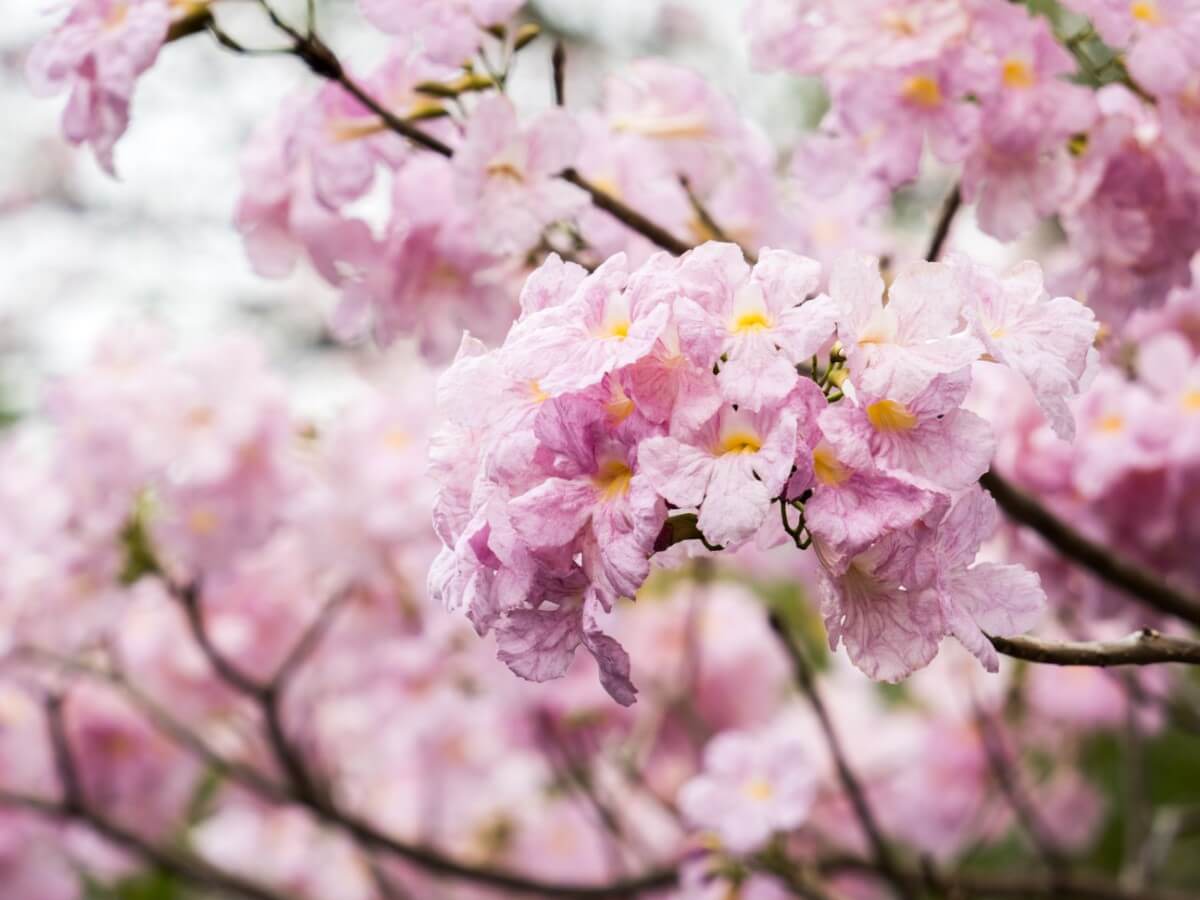
The Caribbean trumpet tree, Tabebuia heterophylla , is a flowering deciduous tree native to the Caribbean islands, also known as pink manjack, whitewood, white cedar, or pink trumpet tree. It belongs to the Bignoniaceae (bigonia) plant family.
They produce two to three-inch flowers in profusion. The flowers are pink and tubular. The trees are small to medium in size and grow moderately fast. They are popularly grown along streets for sidewalk shade and are also commonly grown for their lumber. Florida lists the tree, as pink tabebuia, in Category II in south Florida.
Scientific Name: Tabebuia heterophylla
- Sunlight Requirements
- Full sun
- Growing Zones
- USDA Hardiness Zones 10a-11
- Flowering Season
- Spring through summer
- Flowering Colors
- Pink with golden-yellow centers
- Toxicity
- Not on the ASPCA’s cat and dog lists
9. Columnea
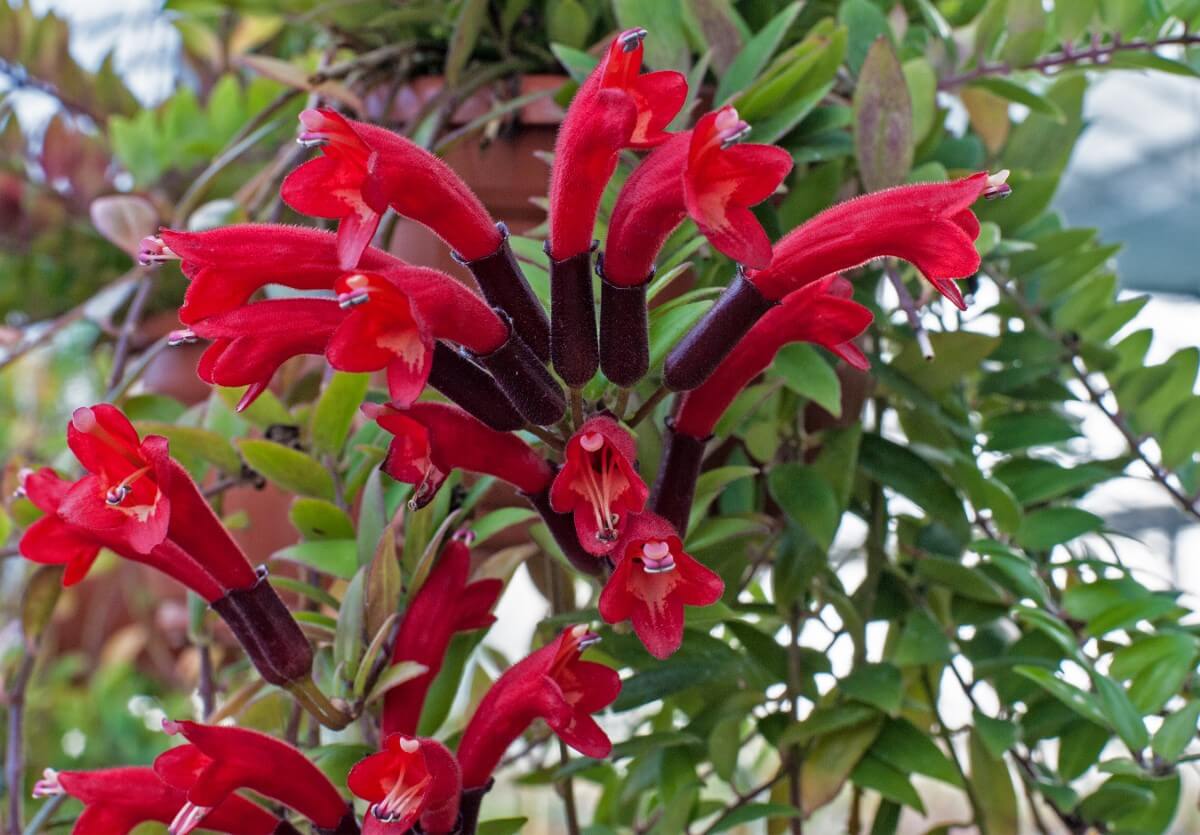
A member of the Gesneriaceae (gesneriad) plant family, the Columnea genus contains 228 accepted species of flowering, epiphytic shrubs and herbs that grow on the sides of trees in their tropical habitat, 18 of them from the islands. Columnea plants are native to Mexico, Central America, northern South America, and the Caribbean islands.
The plants produce large, oddly shaped flowers that are usually tubular in bright shades of red, orange, and yellow. The tubular flowers of some species are shaped like fish, and these are often commonly referred to as flying goldfish plants. Others are typically referred to simply by their genus name.
Scientific Name: Columnea spp.
- Sunlight Requirements
- Bright, indirect light
- Flowering Season
- Spring and summer
- Flowering Colors
- Red, orange, and yellow
- Toxicity
- Not on the ASPCA’s cat and dog lists
10. Coral Bean (Erythrina fusca)
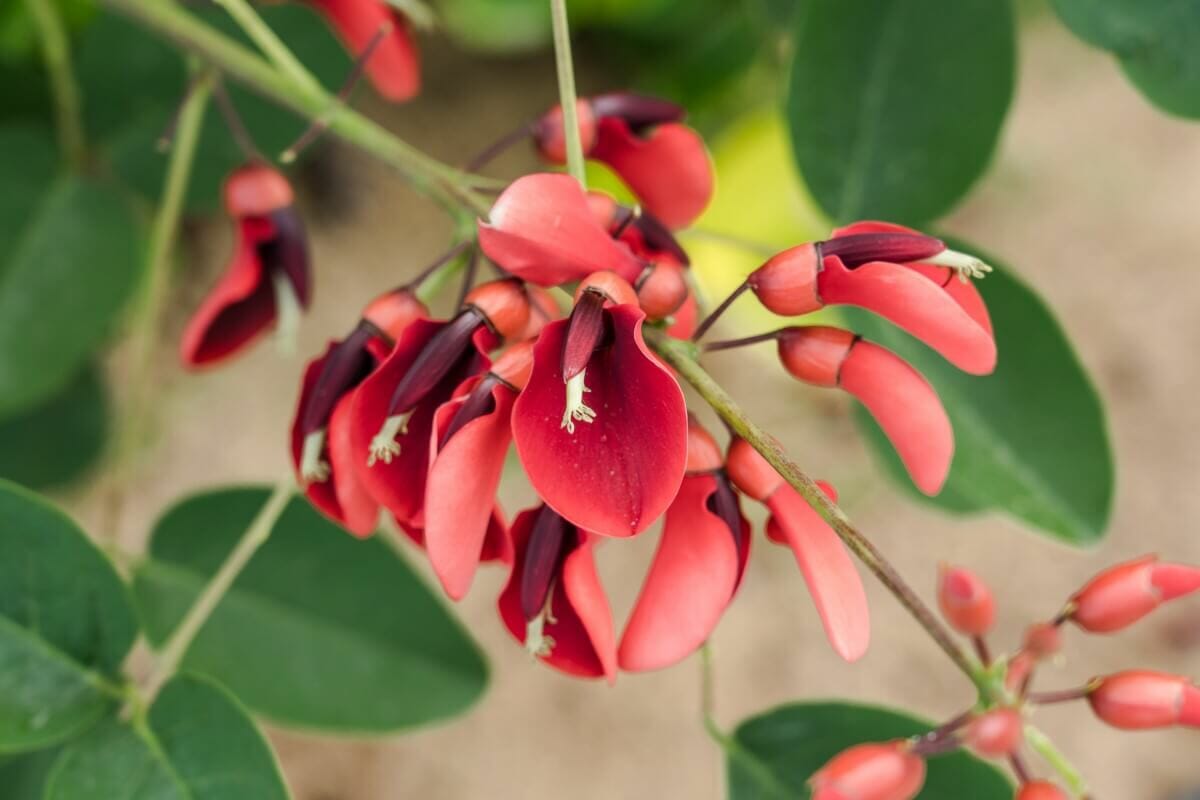
Erythrina fusca is a flowering tree in the Fabaceae (legume) plant family, native to the Caribbean, South America, Central America, and parts of Australasia. This tree is the only species of its genus to have a native distribution in both the New and Old World. It produces large, pendulous clusters of fiery-colored flower blossoms and grows in wetlands, marshes, swamps, and along riverbanks. It has several common names, including coral bean, purple coraltree, bucayo, bois immortelle, gallito, and bucare.
Scientific Name: Erythrina fusca
- Sunlight Requirements
- Full sun to partial shade
- Growing Zones
- USDA Hardiness Zones 10-12
- Flowering Season
- Winter through spring
- Flowering Colors
- Orange and red
- Toxicity
- Not on the ASPCA’s cat and dog lists
11. Coralita
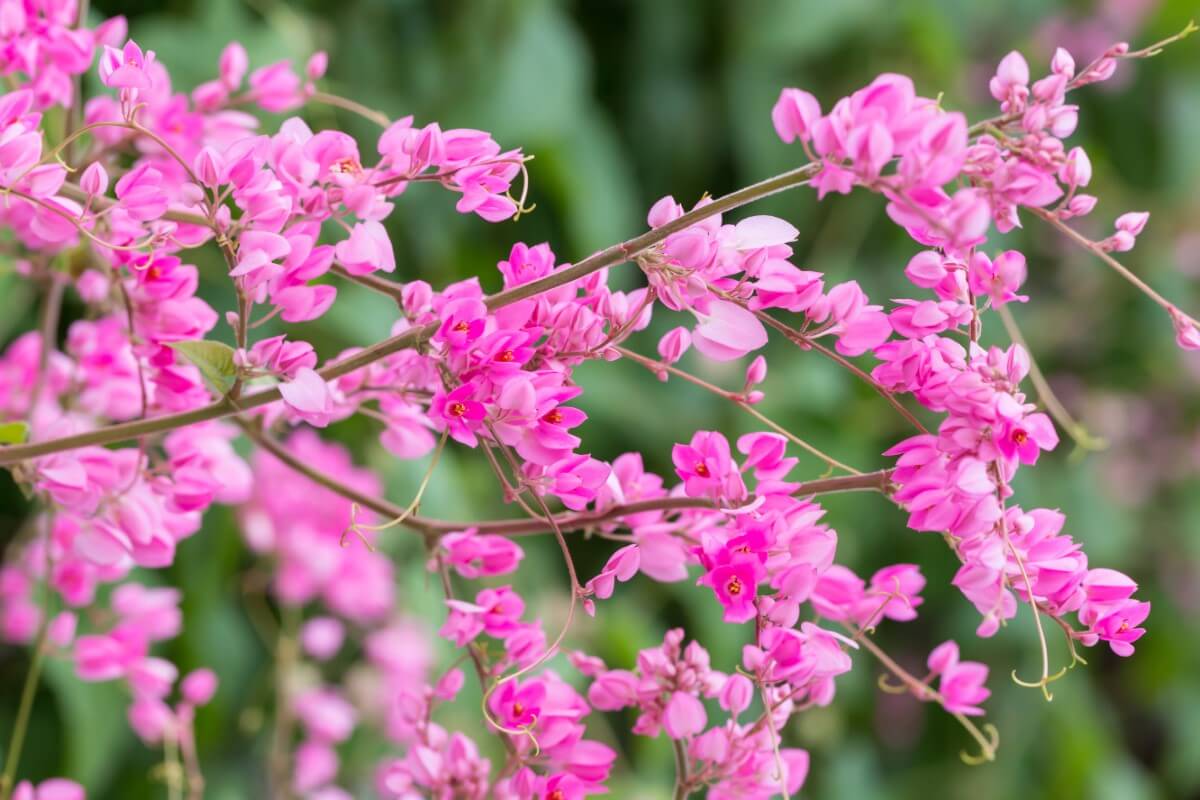
A member of the Polygonaceae (buckwheat) plant family, Antigonon leptopus is a flowering vine prized for its racemes of ornamental, pink, heart-shaped blossoms and its edible seeds and tubers.
It has numerous common names, including coralita, queen’s wreath, Mexican creeper, hearts on a chain, bride’s tears, chain of love, queen’s jewels, mountain rose, coral vine, and many more in different languages.
These Caribbean flowers are native to Mexico and Central America and have been introduced to much of the Caribbean, Gulf Coast, South America, and other tropical regions of the world. Coral vine is listed as a Category II invasive plant in Florida.
Scientific Name: Antigonon leptopus
- Sunlight Requirements
- Full sun
- Growing Zones
- USDA Hardiness Zones 8-11
- Flowering Season
- Year-round
- Flowering Colors
- Coral pink
- Toxicity
- Not on the ASPCA’s cat and dog lists
12. Desert Rose
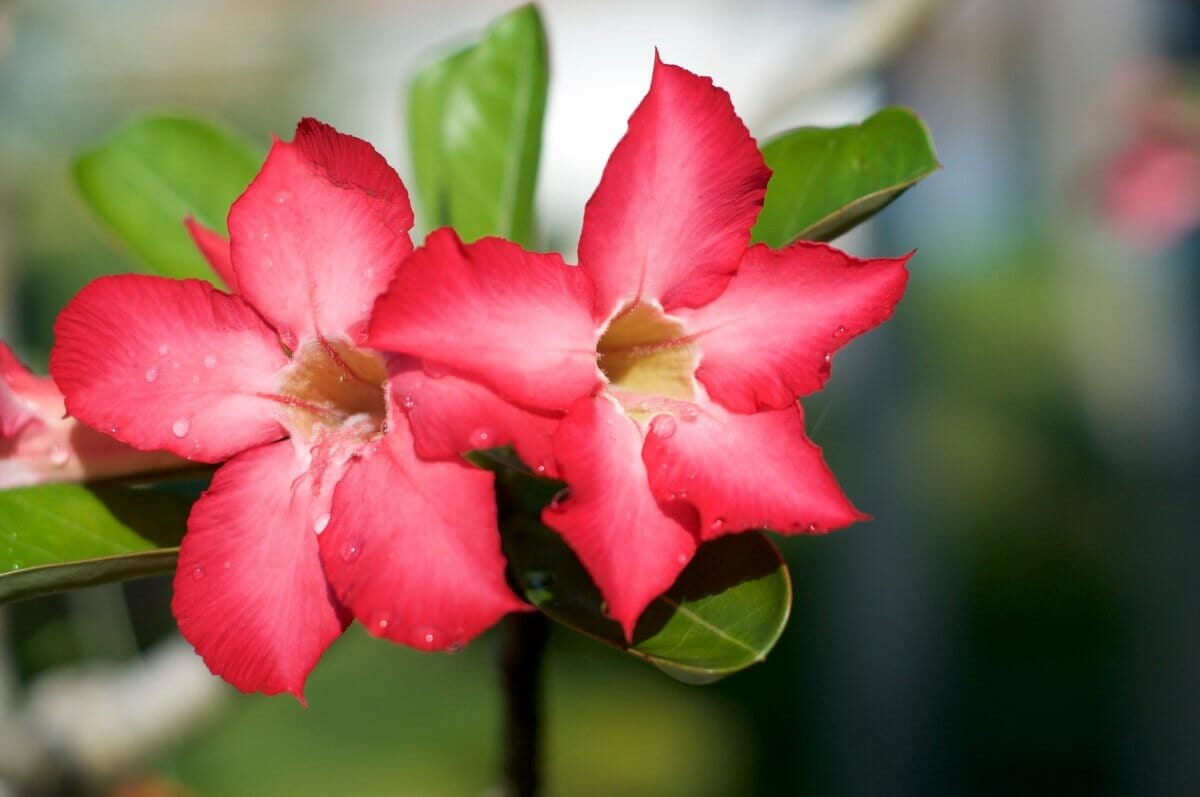
Adenium obesum is native to the Arabian Peninsula and the Sahel region of Africa just south of the Sahara Desert. It is widely grown as an ornamental in warm regions, including the Caribbean, but it has no Caribbean range, native or introduced.
Commonly called the desert rose, it is a succulent shrub with a thick, trunk-like base. It is usually evergreen but can lose its leaves during severe drought. The leaves are arranged spirally around branches.
These Caribbean plants produce five-lobed, trumpet-shaped flowers in several shades of red, pink, purple, and white. Desert rose sap is used as a poison on arrows in hunting in Africa.
Scientific Name: Adenium obesum
- Sunlight Requirements
- Full sun
- Growing Zones
- USDA Hardiness Zones 11-12
- Flowering Season
- Spring and fall
- Flowering Colors
- Red, pink, purple, and white
- Toxicity
- Toxic to cats and dogs (ASPCA); low-severity poison
13. Flamboyant Tree
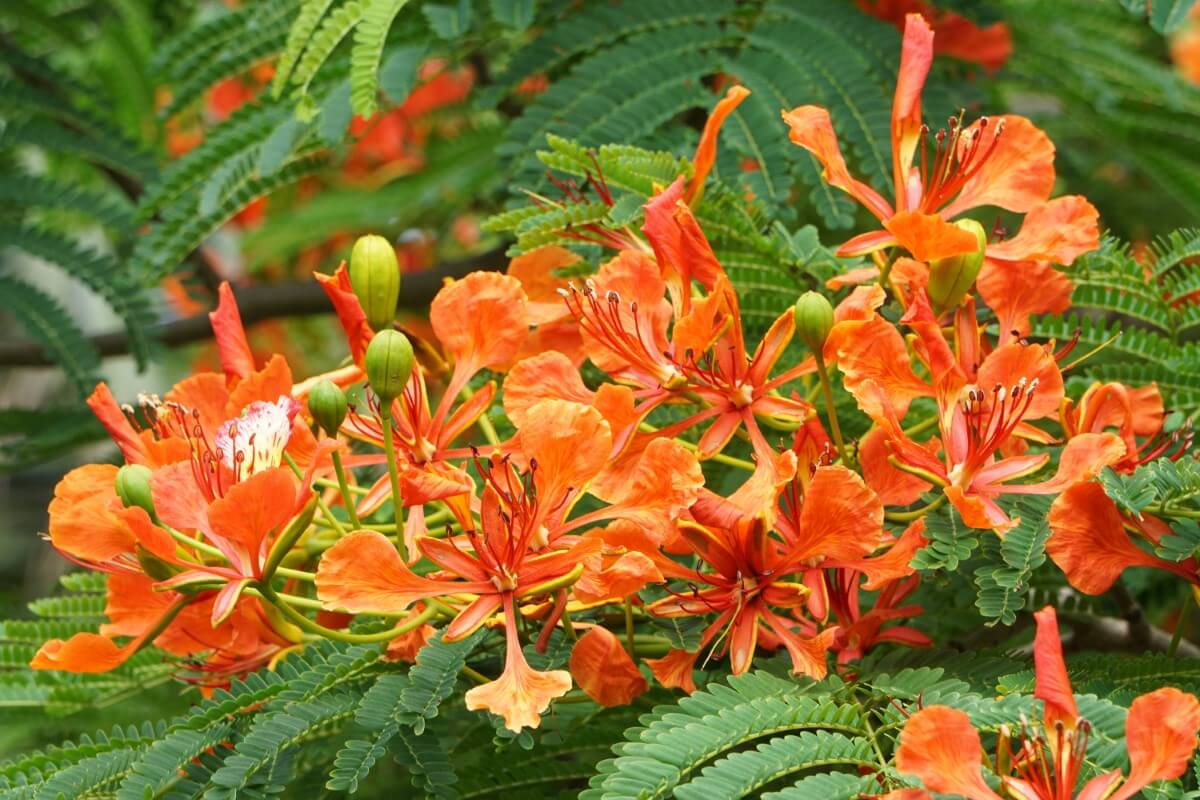
Delonix regia , native to Madagascar and introduced in many Caribbean islands, is a species of flowering deciduous tree belonging to the Fabaceae (legume) plant family. In south Florida, it carries a caution status, to be managed to prevent escape.
The trees blossom abundantly with scarlet-red or orange-red flowers that can be spotted with yellow or white. The flowers have five oar-shaped petals, each about three inches long.
Common names for the tree include flamboyant tree, flame tree, flame of the forest, and phoenix flower.
Scientific Name: Delonix regia
- Sunlight Requirements
- Full sun
- Growing Zones
- USDA Hardiness Zones 10b-11
- Flowering Season
- Spring through summer
- Flowering Colors
- Red and orange
- Toxicity
- Not on the ASPCA’s cat and dog lists
14. Frangipani
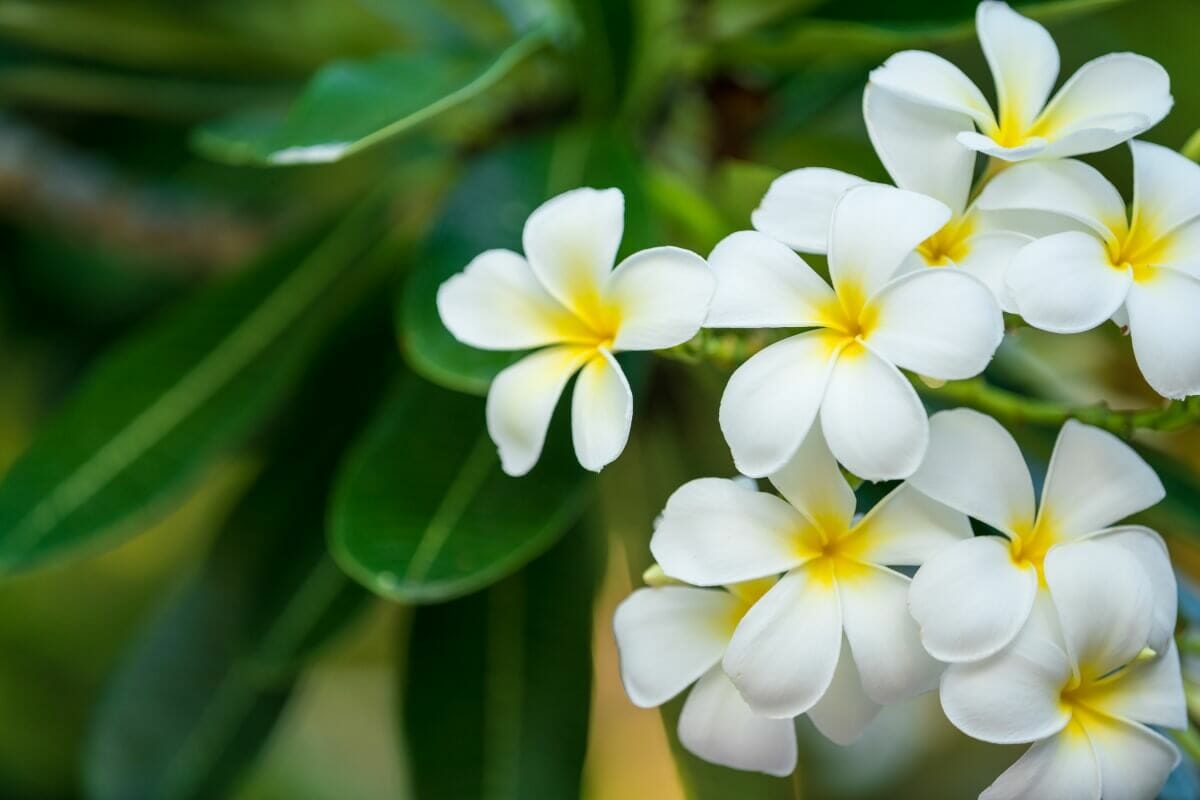
The Plumeria genus contains 19 accepted species of succulent flowering shrubs and small trees in the Apocynaceae (dogbane) family. They are native to Mexico, Central America, northern South America, and areas of the Caribbean, with 18 of the 19 growing wild on the islands while the common garden frangipani, Plumeria rubra, is native to Mexico and Central America and only introduced in the Caribbean.
Plumeria flowers have tubular corollas and five triangle-shaped petals arranged in a pinwheel-like formation. These Caribbean flowers are highly regarded for their powerful fragrance at night. The scent is flowery and slightly citrusy, like jasmine and gardenia blossoms.
Scientific Name: Plumeria spp.
- Sunlight Requirements
- Full sun
- Growing Zones
- USDA Hardiness Zones 10b-11
- Flowering Season
- Spring to fall
- Flowering Colors
- Pure white, yellow, orange, pink, red, and combinations
- Toxicity
- Not on the ASPCA’s cat and dog lists
15. Ghost Orchid
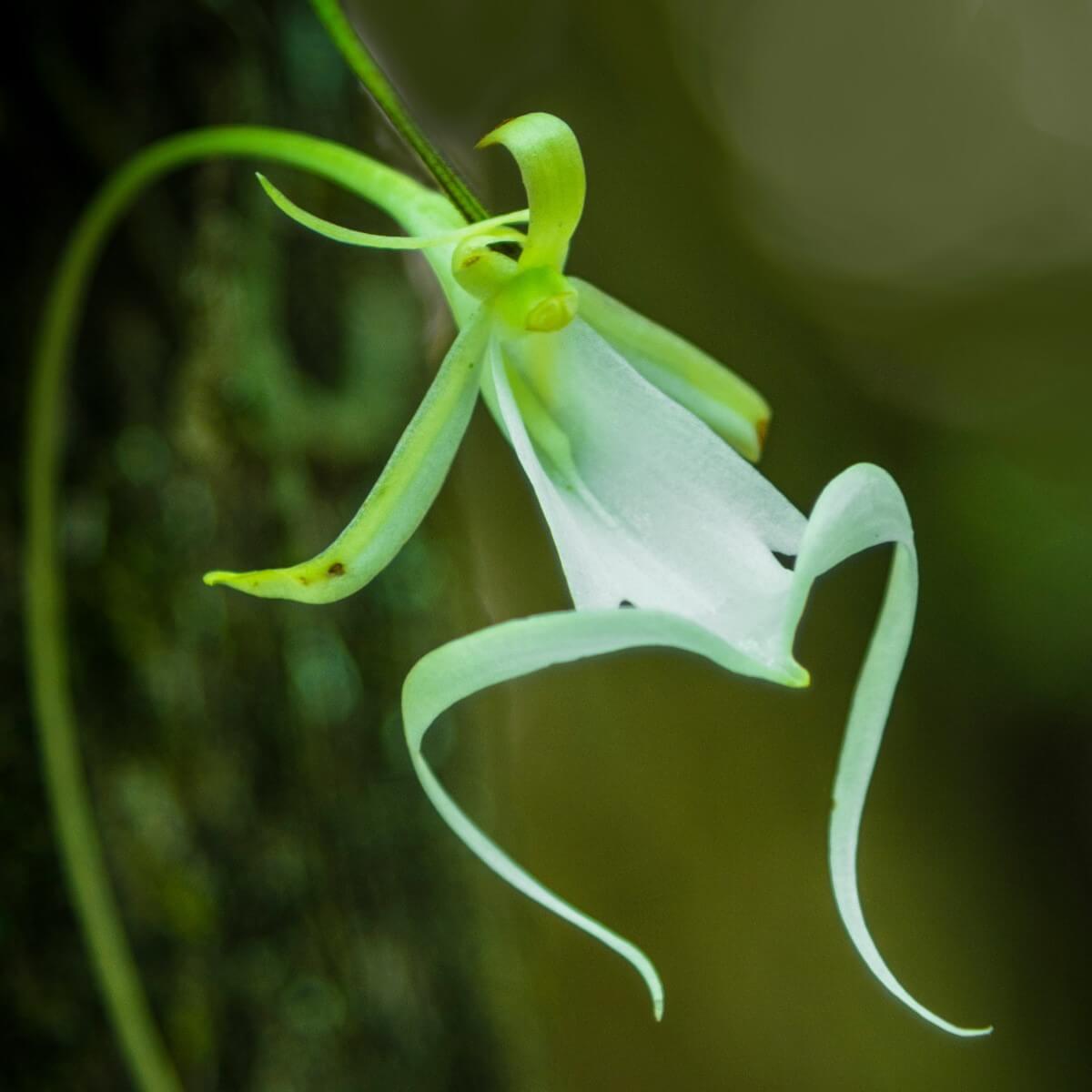
Native to the Bahamas, Cuba, and Florida, Dendrophylax lindenii is an epiphytic perennial belonging to the Orchidaceae (orchid) plant family. Its common names include the ghost orchid, leafless ghost orchid, white frog orchid, and palm polly.
The orchid’s person-shaped flower is primarily white with a corona of light-green petals spanning above its “head.” These flowers are endangered and difficult to cultivate by hand. The ghost orchid is listed as endangered in Florida, where it grows in only a few southern counties.
Scientific Name: Dendrophylax lindenii
- Sunlight Requirements
- Bright, indirect sunlight
- Flowering Season
- Spring through summer
- Flowering Colors
- White and light green
- Toxicity
- Non-toxic to cats and dogs
16. Ginger Lily
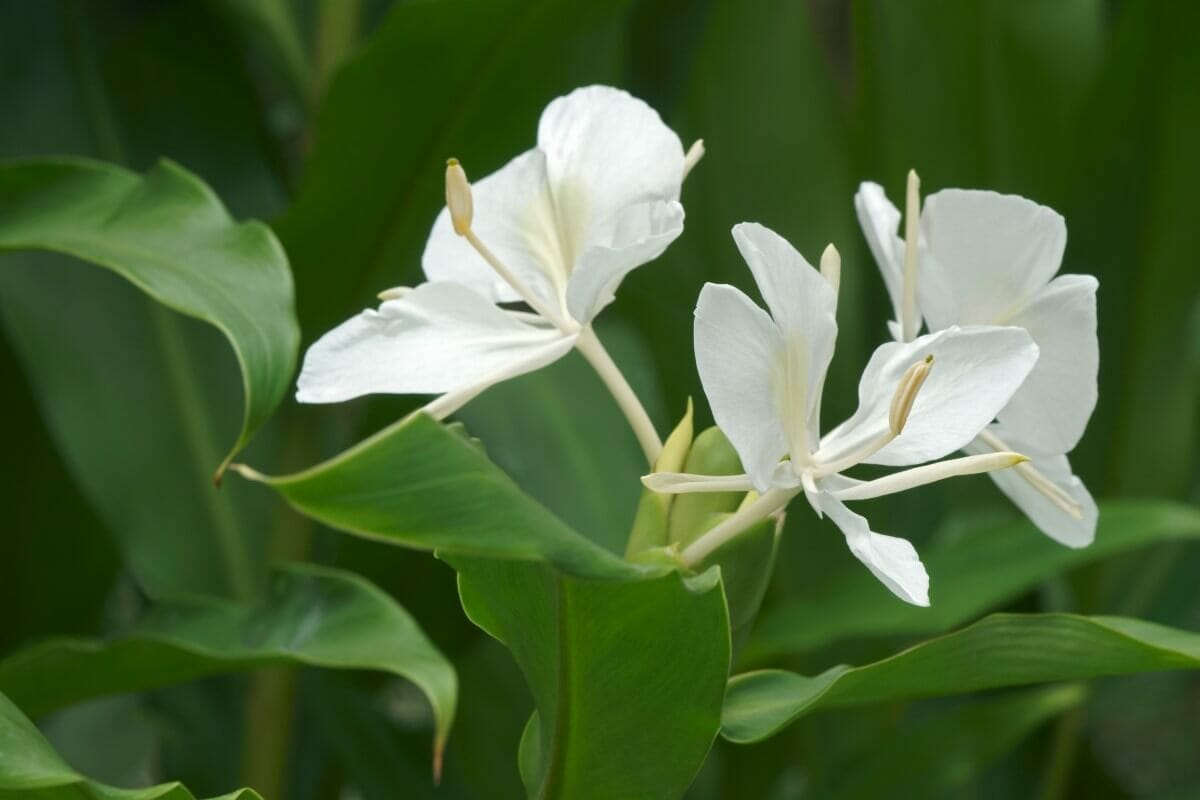
Hedychium coronarium is a rhizomatic, perennial, flowering plant belonging to the Zingiberaceae (ginger) plant family. The blossoms grow in racemes and are usually white but can also be red, pink, or orange. Its common names include ginger lily, white garland lily, fragrant garland flower, butterfly lily, or white ginger.
Native to southern and southeastern Asia, the ginger lily has been introduced to the tropical climates of the Americas and nine Caribbean regions. The ginger lily spreads by rhizomes.
Scientific Name: Hedychium coronarium
- Sunlight Requirements
- Partial sun
- Growing Zones
- USDA Hardiness Zones 7-10
- Flowering Season
- Late summer to fall
- Flowering Colors
- White, red, pink, and orange
- Toxicity
- Non-toxic to cats and dogs
17. Heliconia
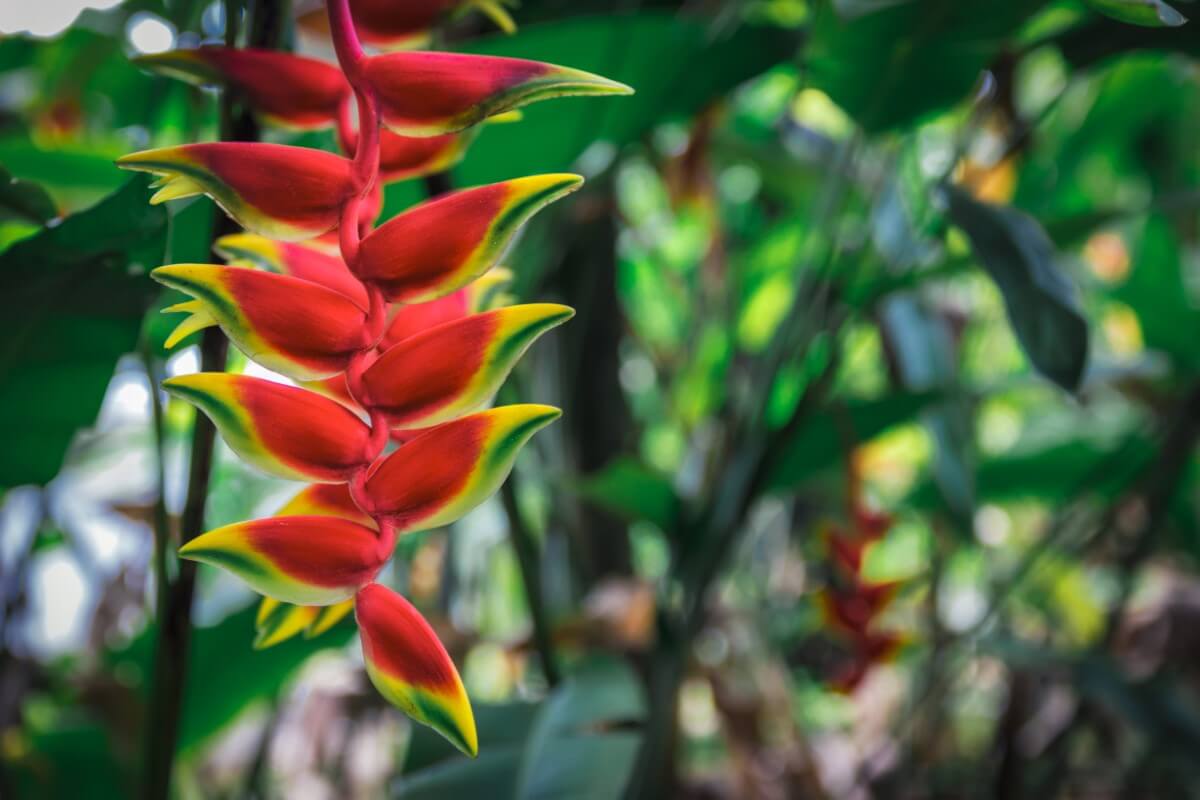
The Heliconia genus contains 204 accepted species of herbaceous flowering plants in the Heliconiaceae family. They are native to Mexico, Central America, northern South America, and parts of the Caribbean, with seven native to the islands, eight introduced, and the rest native to Central and South America.
Some common names include false bird of paradise, lobster claws, wild plantain, and toucan beak, but the flowers are also commonly referred to by their genus name.
Heliconias can be anywhere from 18 inches to 15 feet in height. These Caribbean flowers produce large, ovate leaves and drooping panicles of exotic-looking flowers. The flowerheads primarily consist of showy, beak-shaped flower bracts.
Scientific Name: Heliconia spp.
- Sunlight Requirements
- Partial sun
- Growing Zones
- USDA Hardiness Zones 10b-11
- Flowering Season
- Spring and summer
- Flowering Colors
- Red, orange, yellow, and green
- Toxicity
- Not on the ASPCA’s cat and dog lists
18. Hibiscus (Hibiscus × rosa-sinensis)
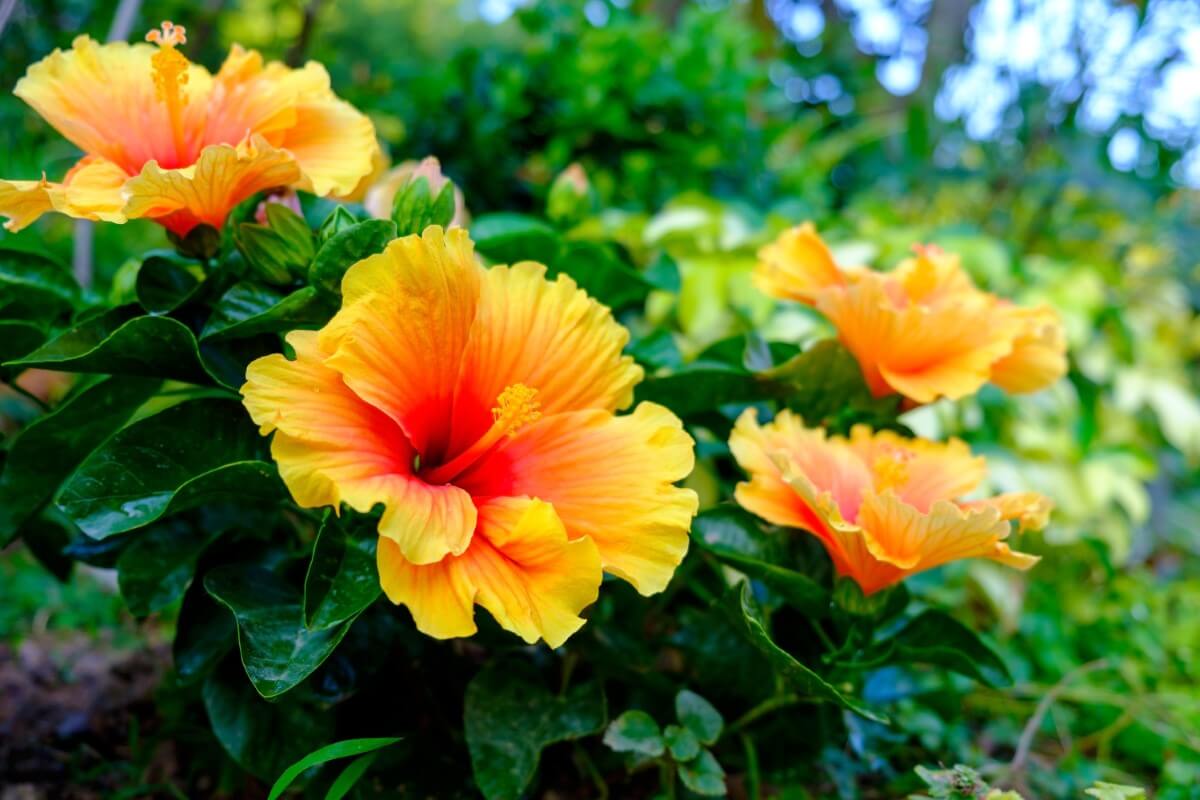
A member of the Malvaceae (mallow) plant family, Hibiscus x rosa-sinensis is a cultivated hybrid of Asian origin with no native range, and it is widely grown in the Caribbean, where it is introduced.
This Caribbean plant is a shrub or small tree and produces scarlet-red, trumpet-shaped flowers with prominent golden-yellow stamens. Its common names include hibiscus, rose mallow, and shoeblack plant.
Scientific Name: Hibiscus × rosa-sinensis
- Sunlight Requirements
- Full sun to partial shade
- Growing Zones
- USDA Hardiness Zones 9-11
- Flowering Season
- Spring through summer
- Flowering Colors
- Red, orange, yellow, pink, blue, purple, and white
- Toxicity
- Not listed for Hibiscus rosa-sinensis; the ASPCA lists rose of Sharon (H. syriacus) as non-toxic
19. Ixora
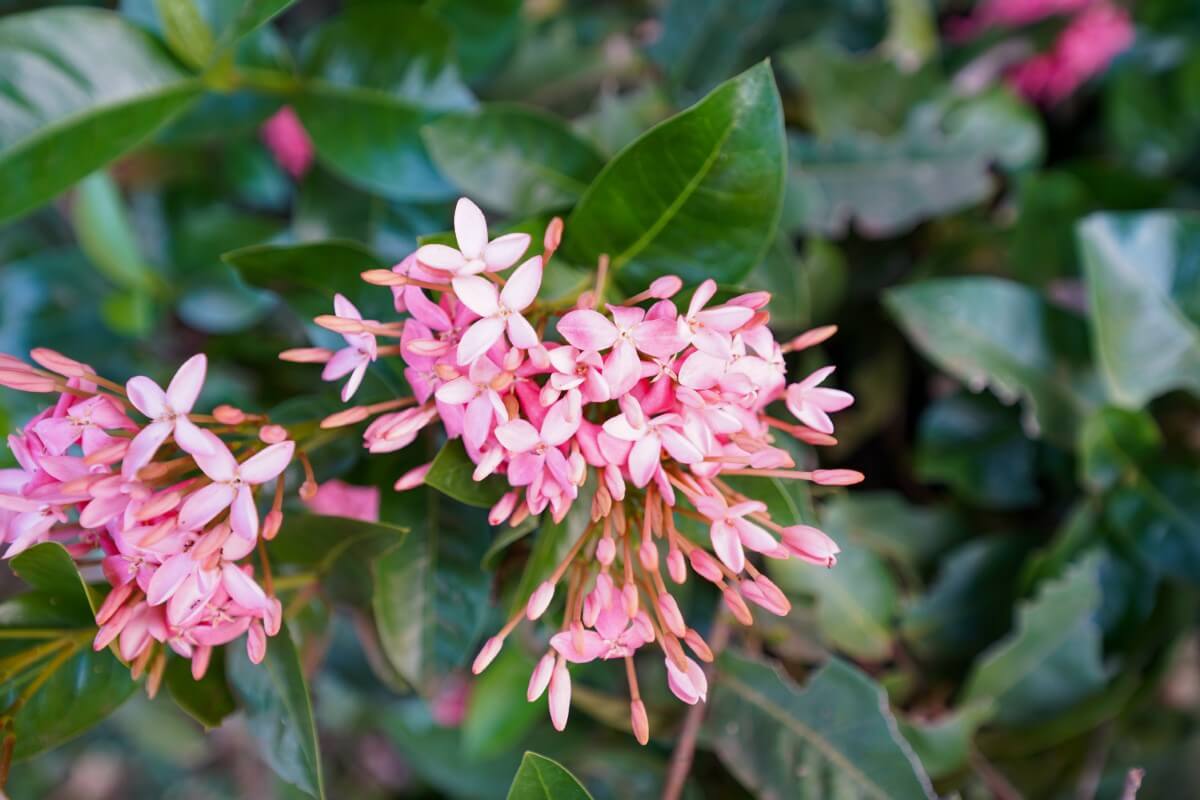
A Rubiaceae (coffee) plant family member, Ixora coccinea is a flowering evergreen shrub commonly called Ixora or jungle geranium. The shrub grows about 4 to 6 feet tall and 3 to 5 feet wide. They produce leathery leaves and clusters of petite, tubular flowers on terminal racemes.
Native to South and Southeast Asia, the species is widely planted in warm gardens, including in the Caribbean. It’s popularly grown as a container plant and makes an excellent hedge or privacy screen in its suitable growing zones.
Scientific Name: Ixora coccinea
- Sunlight Requirements
- Bright, filtered sunlight
- Growing Zones
- USDA Hardiness Zones 9-11
- Flowering Season
- Year-round
- Flowering Colors
- Red, pink, orange, yellow, and white
- Toxicity
- Non-toxic to cats and dogs (ASPCA, as flame of the woods)
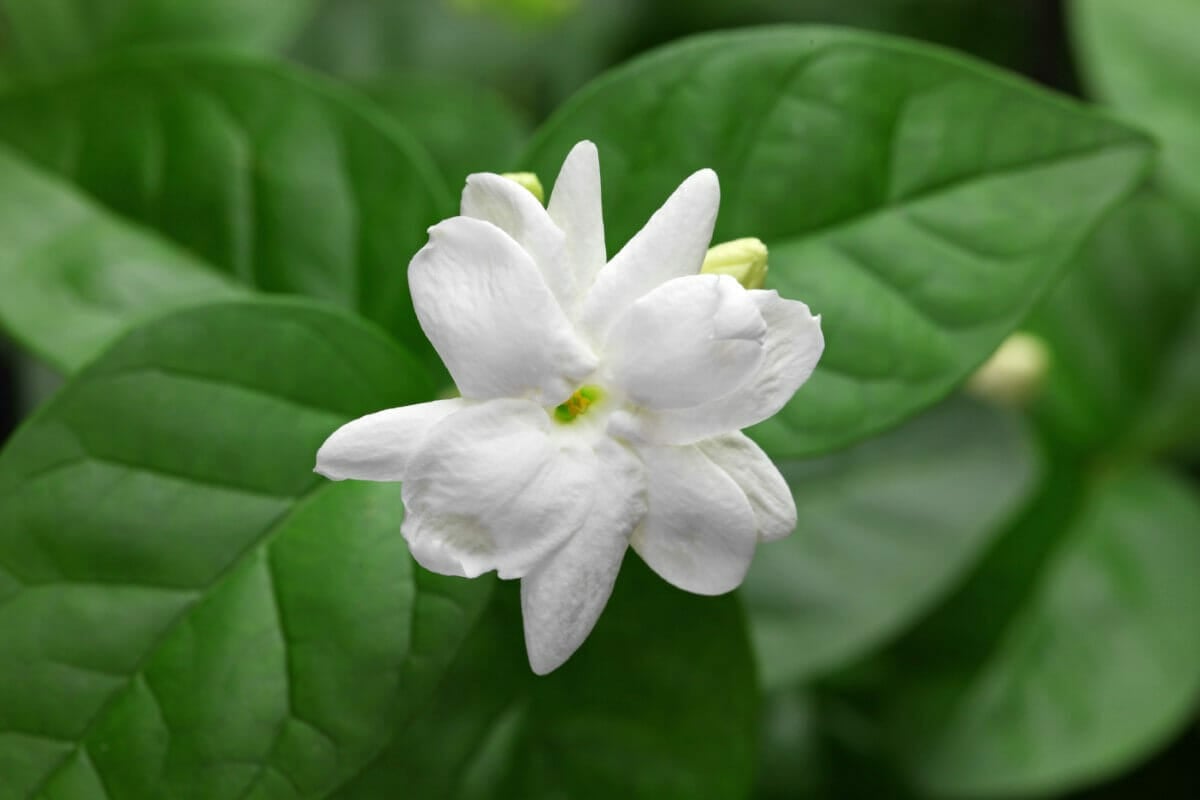
20. Jasmine
A member of the Oleaceae (olive) plant family, the Jasminum genus contains 203 accepted species of flowering shrubs and vines that can be either evergreen or deciduous.
They produce white or light-pink flowers with a rich, fruity, and sweet fragrance most strongly emitted at night. The plants are widely cultivated for their fragrance, a popular ingredient in perfumes and lotions. Brazilian jasmine (Jasminum fluminense) and Gold Coast jasmine (Jasminum dichotomum) are listed as Category I invasive plants in Florida.
Jasmines are native to Asia, Africa, and Australasia, and none is native to the islands, where seven are introduced.
Scientific Name: Jasminum spp.
- Sunlight Requirements
- Full sun
- Growing Zones
- USDA Hardiness Zones 7-10
- Flowering Season
- Spring into fall
- Flowering Colors
- White and light pink
- Toxicity
- Non-toxic to cats and dogs (ASPCA, for the genus)
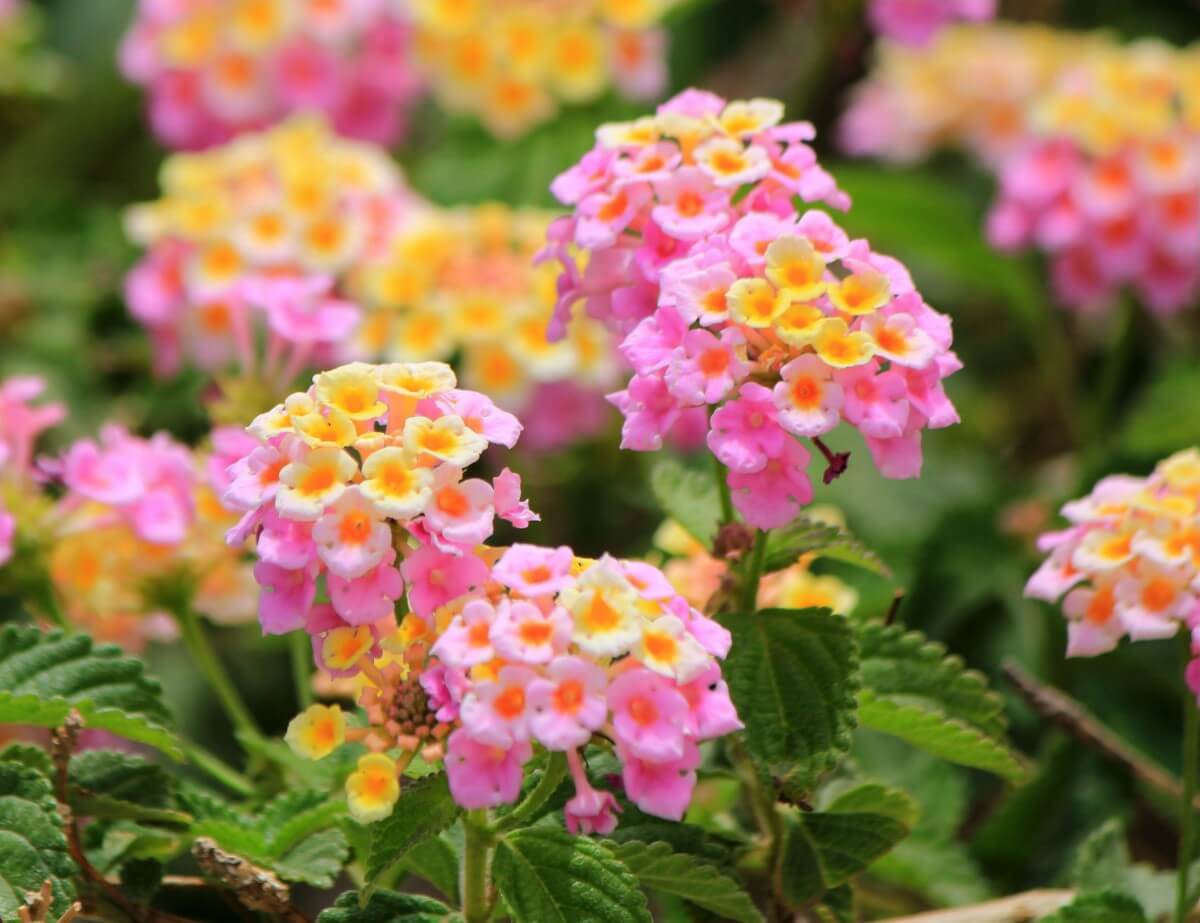
21. Lantana
Native to the tropical regions of the Caribbean and Americas, Lantana camara is a species of flowering shrub in the Verbenaceae (verbena) plant family. The shrubs have a sprawling or scandent growth habit and spread quickly through their root systems.
Lantana is listed as a Category I invasive plant in Florida, where it should not be planted, and it is toxic to cats, dogs, and horses. They produce showy, bulbous clusters of flowers in gradient shades of white, yellow, orange, red, purple, and pink.
Scientific Name: Lantana camara
- Sunlight Requirements
- Full sun
- Growing Zones
- USDA Hardiness Zones 7-11
- Flowering Season
- Summer to fall
- Flowering Colors
- White, yellow, orange, red, purple, and pink
- Toxicity
- Toxic to cats and dogs (ASPCA); medium-severity poison
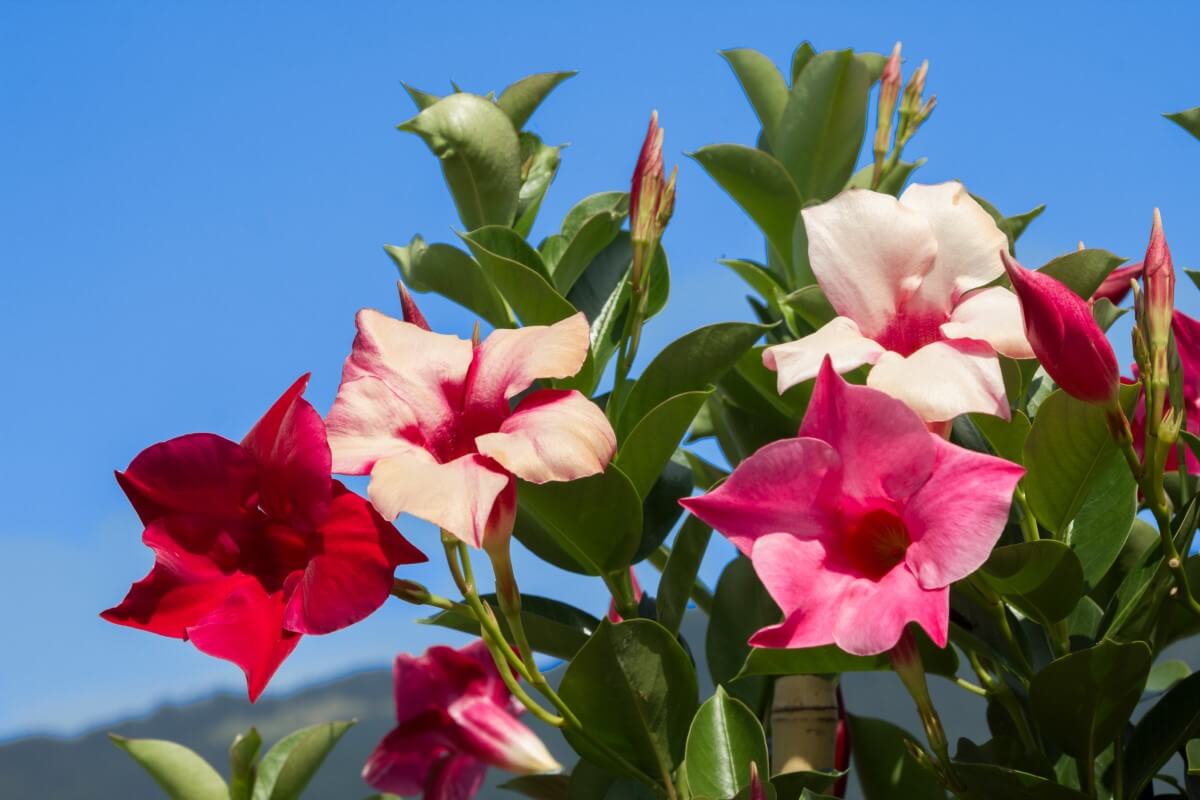
22. Mandevilla
The Mandevilla genus contains 184 accepted species of flowering vines that belong to the Apocynaceae (dogbane) plant family and are native to the southern United States, Mexico, Central America, South America, and parts of the Caribbean, with four native there.
They are commonly referred to as rocktrumpet or simply by their genus name. The vines can be trained to climb fences and walls, providing an attractive leafy covering that is often punctuated by large, tubular flowers in bright colors.
Scientific Name: Mandevilla spp.
- Sunlight Requirements
- Full sun
- Growing Zones
- USDA Hardiness Zones 10-11
- Flowering Season
- Early summer through fall
- Flowering Colors
- Red, pink, yellow, and white
- Toxicity
- Not on the ASPCA’s cat and dog lists
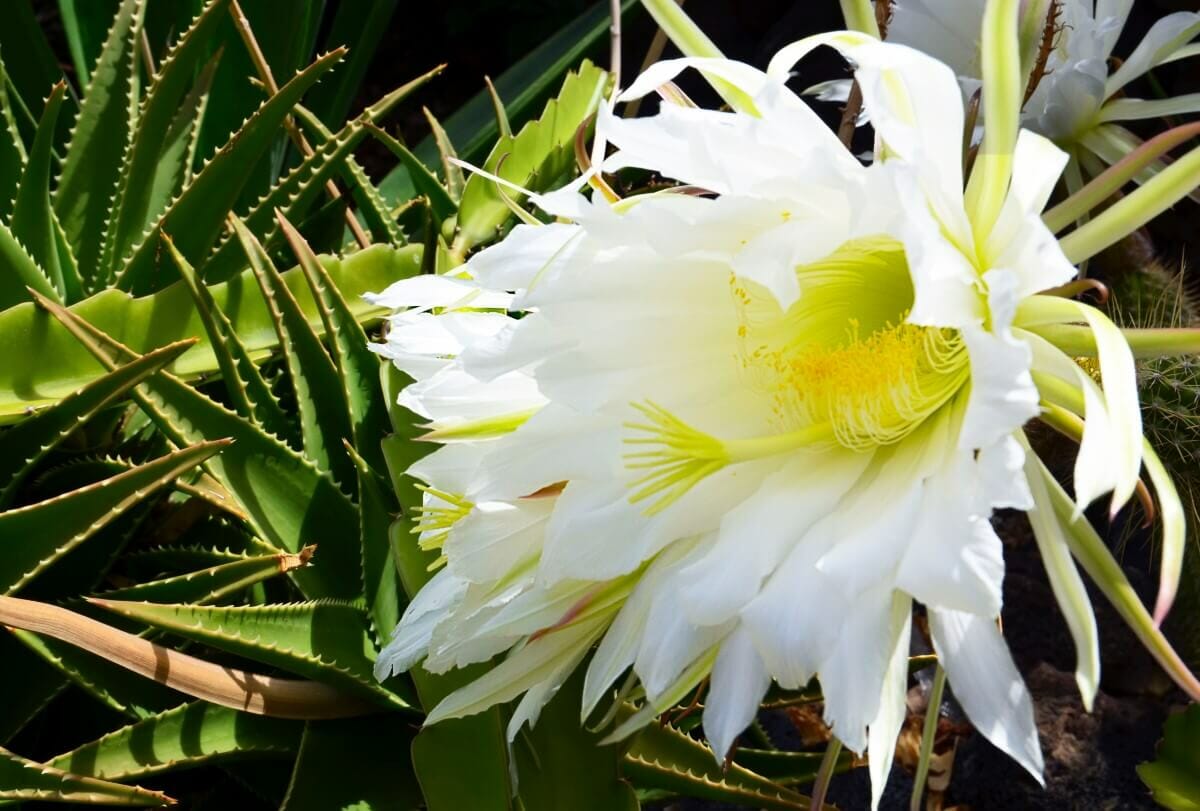
23. Night-Blooming Cereus
Native to Mexico, Central America, and parts of the Caribbean, Selenicereus grandiflorus is a flowering cactus belonging to the Cactaceae (cactus) plant family.
The cactus is commonly called night-blooming cereus, queen of the night, vanilla cactus, and sweet-scented cactus in reference to its night-blooming nature and the pleasant fragrance of its flowers. The fragrant flowers appear at the ends of slender branches and are cup-shaped and white in color.
Scientific Name: Selenicereus grandiflorus
- Sunlight Requirements
- Full to partial sun
- Growing Zones
- USDA Hardiness Zones 10-12
- Flowering Season
- Late spring to early summer
- Flowering Colors
- White
- Toxicity
- Not listed for Selenicereus grandiflorus; the ASPCA lists dragon fruit (Hylocereus undatus) as non-toxic
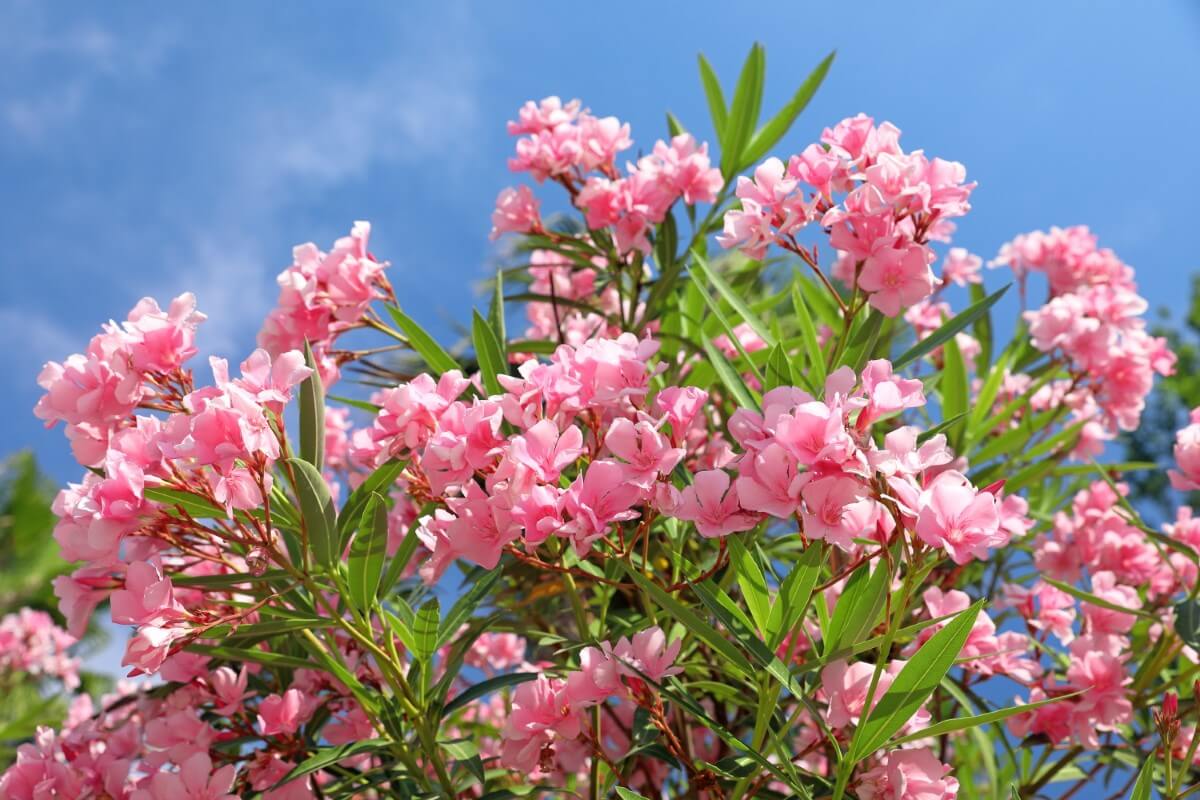
24. Oleander
A member of the Apocynaceae (dogbane) plant family, Nerium oleander is the only species within its genus. It is a flowering shrub or small tree commonly called oleander or nerium.
Nerium oleander is native from the Mediterranean through North Africa to south-central Asia, and it is widely planted in warm gardens rather than naturalized around the Caribbean.
These Caribbean plants produce clusters of small, five-petaled flowers that sometimes have a sweet fragrance. Oleander plants are highly toxic and are listed as toxic to cats, dogs, and horses, with signs that include drooling, abdominal pain, diarrhea, and depression.
Scientific Name: Nerium oleander
- Sunlight Requirements
- Full sun
- Growing Zones
- USDA Hardiness Zones 8-10
- Flowering Season
- Year-round
- Flowering Colors
- White, yellow, peach, pink, salmon, red, and burgundy
- Toxicity
- Toxic to cats and dogs (ASPCA); high-severity poison
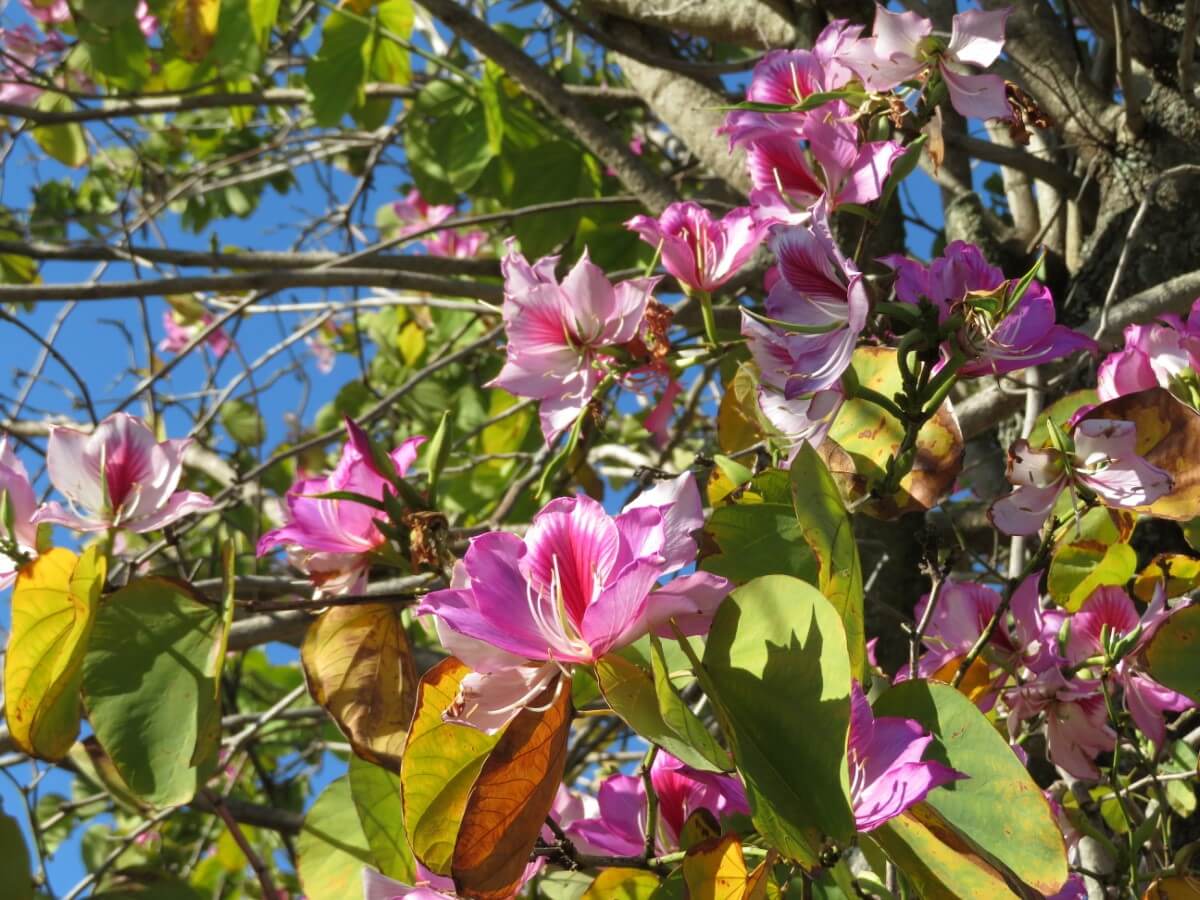
25. Orchid Tree
Bauhinia variegata is a small to medium-sized flowering tree in the legume family with pink and white blossoms, native to southeastern Asia and introduced across the Caribbean. The orchid tree is listed as a Category I invasive plant in Florida. It belongs to the Fabaceae (legume) plant family, producing showy flower blossoms in shades of bright pink and white. The flowers look similar to certain orchid blossoms, and this is where the plant’s common name, orchid tree, comes from.
Scientific Name: Bauhinia variegata
- Sunlight Requirements
- Full sun to partial shade
- Growing Zones
- USDA Hardiness Zones 9-11
- Flowering Season
- Winter through spring
- Flowering Colors
- Pink or white
- Toxicity
- Not on the ASPCA’s cat and dog lists
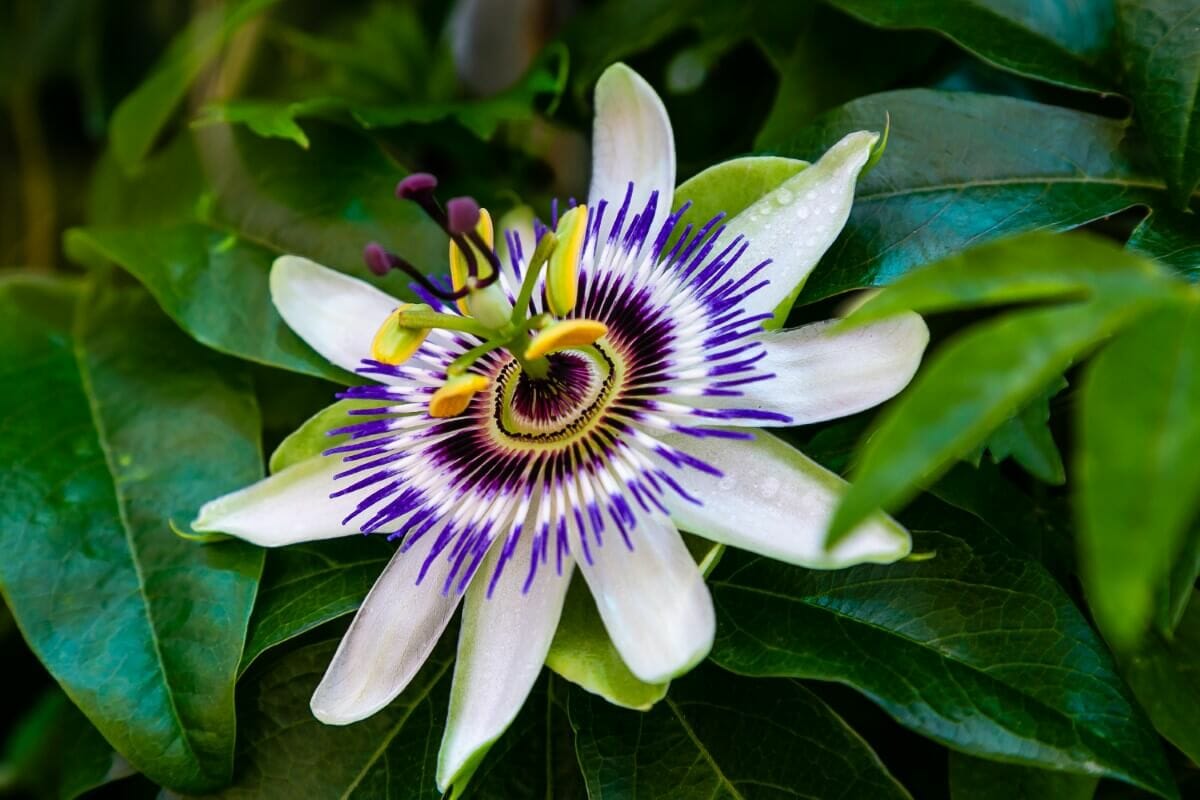
26. Passion Flower
A member of the Passifloraceae (passion flower) plant family, the Passiflora genus contains 640 accepted species of flowering plants, commonly called passion flowers, that are native to the tropical and warm-temperate Americas, with some in Asia and Australasia; 56 are native to the islands and eight introduced there.
These Caribbean flowers are highly unusual looking with various unique color combinations, a symmetrical corona of petal-like sepals, and prominent bursts of wavy stamens.
Scientific Name: Passiflora spp.
- Sunlight Requirements
- Full sun to partial shade
- Growing Zones
- Varies by species; the hardy Passiflora incarnata is 5-9
- Flowering Season
- Summer to early fall
- Flowering Colors
- Purple, blue, white, and pink
- Toxicity
- Not on the ASPCA’s cat and dog lists
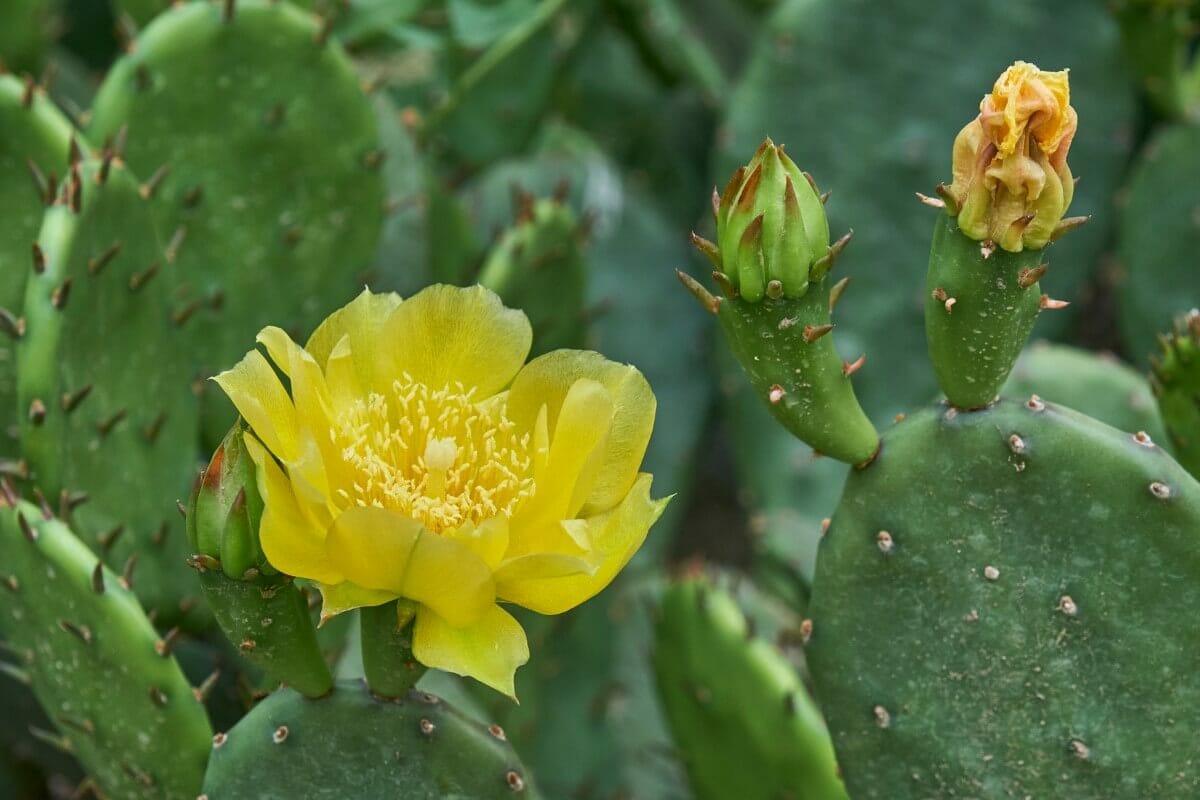
27. Prickly Pear
A Cactaceae (cactus) plant family member, Opuntia is a genus of 176 flowering plants commonly called prickly pear, native to the Americas, with 13 species native to the Caribbean and four introduced there.
These plants produce pretty blossoms atop their fleshy cactus segments.
Scientific Name: Opuntia spp.
- Sunlight Requirements
- Full sun
- Growing Zones
- Varies by species; the hardy Opuntia humifusa is 4-9
- Flowering Colors
- Red, purple, pink, orange, and yellow
- Flowering Season
- Mid-spring to midsummer
- Toxicity
- Non-toxic to cats and dogs (ASPCA, as tree cactus)
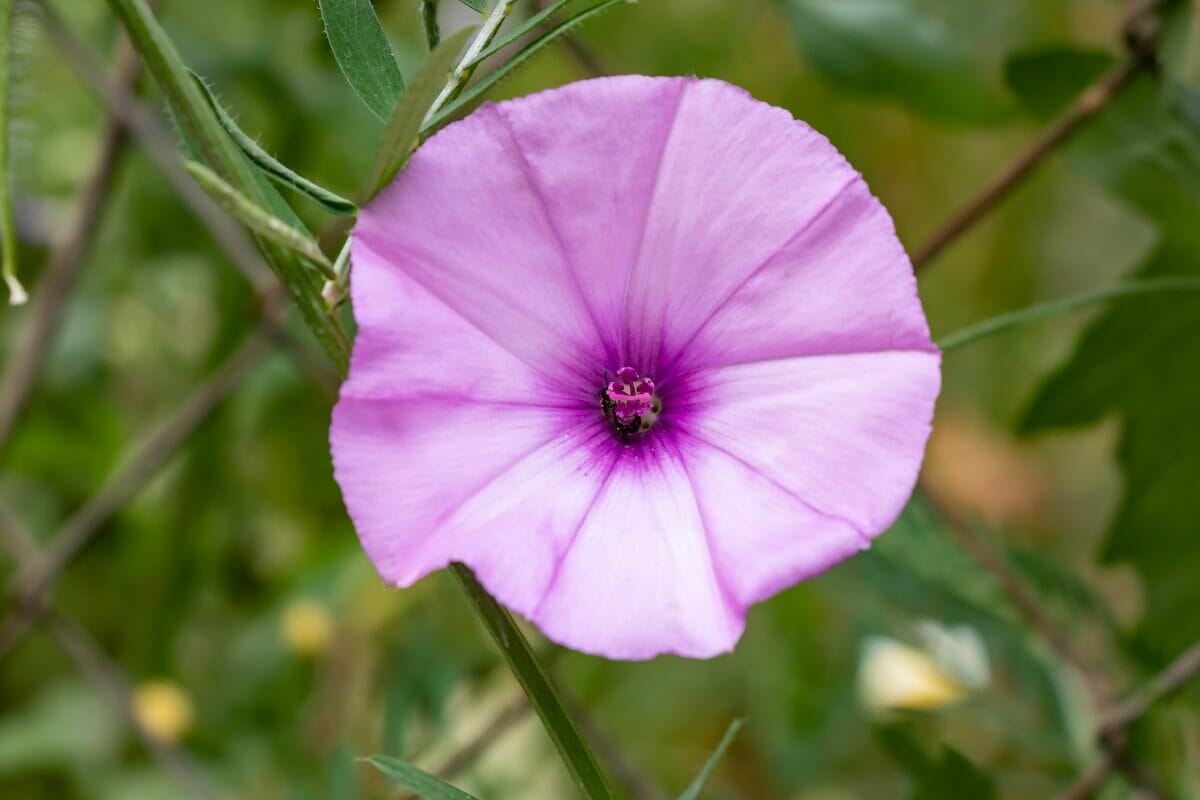
28. Saltmarsh Morning Glory
Ipomoea sagittata is a species of flowering plant belonging to the Convolvulaceae (morning glory) plant family, the family of the asagao among our Japanese flowers, and it is native to the Caribbean region. It is commonly called the saltmarsh morning glory because it grows in saltmarshes along barrier islands.
Saltmarsh morning glories are native to the Mediterranean coast, from Algeria to Turkey, as well as to the Caribbean and the Atlantic and Gulf coasts of the Americas.
Scientific Name: Ipomoea sagittata
- Sunlight Requirements
- Full sun
- Growing Zones
- USDA Hardiness Zones 5-9
- Flowering Season
- Summer and fall
- Flowering Colors
- Pink to purple with a darker throat
- Toxicity
- Toxic to cats and dogs (ASPCA, for the genus); low-severity poison
29. Spider Lily
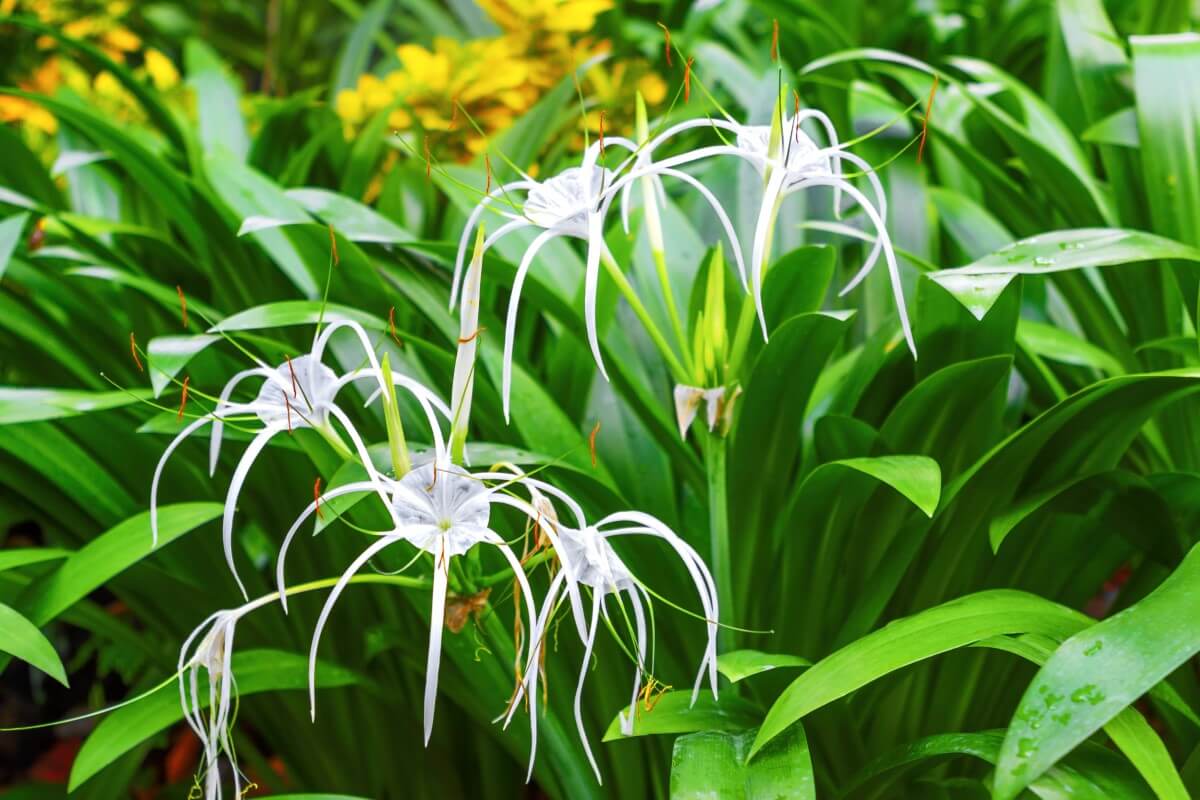
Hymenocallis littoralis is a flowering, bulbous, perennial herb in the Amaryllidaceae (amaryllis) family, commonly called spider lily or beach spider lily, native to Central and South America and grown in Caribbean gardens.
These Caribbean plants grow slightly over two feet tall and produce thick clumps of lance-like foliage. The vanilla-scented flowers are snowy white and unusually shaped with dense, round centers and long, skinny petals that slightly resemble the silhouette of a spider.
Scientific Name: Hymenocallis littoralis
- Sunlight Requirements
- Full sun to partial shade
- Growing Zones
- USDA Hardiness Zones 10-11
- Flowering Colors
- White
- Flowering Season
- Midsummer to late fall
- Toxicity
- Not on the ASPCA’s cat and dog lists
30. Yellow Elder
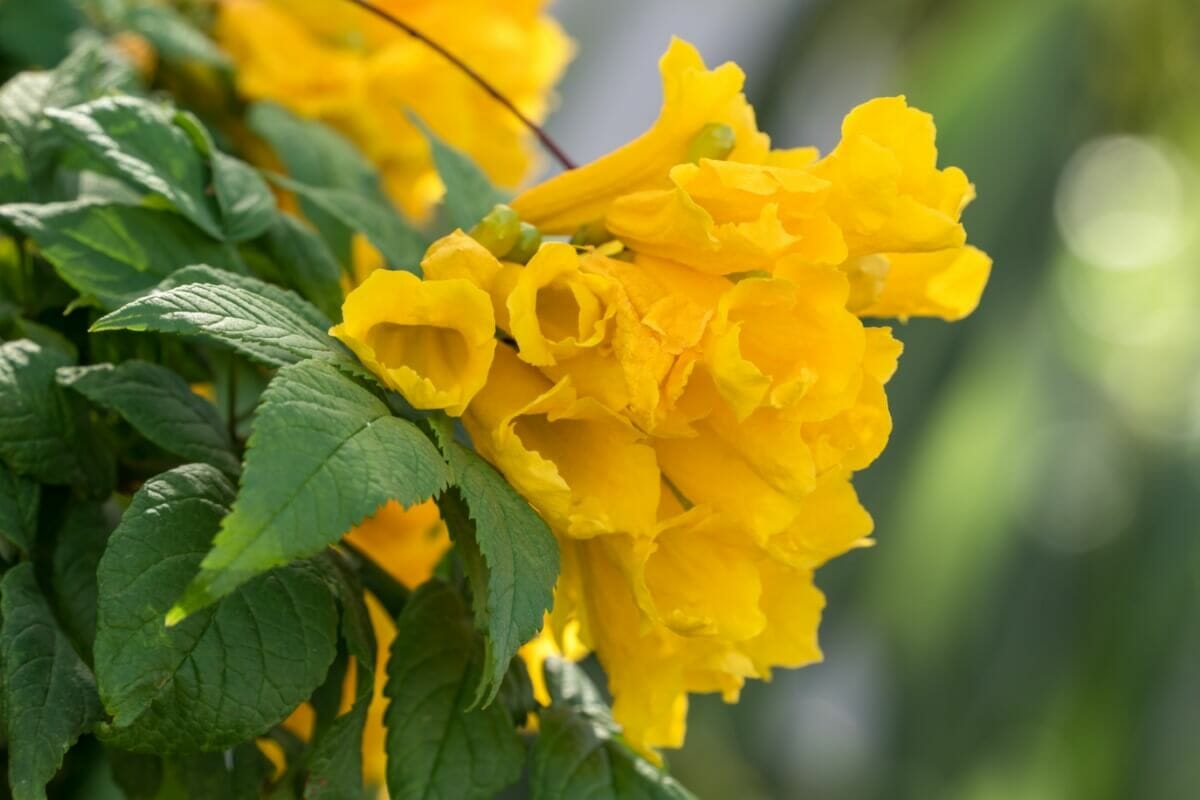
Tecoma stans is a species of flowering, perennial shrubs or small trees commonly called yellow elder, yellow trumpetbush, ginger Thomas, or yellow bells. A member of the Bignoniaceae (bignonia) plant family, it is native to the Americas and more than a dozen Caribbean regions, including the Bahamas, Cuba, and Jamaica.
The plants produce feather-shaped foliage and large, terminal clusters of trumpet-shaped flowers in a vibrant shade of golden yellow, orange-red, or a combination of the two colors. The flowers feature slender, orange stripes inside their throats. Great for pollinators, they attract butterflies, bees, and hummingbirds.
Scientific Name: Tecoma stans
- Sunlight Requirements
- Full sun to partial shade
- Growing Zones
- USDA Hardiness Zones 10b-11
- Flowering Season
- Spring through fall
- Flowering Colors
- Yellow or orange-red
- Toxicity
- Not on the ASPCA’s cat and dog lists
Growing Caribbean Flowers Where You Live
Check your hardiness zone before you plant, since many Caribbean flowers need frost-free winters, and in Florida, review the state's invasive plant list. For more plants to grow, browse our flowers by type and color. Give each flower the right amount of sun.
Questions and Answers
Are most Caribbean flowers native to the Caribbean?
No. Of the 30 in this article, only seven are native; thirteen are introduced, seven genera include both native and introduced species, and three have no Caribbean record.
What is the national flower of Jamaica?
The national flower of Jamaica is the lignum vitae (Guaiacum officinale).
What is the national flower of Barbados?
The national flower of Barbados is the Pride of Barbados (Caesalpinia pulcherrima), also known as the Dwarf Poinciana or Flower Fence. The accepted national flower is the red variety with a yellow margin on the petals.
Sources69 sources, linked in the text
- gbif.org: 3169836
- GBIF, Anthurium andraeanum
- ASPCA, Flamingo Flower
- gbif.org: 5349731
- gbif.org: 2854490
- GBIF, Strelitzia reginae
- GBIF, Bougainvillea
- gbif.org: 2762470
- gbif.org: 3172526
- Florida Invasive Species Council, 2023 List of Invasive Plant Species
- gbif.org: 3172890
- gbif.org: 5349620
- GBIF, Antigonon leptopus
- gbif.org: 7155887
- gbif.org: 2956176
- UF/IFAS EDIS, Delonix regia (ST228)
- gbif.org: 3169672
- gbif.org: 5314418
- GBIF, Hedychium coronarium
- GBIF, Heliconia
- GBIF, Hibiscus rosa-sinensis
- GBIF, Ixora coccinea
- GBIF, Jasminum
- gbif.org: 2925303
- GBIF, Mandevilla
- gbif.org: 3084466
- GBIF, Nerium oleander
- ASPCA, Oleander
- gbif.org: 2953251
- GBIF, Passiflora
- gbif.org: 3084187
- GBIF, Ipomoea sagittata
- GBIF, Hymenocallis littoralis
- gbif.org: 3172492
- Jamaica Ministry of Foreign Affairs and Foreign Trade, National Symbols
- Government of Barbados, National Flower
- NC State Extension Plant Toolbox, Erythrina herbacea
- NC State Extension Plant Toolbox, Hippeastrum
- NC State Extension Plant Toolbox, Antigonon leptopus
- NC State Extension Plant Toolbox, Adenium obesum
- NC State Extension Plant Toolbox, Hedychium coronarium
- NC State Extension Plant Toolbox, Hibiscus rosa-sinensis
- NC State Extension Plant Toolbox, Lantana camara
- NC State Extension Plant Toolbox, Mandevilla
- NC State Extension Plant Toolbox, Nerium oleander
- NC State Extension Plant Toolbox, Passiflora incarnata
- NC State Extension Plant Toolbox, Opuntia humifusa
- NC State Extension Plant Toolbox, Ipomoea sagittata
- NC State Extension Plant Toolbox, Tecoma stans
- NC State Extension Plant Toolbox, Strelitzia reginae
- NC State Extension Plant Toolbox, Allamanda cathartica
- NC State Extension Plant Toolbox, Ixora coccinea
- NC State Extension Plant Toolbox, Dendrophylax lindenii
- UF/IFAS EDIS, Tabebuia heterophylla (ST616)
- UF/IFAS EDIS, Bauhinia variegata (ST092)
- ASPCA, Lantana
- NC State: Anthurium
- ASPCA: Barbados Lily
- ASPCA: Bird of Paradise
- ASPCA: Canna Lily
- ASPCA: Desert Rose
- ASPCA: Ghost Orchid
- ASPCA: Ginger Lily
- ASPCA: Hibiscus (Hibiscus × rosa-sinensis)
- ASPCA: Ixora
- ASPCA: Jasmine
- ASPCA: Night-Blooming Cereus
- ASPCA: Prickly Pear
- ASPCA: Saltmarsh Morning Glory
Updates and CorrectionsNov 17, 2026 · 6 corrected, 1 clarified, 1 removed
- Added: A sorter by native or introduced, colour, sun, hardiness zone and pet safety; a plain Florida invasive warning on lantana, orchid tree, coral vine and the Caribbean trumpet tree; a Pet Safety row on every entry; and three FAQs.
- Clarified: 3 health, edibility and toxicity statements now follow a named source; unsourced ones were removed.
- Corrected: One unsourced figure (a zone, count, size or date) was corrected to a source or removed.
- Corrected: 6 statements about where plants grow wild now follow the sources.
- Corrected: The page said hibiscus is native to Vanuatu, that the saltmarsh morning glory was introduced to the Mediterranean in ship ballast, that desert rose and ixora are naturalized in the Caribbean, and that allamanda comes from Central America. Kew's distribution data says otherwise for each, and each line now follows it.
- Corrected: Oleander was described as an unlikely source of poisoning. The ASPCA lists it as toxic to cats, dogs and horses, and the entry now says so.
- Corrected: Genus species counts (bougainvillea, canna, columnea, heliconia, jasmine, mandevilla, passion flower, prickly pear) now match Kew's current figures, and the hardiness zone of fifteen entries now follows NC State Extension or UF/IFAS.
- Removed: The unsourced national-flower claim for the flamboyant tree, the Key West line, the prickly pear food claim and the six-bullet climate section.
- Corrected: One photo that showed a different plant was replaced.
Save and Share
Reader Comments
Have a question? Ask it here.