
Floriography
Black Rose Meaning: Symbolism and Look-Alikes


Contributing Editor
Credentials
- MA in Anthropology Hearst contributor page
- Master of Library and Information Science Hearst contributor page
Writing for Petal Republic since 2021 · 104 articles
Expertise
Floriography, Flower meanings, Floral design
Published In
SFGate Home Guides
Here is what black roses mean today, and how to tell the dark red cultivars from the dyed blooms sold as black.
In Short
Black roses mean farewell, mourning, and rebirth or new beginnings in modern custom, and none is truly black: the darkest are deep red cultivars or dyed roses, often white. Roses are non-toxic to cats and dogs, but the dye is unassessed, and we'll help you tell dark red from dyed.
- Ask a florist whether a rose sold as black was dyed, since growers inject the dye into the living stem before cutting.
- Read any black rose meaning as modern custom or popular belief: neither Victorian flower dictionary lists a black rose, so there is no old rule to follow.
More Takeaways
- If you want the dark look without dye, ask a florist for a dark red cultivar such as 'Black Baccara' or 'Black Magic' by name.
No Rose Is Truly Black
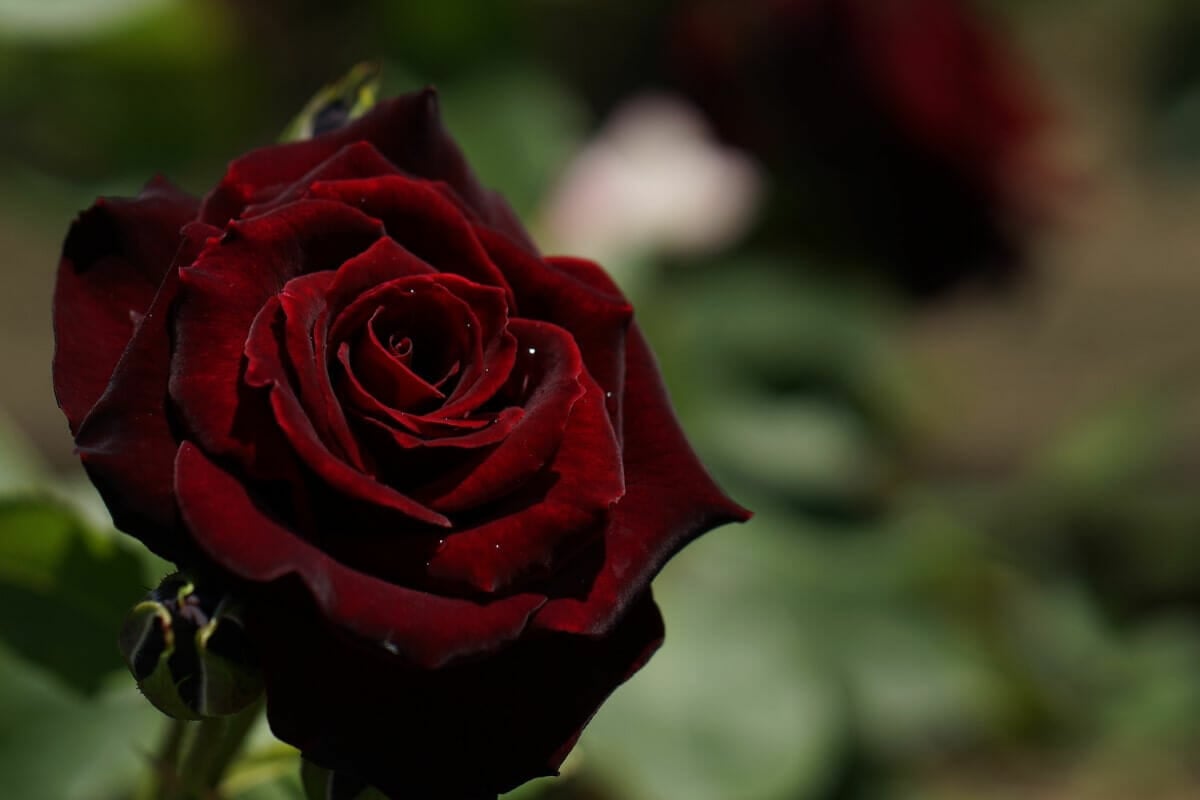
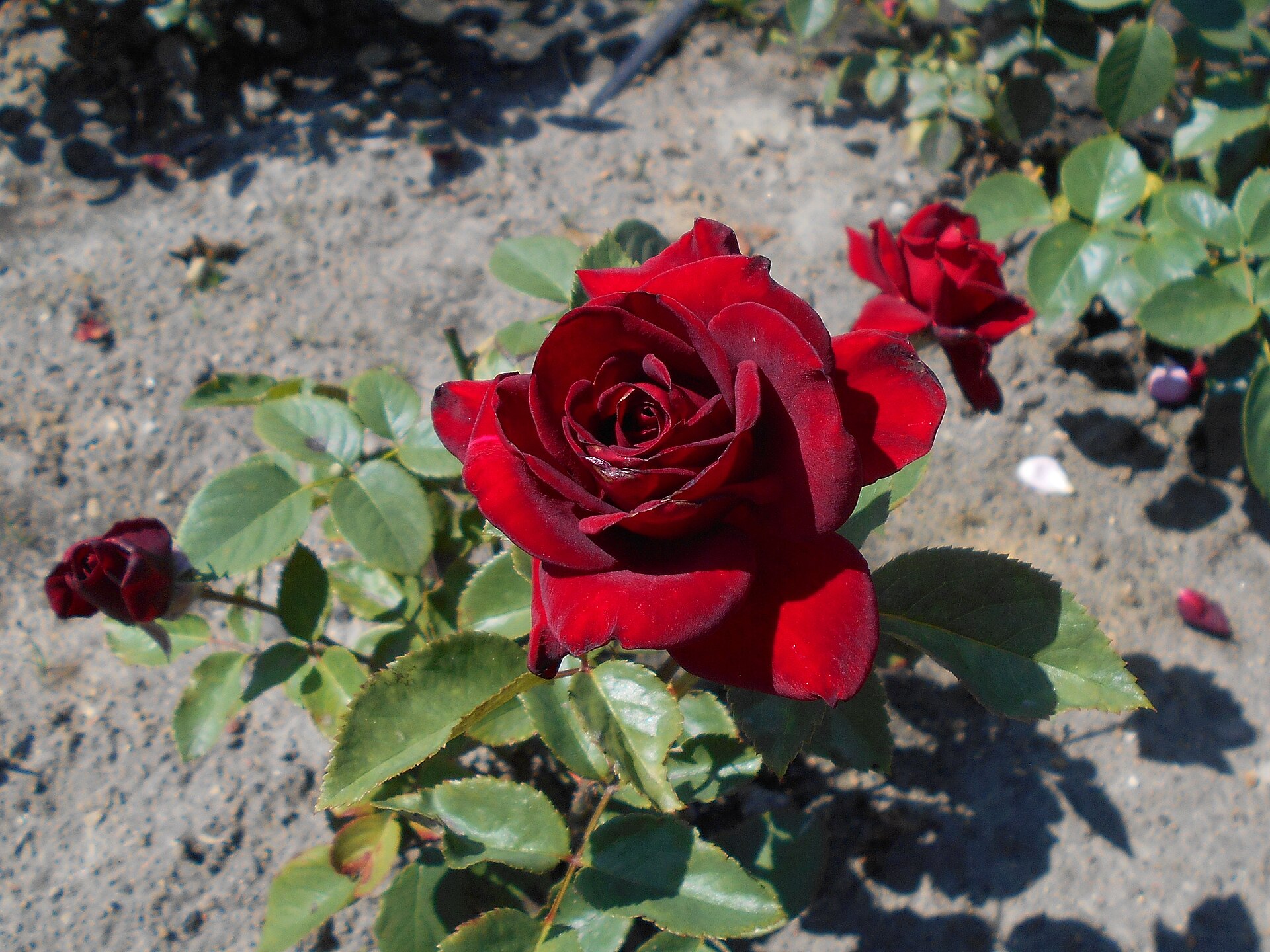
The roses sold as black are ordinary Rosa roses in a very dark red, or white roses that have been dyed. Breeders have raised dark red hybrid teas such as 'Black Magic' and 'Black Madonna', which the rose registers class as dark red, not black.
Which Black Rose Is It? Dark Red, Halfeti or Dyed
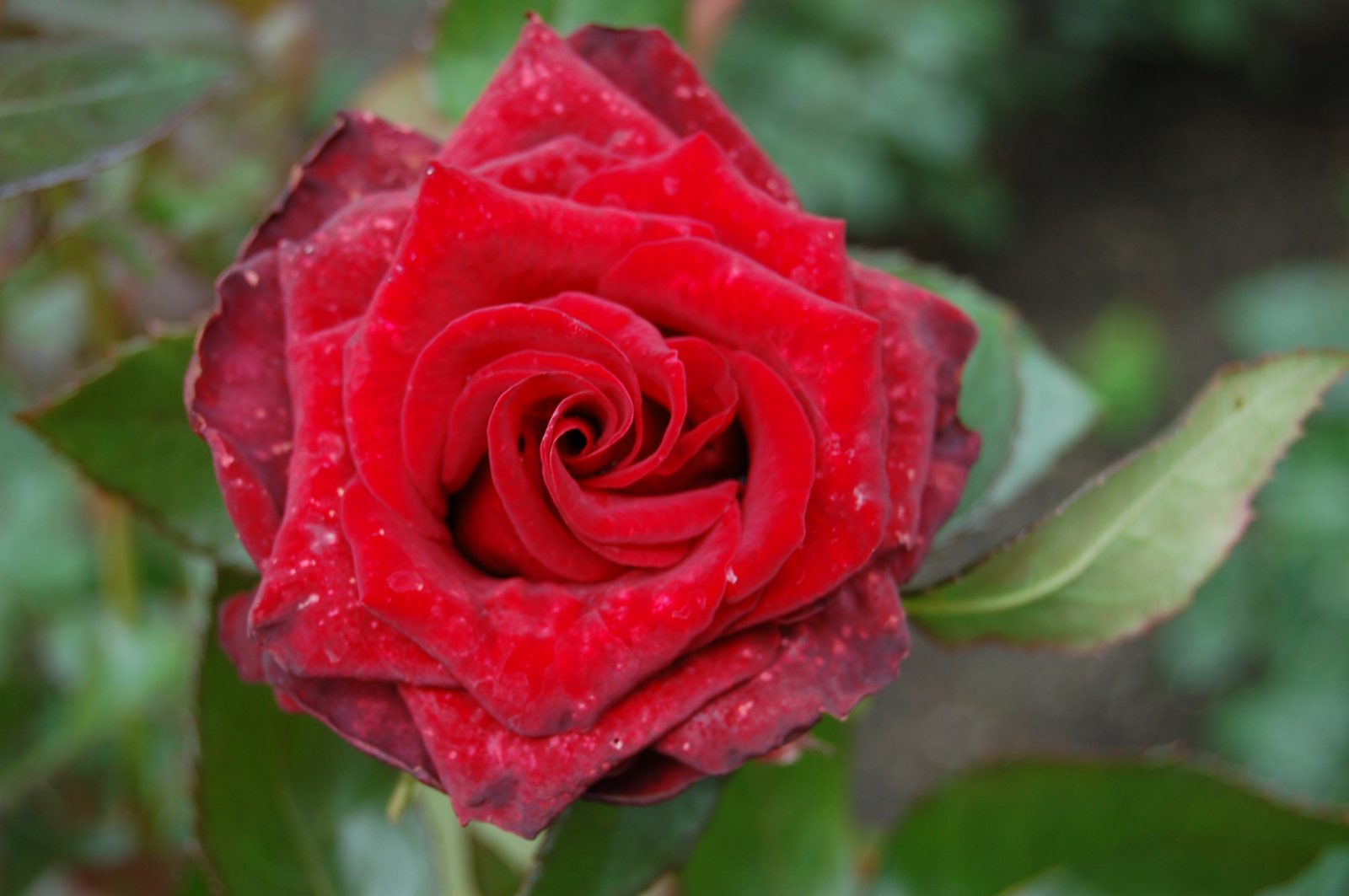
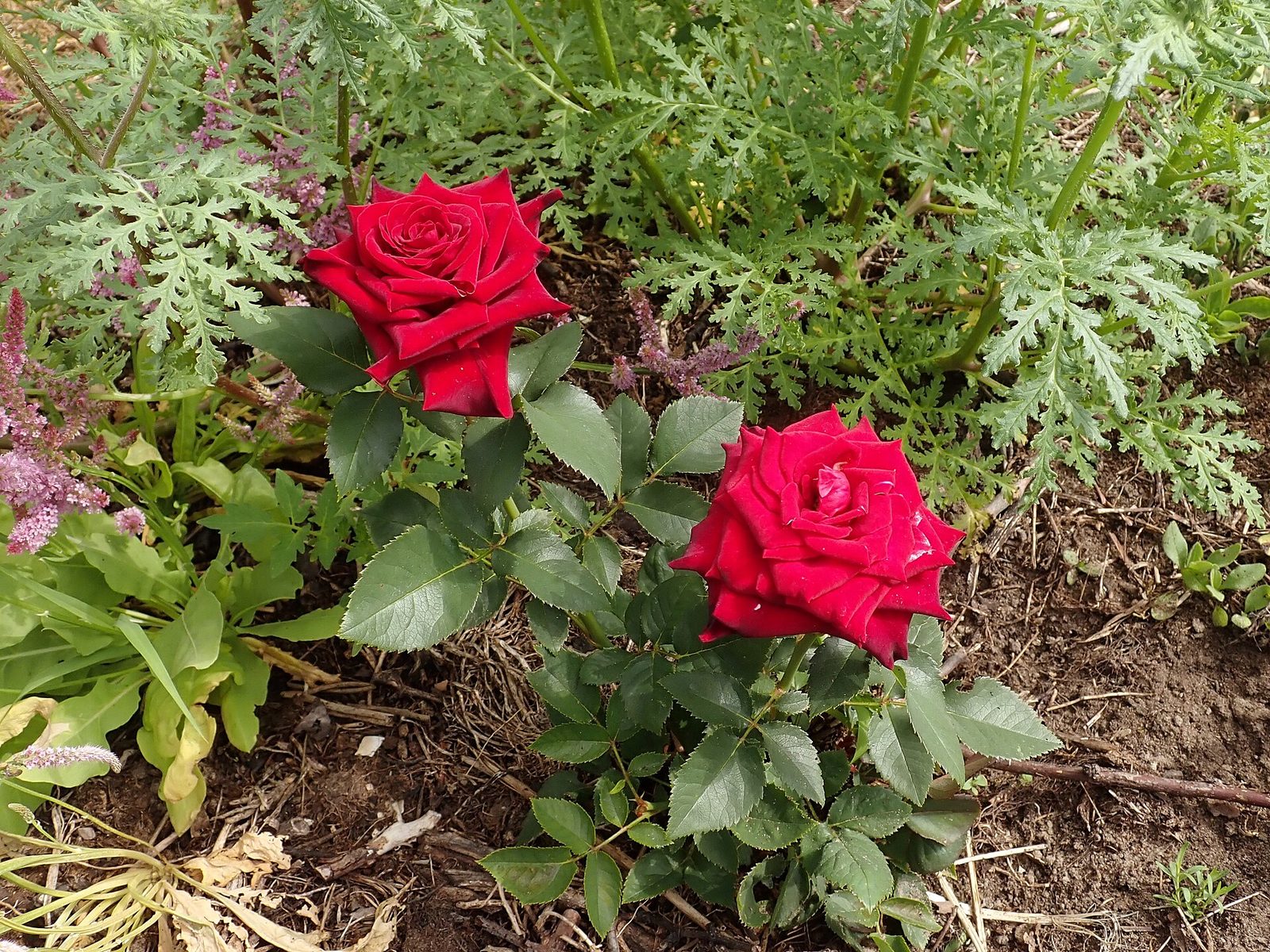
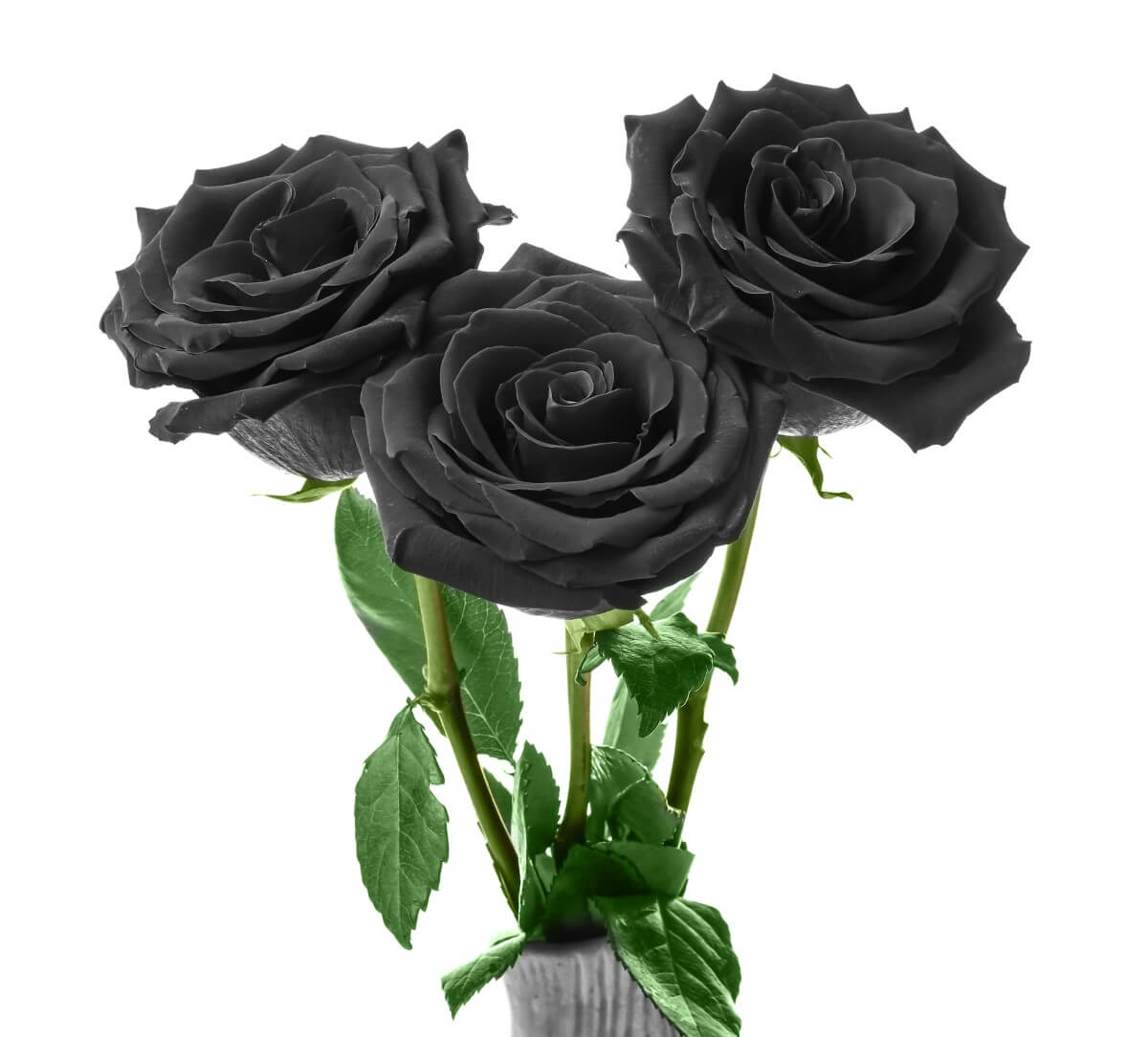
The roses sold as black fall into three kinds. Very dark red cultivars such as 'Black Baccara', 'Black Magic' and 'Black Madonna' are bred for their color, and none is truly black. The Halfeti rose is a dark red rose grown in one district of Turkey, and the rest are roses, often white, that growers dye.
Dark red cultivar
- Example
- 'Black Baccara'
- Color
- Very dark burgundy-red
- Made by
- Breeding
Dark red, not black

Halfeti rose
- Registered as
- Halfeti Karagül, Turkey, 2021
- Color
- Near-black dark red
- Grown in
- Halfeti district, Şanlıurfa
A dark red rose
Dyed rose
- Starts as
- Often white roses
- Color comes from
- Dye, not breeding
Dyed, not bred
Photos: 'Black Baccara' by Salicyna, CC BY-SA 4.0, via Wikimedia Commons. Halfeti town: Bernard Gagnon, CC BY-SA 3.0 (the town where the rose is grown; no free photo of the rose exists)
Black Rose Meanings: Modern Custom or Belief
Neither of the two best-known Victorian dictionaries of the language of flowers, from 1851 and 1884, lists a black rose. So every reading is modern custom or popular belief, and none is an old rule. Death and mourning, rebirth, mystery and courage are modern readings, while farewell and revenge are stories with no source.
Death and mourning
- Reading
- Mourning and loss
- Backed by
- Black as a mourning colour
Modern
Rebirth
- Reading
- Change and renewal
- Backed by
- No old source
Modern
Mystery and elegance
- Reading
- Gothic romance and style
- Backed by
- No old source
Modern
Courage and power
- Reading
- Strength and confidence
- Backed by
- No old source
Modern
Farewell
- Reading
- The end of a relationship
- Backed by
- A story, no source
A belief
Obsession and revenge
- Reading
- Hatred and tragic love
- Backed by
- A story, no source
A belief
Death and Mourning
- Where This Comes From
- Partly supported: Kate Greenaway's Language of Flowers (1884) and Dumont (1851) list no black rose, so the readings on this page are modern custom or popular belief; black as the colour of mourning is the only part with a linked source
Black roses are read today as mourning and loss, a modern reading, because neither Victorian flower dictionary lists a black rose. Black is the traditional color for funerals, mourning, and grieving.
In Relationships: A Belief, Not a Rule
Black roses have no settled meaning in relationships. Some people read a black rose as the end of a relationship, a popular belief with no old flower dictionary behind it.
Popular belief links black roses with hatred, tragic love and revenge, but no Victorian dictionary lists them. The idea that someone sends a black rose to end a relationship is a story with no documented source, so treat it as a belief.
Other Black Flowers
Other black flowers and plants carry their own meanings.
Róisín Dubh: The Black Rose of Ireland
Ireland's link to the black rose runs through Róisín Dubh, a Gaelic original that Samuel Ferguson translated in 1834. James Clarence Mangan's English version, 'My Dark Rosaleen', ran in The Nation in 1846.
The poem has been read as an image of Ireland and sits among Mangan's nationalist verse of that year, so it is a tradition, not a literal rose.
Occasions
When to Give Black Roses
- Pet Safety
- Supported: the ASPCA lists the rose (Rosa) as non-toxic to dogs, cats and horses. It does not assess the dye on a dyed rose
Gifting black roses takes thought, because their readings are modern and popular rather than old. Today black roses are linked with mourning and loss, a modern reading, not a Victorian one. Black roses can be given to someone who is grieving.
Rather than using black roses for an ending, use them, if at all, to mark the start of one, a reading that is popular belief. In the Victorian language of flowers a deep red rose meant bashful shame. Another dictionary of the time gave the red rose beauty and love. A red rose is the safer way to say romance, since neither dictionary lists a black one.
Choosing a Black Rose
Choose a very dark red rose in the shade that suits the message, and tell the person it is dark red, not black, before it goes in a vase. Saying so first keeps the gift honest. Once you have chosen, you can compare flower delivery services to send it. For other flowers with meanings of their own, read about poppy flower meaning and wisteria symbolism, or browse flower meanings by flower. Send it with the meaning you intend.
Questions and Answers
Are black roses poisonous to cats and dogs?
The rose plant is rated non-toxic to dogs, cats and horses. The dye on a dyed black rose has not been assessed, so keep dyed stems out of reach of a pet that chews. Contact your veterinarian or the ASPCA Animal Poison Control Center if you are concerned.
How are black roses dyed?
Growers inject dye through tiny needles into the living stem, usually 6 inches to 2 feet below the bloom and at least 6 hours before cutting. Many of the base roses are white, which takes the color cleanly.
Is the Halfeti black rose real?
Yes, it is a real rose, but a dark red one. The registered Halfeti rose is the Louis XIV variety of Rosa chinensis, black in bud and lighter once open. Grown outside the Halfeti district, its seedlings flower purple, velvet and red.
Sources8 sources, linked in the text
- HelpMeFind, 'Black Magic'
- TÜRKPATENT, Halfeti Karagül / Halfeti Siyah Gül registration
- theatlantic.com: 671558
- Ricorso, James Clarence Mangan: Life
- Kate Greenaway, The Language of Flowers (1884)
- Dumont, The Language of Flowers (1851)
- ASPCA, Rose (Rosa species)
- UC Cooperative Extension, Roses, Part 2: Are Those Carnival-Colored Roses Real?
Updates and CorrectionsNov 3, 2026 · 5 corrected, 1 clarified, 1 removed
- Added: A Which Black Rose Is It? section (a dark red cultivar, the Halfeti rose, a dyed rose), cards labelling each meaning as modern custom or belief, a pet safety row, and answers on how black roses are dyed and whether the Halfeti rose is real.
- Corrected: The page said black roses are bred, and elsewhere that most are dark red or dyed. No rose is truly black: the roses sold as black are very dark red cultivars or dyed white roses.
- Corrected: The page gave death and mourning as the Victorian meaning of black roses. Neither Kate Greenaway's Language of Flowers (1884) nor Dumont's (1851) lists a black rose; the readings are modern custom or popular belief.
- Corrected: The variety list gave 'Black Beauty' a 1954 release (HelpMeFind records Delbard, 1973), described 'Black Baccara' as dark brown (the RHS: very dark burgundy-red) and claimed 'Black Jade' darkens in heat, which no source supports; the list is replaced by a Which Black Rose Is It? section.
- Corrected: The Ireland section placed the song in the early medieval period and named Normans and Saxons. The English poem 'My Dark Rosaleen' is James Clarence Mangan's of 1846, based on Samuel Ferguson's translation of a Gaelic original; the earl's-daughter line is cut.
- Clarified: The relationship meanings, including giving a black rose to end a relationship, are labelled as popular belief; no source documents the custom.
- Removed: The Middle Ages freedom-symbol section, the funeral-bouquet and tattoo lines, the film-director and fashion lines, and the rose-group and petal paragraphs, none of which had a source.
- Corrected: One photo that showed a different plant was replaced.
Save and Share


Reader Comments
Have a question? Ask it here.