Houseplant Guides
17 Croton Plant Varieties for Bold Color Indoors


Briana Yablonski (Full Profile)
Senior Editor
Credentials
- BS in Plant Sciences , focus on agroecology Modern Farmer
- Flower farmer , Creekside Flower Farm, since 2024 Creekside Flower Farm
- Founder , Under Foot Farm, a market garden, since 2019 Under Foot Farm
Writing for Petal Republic since 2021 · 182 articles
Expertise
Plant sciences, Agroecology, Market gardening
Published In
Modern Farmer, Gardener's Path, HuffPost
Seventeen croton cultivars, from Petra to Zanzibar, with the light each needs to hold its color, how large it grows, and whether it is safe around pets and children.
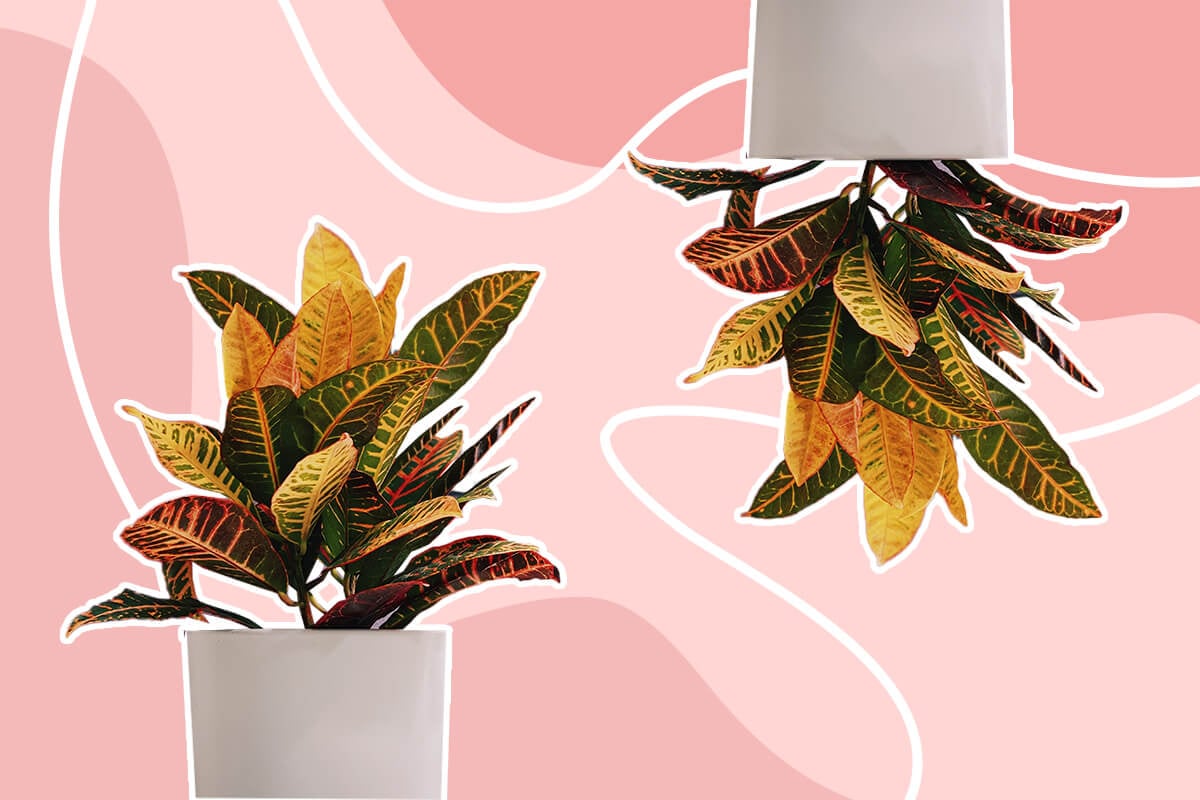
In Short
Crotons are some of our favorite houseplants for bold color, and they keep it only in bright, indirect light, with Petra holding its color best indoors. The sap irritates skin and the plant is a mild poison, not confirmed safe for pets. Explore all 17 picks below and filter them by light, space, and experience.
- Give them bright, indirect light; too little turns leaves green, and harsh direct sun dulls them to gray.
- Wear gloves when cutting; the milky sap can irritate skin and permanently stains fabric.
More Takeaways
- Water only when the top half-inch to an inch of soil is dry, because too wet or too dry makes them drop leaves.
- Keep them at 60 to 85 degrees F; below 50 degrees they drop leaves, so bring outdoor plants in early.
Which Croton Should You Grow?
Answer up to three questions about your space: how much light it gets, whether the plant will sit on a shelf or the floor, and whether this is your first houseplant. The croton cards re-sort so the plants that fit come first, and each plant that doesn't fit says why.
All 17 crotons, in page order. Answer any question to sort them.
Codiaeum variegatum 'Petra'
At least 5 hours bright, indirectUp to 6 ft indoorsNot on the ASPCA listsSome care
Codiaeum variegatum 'Lauren's Rainbow'
Bright, indirectNot on the ASPCA listsSome care
Codiaeum variegatum 'Gold Dust'
At least 6 hours bright, indirectTops out at 3 ft indoorsNot on the ASPCA listsSome care
Codiaeum variegatum 'Banana'
At least 5 hours bright, indirect1 to 2 ft indoorsNot on the ASPCA listsSome care
Codiaeum variegatum (cultivar name unconfirmed)
5 to 8 hours bright, indirect1 to 2 ft indoorsNot on the ASPCA listsSome care
Codiaeum variegatum 'Eleanor Roosevelt'
6 to 8 hours bright, indirectNot on the ASPCA listsSome care
Codiaeum variegatum 'Andrew'
Bright, indirectGenerally below 5 ft indoorsNot on the ASPCA listsSome care
Codiaeum variegatum 'Picasso's Paintbrush'
Bright, indirect or morning sunNot on the ASPCA listsSome care
Codiaeum variegatum 'Bush on Fire'
5 to 8 hours bright, filteredNot on the ASPCA listsSome care
Codiaeum variegatum 'Sunny Star'
At least 5 hours bright, indirect1 to 5 ft indoorsNot on the ASPCA listsSome care
Codiaeum variegatum 'Mrs. Iceton'
At least 6 hours bright, indirect1 to 3 ft indoorsNot on the ASPCA listsSome care
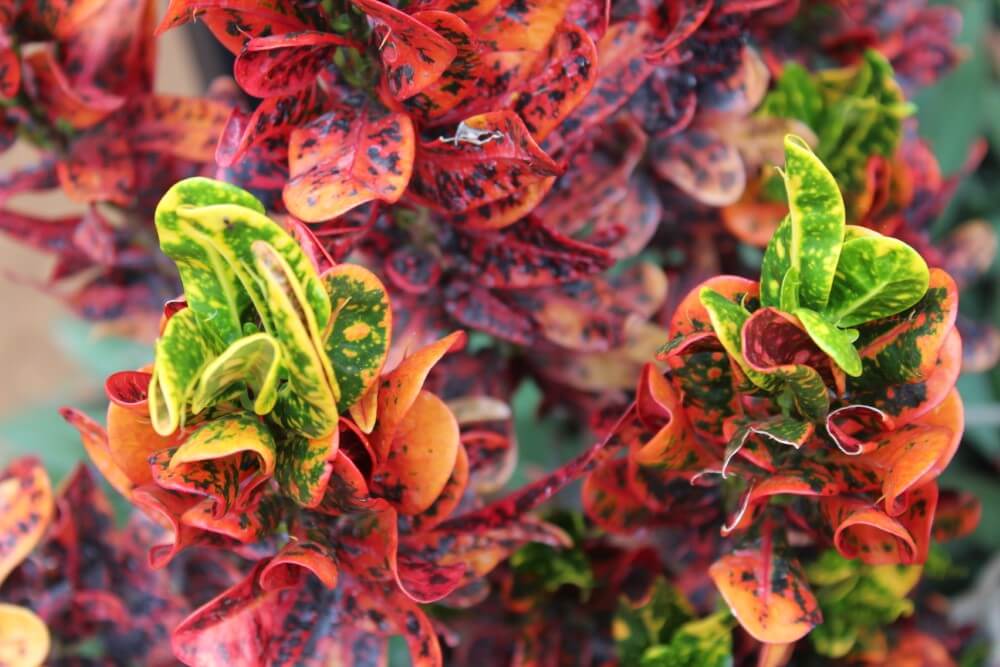
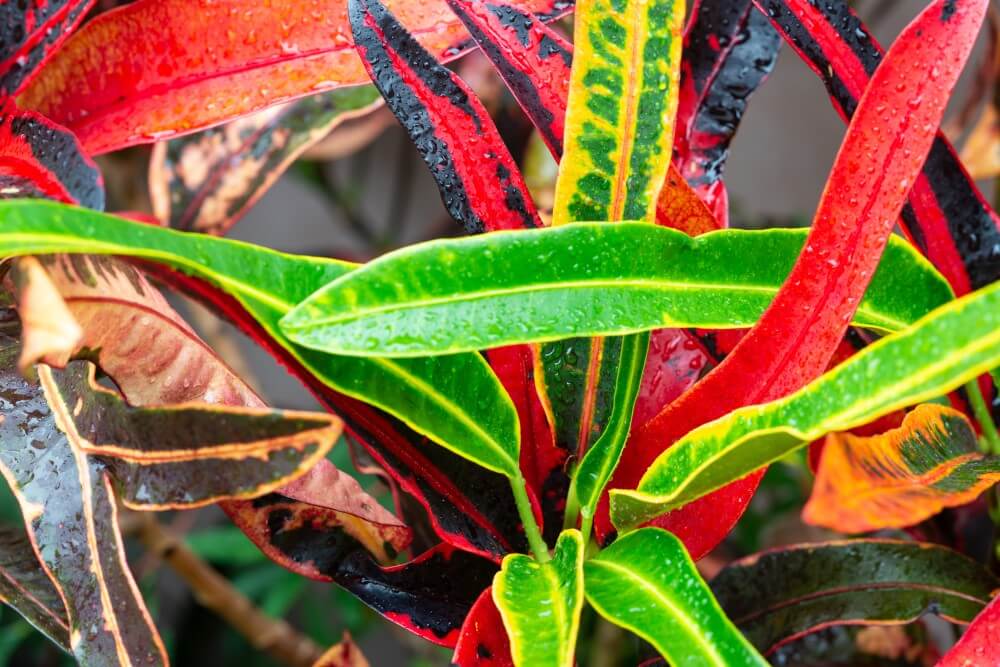
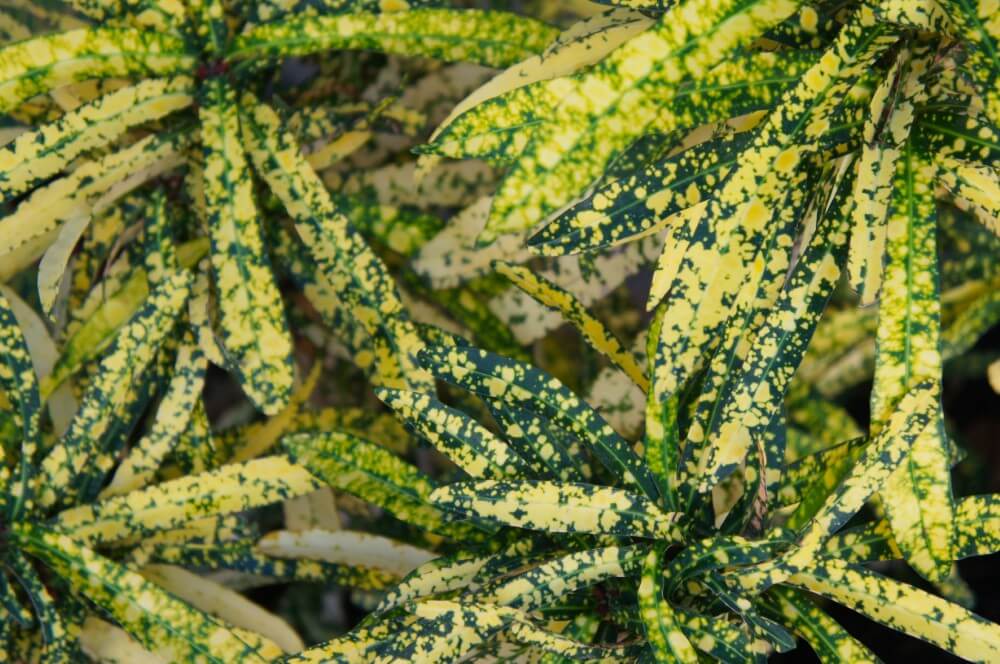
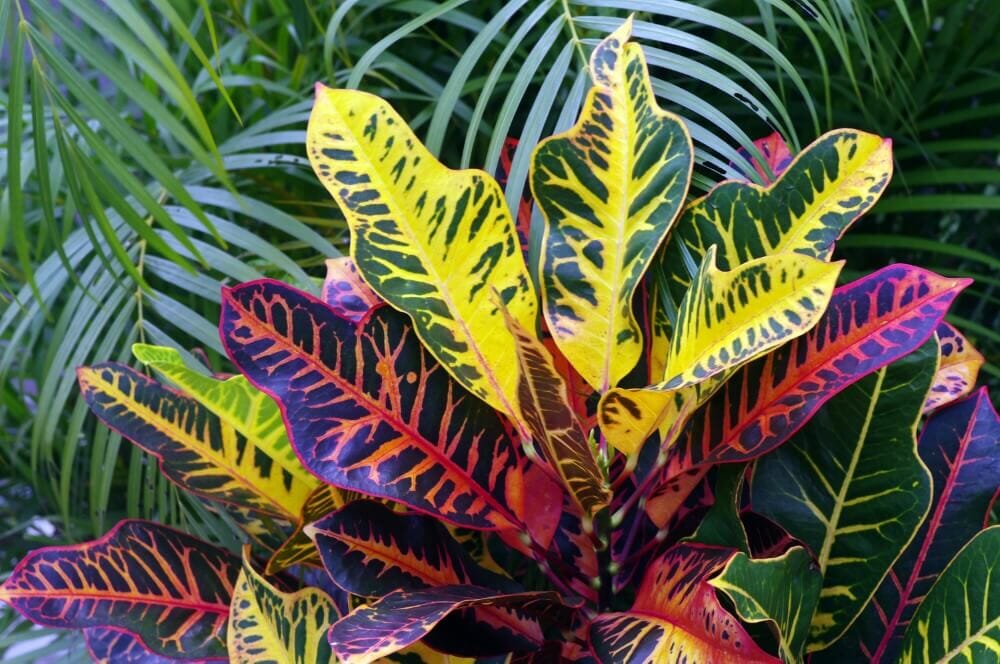
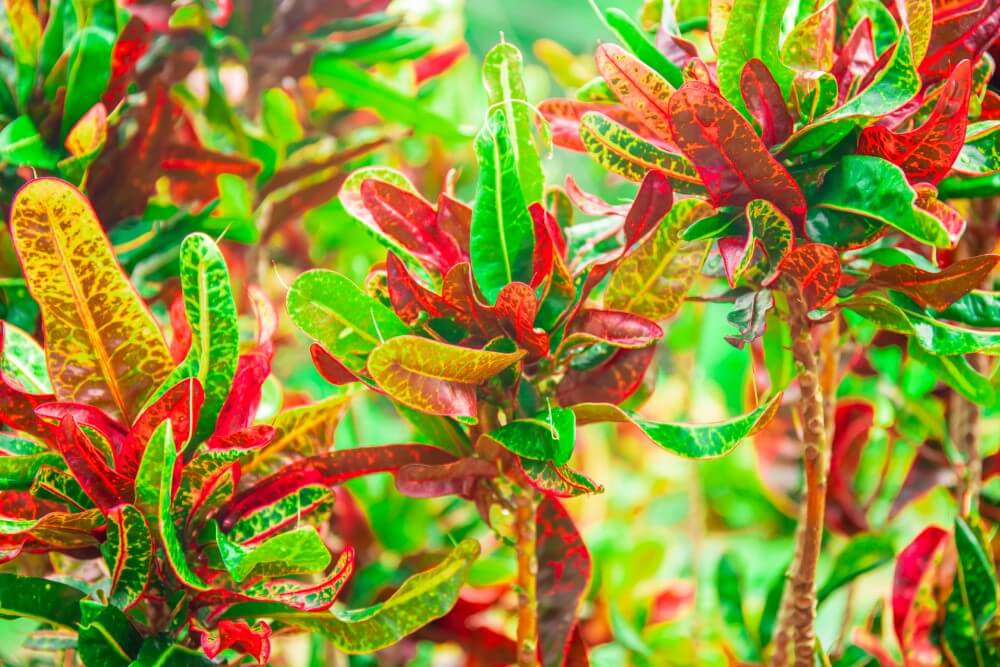
Suns: low, bright indirect, direct sunBars: to 8 ft; the pin is a 5½ ft person
From the care tables below. Crotons are not on the ASPCA's plant lists; NC State rates them a low-severity poison, and the sap can irritate skin.
How We Checked Croton Safety
The croton's safety was checked on October 19, 2026, against the ASPCA's plant lists, NC State Extension, and Wisconsin Extension. The ASPCA has no croton entry, NC State rates it a low-severity poison, and Wisconsin Extension warns the sap can cause dermatitis; not appearing on the ASPCA list does not mean safe.
| What the ASPCA lists | Plants |
|---|---|
| Not on its cat and dog lists | 17 |
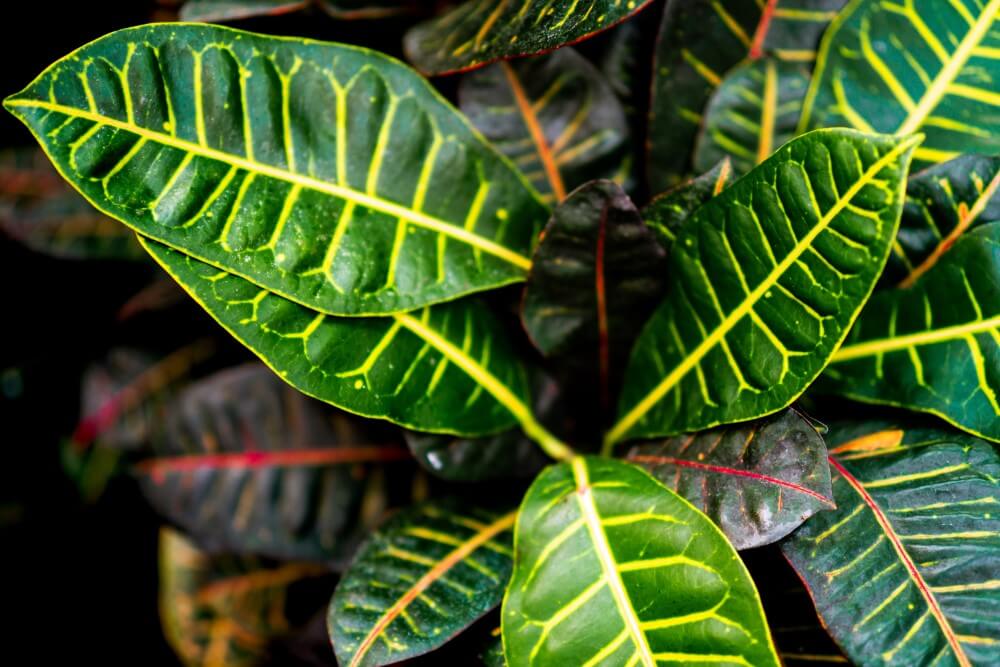
1) Petra Croton (Codiaeum variegatum ‘Petra’)
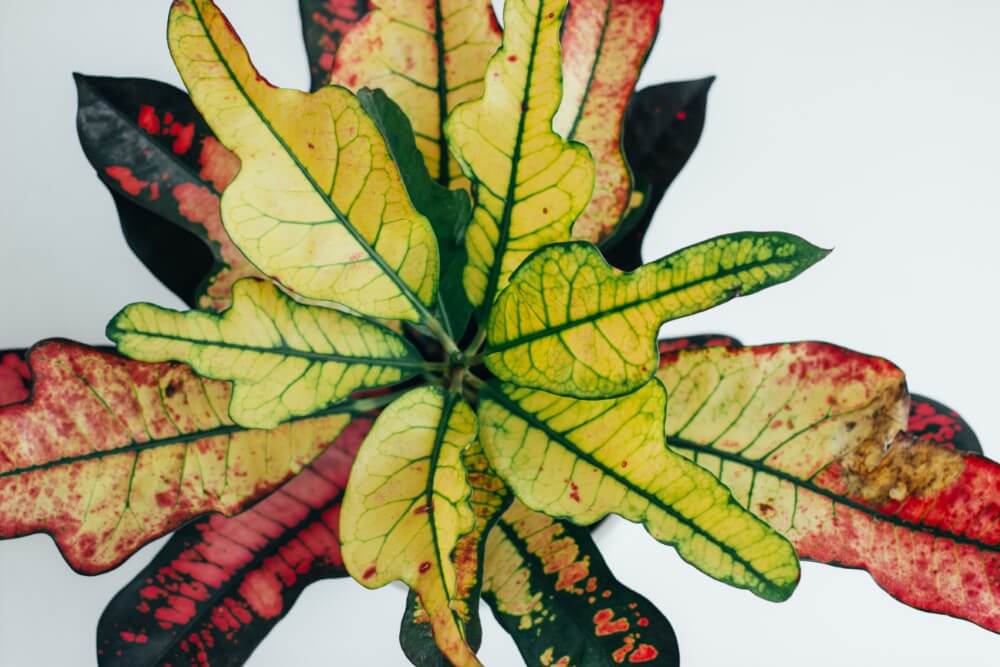
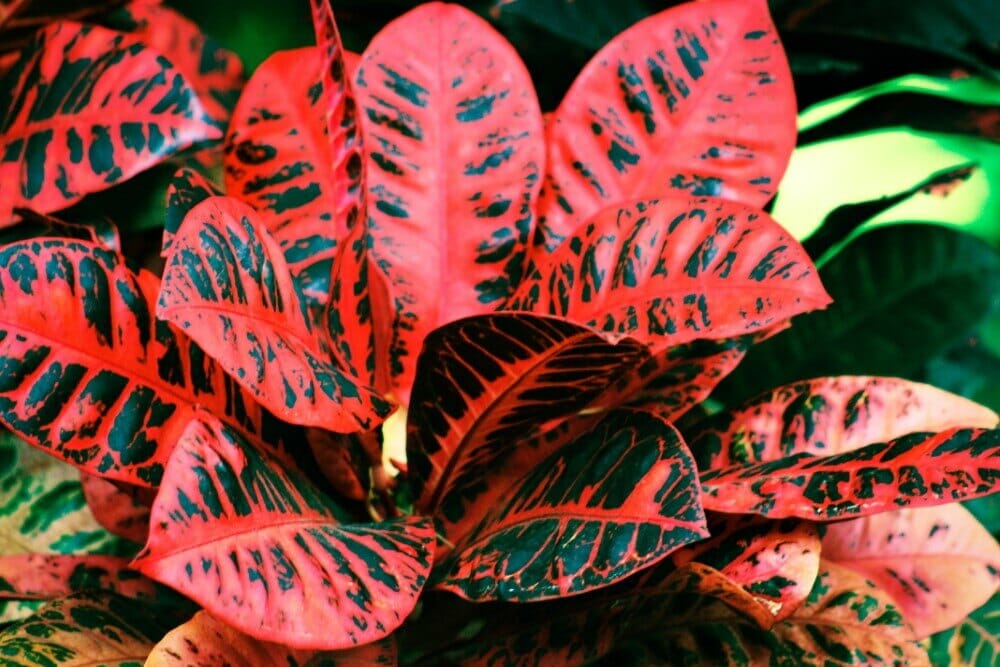
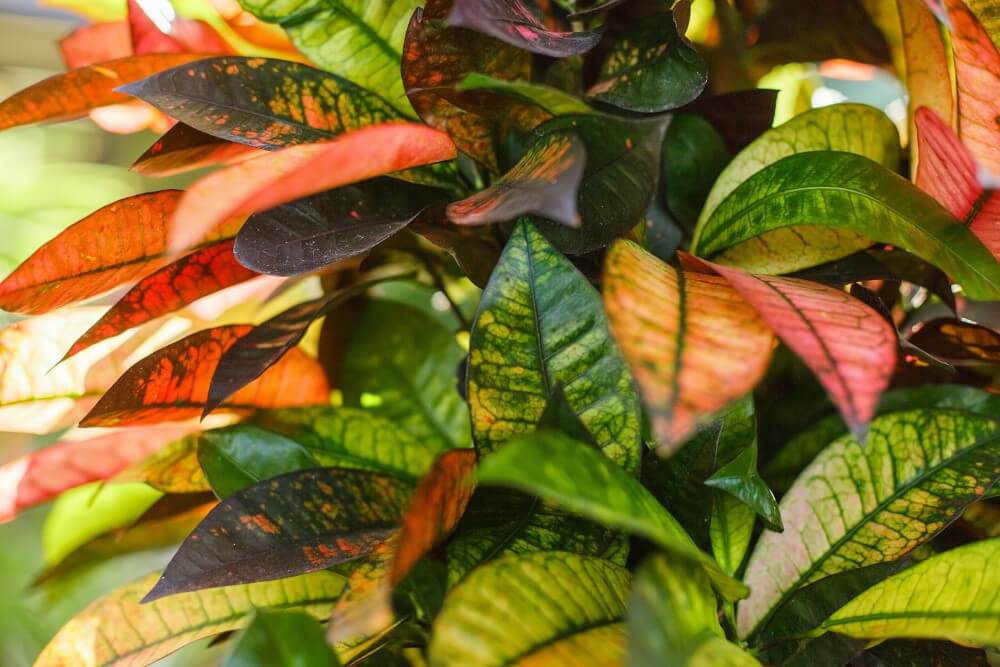
The petra croton has dark green leaves with yellow, pink, and orange-red markings along the veins. It’s native to tropical Asia, the western Pacific region, and northern Australia.
- General Care Requirements
- The petra croton prefers at least five hours of bright yet indirect sun. Keep the temperature between 60-85ºF and maintain moderate humidity. Water when the top two inches of soil is dry. Fertilize with a diluted houseplant fertilizer once a month.
- Suitable for Indoors and/or Outdoors
- This croton can be grown indoors in any area. It can also be grown outdoors in zones 11 to 12.
- Size & Growth Expectations
- When grown outdoors, the petra croton can grow up to eight feet tall! When grown indoors, its size will be limited by the container and environment. With the proper conditions, these plants can reach six feet tall indoors.
- Pet Safety
- Not on the ASPCA’s cat and dog lists; low-severity poison
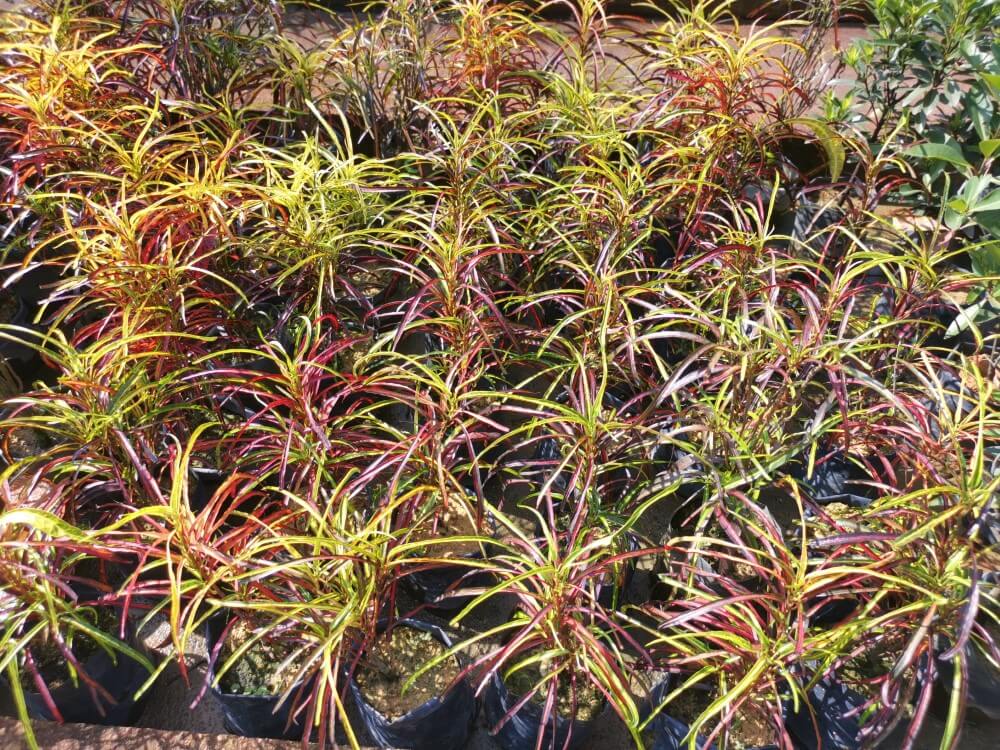
2) Zanzibar Croton (Codiaeum variegatum ‘Zanzibar’)
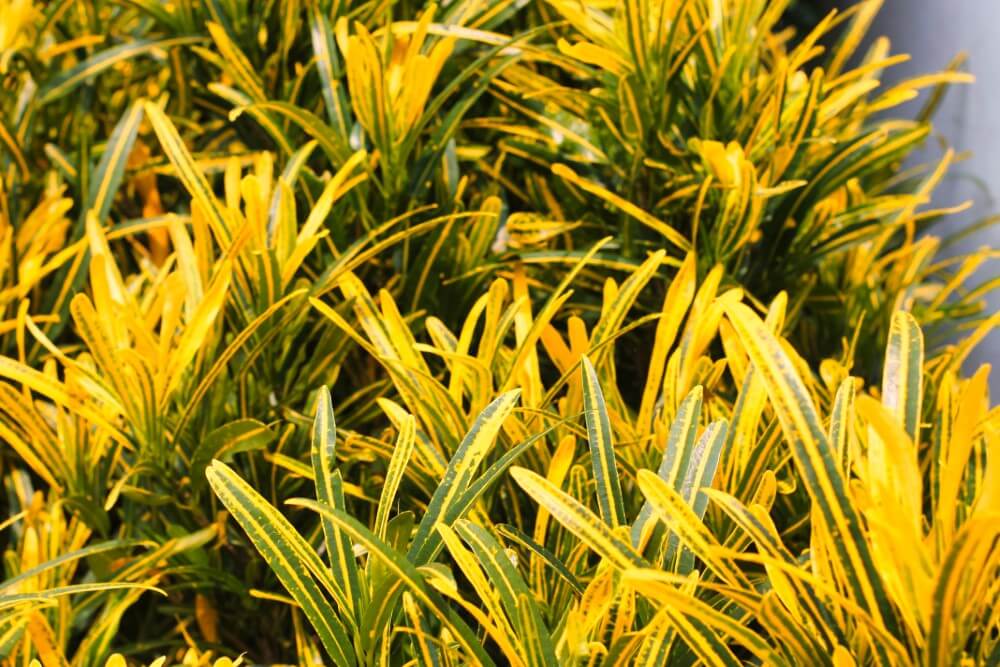
Zanzibar has long, slender, grassy-looking leaves in shades of purple, red, orange, and gold. Due to its long leaves, it can often resemble decorative grass.
- General Care Requirements
- This croton prefers part-shade outdoors and indirect light indoors. It prefers temperatures between 60-85ºF as well as moderate to high humidity. Allow the top few inches of soil to dry between waterings, and feed twice a year with an all-purpose fertilizer.
- Suitable for Indoors and/or Outdoors
- You may grow this croton outdoors in zones 11-12 all year long. You may keep it outside in other areas as long as you bring it inside before the first frost. It also makes a great houseplant.
- Size & Growth Expectations
- The Zanzibar croton can grow up to six feet tall and five feet wide when grown outdoors.
- Pet Safety
- Not on the ASPCA’s cat and dog lists; low-severity poison
3) Lauren’s Rainbow Croton (Codiaeum variegatum ‘Lauren’s Rainbow’)
About: Lauren’s rainbow croton has thin leaves set atop tall stems. The leaves typically have one color as their base and another color running down the middle.
- General Care Requirements
- Like many crotons, this one prefers part-shade or bright yet indirect light. To keep it happy, keep the humidity high and water when the top two inches of soil is dry. Aim to keep the air temperature between 60-85ºF.
- Suitable for Indoors and/or Outdoors
- You can grow this croton indoors in any area, as long as you provide enough light and humidity. It can also be grown outdoors in zones 11 to 12.
- Size & Growth Expectations
- Lauren’s rainbow croton can reach up to five feet tall and five feet wide under the right conditions.
- Pet Safety
- Not on the ASPCA’s cat and dog lists; low-severity poison
4) Gold Dust Croton (Codiaeum variegatum ‘Gold Dust’)
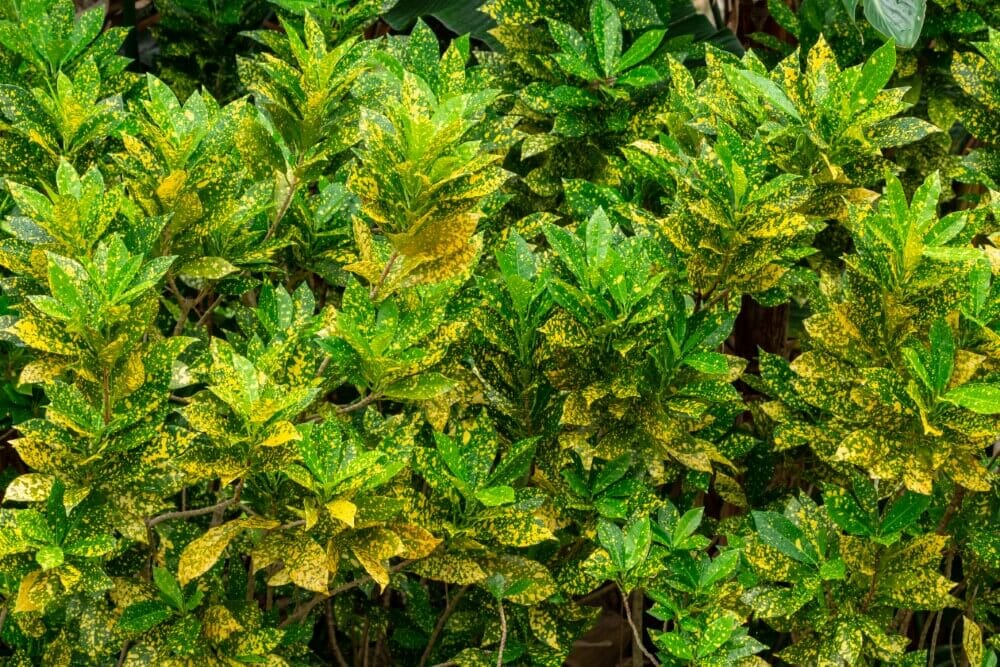
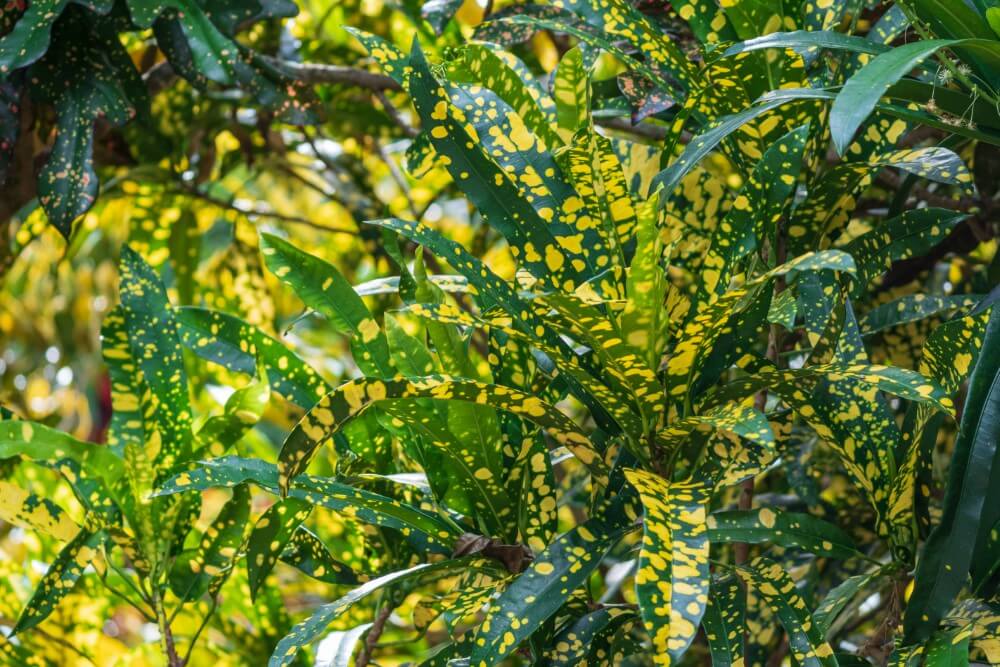
Gold Dust has bright green, rounded oval leaves spotted with golden yellow. The brighter the location, the more yellow the leaves.
- General Care Requirements
- This croton likes at least six hours of bright yet indirect light. When grown outdoors, aim for morning light and afternoon shade. Keep temperatures between 60-85ºF and maintain moderate to high humidity. Water only when the top few inches of soil is dry.
- Suitable for Indoors and/or Outdoors
- You can grow this croton outdoors in zones 11 to 12. It also makes a great houseplant as long as you provide enough light.
- Size & Growth Expectations
- When grown outdoors in warm areas, it grows at a moderate rate, maxing out at ten feet. Indoors, it is a slow grower and tops out at three feet.
- Pet Safety
- Not on the ASPCA’s cat and dog lists; low-severity poison
5) Banana Croton (Codiaeum variegatum ‘Banana’)
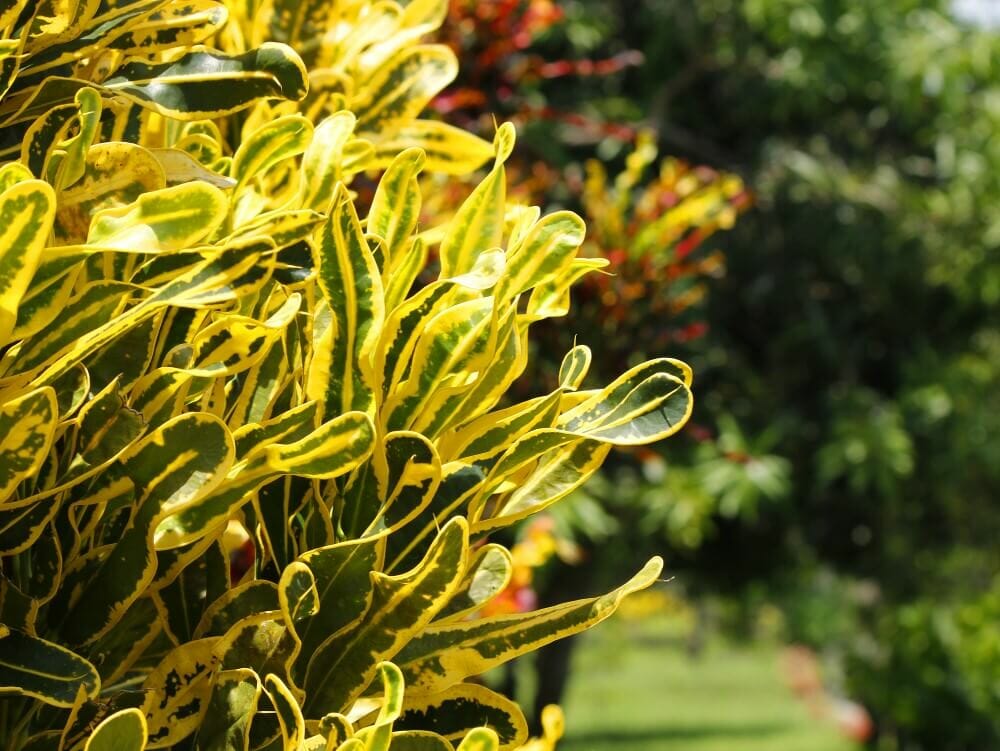
The banana croton is a petite plant that is perfect for small spaces. It has bright green oblong leaves that are covered with yellow bits and patches.
- General Care Requirements
- Plant your banana croton in well-draining soil and water when the top few inches of soil is dry. Keep the temperature between 60-85ºF and make sure the humidity is moderate to high. Provide at least five hours of bright yet indirect light.
- Suitable for Indoors and/or Outdoors
- You may grow the banana croton outdoors in zones 11 to 12. You can also grow it indoors in bright areas.
- Size & Growth Expectations
- This is a slow-growing plant that maxes out at six feet tall. However, it often remains only a foot or two tall indoors.
- Pet Safety
- Not on the ASPCA’s cat and dog lists; low-severity poison
6) Oakleaf Croton (Codiaeum variegatum ‘Oakleaf’)
As its common name suggests, the oakleaf croton has lobed leaves that resemble the leaves of some oaks. The leaves are multicolored, in greens to bronzes with red, orange, or yellow veining.
- General Care Requirements
- The oakleaf croton needs bright yet indirect sun. Keep the temperature between 60-85ºF. Use a well-draining potting mix and water thoroughly when the top two inches of soil is dry.
- Suitable for Indoors and/or Outdoors
- You can grow the oakleaf croton outdoors as long as the temperatures don’t reach freezing. You can also grow them indoors.
- Size & Growth Expectations
- Can reach up to 6 feet in height.
- Pet Safety
- Not on the ASPCA’s cat and dog lists; low-severity poison
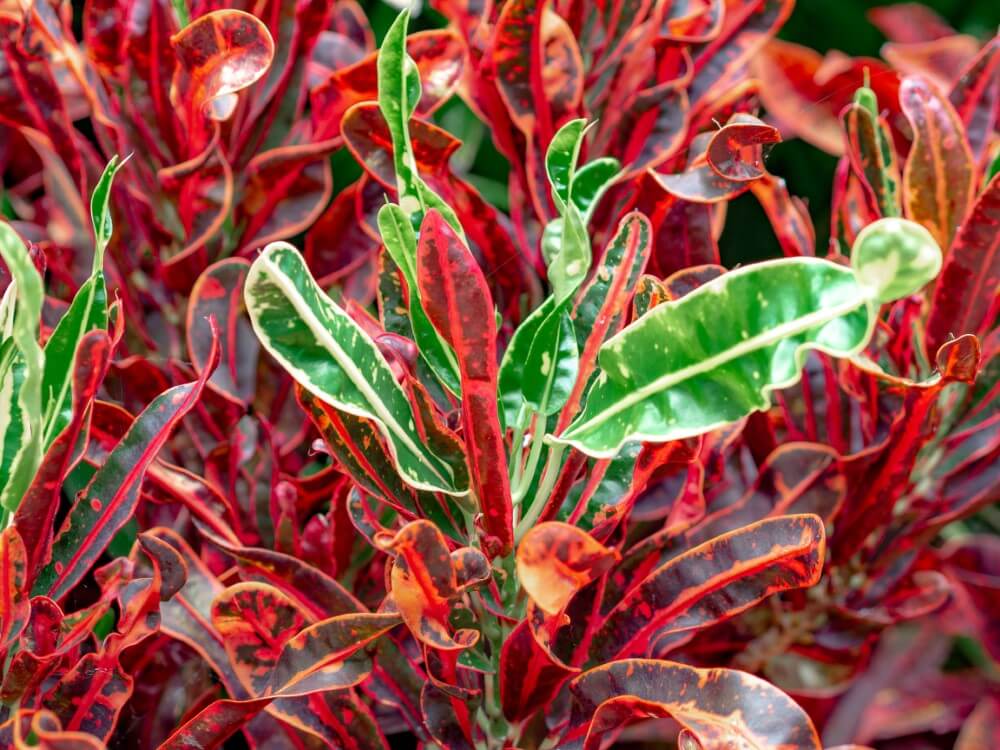
7) Mother and Daughter Croton

Mother and daughter crotons have unmistakable leaves which lead to their name. The oblong leaves appear as if a small leaf is attached to a larger leaf. In actuality, it is one leaf attached via a midrib.
- General Care Requirements
- Give this plant between five and eight hours of bright yet indirect light each day. Aim to keep the temperature between 60-85ºF and the humidity high. Water when the top two inches of soil is dry.
- Suitable for Indoors and/or Outdoors
- You can grow outdoors in zones 11 to 12 or indoors in a pot.
- Size & Growth Expectations
- This croton is typically only a foot or two tall indoors, but it can grow over four feet tall outdoors.
- Pet Safety
- Not on the ASPCA’s cat and dog lists; low-severity poison
8) Mammy Croton (Codiaeum variegatum ‘Mammy’)
Mammy crotons have elongated, twisted, multicolored leaves tending toward greens and purples with bits of red.
- General Care Requirements
- Keep temperatures between 60-85ºF, water when the top few inches of soil is dry, and maintain high humidity. Make sure the plant receives at least five hours of bright yet indirect light.
- Suitable for Indoors and/or Outdoors
- You can grow this croton outside in zones 11 to 12 or indoors in any area.
- Size & Growth Expectations
- Mammy crotons can grow up to three feet tall and two feet wide.
- Pet Safety
- Not on the ASPCA’s cat and dog lists; low-severity poison
9) Eleanor Roosevelt Croton (Codiaeum variegatum ‘Eleanor Roosevelt’)
Eleanor Roosevelt has medium green leaves with golden yellow spots that turn dark red.
- General Care Requirements
- Provide six to eight hours of bright yet indirect sun and high humidity. Use well-draining soil and water when the top inch of soil is dry.
- Suitable for Indoors and/or Outdoors
- You can grow the Eleanor Roosevelt indoors anywhere or outdoors in zones 11 to 12.
- Size & Growth Expectations
- Plants can grow up to six feet tall.
- Pet Safety
- Not on the ASPCA’s cat and dog lists; low-severity poison
10) Andrew Croton (Codiaeum variegatum ‘Andrew’)
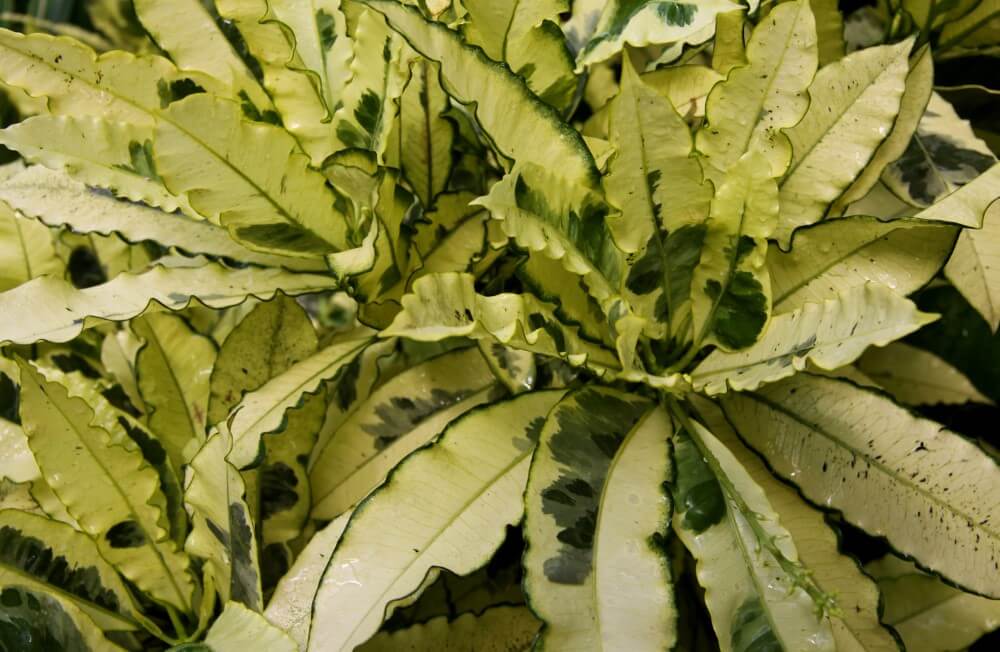
The Andrew croton has long leaves that are dark green and cream. The leaves sometimes develop a wavy texture.
- General Care Requirements
- Plant in well-draining soil and water when the top two inches of soil is dry. Maintain high humidity and temperatures between 60-85ºF.
- Suitable for Indoors and/or Outdoors
- Grow indoors or plant outdoors in zones 11 to 12.
- Size & Growth Expectations
- The Andrew croton can grow up to ten feet outdoors but generally stays below five feet indoors.
- Pet Safety
- Not on the ASPCA’s cat and dog lists; low-severity poison
11) Red Iceton Croton (Codiaeum variegatum ‘Red Iceton’)
The red ice croton has pointed leaves that start yellow and turn red and pink over time. Most plants will have a combination of red and yellow leaves.
- General Care Requirements
- Plant in an area that receives bright yet indirect light. Keep temperatures between 60-85ºF and water when the top inch of soil is dry.
- Suitable for Indoors and/or Outdoors
- Grow indoors or plant outdoors in zones 11 to 12.
- Size & Growth Expectations
- The red iceton croton can reach up to eight feet tall outdoors.
- Pet Safety
- Not on the ASPCA’s cat and dog lists; low-severity poison
12) Picasso’s Paintbrush Croton (Codiaeum variegatum ‘Picasso’s Paintbrush’)
This croton has long, thin leaves that resemble a paintbrush splattered with bright colors.
- General Care Requirements
- Plant in an area with bright yet indirect light or morning sun. Keep the humidity high, and maintain a temperature between 60-85ºF. Make sure you use well-draining soil and water only when the top few inches of water is dry.
- Suitable for Indoors and/or Outdoors
- Grow indoors or plant outdoors in zones 11 to 12.
- Size & Growth Expectations
- It can grow up to six feet tall and five feet wide but stays smaller indoors.
- Pet Safety
- Not on the ASPCA’s cat and dog lists; low-severity poison
13) Gold Star Croton (Codiaeum variegatum ‘Gold Star’)
The gold star croton has long, thin green leaves with tiny yellow spots.
- General Care Requirements
- Bright, indirect light, warm temperatures between 60 and 85°F and moderate to high humidity.
- Suitable for Indoors and/or Outdoors
- The gold star croton can be grown outdoors in zones 11 to 12.
- Size & Growth Expectations
- The gold star croton grows a few feet tall indoors and can reach up to eight feet tall outdoors
- Pet Safety
- Not on the ASPCA’s cat and dog lists; low-severity poison
14) Magnificent Croton (Codiaeum variegatum ‘Magnificent’)
This croton lives up to its name with wide green leaves covered in bright patches of yellow, pink, orange, and more.
- General Care Requirements
- If planted outdoors, the croton magnificent prefers dappled shade or morning sun. Try to keep temperatures between 60-85ºF while maintaining high humidity. Use a well-draining soil or potting mix and water when the top two inches of soil are dry.
- Suitable for Indoors and/or Outdoors
- You can grow this croton indoors in an area with bright yet indirect sun. You can also plant it outdoors in zones 11 to 12.
- Size & Growth Expectations
- This plant can reach around 4 to 6 feet in height when mature.
- Pet Safety
- Not on the ASPCA’s cat and dog lists; low-severity poison
15) Bush on Fire Croton (Codiaeum variegatum ‘Bush on Fire’)
The bush on fire croton has vibrant leaves speckled with yellow, green, pink, red, and more. Make sure the plant receives lots of indirect sun if you want bright colors.
- General Care Requirements
- Place this plant somewhere where it will receive five to eight hours of bright yet filtered light. Water only when the top two inches of soil is dry, and fertilize a few times per year. Make sure the humidity stays moderate and high and the temperature remains between 60-85ºF
- Suitable for Indoors and/or Outdoors
- You may plant the bush on fire croton outdoors in zones 11 to 12. You can also grow it indoors in a sunny location.
- Size / Growth Expectations
- No cultivar height is given. NC State puts the species at 2 to 8 feet tall and 2 to 6 feet wide.
- Pet Safety
- Not on the ASPCA’s cat and dog lists; low-severity poison
16) Sunny Star Croton (Codiaeum variegatum ‘Sunny Star’)
The sunny star croton has oblong green leaves covered in scattered bits of yellow. The brighter the location, the more yellow this plant will develop.
- General Care Requirements
- This croton prefers at least five hours of bright yet indirect light. Maintain temperatures between 60-85ºF and provide moderate to high humidity. Water when the top two inches of soil is dry, and fertilize with a houseplant fertilizer a few times each year.
- Suitable for Indoors and/or Outdoors
- You can grow this plant indoors in a sunny spot. It can also be planted outdoors in zones 11 to 12.
- Size & Growth Expectations
- This croton can grow up to ten feet tall outdoors, but it typically stays between one and five feet.
- Pet Safety
- Not on the ASPCA’s cat and dog lists; low-severity poison
17) Mrs. Iceton Croton (Codiaeum variegatum ‘Mrs. Iceton’)
This croton has large leaves with pointed tips. The leaves are a base color of green, red, orange, or purple and appear lightly dusted with another color.
- General Care Requirements
- Provide at least six hours of bright yet indirect light to encourage full coloration. Keep the temperature between 60-85ºF, and move potted plants indoors when temperatures dip below this range.
- Suitable for Indoors and/or Outdoors
- This croton makes an excellent houseplant, or you can grow it outdoors in zones 11 to 12.
- Size & Growth Expectations
- Mrs. Iceton croton can grow upwards of five feet tall outdoors. It typically grows between one and three feet tall indoors.
- Pet Safety
- Not on the ASPCA’s cat and dog lists; low-severity poison
Wrapping Up
Now that you know about some of the types of crotons available, it’s time to pick out a few you love. With plants of colors, shapes, and sizes, you can find some for every area of your home and garden.
For more, see our comprehensive guide to Croton plant care and growing tips at home.
For more houseplant guides, see banana plant, bird of paradise soil, mint grow indoors and care for an umbrella plant.
Questions and Answers
Is croton hardy?
No, croton is hardy only in USDA zones 11 to 12. It does best at temperatures between 60 and 85°F and often drops leaves if temperatures stay below 50°F. Frosts or freezes will damage it, but it quickly recovers.
Are crotons sun or shade plants?
Crotons need bright light for the best leaf color, with some direct sun. Indoors they need bright, indirect light. Too little light turns the leaves green, and too much direct sun makes them gray and dull. Outdoors many grow best in full sun, but plenty of cultivars tolerate or even prefer light shade.
How many types of croton plants are there?
There are several hundred cultivars of this popular foliage plant. The 17 plants here are all cultivars of one species, Codiaeum variegatum.
Sources4 sources, linked in the text
Updates and CorrectionsOct 19, 2026 · 3 corrected, 1 clarified
- Added: A pet and people safety row on every croton, from the ASPCA's lists, NC State and Wisconsin Extension, and a plant finder.
- Clarified: One health, edibility or toxicity statement now follows a named source; unsourced ones were removed.
- Corrected: One statement about where a plant grows wild now follows the sources.
- Corrected: Crotons are hardy only in zones 11 to 12, per Wisconsin Extension and NC State; the page had given 9 to 12.
- Corrected: 2 photos that showed a different plant were replaced or removed.
Save and Share
Reader Comments
Have a question? Ask it here.